Why is Ongoing Professional Development Crucial for Social Workers Working with Service Members, Veterans, and Their Families, According to the NASW Standards?
Why is ongoing professional development crucial for social workers working with service members, veterans, and their families, according to the NASW standards?
Answer
According to the NASW standards, social workers engaged with service members, veterans, and their families must take personal responsibility for their continuous professional development. Given the complexity and dynamic nature of the systems in which these social workers operate, staying current in both theoretical research and practical knowledge is imperative. This includes understanding the populations they serve, the systems they work within, and the broader network of psychosocial, mental, and behavioral health systems.
The need for ongoing professional development is underscored by the ever-evolving landscape of military service and its impact on individuals and families. To effectively conduct psychosocial and bio-psychosocial assessments, social workers must be attuned to the unique challenges that service members and veterans face, considering the historical context and specific experiences of those who served during different eras. This continuous commitment to professional growth ensures that social workers are well-equipped to provide optimal care and support to individuals and families connected to the military.
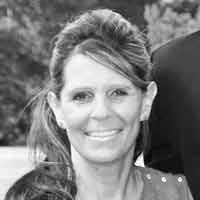
Heide Rathbun, MSW, LCSW
Heide Rathbun has extensive experience working with active-duty service members, veterans, and their families. Upon graduating from Baylor University’s MSW program, Heide worked as a research therapist for Strong Star at Ft. Hood through the University of Texas Health Science Center. Heide’s work at Ft. Hood focused on treating PTSD in an Active-Duty population and supporting a prevention program geared towards service members and their families during the cycle of deployment. As a licensed clinical social worker (LCSW), Heide has worked in Chicago with Veterans/PTSD at the Road Home Program that is funded by the Wounded Warrior Project. Heide has clinical expertise in Prolonged Exposure Therapy for PTSD, Prolonged Exposure Therapy for PTSD using a Web-based Program, Cognitive Processing Therapy for PTSD, CBT for Insomnia, Complicated Grief Therapy, Motivational Interviewing, and DBT.
Related Courses
1/social-work/ceus/course/understanding-military-culture-impacts-family-1986Understanding How Military Culture Impacts Family Dynamics and Social Work PracticeUsing the lens of the Army’s organizational culture and practices in connection with the NASW Standards for Social Work Practice with Service Members, Veterans, and their Families, this presentation looks at the micro, mezzo, and macro systems using statistics, organizational structure, and applicable examples to support military cultural competency for better outcomes with case conceptualization, assessment, and treatment planning.auditory, textual, visual99USDSubscriptionUnlimited COURSE Access for $99/yearOnlineOnlyContinued Social Workwww.continued.com/social-workUnderstanding How Military Culture Impacts Family Dynamics and Social Work PracticeUsing the lens of the Army’s organizational culture and practices in connection with the NASW Standards for Social Work Practice with Service Members, Veterans, and their Families, this presentation looks at the micro, mezzo, and macro systems using statistics, organizational structure, and applicable examples to support military cultural competency for better outcomes with case conceptualization, assessment, and treatment planning.1986OnlinePT66M
Using the lens of the Army’s organizational culture and practices in connection with the NASW Standards for Social Work Practice with Service Members, Veterans, and their Families, this presentation looks at the micro, mezzo, and macro systems using statistics, organizational structure, and applicable examples to support military cultural competency for better outcomes with case conceptualization, assessment, and treatment planning.
2/social-work/ceus/course/working-with-survivors-human-trafficking-2048Working with Survivors of Human Trafficking for Health Care ProvidersAn introduction to human trafficking for professionals working in health care settings. Topics covered include important terminology, the different types of human trafficking, and the scope of the problem within the United States. How to recognize the signs and risk factors for trafficking and conducting trauma-informed screenings for victims is also reviewed.auditory, textual, visual99USDSubscriptionUnlimited COURSE Access for $99/yearOnlineOnlyContinued Social Workwww.continued.com/social-workWorking with Survivors of Human Trafficking for Health Care ProvidersAn introduction to human trafficking for professionals working in health care settings. Topics covered include important terminology, the different types of human trafficking, and the scope of the problem within the United States. How to recognize the signs and risk factors for trafficking and conducting trauma-informed screenings for victims is also reviewed.2048OnlinePT61.0002M
'Great explanation regarding two factors of human trafficking and using informed consent, along with ways to work with clients who disclose that they are being trafficked'Read Reviews
AK/1.25; AL/1.25; AR/1.25; ASWB ACE/1.25 General; AZ/1.25; CA (CAADE)/1.0; CA (CADTP)/1.0; CA (CCAPP-EI)/1.0; CA/1.25; CE Broker/1.25 Human Trafficking, Counseling Theories, Counseling, CE Broker #20-1173272; CE Hours/1.0; CO/1.25; CT (CCB)/1.0; CT/1.25; DC/1.25; DE/1.25; FL/1.25; GA (ADACBGA)/1.0; GA/1.25; HI/1.25; IA/1.25; IACET/0.1; ID/1.25; IL (ICB)/1.0 Counselor II, Preventionist II, CARS II, CODP I, CODP II, PCGC II, CCJP II, CRSS I, CRSS II, CPRS I, CPRS II, MAATP II, CFPP II, CVSS II; IL (MFT CE Sponsor)/1.0; IL/1.25; IN/1.25; KS/1.25; KY/1.25; LA/1.25; MA/1.25; MD/1.25; ME/1.25; MI (MCBAP)/1.0 Related; MI/1.25; MN/1.25; MO (MCB)/1.0; MO/1.25; MS/1.25; MT/1.25; NAADAC/1.0 Clinical Intake And Screening, Counseling Services; NBCC CE Hours/1.0; NC/1.25; ND/1.25; NE/1.25; NH/1.25; NJ/1.25; NM/1.25; NV/1.25; NY-Contact Hours/1.0 Self-Study; OH (OCDP)/1.0 C2; OH/1.25; OK (LPC/LMFT)/1.0; OK (OBLADC)/1.0; OK/1.25; OR/1.25; PA/1.25; RI/1.25; SC/1.25; SD/1.25; TN/1.25; TX/1.25; UT/1.25; VA/1.25; VT/1.25; WA/1.25; WI/1.25; WV/1.25; WY/1.25
An introduction to human trafficking for professionals working in health care settings. Topics covered include important terminology, the different types of human trafficking, and the scope of the problem within the United States. How to recognize the signs and risk factors for trafficking and conducting trauma-informed screenings for victims is also reviewed.
3/social-work/ceus/course/pregnancy-101-introduction-to-common-1281Pregnancy 101: An Introduction to Common ComplicationsThis course is designed for non-medical learners to improve their baseline knowledge of common complications of pregnancy. Learn common diseases of pregnancy as well as behaviors of expectant women that can negatively impact the infant.auditory, textual, visual99USDSubscriptionUnlimited COURSE Access for $99/yearOnlineOnlyContinued Social Workwww.continued.com/social-workPregnancy 101: An Introduction to Common ComplicationsThis course is designed for non-medical learners to improve their baseline knowledge of common complications of pregnancy. Learn common diseases of pregnancy as well as behaviors of expectant women that can negatively impact the infant.1281OnlinePT67.0002M
This course is designed for non-medical learners to improve their baseline knowledge of common complications of pregnancy. Learn common diseases of pregnancy as well as behaviors of expectant women that can negatively impact the infant.
4/social-work/ceus/course/introduction-to-body-based-interventions-1538Introduction to Body-Based Interventions In Psychotherapeutic PracticeBody-based interventions move therapy beyond talking. This webinar explores neuroscience that supports body-based interventions and introduces social worker practitioners to practices that will allow them to use body-based interventions in therapy sessions safely.auditory, textual, visual99USDSubscriptionUnlimited COURSE Access for $99/yearOnlineOnlyContinued Social Workwww.continued.com/social-workIntroduction to Body-Based Interventions In Psychotherapeutic PracticeBody-based interventions move therapy beyond talking. This webinar explores neuroscience that supports body-based interventions and introduces social worker practitioners to practices that will allow them to use body-based interventions in therapy sessions safely.1538OnlinePT61.0002M
Body-based interventions move therapy beyond talking. This webinar explores neuroscience that supports body-based interventions and introduces social worker practitioners to practices that will allow them to use body-based interventions in therapy sessions safely.
5/social-work/ceus/course/pyramid-model-in-early-childhood-2050The Pyramid Model in Early Childhood: Improving Social Emotional Competence and Reducing Challenging Behaviors - Part 1Challenging behaviors in young children are often met with exclusion from settings considered essential for development. However, when correctly set up, community, school, and therapy environments can facilitate growth when employing supportive, evidence-based methods. This course explains the Pyramid Model, an approach promoting social-emotional skills acquisition to minimize problematic behaviors in children 18 months to 7 years old.auditory, textual, visual99USDSubscriptionUnlimited COURSE Access for $99/yearOnlineOnlyContinued Social Workwww.continued.com/social-workThe Pyramid Model in Early Childhood: Improving Social Emotional Competence and Reducing Challenging Behaviors - Part 1Challenging behaviors in young children are often met with exclusion from settings considered essential for development. However, when correctly set up, community, school, and therapy environments can facilitate growth when employing supportive, evidence-based methods. This course explains the Pyramid Model, an approach promoting social-emotional skills acquisition to minimize problematic behaviors in children 18 months to 7 years old.2050OnlinePT121.9998M
Challenging behaviors in young children are often met with exclusion from settings considered essential for development. However, when correctly set up, community, school, and therapy environments can facilitate growth when employing supportive, evidence-based methods. This course explains the Pyramid Model, an approach promoting social-emotional skills acquisition to minimize problematic behaviors in children 18 months to 7 years old.