Course Articles
Addressing Complex Trauma Across the Lifespan
Patrice Berry, LCP, PsyD
Editor’s note: This text-based course is an edited transcript of the webinar, Addressing Complex Trauma Across the Lifespan, presented by Patrice Berry, Psy.D., LCP.
Learning Outcomes
After this course, participants will be able to:
- Define complex Trauma and understand how it can present across the lifespan.
- identify the appropriate assessment tool to match the setting.
- Identify clinical approaches to consider with children, families, and adults that present with complex trauma.
Introduction
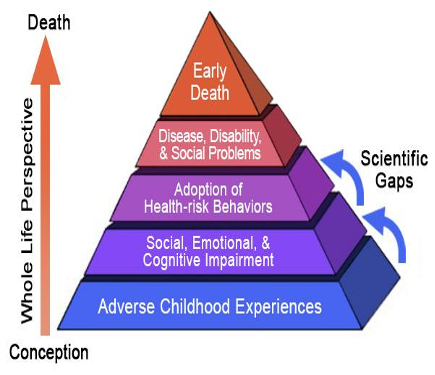
One disclaimer that I want to give is that I will be going over larger programs that you may need an additional certification for, so this course will not give an exhaustive explanation of the different training. This topic applies to almost any setting, and you will encounter individuals with complex trauma if you have not already. These individuals are often difficult to engage, and taking different approaches can help them meet their treatment objectives. This course does assume a foundational knowledge of the Adverse Childhood Experiences study and a basic understanding of trauma-informed care. This care goes from looking at what is wrong to looking at what happened to you. This is important because it is often that the history of the person is not considered. Going into that detailed history can often give you a better understanding of how to help an individual.
Complex Trauma
According to the National Child Traumatic Stress Network, “the term Complex Trauma describes both children's exposure to multiple traumatic events, often of an invasive, interpersonal nature, and the wide-ranging, long-term impact of this exposure.” That exposure can be emotional, social, cognitive, behavioral, or physical. It is not an official diagnosis within the Diagnostic and Statistical Manual of Mental Disorders (DSM-5), and people often refer to it as complex post-traumatic stress disorder (PTSD). However, it is not an official diagnosis. Experts tried to work on including developmental trauma or complex trauma within the DSM-5, and instead lowered some of the restrictions for kids. This is because practitioners realized that kids were not meeting full criteria for PTSD, and it did not fully describe all that was going on with the individual. Maybe it will be included in the future.
Clinical Presentation Across Lifespan
Early Childhood (0-5)
- Developmental delays
- Difficulty separating from caregiver
- Crying and/or frequent screaming
- Difficulty with appetite
- Nightmares
- Dysregulated behaviors
In early childhood, you may notice developmental delays. These children have had significant neglect during their early years, so there may be speech delays, cognitive delays, or issues with sensory processing. They may have difficulty separating from their caregiver, or there may be excessive crying or frequent screaming that goes beyond what you would expect for that age range. This may be a child who is difficult to console, and you may see issues with appetite. In working with their social worker and treatment team, you can see how to address those issues. The child may also be experiencing nightmares, which is one of the DSM criteria for PTSD. That is a re-experiencing symptom where kids often do present dysregulated behavior and maybe a little all over the place. Often you will get complaints from daycares, or if they are able to engage in preschool programming, they may struggle within those environments.
School Age (6-12)
- Commonly misdiagnosed as ADHD
- Tantrums
- Difficulty accepting limits and “no”
- Express emotional issues (depression or anxiety) as behavioral issues
- Physical and/or verbal aggression
- Academic problems
- Social withdrawal or poor boundaries
- Hypervigilance/Fearful
- Guilt/Shame
Research shows that children in their school-age years are commonly misdiagnosed with Attention Deficit Hyperactivity Disorder (ADHD) because you may see similar behavioral dysregulation. I describe this to families by telling them that dysregulation that comes from ADHD is a prefrontal cortex, which is a frontal lobe issue, whereas trauma is from an overactive amygdala. If it is more of an emotional dysregulation, that may be trauma-related whereas ADHD is a frontal lobe issue. Watch for individuals with complex trauma who are prescribed stimulant medication because you may see an increase in negative behaviors, and that is when families should talk with their prescribing physician to discuss options. I have had families want to see if they could get used to the medication. However, I always advise them to immediately discuss their options with their provider because the medication stimulates the entire brain.
Regarding a child with complex trauma, they may have an increase in behaviors at times. That is why it is important to get a good assessment of what is going on. Someone can have ADHD and trauma symptoms and it is important to get some of the trauma symptoms under control. This is because regulating those emotions can help before going forward, and that is when you should work closely with their prescribing physician. You may see tantrums for a variety of different issues, especially in difficulty accepting limits or being told no. That is when you might see an increase in physical aggression or behavioral issues anytime a limit is set. You may get a referral to your office if the family is having difficulty managing the child's behavior. They may be more likely to express emotional issues such as depression or anxiety.
For adoption and foster care, it is often that when a child comes out of a honeymoon period, families will often feel that the behavioral issues are intentional. I view that as survival behavior, and it can be difficult for them to let go of that because it may have kept them safe in a different environment. Individuals with complex trauma may have had to fight for food or fight their siblings within their families of origin, so giving up that physical aggression may make them feel unsafe. That is why having a good understanding of the child's history is important. You may see academic problems and difficulties with learning, and that is when you want to work with the school to make sure they are not only focusing on academics but also on relationships. You may see complete social withdrawal, difficulty engaging with peers, formation of superficial relationships, or struggle with having deeper relationships. They may be hypervigilant, fearful, or jumpy, which are symptoms of PTSD. There also may be guilt and shame related to their trauma if they start to understand their experience in a different way. There may be self-blame, shame, and low self-esteem with that as well.
Adolescence (13-18)
- Depression and/or Anxiety
- Anger
- Feelings of loneliness/social withdrawal
- At-Risk Behaviors (e.g. running away, unsafe sexual behaviors, substance abuse)
- Poor peer relationships
- Poor academic performance, lack of academic motivation, and/or frequent referrals
- Legal problems
With adolescents, we see an increase in depression or anxiety, and their emotions begin to be expressed as anger. There may also be an increase in feeling lonely, as well as social withdrawal. They may begin to engage in risk behaviors and often get involved with the juvenile justice setting. These actions include running away, substance abuse, stealing, or unsafe sexual behavior. They have poor peer relationships and are seemingly addicted to drama. They may recreate the chaos that they feel in their different relationships. With those individuals, I try to have them increase their ability to calm because they are used to chaos, not positive interactions within a relationship. There also may be poor academic performance, lack of academic motivation, or frequent referrals from school. This is often when the school’s social worker gets involved. We take their history and find out if we need to switch to a trauma-informed approach or refer them to other programs. There may be legal problems around this age as well.
Adults (19+)
- Behavioral Issues: impulsivity, substance abuse, treatment interfering/self-sabotaging behaviors
- Emotional Issues: (e.g. affect lability, rage, depression, and panic)
- Social Issues: poor boundaries, frequent drama/conflict, domestic violence (victim and/or aggressor)
- Somatization
Adults often present with similar behavior issues, but now you may start to see ingrained patterns that can be difficult to break. You will see impulsivity, substance use or abuse, treatment-interfering behaviors, or self-sabotaging behaviors. They may also engage in behaviors that damage their relationships, as well as emotional issues and difficulty regulating their effect. They may display rage, depression, or panic. You may see poor social boundaries or frequent drama and conflict. There may be some domestic violence where they could be the victim or the aggressor. There may also be an increase in somatization, where there are frequent physical issues and complaints. The more Adverse Childhood Experiences (ACEs) the individual had in the past will usually mean more medical issues. Trauma has an impact on the physical body, and I want to mention The Body Keeps the Score by Dr. Bessel van der Kolk. It talks about how trauma and the body can be linked and how people have found healing with that. These individuals may present to a medical hospital, but not to counseling or other social services. That is where the social worker, being aware of the background, can often help the person get the right type of treatment.
Borderline Personality Disorder versus Complex Trauma
An individual can present both borderline personality disorder (BPD) and complex trauma. Some research has shown that individuals with complex trauma can have a higher rate of being diagnosed with personality disorders, but there is other research that shows significant differences. If someone does not have certain symptoms then they may meet criteria for a trauma-related disorder and not borderline personality disorder. The DSM criteria for borderline personality disorder starts with frantic efforts to avoid real or imagined abandonment, a pattern of unstable or intense interpersonal relationships, and identity disturbance, so that is where there may be an unstable sense of self. There can be impulsivity in a few different areas involving self-damaging or suicidal behavior, whether it be gestures, threats, or self-harm. They may experience highs and lows that go over a long period of time. This is more of a personality shift versus a biological mood that you may see within a mood disorder. Chronic feelings of emptiness, inappropriate and intense feelings of anger, difficulty controlling anger, transient paranoid ideation, or severe dissociative symptoms may be prominent as well.
Take note that some of these symptoms are similar to complex trauma, but there are some specific differences. In looking at the two, they both have an impact on the self and the identity. But within borderline personality disorder, it is about an unstable sense of self, while complex trauma includes a chronic, negative self-image. An individual with BPD may have days where they feel good about themselves, but changes in relationships bring down their sense of self. With complex trauma there is a negative self-image in which they almost always feel badly about themselves. Often they cannot remember a time when they felt positively about themselves. These individuals may have had histories of emotional abuse when the negative things that they play in their mind are things that someone else has said about them. They may have someone else's voice internalized as their own.
Within both cases, you also can see interpersonal issues. With borderline personality disorder, it is more so about fear of abandonment, as well as unstable relationships due to black and white thinking. With complex trauma there is the chronic avoidance of relationships and isolation, and not feeling like they ever belong within the family. I often see this with individuals who have been adopted and teenagers going into adulthood. They may feel like they do not have a place in the world. They do not go back and forth from love to hate because they often do not feel love from their family. I describe that as there being no bottom to their cup. Regarding individuals with complex trauma, it does not matter how much love you put in their cup because everything just pours out. This can relate to a family that might describe how they spent all day with one foster child, but then that child did not feel cared for the minute they spent time with another child. Also, both BPD and complex trauma have issues with emotion regulation. Within borderline personality disorder, there tends to be more impulsivity and difficulty with regulating mood. With complex trauma, it is ineffective coping and reactive anger. It is chronic difficulty versus not having the right skills. That is why there are treatments that can be effective for both.
Assessment
There are many different types of assessments that look at trauma and a person's history. If you have time to do a thorough social history and ask specific questions, then that would be preferred. You also want to give someone a nonverbal way to share their story in case some are not comfortable talking. I have worked with many patients for a period of time who disclosed their past trauma later on. It may be difficult for them during that initial intake because of an underlying feeling that they will not be understood or will be judged. I think a detailed intake is a great place to start if you have the time. If you are a foster care social worker, you are going to get that detailed social history. If you are working in an outpatient setting, you will be able to get a thorough understanding.
On the other hand, if you have a larger caseload and are only able to do a brief screening, I recommend the Adverse Childhood Experiences Scale. It lists 10 different adverse life experiences that someone may have went through, ranging from divorce to physical or sexual abuse. It is important to ask about negative life events versus trauma because people may not view what they went through as trauma; they see it as normal, or they somehow have found a way to cope. That is why using the Adverse Childhood Experiences Scale can be a good way to do a screening. If you are in a setting where you have to do a screening, such as the juvenile justice setting, every student undergoes this to see what their ACEs is. Individuals with lower ACEs typically have less of the behavioral, emotional, social, or cognitive problems. Individuals with higher ACEs can bring up some of those problems and may end up requiring additional support.
There are symptom checklists to look at, such as the Trauma Symptom Checklist for Children, as well as others for adults. There is a checklist for parents, where they fill it out for their young children. You can also do a more comprehensive assessment by using a Child and Adolescent Needs and Strengths assessment. I see these done within social services, or with a child that has been referred to residential treatment. This is because you are then able to take the time and get a more comprehensive assessment of the child's trauma. I like how that assessment includes their strengths because individuals who have been through complex trauma are also resilient. Those strengths may present in ways that cause issues for them because they may be good at advocating for themselves, but it comes off in an aggressive way. That is where we might tweak their expression of that particular strength because there is always traumatic growth that we can move towards. Even though the person has had those difficult life experiences and cannot change the past, they can turn it into positive change and they need help and support in doing that.
Multidisciplinary Model
With treatment, I think it is best to take a multidisciplinary model to look at all the different people within their life and their home. Within the school you want to be able to collaborate with teachers whenever possible. You can do this by having teachers do updated reports periodically. If they are involved with social services, you want to make sure you are communicating with their social worker. I recommend that individuals with complex trauma be in some type of therapy because it does affect them across the lifespan. There may be times where the trauma is seemingly resolved at age six or seven, but then at around nine or 10 they need to go back to therapy. They do not have to stay in therapy forever, but I want them to view therapy in a positive light, like going to the doctor for an annual checkup. There may be times when they need to attend therapy again and de-stigmatize it. It is to remind them that they are not wrong or crazy. The skills that individuals acquired previously may not work after a period of time, so they can go back to therapy and learn new skills. When I meet with individuals with complex histories of trauma, I prepare families with the knowledge that they can discontinue therapy for a time. However, something may happen in life where they need to return.
Some states have community-based services and I am licensed in the State of Virginia, so we have intensive home-based and school-based services that are available. There are other states that do not have those types of resources available, so you will have to research the resources that are available within your area. This is important because there are times when social services will approve certain programs that aren't approved by insurance. Are there any intensive programs that are within the child's home? At times, people do need to go to higher levels of care. In Virginia, we try to limit referrals to higher levels of care because it is the assumption that kids do best within their home. However, there are times when kids are not able to be stabilized within their home and need that referral to a higher level of care.
You also want to make sure that you are collaborating with their doctor because these individuals can present with a variety of physical symptoms. I do not want to call something somatic without checking with doctors, and then realize the patient has a vitamin D deficiency or sleep apnea. If eating is an issue, I rely on the doctor to help the different treatment providers understand whether or not the individual is in a healthy range. We will most likely intervene more if they are not healthy at that time and collaborate with their psychiatrist. Many individuals with histories of trauma, especially kids and teens, can have sensory issues that are triggered by different things. I have worked with some people who use headphones and that allowed them to do things in their community without becoming overwhelmed with sensory input. Regarding individuals with complex trauma, you will want to be mindful of these factors in your office or the different settings they are involved in. Are they too stimulating? There may be too much going on in their classroom. Within trauma-informed schools, they will often recommend teachers still decorate their classroom in a fun way, but have it be more organized and predictable. For younger children with developmental delays, physical therapy could be helpful. If they have some issues with motor skills, they may need physical therapy.
Neurosequential Model of Therapeutics
Another treatment model is the Neurosequential Model of Therapeutics. It was developed by Bruce Perry to address the impact of early trauma on brain organization. It is a bottom-up model that describes how the brain develops from the brainstem to the limbic system, as well as the different areas of the brain that are impacted by complex trauma. If an affected individual is in their thirties or forties and they have a trauma trigger, they may revert to lower levels of the brain that were not fully developed. It is useful to have a multidimensional lens and a useful picture to assess someone's strengths and vulnerabilities. Bruce Perry also talks about how viewing the client through this lens allows the treatment team to develop interventions to meet their specific needs. This particular model talks about movement and how that repetition can help individuals regulate lower levels of the brain that may not be as well-developed. It is an evidence-based, developmentally sensitive and trauma-informed program.
The brain develops from the bottom-up, and the majority of brain organization takes place within the first four years. Starting with the brainstem, we describe that as the primitive brain that is responsible for basic survival skills. That is where the fight, flight or freeze part of the brain is. From the brainstem we move up to the midbrain, which is where the motor skills are developed. If someone has motor issues, they may have originated in the brainstem and the midbrain was not fully developed. There may be issues within the limbic system because that is after the midbrain. The next part of the brain with traditional development is the limbic system, which is the emotional center. If you are working with someone that has a lot of emotional reactivity and certain triggers, they may be getting stuck in the limbic area of their brain. The last part of the brain to develop is the cortex, which is where reasoning and judgment happen. If I am working with a 12-year-old, there could be times when they emotionally revert to age two or three. Someone's developmental age may change based on the situation.
I work with some people who have certain triggers and revert to different areas of the brain. Some examples of interventions for this include music and repetitive movements. I have a friend that would use jump rope because that repetitive movement helps develop those lower areas of the brain for motor skills. There are some interventions that use yoga or mindfulness cards that can include the entire family. Eye movement desensitization and reprocessing (EMDR) is an example of one of the larger systems that helps reprocess traumatic memories from the affected part in order to prevent flashbacks. It is an effective treatment that has been shown to help work on lower areas of the brain that may not be developed. Drumming can be great as well because of the repetitive movement. Some people benefit from equine therapy or a therapy dog that was specifically trained to help the individual. Maybe the dog helped predict their flashbacks or can tell when they are about to have a panic attack. If some people have companion animals when they are having a difficult moment, it can help calm them. Art therapy and drama therapy are additional examples of interventions that can help develop the lower regions of the brain.
Rolling with Resistance
Working with individuals with complex trauma are often my more difficult cases. But I understand, which does not excuse their behavior but helps me explain it. This is because when I take this approach and decide to roll with resistance, it keeps me from getting frustrated with the individual I am working with. I train and supervise mental health professionals, and I work with my staff on not working harder than their client. This is because it is often that I see mental health professionals get frustrated when they want the client to do more than they are willing. If we meet clients where they are, maybe they will move to a different level down the road. However, getting frustrated with them because they are not doing what I want them to do will often hurt treatment because relationships are one of the most important things in working with trauma survivors. I like to remind myself that both the client and their families are doing the best that they can. My concern is that they are still not being safe, or maybe their best is causing problems for them. Are they willing to learn some different skills?
As a clinician, you want to be aware of your own triggers and reactions. This is because individuals with complex trauma can read emotions extremely well. They will be able to find that trigger and push it to see what happens within the relationship. As the social worker, that is when you use the skills we teach our clients to regulate your emotions and appropriately respond. It is fine to say, "In this room, I will never disrespect you, so I'd really appreciate you making sure to not be disrespectful of me.” I define respect as an appropriate tone, not name-calling, and not taking personal hits. I remember talking with someone about how they did not have to like the person that they were working with, but they did need to respect them. It is important to set limits and boundaries because sometimes clients push those buttons to get a reaction.
My belief is that I have to agree to be manipulated because if I can see manipulation coming, I can change my response and then the person does not get what they wanted. But we are all human and that is where I have to manage my emotions after the session. If it is a very difficult client and I am in outpatient practice, I may schedule a shorter session with that client. If they are not responding to redirection, maybe I bring the parent in to see how I can adjust things to be emotionally safe for both the client and myself. Make sure to be flexible because a big part of trauma-informed care is giving the client some choice. For individuals with complex trauma I typically have a range of three to four things I might try, but if I present all of those things and the client declines them, I can ask them what they want to do. I present these options early into treatment so I can learn what clients like. Maybe some will want to pick an appropriate song and listen while we talk about it, if they are willing. We can also pull up the lyrics if it is a song that is really important to them. Being flexible with your treatment is helpful because inflexibility can lead to triggering the emotional part of the brain that is often overactive within individuals with complex trauma.
It is also important to not give up. There is a difference between telling parents that the client is not a good fit for you, versus canceling treatment because the client will not talk. I have received clients after another professional discharged them without having a final session. It is difficult to engage these clients in treatment because they may learn that if they do not engage, they can get out of it. As a social worker it is important to try and meet people where they are and not lose hope. Not losing hope could mean redefining what success means for this client because your goals for them might be different from their own. We want to keep a nonjudgmental posture because these clients are very good at picking up when they are being judged. There is a difference between providing feedback on behavior versus judging the client. Always keep a nonjudgmental attitude towards the person. I might have concerns about specific behaviors, and you may have to be intentional in separating the two because these individuals are riddled with guilt and shame. That is often when I see them have difficulty accepting responsibility for their behavior. It goes between believing they did nothing wrong to thinking they are worthless and hopeless.
In regards to individuals with complex trauma, be consistent with scheduling, predictable in sessions and following through with appointments. When I went on vacation, I knew that I would have to rebuild the relationship because of the break in consistency. Through preparing myself for that, it helped me not be as frustrated with having to restart the therapeutic process. If we were working on deep topics before I had a planned vacation, we would come back with a check-in in order to build those relationships again. If you have to refer to another provider or terminate services, make sure to do appropriate discharge planning.
Parent Training and Involvement
Parent training and involvement is one of the most important things to consider while working with individuals with complex trauma, especially children and teens. This is because therapists can work on rebuilding the relationship, but that typically occurs over a short period of time. If the parent can get on board with taking a different approach, I have seen progress happen quicker with clients. This way, parents feel less frustrated because if they make changes within their home setting, families have success in reframing behavior. Once again, this is not excusing behavior, but it does help us explain it. One of my favorite examples for this is stealing food. If an individual has had a history of neglect from an early age, we will often refer to that as hoarding food. The word “stealing” has serious consequences while hoarding is more of an impulsive behavior, so families do not get as upset over hoarding. Educating yourself on how to address behaviors without blaming or shaming is important because these individuals already shame themselves in their own minds. We are going to address behaviors, but we are going to do it in a way that targets the behavior and not the person. I recently heard someone say, “Discipline should teach, punishment hurts,” so we want to make sure that we are teaching them about changing their behaviors.
Having parents explore the root of why certain behaviors are triggering them is important as well. Maybe stealing or lying triggers something that is often from their own childhood. They might be fearful of what that means for the child down the road. When we parent out of fear, we typically make more harsh or rash decisions than when we parent from a more mindful place. Teach parents to recognize their trigger, and then you might find out that their family was always lying for one another in the past. This may have led to the parent saying, "When I'm older and have my own family, they're never going to lie.” One of my interventions I do for lying is not asking a question that you already know the answer to. If the child has cookie crumbs all over their face, do not ask them if they ate a cookie. Even kids without complex trauma are going to say no at times because it is a part of the developmental process for children. That is often why I recommend asking, “Show me your homework,” versus “Did you do your homework?” A parent with a child with complex trauma is going to need to be in constant communication with the school because the child may come home and say, "The teacher said there is no homework for the rest of the year.” The teacher did not say that, so being in communication is going to be very important or the child will continue to hold to that lie. Even when you say, "Hey, I'm emailing the teacher,” they will still say, "Yes, she said it.” I also try to have families use humor when talking with the other professionals, or if they can get into a parent group for those with foster kids. It can often be validating to hear that other people are struggling with the same things.
When I have parents come in for their first session I often start by talking about typical examples of things kids with histories engage in, and the parents have a look of relief that says, "I thought it was a bad parent. I thought I was a bad person.” Doing that has often helped families disarm some of their defenses in being able to open up to me. I do not have a judgemental attitude towards the parents because I feel that they are doing the best they can. I want to help give them different skills to try because I might recommend something that may not work for their child. It is important to make sure that they are increasing their toolbox because things may work for only a period of time, which is why the relationship with an ongoing provider can be important. They continue to get additional updates, such as getting creative with ways to say yes instead of saying no all the time. With one specific treatment called Trust Based Relational Intervention (TBRI), they talk about ways to deal with children that have issues with food. Parents can have a “yes” table, in which children asking to have nutritious food is always a “yes.” However, it may be yes with a condition. For example, if the parent is cooking dinner and the child asks for a piece of fruit, instead of saying, "No, dinner is almost ready," shift a different way and say, "Okay, you can have it. Set it at the table and you can have it once you finish your dinner.” It is that often the child never eats the banana. If they do, they do not feel like their basic needs are being deprived.
Regarding children that have histories of significant trauma before the age of four, their brains can easily go into survival mode. That is why I think saying no can be triggering because they are reacting and responding as though this is the individual that is abusing and neglecting them. I have had students that get into rages, saying, "Why don't you care about me? Why won't you feed me?" In some cases they may have just been asking for a snack and they were told no. Now you will have to say no to certain things, but you want to save those no's for big things. The parent may have to let some of the smaller things go, but this is just a different way of thinking about things. We want to focus on safety-related behaviors while letting go of minor annoyances because the child may chew with their mouth open, but they have a history of significant trauma. Instead it would be beneficial to focus on the speed that they eat instead of how they eat, because that might be a safety issue. Focusing on major things and letting go of some minor things can be good for building a relationship because people do not want to be in a relationship with those who always tell them no. With parents, they feel like they should always be mindful of their child. Letting a few minor things go can often be very helpful.
Creating “Felt Safety”
As I mentioned before, TBRI is an intervention that has been developed by Karyn Purvis. There is a treatment protocol and a free chapter available online. It talks about creating physical, emotional, social, and cultural safety. With felt safety, it is a feeling in which you can be physically safe, and still not feel safe. It is often that individuals with complex trauma rarely feel safe, and I want to talk to those clients about the areas of their life where they feel safe. Is it when they are all alone and no one is around? For some people, being alone is when all their thoughts come. They may feel more safe when they are with a trusted caregiver, so it is important to learn about what makes them feel safe and unsafe.
With physical safety, we may learn that they feel unsafe in their bedroom at night. They may be 15 years old, but maybe bad things happened at night and having a nightlight would help them. This would also help them save face if there are some other children living in the house. Maybe sleeping with the door open could be another safety precaution. "We're going to start sleeping with the door open, just so I can check in at night.” Having the door open with the hallway light on helps get some additional light into the room. Trying to find those creative ways to help clients feel safe when they are physically safe is important. If they are not in a safe situation, we want them to get out of it. However, we want to increase the times that they feel safe when they are physically safe. There are a lot of interventions that you can do around that.
Creating emotional safety is where we let clients know that emotions are neither good or bad, they just are. Have them get comfortable with their emotions because often they want the emotions to go away. Social safety can be created within their peer group. Some helpful resources include The Deepest Well by Dr. Harris, The Connected Child by Karyn Purvis, and other additional books by Bruce Perry and Daniel Siegel. I have also included video resources. I have families who struggle with finding time to read a whole book, and quick links work better for them. With these links, it may be appropriate for the patient to watch and get an understanding of what is going on with them as well, which can be validating.
Resources
- The Deepest Well: Healing the Long-Term Effects of Childhood Adversity by Nadine Burke Harris, M.D.
- The Connected Child: Bring hope and healing to your adoptive family by Karyn B. Purvis, David R. Cross, & Wendy Lyons Sunshine
- The Boy Who Was Raised as a Dog: And Other Stories from a Child Psychiatrist's Notebook- What Traumatized Children Can Teach Us About Loss, Love, and Healing by Brue D. Perry & Maia Szalavitz
- The Body Keeps the Score: Brain, Mind, and Body in the Healing of Trauma by Bessel Van Der Kolk, M.D.
- The Neurosequential Model in Education: Introduction to the NME Series: Trainer's Guide (NME Training Guide) by Bruce D. Perry & Steve Graner
- The Whole-Brain Child: 12 Revolutionary Strategies to Nurture Your Child's Developing Mind by Daniel J. Siegel & Tina Payne Bryson
- The Connected Parent: Real-Life Strategies for Building Trust and Attachment by Lisa Qualls, & Dr. Karyn Purvis
- Attached: The New Science of Adult Attachment and How It Can Help You Find and Keep Love by Amir Levine & Rachel Heller
Video Resources
Karyn Purvis Institute of Child Development: https://www.youtube.com/channel/UCBW9RKLvTR5C46ey7gy3NuA
Survival Brain versus Learning Brain (Jacob Ham): https://www.youtube.com/watch?v=KoqaUANGvpA
The Repair of Early Trauma: A Bottom Up Approach (Beacon House): https://www.youtube.com/watch?v=FOCTxcaNHeg
What is Complex PTSD (BetterHelp): https://www.youtube.com/watch?v=NeQ8bgUAnFg
How Childhood Trauma Affects Health Across a Lifetime (Nadine Burke Harris)
Summary
In summary, we were able to define complex trauma and understand its different presentations across the lifespan in order to avoid misdiagnosis. We then talked about assessing complex trauma and some different clinical approaches that focus on a multidisciplinary approach, including the whole team to create safety and address complex trauma across the lifespan. For more information regarding culturally competent practice, please review the NASW resource Standards and Indicators for Cultural Competence in Social Work Practice.
References
Alisic, E. (2012). Teachers' perspectives on providing support to children after trauma: A qualitative study. School Psychology Quarterly, 27(1), 51–59.
Briere, J. (1996). Trauma Symptom Checklist for Children (TSCC), Professional Manual. Odessa, FL: Psychological Assessment Resources.
Ford, J. & Courtois, C. (2014). Complex PTSD, affect dysregulation, and borderline personality disorder. Borderline Personality Disorder Emotion Dysregulation 1, 9
Fox, B., Perez, N., Cass, E., Baglivio, M., & Epps, N. (2015). Trauma changes everything: Examining the relationship between adverse childhood experiences and serious, violent and chronic juvenile offenders. Child Abuse & Neglect. 46.
Giourou, E., Skokou, M., Andrew, S., Alexopoulou, K., Gourzis, P., & Jelastopulu, E. (2018). Complex posttraumatic stress disorder: The need to consolidate a distinct clinical syndrome or to reevaluate features of psychiatric disorders following interpersonal trauma?. World journal of psychiatry, 8(1), 12–19.
Greeson, J., Briggs, E., Kisiel, C., Layne, C., Ake, G., Ko, S., Gerrity, E., Steinberg, A., Howard, M., Pynoos, R., & Fairbank, J. (2011). Complex trauma and mental health in children and adolescents placed in foster care: findings from the National Child Traumatic Stress Network. Child welfare, 90(6), 91-108.
Hyland, P. Shevlin, M. Fyvie, C., Cloitre, M., & Karatzias, T. (2020). The relationship between ICD-11 PTSD, complex PTSD and dissociative experiences. Journal of Trauma & Dissociation, 21(1), 62-72, DOI:10.1080/15299732.2019.1675113
International Society for Traumatic Stress Studies (ISTSS). (2020, March). Trauma assessment. https://istss.org/clinical-resources/assessing-trauma
Luyten, P., Campbell, C., & Fonagy, P. (2020). Borderline personality disorder, complex trauma, and problems with self and identity: A social-communicative approach. Journal of Personality, 88(1), 88– 105. https://doi.org/10.1111/jopy.12483
Lyons J. (2009). The Child and Adolescent Needs and Strengths. In: Communimetrics. Springer, New York, NY
Murphy, A., Steele, H., Steele, M., Allman, B., Kastner, T., & Dube, S. (2016). The Clinical Adverse Childhood Experiences (ACEs) Questionnaire: Implications for trauma-informed behavioral healthcare. In R. D. Briggs (Ed.), Integrated early childhood behavioral health in primary care: A guide to implementation and evaluation (p. 7– 16). Springer International Publishing.
Perry, B. (2009) Examining child maltreatment through a neurodevelopment lens: Clinical applications of the neurosequential model of therapeutics. Journal of Loss and Trauma, 14, 240-255. DOI: 10.1080/15325020903004350
Perry, B., & Dobson, C. (2013). The neurosequential model of therapeutics. In J. D. Ford & C. A. Courtois (Eds.), Treating complex traumatic stress disorders in children and adolescents: Scientific foundations and therapeutic models (p. 249– 260). The Guilford Press.
Purvis, K., Cross, D., & Sunshine, W. (2007). Disarming the fear response with felt safety. The Connected Child (pp. 47-72). New York: McGraw-Hill.
Rusch, H., Shvil, E., Szanton, S., Neria, Y., & Gill, J. (2015). Determinants of psychological resistance and recovery among women exposed to assaultive trauma. Brain and Behavior, 5(4), e00322. DOI:10.1002/brb3.322
Ryan, K., Lane, S. J., & Powers, D. (2017). A multidisciplinary model for treating complex trauma in early childhood. International Journal of Play Therapy, 26(2), 111– 123
Spacious Therapy. (2017, October). Negative coping to stress, trauma, and PTSD. Available at www.spacioustherapy.com
Stowkowy, J., Goldstein, B. I., MacQueen, G., Wang, J., Kennedy, S. H., Bray, S., Lebel, C., & Addington, J. (2020). Trauma in Youth At-Risk for Serious Mental Illness. Journal of Nervous & Mental Disease, 208(1), 70– 76. https://doi.org/10.1097/NMD.0000000000001069
Substance Abuse and Mental Health Services Administration (SAMSHA). (2020, March). Recognizing and treating child traumatic stress. https://www.samhsa.gov/child-trauma/recognizing-and-treating-child-traumatic-stress#signs
The National Child Traumatic Stress Network. (2020, March). What is a trauma screening tool or process? https://www.nctsn.org/treatments-and-practices/screening-and- assessments/trauma-screening
The National Child Traumatic Stress Network. (2020, March). What is child trauma. https://www.nctsn.org/what-is-child-trauma/trauma-types/complex-trauma
U.S. Department of Veteran Affairs. (2020, March). PTSD: National Center for PTSD. https://www.ptsd.va.gov/professional/treat/essentials/complex_ptsd.asp
Vasilopoulou, E., Karatzias, T., Hyland, P., Wallace, H., & Guzman, A. (2020). The Mediating Role of Early Maladaptive Schemas in the Relationship between Childhood Traumatic Events and Complex Posttraumatic Stress Disorder Symptoms in Older Adults (>64 Years). Journal of Loss & Trauma, 25(2), 141– 158. https://doi.org/10.1080/15325024.2019.1661598
Citation
Berry, P. (2020). Addressing complex trauma across the lifespan. continued Social Work, Article 14. Available at www.continued.com/social-work
Nov 11, 2026
Understanding Trauma Part 1: What It Is and How It Shows Up
Nicole Steward, MSW, RYT
Editor’s note: This text-based course is an edited transcript of the webinar, Understanding Trauma Part 1: What It Is and How It Shows Up, presented by Nicole Steward, MSW, RYT.
Learning Outcomes
After this course, participants will be able to:
- Define trauma, the different types of trauma, and trauma’s impact on our health.
- Explain (simply) the three-part brain model and each level’s attributes.
- Identify the ways trauma impacts social work practice.
Introduction
I am going to present Understanding Trauma. This is a two-part series. This first part talks about what trauma is and how it shows up.
Why Trauma?
First, I want to start by just saying why trauma? We know that young people from five to 18 are in school, therefore that is the most impactful place for us to find data and statistics. The National Child Trauma Stress Network says that one out of every four children attending school has been exposed to a traumatic event that can affect learning and/or behavior.
What is Trauma?
Trauma is very simple and complicated at the same time. Trauma is a deeply distressing or disturbing experience. It can occur once, it can occur multiple times, and it can occur at any stage in our lives. It is an experience that is overwhelming to our system.
Miriam-Webster Dictionary defines it (trauma) as a disordered psychic or behavioral state resulting from severe mental or emotional stress or physical injury.
I think it's also important to remember the root of the word. The root of the word trauma means “wound”. As social workers, we know that most of the folks that we serve are showing up with some level of a wound, some level of trauma, so it's really important for us to really understand it.
Types of Trauma
There are a few different types of trauma and I think this is where the nuance comes in. I talk about big “T” and little “T” trauma. Not to minimize any trauma but recognizing that trauma shows up in different ways. Types of trauma include:
- Acute
- One-time traumatic event
- Chronic
- Multiple, different traumatic events
- Complex
- Ongoing, repeated trauma
- System-Induced
- Exposure to traumatic systems
The first type of trauma is acute trauma, which is a one-time traumatic event. For example, I have a friend who recently was at a retreat and twisted her ankle, actually broke her ankle at that retreat and she described that as an acute traumatic event, a one-time event. Acute trauma can happen at any stage in our lives.
The next type of trauma is chronic trauma. Chronic trauma is when we experience multiple traumatic events but those are different events. So maybe we break a bone, maybe we are in a car accident, maybe we experience being a victim of a crime; different traumas but multiple within our lifespan.
Then there's complex trauma. This may be one that many of us in child welfare or in public education work with often. Complex trauma is when the traumatic event is ongoing and repeated and potentially the same trauma. This is where child abuse comes in and fits in as complex trauma. You know, when a child is in a home or in a family where they are constantly being traumatized; whether it's physical abuse, emotional abuse, or sexual abuse. Complex trauma can also be war; when a soldier or someone in the military has to go into war, after war, after war for a long period of time, the same traumatic event.
And then there is system-induced trauma. This type of trauma is kind of a newer one but it's really important for us as social workers to keep it in our minds. What this means is exposure to traumatic systems. And ultimately what that means as many of our systems intend to do well or to do good by us; whether it's our healthcare system, our education system, our criminal justice system, the foster care system; they're intended for good but they may have unintended negative consequences or even traumatic impacts. An example might be the way we do discipline in public education. Now that's shifted a lot because many of us as social workers have come to the table and said this is a little traumatic. But when we push kids out, when we expel or suspend kids and push them out of school and tell them they have to be at home for a period of time, that can be traumatic to a child who is constantly being rejected and feels as though they're being pushed away and told that we don't want them in school. So, it's things like that that we just have to be aware of as members of systems, as social workers.
What is the Impact of Trauma?
I really appreciate Judith Herman's work. She has a book called "Trauma and Recovery", it's a great book to read, it's really intense and heavy but a good one for us social workers to have under our belts. And what she says is, "Traumatic events overwhelm the ordinary systems of care that give people a sense of control, connection and meaning."
What she says is that control, connection, and meaning are the things that make us human. That's what makes us different from our primate ancestors. The fact that we have a sense of control of some aspects of our lives, the feeling that we have a level of connection to the people in the world around us, and that we have some meaning.
When we wake up in the morning, we feel like there’s a reason to wake up and get out of bed and go and do our work or live our lives. And when we experience a traumatic event it shakes all of those foundations, so we feel like we are out of control, we have lost connection either because we feel like we can’t stay connected to certain people because it’s not safe or because maybe when a traumatic event happens some people tend to move away from us because they don’t want to deal with the discomfort of that trauma or the impact of that trauma. And then sometimes we lose our sense of meaning when we experience a traumatic event. What is this world? Why am I here? What’s the purpose of life? So, I think this is a really succinct definition of the impact of trauma.
Traumatic Situations
There are a plethora of ways and situations in which we can experience trauma. This is certainly not an exhaustive list but this is a list of some of the ways that we know folks are traumatized:
- Bullying
- Community violence
- Poverty/Homelessness
- Physical or Sexual Abuse
- Abandonment or neglect
- Acts of threats of terrorism
- Natural disasters/Pandemic
- Witnessing domestic violence
- Migration/Refugee experience
- The death or loss of a loved one (or pet)
- Medical trauma (own or that of a family member)
I have added pandemic to this list. We are recording this in April of 2020 while we are all in-home quarantine due to the COVID-19 virus. And this is a global trauma, this is an experience that many of us are realizing we are not in control of.
We may have lost a little bit of connection to the life that we knew before or the people in our environments that we used to be able to connect with very closely. And we might even have a little bit of a loss of sense of meaning especially for those of us who identify very strongly with our work and we can't be doing that right now. So, it's really important to recognize that we are currently experiencing a trauma. And any of these other things that are listed are also traumatic.
Now you may have experienced something on this list and feel like it wasn't that traumatic for you and that's what I meant when I said big “T” and little “T” trauma. We can all experience the same kind of traumatic event and it be seen as a traumatic event and not be fully impacted by that event.
I will talk a little bit later about protective factors and why some people are impacted more than others. It is not about personal weakness, it's about the fortification of our resilience. So that's where we as social workers come in and that's our role in undoing some of this trauma. But by just taking a look at this list recognizing, again it's not exhaustive and things that may have not been traumatic for you might be for the next person.
This is also a really good reminder that we have to validate everybody's trauma because you may have experienced something and it wasn't a big deal but the person sitting next to you experienced the same thing and it was overwhelming for their system.
What is the Impact of Trauma?
Again, the impact of trauma is really important when we think about development and again many of us as social workers whether we're in child welfare or not we might be working with an adult population or even an elderly population but we know that these things all come back to developmental stages. So, it's really important that we recognize that developmental trauma negatively impacts the social, emotional, and cognitive or neural development in a person. We are normally talking about birth to about age five when we talk about developmental trauma.
We could even go back and say prenatal to five if we want to talk about epigenetic or generational trauma. But it's really important that we remember that infants depend on their caregiver for their basics:
- survival
- warmth and love
- protection and safety
- emotional modulation
For basic survival we seek our caregiver, we seek warmth and love from that caregiver and we certainly seek protection and safety. Now one of the things that we seek from our caregiver is emotional modulation. Recognizing that when something scares a baby they look to their caregiver to see should I really be scared am I not safe or am I just having a really brief reaction but I look at you and you tell me everything's okay and I know I'm safe and my nervous system can regulate? As you can imagine it's important for infants to have that kind of a caregiver but not everybody does.
Developmental Trauma
I really appreciate this quote from Dr. Robert Stolorow, he says, "One consequence of developmental trauma relationally conceived, is that affect states take on enduring, crushing meanings. From recurring experiences of malattunement, the child acquires the unconscious conviction that unmet developmental yearnings and reactive painful feeling states are manifestations of a loathsome defect or of an inherent inner badness."
What this quote gets at is that when there is disorganized or dysregulated attachment when that caregiver isn't responding to that child and helping that child modulate their emotions, children and infants especially. They're very self-centered, they are the center of their universe as they must be for survival. And when those needs aren't met the only option for them to understand it is to make it about themselves and make it about their own defects or inability to be loved. That is the work that many of us social workers have to undo to depersonalize the traumatic experiences that many of those that we serve had in the past from who they are now in their sense of self-worth and self-esteem.
That's why self-esteem is such an important topic and I know when we start to talk about self-esteem we can get some eye rolls. But self-esteem comes from an adequate attachment and childhood, knowing that you are worthy of love and you are worthy of care and attention.
Chronic & Developmental Trauma
Chronic trauma interferes with the neurobiological development of a child and their capacity to integrate the sensory emotional and cognitive information. As we go through our lives, we're getting information from our environment and from the people in our environment constantly. And when we have a healthy nervous system, we can integrate what we're hearing, what we're feeling, what we're tasting, the temperature in the room, the behavior coming from other people, and the words other people are speaking; we can kind of pull all that together into a cohesive whole. If we experience chronic trauma (and remember a chronic trauma is different traumas but multiple traumas over the time) that impacts our neurobiological development and it almost makes our nervous system incapable of integrating the inputs in our environment.
Developmental trauma sets that stage for an unfocused response to subsequent stress. So, what happens is when we experience developmental trauma over our lifespan it becomes really challenging for us to integrate and to be able to focus on the modulated emotional response from any inputs. It's interesting that developmental trauma can lead to increases in the use of medical, correctional, social, and mental health services.
Again, this is the work we do as social workers. We are undoing developmental trauma all the time whether you work with elders, infants, school-age children, or you work in a college or you work in corrections. We are undoing developmental trauma.
Impact of Developmental Trauma
Some of the impacts of developmental trauma include:
- altered schemas of the world
- disturbed attachment patterns
- complex disruptions of affect regulation
- aggressive behavior against self and others
- failure to achieve developmental competencies
- anticipatory behavior and traumatic expectations
- loss of bodily regulation around sleep/food/self-care
- rapid behavioral regressions/shifts in emotional states
- multiple somatic problems (gastrointestinal distress to headaches
- lack of awareness of danger, resulting in self endangering behaviors
- self-hatred and self-blame and the chronic feelings of ineffectiveness
These are the impacts that many of us are mitigating with our clients and those we serve. When someone is impacted with developmental trauma their schema of the world, their way of thinking about how the world operates and trusting that it will operate in that way consistently gets altered. Their caregiver was not consistent. The care and love that they got, and the support and the warmth and love that they got and emotional modulation wasn't there. So why would they trust that the world would be what it is or what it says it is?
These are disturbed attachment patterns. Attachment issues from childhood can expand into our adult lives, they can impact our romantic relationships, they can impact our professional relationships.
Disruptions of affect regulation. Affect regulation is really important. When someone says something funny, are you laughing at it or are you angry? Like what does your face look like when you are experiencing that thing? Many of us if you've been in social work a long time, when you work with folks who experience trauma at least in my experience. I can be sitting across from someone and they're relating a very traumatic and overwhelming experience to me while laughing about it. A very different effect than I might expect from someone who may not be traumatized. And this actually happens a lot for me when I work with foster youth.
I'm a foster parent so I have three wonderful kids, they're all older now, they're 25, 26 and 27 but my 27-year-old is back with me. And I noticed that when he tells me stories of his childhood and kind of wants to relive those, he's telling me horrible stories of abuse but he's laughing the whole time. His affect regulation is just a little bit off.
We might find folks who experience aggressive behavior either towards themselves or toward others. Inability or failure to achieve developmental competencies. This is when we notice that we're working with someone who might be college-age but their ability to regulate or their ability to really understand things is at a younger age level. There may be also anticipatory behavior and traumatic expectations. So, this is when, you know, young people or whoever we're working with expects us to be mean to them, expects us to yell at them or curse at them or cancel an appointment. What that might actually look like though in our work is that if we have to cancel an appointment with a client or someone we're serving because of something really benign, right? Maybe we just have to take our dog to the vet so we have to reschedule that appointment, they might take that as, "Oh see, that she doesn't want to be with me, I'm a loser, I'm useless. Of course she doesn't want to help me, of course she's canceling this." And it becomes a bigger issue for them than just a canceled appointment. It's an expectation that there is more behind that.
There can also be a loss of bodily regulation specifically when we're talking about self-care. The inability to feed themselves or get good rest or sleep. Hygiene can become an issue. We also will notice rapid shifts in their emotional states and this may or may not be something that's diagnosable. It may not be a bipolar disorder or some kind of schizophrenia or anything related to pathology. It may just be that inability to modulate their emotions because again they didn't get that from the caregiver and if we aren't teaching that in schools or we're not sharing that with our clients they have no tools to do that. So, their emotional states may shift, they might have some levels of regression in their behavior as well.
Multiple somatic problems. This one I think is really important especially, you know, someone who works with school-aged children we often see stomach aches or headaches that may not have any medical diagnosis or medical grounding, that's what we call somatic. It's still in the body, they are still experiencing that pain or that issue, there just may not be any medical explanation for it. This is really important because this may be one of the first tells that a young person or an older person is trying to relay to us that they might be experiencing some level of trauma.
I find a big one is lack of awareness of danger. When kids have developmental trauma or they've experienced developmental trauma their ability to sense danger is a little bit compromised partly because they've been experiencing that danger from, again maybe, a caregiver or in their home and that's normal. So, when they are outside of the home or in a different environment their ability to know when something is about to happen or to sense danger either for themselves or if they have a young child with them. That can be challenged and compromised. Again, I've seen this with the young people I've worked with in foster care especially the young mothers that I've worked with. That sometimes their inability to see the dangers to themselves may shift when they have a child and then they are able to see danger related to that child, hopefully, right? That's where we want them to be.
And then this last one I think is, again is really important and this is a lot of the work that we do as social workers. Developmental trauma can cause self-hatred and self-blame or chronic feelings of ineffectiveness and this comes directly from those who are traumatizing us, right? They may tell us very directly, "This is your fault.” "I wouldn't do this but I have to because you've done this." "If you didn't do this I wouldn't have had to do that." Those are all lies, absolute lies around trauma. The victim is never ever at fault or the cause of trauma but that causes us to kind of internalize and self-blame especially when we're not getting any messages to the contrary. Unless someone is stepping in to stop that trauma and to say this is not right, you don't deserve this and this is not your fault the impact is long-term. Again, that is the beautiful work that we as social workers get to do is to remind those that we serve that this trauma is not theirs to hold.
Attachment Theory
And then we get to attachment theory. I'm not going to go too far into attachment theory, that's a whole other course we could pull into for another hour. But I really want us to remember attachment theory as a kind of grounding and a routing of our work. Attachment is a deep and enduring emotional bond that connects one person to another across time and space, that's such a beautiful way of explaining it, and especially now when we are quarantined and we're all kind of separated from those that we love and those that we normally have contact with.
Some of us notice this attachment is really strong, we might be able to still feel that that emotional bond to those that we can't quite be in the same space with. And this happens again in childhood. This is happening from birth to age five where we're getting that understanding of how we are attached to those that are caring for us. When an attachment is in children it's seeking a connection to a caregiver whenever they are upset or threatened. When a child cries, the hope is that a caregiver will be attentive to them. Now those of you who have toddlers you know that this doesn't mean that any time your child cries you give them what they want, it's anytime they cry you give them the attention that they need, right? You focus your gaze at them, you try to figure out what's happening. Now if your child is crying because they want, you know, another bowl of ice cream you're not going to necessarily give them that ice cream but you are going to attend to that need, right? You can turn to them and say, you know, I know you're really upset because you really want that bowl of ice cream but not tonight, we can have another bowl tomorrow after dinner. But you're giving that child that level of attachment, that level of care so that they know that their cry is listened to and heeded.
It's the same when we're trying to sleep train a baby. I've had the pleasure of having two of my foster daughters live with me when they had babies for the first two years of those babies' lives. And I got to do nighttime duty while they were working or in school. So it was one of those things where yes, I put them down and then I'm going to hear a cry and I'm going to go into the room, I'm going to be attentive to that cry but I'm not going to get them out of the crib and where it's not playtime at midnight, right? They know that they are cared for, they know that their cry or their seek for attention will be managed and they know that they're safe but they may not get what they want, right? That's very different.
When we look at attachment in adults that may be responding sensitively and appropriately to that child's need. So again, attachment is so important for the work we do as social workers because it's a generational thing. When we are working with mothers, you know, when my daughters were living with me, I was very much paying attention to what they needed from me as a parent but I was also watching how they engaged with their babies, and their ability to respond sensitively and appropriately when their babies needed them. There were some challenges, some of it was “why are you crying, I'll give you something to cry about,” which is not good attachment. But eventually, with the right modeling it was, “okay, I see now that I need to be attentive to the crying even if I don't give the baby what they need or what they want in that moment.” I'm going to give them what they need which is my attention. And that's when infants know how to regulate their system. If I cry like this, this is what I get, if I make no noise I won't get anything. Or I do know that someone will come, someone will see me, I'll get soothed a little bit. So, attachment is so important, and again this is its own workshop so we'll move along.
Trauma and the Brain
I really want to expand a little bit on the brain. And it's really important that we understand how trauma shows up in the brain for those we serve but it's also really important for us to recognize this as well. In part two we'll talk a little bit more about our own trauma as social workers, we're not getting away from that. But recognizing when I go through these parts of the brain, what I'd like you to do is really think about your own childhood and your own situation as well as maybe choosing one or two of your clients or those folks that you serve to think about as we talk about the brain and its development.
Reptilian Brain
Figure 1 is an image of the reptilian brain:
[Figure 1]
The reptilian brain is the base of the brain stem. It's the cerebellum and the brain stem. And if we remember from biology 101 in high school, our central nervous system is the brain and the spinal cord, right? That's the central nervous system. That's a two-way communication from the body to the brain and brain to the body. Our reptilian brain is the cerebellum and the brain stem that attaches directly to the spine. This is the part of our brain that is on autopilot. You all are sitting here, you're breathing, you're blinking, you're swallowing, the reproductive organs are working, your digestive organs are working, right? Everything is working in your body without you having to direct it. You don't have to sit here and go, breathe, blink, swallow, breathe, blink, swallow, breathe, blink, swallow, right? Your brain stem and cerebellum are taking care of all of that regulation for you.
The challenge is if we experience any injury to this part of the brain, a brainstem shearing, or any injury to the brain stem, those activities might cease. If we have a brainstem injury we may not be able to breathe on our own or swallow on our own or digest on our own. So that's really important to pay attention to. It's a part of our brain we don't have to think about but it's a really important part of our regulation.
This is also called the primitive brain, it's called the reptilian brain because every reptile has this part of their brain but only this part of their brain and that's why they do very impulsive things. A reptile can only think about survival, they think about I need to sun on this rock, so get some energy and then I'm going feed and eat some bugs and then I'm going to go to sleep and hibernate and I'm going do it again and again. No emotion, they're not worried about what that rock looks like or how they look or who their friends are, it's just survival every day.
This is the part of our brain that's online at birth as well. That's why babies can eat, they can go to the bathroom, they can cry, and they can sleep. Infants when they're first born don't have the larger developmental parts of their brain yet, so it's the brain stem and the cerebellum. In addition, this is the part of the brain that regulates our body's vital functions. This is the part of the brain also we have to think about when we're thinking about body temperature. When we sweat or when we shake because we're cold, that happens with our brain stem and cerebellum. Our heart rate, our rate of breathing, and our balance are also controlled here.
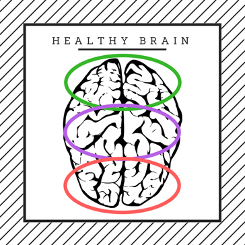
One of the things of the three-part brain to note is that we have to start from the base of the brain and build up for us to have full capacity and full use of our brain. Our brain stem has to be regulated before we can pull into our limbic system and then into our cortex. This is why we feed kids before we give them tests because we know that if we regulate their reptilian brain by feeding them and making sure they get rest the night before, they'll be able to pull into their higher-level thinking skills. This is also why breathing exercises and yoga physical movement work to help regulate the brain and the body because we're accessing heart rate, we're accessing breathing, and we may be accessing balance. That's the reptilian brain, the brainstem.
Mammalian Brain
Figure 2 is an image of the mammalian brain:
[Figure 2]
This next part of the brain is called the mammalian brain or the limbic system, it's the middle part of the brain. If you were to take an arrow and draw between your ear and your eye, where they would connect in your head, this is where your mammalian brain is. It’s kind of just midline from the eyes to ears. This is the part of the brain that makes decisions and some judgments. This is also our emotional brain, the emotional center of our brain. This is where we take in and perceive emotions. And the magical organs here as you've probably heard are the amygdala, the hippocampus, and the hypothalamus. The amygdala and the hippocampus are where the magic happens.
The amygdala is the fear center of the brain and the hippocampus is the learning or memory center of the brain. Now they have a converse relationship. The hippocampus kind of sits in the brain like a little half-circle, kind of behind the ears and eyes, and at the ends of the hippocampus, on either end is a cluster of neurons called the amygdala. When the amygdala is set off; when we experience some level of fear in our environment, real or perceived; our brains take in either a real or perceived danger. So, when we experience that our amygdala starts to fire saying, "Oh wait a minute, we're not safe, we have to do something to keep ourselves safe." When the amygdala is triggered, the hippocampus, the learning center, and the memory center of the brain goes offline. That's important to know because what that means is when we experience fear in the body our ability to remember details or to take in information is compromised.
We know this because when a kid is sitting in a classroom and they're worried about, “Is mom going to be safe when I leave home?” Or “Where are we going to sleep tonight?” Or “Am I going to have dinner tonight?” Their ability to focus in school and to really learn is compromised.
I want to be very clear that this does not mean that these kids are not smart. It literally means their brain is in a different state and it's not allowing them to record those memories because it's got to do something to survive. And what happens is when the amygdala is triggered the hypothalamus releases chemicals into the body and those two main chemicals when we feel a state of fear, are adrenaline and cortisol. Adrenaline physically moves our body so that we can do the thing we need to do and cortisol actually acts as a pain reliever.
Evolutionarily we know that if we have to take action to keep ourselves alive we're probably going to get hurt and if we get hurt we're probably going to stop doing that thing that we need to do to stay alive. So, our brains and our bodies do this perfect harmony dance where they say, "Okay, something happened. You need to get safe, you need to run away, you need to fight this, or you need to freeze in the moment and we're going to help you do that. Here's some adrenaline to move the body and here's some cortisol so we don't feel pain so we can stay in this survival mode."
Now what happens is once we get safe and we're no longer threatened by that trauma in our environment or that danger in our environment our body can dissipate those chemicals. So, the adrenaline and the cortisol can be dissolved into our blood system. If we experience trauma over and over again like a chronic trauma or a complex trauma, every day we have to experience that trauma and there's no escape, we can't run away from it, we can't fight it, and freeze might work for a period of time but we're still experiencing that trauma; cortisol stays in the blood in the body a little bit longer.
What we know (we'll go into ACEs a little bit later) is that cortisol in the body over a long period of time causes inflammation in the body and inflammation is the base of almost every disease that we know whether it's cancer or hypertension or diabetes or heart disease. This is why when we talk about trauma impacting the lifespan this is so important, it's the level of cortisol in the body from that stress response that is beautiful in a short moment of survival but long term over and over again is detrimental to our bodies.
This part of the brain is our connection to others, this is where we relate. We regulate in the brain stem and we relate in the mammalian brain or the limbic brain. Our value judgments and emotional regulation are here. Being able to take in input and modulate our emotions, our recorded memories and learning, and then unconscious influences on behavior.
An example of this amygdala, hippocampus relationship that you've probably experienced is, have you ever driven from work to home or home to work and you got there safely but you didn't remember anything about the drive? All right, when I say this in a conference is a bunch of hands go up. That is the weirdest experience, isn't it? When you know you just drove but you don't remember anything about the drive. What happened was in your brain something was worrying you, whether it was you were worried about a client that you had just seen on your way home and you were thinking about them or you were on your way to work and you had your to-do list in your mind, your amygdala was triggered and your hippocampus went offline. Now because you've navigated going home and work and work to home several times, that was on autopilot for you, isn't that beautiful? But that's how our brains and our bodies work together to protect us.
Rational Brain
Figure 3 is an image of the rational brain:
[Figure 3]
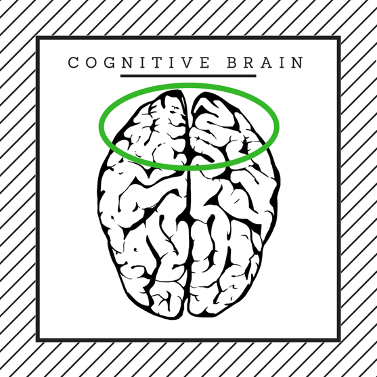
The last part of the brain is the rational brain. When you think of a brain, this is the top of it and the outside coating. This is where cognition and learning happens. There's reasoning, this is the neocortex or the thinking brain. This is where we get an accurate representation of ourselves and the world. But again, we have to get all the way up to this part of the brain which means we have to be regulated and we have to feel a sense of connection in some way before we can come into this rational brain.
What that means is when I'm in schools and I'm working with my teachers I remind them we have to make sure that these kids are regulated, that they've slept enough, that they've had enough to eat, that they're hydrated. Then we need to make sure that they feel connected to school, that they know that you want them in your classroom.
When you say hi to them every morning. You know these teachers that have the handshakes for every kid, that's great. You don't have to have something like that but just to look at each kid as they come into the classroom with a smile so they know they're wanted there, that's that connecting to the limbic system. Then those kids can pull into their neocortex and learn and share information and do well on a test.
We have to build that brain up first. This is the rational part of our brain, so it’s regulate, relate, and being rational. This is what makes us who we are. Our self-efficacy and our self-image. This is where abstract and rational thought comes in, foresight, hindsight, and insight come in, imagination, judgment, and logic as well as a developmental in our understanding of language.
I can speak to you and you hear exactly what I'm saying and you're making sense of what I'm saying and you could repeat back to me what I'm saying, you've learned or understood what I said. This is the part of the brain that doesn't fully develop until age 25. I've even seen some studies that are saying now at 27.
This is really important because a lot of policy is made based on this brain science. If you are in the justice system or corrections, you know that recently there's been this information to say that if someone has committed a crime, a non-violent crime before the age of 25, they may not have known fully what they were doing or the consequences of that action so many of those cases are being put down to lower courts or from prisons to local jails so that those folks can be rehabilitated and reintroduced into the community. That social policy and corrections is being influenced by the brain science on this.
Limbic System: Emotional Center
Figure 4 is an image of the limbic brain:
[Figure 4]
So again, we have our reptilian brain that regulates, our mammalian brain that relates, and our rational brain that helps us be rational and we need all three of those. That limbic system as I mentioned was that emotional center in the mid part of the brain. One of the important parts, I know many of us are familiar with fight, flight, or freeze and those are immediate responses, right? If we can fight a stress or a danger away we'll fight, it if we can't fight it then we might try to run away from it. If we can't fight or run away from it, the most common response is to freeze and allow what's happening to happen and knowing that we'll deal with it later.
When I say freezing and letting what's happening happen that does not mean in any way that we're giving consent to what's happening. I want to be very clear on that. It just means our body and our brain are acknowledging, "We have nowhere to go here, we can't fight and we can't run away so just hunker down." This is also when folks tend to dissociate. Come out of their body because what they're experiencing in that freeze response is too upsetting or too hurtful. They may dissociate and come outside of their bodies. Freeze is the most common response, it's also the response that elicits the most kind of trauma afterwards because we start to ask ourselves, "Why didn't I run? "Why didn't I fight? "Why didn't I scream? "Why didn't I kick back?" And other people then start to ask us those same silly questions, "Why didn't you do this? "Why didn't you do that?" When our body chooses a survival response it is always the right response. Let me say that again, when our body chooses a survival response it is always the right response. Even if it was a freeze. I think that's really important for us to remember.
Another fear Response is fawn. This one is actually what we find a lot with caregivers and social workers and those of us who serve others, is that we tend to in a crisis seek to take care of other people, that's what fawning means. We take care of everybody else's needs, maybe to the detriment of our own. This is why we are social workers but it's something that we really have to take into account and we have to be very aware of and honest with ourselves.
Sometimes that fawn response is wonderful when we can take action and help someone else in a situation, that actually can lessen our own trauma. And I'm finding that during this pandemic, the fact that I can actually continue to work and find my kids and connect with them is making this feel like less of a big trauma for me. And we also have to remember when fawning it may not be in our own best interest. We'll talk about that in part two when we're talking about self-care.
It's really important to recognize that the amygdala is also responsible for some impulse and some aggression control. You can tell that if that is not regulated we might have a child or an older person experiencing aggression or lack of impulse control. The hippocampus is the memory storage and the recall, that spatial memory, and navigation as well as proprioception which is knowing where we are in space, where our body ends and the next one begins.
So again, when we can drive from home to work or work to home and not remember the drive but get there safely that's because our navigation, our spatial memory, and our proprioception are working behind the scenes even while our amygdala is triggered. Now there is research that shows that you can strengthen our hippocampus so that when our amygdala gets triggered our hippocampus stays online and kind of reminds us, "Wait a minute, we've been here before, "we've experienced this before, "we know how to get out of this trauma, we're good." And then the body can calm down, the brain can be regulated and we can take action.
The hypothalamus as I mentioned, releases pituitary hormones, which are responsible for growth, our blood pressure, the sex organs, metabolism, and reproduction. This might be why we may notice that someone who has experienced a lot of trauma especially during developmental stages might actually have growth issues, where they haven't grown because of the trauma they've experienced.
In fact, I had one foster child in my own home who once he came to live with me, I think he was 16. No, he was almost 17 and a half actually 'cause it was toward his aging out. He grew like five inches after he had lived with us for a few months. Once he began to feel safe and regulated in our home and he was so thrilled 'cause he wanted to be really tall. He actually grew five inches and everyone had said he was done growing, he was just going be a little shorty but his body was able to re-regulate to safety and his pituitary hormones kicked in and he was able to grow a little bit, so he was thrilled about that.
Recognizing that this part of the brain also modulates sleep and circadian rhythms, fatigue and pain relief, and input or important aspects of our parenting and attachment behaviors. This is why when we're stressed out we have trouble sleeping, we might not be able to find pain relief. I know for me my sciatic nerve just bangs on me when I'm experiencing stress. So, paying attention to that and how the brain and the body work together to help us understand our trauma and our stress.
Trauma and the Nervous System
Figure 5 is a graph depicting the impact of trauma on the nervous system:
[Figure 5]
Figure 5 is an interesting graph on trauma and the nervous system. What happens when we are experiencing a traumatic event, our sympathetic nervous system, the one in orange comes online. Our pupils dilate so we can take in more information. We might actually lose our peripheral vision but our pupils dilate so we can take in more. We might notice that we get a dry mouth right away, our heart rate rises. Our heartbeat becomes a little stronger. But what happens is our other organs kind of shut down.
When our body is experiencing stress it knows it has to kind of meeting that challenge. And we don't need digestion to meet that challenge, we don't need reproduction to meet that challenge. So those systems kind of go into a freeze state. This is why folks who experience trauma may experience stomachaches or fertility issues even. Those parts of the body get shut down or frozen. And that's when we might have a young person, I know I've worked with a lot of kids in foster care who've had their guts get really locked up because their brain and body is always in survival mode.
This is really important for us to remember when we have a child with somatic complaints of stomach aches. It all ties back. What happens is we want to shift the body from that state of fight-or-flight in our sympathetic nervous system to a state of what we call to rest and digest and that's in the parasympathetic nervous system.
So when we can engage in some kind of work, whether that is talk therapy, CBT, DBT work or we can physically move our bodies. Taking a walk, getting out in nature, maybe doing some yoga or some breath work, some meditation, some mindfulness we can actually shift our nervous system to the parasympathetic side. And again it's called rest and digest because then our digestion system can come online, our circadian rhythms tend to equal out so we can actually get to sleep. We feel a sense of calmness in the body. The body starts to work, the heart rate gets regulated and all of these other things are happening in the body. The pancreas works, the kidneys work, the liver's working, everything is working well and in coordination when we're in the parasympathetic nervous system.
Take a little bit of time to look at this graph or maybe even google a little bit more about this, it's really fascinating and I think it gives us as social workers really good information when we're working with our clients and those we serve.
Behaviors you might observe
This is a list of some behaviors you may observe when someone has experienced trauma:
- Absenteeism (work/school)
- Increased somatic complaints
- Changes in school performance
- Changes in behavior:
- Increase/Decrease in activity level
- Withdrawal from others or favorite activities
- Angry outbursts and/or aggression
- Decreased attention and/or concentration
- Difficulty with authority, redirection, or criticism
- Distrust of others with both adults and peers
- Inability to interpret and respond appropriately to social cues
- Anxiety, fear, and worry about the safety of self and others
- Increased distress (unusually whiny, irritable, moody)
- Over (or under) reacting to bells, doors slamming, sirens, physical contact, lighting, sudden movements, changes in plans.
If you can notice changes in behavior, changes in performance, changes in effect, missing work, missing school, distrusting folks, noticing a sense of fear and anxiety about the world, about leaving home, about being with other people. And I think just having that oversensitive system where something goes off, we kind of have a startled response.
Again this is the work that we do, right? We get called in when these things happen. As a social worker I get called in schools if a student is missing a lot of school, or behaviors or grades have changed. That's usually a key, hey you know, a little awareness that something might be going on for that child. What's important though to remember and this is something that I have noticed in my work in the last 10 years. If we're only looking for these signs to see if a child needs our support we are going to miss some of the kids who can regulate a little bit more and kind of cover-up these trauma effects.
And what I mean is this, I had a young man who was a straight-A student, perfect attendance, never on anyone's radar until one day he blew up at his math teacher, cursed her out up and down and at the end of it he said, "You have no idea what I'm dealing with." There was an aide in that classroom who had been to one of my presentations about trauma and that aide said, "You need to go talk to miss Nicole." When that student came into my office, we talked a little bit about the outburst and then I asked him, "Well, what is it that "your teachers and I, you know that your teachers "have no idea what you're dealing with?" And that's when this child proceeded to tell me that he and his family were living in an RV. They had been homeless for almost a year and had been living in an RV without any electricity or running water.
You would have never known that if we were only looking at negative behaviors or dissociation or changes in behaviors. Now to be fair it was a change in behavior that brought him to my attention. But until he had that outburst in his class, he wasn't on anybody's radar. It's important for us to remember that sometimes when kids experience trauma they can overachieve to cover it up. They become the straight-A student, the perfect attendance, the kid that does everything and says everything right because they're hoping that if they do that maybe someone will pay attention to them, maybe that's when they'll be worthy of their love instead of the pain and the trauma that they're experiencing. So that's a very important thing to remember as social workers.
Optimum Brain Development & Brain Engagement
Figure 6 is an image of a healthy brain:
[Figure 6]
What we know is for optimum brain development we need all three of those parts of the brain working together. We need to be regulated, we need to feel connected, and we need to have some level of cognitive challenge.
Risk Factors
It's important that we recognize risk factors. Again this is a lot of our work as social workers. Risk factors are defined as any event, condition or experience that increases the probability that a problem will be formed, maintained, or exacerbated. This is our work, finding those risk factors; what is it that's causing this issue? What is this that's causing the problem, right? What is the event, the condition, or the experience that our client has had that has maintained this challenge or formed this challenge or exacerbated this challenge, right?
Adverse Childhood Experiences
This is where we get to adverse childhood experiences. ACEs are a risk factor. This has been done as a really comprehensive study. The reference to this report and the study is in the reference pages at the end of this presentation. This is a really important study for those of us in this work to really digest and understand.
It was a study done between 1995 and 1997 and it was about 17,000 patients which is a really good number when we're talking about research. What they found is when they basically gave 17,000 patients a checklist of 10 items and all they had to put was a yes or a no on each of those items and then they got a score from a one to a 10 or zero to 10 based on how many yeses they had. Those 10 items were; emotional abuse, physical abuse, sexual abuse, emotional neglect, and physical neglect. Anyone experiencing mental illness in the household, parental separation, or divorce.
This one's important, I think it's really important that we remember that divorce is a trauma for children. They have no idea what's going on, they just know that their world is being torn apart. While parents might feel like their divorce was really amicable or they talked about it and they knew exactly what they were going to do and split things evenly, for children that is still a really big trauma.
I will say in schools most of the challenges that I deal with are kids who are experiencing pain from their parents' divorce. If you've ever had anyone in the household that had a criminal background or had been arrested or incarcerated, if the mother or stepmother or mother figure had been treated violently, domestic violence or if there was any substance abuse in the household mostly by a caregiver and older sibling.
These were the basic 10 factors for ACEs that they decided to study the first time:
- Emotional abuse
- Physical abuse
- Sexual abuse
- Emotional neglect
- Physical neglect
- Mental illness in the household
- Parental separation or divorce
- Criminal household member
- Mother treated violently
- Household substance abuse
What they found were two-thirds of those folks that they had studied reported at least one ACE. What they were also able to do is tie the number of ACEs, so the dosage of adverse childhood experiences directly correlating those to adverse outcomes in health later in life. So, if you had this many ACEs you're this much more likely to have heart disease or to experience Alzheimer's or dementia as an older person. So, this dose-response relationship is what the ACEs study really brought out and this is vital for our work as social workers.
I have included a link here to the TED Talk from Dr. Nadine Burke Harris. She is the first Surgeon General of California, I'm so excited and proud of her. This TED Talk, she did in 2014 really explains ACEs beautifully and explains the impact on those we serve. I really would encourage you to take time, I think it's less than 20 minutes to really watch that TED Talk. Dr. Nadine Burke Harris also has a book called "The Deepest Well" where she talks about childhood adversity and how we heal it, it's really important. She talks a little bit about how this is a great and dose-response relationship. We know if the dosage of trauma in childhood has impacts on later life health outcomes.
This is a graph (Figure 7) showing the outcomes for ACEs. This is something I really encourage you as social workers to dig into a nerd out on, this is really important for our work. It helps us understand those we serve, it helps us understand kind of our role and what is within our control and what isn't and it also helps us understand ourselves.
Protective Factors
Risk factors are what we are looking at all the time as social workers and that's usually what's being flagged for us. When the risk factor shows up everyone else can say what we need to talk to the social worker. It's protective factors though that we want to get to as social workers and this is where the magic happens. If we can give children those protective factors, preventively. Maybe we can prevent some of the trauma they're experiencing. But it can also be done post-trauma. So that's the other beautiful thing about this is trauma is never the final word.
We can always heal trauma. It may take some time and it might take a little bit more time to undo depending on how complex or ongoing that trauma was for you but trauma healing is possible and that's the beauty of our work. With protective factors what we're looking for is the overall resiliency and that would include these things:
- Courage
- Social skills
- A positive outlook
- Internal locus of control
- Motivation to overcome hardship
- Higher internal valuation of one’s worth (self-esteem and self-efficacy)
A positive outlook, internal locus of control, recognizing what they can control and the power that they have internally. I would also say really having agency which is kind of that an internal valuation of oneself but having agency, knowing that you can make choices for yourself is really important as part of that resilience.
These are skills that we can teach kids and in public education, we talk about social-emotional learning, we talk about building kids resilience toolbox and that's really beautiful, that really can help buffer some of this trauma. And that's really the only way for us to do this work is to prevent or to buffer the trauma and if we can't do those things then it's our job on the back end to try to help heal some of that trauma.
There are individual protective factors and there are community protective factors. Community factors include:
- Equitable access to education
- Childcare and family economic supports
- Positive parenting and parenting support
Having equitable access to education is a protective factor for young people, having child care and economic supports seriously and obviously. I'm not sure why health care and child care are not universal, they should be but that's really important as well. And then positive parenting and parenting support. It can be really easy to demonize parents and to be frustrated with parents if they are traumatizing their children but it's important for us to remember, again, that this is a generational cycle. So that parent might have also had a really disorganized or dysregulated attachment in childhood themselves, they may have experienced trauma and developmental stages themselves so they don't know how to parent a child. That's where we come in again as social workers to offer positive parenting and parenting support. Recognizing that these parents have the capacity to do and love their children and to provide that safe and caring attachment if we can give them the skills and that is really challenging work but it's such valuable work when we are giving parents those skills.
Domains of Protective Factors
There are four domains of protective factors:
- parental resilience
- social connections
- concrete support in times of need, and
- social and emotional competence in children.
Parental resilience is one, social connections are another one. Again, being connected, that part of the brain needs connection. Concrete support in times of need. I am the homeless advocate in my school district. So, when a family needs food I'm giving them food, when they need housing I'm trying to find housing; but maybe we get them into a hotel or we find some other safe place for them to be a shelter or something, concrete support. Not just like, oh, okay, well, we'll get to that or we'll talk about that. Here's what you need.
And then that social and emotional competence of children. These are some things that we as social workers have a direct impact on and isn't that beautiful? That we can be part of that protective factor for those we serve.
And that brings us to the pivot. If we are going to do this work and if we are going to serve those that we serve in a competent way, in a regulated way, in a very centered and present way we must take into account our own trauma, we must understand our own trauma, right?
Understanding Our Trauma
We have to know when we are being triggered when our past traumas are being triggered, and we also have to know if our own dysregulation is driving our behavior in any kind of way. It's a very humbling process and it's always ongoing but we have to understand our own trauma if we want to do this work well.
I love this quote by Naomi Rachael Remen. She says, "the thought we can be immersed in suffering and loss daily and not be touched by it is as unrealistic as expecting to be able to walk through water without getting wet."
We know when we are serving folks who are experiencing trauma we are absorbing that trauma as well. Our nervous system is absorbing that trauma and then our past traumatic issues may be agitated and it's really important for us to be aware of that.
Burnout & Compassion Fatigue
Burnout and compassion fatigue are real. I'm giving just a really quick rundown of what I want to share in part two of this two-part series. So we'll talk a little bit more about these topics in the next series or in the next part. But just to recognize that burnout and compassion fatigue are real in this work. Given what we just talked about all the trauma that we are holding for other folks, you know, and you may see I don't even know how many clients in one day so that is trauma after trauma after trauma after trauma. And we're sitting usually with it, right? Unless we can do walking meetings or we work in a nature preserve or we have the ability to move our bodies while we absorb this trauma but that impacts us, right? There is no way for us to do this work without getting wet.
I appreciate this definition of compassion fatigue. It's a syndrome of emotional exhaustion, depersonalization, and reduced personal accomplishment that can occur among individuals who do "people-work" of some kind. And I like that concept of social work as "people-work". But recognizing that there are times when we hit a wall and we might feel that exhaustion, we might even feel a little bit of depersonalization from the work and when we experience reduced personal accomplishment, really feeling like we're not doing enough to help those we serve or feeling like we're not coming to the table with enough tools that can impact us and cause burnout.
Burnout can feel like headaches, a low-grade cold, having a cold for a long time, or having a cough for a long time, and/or feelings of helplessness. I know when it comes to housing in the Bay Area where I work there's a sense of helplessness in trying to find affordable housing for my homeless families.
We can experience fatigue and exhaustion. And what I say is, this is beyond tired. When your bones are tired, when you are tired when you wake up, that's fatigue and exhaustion. We might experience tightness in the chest or in the body, in different parts of the body, or a lack of interest and engagement in our work. Now, this lack of interest and engagement seems really simple but this is detrimental to our work. When we are not engaged with those we serve, when our whole body and brain isn't fully working toward solutions for those we serve, the outcomes for those we serve are impacted directly. If I'm having a bad day and I am not fully aware of what's happening for me and I'm burnt out, I may make a decision for a foster kid that is going to impact their lives negatively for the rest of their lives. So it's vital for us to take our own self-care very, very seriously and show up for those we serve in a way that doesn't take away from their outcomes.
Vicarious trauma
Vicarious trauma is kind of the deeper level between burnout and compassion fatigue. I like this definition too. It's the emotional residue of exposure from working with people with a trauma history. Emotional residue, I think that's important. But vicarious traumatization refers to a cumulative transformative effect or condition experienced by working with specific populations of survivors of traumatic life events. Cumulative transformative effect. So, the trauma that we absorb in our work actually transforms us and it's a cumulative thing. You might not get burnt out year one, year five or year seven but maybe year 10, right? That accumulation comes. It's very important for us to notice when we are feeling that way and things are building up.
How We Carry the Work
Another really important thing for us to consider is how we carry the work. And again I'm going to talk more about this in part two. So, I just want to briefly talk about transference and countertransference.
Transference is the unconscious transferring of feelings and attitudes from a person or situation in the past onto a person or situation in the present. Isn't that our work? When we're sitting in front of someone and they're talking to us they might be seeing us as someone in their past or they might be seeing the situation we've created, the environment we've created as reminding them of something in the past and they are going to behave as they did in the past. It's our job then to do that countertransference, where we recognize what they're transferring and we hold that line. When we experience countertransference that's when we have an emotional reaction to what is being unconsciously communicated to us. That reaction is provoked by their behavior.
I like this concept of emotional entanglement with another person. And this is the balance and the dance of our work and again we'll go into this deeper in part two.
Triggering of personal trauma
I've already mentioned that when we are working with traumatic material or folks experiencing trauma it can trigger our own personal trauma. It's important for us to check in with ourselves as a situation is unfolding to notice if we're experiencing any bodily sensations or any thoughts about what's happening. So, what about the student, parent, or the situation, the child in front of me is bringing out what within me and where is that coming from? We'll explore that a little bit more in part two as well.
Personal & Professional Effects
And finally recognizing that our work has personal and professional effects. When we experience the trauma that our clients and those we serve have experienced we have impacts on chronic stress, impacts on our health and wellness. It's important that we recognize that this can impact the choices we make at work, and the choices we make at home. It can cause more stress unless we take it very seriously and try to counteract these implications.
Summary
We will talk a lot more about burnout, compassion fatigue, and vicarious trauma in part two. I hope you'll join me for part two; Understanding Trauma: You Are the Intervention. I'll close for now. Here's my contact information: Nicole Steward, MSW, RYT (nicole@radical-tendencies.com). I would love to hear more from you. If you really appreciated this, if you have more questions, if you want to nerd out with me on any of the concepts, please shoot me an email.
And I always close with this quote because this is how I approach my work as a social worker. It's a quote from Lila Wilson who was an Aboriginal healer, a feminist, and an activist and she says, "If you've come here to help me you're wasting your time but if you have come because your liberation is bound with mine then let us work together."
Thank you so much for taking this time to learn more and to support yourself in the work that we do. This was just part one of a two-part series and part two I think will be a little bit more engaging about our own trauma and how we show up for this work.
If you want to nerd out on any of these things you can dig in a little bit deeper. I do want to share that if you want additional information on cultural competence regarding the standards or indicators for cultural competence, please check out the NASW resource on cultural competence. Recognizing that cultural competence is something that is throughout our work, we are recognizing that trauma impacts people at different levels based on different cultural practices that they may have that might bring resilience and we'll talk a little more about that in part two as well. Thank you so much for your time. Thank you for, again trying to grow in your work as a social worker and for being curious about trauma.
References
Refer to the course handout for a complete list of references.
Steward, N. (2020). Understanding Trauma Part 1: What It Is and How It Shows Up. continued.com - Social Work, Article 87. Available at www.continued.com/social-work www.continued.com/social-work
Nov 11, 2026
Using What We Know About How We Grow: Utilizing Development as an Assessment Tool for Early Childhood Services
Alison D. Peak, LCSW, IMH-E
Editor’s note: This text-based course is an edited transcript of the webinar, Using What We Know About How We Grow: Utilizing Development as an Assessment Tool for Early Childhood Services, presented by Alison D. Peak, MSW, LCSW, IMH-E.
Learning Outcomes
After this course, participants will be able to:
- Identify an array of developmental milestones in both the physical and social-emotional domains.
- Identify both structured and unstructured methods of assessing development.
- Consider the role of development in understanding traumatic experiences and identifying treatment interventions.
Introduction
My lens is in this place of early childhood trauma. My clinical work is with children who have experienced trauma before the age of six. That often entails working with children, either in the child welfare system or with international adoptions. While this is my lens, that often means that this is the place where my stories draw from, and my lived experience is. But so many of the things that we talk about are generalizable outside of the early childhood field. One of the things that I often talk about, when I get the opportunity to train and to teach at local universities, is this piece that makes early childhood unique is that being a child has a universality. We don't always know what it is to have had a substance abuse issue or to have been in a domestic violence situation, but we all know what it is to be three-years-old. We all have an inherent experience of what it is to try to get our needs met and for someone to not understand us or to be the smallest person in the room and not always have people understand that we have a perspective and experience at hand. Being able to recognize that universal experience and how it plays into the development of individuals as a whole, their personality formations, identity formation, ability to engage in relationships, and manage stress across the lifespan, is essential to the work that we do, as social workers. It's essential to being able to really consider the whole realm of what's occurring in a client's life and how we best meet their needs where they are.
Child Development
- Generally all Social Work programs require some level of HBSE education and childhood development training
- Few programs emphasize child development as marker for assessment and intervention
- An awareness of developmental milestones and frameworks assists social workers in understanding an individual’s strengths, areas of growth, experience as a child, and current foundation for relationships
Generally speaking, in all social work programs and social work education, there is some level of Human Behavior in the Social Environment (HBSE) education. At some point, some of us in a BSW program learned some basic information about child development from prenatal and pregnancy through death and dying. We have all had that to some extent. But, oftentimes that really is the only look at child development that we get from an educational standpoint. We are really trying to cover the entire lifespan in one semester. That can often get complicated and it also means that maybe we didn't get a super thorough dive. Very few programs really look at child development in an intensive way, and even fewer of those really talk about how that developmental knowledge and awareness translates into a place of assessment for treatment planning and intervention, and long-term conceptualization of presenting issues. I think that this is going to be an interesting conversation as we take some of those base concepts that we all know and look at what that means for us in a point of action and how we take it to a place of engagement. This also allows us to be able to identify the strengths of individuals, areas of growth, and what we in psychodynamic early childhood work refer to as an internal working model. Just as in Cognitive Behavior Therapy (CBT) it would frequently be considered your core belief, like the thought of what is it internally that I know about myself and how I am with the world and how the world is to me. These things are rooted in the place of what our experiences are that overlay, much like an old-school transparency, with our child development at that time.
Child Development Review
- Social Smile at 6 weeks
- Stranger Anxiety at 8 months
- Pointing by 12 months
- Should be increasing ability to self-soothe, move away from caregivers to engage in interesting activities by 18 months
- Walk by 1, Talk by 2
- Vocabulary by 2: 250 words, by 3: 500
- Night terrors are typical around age 3
Let's review for a bit. At some point, we all probably had a quiz on these things. Very rarely is it the thing that we pull out of our back pocket and turn into an active place of assessment. From the moment of birth, we know that all children are born with three capacities. They are born knowing the smell of their mother, knowing their mother's voice, and with some sense of fear of heights or fear of falling. That's really a survival mechanism. Babies fear falling because if they fell, more likely than not they would die. Outside of that, at the point that you're born, you can only see about six inches from your face and you can't see anything in color. Our capacities are limited. Newborns are not blank slates. They are not completely feelingless, thoughtless blobs, as has been sometimes the assumption historically. We know from T. Berry Brazelton's work that even hours after birth we can get babies to be able to regulate themselves in their own body temperature and regulate their own emotional states. They will turn their heads to follow sounds, especially the sound of their mother's voice. They will track objects and they show a keen interest in what is going on around them and how they are taking in that greater world.
By six weeks we're looking for the development of a social smile. Many parents will be very insistent that babies smile before six weeks. That happens sometimes, but it is pretty rare. By six weeks we're looking for babies to smile with the intent that there is an emotion associated with it, that they do feel happy, and that, typically, with that social smile, they have also associated that someone is going to smile back at them. This is an indication of connection and of joining.
By eight months we are also looking for babies to be able to identify clear stranger anxiety. This goes into that thought of diagnosis around separation anxiety. At eight months, we want to see some separation anxiety. We want to see that if someone a child has never seen before walks into a child care center and picks up a nine-month-old, that baby should shriek. Again, there is survival inherent in that. "I don't know this person and I don't know that they're going to keep me safe." The assumption is that this is dangerous and I need to let somebody know. We're really looking for infants to have developed this sense of seeking out their primary caregivers and wanting to maintain close proximity to them. At this point in development, we're not looking at that from a place of concern or a place in which a later diagnosis of separation anxiety would be plausible. That later diagnosis looks at a bit more age and a bit more intellectual capacity to really anticipate separation, and to fully understand object permanency in some of those pieces. We can't see really intense separation anxiety in young kids, two to three years old, but we are looking for it as a positive developmental marker by eight months.
We also want to see pointing by 12 months. I can remember years ago when the first article on the impact of pointing was published. It was such an interesting landmark piece around something that many people had often taken for granted. Children pointing by age one was indicative of so much, including the sense that adults would enjoy what children found enjoyment in and that adults would be able to identify what they were looking for. Children pointing are attempts at shared connection and at some level of communication. Pointing also is a signal in early childhood that children are aware that their thoughts are not identical to those of adults.
One of the first markers that we see for children on the autism spectrum is that they did not develop the capacity to point and that when adults point, they often cannot track it. They know you're pointing, but they cannot figure out why, or where, or what you're referencing in that gesture. Pointing by 12 months is indicative of this place of positive connection, of independent thinking, and of beginning development of theory of mind. It's also a place where in situations of high levels of neglect we see that this is a milestone that often won't develop. There hasn't been shared connection, there hasn't been an experience that people see and hear me, or that someone is going to know that I want something through this gesture. That piece of social communication will often lag.
By 18 months, we're looking for an increased ability to self-soothe and to move away from caregivers and engage in other activities. We are also looking for them to come back. Often in relationships, we talk about this piece of looking for kids to make a circle. We are looking for them to start with caregivers, go out to explore, and come back to be admired, in that very classic circle of security language. They should come back, meet this reference point, and know I am safe to move out and go away and look at new things. Also, there will be a point I need to come back. I am not constantly on my own. I am not alone in the world. There are times that I'm going to need adults to meet my needs. The classic adage is walk by one and talk by two. We're looking for kids to be able to walk somewhat independently by 12 months. Some kids are more stable than others. There are definitely babies that walk by nine months. But, we start to get concerned about gross motor skills if babies are 13 months plus and still not walking.
It’s the same thing with talk by two. The standard is that by two we're looking for kids to have some level of language. Single words are sufficient. We're not looking from a developmental trajectory for words to be paired until between two and a half and three years. Even at that point we're still looking at just two to three-word sentences. Again, some kids develop quickly in that area and other kids are a little more behind. But by two, we are looking that there's some capacity for language. Generally speaking, by two, kids should have about 250 words in their vocabulary. When we add up words such as ball, milk, cookies, dog, cat, mom, dad, and grandma, it's not difficult to get to 250 words without there being a lot of linking. In linking, we are thinking about that idea of putting words together such as, "Ball go?" "Outside?" We want there to be some kind of intentionality and that the words are more complex than just naming objects.
Definitely by three years we are looking at a vocabulary of about 500 words. Again, we are really looking for those words to begin to get connected and to see some level of verbiage and some general grammatical structure.
One of the other pieces that we know is kind of a precipice for parent anxiety. In this birth to three age range is the development and existence of night terrors. Night terrors are these super intense horrific dreams that kids at about age three will have. They often wake up in the middle of the night in cold sweats, are shrieking and screaming, completely inconsolable, and totally unconscious. They don't remember it the next morning. They have no recollection of it. They are incredibly anxiety-provoking for adults who watch kids go through that process, and not at all anxiety-provoking for children themselves. Part of what causes night terrors in this classical developmental sense is that kids are not fully regulated in their sleep patterns, and so they drop into a really heavy REM sleep, but can't bring themselves out of it. That kind of REM cycle starts and is pretty heavy and they're stuck down there for a while. Whereas adults, when we get too deep we know to come back up, so our body regulates in that sleep cycle a lot easier. Kids who struggle with night terrors are really, really asleep. In that place we'll often see referrals around this age. We will often see lots of communication with pediatricians about concerns for sleep. It is much more related to their bodies beginning to process sleep cycles and less to do with actual anxiety-provoking events for the child themselves.
Child Development 3-5
- Increased vocabulary to generally appropriate grammar and 5,000 words by age 5
- “Trying on” of different roles through play and projection
- Egocentrism - I make everything in the world happen and bad things that happen are all my fault
- Beginning of friendships with peers. Lots of imaginative play. Use of play as a method of mastery
- Capacity to follow parental expectations when parents aren’t present
- Increased ability to regulate self when parents aren’t physically present
By five years we are looking at a vocabulary of about 5,000 words, and grammar should be pretty close to appropriate. We will see kids at this point misconjugate verbs from time to time. They will say things such as, "They was," or "He done gone," things that, again, are not grammatically correct, but there is this clear sense of past and present tense, of multiple sections to a sentence, and of using a verb. By five we are also looking for kids to have a clear marker around the use of "I" and "me." For example, "I went to the playground.” "They gave the ball to me." Not, "Me went to the playground." That shows a clear understanding of how to utilize those words and pronouns. Grammar is an ongoing work of art, but, by five, most kids have a pretty good grasp on it.
From ages three to five we are also seeing a lot of what we call trying on, or mastery of different roles, through play and projection onto play. Playing house and dress up, being superheroes and Power Rangers, fighting off bad guys, and working in that place of mastery through play, help children manage things that they are concerned about.
From ages three to five we also see heavy amounts of egocentrism, which is completely developmentally appropriate, and at times frustrating. One of my favorite stories is about my nephew who was probably two and a half to three and a half years old. He had an Elmo doll and when you pushed Elmo's chest it would say, "Elmo is happy to see you." He would always say, "Elmo is happy to see me" as if Elmo was programmed specifically for him and not anybody else in the entire world. At that age it really does feel, from our perspective, that the entire world revolves around us as individuals.
There is a certain level to which egocentrism hangs on throughout our lifetimes. I think, generally, one of the conditions of humanity is that we all believe we control things, way more than we probably have any impact on. We associate that things are much more quickly our fault, and being able to give grace to that. When we really are in this age of three to five years, egocentrism really does dictate that everything that happens in the world, good and bad, are as a result of something we have done. For example, I took a nap and then the dog died. It must have been because I fell asleep, not because the dog ran outside and got hit by a car. We don't have the ability to connect cause and effect in those ways. Because we feel that everything in the world is our fault, that associates to even the very big things. When we talk about this place of childhood trauma, then that also goes with the sense of I have experienced abuse because I am bad. I made those people that angry. I did something that resulted in getting punched, burned by cigarettes, or left outside on the porch for extended periods of time.
In this three to five range we also see the beginning of friendships with peers. Between three and five lots of kids are in some kind of child care setting, whether that’s voluntary pre-K, preschool, or something else. With that, there is the beginning of deeper friend relationships. Prior to about three years old, we see opportunistic play. "I wanna play with the blocks, Joey's also in the blocks. Joey and I are friends as long as we're in the blocks.” But, in 15 minutes when I wanna play outside, then “Brandon's outside and now I'm gonna play with Brandon." But, from three to five years, we see kids seeking out other peers out of preference, really preferring to engage in activities because of who is engaging in the activity, less than the activity itself. We start to see them really engaging in imaginative play with peers, whether that is playing house where everybody has a role, or everyone is playing Power Rangers and gets their own spot. Think about how those concepts then kind of build on top of each other.
Three to five is also the place where we see the beginning of kids’ capacity to follow parental expectations when parents aren't present. "You stand right here. I'm going to walk around the corner and I'll be right back." The kids can hold on to the expectation that they are supposed to stay in one place. Think about Kohlberg's moral development and the idea of the marshmallow test, when the child is given the marshmallow and told, “If you don't eat it then I'll give you two when I come back.” Then adults can exit the room. Not all kids, but a fair number, are able to hold that expectation internally in anticipation of what's to come.
Also, kids at this age are at an increased capacity to regulate themselves when parents are not present. When we think about infants, they really have to have an adult to be able to self-soothe. They have got to have somebody who will pick them up, who will hold them, who will rub their back, who will give them food, and blankets, and bottles, and pacifiers, and all of the myriad of things. By three to five, kids are spending lots of time out of their day without their primary caregiver. They can begin to engage in self-soothing by saying, "I am sad and I need some time alone” or, "I really need to go find my teddy bear” or, "I want to call my mama." They can ask for what it is that they are after, and much more clearly be able to regulate their own emotions without having that caregiver right by their side.
Child Development 5-10
- General slowing of developmental milestones, by deepening of foundational capacities - fine motor skills improve, grammar and syntax expand, friendships are more stable and consistent
- Formulation of individual hobbies, routines (dance, basketball)
- Ability to predict patterns of behavior
- Resolution of fantastical thinking by age 8
- Beginning to identify perspectives of others
In that five to 10 range, what we see is a general slowing of developmental milestones. Between birth to five, the brain’s capacity for development and learning and increases through synapses are pretty intense. Then we see that narrow down between five and 10 as kids are not growing as rapidly. The percentage of growth between when kids are born and when they are five is exponential. While kids do continue to grow between five and 10, it is not on the same scale. What we do see is rather than this rapid development of new milestones, a fine-tuning, and a deepening of the milestones that do exist. We've learned to walk, we've learned to run and now we spend lots of time practicing how to be the fastest. We have learned to begin to draw and write, so now we spend time practicing handwriting. We are taking milestones we've already hit and fine-tuning them to a place where they're much more adult-like in their capacities and able to get a deeper learning from those.
We also see, between five and 10, that kids really do develop their own hobbies and routines and that they have an activity that they really prefer to engage in. They are beginning to set their own typical routines. "Every Saturday morning I have Cheerios, and then I watch this on TV, and after that, I play outside." They have rhythms to their daily process that are pretty consistent and stable.
Kids in this age range are also able to predict patterns of behavior. "I spilled my juice on the carpet and I know that's gonna make Mama mad. And when Mama gets mad, then sometimes she sings, and that means I should go play in my room." They can clearly connect cause and effect and have a really good idea of what is to come. For example, "I know that if I get in trouble at school because I hit somebody on the playground, then Dad's gonna be upset when he picks me up." We're looking in that same place of being able to predict patterns of behavior, that kids are also beginning to be able to identify perspectives of others who are engaged in that behavior. "I kicked somebody on the playground, and then Sarah cried because it hurt and her feelings were sad." They may not be able to fully realize all of the layers of how now Sarah doesn't want to be your friend because this is the third time you kicked her this week. But they can begin to associate with what that perspective is, and what the feelings may have been for the other child or adult, or whoever in question in this situation.
By age eight kids usually have a pretty clear resolution to fantastical thinking. Fantastical thinking is the line between what is real and what is fantasy. By age eight, they should know that unicorns don't exist and should have some real doubt and conversation about doubt around things like Santa and the Tooth Fairy. One of my kids is six right now and is super fascinated with this. He will watch TV and say, "Mom, Paw Patrol's not real, right? Like, they're not down the street, right? Like, we can't go meet them." He has this idea that these are characters that he knows and things that he understands about them, and they have feelings and likes and dislikes, but yet they don't exist.
There's a real play at this six to eight age around understanding what is real and what is make-believe. When we see fantastical thinking extend beyond age eight, it is definitely a place for assessment of what is motivating that. There are some real reasons why kids would hang on to fantastical thinking beyond that, and some of them do include developmental delays and some kind of cognitive difficulty. There are others, but those are generally primary.
Neurological Development
- Synaptic connections develop rapidly in the first 3 years of life
- Generally the idea of “if you don’t use it you lose it” but also “what fires together wires together.”
- Oxytocin and Cortisol are used by the brain from birth to regulate emotions and to send clear signals about activities and relationships that are un/safe.
- Increased levels of oxytocin and cortisol act as reinforcers within the neurological system that result in increased number of oxytocin/cortisol receptors for life.
- Neurological developments occur from the brain stem forward, resulting in greater development in complex areas of through as we age.
When we think about neurological development, as I said a few minutes ago, one of the things that we think about often is the time between birth and 36 months because the number of neural connections that are made is about a million a minute. Those synaptic connections are rapid and constantly firing. We know that if you don't use it, you lose it. If we are not developing capacities in a wide range in early childhood, then it's a lot harder, later on, to make your brain do those things. One of the things in my background is that I speak fluent Spanish, which I learned to do later in life during college. It was really hard. Often, we see kids in this birth to three range that when they have grown up in bilingual households, gone to bilingual schools, and engaged in TV that's in English and Spanish both, it just comes second nature to speak both languages. They didn't spend money on a degree and several years practicing to be able to limp their way through a good conversation. There is this piece of if you don't use it, you lose it.
There is also the saying, “What wires together fires together.” Within the brain, there are groupings of synapses that go together. Certain muscle movements are associated with emotional release. Our feelings and our stress center also impact our development in gross motor functioning. If those things are wiring together and there is a delay in one of them, then there will also be a delay in the other piece that is wiring side-by-side.
Thinking about the neurological aspect, if there has been a developmental delay in one area, there will also be side effects in others. The other thing about understanding child development in relation to child trauma is that oxytocin and cortisol are essential hormones in looking at danger and proximity in early childhood. From the moment of birth, the brain emits both of these hormones to say what is safe and what is dangerous. I often talk about this being almost the Applied Behavior Analysis (ABA) of neurology, that if we are in a place where people are kind to us and they meet our needs and we feel comfortable, our brain will elicit oxytocin that says, "This is a positive thing you want to repeat." When we are in situations of danger, or when people are angry at us or don't meet our needs, then our brain will elicit cortisol that essentially says, "This is a behavior you do not want to repeat." There are really clear signals about activities and relationships that are safe and unsafe. It’s important to establish that neurological reinforcer.
Those developments really do occur from the bottom up. Thinking through brainstem up to the frontal cortex, which is also associated with greater complexity and development, the frontal cortex piece of our brain is the last to develop because it is the most complex. When our brain is able to feel safe and calm, then it will speed through this process of development in the back part of the brain and spend more time developing that frontal cortex. In situations where we have felt high stress and threat, then the opposite is true. Our brain spends more time in the back and base of our brain and not nearly as much time building this frontal cortex. If we don't use it, we lose it.
Trauma and Development
- Trauma in early childhood “arrests” development at the age in which it occurs.
- Trauma in early childhood frequently results in delays in both social-emotional and gross motor development
- Social-Emotional Development (The developmental milestones around relationships, self-regulation, social skills)
- Gross Motor (Physical development such as ability to speak, run, skip, etc.)
We often think about that trauma in early childhood essentially arrests development at the stage in which it occurs. We talked about how development occurs in waves and through milestones, and that there is the concept of both social-emotional and gross motor development. Trauma essentially sticks wherever that development is. If we have a kid where there's been a major increase in chronic trauma, or one really large trauma at age four, then we're going to see that development maintain there until the trauma is addressed, even if our chronological development continues. We look older, we're taller, we have more weight, and we're in the fourth grade, but we still function in this place from the moment when the trauma occurred. It really does delay, pretty frequently, both social-emotional and gross motor development.
The area of social-emotional encompasses developmental milestones around relationships, self-regulatory capacity, and social skills. Gross motor is the physical development side, such as the ability to speak, or run, or skip. We do see delays in both domains for children who have experienced trauma, and especially for children who have experienced multiple ongoing trauma. That can look like poor development of personal relationships with peers. It may also look like difficulty in regulating when big emotions arise. It can also show up as speech delays.
A lot of kids from early histories of trauma are quite clumsy. Their fine motor and gross motor skills are just not fully up to par. Their vestibular internal sense of balance is not where we would think of it to be for their typically developing peers. For children with early histories of trauma, it is observable that interactions with the world feel much younger than those of our same-aged peers and are often times lagging.
Trauma and Child Development
- Interpersonally, early childhood trauma frequently results in dynamics that are reflective of the age of trauma.
- Problem-solving and self-regulation capacities that are much younger than the client’s age
- Difficulties in understanding perspective of others
- Prolonged belief in fantastical figures
- Interpersonal relationships reflective of younger dynamics
When we think about child development, not only does trauma delay further child development, but it also delays development in general. Early childhood trauma frequently results in dynamics that are reflective of that age of trauma. The example I gave was of trauma at age four that impacts a fourth-grader, but it goes beyond that. It often shows up in our work with adults or in marriage and couples counseling. You might see this if there was a trauma at age 13, and at 35 continue to expect that social relationships are going to mimic that of our relationships at 13, or that we continue to regulate our own senses of stress and find identity in the same ways that we typically would if we were still 13.
There is a persistent theme similar to the idea of Erikson's Stages of Development. I had a professor who would refer to it as the idea of packing a bag in that you pack your bag with what you have at that stage of development and then you move on. When we haven't packed the bag with what we need for the next stage, we just stay for a while until we figure out what that need is, and then are able to meet that need and move forward.
Those problem-solving skills reflect the age where trauma occurred and the regulation capacity of the person. Again, throughout not only adolescence, but into adulthood, it will come up that adults who have experienced chronic trauma as children often are much more impulsive, have a lot of difficulty engaging in really healthy relationships, and are in that place of constant fight or flight. Part of that is because that's the way that children function. We remain there neurologically because we haven't yet gone through that stage.
We will also see continuing difficulties in understanding perspective of others. We talked about the capacity to understand alternative perspectives developed between ages of six and eight. Even at that point, the understanding of another's perspective is really rudimentary. We can get to the place of like, "I kicked somebody on the playground and they were sad," but often we don't get to understanding that that person had also had a hard morning and their other friend had been mad at them, and so they were extra sad because it felt like everybody was mad at them. We'll see that carry through often in adolescents when they're questioned such as, "Why did you do a thing?” or, "How did we decide that this was our best course of action?" They will respond with a shoulder shrug and “I don’t know.” They know there had to be a reason, but cannot give words to it in that space. The same thing happens as those individuals get older. We still see this very flat understanding in the perspective of others. They can say, "I'm sure she was sad," but they really can't step outside of themselves to alternate perspective and think about what the full experience might have been like for somebody else.
We do see prolonged belief in fantastical figures when children have had experiences of trauma early on. Again, a lot of that is delayed development. It's also due to delayed object permanence where they think, "I'm not 100% sure what exists when I'm not around. And where people go or what happens from there." Kids will often hang on to these fantastical figures as a comfort for all of the really rough things that they have been through. The idea that there is something magical and that there is someone out there in the world who's really good can be highly comforting. We will see those 12 or 13-year-old kids continuing to believe in Santa Clause and the Easter Bunny. This furthers some of what we have talked about with delayed social skills because the other kids in their classroom, who are typically developing same-aged peers, are really going to have a hard time with that. They will often think, "What is this kid in my seventh-grade class who still believes that Santa's a real thing?" That creates secondary opportunities for there to be strife in peer relationships and potentially for other traumatizing events. Our mismatch in development now creates a space where there's going to be a response, and a potentially negative response from greater society.
We have talked about how relationships, interpersonally, are also going to be reflective of younger dynamics, that there are expectations that people are going to respond the way they did when we were in seventh grade, and that we can engage impulsively in relationships and that people easily forgive and forget, much like early high school. There's still a lot of that implied juvenile formations of relationships, because we are still operating from this is the place where time stopped. The developmental assessment is a piece that can be really helpful in gaining a clear picture of what all is going on for the child in question.
This can also be helpful when looking at transitional 18 to 25-year-old adults, and even older adults. Think through with them and reflect individually as practitioners on what are some of those things that we are seeing, interpersonally, cluster with this client. What are the things that we see that they're doing really well in? What are the things that seem to be a consistent struggle? What might that help us understand about their early experience?
Developmental Assessment
Structured Developmental Assessments
- Provide clear questions/answers to milestone achievement
- Are often set up to be self-report by parents
- Are easily used by clinicians who are newer to work with children or who don’t see children on a regular basis
- MCHAT (Assessment given at age 2 to identify symptoms of global developmental delays)
- ASQ & ASQ-SE (Self-report screeners that identify delays in gross motor development and in social-emotional functioning
- PSC-17 (Self-report that identify symptoms of attention difficulties, anxiety, depression, and interpersonal struggles)
The assessment piece can be done in a couple of different ways. Structured developmental assessments are helpful if you're in something other than a clinical kind of practice. This can include if you are in a situation where you're doing integrated care or providing services, like an addendum to some kind of medical setting, or if you are providing some level of case management or case consultation and don't have time to sit and do a super thorough assessment.
Structured developmental assessments will give you pretty clear questions and answers to whether or not milestones have been achieved, and are generally pretty quick to complete. Most of them are also set up to be self-report by parents. Thinking through if you're in a medical model, these can be included in typical intake packet paperwork. They are just checked off, somebody reviews them, and in three to five minutes you've got a pretty good idea of what's going on with this child and family and in their world. They are also much more easily accessible for clinicians who don't see children on a really regular basis, or who are newer to the use of development as an assessment point.
There are a variety of structured developmental assessments that are available. A few to consider are listed below. Some of those structured developmental assessments, like the MCHAT, and the PSC-17 are public domain and are free to access.
Pediatric Symptom Checklist (PSC-17)
The Pediatric Symptom Checklist (PSC-17) has 17 questions. They always sound official, but they are not nearly that intimidating. It is a self-report and identifies a pretty broad range of symptoms that might be present in younger kids. It looks at everything, from attention difficulties and anxiety and depression, to interpersonal struggles and academic achievement, the whole nine yards.
Modified Checklist for Autism in Toddlers (M-CHAT)
The MCHAT is an assessment that is generally given to kids between about 12 months and four years of age. It looks much more into global developmental delays and ruling in or out the possibility of an autism spectrum disorder. Again, it's going to give you a pretty clear cluster of symptoms around object permanency, theory of mind, ability to take perspectives of others, speech and language development, and use of reciprocal language. It’s much less from a perspective of I want and I need, but in questions and looking for conversational response.
Ages and Stages Questionnaires (ASQ & ASQ-SE)
The Ages and Stages Questionnaires required a paid subscription. The ASQ-SE is the social-emotional version of the screener. The ASQ looks much more at fine and gross motor skills, asking questions such as, "Can they crawl? Are they cruising? Do they walk? Can they throw a ball overhanded?" The SE version looks much more at the social-emotional development of the child. Both the ASQ and the ASQ-SE are self-report and are to be completed by whoever the primary caregiver is. They both give a thorough perspective among multiple domains. The ASQ and ASQ-SE both also shift by six-month age ranges, so that the questions, and what they're looking for in regards to what children can do, are going to consistently shift. That says this child should now be at a different level. We should have different responses now than we would have a year ago. Not the same set of questions, not the same set of answers. Those are really good places to begin some foundational assessment around development, and to also begin to expand understanding for us, as providers, of what we're looking at, and how to utilize that as a point of intervention.
Unstructured Developmental Assessments
- Allow for observation to be the primary method of data collection
- Allow for observation of parent-child interactions
- Require the clinician to be well versed in the administration of the assessment
- Marshack Interaction Method
- What to Look for In Relationships? Assessment
- General observation of the child or child & parent
There are also unstructured developmental assessments. These provide their own set of strengths and areas of awareness. Unstructured developmental assessment means that these are not a screening tool. They don't have a series of questions that can be completed in the self-report format and they take much longer than about five to 10 minutes to complete. These do allow for observation of parent-child interactions. It is much more that the clinician is looking at some kind of observation with a specific lens, looking to see certain markers, positive or negative, and the awareness comes from the clinician’s perspective and is not so much symptomology presented by the parent themselves. Again, with screeners, parents are going to be the ones who raise the red flags around whatever is being asked. With unstructured developmental assessments it does require that the clinician in question be well versed in the administration of that assessment. They really need to know what it is that they're going to layout for this family, and they also really need to know what they're looking for and looking at. For example, when children or parents engage in a certain way or when there is a response in a certain manner, there should be an awareness by the clinician that this is an area of concern, or this is a real strength within this place of attachment relationship.
There are a variety of these unstructured developmental assessments. Some of them are almost observation of free play among a family. The What to Look for in Relationships? Assessment is a guide for some of those free-play interactions to have a list and say, "Okay, these are the things I saw. These are the things that I'm looking for."
There's still some level of structure in the idea of having a containment, or some type of activity that has the possibility of creating good observable material, as is the case with the Marshack Interaction Method, or with the Krol Assessment. Both of those have a series of identified activities that are to be completed by the parent and child together which allows a clinician to look at specific things. Those include a parent’s capacity to understand a child's developmental perspective, a child's capacity to follow directions, a parent's capacity to set expectations appropriately and follow-through, and being able to give and receive nurture among a dyad. Those are structured in the sense that they're not just a general observation of free play, but they are not structured in, again, the actual clinical material comes from the clinician's assessment and not from parent or child report. Oftentimes when we look at these unstructured assessments on the front end it can make you wonder, “What could we possibly see in such a short amount of time?” or, “How could such a question elicit any real kind of information?”
Marshack Interaction Method (MIM)
The Marshack Interaction Method is the one that I use most frequently. When using the MIM, you select five activities from a variety of domains. Then you allow the parent and child to work through them untimed. It is up to them how long it takes, what they do with it, and where they are headed. One of the cards that I frequently pull is that a parent will show a child something that they don't know. That's all it says. The card says, "Parent will teach a child something they don't know." This is always a very curious thing to observe. Sometimes we get parents who decide they're going to teach kids how to play hopscotch or that they'll teach kids how to draw a circle. One time I had a father who taught his three-year-old son how to tie his shoes for 45 minutes. We don't generally have the fine motor skills to be able to tie shoes until we're right around five. The expectation for the activity was a little off to begin with. Then, consistently maintaining the activity for 45 minutes was far beyond what was developmentally appropriate for a three-year-old. This simple prompt allowed me to see clearly that Dad's expectations of what this little boy could do on a daily basis created a lot of frustration for this kiddo, and resulted in further conflict between he and Dad.
They do require that the clinician know what you're looking for and have a good history of using development as a place of assessment. It’s also important for the clinician to feel really comfortable in that role of observing and making inferences from the material that is seen. They can be really rich, in that there's a depth to them that you don't get out of structured assessments.
Developmental Assessment in Intervention
- Using developmental tools can assist in identifying areas to target for intervention in clinical work.
- These assessments can also be reflective of the age in which development slowed as a result of trauma.
- Many early childhood trauma intervention models assert that optimal functioning is gained by scaling back expectations and clinical focus to target the social-emotional age of the child vs. the chronological age.
- Use of structured and unstructured assessments can assist in identifying the social-emotional age of the client.
- Dialectical Developmental Psychotherapy leverages that adjusting expectations/interactions to the social-emotional age allow children to “catch up” to age-appropriate expectations more quickly.
- ost parents can quickly and accurately identify level of functioning through the exercise of “Stop acting like a ____-year-old.”
- Assisting families in identifying appropriate expectations for the identified social-emotional age
- Bruce Perry’s Neurosequential Model utilizes a formalized assessment to identify the areas of the brain where development is “stuck”
- Promotes use of a variety of interventions from a developmentally appropriate approach
- Emphasizes the idea of “regulate, relate, respond”
- Encourages interventions that “wire together”-such as engaging in sensory activities while engaging in talk therapy
- A variety of other trauma interventions can be well utilized when combined with developmental assessment
All of those things then allow us to identify where the areas are that might need intervention in clinical work. Again, back to that example that I gave about the dad and the little boy. It was quite clear that one of the places we were going to start was some general psychoeducation around child development. It was important to talk through with Dad and say, "What is it that you're hoping for him? He worked really hard and you worked really hard. You both got really frustrated. What is it that you want him to learn in these places? What are you hoping for him in the future?" It does help in goal setting, being able to identify those points for intervention, but also, again, with when we think about adults and adolescents.
When we are looking at the developmental perspective, if we are seeing consistently that this child cannot hang up their clothes, has bleached three loads of laundry, and has been in fights with peers at school six out of the last seven school days, then we are going to look back and say, "What things are we doing well?" For example, what age are we really functioning at? It’s the idea of identifying kids from their place of social-emotional maturity, rather than their chronological age and looking at where their birth certificate says they should be. When we are able to pull back and recognize that this is where we're functioning and use that as a point of intervention, then we will really see shift in developmental change pretty quickly in that area.
These assessments can also be reflective of the age in which development was slowed due to trauma. Many times, we will have this piece with developmental assessment where everything feels like this 30-year-old is still 16 and still functioning in this place as though we're in high school. Sometimes there may be a red flag in the back of our head that helps us go back and ask questions such as:
- Tell me about what high school was like for you.
- Tell me about what you did on a day-to-day basis.
- Who were your peers?
- How did you engage?
- Where were you in the social system that existed at that point?
- What were your goals?
- Who did 16-year-old you think that 30-year-old you would be?
Those assessments also help us to open up potentially where trauma might be that people aren't readily recognizing. That happens frequently and we will get individuals who say, "Yeah that happened, but it wasn't a big deal." Or, "I thought that happened to everybody." These assessments really can open up and create conversation where it didn't previously exist. In that place, many early childhood trauma intervention models assert that the optimal functioning for a child will be attained when we scale back the expectations to meet that place of social-emotional age versus the chronological age.
Dan Hughes' work with Developmental Dyadic Psychotherapy looks at that. Bruce Perry's work under the Neurosequential Model talks about identifying where within the brain and where within the social construct children who have had chronic exposures to pretty intense trauma really do engage. For example, what's the level they're functioning well at? What is the point when we pull back the expectations to where they have been successful and then build scaffolding, or supports around them to move forward? At that point kids will make success quite rapidly. However, I'm sure if you've ever been in a room with an eight-year-old and the expectations are beyond what are within the capacity to be accomplished by that child, frustration ensues. Then everybody gets frustrated. The kid's frustrated because they can't do it and the caregiver's frustrated because they won't do it, and now everybody's in a standoff.
Being able to recognize that the internal part of this child, or adolescent, or a 30-year-old is functioning very differently than the external body of this individual can make a considerable difference in the way we approach a case, but also in the long-term outcome for that individual participating in services. Again, this shows how the use of structured and unstructured assessments can really help us in identifying that social-emotional age of the client.
As I previously said, the ASQ and the ASQ-SE are really good at that. If you can find the place within those ASQs we're really starting to fall behind developmentally, then you can go back to the earlier editions. For example, if we didn't do well at the 60-month assessment, what do we look like if we scale back to the 36-month? Are we successful at that point or do we need to go back to the 30-month? Where is the point in those structured assessments that says, "Oh, here's where we were successful." In unstructured assessments we can often see frustration in kids faster than the caregiver because we are not in it in that moment. We are not talking, we are not playing, and we are not juggling multiple conversations. Our sole goal in is to watch and to see what there is that maybe hasn't been seen so far.
We talked about Dan Hughes and the Dialectical Developmental Psychotherapy, but Bruce Perry's Neurosequential Model has a similar approach, that adjusting the expectations really allows for kids to catch up. I always tell families that if we're functioning like we're 18 months old and we're four, it's not going to take the same amount of time to catch up, as if we were actually 18 months old and have to get to being four. We go back to that analogy from earlier about packing suitcases in Erikson's Developmental Stages. Sometimes there's some stuff already in that suitcase. We missed a couple of really big pieces. Maybe somebody managed to forget a left shoe. That's going to be hard. You can't go hiking without both of your shoes, but we're not going back looking for both of them. We're not going back looking for everything. We're going back to scale back expectations to create an environment where we can then pull together the things we did pick up along the way and catch up much faster.
One of the ways that I'm able to get a preliminary sense of this is to ask parents and caregivers, "How often do you find yourself fussing at this child and saying, ‘Stop acting like a ___ year old’?" Most caregivers can fill in that blank pretty rapidly. "Oh, I swear he's two” or “I'm telling you, there are times that he is five and I don't know how we have gone from 14 to five in three minutes." Then they will tell you that there is something within them that resounds to the idea that this child's social-emotional development is stuck at a certain place. They know that there is a place where they are successful, where they are continuing to engage from a specific perspective over and over and to the point of lots of frustration. It’s important to work to help families and caregivers and support relationships to identify what's appropriate in thinking through scaling back to the child’s social-emotional age. This is hard. Clinically, I get a lot of pushback around it. To say, "Yes, I know this child is nine, but he acts three and so I'm going to ask that we scale back expectations to as though he were three."
Parents get really wary. I use the term parents loosely here. Sometimes it's biological parents, sometimes it's a kinship placement, it could be foster parents, or it might be a caregiver that they've lived with forever. Whoever that primary person is often says, "My frustration is that they're not mature enough and you want me to treat them like they're younger?" We have to talk through and hold this frustration and conflict that they're experiencing and discuss how we get to a place where decreased frustration and decreased conflict results in decreases in cortisol and better capacity for our neurology to learn. We want parents to have this goal. The goal may be for them to be independent and have friends and go on a playdate. For some of my kids a win would just be getting an invitation to a birthday party.
It's also the clinical hat use of negotiation around helping families identify what they are willing to scale back. Some families will also say, "I'm not doing that." So, how do we say, "Okay, I hear you. You are not willing to reset expectations on that, but where can we do that?" We ask and hope for a really broad range answer.
I had a 14-year-old who was adopted from a country internationally when he was 12. That was a really big shock for him, not only from a developmental perspective, but also from a cultural lens of going from a place and a country that English was not his predominant language and things were dealt with much differently, to being placed in a home in a rural community where everybody spoke English and everybody looked alike. There was an assumption that everybody did things the way that this community did. One example is this 14-year old, who acts like he's three, and needs a bedtime routine. If he were three, he'd have a bedtime routine. Another example is my 11-year-old who has a history of cancer. He had lots of time in hospitals and exposure to chemo and radiation. If you just hand him a toothbrush and toothpaste he's going to brush his teeth for about 30 seconds, and he might actually brush three of them. We have to stand there and make sure he brushes, spits, rinses, and does his mouthwash, as though he were five, because that's where we're at.
When we can shift those expectations, as controversial as it often is, we'll see parents’ frustration drop and kids’ frustrations drop. When the relationship has an opportunity for connection and positive mutual regard, then people are suddenly willing to do things for each other. Kids will say, "All right mom, I'll go take care of that" or, "Okay, Grandma, I got that for you." Now we can start to make progress in some of those areas where we've expressed frustration about lack of responsibility, lack of maturity, and lack of follow-through.
Bruce Perry's Neurosequential Model is a much more formalized assessment on identifying chronological age than those examples that I gave earlier. They do a pretty thorough assessment around obtaining medical records, academic records, and looking at EEGs. It's like a full medical workup where they create a thorough brain map and can pinpoint exactly where development got stuck and what areas are doing really well and what areas are lagging behind. It's a pretty impressive model in being able to quickly conceptualize that level of information and provide it to clinicians to really look at how does this impact intervention? How do we make those shifts in our clinical decision making? Then we are able, generally, to catch up and make progress more quickly, because we are targeting both the pieces where the brain is strong and the pieces where there is weakness. This is a model you have to be trained on independently and you have to pay for it. It's not really a thing you can just read a book and do.
While it identifies that the brain is stuck, one of the pieces about the Neurosequential Model is that they promote, from a clinical lens, a pretty wide variety of clinical approaches. They may say, "We're going to have to tweak this to meet the developmental needs in this section of the brain." But you can use Trauma-Focused Cognitive Behavioral Therapy (TF-CBT), Eye Movement Desensitization and Reprocessing (EMDR), child-parent psychotherapy, whatever it may be, we're just going to make some adjustments and accommodations.
They really are complimentary to multiple kind of approaches to trauma and trauma treatment. In that place, the Neurosequential Model also emphasizes the idea of regulate, relate, and respond. Throughout all trauma approaches hold this idea that we don't do trauma work until we are calm. We don't do trauma work when we're in the middle of trauma. From that, the adage within the Neurosequential Model is we have to be able to teach kids how to regulate themselves, we have to have them in a regulated place, and then we build the connection, we engage in that place of relationship, we engage in relating between caregiver and that child, or partner and the other partner, clinician and that identified client. Once that person is regulated and we have engaged in relationship building, then we can respond. Then we can say, "We are going to take some deep breaths. I know that you are so sad and I see your tears. You know that I care about you. You cannot go swimming outside. It is 50 degrees." We can give that hard information that is the piece that kind of pushes boundaries with that child, or family, or individual in this process of regulate and relate and respond. These are the other pieces we talked earlier about that neurologically things that wire together fire together.
The Neurosequential Model pulls a lot on that concept and tries to pair interventions that wire together. Remember, we talked about the map where they look at places where the brain is really strong and places where muscularly it's really weak. They will say, "Use this thing that's strong. We know that the part that really is attracted to music in this brain is a big deal so let's play some music and talk about feelings at the same time." We are going to use what's strong and what's really weak and be able to pair those two together, because when they can wire together, then they'll fire together. From my perspective, this really allows for the creation of some pretty creative intervention models. I think that it is also really fun to be able to just look at those places and be able to pair things together.
You can really use a variety of whatever your preferred clinical approach is and consistently hold in the back of your mind overlaying this piece of what does development tell me about what may be going on? What does developmental assessment tell me about where I might best make my move, make a commitment, or shift my intervention just slightly, in hopes for kind of a better grasp from that client and improved long term outcomes?
References
Bruce, D. P. (2009). Examining child maltreatment through a neurodevelopmental lens: Clinical applications of the neurosequential model of therapeutics. Journal of Loss and Trauma, 14(4), 240-255, DOI: 10.1080/15325020903004350
Campbell, C., Roberts, Y., Snyder, F., Papp, J., Strambler, M., & Crusto, C. (2016). The assessment of early trauma exposure on social-emotional health of young children. Children and Youth Services Review, 71, 308-314.
Choi, K.R., & Graham-Bermann, S. A. (2018). Developmental considerations for assessment of trauma symptoms in preschoolers: A review of measures and diagnoses. Journal of Child and Family Studies, 27, 3427-3439.
Davies, D. (2011). Child development: A practitioner’s guide. New York: The Guilford Press.
Denton, R., Frogley, C., Jackson, S., Jphn, M., & Querstret, D. (2017). The assessment of developmental trauma in children and adolescents: A systemic review. Clinical Child Psychology and Psychiatry, 22(2), 260-287.
Frankel, K. A., Harrison, J. N., & Njoroge, W. (2019). Clinical guide to psychiatric assessment of infants and young children. New York: Springer International.
Harel-Gadassi, A., Friedlander, E., Yaari, M., Bar-Oz, B., Eventov-Friedman, S., Mankuta, D., & Yirmiya, N. (2018). Developmental assessment of preterm infants: Chronological or corrected age? Research in Developmental Disabilities, 80, 35-43.
Hughes, D. A. (2000). Facilitating developmental attachment: The road to emotional recovery and behavioral change in foster and adopted children. Maryland: Rowan & Littlefield.
Kisiel, C. L., Fehrenbach, T., Torgersen, E., Stolbach, B., McClelland, G., Griffin, G., & Burkman, K. (2014). Constellations of interpersonal trauma and symptoms in child welfare: Implications for a developmental trauma framework. Journal of Family Violence, 29(1), 1-14. https://doi.org/10.1007/s10896-013-9559-0
Phua, D., Kee, M., & Meaney, M. (2020). Positive maternal mental health, parenting, and child development. Biological Psychiatry, 87(4), 328-337.
Weitzman, C. (2003). Developmental assessment of the internationally adopted child: Challenges and rewards. Clinical Child Psychology and Psychiatry, 8(3), 303–313.
Zeynel, Z. & Uzer, T. (2020). Adverse childhood experiences lead to trans-generational transmission of early maladaptive schemas. Child Abuse & Neglect, 99.
Citation
Peak, A.D. (2020). Using what we know about how we grow: Utilizing development as an assessment tool for early childhood services. continued Social Work, Article 12. Available at www.continued.com/social-work
Nov 11, 2026
1 CE CreditProtecting Vulnerable Populations: Human Trafficking Identification for Health Professionals
Sophie Nathenson, PhD
This text-based course is an edited transcript from a live webinar presented by Sophie Nathenson, PhD.
This material is for educational purposes and does not replace clinical judgment or local policy.
Course Overview
This course provides health professionals with a comprehensive framework for understanding and identifying human trafficking in the United States. Grounded in a sociological perspective, the material examines the complex definitions, scope, and societal factors that contribute to trafficking. Participants will learn to recognize the physical, behavioral, and psychological indicators of trafficking in both adult and minor victims, with a specific focus on signs that may present in healthcare settings. The course offers practical guidance on trauma-informed communication, clinical assessment, and the use of national resources to report suspected cases and support vulnerable individuals.
Learning Outcomes
After this course, participants will be able to:
Describe the different types and venues of human trafficking prevalent in the United States.
Explain at least two risk factors and warning signs, including social and systemic factors, of human trafficking for both adult and minor victims.
Identify five specific indicators of trafficking that can be identified in healthcare settings and appropriate resources and protocols for reporting suspected cases.
Risks/Limitations
Generalization of Trends: Trends presented change over time and population.
Limited Cultural Representation: The course may not fully encompass the diversity of experiences with human trafficking or the regional or global scope and differences.
Research Scope: This course does not contain an exhaustive review of research conducted on these topics.
Definitions of Human Trafficking
Understanding the formal definitions of human trafficking is the first step in distinguishing it from other related criminal activities. These definitions provide the legal framework for identification, reporting, and prosecution, establishing clear boundaries for what constitutes this severe violation of human rights.
Federal Definitions
The primary federal legislation governing human trafficking in the United States is the Trafficking Victims Protection Act (TVPA). First enacted in 2000, this act establishes clear definitions for the main forms of trafficking and provides a framework for prosecution, protection, and prevention (U.S. Department of Justice, 2024).
Sex Trafficking: This is defined as the recruitment, harboring, transportation, provision, obtaining, patronizing, or soliciting of a person for the purpose of a commercial sex act, where the commercial sex act is induced by force, fraud, or coercion.
Labor Trafficking: This involves the recruitment, harboring, transportation, provision, or obtaining of a person for labor or services, through the use of force, fraud, or coercion for the purpose of subjection to involuntary servitude, peonage, debt bondage, or slavery.
A critical provision of the TVPA relates to minors. Any individual under the age of 18 who is engaged in commercial sex is legally considered a trafficking victim, regardless of whether force, fraud, or coercion can be proven (U.S. Department of Justice, 2024). This removes the burden of proving manipulation in cases involving children, acknowledging their inherent vulnerability. Beyond these two primary categories, other forms of trafficking exist, including child trafficking for non-sexual labor, bonded labor (debt peonage), forced marriage, and organ trafficking.
Michigan State Law
State laws often provide additional specificity that reflects local priorities and legal structures. For example, the Michigan Penal Code defines human trafficking as the knowing exploitation of an individual, with a particular focus on vulnerable populations (State of Michigan, 1931). The key element in this definition is the concept of "knowingly." A person is not culpable if they are caught in a situation without awareness of the context or details of the exploitation.
The Michigan statute includes specific actions, such as:
Benefitting financially from the exploitation.
Controlling an individual's access to controlled substances as a means of coercion (State of Michigan, 1931). This tactic is a common method used to maintain control over a victim, creating a physiological dependency that compounds psychological manipulation.
Distinctions from Other Crimes
Human trafficking is often confused with other serious crimes, but its methods and motivations are distinct. It is not always a violent crime, and the signs of abuse may not be physically visible. While violence can be a component, psychological control is often the primary and most powerful tool.
Smuggling: This crime involves providing transportation across a border, typically with the consent of the individual being transported. While dangerous and illegal, it is not trafficking unless the relationship transitions into a situation of force, fraud, or coercion after the transport is complete. Smuggling is a crime against a nation's border, whereas trafficking is a crime against a person.
Kidnapping: This typically involves taking someone against their will for a specific purpose, such as a ransom. The motivation is often a one-time event or payment, whereas trafficking is an ongoing form of exploitation for labor or commercial sex.
Trafficking is far more likely to rely on psychological means of control rather than physical restraint. These tactics include manipulation, defrauding individuals with false promises, and making threats against the victim or their loved ones (Eryarsoy et al., 2024). This sustained psychological pressure paralyzes individuals, preventing them from seeking help even when physical escape appears possible.
Tactics
The methods used by traffickers are often subtle and designed to break down a person's autonomy over time. Psychological means are more common than physical confinement, particularly when a family member is the trafficker, as the pre-existing emotional ties can be powerfully exploited (Eryarsoy et al., 2024).
Common tactics include:
Fraud: This involves making false promises to lure a victim into a situation of dependency. Examples include offering a good job with a specific salary, a safe place to live, a marriage proposal, or support for their family. Once the victim is isolated, these promises are broken, and the exploitation begins.
Threats: Traffickers frequently use threats to maintain control. This can include threats of physical violence against the victim, threats of harm to their family members and loved ones, or threats of deportation for undocumented individuals. The fear these threats generate can be a more effective restraint than any physical barrier.
Debt and Intimidation: Many victims are trapped through debt bondage. A trafficker might withhold pay, create a fraudulent debt for transportation or lodging, hold personal documents like passports or identification as collateral, and use various forms of intimidation to ensure the "debt" can never be repaid (Eryarsoy et al., 2024).
Sociological Perspective
To effectively identify and prevent human trafficking, it is essential to look beyond individual cases and examine the broader societal conditions that allow it to flourish. A sociological perspective focuses on the "upstream" factors—the social and systemic issues that create vulnerability in the first place. This approach studies group differences rather than individual pathologies to understand how belonging to certain demographic groups can increase risk. This view shifts the focus from asking "What is wrong with this person?" to "What is happening in our society that allows this to occur?"
This perspective emphasizes several key areas:
Social Factors: These include a person's demographics, such as race, gender, sexuality, marital status, and employment status. Analysis of these factors can reveal patterns of vulnerability within a population.
Prevention Focus: By examining upstream factors, the focus shifts from intervention to prevention. Addressing the root causes of vulnerability—such as poverty, lack of education, and discrimination—can reduce the pool of potential victims.
Systemic Factors: These are issues embedded within our societal systems, such as healthcare, education, and justice. A lack of access to resources, for example, is a systemic factor that can increase an individual's risk of being trafficked.
Role of Institutions: This involves analyzing how institutions like schools and hospitals can either contribute to a person's vulnerability or serve as critical points for identification and support.
Social Environment: A person's environment—including their family, neighborhood, and experiences with discrimination—profoundly affects their psychological and even physiological well-being. A hostile or unstable social environment creates the fertile ground in which traffickers operate.
Role of Behavioral Health Professionals
Behavioral health professionals are uniquely positioned to identify and support victims of human trafficking. The growing awareness of this issue has highlighted the critical role clinicians play in the response system, serving as a potential lifeline for individuals who may not encounter other service providers.
Key responsibilities include:
Mandatory Reporting: Professionals must be aware of and comply with their state's mandatory reporting laws regarding suspected abuse and trafficking, particularly concerning minors.
Identifying and Supporting Victims: This involves recognizing the subtle signs of trafficking and understanding the resources available to help victims.
Addressing Consequences: Clinicians must be prepared to address the specific and severe mental, physical, and emotional consequences of trafficking, which often manifest as complex trauma.
Providing Trauma-Informed Care: It is crucial to use a trauma-informed approach to avoid re-traumatizing victims during assessment and treatment.
Collaboration and Coordination: Effective support requires collaboration with specialized organizations, law enforcement, and social services that are equipped to handle trafficking cases. No single provider can meet all of a survivor's needs.
Empowering Vulnerable Individuals: A key prevention strategy is to empower at-risk individuals by providing them with the support and resources needed to reduce their vulnerabilities before a trafficker can exploit them.
Identification
Identifying victims is a challenging but critical task. Traffickers are skilled at manipulation, and victims often do not self-identify due to fear, shame, or psychological control. It is a misconception that trafficking only occurs in other countries; it is a significant problem within the United States.
Victims who are not believed or are met with inadequate responses from institutions can experience re-victimization, which reinforces their sense of helplessness and distrust of authority. A major barrier to identification is the stigma associated with the circumstances of trafficking. Labeling a victim as a "criminal," "delinquent," or "prostitute" prevents professionals from seeing the underlying coercion and exploitation. Overcoming this stigma is essential for effective identification (Toney-Butler et al., 2017).
Policy
Several key policies have been enacted to address human trafficking at both the national and international levels, creating tools for both law enforcement and victim support services.
The Trafficking Victims Protection Act (TVPA) of 2000 was a landmark piece of federal legislation. It allows trafficked foreign nationals to be eligible for federally funded benefits, including healthcare and immigration assistance.
The T Visa is a specific provision that offers immigration relief to victims of human trafficking. It prohibits deportation and provides a pathway to potential permanent residency, which encourages victims to come forward and cooperate with law enforcement without fear of being removed from the country.
The United Nations Sustainable Development Goals also address this issue, with Goal 8 aiming to promote "decent work and economic growth," directly targeting the exploitative labor conditions that trafficking creates.
Scope of Trafficking
Human trafficking, including domestic servitude, occurs in every region of the world. However, measuring its true prevalence is difficult due to the hidden nature of the crime.
Global Estimates: The estimated number of people in modern slavery varies widely, with figures ranging from 12.3 million to over 45.8 million worldwide. This vast range reflects the significant challenges in data collection.
Types of Trafficking: According to the United Nations Office on Drugs and Crime, sex trafficking accounts for approximately 50% of all trafficking cases. The International Labour Organization provides a more conservative estimate of 23%.
Victim Demographics: Children constitute a large portion of victims, making up around 46% of cases. In high-income countries, child trafficking is often for sexual exploitation, forced criminality, or begging, whereas globally it is more often for forced labor (Trafficking, n.d.). Traffickers disproportionately target the extremely poor, those from dysfunctional homes, and individuals who have been abandoned. Approximately 61% of all victims are women and girls.
Runaways: In the U.S., the link between running away and trafficking is strong. The National Center for Missing and Exploited Children estimates that one in six endangered runaways is likely a victim of child sex trafficking.
Trafficker Profiles: Trafficking is not typically perpetrated by lone individuals. The majority of cases (57%) are run by organized criminal enterprises. Other structures include "governance-type" organized crime (18%), opportunistic associations (14%), and individual traffickers (11%). This highlights that trafficking is often a business, and identifying one victim may lead to a much larger network.
National Prevalence
In the United States, several organizations work to track the scope of the problem, providing the best available data on this clandestine activity.
The Polaris Project: This is a leading research and advocacy organization that has handled over 400,000 contacts related to trafficking since its inception.
National Human Trafficking Hotline: In 2023 alone, the hotline received over 30,000 "signals"—including calls, texts, emails, and web chats. These signals led to the identification of over 9,600 potential cases involving nearly 17,000 victims.
Michigan Data: In 2023, Michigan accounted for 779 of these tips, which resulted in 254 confirmed cases and 506 victims. The running total of data for Michigan reflects nearly 10,000 tips, over 3,000 confirmed cases, and more than 6,200 victims since the hotline began collecting data.
Across the U.S., victims of both sex and child trafficking are disproportionately women and girls, with women and girls of color being impacted at even higher rates.
Data Limitations
Despite these numbers, there are major gaps in the research on trafficking prevalence and identification (Barrick & Pfeffer, 2024). The data we have likely represents only a fraction of the true scope of the problem.
Key limitations include:
Hidden Population: Trafficking is a clandestine crime. Victims are difficult to reach and may not self-identify, making accurate counts nearly impossible (Barrick & Pfeffer, 2024).
Varied Definitions: Different agencies and jurisdictions may use slightly different definitions of trafficking, leading to inconsistencies in data collection.
Multiple Data Sources: Data is collected by various entities, including social services, healthcare systems, and the criminal justice system, but these sources are often not integrated.
Difficulty of Proof: Proving trafficking, especially when it involves psychological manipulation rather than physical confinement, is much harder than proving other crimes. This leads to a significant drop-off between potential cases and official prosecutions. For instance, of 11,500 potential situations identified by the National Human Trafficking Hotline in 2019, federal law enforcement opened only 1,830 cases (U.S. Department of State, 2020).
Social Factors
Certain social factors create and exacerbate the vulnerabilities that traffickers exploit. These factors often relate to instability and a lack of a protective social network.
Unstable or Insecure Housing: Individuals who are homeless or at risk of homelessness are prime targets. This includes youth aging out of the foster care system, who often lack the support services needed to transition to stable independence.
Displacement: Displaced populations, such as undocumented migrant workers and refugees, are particularly vulnerable. Language barriers can prevent them from understanding the true nature of a fraudulent offer, and the fear of deportation is a powerful tool of coercion.
Minority or Disability Status: Individuals belonging to minority groups or those with disabilities often face discrimination and marginalization, which increases their risk.
Poverty and Marginalization: Poverty creates a desperation that traffickers prey on. When people lack access to basic resources, a false promise of a job or a safe home can be incredibly alluring.
These vulnerable populations are disproportionately impacted because their life circumstances align perfectly with the manipulative tactics used by traffickers.
Systemic Contributors
Beyond individual social factors, broader systemic issues within a society contribute to an environment where trafficking can thrive. These are large-scale problems that increase risk for entire communities.
Systemic contributors include:
Lack of access to quality healthcare
Inadequate educational opportunities
Limited access to stable, living-wage employment
Shortages of safe, affordable housing
Harmful cultural norms and attitudes around sex, gender, and labor
These systemic failures create a constant state of precarity for many people, making them more susceptible to the false promises of exploiters.
Previous Trauma as a Risk Factor
A history of trauma is one of the most significant risk factors for becoming a victim of human trafficking. Traffickers specifically target individuals who have already been victimized, as they are often more easily manipulated and controlled.
Key trauma-related risk factors include:
Adverse Childhood Experiences (ACEs): A high ACE score, which measures experiences like abuse, neglect, and household dysfunction before the age of 17, is strongly correlated with a wide range of negative life outcomes, including vulnerability to trafficking (De Vries & Goggin, 2020).
Neglect from Caretakers: A history of neglect can leave individuals with a profound need for safety and affection, which traffickers exploit through "loverboy" tactics of feigned love and security.
Intimate Partner Violence (IPV) and Sexual Abuse: Prior experiences with IPV or sexual abuse can normalize exploitation and make it harder for a victim to recognize and resist a trafficking situation.
Gender Identity: Transgender individuals face high rates of discrimination, family rejection, and homelessness, leading to increased vulnerability. According to a 2015 survey by the National Center for Transgender Equality, 1 in 25 transgender individuals had engaged in sex work, and 19% had participated in "survival sex" to meet basic needs.
In Hospitals
Healthcare settings are a critical, and often missed, opportunity for intervention. Research indicates that as many as 87% of trafficking victims in captivity seek medical treatment at some point during their exploitation but do not receive assistance (Toney-Butler et al., 2017).
Healthcare professionals should be aware of the following dynamics:
Use of Translators: If a translator is needed for a suspected victim, it should never be a family member or the person who accompanied them to the appointment. This person could be the trafficker. An independent, professional interpreter is essential (Hachey & Phillippi, 2017).
Trafficker Behavior: Traffickers often seek the fastest possible care to minimize exposure. They may become aggressive or agitated over long wait times in an emergency department and may "hospital shop" to get in and out quickly.
Victims from All Backgrounds: While it is important to be aware of risk factors, professionals must remember that victims can come from any social group or economic background. A person who appears to come from a stable home can still be a victim.
In Child Welfare & Juvenile Justice Systems
The child welfare and juvenile justice systems are high-risk environments for trafficking. Youth in these systems are often dealing with the exact vulnerabilities—such as a history of trauma, instability, and lack of a protective family—that traffickers seek out.
Although research in this area is limited, existing studies show a strong overlap. A study in Florida of over 12,000 allegations found that half of the children with a human trafficking abuse allegation were already involved in the child welfare system at the time (Scaggs et al., 2024).
Further findings from this study include:
Females were more likely than males to be involved in the child welfare system.
Black children were more likely than white children to be involved in both the child welfare and juvenile justice systems.
Victims of sex trafficking were more likely than victims of labor trafficking to be involved in both systems (Scaggs et al., 2024).
This data underscores the need for professionals in these systems to shift their perspective. An adolescent who appears to be a "perpetrator" of a crime may, in fact, be a victim of trafficking. Adopting a mindset that views these youth as potential victims first is crucial for breaking the cycle of exploitation.
Signs of Human Trafficking
Recognizing the signs of human trafficking requires a multi-faceted approach that looks at physical, behavioral, and psychological indicators. It is also important to understand the common venues where trafficking occurs and the characteristics of potential victims. However, it is essential to remember that many victims may fall outside of a typical profile (Rambhatla et al., 2021).
Physical Indicators
Physical signs are often the most direct evidence of abuse, though they are not always present.
Injuries and Neglect: Look for unexplained injuries, signs of physical abuse or neglect, poor hygiene, and signs of malnutrition or dehydration (Rambhatla et al., 2021).
Specific Wounds: Certain types of injuries are highly suggestive of trafficking, such as abrasions from ropes or belts, scratches, road rash, and small, circular cigarette burns.
Branding and Tattoos: Research has shown that brandings, tattoos (especially those indicating ownership), and rashes are more common in sex trafficking. In contrast, victims of labor trafficking are more likely to present with burns and deep cuts related to hazardous working conditions (Rambhatla et al., 2021).
Behavioral Indicators
Behavioral indicators often reflect the fear and control that define a victim's experience.
Demeanor: A victim may appear fearful, anxious, submissive, or hyper-vigilant.
Reluctance to Share Information: Evasiveness or reluctance to share personal information is a major red flag.
Detachment: The person may speak about their experiences in the third person, a form of mind-body separation common in trauma survivors.
Physical State: They may appear sleep-deprived or impaired by substances.
Inconsistent Stories: Pay close attention to inconsistencies in their stories about their home life, job, or relationships.
Unexplained Absences: For minors, this can manifest as unexplained absences from school, poor attendance, or runaway behavior.
Pride in Travel: Paradoxically, a young person might boast about travel, which could be a red flag if the details are vague or do not add up.
Psychological Indicators
The psychological toll of trafficking is immense and often presents with symptoms that overlap with other mental health conditions.
Trauma Symptoms: Victims frequently exhibit symptoms of Post-Traumatic Stress Disorder (PTSD), such as nightmares, flashbacks, irrational fears, and irritability (Hopper & Gonzalez, 2018; Okech et al., 2018).
Mood and Anxiety Disorders: Depression and anxiety are extremely common (Hopper & Gonzalez, 2018).
Other Conditions: Substance abuse and suicidal ideation are also prevalent among survivors (Sidun, 2025).
Trauma Bonding: Victims may show a strong, seemingly loyal attachment to a controlling or abusive individual. This phenomenon, known as trauma bonding, is a survival mechanism that can be mistaken for a consensual relationship.
Social Isolation: Traffickers work to isolate their victims from friends and family to maintain control. This isolation becomes a significant psychological indicator (Okech et al., 2018).
Identifying Venues
Trafficking can happen anywhere, but certain venues and industries are known hotspots for recruitment and exploitation.
Online and Youth-Centered Venues: Recruitment often happens online through social media and chat rooms. After-school programs can also be venues, with traffickers sometimes being other students.
Advertisements: Job advertisements may contain red flags, such as obscured phone numbers, language over-emphasizing trustworthiness ("this is a safe job"), or specifications about ethnicity or youth.
High-Risk Activities: Activities such as stripping, pornography, forced begging, and drug sales are often linked to or serve as entry points into trafficking.
Common Labor Venues: Labor trafficking is common in restaurants, hair and nail salons, domestic work (as nannies or au pairs), and agricultural settings.
Common Sex Trafficking Venues: Sex trafficking frequently occurs in hotels and motels, on the street, in brothels (which may be disguised as homes or legitimate businesses), through escort services, and at truck stops, bars, and strip clubs.
Clinical Red Flags
In a clinical setting, several red flags can indicate that a patient may be a victim of trafficking.
Controlling Companion: The person is accompanied by a dominant individual who speaks for them, refuses to let them be alone, or becomes agitated when the patient is addressed directly.
Lack of Documents: The patient lacks identification documents, such as a driver's license or passport, or is not in control of them.
Inability to Keep Appointments: They are unable to schedule or attend appointments independently.
Signs of Control: There are signs that the person is working excessively long hours, is being constantly monitored, or has their movements restricted.
Health Indicators: Recurrent sexually transmitted infections (STIs), especially in a minor, are a major red flag. Other signs can include signs of addiction and injuries that the patient claims are self-inflicted (Hachey & Phillippi, 2017).
Questions to Ask: Identifying Trafficking Red Flags
Because victims may be afraid to disclose their situation directly, asking indirect questions can help gather information and identify red flags. These questions should be asked in a private, safe setting without anyone else present.
Work and Finances
Are you being paid the wages that were part of the initial agreement?
Can you change jobs if you want to? Would anything happen to you if you quit your job?
Did you pay a fee to get your job? Do you owe a debt to your employer?
Do you have access to your money and your identification?
Freedom of Movement
Can you come and go as you please, take bathroom breaks, and eat when you want?
Have you moved around a lot? Do you know your current address?
Are there locks on the doors or bars on the windows where you live? Can you leave freely?
Living and Working Conditions
What are your home conditions like? Do you have your own bed?
Is it too cold or too hot where you live or work?
Are you provided with safety equipment for your job, like masks, gloves, or a safety harness?
Does your employer provide your housing?
Safety and Threats
Has your employer or anyone else ever threatened you?
Are you concerned about your safety? What about your family's safety?
(Adapted from the National Human Trafficking Resource Center)
Trauma-Informed Care
A trauma-informed care approach is essential when working with potential victims of trafficking. This approach is designed to create an environment of safety and trust and to minimize the risk of re-traumatization.
Key principles include:
Recognize Trauma Signs: Be aware of the signs of trauma, including nonverbal cues, and make appropriate referrals.
Create a Safe Environment: Use slow, calm speech, maintain respectful eye contact, and position oneself at the same physical level as the client. The physical layout of the room, including the location of the door, should be considered to enhance feelings of safety.
Empower the Client: The goal is to restore a sense of power and control to the client. Allow them to make choices and lead the conversation where possible. Avoid creating a dynamic where the professional is an authority figure to be feared. It is not enough to say "this is a safe space"; the professional must earn that trust through their actions.
Communicating
The language used with a potential victim is critical for building trust. Communication should be supportive, non-judgmental, and clear.
Here are some suggested phrases:
"We are here to help you, and our priority is your safety. We can help keep you safe."
"Everyone has the right to live without being abused or hurt, and that includes you."
"You deserve to be independent and make your own choices. We can help you with that."
"We can get you help to protect your family and your children."
"You have rights, and I will do everything in my power to help you."
"You can decide what is best for you, but let me give you a number you can call for help 24 hours a day. You don’t even have to tell them your name."
Crucially, do not make false promises. Only offer assistance that can realistically be provided. Offering help and failing to deliver can be deeply re-traumatizing.
(Adapted from the Department of Health and Human Services)
Cultural Competency
Cultural competency is the ability to work effectively with diverse populations. In the context of human trafficking, it involves understanding how cultural factors can influence a victim's experience and disclosure.
Avoid Assumptions: Do not write off potential signs of trafficking as mere "cultural differences."
Recognize Language Barriers: Language barriers can obscure discrepancies in a person's story, causing professionals to miss red flags. As stated previously, always use a professional, independent interpreter.
Understand Cultural Stigma: A victim's immigration status or cultural stigmas around sex and abuse can be powerful barriers to disclosure.
Examine Personal Biases: All professionals have biases. It is critical to reflect on these biases and prevent them from interfering with identification and care. For example, a bias that a person "should have known better" can completely shut down a provider's ability to see the coercion involved.
Barriers to Identification
Several factors can prevent the successful identification of trafficking victims.
Lack of Protocols or Resources: Many organizations lack clear protocols for how to respond to a suspected case of trafficking.
Stigma, Myths, and Stereotypes: Preconceived notions about what trafficking is and who it affects can blind professionals to the reality in front of them (e.g., the myth that it only happens in other countries).
Lack of Privacy: It can be difficult to separate a potential victim from their trafficker, both physically and psychologically, due to the strong trauma bond that may exist.
Incomplete History: A client may not give a full or accurate history, making it impossible to identify them as a victim.
Clinical Applications
To apply this knowledge in a clinical setting, professionals should focus on several key actions:
Establish Trust: Work actively to identify potential victims by establishing trust and consistently practicing trauma-informed care.
Know Local Resources: Become familiar with the National Human Trafficking Hotline as well as local shelters, advocacy groups, and other support services. Being able to provide a direct, local referral can make all the difference.
Understand Reporting Laws: Learn the specifics of the mandatory reporting laws in the applicable state or jurisdiction.
Pursue Further Education: Take advantage of further training opportunities, such as simulations or role-playing exercises, to build skills and confidence in identifying and responding to trafficking.
Head-to-Toe Assessment, 1
A systematic physical assessment can reveal numerous indicators of human trafficking. The following is a comprehensive guide to potential findings from a head-to-toe evaluation.
Head/Face: Look for bruising (old, new, or healing), lacerations, hematomas, and signs of acute or chronic head trauma or headache. Check for missing hair or bald spots from hair-pulling.
Ears/Mouth: Assess for hearing trouble, damage to the auditory canal or eardrum, and trauma to the oropharynx (e.g., lacerations, burns, ulcerations). Note any broken teeth, tooth decay, or gum irritation. The oral mucosa can also show signs of anemia or dehydration.
Eyes/Neck: Note any visual defects, tattoos or brands hidden in the hairline or on the neck, and any signs of strangulation, such as bruising.
Chest/Cardiovascular: Check for signs of chest trauma, heart murmurs, cigarette burns, and tattoos that imply ownership. Be aware of stress-related cardiovascular issues like arrhythmias or high blood pressure.
Respiratory/Environmental: Inhalation injuries may be present from exposure to chemicals, toxic fumes, asbestos, or mold. Meth lab exposure can cause burning to the eyes, nose, and mouth, chest pain, and dizziness. Look for signs of tuberculosis (night sweats, coughing up blood, fever, weight loss) or signs of hypothermia/hyperthermia from poor working conditions.
Gastrointestinal: Assess for chronic GI issues like nausea, vomiting, or abdominal pain. Check for rectal trauma, bleeding, or parasites.
Head-to-Toe Assessment, 2
The assessment should continue through the rest of the body systems, paying close attention to signs of sexual and physical abuse.
Back/Genitourinary: Look for bruising or scarring on the back. Sexually explicit tattoos or tattoos implying advertisement in the pubic area are a major red flag.
Obstetrical/Gynecological: Note any OB/GYN complaints, especially recurrent STIs. An STI in a minor is a powerful indicator of sexual abuse. Other signs include repeated unwanted pregnancies, forced abortions, anogenital trauma, and evidence of retained foreign bodies in the vagina. Inquire about the number of sexual partners and condom use.
Musculoskeletal: Look for signs of repetitive trauma, work-related injuries, or injuries from forced acts (e.g., back problems from wearing heels for long hours, jaw problems from forced oral sex). Note any fractures (old or new) and contractures.
Extremities/Skin: Check for cigarette or scald burns. Ligature marks or scars around the wrists and ankles are highly indicative of bondage. Look for skin conditions like scabies, infestations, impetigo, or fungal infections.
Nutritional: Signs of nutritional deficits can include Vitamin D deficiency (from lack of sunlight), anemia, fine or brittle hair, signs of anorexia or bulimia, and severe electrolyte abnormalities. In children, look for growth abnormalities and poor dental health.
Neurological: Neurological issues can include unexplained memory loss, inability to concentrate, migraines, vertigo, numbness or tingling, and seizures or pseudo-seizures. Insomnia and nightmares are also common.
Key Resource: National Human Trafficking Hotline
The single most important resource for professionals and victims is the National Human Trafficking Hotline.
Phone: Call 1-888-373-7888.
Text: Text "HELP" to 233733.
Emergency: Call 911 for immediate danger.
Live Chat: humantraffickinghotline.org
Email: help@humantraffickinghotline.org
This confidential service does more than take tips. It connects victims and survivors to services in their local area and provides training and technical assistance to professionals. Support is available in English, Spanish, and over 200 other languages through interpreters.
Take-Home Messages
Human trafficking is a complex issue, but awareness and diligence can save lives.
Be aware of the upstream social factors and community characteristics that make certain groups more susceptible to exploitation.
Remember that trafficking affects people from all walks of life; do not let stereotypes prevent identification.
Identification can happen before or during confinement. Recognizing early warning signs is a key part of prevention.
Do not be afraid to ask direct, non-judgmental questions in a safe and private setting.
Understand that many victims may not have the capacity or willingness to leave their situation immediately due to intense psychological manipulation and fear. Be patient and persistent in offering support.
References
Barrick, K., & Pfeffer, R. (2024). Advances in measurement: A scoping review of prior human trafficking prevalence studies and recommendations for future research. Journal of Human Trafficking, 10(1), 1–19.
Eryarsoy, E., Topuz, K., & Demiroglu, C. (2024). Disentangling human trafficking types and the identification of pathways to forced labor and sex: An explainable analytics approach. Annals of Operations Research, 335(2), 761–795.
Hopper, E. K., & Gonzalez, L. D. (2018). A comparison of psychological symptoms in survivors of sex and labor trafficking. Behavioral Medicine, 44(3), 177–188.
Okech, D., Hansen, N., Howard, W., Anarfi, J. K., & Burns, A. C. (2018). Social support, dysfunctional coping, and community reintegration as predictors of PTSD among human trafficking survivors. Behavioral Medicine, 44(3), 209–218.
Rambhatla, R., Jamgochian, M., Ricco, C., Shah, R., Ghani, H., Silence, C., ... & Kourosh, A. S. (2021). Identification of skin signs in human-trafficking survivors. International Journal of Women’s Dermatology, 7(5), 677–682.
Scaggs, S. J., Starseed, S. C., Kluckman, M., Tueller, S., & Yu, L. (2024). A state-wide analysis of characteristics and predictors of dual system involvement among child victims of human trafficking. Child Abuse & Neglect, 147, 106530.
Sidun, N. M. (2025). Understanding and combating human trafficking: A psychological perspective. American Psychologist.
State of Michigan. (1931). The Michigan Penal Code (Excerpt), Act 328 of 1931, Chapter LXVIIA: Human Trafficking. https://www.legislature.mi.gov/Laws/MCL?objectName=mcl-328-1931-LXVIIA
Trafficking, W. I. H. (n.d.). Human trafficking of children in the United States: A fact sheet for schools. Retrieved July 1, 2025.
Citation
Nathenson, S. (2025). Protecting Vulnerable Populations: Human Trafficking Identification for Health Professionals. Continued Psychology, Article 317. www.continued.com/psychology
Jul 23, 2025
1 CE CreditMastering Telehealth in Behavioral Health: Ethical Considerations, Clinical Interventions, and Building Human Connection
Ryan Kirk, HSPP, PsyD, MSW
This text-based course is an edited transcript of a live webinar presented by Ryan Kirk, PsyD.
This material is for educational purposes and does not replace clinical judgment or local policy.
Risks/Limitations
- This course provides foundational training but does not certify clinicians in EMDR or specialized trauma interventions.
- Clinicians are encouraged to seek further supervised training specific to EMDR protocols and advanced telehealth competencies.
- Due to diverse client populations, cultural competence strategies discussed may require tailored adaptations in unique clinical contexts.
- Participants are advised to consult state-specific telehealth guidelines for complete compliance.
Learning Outcomes
After this course, participants will be able to:
- Identify ethical considerations, diversity, equity, and inclusion (DEI) strategies, and best practices for culturally competent telehealth services.
- Describe strategies for effectively adapting trauma interventions, EMDR, and child and play therapy techniques for telehealth settings.
- Explain methods to establish and maintain human connection and therapeutic rapport during virtual sessions.
Introduction
Telehealth has undergone a profound transformation, particularly since 2020, becoming an indispensable modality in behavioral health. This shift, largely accelerated by global events such as the COVID-19 pandemic, has necessitated that clinicians across various disciplines, including those in primary care and behavioral health, integrate some form of telehealth intervention into their practice. This article aims to explore key insights for mastering telehealth in behavioral health, focusing on ethical guidelines, diversity, equity, and inclusion (DEI) considerations, and the adaptation of clinical interventions. Specific attention will be given to trauma treatments, EMDR, and play therapy, alongside a discussion of various virtual platforms and, crucially, techniques for fostering rapport and human connection in teletherapy.
The growth of telehealth has been exponential, offering unprecedented access to mental health services for individuals who might otherwise face significant barriers. These barriers can include geographical distance, transportation challenges, physical limitations, or privacy concerns. The ability to deliver care remotely has not only expanded the reach of behavioral health professionals but has also introduced a new set of complexities and considerations that demand careful navigation. This article will delve into these aspects, providing a comprehensive overview for clinicians seeking to enhance their telehealth practice.
Telehealth Behavioral Health Case Study
To provide a practical framework for applying the concepts discussed, we will follow a case study involving Daniel, an 8-year-old Latino male. Daniel's primary concern is increased anxiety and behavioral disruptions at school following witnessing domestic violence in his home. He was recently referred by his school counselor due to noticeable anxiety, a decrease in school performance, and aggressive behaviors towards his classmates.
Daniel's mother, Sofia, scheduled a telehealth session due to transportation barriers and privacy concerns that prevented in-person visits. The family resides in a rural community with limited access to mental health services, highlighting the critical role telehealth can play in bridging service gaps. As we proceed through the various sections of this article, we will revisit Daniel's case to illustrate how ethical considerations, DEI strategies, and adapted clinical interventions can be effectively applied in a real-world telehealth scenario.
Ethics Codes
Ethical practice forms the cornerstone of all clinical work, and its importance is amplified in the context of telehealth. Every major behavioral health profession has, to our knowledge, addressed telehealth within its ethics code. Clinicians are strongly advised to consult their specific ethical guidelines to ensure compliance and best practice. Resources for various professional organizations include:
- American Association for Marriage and Family Therapy (AAMFT)
- American Counseling Association (ACA)
- American Psychological Association (APA)
- National Board for Certified Counselors (NBCC)
- National Association of Addiction Professionals (NAADAC)
- National Association of Social Workers (NASW)
Additionally, clinicians must be aware of and adhere to their state-specific laws and administrative rules governing telehealth practice. These guidelines provide the foundational framework for ensuring ethical and responsible service delivery in the virtual environment.
Ethical and DEI Considerations – Brief Review
Ethical practice is foundational, particularly in telehealth. It is paramount to ensure privacy and confidentiality, which encompasses not only the use of secure video platforms but also safeguarding the virtual workspace. Clinicians must clearly communicate informed consent, detailing telehealth-specific risks and limitations. Proper documentation is essential to meet compliance standards and ensure quality care within one's organization or practice.
Diversity, Equity, and Inclusion (DEI) are equally important. Clinicians must be mindful of cultural differences and language barriers, which can be even more challenging to detect in an online platform. Strategies such as culturally sensitive communication and providing resources in the client's preferred language are crucial. Awareness of digital literacy levels is also vital. While some older individuals may need assistance with computer technology, younger generations, though comfortable with cell phones or tablets, may find these devices less ideal for telehealth interventions. The goal is to meet the patient where they are, understanding their typical interaction with technology.
Accessibility challenges related to disability or limited technological resources must also be considered. In Daniel's case, residing in a rural community with limited access to technology underscores the need for tailored approaches. Clinicians must always adapt their approach on a case-by-case basis, even when working with a general population, to ensure that telehealth services are accessible and effective for all clients.
Case Study: Diversity, Equity, and Inclusion (DEI) in Telehealth
Daniel and Sofia represent a diverse cultural and socioeconomic background, making the application of DEI principles in telehealth particularly relevant. Practicing diversity, equity, and inclusion in telehealth necessitates culturally sensitive communication, ensuring that language is both accessible and inclusive. It also requires understanding cultural views on mental health. How do Daniel and his mother generally perceive mental health practitioners or accessing therapy services? This understanding is crucial, as it adds another layer to how they might interact with technology and how these two aspects converge.
Acknowledging barriers to service access, such as their rural location, is vital. Openly addressing any cultural stigma related to counseling can foster greater engagement and trust. Several questions arise when considering cultural considerations in telehealth sessions with Daniel and Sofia. One might consider potential stigma surrounding mental health discussions and familial dynamics. Who is involved in the treatment, and who might wish to be involved? In a brick-and-mortar setting, one might anticipate meeting only the mother and child, but in a digital format, several additional relatives might wish to participate. How does this dynamic translate to a virtual environment?
Culturally appropriate methods of emotional expression also warrant attention. To what extent are nonverbal cues captured on screen? If the clinician is only visible from the shoulders up, how might this limit the observation of whole-body dynamics or nonverbal communication beyond traditional talk therapy? These discussions are essential for ensuring a comprehensive understanding of the client's emotional world.
Socioeconomic factors significantly influence Daniel's engagement and access to telehealth. Internet access limitations, including the speed required to sustain a video conference, and device availability are critical considerations. Clinicians must assess what devices the family possesses and how they interact with the clinician's chosen platforms. Offering practical solutions, such as phone check-ins or leveraging community resources, is paramount if reliable telehealth connectivity becomes an issue. For instance, an organization might set up a room with a computer in a different location within a rural community, allowing clients to access telehealth services even without home internet. This creative problem-solving is vital, while also being mindful of limiting solutions that involve public spaces, such as libraries, where full privacy may not be guaranteed.
Informed Consent and Client Autonomy
Informed consent and client autonomy are fundamental to building a strong therapeutic alliance, whether in traditional or virtual therapy settings. It is imperative for the patient to clearly understand telehealth procedures. This includes detailing the session structure, such as the expectation of using a virtual waiting room or preparing microphones and video before the session begins. Confidentiality measures must be thoroughly explained; patients may not fully grasp the security protocols simply by seeing a portion of the clinician's screen. Transparency about the measures the clinician personally takes to safeguard privacy is invaluable.
Data privacy is another critical aspect. Patients should be informed about whether sessions are recorded (typically they are not without explicit consent) and that data is generally not retained. A thorough discussion of the risks and benefits of telehealth compared to in-person therapy is also essential. If a clinician has reservations about telehealth ultimately benefiting a patient, it is best not to proceed with this modality.
When working with minors, as in play therapy or trauma therapies, obtaining informed consent from parents or legal guardians and assent from the child is crucial. The comprehension level must be appropriate for each developmental stage. For example, when conducting sand tray therapy, the clinician should explain how the virtual experience might differ from an in-person session where direct guidance or coaching is possible.
Best practices for informed consent include providing written documents that clearly detail telehealth-specific concerns, as recommended by APA guidelines. Ample time should be allocated for questions, not just at the intake or the beginning of treatment, but throughout the therapeutic process. This ongoing dialogue allows patients to express their comfort levels and helps gauge whether telehealth remains a suitable fit. Ultimately, ensuring that the client and caregiver clearly understand their rights and roles in telehealth services is paramount.
Confidentiality and Privacy
Confidentiality and privacy are paramount in telehealth. Practitioners must utilize secure, encrypted communication platforms that comply with HIPAA regulations. The era of using platforms like FaceTime for therapy is long past; secure options such as Zoom for business and healthcare, and other specialized platforms, are now standard. A list of hyperlinked resources will be provided at the end of this article, offering various platforms, some specifically designed for interventions like EMDR, bilateral stimulation aids, or group therapy modalities.
It is crucial to clearly communicate potential limitations of confidentiality in telehealth. This includes addressing accidental disclosures if someone enters the client's private space during a session. Clinicians should prepare for scenarios such as a patient attempting to find privacy in a public restroom, as this highlights the need for continuous assessment of the confidentiality of the client's environment. If a client is interrupted, any sensitive discussions should be paused to ensure no one overhears the private conversation. Particular attention must be paid to privacy issues in child and trauma-focused therapies, as sensitive disclosures may raise additional confidentiality concerns.
Best practices involve confirming that the client has a confidential and secure environment, free from disruptions, for each session. This might involve a virtual tour of the space. Regular reminders about the importance and limitations of confidentiality are essential, especially for minors and trauma survivors, ensuring they understand who has access to session content. Just as in traditional therapy, minors must understand that parents will be contacted in certain situations where confidentiality must be breached, clarifying that this does not mean parents will be brought into the video session without the child's knowledge.
Competence and Professional Boundaries
Ensuring professional competence in using telehealth technology and platforms is vital. This includes proficiency in technical troubleshooting and ethical decision-making within a virtual environment. It is advisable to conduct some of this troubleshooting during the initial intake to establish a safe environment, confirm good internet speeds, and ensure the patient is comfortable interacting on screen.
Clinicians must also recognize the limitations of telehealth in accurately assessing nonverbal cues, particularly in child therapy or trauma work, and adjust their practice accordingly. Patients do not need to be so close to the screen that only their head is visible. If an intervention involves bilateral stimulation or "butterfly hugs," a conversation should occur at the outset to determine the best setup for the technology, allowing the patient or parent to arrange it before the session. This proactive approach prevents the patient from feeling pressure to perform correctly while simultaneously discussing sensitive information. The goal is to avoid creating anticipatory anxiety related to the technology.
Maintaining clear professional boundaries in virtual interactions, especially regarding out-of-session communications, is equally important. Best practices include pursuing ongoing training and certification specific to telehealth best practices and ethical standards. For those engaging in specialty interventions, consulting the accrediting bodies or developers of those interventions for telehealth guidance is highly encouraged, as most now offer relevant literature. Establishing clear communication guidelines and protocols for session scheduling, rescheduling, and after-hours contact is also crucial. While the virtual format may make it seem easier for patients to text, email, or call, clinicians must clearly define these limitations, just as they would in standard therapy.
Trauma-Informed Ethical Practices
Applying trauma-informed care principles to telehealth practice is essential, prioritizing safety, transparency, and client empowerment. This guidance, derived from SAMHSA, emphasizes that patients must feel comfortable engaging in this modality, a comfort that may take several sessions to achieve. The aim is to ensure forward progress in the therapeutic journey.
It is crucial to acknowledge that trauma work via telehealth carries a risk of re-traumatization if not carefully managed. Clinicians must consider potential technological breakdowns, lag, or loss of connection during deep meditative states. These possibilities warrant upfront discussions with patients. A backup plan, such as a phone call to continue the session, should always be in place to prevent patients from feeling stranded during critical moments of trauma processing.
Best practices involve utilizing virtual grounding and containment strategies specifically designed for telehealth settings. These adaptations help patients remain grounded during sessions. Regular monitoring for emotional safety is also vital, requiring clinicians to adjust their therapeutic approach to reduce client distress and ensure supportive follow-up care.
Ethical Considerations for Child Therapy and Play Therapy
Child therapy and play therapy in a telehealth format often require significant adaptation. Direct physical interaction, as in traditional in-person sessions, is typically not possible. The primary goal is to maintain therapeutic effectiveness while upholding ethical standards. The Association for Play Therapy, in 2020, released recommendations for such adaptations, which clinicians are encouraged to consult.
Considering developmental appropriateness and age-specific confidentiality is paramount. Working with a 10-year-old differs significantly from working with a 3- or 4-year-old. The role of the parent or caregiver in facilitating the session may also increase, potentially involving more interaction between them and the child than would typically occur in an office setting.
Best practices include selecting age-appropriate virtual play interventions and ensuring caregiver involvement in creating a therapeutic space conducive to online play therapy. Clear communication of expectations and boundaries for both caregivers and child clients regarding interactions within teletherapy sessions is essential. For instance, clinicians might advise parents that while they can assist with setting up the digital format, they should not simply "pop in and out" of the session to maintain child confidentiality. A brief 5-minute start or close with parents, with the middle of the session dedicated solely to the clinician and child, can help maintain this boundary.
Ethics, Diversity, Equity, and Inclusion (DEI)
Ethically sound telehealth practice must actively consider diversity, equity, and inclusion by recognizing the multifaceted barriers clients face. These barriers can include language differences, which may necessitate a translator, similar to in-office settings. Cultural stigma surrounding mental health is another significant factor; clinicians must understand how patients perceive accessing therapy in general, and then layer on how they feel about accessing telehealth specifically. Socioeconomic constraints, such as the cost of devices and internet access, also impact access to telehealth. Clinicians should strive to level the playing field as much as possible, exploring creative approaches such as directing clients to community resources or designated office spaces where technology can be accessed.
Addressing potential implicit biases in telehealth interactions is crucial, as these can influence the therapeutic alliance or clinical judgment. For example, if a clinician expects a patient to maintain direct eye contact with the camera, but the patient's cultural background dictates a more deferential interaction style, the clinician must be well-versed in these nuances. Understanding that this is not a lack of respect but a cultural norm allows for appropriate adjustment of expectations.
Best practices involve actively engaging in cultural humility and seeking education on culturally responsive telehealth strategies. The growing body of research in this area provides valuable insights into interaction strategies for specific populations in telehealth. Providing equitable services is also paramount, which includes accommodating client needs through language assistance, culturally appropriate interventions, and flexible scheduling to address access barriers. This might mean adjusting session times to align with when community resources for technology are available.
Crisis Management and Ethical Decision-Making
Telehealth practitioners must anticipate and proactively prepare for crisis situations during virtual therapy sessions, especially when working with trauma and high-risk client populations. This guidance is reinforced by APA articles from 2017. It is crucial to clarify protocols for managing crises remotely, including suicidal ideation, threats of harm, or disclosures of ongoing abuse. When geographical distance is a factor, safety plans with nearby support systems may need to be established to assist at-risk patients.
Best practices involve creating and clearly communicating telehealth-specific crisis response plans. These plans should include immediate contact numbers, such as suicide hotlines or other interventions typically provided in face-to-face settings. Procedures for emergency intervention must be clearly outlined, including agreements to remain online beyond the scheduled therapeutic hour if necessary, to ensure the patient's safety and stabilization, and potentially arranging for a safe person to join them. Detailed, written crisis protocols outlining exact steps for both the client and clinician to follow in urgent situations are also essential.
Ethics Summary
Ethical practice within telehealth is critical for ensuring the delivery of effective, safe, and culturally responsive behavioral health services. By diligently adhering to established ethical guidelines, behavioral health clinicians can successfully provide trauma-informed care, implement child-focused interventions, and offer diversity-inclusive therapy services remotely. It is imperative for clinicians to engage in continuous professional development through regular training and to maintain familiarity with current ethical codes. This ongoing commitment provides the necessary foundation for sound ethical decision-making within the evolving landscape of telehealth practice.
Case Study: Best Practices and Ethical Considerations in Telehealth
Returning to our case study, as we meet with Daniel and his mother for their initial telehealth appointment, it is critical to integrate ethical guidelines and best practices. The first step involves obtaining clear and specific informed consent from Sofia regarding the nuances of telehealth sessions. This conversation must ensure she thoroughly understands the potential risks, the privacy safeguards we will implement, and the privacy measures she should also take. Additionally, a plan for addressing emergencies or technological interruptions must be established. Utilizing an encrypted, HIPAA-compliant telehealth platform and clearly outlining data security measures will enhance trust in the telehealth process.
To handle informed consent with Daniel's mother and ensure her understanding, a clear, age-appropriate explanation of telehealth, its functionality, and what to expect should be provided. Verification of understanding can be achieved by asking Sofia to paraphrase or recite her understanding of how the telehealth sessions will work, with this consent thoroughly documented.
To confirm confidentiality and data security with Daniel's family, it is essential to clarify that the platform is encrypted and to discuss privacy settings so they understand that session content is not shared with others. The clinician's unwavering commitment to confidentiality should be emphasized. Furthermore, providing a written detailed explanation or a frequently asked questions (FAQ) document can be a valuable resource, particularly if telehealth is a regular component of the clinician's practice.
Telehealth for Trauma Treatment and EMDR
We now turn our attention to Eye Movement Desensitization and Reprocessing (EMDR), specifically examining how this powerful, evidence-based trauma intervention can be adapted for telehealth settings. While early research and interventions for EMDR were primarily conducted face-to-face, telehealth has significantly broadened its accessibility, providing essential trauma treatment to clients who might otherwise face limited access due to geographic, physical, or logistical barriers. Shapiro's 2017 article, referenced at the end of this document, provides valuable insights into this expansion. Successfully translating EMDR to virtual environments necessitates thoughtful modifications, specialized tools, and careful ethical considerations to ensure both effectiveness and client safety.
EMDR Brief Summary
EMDR is an evidence-based therapeutic modality primarily used for addressing trauma and distressing experiences. Developed by Francine Shapiro, EMDR integrates bilateral stimulation, such as guided eye movements across the midsection, to facilitate the brain's natural processing mechanisms. This approach enables clients to reprocess traumatic memories, thereby reducing their emotional intensity and associated distress. EMDR has demonstrated high effectiveness as an evidence-based intervention for post-traumatic stress disorder (PTSD), anxiety disorders, and depression, often leading to a more rapid alleviation of symptoms compared to some traditional therapies. Its incorporation expands the therapeutic toolbox, offering a powerful resource for supporting clients on their healing journey.
How to Obtain Training
EMDR training is typically available to licensed behavioral health professionals, including psychologists, social workers, counselors, marriage and family therapists, and psychiatric nurses. The training process generally involves completing an EMDR International Association (EMDRIA) approved course. These courses consist of intensive workshops that combine didactic learning, live demonstrations, supervised practice, and consultation sessions. Training usually spans several weekends or a week-long intensive program, followed by substantial supervised clinical practice sessions to ensure competency. After initial training, ongoing supervision and consultation are crucial for therapists to refine their skills. Completing this comprehensive training equips clinicians with a robust, evidence-based therapeutic tool that significantly enhances their ability to work with patients experiencing trauma and anxiety.
Virtual Bilateral Stimulation Methods
Bilateral stimulation is at the core of EMDR treatment. Traditionally, this involves eye movements guided by a therapist in person. In telehealth, several virtual methods are utilized. Visual methods may include following a therapist's finger across the webcam or using digital platforms specifically designed for EMDR, some of which feature tools that facilitate back-and-forth eye tracking, such as RemotEMDR or BilateralStimulation.io. These resources are listed in the references section. Another common method involves auditory bilateral stimulation, where clients use headphones to listen to alternating audio tones, facilitated by specialized EMDR platforms. Clinicians may need to provide additional coaching to patients on setting up their virtual environment, including the use of headphones, to achieve this.
Tactile stimulation offers another avenue, involving methods clients can perform themselves, such as alternately tapping on their shoulders or legs, often referred to as a "butterfly hug" technique. All these methods aim to activate bilateral brain activity, which is essential for EMDR processing, while maintaining client comfort and engagement in a virtual format. It is crucial to clearly demonstrate and practice virtual bilateral techniques with clients before starting treatment. This proactive approach prevents the first exposure to these techniques from coinciding with the discussion of a traumatic experience, thereby reducing anticipatory anxiety. The goal is to ensure clients feel comfortable and competent with the technology before engaging in sensitive processing.
These methods have proven effective when clearly demonstrated, practiced, and discussed with clients prior to therapy sessions, as highlighted in Parnell's research. The therapist's role is to select the bilateral stimulation method most suitable for the client's comfort, preference, and technological capabilities.
Telehealth Adapted EMDR Protocol
Adapting the standard EMDR protocol, which typically includes eight phases—history taking, preparation, assessment, desensitization, installation, body scan, closure, and reevaluation—to a teletherapy format requires maintaining fidelity to the original methodology. While adaptations are necessary, the fundamental phases must still be followed, just as they would be with an in-person patient. Telehealth adaptations primarily focus on utilizing secure virtual environments to ensure privacy and compliance with HIPAA regulations. It is crucial to adequately prepare clients for what to expect during remote sessions.
Reinforcing the structure of EMDR virtually and thoroughly explaining each phase is critical. Adjusting the pacing of the session and transparently communicating these adjustments to the patient empowers them with information about the pros and cons of the virtual format. If a patient ultimately decides that an in-person approach is preferable, that wish should be respected.
Remote Resourcing and Stabilization
A critical component of EMDR therapy, especially when addressing severe trauma, is ensuring clients possess effective emotional regulation tools. In telehealth settings, this may involve guiding clients through virtual mindfulness exercises, grounding techniques, or guided imagery. Helping the client create a "calm place" and "safe place" virtually can significantly enhance their resilience. This is particularly important when discussing sensitive, trauma-related issues, as it helps reduce emotional flooding during processing and ultimately reinforces the client's sense of agency.
This process requires regular practice and consistent reinforcement of these resources at the beginning and end of sessions to help clients manage distress. When considering adaptations, it may be necessary to dedicate more time to ensuring the initial starting point or location is quiet and confidential, fostering a calm environment conducive to entering a meditative headspace.
Trauma-Focused Telehealth EMDR
When utilizing EMDR specifically for trauma-focused therapy via telehealth, special attention must be given to remote containment strategies, crisis planning, and any immediate safety measures that might be necessary if the patient experiences emotional flooding during the session. A clear plan must be in place to manage such situations and guide the patient back to a calm state.
During trauma-focused sessions, emotional activation is expected. As clinicians, we must carefully assess a client's readiness and stability before initiating EMDR online. Clear emergency protocols and crisis planning must be firmly established, and clients should be provided with explicit guidelines or frequently asked questions (FAQs) regarding crisis procedures. This might include providing resources such as the National Suicide Hotline (988) and establishing a specific telehealth safety plan to ensure immediate access to crisis interventions if needed.
Virtual EMDR Group Protocols
Virtual EMDR group therapy is an emerging and increasingly beneficial approach, particularly in scenarios involving shared trauma, such as natural disasters, community violence, or supporting healthcare workers during events like the COVID-19 pandemic. Much of the research in this area originated from the need to provide an outlet for highly fatigued and overtaxed healthcare workers to process shared experiences with peers.
Group EMDR protocols necessitate special attention to informed consent regarding confidentiality and group safety. It is crucial to ensure that the virtual environment is private, meaning that individuals in the background of one participant do not have access to the confidential information of other participants. This mirrors the in-person imperative to prevent information from leaving the group. Facilitators must ensure a secure environment, clarify boundaries, roles, and expectations prior to initiation, and continuously reinforce confidentiality, especially given the increased number of linked devices in a group format.
EMDR Telehealth Ethics Reminder, Resources and References
For further guidance on EMDR telehealth ethics, several key resources are available. The EMDR International Association (EMDRIA) provides specific guidelines on virtual EMDR, accessible through their website. Additionally, the American Psychological Association (APA) offers comprehensive telepsychology guidelines that are highly relevant.
In terms of specific EMDR telehealth platforms and tools, several options exist. RemotEMDR is a dedicated online EMDR therapy platform. BilateralStimulation.io offers a free virtual bilateral stimulation tool, and Easy EMDR provides an online platform for visual and auditory bilateral stimulation.
For client safety and crisis resources, the National Suicide Prevention Lifeline (988) offers 24/7 crisis support. The Crisis Text Line provides text-based crisis support by texting HOME to 741741.
Recommended literature for clinicians seeking to deepen their understanding and training in EMDR includes:
- Shapiro, F. (2017). Eye Movement Desensitization and Reprocessing (EMDR) Therapy: Basic Principles, Protocols, and Procedures (3rd ed.). Guilford Press.
- Leeds, A. (2016). A Guide to the Standard EMDR Therapy Protocols for Clinicians, Supervisors, and Consultants (2nd ed.). Springer Publishing Company.
- Parnell, L. (2013). Attachment-Focused EMDR: Healing Relational Trauma. W.W. Norton & Company.
These resources provide comprehensive information for those looking to pursue more training or enhance their EMDR practice in a telehealth context.
Case Study: Effective Rapport-Building via Telehealth
Returning to Daniel and Sophia's case, building rapport through telehealth requires very intentional efforts. Sessions can begin with engaging, age-appropriate icebreakers. For instance, asking Daniel about his favorite hobbies or inviting him to a "virtual show and tell" where he can share objects or activities from his home that he wouldn't typically bring to an in-person session can be highly effective. This might include introducing pets, which can be a powerful way to build rapport and bond with the patient.
Consistently maintaining direct eye contact, assuming it is culturally appropriate, involves looking into the camera and modeling how to interact on screen. This clearly demonstrates to Daniel that the clinician is focused and attentive, serving as positive modeling not only for children but also for adults, showing a high comfort level with the technology and a genuine presence.
To modify communication style for building trust and rapport online with a child client, clinicians should adjust their voice tone, utilize visual gestures, and employ expressive facial expressions. Incorporating interactive elements that foster emotional connection is also crucial.
Regarding virtual tools or activities that might engage Daniel effectively, the internet offers numerous possibilities. Shared online games, such as chess, checkers, or word games, can be beneficial, provided they are compatible with a HIPAA-compliant platform. Digital drawing tools and storytelling applications, akin to a journaling practice, can also enhance engagement and make sessions more enjoyable for Daniel.
Case Study: Trauma Therapy via Telehealth
In addressing Daniel's trauma from witnessing domestic violence, a trauma-informed care approach specifically adapted for telehealth is essential, guided by best practice guidelines. Before delving into traumatic memories, it is paramount to ensure Daniel is in a safe, comfortable, and confidential space at home. Virtual grounding exercises should be employed, teaching Daniel breathing or sensory grounding skills to manage distress. This foundational work and coaching, which might be more extensive than in face-to-face therapy, are crucial to ensure that if Daniel becomes overwhelmed by the additional element of technology, he can utilize techniques like deep breathing to regain presence in the session.
To adapt trauma-focused interventions for Daniel via telehealth, clinicians might use visual aids, such as a breathing exercise, and virtual grounding techniques like counting backward from 10. Each step should be clearly demonstrated over video to eliminate any ambiguity, ensuring Daniel does not have to guess how to perform the technique.
Telehealth-specific safety measures must also be considered. Working collaboratively with Sofia, Daniel's mother, to establish a clear safety plan is vital. This plan should ensure Daniel has access to supportive resources and emergency contacts in case of any distress he might experience during sessions, particularly given the potential for traumatic events related to domestic violence to arise.
Adapting Child and Play Therapy for Virtual Care
Child and play therapy necessitate creativity when transitioning to an online format. The integration of engaging, interactive virtual activities that align with the child's developmental stage is crucial. Encouraging caregiver involvement when appropriate facilitates meaningful therapeutic interaction, even in a remote setting. Examples of such activities include guided drawing, where a child might draw their family and describe its members, or a more specific prompt like drawing how they wish to be perceived by peers. Interactive storytelling or bibliotherapy can also be employed, perhaps through shared digital storybooks or collaborative drawing platforms. Virtual sand tray therapy, using digital tools that allow children to select and place symbolic objects, helps externalize internal experiences. Emotion-focused games, virtual puppet therapy, and mindfulness or virtual yoga sessions are also valuable options. Clinicians must guide parents in setting up a conducive therapy space at home to maximize effectiveness and ensure safety, potentially sending FAQs or emails in advance.
Modifying Therapy Techniques for Virtual Sessions
When transitioning play therapy to a virtual platform, careful selection of methods that are engaging, interactive, and developmentally appropriate is essential. Virtual interventions must be clearly structured and easy for the child to follow remotely. The principle of "less is more" often applies; steps should be easily digestible. It is important to anticipate and resolve any technology challenges. If additional interactions involving hyperlinks or navigation to other areas are incorporated, their number should be limited to avoid overwhelming the child or parent. Selecting virtual tools such as digital drawing platforms, online stories, and interactive games can significantly enhance engagement and outcomes, offering age-appropriate alternatives to standard talk therapies.
Integrating Caregivers Effectively
Caregivers, especially for children, play a crucial role in virtual therapy. Their involvement in teleplay therapy sessions is paramount, as virtual therapy takes place within the home environment, making caregiver support central to therapeutic activities. Clinicians can engage parents through phone calls or virtual video calls to outline session intentions and specific timestamps for their involvement. Gil's 2015 article provides good examples of how to prepare and converse with family members or caregivers. For instance, caregivers might set up a safe, comfortable therapy environment, assist with technology setup, and reinforce session activities. In a virtual sand tray therapy scenario, extensive coaching with the parent might enable them to facilitate the physical interaction that would otherwise occur in a face-to-face setting, with the practice extending as homework.
Tele-Play Therapy Examples
Several tele-play therapy examples can be effectively adapted for virtual settings. Guided drawing and expressive arts encourage children to express emotions through interactive drawing tasks. Clinicians might prompt a child to create a safe space or draw their feelings, then discuss these creations to gain insights into their emotional world. Interactive storytelling and bibliotherapy can involve digital storybooks or shared screens, allowing for collaborative drawing or storytelling. Virtual sand tray therapy, utilizing digital platforms, enables children to select and place symbolic objects, helping them externalize internal experiences safely. Emotion-focused games, such as feeling charades or emotion matching, promote emotional identification and expression. Virtual puppet therapy offers a unique dramatic element, leveraging the unseen space to facilitate safe emotional expression through puppets. Finally, mindfulness and virtual yoga, through simple exercises or brief child-friendly sessions, can help reduce anxiety and improve emotional regulation. Clinical judgment is always essential to determine the best fit for the child, their family's comfort, and their overall interaction and growth.
Family and Parent-Child Interactive Teletherapy
Family involvement through structured interactive teletherapy can be a powerful tool, particularly in addressing relationship dynamics. This approach can help strengthen attachment bonds and reinforce session outcomes within the home environment. Various methods can facilitate family interaction on screen, including joint art projects, collaborative storytelling, or structured emotion-sharing tasks. Anything that promotes effective communication and supports family wellness can be beneficial.
Trauma-Focused Approaches and EMDR Adaptations
Shapiro's 2017 article highlights the significant therapeutic value of integrating trauma-informed strategies, such as virtual EMDR or trauma-focused Cognitive Behavioral Therapy (TF-CBT), adapted for telehealth. The article specifically discusses carefully adapted trauma processing techniques, including virtual bilateral stimulation through guided tapping activities or "butterfly hugs," which support children in safely exploring and processing traumatic memories remotely. Clinicians engaging in these trauma-related processing techniques via telehealth are strongly encouraged to consult this article for comprehensive guidance.
Considerations for Diversity, Equity, and Inclusion (DEI)
Adapting child and play therapy techniques virtually also requires careful attention to cultural sensitivity, diversity, equity, and inclusion. It is paramount to ensure that all activities are culturally relevant, inclusive, and sensitive to the family's background. This necessitates an open discussion at the outset of therapy, prompting clinicians to thoughtfully consider the cultural differences that may exist based on the patient in front of them.
Ethical Considerations in Virtual Child Therapy
Several ethical considerations are paramount in virtual child therapy. Confidentiality and privacy are critical, requiring the exclusive use of HIPAA-compliant telehealth platforms. Informed consent is equally crucial; caregivers must be fully informed about telehealth specifics, potential risks, and their responsibilities during sessions. They need to understand the pros and cons of engaging in this format, as convenience alone does not guarantee suitability for their presenting problems or symptoms. Competence is another key ethical pillar; clinicians must continuously develop their skills related to virtual care delivery, ensuring familiarity with technological platforms and the utilization of age-appropriate virtual therapy methods. Finally, safety protocols are essential. Clinicians must have a clear safety plan and established procedures for implementation should a crisis arise during a session.
Adapting Child/Play Therapy to Telehealth Wrap-up
As we conclude this section, it is evident that teleplay therapy offers innovative, accessible, and highly effective avenues for delivering therapeutic services remotely. Clinicians are strongly encouraged to continuously expand their telehealth toolkit through ongoing professional education, consulting with experienced colleagues, and seeking guidance from professional associations that have developed specific guidelines, such as the Association for Play Therapy and the National Child Traumatic Stress Network (NCTSN), which are excellent resources for ongoing training.
For Daniel's case, to facilitate play-based emotional expression, specific virtual interventions could include utilizing virtual sand tray tools, guided storytelling, and drawing platforms. In this scenario, such approaches could encourage Daniel to open up more emotionally and be more willing to explore his experiences, thereby building stronger rapport. To monitor and maintain engagement and emotional safety during virtual child therapy, clinicians should regularly observe Daniel's emotional reactions, frequently check his comfort level, and use rating scales or check-ins and check-outs. This continuous assessment, not just at the start of treatment but at each subsequent visit, helps gauge his comfort and the effectiveness of the therapeutic relationship.
Building Human Connection Virtually
Establishing a strong therapeutic alliance remains paramount in a virtual setting, just as it is in person. This involves building trust and rapport, increasing emotional attunement remotely, and effectively managing any virtual crises. When patients know that their clinician has a plan for managing emergencies, it fosters a sense of security and trust.
Telehealth Best Practices: Key Takeaways
To recap the essential elements for mastering telehealth in behavioral health:
- Quick review of ethical guidelines: Clinicians must regularly consult their specific ethical guidelines and state regulations to ensure compliant and responsible practice.
- Cultural responsiveness in telehealth: Understanding and adapting to diverse cultural backgrounds, language barriers, and digital literacy levels is crucial for providing equitable and effective care.
- Effective virtual therapeutic techniques: Employing creative, engaging, and age-appropriate interventions, especially for trauma and child therapies, is key to maintaining clinical effectiveness in a remote environment.
Ultimately, the aim is to create compassionate, effective, and ethical care remotely. The resources discussed throughout this article, including specific platforms for trauma-based interventions like EMDR and general ethical guidelines from organizations such as the APA, ACA, and NASW, provide invaluable support for clinicians in achieving this goal (NASW, 2021).
Telehealth Course Resources
Copy and paste the links into a new browser window.
Child and Play Therapy via Telehealth
- Virtual Sandtray Therapy: https://www.sandtrayplay.com
- Interactive Storytelling and Bibliotherapy: https://www.storybird.com
- Virtual Puppet Therapy: https://puppetools.com
- Online Playrooms and Interactive Games: https://toytheater.com
- Virtual Mindfulness and Yoga Activities: https://www.cosmickids.com
EMDR and Trauma-focused Telehealth Resources
- EMDR International Association (EMDRIA): https://www.emdria.org
- Virtual EMDR Platform: https://virtualemdr.com
- Trauma-focused Cognitive Behavioral Therapy (TF-CBT): https://www.nctsn.org/interventions/trauma-focused-cognitive-behavioral-therapy
- PTSD Telehealth Toolkit (Veterans Affairs): https://telehealth.va.gov
Telehealth Ethical Guidelines and Resources
- American Psychological Association (APA) Guidelines for Telepsychology: https://www.apa.org/practice/guidelines/telepsychology
- American Counseling Association (ACA) Code of Ethics (Telehealth): https://www.counseling.org
- National Association of Social Workers (NASW) Standards for Technology: https://www.socialworkers.org
References
American Counseling Association. (2014). ACA code of ethics. Retrieved from https://www.counseling.org/Resources/aca-code-of-ethics.pdf
American Psychological Association. (2017). Ethical principles of psychologists and code of conduct. Retrieved from https://www.apa.org/ethics/code
American Psychological Association. (2020). Publication manual of the American Psychological Association (7th ed.). https://doi.org/10.1037/0000165-000
American Psychological Association. (2021). Guidelines for the practice of telepsychology. Retrieved from https://www.apa.org/practice/guidelines/telepsychology
Association for Play Therapy. (2020). Play therapy best practices. Retrieved from https://www.a4pt.org/page/PTBestPractices
EMDR International Association. (2020). EMDR therapy and telehealth guidelines. Retrieved from https://www.emdria.org
Gil, E. (2015). Play in family therapy (2nd ed.). Guilford Press.
Landreth, G. L. (2021). Play therapy: The art of the relationship (4th ed.). Routledge.
Leeds, A. (2016). A guide to the standard EMDR therapy protocols for clinicians, supervisors, and consultants (2nd ed.). Springer Publishing Company.
National Association of Social Workers. (2017). NASW standards for technology in social work practice. Retrieved from https://www.socialworkers.org
National Association of Social Workers. (2021). NASW code of ethics. Retrieved from https://www.socialworkers.org/About/Ethics/Code-of-Ethics
National Child Traumatic Stress Network. (2021). Trauma-focused cognitive behavioral therapy. Retrieved from https://www.nctsn.org/interventions/trauma-focused-cognitive-behavioral-therapy
Norwood, C., Moghaddam, N. G., Malins, S., & Sabin‐Farrell, R. (2020). Working alliance and outcome effectiveness in videoconferencing psychotherapy: A systematic review and noninferiority meta‐analysis. Clinical Psychology & Psychotherapy, 27(6), 797–808. https://doi.org/10.1002/cpp.2456
Parnell, L. (2013). Attachment-focused EMDR: Healing relational trauma. W.W. Norton & Company.
Perry, B. D., & Hambrick, E. P. (2008). The neurosequential model of therapeutics. Child Trauma Academy. Retrieved from https://childtrauma.org
Shapiro, F. (2017). Eye movement desensitization and reprocessing (EMDR) therapy: Basic principles, protocols, and procedures (3rd ed.). Guilford Press.
Substance Abuse and Mental Health Services Administration. (2014). SAMHSA’s concept of trauma and guidance for a trauma-informed approach. Retrieved from https://store.samhsa.gov/sites/default/files/d7/priv/sma14-4884.pdf
Veterans Affairs Telehealth Services. (2021). PTSD and trauma telehealth toolkit. U.S. Department of Veterans Affairs. Retrieved from https://telehealth.va.gov
Additional Current References
These references were added as additional information on the topic for course participants; the presenter did not use them in developing the course.
Adedoyin, A. C., Wynn, S., Adunlin, G., Adegboyega, A., Holly, H., Makanjuola, D. I., Adedoyin, O. O., Bolaji, O., Olawoyin, E., & Makanjuola, O. E. (2025). Telehealth access inequality for african americans in rural areas: Interventions from an interprofessional education perspective. Journal of Human Behavior in the Social Environment. Advance online publication. https://doi.org/10.1080/10911359.2025.2470901
Choi, S., Hussain, S., Wang, Y., D'Aunno, T., Mijanovich, T., & Neighbors, C. J. (2025). Telehealth disparities in outpatient substance use disorder (sud) treatment among medicaid beneficiaries during covid-19. Substance Use & Misuse. Advance online publication. https://doi.org/10.1080/10826084.2025.2478603
Palfai, T. P., Kratzer, M. P. L., Taylor, J. L., Otis, J. D., & Winter, M. R. (2025). Addressing pain and heavy drinking among patients in hiv-care: A pilot study of an integrated telehealth intervention. AIDS and Behavior. Advance online publication. https://doi.org/10.1007/s10461-025-04660-8
Torres, V. A., Coe, E., Jackson, J., Leonard, K., Rostockyj, J., Swensen, K., Meyer, E., Gulliver, S. B., & Jones, S. (2025). Data‐informed selection of evidence‐based treatments for posttraumatic stress disorder and co‐occurring symptoms. Journal of Traumatic Stress. Advance online publication. https://doi.org/10.1002/jts.23133
Young, J. F., Jones, J. D., Schwartz, K. T. G., So, A., Dysart, G. C., Kanine, R. M., Gillham, J. E., Gallop, R., & Davis, M. (2025). Telehealth-delivered depression prevention: Short-term outcomes from a school-based randomized controlled trial. Journal of Consulting and Clinical Psychology, 93(4), 213–225. https://doi.org/10.1037/ccp0000913
Citation
Kirk, R. (2025). Mastering telehealth in behavioral health: Ethical considerations, clinical Interventions, and building human connection. Continued - Social Work, Article 312. Available at www.continued.com/socialworkJun 6, 2025
1 CE CreditRecognizing and Identifying Teen Dating Violence
Kaytlyn Gillis, LCSW-BACS, MSW
Editor's Note: This text-based course is an edited transcript of the webinar, Recognizing and Identifying Teen Dating Violence, presented by Kaytlyn Gillis, MSW, LCSW-BACS.
Learning Outcomes
After this course, participants will be able to:
- Identify the various ways IPV takes place in teen relationships.
- Explain unhealthy vs healthy teen relationships.
- Identify best practices for developing a safety plan for teen victims of IPV and understanding when to report and/or involve parents.
Risks and Limitations
This course includes information about relationship abuse, addressing various forms, including those specific to the LGBTQ+ community. Given the wide range of abusive and traumatic experiences in relationships, this is not an exhaustive overview. Some experiences may differ from those described here. Participants are encouraged to analyze this material within the context of their professional climate and practice. The roles and practices of individuals who support survivors vary greatly, so these experiences may also appear differently depending on your specific role.
Presenter Positionality
Before we begin, I’d like to share a bit about my positionality to provide context for my perspective. I am a white woman, which affords me the privilege of presenting as white and benefiting from the societal advantages that come with that. I am also a member of the queer and LGBTQ+ community.
I have personal experience as a queer teen navigating the challenges of coming out. While I faced bias and discrimination related to my identity, I also carried the privilege associated with being white. Additionally, I am a survivor of intimate partner violence and relationship trauma. When I speak on these topics, I draw from both firsthand experience and professional expertise.
As a therapist, I work with survivors of family and relationship trauma across a broad spectrum, including those who have experienced domestic violence within their families or relationships. My clients span all ages, from young people to older adults. I regularly provide training on recognizing intimate partner violence and have worked extensively with the legal system, offering education and raising awareness about IPV, which is often overlooked in that context.
In terms of education, I earned my bachelor’s degree from Clark University, a master’s degree in social work from Tulane University, and am a current Ph.D. student at Michigan State University, focusing on domestic violence.
What is IPV?
Intimate partner violence (IPV) is defined by the CDC as abuse or aggression occurring within a romantic relationship. Broadly, it includes any intentional behavior in a relationship that causes emotional or physical harm. While this definition may seem vague, the flexibility is intentional to encompass the diverse ways IPV manifests.
Different behaviors qualify as abusive depending on the individual and the context. What one person considers harmful might not be perceived the same way by someone else. That said, there are clear criteria for identifying and categorizing domestic violence.
IPV can happen to anyone, regardless of gender, race, nationality, sexuality, faith, socioeconomic status, or age. It’s important to emphasize this point because certain groups—such as teens and older adults—are often excluded from discussions about IPV. These populations are frequently overlooked in IPV assessments and broader conversations, even within clinical settings. Ensuring inclusivity in these discussions is crucial to addressing IPV for all age groups.
Why is it Important to Learn About IPV in Teens?
Understanding IPV in teens is essential because healthcare workers are often the first point of contact for individuals experiencing abuse. Our work spans a variety of settings—healthcare facilities, clinics, schools, and policymaking spaces, among others. While I can’t list every role represented here today, it’s safe to say we work in diverse environments.
Most, if not all, of us will encounter a client who has been a victim of IPV at some point in our careers. However, many of us might not recognize that this has occurred. This isn’t necessarily a fault of the clinician; not every client will disclose their experiences, especially if it doesn’t feel relevant to the situation at hand.
Still, given the prevalence and relevance of IPV, it’s vital to understand our unique role. We are often the first professionals to identify abuse simply because of the nature of our interactions with clients. Whether in emergency rooms, social services, or other settings, we’re often the initial point of contact. By creating safe spaces for teens to disclose their experiences, we increase the likelihood that they’ll feel comfortable coming forward. Equally important is knowing how to respond and take appropriate next steps when they do.
Terminology
Before diving deeper, let’s review some key terms for this training:
- Victim and Survivor: I use these terms interchangeably, depending on the context. I recognize that people have strong preferences for one term over the other, and I aim to use both respectfully.
- Perpetrator: Refers to the individual committing the abusive act. This person is often the partner but not always.
- Intimate Partner Violence (IPV), Domestic Violence (DV), and Teen Dating Violence: These are related but distinct terms that I will use throughout the session, with context provided as needed.
Understanding and respecting these terms is critical as we navigate discussions about IPV.
2-Minute Reflection Exercise
The purpose of this quick reflection exercise is to help us, as clinicians, reflect on our biases—because we all have them. Consider this question: Is intimate partner violence (IPV) in teen relationships the same as in adult relationships? Why or why not?
There is no right or wrong answer. Experiences vary widely, and your response will be shaped by your own knowledge and perspective. Whether this is your first time learning about IPV or you’ve had personal or professional exposure, reflect on what you’re bringing into this discussion. Keep this in mind as we move forward, as this reflection will frame how you engage with the material.
Forms of Dating Violence in Teen Relationships
When discussing forms of dating violence in teen relationships, it’s essential to consider the context. Many terms will be familiar, either from working with adults or encountering them in social media discussions. However, teens often experience these behaviors in unique ways. Let’s explore some of these forms and how they may present in teen relationships.
Physical Abuse
Physical abuse is often the first form that comes to mind when people think of domestic violence. It includes actions like hitting, slapping, throwing objects, or using physical force to harm someone. Unfortunately, this type of abuse is frequently prioritized in legal assessments, sometimes overshadowing other forms of IPV. While physical abuse remains a critical concern, we now understand that IPV encompasses many other harmful behaviors.
Coercive Control
Coercive control involves behaviors aimed at dominating or manipulating a partner through threats, punishment, or retaliation. For teens, this might look like a partner threatening to break up, exposing private information, or sharing intimate photos on social media. Other examples include refusing to use—or lying about using—birth control, or pressuring a partner to do the same. These behaviors often exploit vulnerabilities unique to adolescents, such as social reputation or family dynamics.
Emotional Abuse
Emotional abuse includes actions like name-calling, intentional humiliation, and stonewalling (e.g., ignoring or giving the silent treatment). Teens may report partners calling them names or refusing to engage in communication as forms of punishment. It’s worth noting that these behaviors often overlap with other forms of abuse, compounding their impact.
Sexual Abuse
Sexual abuse can involve forced sexual contact, sharing intimate content without consent, or lying about sexually transmitted infections (STIs). Among teens, sharing explicit photos or videos on social media without permission has become an alarming trend. These violations of trust and privacy can have lasting emotional consequences and are increasingly prevalent among young people.
Psychological Abuse
Psychological abuse often includes manipulative behaviors like gaslighting, stalking, or spiritual abuse. While teens might describe their experiences using terms like "narcissistic abuse," it’s important to approach these statements with curiosity rather than judgment. For example, when a teen claims their ex is a "narcissist," it provides an opportunity to explore what they’re experiencing and how it’s affecting them. The goal is not to define or label but to understand and support.
Case Studies
Case Vignette 1: Jesse
Jesse, a 13-year-old student, was referred after being caught skipping class. She shares that her relationship stress has made school feel unimportant. Initially, her truancy appears to be the main issue, but through active listening, it becomes clear that her relationship is the root cause.
When Jesse describes her partner as “not in school anymore,” it raises a red flag. This vague detail prompts further exploration into her concerns and discomforts. By providing education on healthy versus unhealthy relationships and information about consent laws, clinicians can empower teens like Jesse without making them feel judged or pressured. Avoiding direct confrontation about her partner’s age helps maintain trust, ensuring she feels safe to share more when ready.
Case Vignette 2: Braden
Braden, a 15-year-old, seeks help, describing his relationship as “toxic.” Rather than imposing definitions, the focus is on understanding his perspective: What feels toxic? What’s happening? This allows Braden to define his experience in his own terms.
It’s crucial not to assume the gender of Braden’s partner. Using neutral pronouns like “they” creates a more inclusive environment, especially for queer teens who may fear disclosing their identity. Braden expresses concerns about being outed—a common fear among LGBTQ+ youth—and receives education on healthy versus unhealthy relationships, tailored to his situation.
Unique Factors of IPV in Teens
Intimate partner violence (IPV) among teens presents unique challenges, often making it difficult to recognize and address. Teens are frequently overlooked in IPV assessments, and many don’t realize they are experiencing abuse. This lack of awareness can stem from various factors, including behaviors being normalized, excused, or influenced by harmful trends on social media. Some teens may not understand what constitutes abuse because they come from family environments where abusive behavior is common. For these teens, what they experience in their relationships may feel normal, making recognition even harder.
Fear of getting into trouble can also deter teens from seeking help. Some may face restrictions about dating altogether or may worry about dating someone their parents disapprove of—whether that person is of the same gender, a different race, or a different faith. These fears can lead them to hide their relationships, further complicating their ability to address IPV.
How is Dating Violence Different with Teens?
Dating violence among teens differs significantly from that experienced by adults, and context is key to understanding these differences. While no age excuses bad or unhealthy behavior, it’s important to approach young relationships with an awareness of developmental factors. Teens are still learning about boundaries, emotions, and relationships. Labeling certain behaviors as abusive without considering context can sometimes complicate the conversation.
Take, for example, the term “gaslighting.” It was named Word of the Year recently, largely due to its prevalence on social media. While the concept holds merit in many situations, social media often dilutes its meaning, applying it broadly to any form of conflict or miscommunication. This highlights the importance of carefully assessing what teens are describing without immediately assigning labels.
How is Dating Violence Different with LGBTQ+ Teens?
Approximately 26% of female teens and 15% of male teens experience dating violence. While comprehensive statistics for LGBTQ+ teens are limited, it’s clear that teens of all genders face these challenges. For LGBTQ+ teens, the experience can be uniquely complex.
Take Braden’s story as an example. LGBTQ+ teens often fear being outed. Their families, schools, or communities may not be accepting of their sexuality or gender identity. Sharing their experiences of abuse or dysfunction can risk exposing their identities, creating a dangerous situation. For many, the potential consequences of being outed—such as rejection, hostility, or homelessness—are so severe that they choose to remain silent about the abuse.
Social environments often compound these difficulties. Teens may grow up hearing negative messages about LGBTQ+ people, internalizing fear and shame. Recent legal changes in some regions have only heightened this fear, discouraging teens from disclosing information that might reveal their identities.
For healthcare workers, it’s crucial to validate these fears. Disclosure for LGBTQ+ teens isn’t just a conversation—it can feel like a life-or-death decision. Some teens I’ve worked with have been kicked out of their homes at young ages, while others live in constant fear of such an outcome. The stakes are incredibly high for these individuals.
Abuse within LGBTQ+ relationships can also take specific forms. A partner may threaten to out the teen to their family or community if they attempt to leave or report the abuse. This coercion forces many teens to remain in harmful relationships, reasoning that enduring the abuse is safer than the potential fallout of being outed. Additionally, queer teens may experience unique forms of sexual abuse, such as being forced to have unprotected sex under the assumption that pregnancy is not a risk.
These layered complexities demand a nuanced and compassionate approach from those working with LGBTQ+ teens experiencing IPV.
Common Ways Teens May Excuse Abuse
Teens often rationalize or excuse abusive behavior in ways that reflect their environment, developmental stage, or lack of awareness. Some common examples include:
Intellectualizing: Teens may justify their partner’s actions, saying, “He was just angry; he’s not normally like this.”
Desensitization: Teens who grow up in abusive families or violent communities may have a diminished emotional response to abuse. They’ve been exposed to so much violence or trauma that they fail to recognize abusive behaviors as abnormal.
Excusing: Teens might downplay harmful behavior by attributing it to external stressors. For example, they might say, “She was just stressed about finals; it’s not usually like this.”
Beliefs About Gender Roles: Some teens internalize harmful societal norms. A boy might say, “Men just act like this sometimes. I shouldn’t get upset.”
Reasoning or Bargaining: Teens may try to negotiate with their abuser, saying things like, “Please don’t out me. I’ll stay with you, just stop doing this.”
Self-Blame: Like survivors of all ages, teens often blame themselves for the abuse. Developmentally, they are particularly prone to internalizing guilt for negative events, believing, “If something bad happened, it must be my fault.”
Denial: Many teens mimic the justifications they’ve heard in their families. A teen might say, “My boyfriend wasn’t angry, he was just tired,” echoing what they’ve heard parents say, such as, “Dad wasn’t angry, he was just tired,” or, “Mom wasn’t loud, she was just frustrated.”
This cycle of denial and minimization is deeply ingrained in many young people. It reflects a learned tendency to downplay bad behavior and compare it to others, often concluding, “It’s not that bad. Other people have it worse.”
By recognizing these patterns, we can better support teens in identifying unhealthy relationships and breaking free from harmful cycles.
“Toxic” Relationships
Let’s take a moment to talk about the buzzword “toxic.” If you’ve been on social media over the past couple of years or if you work with kids, you’ve likely encountered this term. It’s everywhere right now, and while it’s a useful descriptor in some cases, it’s important to understand how its meaning varies.
As clinicians, we know that not all toxic relationships are abusive. Toxicity exists on a spectrum. When I hear the term in a clinical setting, I associate it with specific behaviors—those that are abusive, extremely unhealthy, or even dangerous. However, teens often use the word differently.
For many young people, “toxic” might simply describe a personality conflict or an ongoing disagreement. There’s also a generational difference in how these terms are applied, which can create a gap in understanding between adults and teens. My goal is not to label their usage as right or wrong but rather to gain insight into their perspective.
I’ve worked with clinicians who, upon hearing a teen describe their relationship as “toxic,” immediately assume the teen is experiencing abuse. While that could be the case, it’s essential to pause and explore further. Jumping to conclusions—either to dismiss or validate their claim—can overlook the nuances of their experience. Treatment is most effective when it centers the teen’s perspective and meets them where they are.
What is “Normal” in Teen Relationships?
What qualifies as “normal” in teen relationships? It’s a complicated question, as adolescence is a time of exploration and growth. Here are some behaviors that often fall within the realm of normal:
- Occasional name-calling
- Arguments and disagreements
- Competition or jealousy
- Frequent changes in romantic interests
- Online arguments or drama
- Curiosity about sexuality
While these behaviors might not always be healthy, they are common developmental milestones for teens. Many of us can likely relate to some of these experiences from our own younger years.
On the other hand, certain behaviors cross the line and are decidedly not normal. These include:
- Physical violence (hitting, punching, etc.)
- Sexual violence
- Excessive name-calling
- Bullying or cruelty
Occasional name-calling, for instance, can fall into the realm of normal depending on the context. Teens often refer to it as “josing” or playful banter, and it’s important to assess whether the behavior is mutual or intended to cause harm. Bullying or intentionally cruel behavior, however, is never acceptable.
When discussing intimate partner violence (IPV) or teen dating violence, it’s vital to stress that bad behavior is never excusable. However, I encourage viewing each situation as an opportunity to educate teens about healthy relationships. By considering the context of their behavior, we can guide them toward better understanding and healthier interactions.
Younger teens, for example, might react with more extreme emotions due to their developmental stage. While it’s not acceptable for someone to endure this, understanding that they are still learning what is and isn’t okay can help frame conversations. Cultural differences may also influence what is considered typical behavior.
Ultimately, “normal” doesn’t always mean healthy, and it doesn’t mean acceptable. Everything—good or bad—becomes an opportunity to explore, educate, and guide teens toward healthier relationships while reinforcing that dating violence is never excusable.
IPV in Modern Times
Intimate partner violence (IPV) among teens has evolved in modern times, introducing challenges that are often overlooked in traditional IPV assessments. Technology plays a significant role, with issues such as tracking devices, stalking, and surveillance through social media becoming increasingly common. Social media, in particular, has become a powerful tool for perpetuating teen dating violence.
Teens often underestimate the permanence and impact of online activity. Many believe that platforms like Snapchat or Instagram stories are fleeting, thinking, “It’s only on my story, so no one will see it later.” They don’t always realize that content shared online rarely disappears entirely. As clinicians, our role includes educating teens about these risks, even if the information doesn’t seem to resonate immediately.
I recognize that when I bring up these topics with teens, it might go in one ear and out the other. That’s part of the challenge of working with this age group. If someone had tried to explain these concepts to me as a teenager, I might have dismissed it too. But our responsibility is to educate, persistently and patiently, and provide tools for navigating these modern risks. Small things like tagging locations or sharing check-ins might seem harmless to them, but they’re often used by others to monitor their movements or activities.
Why Teens May Seek Support
Teens come to us for a variety of reasons, and it’s not always obvious at first that IPV is involved. For example, as I mentioned earlier with Braden, a teen might openly say, “My relationship isn’t going well,” or use the word “toxic.” But more often, they come to us for unrelated issues, and only later do we uncover dating violence beneath the surface.
There are certain signs that may point to underlying IPV, such as:
- Poor self-esteem
- Mental health concerns like depression or anxiety
- Sleep difficulties
- Appetite changes
- Personality shifts
- Academic or behavioral changes
For instance, imagine a straight-A student who sits at the front of the class every day. Suddenly, they start failing their classes, sleeping through lectures, or showing no interest in school. Such drastic changes should prompt us to ask, “What’s going on here?”
Teens may also get into legal trouble or face disciplinary action at school, which can sometimes be connected to relationship stress or abuse. Parents often play a key role in these situations. Some will approach us saying, “Here’s my teen. Fix them. They’re the problem.” Others will be more supportive, expressing a desire to help their child navigate their struggles.
Supportive parents can make a significant difference. When a parent encourages their teen to engage in therapy or conversations about their challenges, it often creates a productive environment. However, in cases where the teen feels forced into counseling, it can backfire. For example, you might start a session by saying, “Well, since you’re here anyway, let’s play Uno while we talk.” This relaxed approach can help ease the tension and make the teen feel less pushed.
Whether a teen feels supported or pressured, the goal is to meet them where they are, gradually building trust and creating space for honest conversations about what they’re experiencing.
How Can We Support Teen Clients During this Time?
Supporting teen clients during this time involves many of the same principles we use with all clients, but with added sensitivity to their unique developmental needs. Listening empathetically and allowing them to share their story without interruption is critical. Often, clinicians worry about the smaller details, like exact times or dates, but those specifics aren’t our priority. If a teen says something happened on Friday night but isn’t sure if it was at 10:00 or 11:00, that’s okay. Our role isn’t to be detectives—it’s to help them process and heal. The healing begins when they feel heard.
Encouraging documentation can also be empowering. For example, if reporting is necessary, I model transparency by showing them what I’m writing. I explain, “This is the information I have, and here’s how it might be shared—whether that’s with a parent, school staff, or law enforcement.” This practice ensures they’re informed and minimizes surprises, helping build trust.
Having open conversations is equally important. For anyone working with young people, one crucial reminder is to avoid taking their anger or frustration personally. Teens often react with extreme emotions; it’s part of their developmental stage. While this doesn’t mean we should tolerate inappropriate behavior, it helps to remember that their reactions are rarely about us.
Avoid instructing them to leave their relationship. Saying, “You need to end it,” can alienate them, making them less likely to trust or confide in us. Similarly, trying to explain or reason with teens often backfires. They’re likely to push back even harder—sometimes just for the sake of arguing. I’ve had teens argue with me about the color of the sky simply because they wanted to challenge something.
Instead, take a nonjudgmental approach. If a teen says something like, “I have to stay in this relationship because I’m keeping them alive,” respond with curiosity rather than judgment. Say, “Tell me more about that.” Avoid insisting they report their situation unless legally required, as forcing this step can strip away their sense of autonomy.
Finally, avoid making assumptions about their gender, sexuality, or faith. Comments like, “This is God’s plan,” or suggesting they pray can be alienating unless you know their faith aligns with such sentiments. Instead, meet them where they are and let them guide the conversation.
Who is at Risk?
Which teens are most at risk for dating violence? Certain factors increase vulnerability. Teens who experience abuse or dysfunction at home are particularly susceptible. Those with poor self-esteem, depression, or other mental health struggles are also at higher risk.
Living in violent environments or witnessing domestic violence at home is another significant factor. In my work, I often see connections between unhealthy family dynamics and later relationship patterns. For example, a teen who grows up watching their father abuse their mother—or a grandfather mistreat an aunt—may come to view gender-based violence as normal. This normalization increases their likelihood of experiencing or perpetrating dating violence.
Research also highlights a link between early sexual or dating behaviors and higher risks of teen dating violence. While there are many theories about why this happens, it’s a pattern worth considering. Additionally, having friends who experience dating violence can normalize the behavior within social circles, further perpetuating the cycle.
How Will I Know if a Teen is Experiencing Dating Violence?
Identifying dating violence in teens isn’t always straightforward. Some teens will self-report, as in Braden’s case, directly telling you about their situation. Others might display visible signs, such as body language, physical injuries, or behavioral changes.
In some cases, external factors bring teens to your attention. Schools might mandate sessions with a counselor due to legal troubles, disciplinary issues, or behavioral concerns. For instance, a teen caught fighting might reveal they were defending themselves from a violent partner. Similarly, substance use or self-medication could indicate an underlying issue like dating violence.
Mandated sessions can go either way. Sometimes, they create an opportunity to connect with a teen, while other times, the teen resents being forced into therapy. When a teen is resistant, a low-pressure approach can help. For example, start with something casual like, “Since you’re here anyway, let’s play a quick game of Uno.”
Listen carefully to what teens say. Phrases like, “I’m afraid to break up with them,” or “My partner controls me,” can be red flags. Teens might also blame themselves, saying, “Maybe it’s my fault,” or express fear of retaliation, such as, “They’ll out me if I tell anyone.”
Social media complicates these situations. Sharing passwords is, for some reason, a current trend among teens, and it often enables controlling behaviors. A teen might say, “I can’t tell you what happened because they have my Snapchat password.”
Keep in mind that many teens won’t disclose their experiences immediately, or at all. You might work with a teen for weeks or months before uncovering signs of dating violence. Maintaining an open mind and a judgment-free environment is crucial to creating a space where they feel safe to share.
Assessing and Screening
When assessing and screening, the first step is ensuring confidentiality while being transparent about exceptions. When I work with teens, I start by reassuring them: “I’m not going to tell your parents what we talk about.” Most teens are deeply concerned about confidentiality, and for good reason. I explain that everything they share stays private unless it falls under specific exceptions, which I review with them to avoid surprises later.
Always conduct assessments alone—especially without parents present. This ensures the teen feels safe to speak openly. If a parent insists on being involved, I adapt my approach depending on the situation. Sometimes, I’ll explain that it’s policy to meet with the teen individually. Other times, I’ll agree to a joint meeting first, followed by private sessions with the teen going forward. In certain cases, I meet with the teen privately before bringing in the parent. There’s no one-size-fits-all approach, so flexibility is key.
Referrals and ongoing safety assessments are crucial. For instance, if a teen comes in with visible bruises or scrapes, they may need a referral to their primary care doctor. It’s important to provide clear, actionable resources so they know where to turn for additional help.
One critical reminder: never include information about dating violence on discharge paperwork. Teens often toss these papers into their backpack, where a parent, friend, or partner might find them. A discovery like that could put the teen in an unsafe situation. Instead, provide education verbally and create a safe space for them to process their experiences. Avoid trying to convince them they’re in an abusive situation—they’ll resist. Instead, focus on education and let them come to their own conclusions in a supportive environment.
Always ask about other forms of abuse, not just physical violence. While this is starting to change, many assessments still focus heavily on physical abuse. Stay gender-neutral and avoid assuming sexuality or gender. Use open-ended questions like, “What’s your relationship like with your partner?” or “How do they treat you?” rather than asking directly if they’ve been emotionally abused.
Teens may not immediately recognize or acknowledge their social supports. When creating safety plans, I’ve had kids suddenly remember a coach or teacher who has been a source of encouragement. These moments can be empowering and remind teens that they’re not alone.
Lastly, don’t rush to report unless there’s an immediate safety issue. Reporting is sometimes necessary, but it should never be done impulsively. I’ll address this in more detail later.
Documenting and Reporting
When documenting and reporting, accuracy and clarity are essential. Always record as much detail as possible in the teen’s own words, including the date, time, location, and specific events they describe. If they say something happened “Friday night after the football game,” write exactly that. It’s not our role to investigate whether it was 10:00 p.m. or sunset or who was present—we document what the teen shares, not what we suspect or assume.
Safety assessments, referrals, and resource recommendations should all be part of your notes. Always seek consultation or support when needed. No matter how experienced we are, it’s helpful to bounce ideas off a colleague, whether it’s to determine if something is reportable or to gain a fresh perspective on a safety concern.
It’s also important to remember that clinical notes are not the same as police reports. While this distinction may be familiar to many, it’s worth emphasizing. Police reports are investigative and involve gathering evidence, whereas clinical notes reflect the client’s narrative and our professional observations.
In summary, thoughtful documentation and collaborative consultation are key to providing effective support while maintaining ethical standards.
Legal Issues and Reporting
I’ve encountered situations where clinicians mistakenly shared their clinical notes with the police. It’s important to clarify that our documentation serves a different purpose. Clinical notes are for therapeutic and professional use, not for investigation. Legal requirements, however, vary depending on your state and professional license.
Each license comes with specific mandates. Some states require healthcare practitioners to report certain situations, while others do not. These laws are changing frequently, making it crucial to stay updated on current regulations.
Here are common examples of reportable scenarios:
- Sexual abuse or assault
- Threats of harm to oneself or others
- Dating violence involving a partner over 18
However, the specifics depend on your jurisdiction, license, and agency policies. For instance, some agencies may require reporting a sexual assault to a supervisor, even if it doesn’t meet state-mandated thresholds. Similarly, in schools, if a student discloses suicidal ideation with a plan, that may need to be escalated to administrators, parents, or law enforcement.
Confidentiality is critical when working with any client, especially protected populations. For example, if a teen has a younger sibling exposed to abuse or neglect, or if the teen is a parent themselves, reporting laws may apply differently. These considerations make it essential to understand both the specifics of the law and the unique circumstances of each case.
Different Types of Reporting Laws
There are four primary categories of reporting laws, though these can vary by jurisdiction:
- Injuries caused by weapons
- Abuse, neglect, or exploitation of children
- Abuse, neglect, or exploitation of vulnerable adults or elders
- Situations involving other exposed individuals, such as younger siblings or dependents
For example, if a teen comes to you with a baby, your reporting obligations may extend to the child’s safety as well. Similarly, you may need to report if the teen’s younger sibling is in harm’s way, even if the teen themselves isn’t the primary focus. Each situation requires a careful assessment of who is at risk and the context surrounding the abuse or neglect.
Unintended Consequences of Reporting
While reporting is sometimes necessary, it’s important to be mindful of unintended consequences. I’m not suggesting we avoid reporting, but we need to consider the potential risks.
For LGBTQ+ teens, reporting can unintentionally out them to their family or school, potentially placing them in a life-threatening situation. Forced outing may make them feel unsafe, isolated, or at greater risk of harm. Similarly, teens of color face disproportionate representation in the child welfare system. Historically, children of color have been removed from their families at much higher rates than their white peers, creating additional trauma and systemic inequities.
Other fears teens express include:
- Fear of Child Protective Services (CPS) involvement
- Fear of police or legal action
- Fear of retaliation from their family or abuser
Some teens, especially those from undocumented families, worry about the implications for their family’s immigration status. Others might have had negative past experiences with authority figures, healthcare workers, or law enforcement, further compounding their fears.
For many, the idea of involving parents can feel worse than the abuse itself. I’ve had teens tell me, “If you tell my dad, it’ll be so much worse than what I’m already dealing with.” In such cases, family violence or abuse may already be present, adding layers of complexity to the reporting decision.
Shame and embarrassment are also common barriers to disclosure, particularly for teens who feel they’re at the mercy of adults making decisions about their lives. These factors highlight the importance of balancing legal obligations with compassion and careful judgment.
Things to Be Mindful of When Reporting
When reporting, consider the following:
- Impact: Who will be affected, and how?
- Biases: Are implicit biases influencing your decision?
- HarmReduction: Assess the risks and benefits of reporting to ensure you minimize harm.
Consultation is invaluable. When I worked in a school, I often relied on colleagues to bounce ideas off of. Talking through a case can help you avoid rushing into a decision or missing something important.
When you must report, be honest with the teen. For older teens, I model transparency by saying, “Here’s what you told me. This is the information I’m required to share, and here’s who I’ll share it with.” For example: “You said it happened Saturday night after the football game, and you were sexually assaulted. That’s the information I’ll need to report.”
This approach ensures they’re not blindsided by a visit from CPS or law enforcement. It empowers them to understand the process and feel less helpless.
Should You Report?
Most situations aren’t clear-cut yes or no decisions. Some are obvious, but many require careful consideration. Here are a few examples to reflect on:
A gay teen discloses an abusive relationship with an older female partner, involving physical fights and name-calling.
Questions to consider: How much older is the partner? Does the behavior meet the threshold for abuse or reporting in your jurisdiction?A young teen reports living in a violent household with physical abuse, substance use, and a three-year-old sibling present.
Here, the risks extend beyond the teen to their younger sibling. Assessing the safety of everyone in the household is critical.A young male discloses that his female partner yells at him and makes him feel bad.
This might not warrant reporting, but it’s worth exploring further to determine whether there’s a pattern of abuse or harm.
In each scenario, the key is to weigh the risks, consult when necessary, and prioritize the teen’s safety and well-being.
Safety Planning
When working with teens on safety planning, the process is similar to working with adults but requires adjustments to suit their developmental stage and unique needs. Safety plans should always be personalized and tailored to the individual. They can be handwritten, saved in their phone, or even verbalized. What’s most important is that the plan is memorable.
In high-stress or crisis situations, teens are unlikely to pull out a written safety plan. Instead, the conversations we’ve had and the tools we’ve discussed stay in their minds, helping them recall where to go or who to contact. For instance, a teen might suddenly remember they can go to Coach Johnson’s office because we talked about it during safety planning. This process lights up those mental connections and reinforces their support network.
Start by identifying priorities. Protect living things first, and create a list of people they can call. Review their support system, including friends, school staff, or trusted adults. Having a point of contact at school is often crucial since that’s where teens spend most of their time. This could be a teacher, coach, school counselor, or social worker.
If applicable, explore their faith or social communities. Teens may find support through a youth pastor, a trusted neighbor, or older relatives like cousins or siblings. While parents are often the first line of support, extended family members can also play a vital role in providing safety and guidance.
Safe spaces are equally important. Ask where they feel secure. While many teens say their room, encourage them to think of other places as well. I’ve had teens say they feel safe in the choir room or other familiar spaces at school. Knowing where they can retreat during difficult times is an essential part of the plan.
Ongoing safety assessments are critical. In addition to evaluating risks related to dating violence, assess for suicidal or homicidal ideations, as these risks often escalate in crisis situations.
Crisis Resources
It’s also important to prepare teens to access crisis resources quickly. Go over how to call 911, as even simple actions like locating the emergency button on a phone can feel overwhelming during a crisis. Some teens freeze, unsure whether to press the red button, type “911,” or use the emergency lock screen. Reviewing these steps in advance can make a big difference.
Provide additional resources like the 988 Suicide & Crisis Lifeline and the teen-specific crisis text line (741741). For privacy, teens can save the number under a nondescript name like “Chris from Math Class” to avoid questions if someone looks through their phone.
Discuss online safety as well. Teens should change passwords if they’ve shared them with a partner or anyone else who might misuse them. While messages about not checking in or minimizing social media posts often go in one ear and out the other, repeating these points over time can help them sink in.
Finally, provide psychoeducation on laws and safety around sharing photos. This issue is prevalent, and while teens may not want to disclose whether it applies to them, giving them the information empowers them to make safer choices.
Examples of Safety Plans
Here’s an example of a safety plan for Braden. He identified his older cousin Erica as a key support, which is great, along with her mom. He also mentioned his favorite teacher, Miss Terry, as someone he could turn to for help.
We reviewed how to pull up emergency numbers on his phone. While this might seem basic, in a crisis, having practiced it can make all the difference. For crisis support, we identified his safe place: the teen LGBTQ+ center. Braden loves painting and playing Dungeons & Dragons, so we talked about how engaging with his D&D group chat could provide a positive distraction. Sending silly memes or connecting with the group is a small but meaningful way to cope.
We also addressed online safety. Braden changed the passwords for his Instagram and Snapchat accounts, which his boyfriend had previously accessed. Additionally, we discussed strategies for staying safe online, emphasizing the importance of privacy and protection.
Jessie’s safety plan followed a similar approach. Her support network included her mom, close friends, youth pastor, and volleyball coach. She saved crisis numbers like 911, the 988 lifeline, and the teen crisis text line (741741) on her phone.
For her safe place, Jessie chose her room, but we also explored other options. She listed coping skills that work for her, and we incorporated the same psychoeducation we provided to Braden. This included discussions on online safety and maintaining her privacy.
Why Safety Plans Matter
As you may notice, these safety plans include similar steps:
- Building a social support system
- Ensuring access to crisis numbers
- Identifying safe spaces
- Listing effective coping strategies
- Providing ongoing psychoeducation
The repetition is intentional. These steps reinforce critical tools and resources that teens might rely on during difficult moments. Most kids won’t pull out a written safety plan during a crisis. Instead, these conversations jog their memory when it matters most.
For example, if it’s a Saturday night and Jessie can’t reach her teacher or school counselor, she remembers she can text the crisis line or call a trusted friend. Similarly, Braden might think of his D&D group chat or the LGBTQ+ center when he’s feeling overwhelmed. Safety plans don’t just serve as lists—they create mental roadmaps, empowering teens to take action and access support when they need it.
Frequent Questions and Summary
One of the most common questions I receive during these trainings—especially over the past couple of years—is about how changes in laws or societal shifts are affecting clinicians, and whether these changes are relevant to teen dating violence.
This is a complex question, and the answer often depends on the state you’re in. It’s clear that many of us are grappling with this issue in various ways. The challenge lies in holding space for clients experiencing feelings of powerlessness. For example, when teens express frustration or fear about things beyond their control, it’s important to acknowledge their struggles without pretending we can solve them.
Sometimes, safety plans will need to be adapted to these circumstances. I may adjust how much I document or carefully consider the wording I use, always keeping the teen’s safety and privacy in mind. My focus in these situations often shifts to being present—holding space for their fear, uncertainty, and vulnerability. As clinicians, it can be difficult to sit with the reality that we can’t always provide immediate solutions, but the act of being there is powerful in itself.
Another frequent question I get is how therapists or clinicians with personal experiences of intimate partner violence (IPV) or family violence can use their history to help teens. This is an important topic, and I want to emphasize a few key points.
First, maintaining boundaries is essential. Each of us will have different relationships with the teens we serve, and it’s crucial to know what aspects of our history are relevant to the session. For instance, I once worked in a small town outside New Orleans, where everyone seemed to know everyone else. Many of the teens I saw were connected to teachers or counselors at their school. While I wasn’t from that area and didn’t share a history with them, some of my colleagues did. In those cases, maintaining professional boundaries became even more critical to avoid overstepping or bringing personal history into the session unnecessarily.
Second, use personal insight wisely. Remembering yourself as a young person can provide valuable perspective. For example, when discussing social media, I often reflect on how invincible I felt as a teen. If someone had warned me not to overshare on MySpace or similar platforms, I probably wouldn’t have listened. Now, with hindsight, I can frame my advice in a way that feels relatable rather than preachy.
Third, model resilience and recovery. Teens often assume that adults in helping roles have perfect lives and have never faced challenges. By normalizing the human experience, we show them that growth and healing are possible. For instance, acknowledging that everyone makes mistakes or faces struggles helps break down unrealistic expectations and creates a space for openness and connection.
As we close, I want to leave you with this: Continuous growth is a lifelong journey, both as individuals and as clinicians. Whether it’s examining our biases, reflecting on how our personal history shapes us, or finding ways to strengthen our practice, growth is about more than avoiding blame or shame. It’s about striving to be better for ourselves and the people we serve.
Ask yourself:
- How does my history impact who I am?
- How does it shape me as a clinician, a healthcare worker, a partner, or a member of society?
These reflections help us stay grounded in our work and support our ongoing evolution as professionals. By embracing growth, we can better serve our clients and make a meaningful difference in their lives.
References
Centers for Disease Control and Prevention. (2019). Understanding teen dating violence: Fact sheet. Retrieved from https://www.cdc.gov/violenceprevention/pdf/tdv-factsheet.pdf
Font, S. A., Berger, L. M., & Slack, K. S. (2012). Examining racial disproportionality in child protective services case decisions. Children and Youth Services Review, 34(11), 2188–2200. https://doi.org/10.1016/j.childyouth.2012.07.012
Foshee, V., McNaughton Reyes, H., Chen, M., Ennett, S., Basile, K., DeGue, S., Vivolo Kantor, A., Moracco, K., & Bowling, J. (2016). Shared risk factors for the perpetration of physical dating violence, bullying, and sexual harassment among adolescents exposed to domestic violence. Journal of Youth and Adolescence, 45(4), 672–686. https://doi.org/10.1007/s10964-015-0404-z
Gillis, K. (2021). Invisible bruises: Understanding and breaking the patterns of domestic violence. Lisa Nicole Publishing.
Harland, K. K., Vakkalanka, J. P., Peek-Asa, C., & Saftlas, A. F. (2021). State-level teen dating violence education laws and teen dating violence victimization in the USA: A cross-sectional analysis of 36 states. Injury Prevention, 27(3), 257–263. https://doi.org/10.1136/injuryprev-2020-043960
Pastor-Bravo, M. D. M., Vargas, E., & Medina-Maldonado, V. (2023). Strategies to prevent and cope with adolescent dating violence: A qualitative study. International Journal of Environmental Research and Public Health, 20(3), 2355. https://doi.org/10.3390/ijerph20032355
Rochford, H. I., Peek-Asa, C., Abbott, A., Estin, A., & Harland, K. (2022). United States' teen dating violence policies: Summary of policy element variation. Journal of Public Health Policy, 43(4), 503–514. https://doi.org/10.1057/s41271-022-00365-7
Taquette, S. R., & Monteiro, D. L. M. (2019). Causes and consequences of adolescent dating violence: A systematic review. Journal of Injury & Violence Research, 11(2), 137–147. https://doi.org/10.5249/jivr.v11i2.1061
The Trevor Project. (2021, February 12). Physical dating violence and suicide risk among LGBTQ youth. The Trevor Project. Retrieved from https://www.thetrevorproject.org/research-briefs/physical-dating-violence-and-suicide-risk-among-lgbtq-youth/
Zaza, S., Kann, L., & Barrios, L. C. (2016). Lesbian, gay, and bisexual adolescents: Population estimate and prevalence of health behaviors. JAMA, 316(22), 2355–2356. https://doi.org/10.1001/jama.2016.14741
Additional Current References
Please Note: The following resources have been included for members to view additional resources associated with this topic area. These resources were not used by the presenter when creating this course.
Ackard, D. M., & Eisenberg, M. E. (2024). Verbal, physical, and sexual dating violence among a population-based sample of teens: Does exposure to intimate partner violence in the home account for the association between dating violence and mental health? Child Abuse & Neglect, 147, Article 106581. https://doi.org/10.1016/j.chiabu.2023.106581
Brewer, N. Q., Thomas, K. A., & Guadalupe-Diaz, X. (2024). “It’s their consent you have to wait for”: Intimate partner violence and BDSM among gender and sexual minority youth. Journal of Interpersonal Violence, 39(1–2), 35–58. https://doi.org/10.1177/08862605231193445
Dasgupta, S., & Melvin, E. (2024). Technology-based intimate partner violence intervention services for Generation Z victims of violence. Social Sciences, 13(3), Article 169. https://doi.org/10.3390/socsci13030169
Hubbell, J. T. (2024). Elucidating intimate partner violence rate disparities between same- and opposite-sex couples: A demographic approach. Journal of Interpersonal Violence, 39(3–4), 651–675. https://doi.org/10.1177/08862605231197781
Nydegger, L. A., Blanco, L., Marti, C. N., & Kreitzberg, D. (2024). Moderation effects of gender on the association between intimate partner violence and suicidal ideation or attempt among adolescents: A secondary analysis of the 2017 YRBS. Archives of Suicide Research, 28(1), 310–323. https://doi.org/10.1080/13811118.2023.2173112
Citation
Gillis, K. (2024). Recognizing and identifying teen dating violence. Continued.com, Article 281. Available at www.continued.com/social-work
May 8, 2024
1 CE CreditThe Effect of Childhood Family Trauma on Adult Relationships Podcast
Editor's note: This text-based course is a transcript of The Effect of Childhood Family Trauma on Adult Relationships Podcast, presented by podcast host Benjamin T. Bencomo, DSW LISW, LCSW, and podcast guest Kaytlyn Gillis, MSW, LCSW-BACS.
Learning Outcomes
After this course, participants will be able to:
- Describe childhood family trauma.
- Identify ways childhood family trauma can manifest in adult relationships.
- Identify the six stages of healing from childhood family trauma.
Podcast Discussion
Ben: Hello and good morning, Kaytee. I am very excited about our podcast today. We have with us, Kaytee Gillis. Kaytee Gillis is a psychotherapist, author, and consultant with a passion for working with survivors of traumatic relationships. She's a licensed clinical social worker and a board-approved clinical supervisor. Kaytee has extensive experience working with survivors of family trauma and dysfunction. Due to both her personal and professional experiences, Kaytee has focused her work on helping survivors grow in the aftermath of trauma. She has published two books on intimate partner abuse, and her third most recent book is being released this weekend, the first weekend of July, 2023. Through her published writing, as well as her presentations and trainings, Kaytee hopes to help others develop awareness and healing. Kaytee, I'm very excited for our conversation today. Thank you so much for joining us. I know it's a busy time for you, an exciting time for you. Thanks for being here.
Kaytee: Thank you so much for having me. I'm really excited to talk about this. I know it's weird to say exciting to talk about trauma, but it is really a passion of mine to talk about this topic.
Ben: Absolutely, and a passion for many of our listeners, I'm sure. So I'm sure that everything that you have to share with us today will be very well received by our listeners. Kaytee, I am always really interested in hearing about how people find social work or, better yet, how social work finds us. I find that very interesting. So if you wouldn't mind, would you share a little bit about your own path to social work? How did social work find you?
Kaytee: I love that you say it like that. I love that you say it finds us because that's actually how I was gonna answer that was, you know, I remember as a child always being like, "Oh, I wanna be a veterinarian," and I even could say that word as a child. And I remember my mom being like, "Oh, that's interesting. She can say that word at a very young age." So I really wanted to be a veterinarian. I really wanted to help animals. And then, for a while, I thought I was gonna be a lawyer for maybe a second or two. And then, all of a sudden, by the end of high school, I was like, "Oh, I'm going to go to school and study psychology."
And now I know, as most social workers and therapists, is that many of us, not all, but many of us, go into this field trying to kind of figure out our own history and like, "Oh, if I can study psychology, that'll make things make sense, or if I can solve other people's trauma, that'll help me kind of help my own." So I really think it just kind of fell on me like that. So it definitely, like you said, came to me.
Ben: My daughter is currently in the "I want to be a vet" stage, so she and I watch all of the vet shows as often as we can. But yes, it is interesting how social work at different points in our life just kind of starts to make sense for us as well. I know that I and many others are glad that social work found you and that you have been able to share a lot of your experiences already through your writing and presentations. So again, we are happy to have you here.
Kaytee: Thank you.
Ben: How did you first become interested in working in the specialized area of family trauma specifically?
Kaytee: So this is definitely another thing where, you know, it is weird because I feel like so many of us have kind of two minds. It is like we know we have dysfunctional history. You know, if we have dysfunctional history, we know it, but maybe we just kind of compartmentalize it, we put it on the back burner, so to speak. And we think, "Okay, well, it's not going to affect me. You know, I just am aware of it." And then I noticed that the universe has its way of sending you clients who you can relate to, like, have the issue that maybe you have or something. I really think the universe does that to us. So many of my clients, if not most or all, had some kind of family trauma, and even if they were coming in for other things, like relationship issues, I work a lot with domestic violence, it is a lot of people coming in for help with that of course, depression, anxiety, life stressors, things like that, but then we would find that there was some underlying dysfunction or some underlying trauma that was more than just the, like, and I'm using, like, my air quotes, like normal dysfunction or things like that, things that really stuck with them.
And so they were coming in for anxiety, yeah, they were coming in for insomnia or an unhealthy relationship or even an abusive relationship. But then we start talking about, oh, well, they haven't had any healthy relationships in their whole life, and we would really start to kind of unpack that. And I started being like, "Wow, okay this is really a pattern. It's a pattern among all my clients," like patterns I can see in them because of my professional experience with them, but also because I'm like, "Yeah, I remember that. I remember having those thoughts and those feelings and those kinds of awakening moments and things like that." So it really kind of all started to kind of come down from there.
Ben: Kaytee, can you define for us what is childhood family trauma specifically? To use some of your words, can you share information on the difference between, and I'm gonna use air quotes as well, between a normal level of dysfunction and what might make a family experience traumatic, especially in childhood?
Kaytee: Absolutely, okay, so I always kind of say that trauma, right now, is a buzzword. I feel like it is every third thing that you click on, especially if you are on, like, the TikToks and the Instagrams of the world. Everything is trauma, and that's good, but it is also kind of, you know, many argue that we are kind of watering it down and things like that. So I do want to say that I recognize that it is really broad right now, but I also wanna recognize that family trauma itself is broad. There is a normal level of dysfunction because I feel like no person, no human being, is going to go through this lifetime with a perfect childhood.
And people who do, I mean, good for them, but maybe, I don't know, I think that in itself would be a form of trauma because then you're sheltered, anyway, podcast for another day. But I really think that people who have gone through trauma, like family trauma, understand that this is something that affects them more than just the, "Okay, like Mom had her quirks, or Dad did his thing," or whatever. It's more than stuff like that. So, what I like to do is kind of give an example. A normal level of dysfunction is a family who can usually acknowledge that they're imperfect. Many times you'll hear them even joke about it.
I'm not saying it's exact, like it's an exact determinant to figure out what's normal dysfunction and what's not. But usually, families who are healthy in their imperfections, they're able to say, "Yeah, we're imperfect. Like this is something that we recognize," and you can bring it up. You can acknowledge it, and there's not a power struggle behind it. You know, you could probably say to your caregiver, "Hey, this is something you kind of do," and, "Oh, I do kind of do that." You know, and there's more of that give and take as opposed to the punishment that comes from growing up in a very dysfunctional environment that is weaponized. So I know I say all that, and that's very, very broad, but family trauma is, like, anything that a person feels happened in their family of origin and in their childhood that is affecting them today.
So it could be anything from growing up in a place where there was a national disaster, growing up in a war zone, having to flee your country and come to another country, or having parents who have a mental illness. I always like to specify it's untreated mental illness. I'm not trying to stigmatize mental illness. There are people every day, all day, managing mental health and parenting. And that's not at all automatically a trauma. I'm talking about untreated. You know, I have many clients whose parents were dealing with some serious mental health symptoms, and they were untreated, and that can be traumatizing for a child. And the same thing with substance use, untreated, I mean. So things like that that happen in the childhood environment that people feel impacts them today in their adult life.
Ben: That makes sense, and I'm glad you explained that because it is a bit of a double-sided coin when we see these conversations happening more readily in different circles. And so I appreciate that you explained that, that while we are excited that people are having these conversations and acknowledging traumatic experiences, we wanna make sure that it's not diluted and that we really understand what that traumatic experience might look like.
Kaytee: I always tell clients, you know, I work a lot with teens and adolescents, and they'll come to me and be like, "Oh, I found out on TikTok that," and whenever they start the sentence with, "I found out on social media that," I'm like, "Oh, yeah." So they're like, "Oh, this means that I have this disorder. This means that I have trauma." And they're not always wrong, but they're not always right. And so definitely, just be careful of where you get stuff. And I'm glad we're having these conversations, but on the other hand, I feel like there's always going to be, like you said, a give and take.
Ben: Yes, exactly. Kaytee, you started talking and defining some of these, but I wonder if we can go a little bit more into some of these major areas of problematic dysfunction that you talk about in family systems. Maybe if you can give us an example of what they might look like. You know, you spoke of untreated mental illness and substance use, but I know that there are many others. Would you mind going into those and giving us some examples?
Kaytee: Absolutely, so the ones I talk about in my book, and I'll just kind of give a rundown, and then I'll go back and give examples. So I talk about abuse and neglect, and I know that they are often linked, but they are not always the same. Many times, they are different. Abuse, as we know, is something that happens to a person, and neglect is the absence of things happening. Substance use or mental illness within the family that is untreated; divorce or death in the family; changes in the family structure that are not dealt with appropriately; parental abandonment; and then psychological or narcissistic family structure or family system. So the first one, abuse and neglect, are frequently linked together. And I do link them together in my book, just for the sake of explaining them.
But abuse, of course, as we know, is something that happens to the person. Emotional abuse, physical abuse, sexual abuse, and things like that. Neglect is, I find in my experience, and maybe other clinicians have had different experiences, I find that neglect often is something that was not done maliciously. It is kind of something that happens as a result of other things going on within the family. And I do want to say that many of the things I said, the reason why I listed them off first before explaining, is because so many of them can be intertwined. For example, let's say you have a parent who has an untreated mental illness or untreated substance abuse disorder, and they are really struggling with that. That can, of course, impact the whole rest of the family. And maybe the kid was, or the kids were neglected because the parent was struggling so bad with that mental illness that the kid was not getting the things that they needed for school and getting the care that they needed and the medical care and things like that.
So, so many of these things can really kind of happen together. It's not like they're mutually exclusive. So abuse and neglect, abuse happening to a child, of course, that's absolutely going to result in a traumatic history. Neglect, I find in my practice that neglect is something that so many people feel shame discussing because it's like abuse, for example, and not to minimize it in any way, shape, or form, but abuse you can come in, and you can say, "This happened to me. I was abused, this happened. I was hit, I was sexually abused," whatever. And you have almost, again, air quotes, evidence that it happened. And then that almost gives you the permission, again, air quotes, to grieve and be upset about it.
With neglect, there are so many other factors, especially when I work with clients from generations older than mine. So generations or cultures, where they were, like, "I wasn't neglected. I had to take care of my brothers and sisters. That was my role. That wasn't neglect." So there are so many different factors that come into that. It is definitely not something that is as easily examined. So I did talk about substance use and mental illness in the family, but again, untreated things like that.
I have had clients who wake up in the middle of the night, and Mom or Dad is acting paranoid or screaming with severe mental illness that is untreated. That is very traumatizing for a child because they do not know what is going on. Or absences where maybe a parent is hospitalized, or I have had a lot of clients whose parents have to be taken by EMTs or the police or stuff like that because of mental illness. It is that, right there, that is so traumatizing.
Divorce or death within a family. And again, I always wanna specify these are changes that are not dealt with appropriately. Having a divorce, like I always want to tell people, sometimes that is the best thing you can do. I'm not in any way trying to say do not divorce. It is not the divorce, and it is not the death. That is nobody's fault. Death happens, and, of course, it's scary to a child, and it's sad to a child, but it does not have to result in lasting trauma because ideally, in a loving, my air quotes again, perfect situation, the parents and the caregivers will help the child and say, "Yes, like this is what happened, the person," and dealt with it. However, it is that that family relates to death and how they want to kind of convey that message. What I find is traumatic is when it's something that's just brushed under the rug, like all of a sudden Mom never comes home, or all of a sudden Dad just, like, moves out one day and has another family. And then the kids are like, "Wait, what?" That needs to be explained. I have a lot of people come to me and say, "I'm really scared of getting divorced because I do not want to traumatize my child." And that is definitely a decision that I can never make for the client. But I always kind of want to stress that, on the other hand, we could be traumatizing kids by not doing the healthy thing and splitting a relationship that needs to be. So divorce that is not dealt with in a healthy way or any kind of change in a family structure; I usually use divorce and death, but anything that changes a family structure that is not dealt with.
Parental abandonment and this is not something like adoption. This is something like a parent just all of a sudden washing their hands of a child. And you see that a lot with kids who are involved in the criminal justice system. In my work with teens and a kid gets arrested, living in New Orleans, we have a lot of teen crime right now, and I know it is everywhere, but New Orleans really is dealing with a lot of it. So I have a lot of kids who are caught stealing a car, and their parents are, like, "I'm done with you." And you can not do that to a 15-year-old, and so it really fuels that cycle.
And then psychological or narcissistic family system, so when you have that psychological abuse. And I always like to differentiate psychological abuse from abuse; even though I know it is abuse and many times people use it the same as emotional abuse, I consider it as something that is just so unique and so different, and the experience is something that is so, like, it's hard to explain to people who have not really been through it. And so it is like a whole family system that works to kind of create the homeostasis of this dysfunctional system.
So those are the ones that I list in my book. I want to say these are not an exhaustive list. I mean, there are many other ways that people can say, "Okay, I had a different experience in my family that wasn't listed." These are some of the major ones that I see in my practice.
Ben: Absolutely. Thank you for that. Thank you for sharing those. I can see how so many of these can be very intertwined and interrelated, and you can have almost that layering, that compound trauma that happens within a family system that is experiencing, like you say, untreated substance use, untreated mental illness, and maybe there are absences of the parent because of the manifestations of some of that untreated mental illness or untreated substance use. And then there is also possibly acts of commission of abuse, acts of commission of neglect, and some of those things.
Kaytee: I like how you say that. "Layering." Because it is true, it is not like, okay, this one thing happened. So many of these things can affect each other.
Ben: Absolutely. Now, in your experience, what are some of the major ways that childhood family trauma can affect the survivors of those experiences into adulthood? In one of your articles published in Psychology Today it's entitled "10 Ways Childhood Trauma Can Manifest in Adult Relationships." So I am wondering if you wouldn't mind going into those ten specific ways that, in your experience, in your professional experience, those ten ways that those who experience that trauma that can find that this affects them in adulthood, can affect their relationships in adulthood, would you mind expanding on those a little bit for our listeners?
Kaytee: In my article, I have ten major ways that I have seen in my practice of having a childhood family dysfunction affecting us in relationships. And again, not an exhaustive list, but these are probably the major ten.
Number one is fear of abandonment. And that can look different in each of us. For some people, they are so scared of abandonment that they avoid relationships because if you never get into a relationship, then you are not going to be abandoned. And that even goes as far as some people struggling with friendships too. I mean, it does not always affect us in romantic relationships. A lot of times, it is with coworkers or things like that, you know, there is always like that guard up of this person is eventually going to hurt me, so I have to really kind of prepare accordingly. People who are in relationships and they find any kind of hint that the person is going to leave, they freak out. It really comes across as an anxious attachment. So anytime someone is like, "Okay, well, we just got in an argument, and I'm worried they're gonna leave," or they go out with friends or they do this, and it really is affecting every day, every aspect of their life. It's not just, "Okay, I have a fear of abandonment, and I acknowledge it." It's that, "I worry about my partner going to a guy's weekend because I'm scared they're gonna leave me," or stuff like that, that kind of thing where it affects their relationship, it affects the ability of the relationship to be a healthy trusting dynamic.
Number two, easily annoyed with others. I get a lot of interesting questions about this one, like, "What do you mean easily annoyed with others?" I have found that people who have had maybe narcissistic family structures allow psychological abuse in their family. They are very hyper-aware of things that other people might do that are going to set them off. And I am not excusing it in any way, but I find that it is like they are kind of in this constant state of hyper-arousal. So maybe their partner did not take out the dishes, and they're like, "Are you kidding me? Like, you didn't take out the dishes." Take out the dishes, I hope you aren't taking out the dishes. Put away the dishes or take out the trash. They took out the dishes!" So if the partner didn't take out the trash or something like that, "This is a sign that you don't love me. I knew it. You weren't listening to me." Things that are above, like, the normal, okay, if you're getting easily annoyed by other people and you're able to acknowledge it and you're able to say, "Okay, I'm feeling really irritable today." Like, I think we all have that time where we're like, "I'm feeling kind of irritable today, or maybe this weekend, maybe it's a change in our life," but what I'm looking for usually is a pattern. Like, are you constantly annoyed with the other person, like the way they sit, the way they dress, the way they sit down? This is usually a sign that you've been mistreated for so long in your childhood and you were unable to say anything. Because of the power differential, you were unable to say anything. So then, now that you have the freedom and this space, you're able to explain, and you're always in, like, that hyper-aware, hyper-aroused state.
Number three is kind of similar. Number three is needing a lot of time to yourself. And when I say it is similar, I mean that there are people who need a lot of time themselves, and there are people who get easily annoyed with others, and it has nothing to do with trauma. So especially for people who are neurodivergent, for example. That can just be who they are. So it does not necessarily mean that you have a history of trauma because you need a lot of time to yourself. But what I mean is a lot of times, these things, kind of like the things we were talking about earlier, they coexist at the same time. So people who have had a lot of overstimulation with being around other people or people who have a history of mistreatment in their childhood and were not allowed to take care of their own needs. So spending a lot of time by themself is a safe space because it is they were not allowed to do that. They were not allowed to take care of their own needs. They were not allowed to just be alone and things like that. So they take a lot of time to just be in that safe space.
Ben: Right, almost like an overcompensation for a lack of control in previous experiences and overcompensating by really wanting to over-control that experience.
Kaytee: Yeah, I like how you say that. It is funny because sometimes I'm like, it makes sense perfectly in my head. I feel like I find that when I'm writing, it makes perfect sense, and then I'm trying to explain it. I'm like, "How come it isn't coming across like how I wrote it in my article?" But yeah, you said it perfectly. That's exactly what I find. And I remember working with clients, and I would find that so many of them were like, "Oh, I just needed to take time to myself, like, after we had an argument or something." And I was like, "Huh, I'm seeing patterns here."
Number four is settling for unequal financial or household responsibilities. What I mean by this one is that the person is settling for mistreatment. I do not mean, "This is my responsibility, this is your responsibility, and then that's fine." And I'm not here to tell you what's yours and what's theirs. But settling for having someone who is, I have a lot of clients who someone was really mooching off them. Someone was really using them for their finances. They were using them for their home, and they always had some excuse of why they couldn't work or always had some kind of excuse of why they couldn't contribute. Or maybe they were working, but their money was going towards something else, and the person would just put up with it and put up with it and put up with it. And I would say, "What's going on here? What are you getting from this?" And it goes back to, again, sometimes, that fear of abandonment. Sometimes it's, "Well, they're gonna leave," or sometimes it's, "Well, this is the best I'm going to do in this relationship." And these are not, like, conscious statements. Like, people do not usually sit and say, "Oh, I'm never gonna get anyone better." It's usually something that's way back here in your head. You're not conscious of it, but somewhere the little voice, your inner child, is saying, "Okay, you're not going to get much better," or, "This is what you deserve," or things like that. That's common. Another common thing is people who observe that in their childhood, maybe they observed Dad never worked, and then Mom had to work three jobs, take care of the house, take care of the kids, that kind of thing. So they really learn that dynamic, and they learn that that is what happens and that you have to put up with it. So that is definitely something that is, definitely something that we would work through.
Staying in relationships much longer than their expiration date really follows that, so that is number five. And, like I said, a lot of these really kind of go together. So that one is something, again, goes back to that fear of abandonment, that fear of, "I'm never going to do anything, but I'm never going to get anyone better, I'm never going to get another relationship, like, this is the person who loves me. I might as well stay with them. This is the best I'm going to do." I mean, these are really this inner voice that many people are saying, and there's a lot of shame in that. There is a lot of shame in saying, "I feel like I can't do anything, do any better," but it's true. And it ends up with people staying maybe years past when the relationship was supposed to end. And a lot of times, in my work with domestic violence survivors, we will look back years before, and they will be like, "Well, that was red flag number one, and then this was red flag number," and I've been there, I've done that. "Okay, well, that was red flag number 70. Why did I ignore all these red flags? Probably because I grew up that I was supposed to ignore red flags or I was supposed to intellectualize them or excuse them or even deny them." Like, "Oh, that's not really happening. They're just having a bad day." So that is definitely something that we work with, that I work on with clients when they are dealing with that.
Another thing that ends up presenting a lot in the therapeutic session with couples is number seven, which is avoiding conflict. Wait, I'm sorry, that was number six. I jumped from number six, constant arguing and relationships or avoiding conflict at all costs. So that is something that I see a lot with couples where one person, I see that there is, like, one of two dynamics that will happen to the extreme. I mean, I feel like everyone kind of has their way of arguing. Everyone has their way of how they present themselves in an argument, and that is fine.
But I am talking about the extremes where, like, "I'm going to avoid any and all conflict because I'm scared of what's gonna happen," or, "I am going to like constantly argue to the 10th degree about everything like everything is a huge argument." And I always tell people, like, I worry about clients who are couples who will come in and say, "Oh, we never argue." And I'm like, "What do you mean never?" Like, you've been together ten years, and you've never had an argument? Like, I would kind of explore because I feel like arguing, even the word argue, the word fight, those things are such, like, negative words, but a lot of healthy things can come from having a healthy conflict as long as it's done in the right way.
Ben: Absolutely.
Kaytee: A lot of times, people who have had traumatic histories with family members where maybe communication felt like a war zone. If we say anything, it is going to get worse, so we really learn to just be quiet, or we learn that there is no way to just say, "Hey, I was kind of upset about this thing that you did. Maybe we can kind of talk about it." Instead, it is I look at it for those extremes.
And then number seven kind of follows up with that is not knowing how to repair after fights. And this is something that is very common that I see with people who grew up in arguments, grew up in environments where there were no healthy arguments. And this is why when I work with families, people say to me, "I don't wanna argue in front of the kids." And I'm like, I understand that. I do not think anyone, like, loves arguing. I do not think anyone wants to argue in front of other people, but I feel like kids, like all human beings, need to see how healthy conflict is managed. Like, yeah, I mean, it's basically from social learning theory. We learn how to express our needs and express our displeasure through watching others.
Ben: That is a life skill, that learning how to resolve those conflicts in a healthy manner.
Kaytee: Absolutely. So, kids who do not see that, they do not know how to have an argument. So maybe a lot of teens I work with, it's like, "Oh, she looked at me wrong, and next thing I know, we're fighting, and whoa, how do we get to this point?" Because that is what they are seeing. That is how conflict is managed. You know, they would never sit down and just have a conversation. So people who do not know how to repair after having an argument. Maybe they'll have an argument, and then they separate, and they do not talk for three days, or they just never address it again. It's almost like it's brushed under the rug, and it never is talked about again.
There are many ways that you can have an argument and then handle it in an unhealthy way. And then there are many ways you can have an argument and handle it in a healthy way. So the people who don't know how to repair, the people who don't know how to come back and say, "Okay, maybe that wasn't my best moment. And how can we prevent this from happening again? You know, what would you like me to do? Would you like me to make sure I take out the trash every day or something like that?"
Or take out the dishes. Take out the dishes, want new dishes. So number eight is serial monogamy. And that one is the people who are, like, so scared to be out of a relationship, and it kind of relates back to the fear of abandonment, but it's like a step above that. It's like I can't be alone. So you'll see the people who are, like, in, like, a long-term monogamous relationship, as soon as that ends, boom, the next one, and then boom, the next one. And for some people, that just happens, and it works out. Maybe someone is in a long-term relationship, and then they get another long-term relationship, and that's fine. But what I mean is that people who cannot be alone. They have to then look for the next person. Then they have to kind of have someone lined up before ending a relationship because the fear of being alone and the feeling of being alone is so much worse than being with someone who isn't right for them.
Ben: Right, so they feel that need to immediately look for that security that they find externally in a relationship.
Kaytee: Yeah, absolutely, it's like security. Like, they feel like, "Okay, I need to have that person, 'cause having someone is better than not having anyone," because there's that inner voice that many children who grew up with neglect or grew up with abuse or grew up with really unhealthy levels of dysfunction, grew up with a lot of trauma, there's that inner voice in the back of their head that's like, "See, you're not lovable, you're not worthy, you're not able to be loved, you're not going to be able to be in a healthy relationship. You're going to be alone. You're gonna end up alone." And again, it is not conscious. It's really, like, in the back of the head.
Unless you have enough insight, then it is conscious. But usually, it's something that people aren't necessarily aware of, but they just know that they feel uncomfortable alone or they know they feel anxious. And so being with someone, it, like, helps to kind of prove to them, "See, I'm not unlovable 'cause I have a relationship." It doesn't matter if the relationship is unhealthy, it doesn't matter if the relationship is past its expiration date, but they have a person, so it's proving that they're lovable.
Ben: Yeah, that makes sense.
Kaytee: Yeah, so number nine kind of plays off of that is worrying about commitment. So I notice that clients kind of do the, or survivors do one of two things. That's either serial monogamy or they're afraid of commitment. And again, it kind of goes back to that fear of abandonment, but not always. But the people who are like, "I'm kind of avoidant of relationships," or, "Okay, I'm kind of interested in this person, but I don't want to commit," or anytime the relationship starts to get serious, they get kind of anxious and things like that because, again, people who were close to them hurt them. So either going to have other people who are close to them, then they're setting themselves up again to be hurt.
Ben: Right.
Kaytee: And the last one is trying to change your partner. And I find that many survivors of family trauma try to change their partner. And I remember, I mean, many of us have done this. I did this for years. You know, being like, "Oh, if you would only just do this, or if you'd only not do that, or if you only didn't use substances, or if you only could just get a job," or whatever it is that you feel like the person needs to do, trying to change them. And that definitely goes back to trying to change that caregiver who you couldn't change, and you couldn't provoke any kind of change in your caregiver. You couldn't give them any kind of constructive feedback or any kind of you couldn't even really tell them what they were doing and how it affected you. So it's like your brain is almost like, "This is your chance to change this person." Yeah, so those are the 10.
Ben: Yeah, thank you. Thank you for sharing those. They make perfect sense. And I can tell that this is something that you have a lot of experience with. In one of my previous lives, I worked with teens who were aging out of foster care and starting to navigate those adult relationships and adult responsibilities, and because of the traumatic experiences that they had experienced, I think that I was able to picture each one of these as you were explaining them. And that was sort of a constant cyclical pattern of not having that sense of control in childhood and because of the trauma that they experienced and having to move in and out of state foster care systems, trying to gain that control or searching for it in any way that they could by putting up those walls and pushing people away, "I'll hurt you before you hurt me," or the opposite of, "I really need this in my life." I wasn't really sure what you meant at first by serial monogamy, but when you explained it, that process of having to always have that person to feel that sense of security was manifested in a lot of the kids that I worked with as well. So those polar extremes.
Kaytee: Yeah, I talk about a lot of people who've gone through foster care in my book because I feel like when we talk about family trauma, we always end up assuming it's the parents. And many times it is, but I mentioned that in my book. I'm like, for each one of us, it's gonna be whatever was your home environment, whether you were raised by two uncles, by your grandparents, whether you had a foster family, whatever. And so I talk a lot about the people who've gone through the foster systems. That's really interesting that you've gone through that. Yeah, I bet you could see them in the examples.
Ben: Yeah, absolutely. Thank you again. I feel like this is a good transition time maybe to start talking about, we've talked about what some of these traumatic experiences might be, what they might look like, and then how they might manifest at different stages of a person's life. Now, this weekend, for those listening or watching us on the Continued YouTube page, this weekend, the first weekend of July, 2023, your book goes live, I guess, is the right word, right?
Kaytee: Yes, it is live on Amazon.
Ben: Okay, all right, and that book, I think, is a good transition of looking at what we do now, right? And so that book entitled "The 6 Stages of Healing from Family Trauma." Now, based on what you were talking about in regard to those specific areas of dysfunction, how might we start that process? What would be the first step in healing from family trauma?
Kaytee: So the first step, and I'm gonna start by just kind of doing a quick run-through of the six, just to say the names, just because it kind of helps people kind of visualize that there are six steps. So there's pre-awareness, uncovering, digging in, healing, understanding, and nurturing. And I say that so people kind of get that visual of almost like the mountain like you start to climb the mountain, and you're in pre-awareness. Well, pre-awareness is really, like, before you even start hiking. It's like you're not really sure yet. You know that there's a lot of anxiety, you have a lot of anxiety, you have some unhealthy patterns. Maybe you keep getting into a relationship, or you keep repeating the same stuff.
People will come in and say to me, "I keep dating the same people, I keep falling for people who are mean to me, what's going on?" And so there's a lot of patterns there, but we haven't really started to uncover that there's a link between our history. Maybe we just think, "Oh, I'm just attracted to mean people." So pre-awareness is really, like, before you even start kind of doing the work of climbing the mountain. It's like you're kind of not really there yet. People are kind of still in, like, the denial phase. And there's a lot of safety in denial. It's really unsettling, sometimes unsafe, especially for younger people or people who don't have a lot of support.
It can be unsafe to examine our family trauma history, which is why I try not to go there too much with kids or people who are still, like, living, people who are still kind of, like, in that family system, especially if you're still living at home because you can't afford to move out. It can be difficult to start the uncovering process when you're still living at home. But pre-awareness is really, like, you're not really sure why it is that you're having these feelings, but you're recognizing that there's something kind of weird going on or some kind of patterns. So then there's uncovering. Uncovering is the second stage. So uncovering is when you start to realize, "Okay, yep, I'm seeing some patterns here, and I'm recognizing them, and I'm recognizing that there was some stuff that happened in my past that might be connected to that."
And so uncovering is when you start kind of ascending the mountain, and then you're like, okay, I, kind of getting the tools ready so people will, you know, we start to talk about all the ways to manage self-care and to manage the symptoms that come up. Because as you start looking at your history, a lot of negative feelings can come up, and a lot of negative feelings will come up. And unless you know how to handle that, unless you have your support system and things like that, you know, we work a lot on tools, like making sure that you're taking care of your body every day, whatever that looks like for you. If it looks like taking a walk, it looks like making sure you're drinking more water, you know, what kind of foods do you like to eat? Things like that that make you feel good. So that way, when you're starting to uncover, you have the tools needed to really kind of take care of yourself.
Ben: Yeah, so this third stage that you talked about is digging in. What might this look like in an adult who's experienced childhood family trauma?
Kaytee: So digging in is really when you start to look at, and I picture, go ahead and dig, like uncover the stuff. Start to look at patterns that went on in your childhood. Start to look at things in your childhood that maybe you had ignored, denied, excused. There are so many defense mechanisms that come in when we're going through our childhood to help us get through it. We intellectualize things. Oh, well, they're just having a bad day. We excuse things, we deny things. Maybe we, like, don't remember, like we block things out. And so digging in is really when we start to kinda look at those patterns and be like, "Okay, I blocked a lot of this stuff out, or I denied a lot of that, or I excused a lot of that, and that was really dysfunctional, and that was really traumatic."
And really kind of looking at, "Okay, these are the things that happened." How did it impact what you look like today or like what your patterns look like today? What can we do to uncover? For some clients, it looks like just coming in and talking. Some clients will come in and, okay, well, we just talk about patterns that happened. A lot of times, I find that people will start to notice patterns around holidays. For some reason, i have a lot of clients that will come in around holidays, and they'll be like, I think it's because of all the time that people have to spend with their family around the holidays. So they'll come in and say, "Oh, for the last, like, 10 Thanksgivings, I've had to host Thanksgiving at my house, and it always has to be me, and my mom always did this growing up."
It all starts to be uncovered because then, for the other ten months out of the year, it's easier to kind of just go on with your days because you're not dealing with your caregivers, your parents, like, every day. You know, it's not like when you're a child, and you're seeing them every day. Yeah, so like a lot of times, ten months will go by, and then people are all excited for Thanksgiving, and then they're coming into my office like the week after Thanksgiving, and they're like, "Ah, like, I remember she used to do this like she'd wake me up at quarter four in the morning to make me bake all these pies, and then we'd," stuff like that would come out.
And so digging in is really like allowing yourself to sit there and be like, "Yes, that happened." Many clients will tell me, for some reason, people have a lot of deep thoughts either when they're in the shower or driving, and, of course, exercising too, like if people are out walking and running and stuff like that. But clients will come in and be like, "Oh, I was driving, and I remembered this thing that happened." And then, we start talking about the pattern of why it is that they act a certain way because they were conditioned to act that way.
Ben: Right, that makes sense. Yeah, thank you for explaining that. When I first heard digging in, I immediately went to, oh, digging in their heels and being stubborn and not wanting to do that.
Kaytee: No!
Ben: Maybe it is because I'm raising a teenager right now.
Kaytee: Probably. But that is good insight because that helps to explain what I'm trying to say. It helps to know how that would come across, like that word. So that is why I give the visual of a mountain to depict digging into it. Actually leaning into it.
Ben: That makes sense, for sure. Thank you for that. So then we move to these final three stages. The next stage after digging in you have is healing. Can you go a bit into that stage of the process?
Kaytee: So doing the work of healing is when we're growing, we're learning. A lot of these stages are going to be some like each person hits the stage sometimes before even realizing that they're at the stage. And so healing for a lot of people is like, how are you growing? How are you moving forward? And a lot of times, we don't know that until we can look back and be like, "Wow, this year I've really grown." You know, I don't think people know, "Okay, today, June 26th, I'm hitting this healing stage." It's usually something that you can kind of notice in hindsight. But that is when we start to notice, or we start to work on, okay, what patterns were happening?
In what ways are you seeing your history manifest now? How can you do the work to change that? And so a lot of times that's done sometimes through therapy, sometimes just talking about it. If people have, like, a severe enough trauma history, so of course, sometimes I recommend other modalities to work through the trauma and stuff like that before you can do the work of healing. I always like to tell clients it's never anything where I'm like, you, like, have to hit stage three by a certain time, and we start healing. Like, I want you healing by a certain time. Like, no, no, no. It's something that usually people start to realize, "Okay, I'm recognizing, I'm seeing the behaviors in myself.
I noticed I was about to snap at my partner about such and such, but then I remembered, okay, and I took a breath, and I was able to change that pattern on my own." And so that is when they're noticing that they're growing or big things are like not reenacting the dysfunctional patterns with the caregivers. So a lot of times, people will get, maybe they have that dysfunctional issue with their mom or their dad. They get into that dynamic, and they're able to stop that. Maybe they're able to stop the argument, or they're able to disengage. And again, around the holidays, for some reason, that puts everyone into, people are really having to test their patience and stuff like that.
And so, excuse me; people will come back in January and be like, "Okay, I noticed a change. I was able to walk out of the room during Thanksgiving and go and set the table, or I was able to take the kids outside for a game of football or something like that," that they noticed, "Okay, whereas in the past, I would've sat and gone with my dad. Like, nope, and we're gonna argue about this, and we're gonna bring up all those unhealthy dynamics. But nope, now I was able to notice that I didn't see myself getting as activated," whether that looks like less arguing, whether it looks like removing yourself, whatever it looks like for you. So that's like the growing stage.
Ben: What an empowering moment, I imagine. That must be that feeling of recognition and of the fact that they were able to do that in that point.
Kaytee: It is.
Ben: The final two stages that you talk about are understanding and nurturing. What does understanding and nurturing mean? How might that look like for these people healing from this trauma?
Kaytee: So understanding is understanding how our past influences us. So this is what I usually refer to as, like, the aha moment. "Oh, this is why I do that." Or, "Oh, that's what I was doing that whole time." Or things like that, understanding why we do the things we do, how our past influenced us. And it's not about blame. I definitely wanna stress that it's not about blame. It's not like, "Oh, I'm like this because it's my parents' fault," or, "I'm like this because of my environment." I mean, is there a factor? Absolutely. We are a product of our history. However, it is also taking the responsibility of like, "Yes, this happened to me, and it was traumatic.
However, now as an adult, I have the tools and I have the resources available to me to work through it and to figure out what I'm gonna do. And I no longer have the right or the excuse to continue these dysfunctional patterns." And as a teenager, you go to school, and you're fighting with your peers, like literally fist fighting with your peers, and things like that. I'm not saying that that's okay, but you're an adolescent, and you're learning what it is that you've gone through. Now in our 30s and 40s, if we go to work and we're fighting with our peers and stuff like that, like no, we need to really do the work of healing, of recognizing, "Okay, I'm really triggered by this type of situation.
For some reason, I was really irritated by whatever happened in that meeting. I need to kind of do the work through that. The same pattern is happening with my partner again and again. What can I do to change that? Or what can I do to, like, what role am I playing in the dysfunctional pattern that I am continuing to perpetuate." And so that right there is something that, the reason why that is a later stage, of course, is because in the beginning that can be very, it feel very victim-blaming, and it can feel impossible. I mean if you talk to someone who's just starting to uncover or just starting to be comfortable enough acknowledging and recognizing how dysfunctional or even traumatic their family was, it's not likely for them to be like, "Okay, well, what part am I playing in the way that I'm perpetuating this dysfunction with my current partner?"
It's too much of a jump, and you can have people actually go the other way. So you need to take the time and go through the work of uncovering and go through the work of digging in and things like that. And number six nurturing. And the reason why I say nurturing is because it's more of like a maintenance stage. It's kind of like having a car like you have to do regular maintenance for your car. It's not like you get to healing, and then you're healed, and you're fine, and it never affects you again. Like, you get to the stage of healing, and then it turns to maintenance. We never fully recover. We never fully get to the point where it's, like, never gonna affect us or never gonna be a part of who we are.
Ben: Right, yeah, that process isn't necessarily finite in that we're looking to, "Oh, okay, I'm done. I'm done doing the work."
Kaytee: Yes, and that's it, and I'm healed. Yeah, and I'm going to put the cap on it. That is why I consider it kinda like a mountain. It is not like you get to the top of Everest, and you get the selfie, and you post on Instagram, "Okay, I've healed from my family trauma." Absolutely not. Now, will you get to the point where it's manageable? Absolutely.
Will you get to the point where you can go on and do podcasts and talk about it and help other people? Yes, but it is always something where there's maintenance. There's going to be things, or maybe you are driving along and a song pops up, and that song reminds you of your childhood or maybe there's a death in the family, and everyone is brought together for those events that have to take place and things like that. So there will be times in your life when things will pop up where it's almost like healing really ebbs and flows. It's not like a fine line.
Ben: That actually leads me to my next question. You talked a little bit about how there's not really a set time limit for a person to work through each one of these stages. Everyone kind of works through them at their own pace and based upon their own needs. But in your experience, is it common for people to progress through these stages, maybe in a different order, or for people to revert to a previous stage when they have that trigger, if you will, that kind of puts them back in that space of feeling the trauma in a very real way again? Is it common for people to work through those stages in different ways and revert to previous stages?
Kaytee: Yes, absolutely. I feel like most people are going to start with pre-awareness, whether or not that pre-awareness happened in your childhood. Some kids are very insightful and are able to know that there's something wrong, and they maybe are even in the uncovering, even as an adolescent. Most adolescents, just by nature of needing to survive their environment, are not aware of the level of trauma that's going on in their environment, just because that's how they survive. So I say all that to say most people start there, but it can go any, people can go back to other stages. You know, for example, death in the family is a common one, that people would be like, "Oh, I thought I was healed, and then my dad died, and then I had to go back, felt like I was going back to the digging in, felt like I was going back to uncovering. It's like it all came rushing back."
That is very normal. It is very much like Elisabeth Kubler-Ross with the stages of grief, she talked about how you can go back and forth from other stages, and it's very similar to that kind of pattern that she found with people recovering from, or people managing grief that you can go back and forth. And you can repeat stages. You can skip stages, you can go back and be like, "I thought I was in the understanding, but I guess I'm in uncovering. Maybe I'm kind of wavering back and forth." It's definitely something, kinda like what I said earlier, it's something that usually clients, like, or people know in hindsight that they've gone through the stages.
I mean, rarely, you know, people know, like, the second it happens. It's usually something where they can look back and be like, "Okay, yeah, I've gone six months without any headaches or insomnia or arguments with my mom or things like that." And then each person progresses for a different amount of time. There's no set amount of time. For some people, if they have a lot of support, maybe they do a lot of reading, they do listen to a lot of podcasts, they have a really good support group, a really, like, maybe strong spirituality, strong faith, I feel like they progress faster because they're able to use those resources.
Ben: We know that people have different support systems and different levels of resiliency and just different personalities, and it manifests differently in people. Is it realistic for everyone to expect that their history won't affect them in adulthood? We already talked about the fact that it's not really like you get to that point to where you're done doing the work, but rather you continue to nurture that process throughout the rest of your life. But in your experience, is it realistic for people to expect that the history won't affect them in any way?
Kaytee: I feel like it's unrealistic. I feel like our history affects who we are today and affects really everything from our sense of self, our self-esteem, to how we relate to other people. Now, we can do the work to kind of change that, but it definitely is not realistic to expect that it wouldn't affect us. I know a lot of people think that it doesn't, and I respect that. I think that's the stage of change that they're in, but no, I don't think it's realistic, unfortunately.
Ben: Our listeners are, by and large, social workers. So what are some interventions that might be utilized for social workers who are working with clients who are trying to understand more about their own traumatic experiences and their trauma history and how that's manifesting in adulthood? Are there any interventions specifically that you would recommend for those social workers working with that client?
Kaytee: There are a lot of different theories and interventions like EMDR. I personally really like IFS, but I also feel like it depends on the year or whatever is the popular therapeutic technique of choice. And I respect that. I have many clients who have benefited greatly from EMDR, and that was the only thing that worked. I have many clients that benefited greatly from IFS, and that was the only thing that worked. I really feel like the number one thing that's going to affect change in your client is your relationship with them. I mean more than the modality or anything like that. If you have a client and you feel like EMDR is, for example, the only thing that is going to work for them, absolutely, that is between you and the client, your clinical discretion of what you feel like you need to do for the client, if you need to refer out, whatever you need to do.
But the number one thing is really letting the client direct what they're comfortable talking about and your relationship with them and believing them. So many times, and I've had this experience too on the other side when I was in college where the therapist's saying you really need to get over that, that's in the past, and things like that. And that can do more damage to a client than any modality that you use that you shouldn't have used or something like that. Like, a lot of times, clinicians will say to me, "Well, I'm using CBT, but should I try this?" I worry more about, are you believing the client. Are you providing a safe space for them to talk about their history without judgment and without feeling like you're denying or minimizing? That is like the number one, above all else.
Ben: That makes sense. So for those looking to heal from their own history, many of us in this profession also have our own histories, right? And so, what would you recommend for people who are living in those stages currently and seeing the manifestations of that trauma? Is therapy necessary for everyone? Is it recommended for most? What would you say to help support people who are healing currently from their own histories of traumatic experiences?
Kaytee: So the thing I like to tell people is to do something that helps them develop their own self-awareness. So some people like journaling. For some people, that's the last thing they wanna do is journal. Gardening, going out and taking time to meditate, doing yoga, walking, whatever works for you. If I say, do yoga, and the thought makes you go, "Oh, that's the last thing I wanna do," don't do that. You know, whatever it is that works for you, you can take time to really self-reflect. The big things are self-reflecting. The big things are developing self-awareness, doing a lot of educating, listening to podcasts, reading books, things like that, talking to other people about their history, and reading.
I think that therapy is something I recommend if you feel like the symptoms are impacting your life. If you're feeling like it's impacting your sleep impacting your relationships, then then it's necessary. If you have a lot of support, or if you have what you feel like is the support you need, and you don't feel like you need anyone to help you manage any negative symptoms that are coming up, you're just kind of exploring and becoming aware, I don't think therapy is necessary.
Ben: Thank you for that and for this discussion, Kaytee. Now, for anyone listening who might want to learn more about this topic, how might they get a hold of you, or where can they get a copy of your books?
Kaytee: I would like just to direct everyone to my website. It's kind of confusing. My mom spelled my name kind of weird. It's www, and it's my full name, Kaytlyn Gillis, LCSW. So it's K-A-Y-T-L-Y-N G-I-L-L-I-S-L-C-S-W, for licensed clinical social worker, dot com. And my books are available all on Amazon, so you can put my name into Amazon, and my books will come up, or you can go to my website, and there should be links there.
Ben: All right. Well, perfect. Well, Kaytee, thank you so much for your time and for this conversation.
Kaytee: Thank you.
Ben: I know that I found it very helpful and enlightening, and I'm sure that our listeners will as well. Keep doing the incredible work that you're doing, and thanks again for joining us.
Kaytee: Thank you so much for having me.
References
Cai, J., Li, J., Liu, D., Gao, S., Zhao, Y., Zhang, J., & Liu, Q. (2023). Long‐term effects of childhood trauma subtypes on adult brain function. Brain & Behavior, 13(5), 1–9. https://doi.org/10.1002/brb3.2981
Gillis, K. (2023). Breaking the Cycle: The 6 Stages of Healing from Family Trauma. Lisa Nicole Publishing.
Hong, A., Zhou, S., Yang, C., Liu, X., Su, S., & Wang, Z. (2023). Impact of childhood trauma on the abnormal functional connectivity of brain regions in the fear network model of panic disorder. Journal of Affective Disorders, 329, 500–510. https://doi.org/10.1016/j.jad.2023.02.128
Laghaei, M., Mehrabizadeh Honarmand, M., Jobson, L., Abdollahpour Ranjbar, H., & Habibi Asgarabad, M. (2023). Pathways from childhood trauma to suicidal ideation: mediating through difficulties in emotion regulation and depressive symptoms. BMC Psychiatry, 23(1), 1–13. https://doi.org/10.1186/s12888-023-04699-8
Li, C., Fu, P., Wang, M., Xia, Y., Hu, C., Liu, M., Zhang, H., Sheng, X., & Yang, Y. (2023). The role of self-esteem and emotion regulation in the associations between childhood trauma and mental health in adulthood: a moderated mediation model. BMC Psychiatry, 23(1), 1–11. https://doi.org/10.1186/s12888-023-04719-7
Citation
Gillis, K., & Bencomo, B. T. (2023). The Effect of Childhood Family Trauma on Adult Relationships Podcast. Continued.com - Social Work, Article 220. Available at https://www.continued.com/social-work/
Jul 25, 2023
1 CE CreditSchool Social Work and Efforts to Support Students in Public Schools Post-Pandemic Podcast
Editor's note: This text-based course is a transcript of the School Social Work Efforts to Support Students in Public Schools Post-Pandemic Podcast, presented by podcast host Benjamin T. Bencomo, DSW LISW, LCSW, and podcast guest Capella Hauer, MSW, NCSSW.
Learning Outcomes
After this course, participants will be able to:
- Describe the role of a school social worker.
- Explain the impact of the COVID-19 Pandemic on students.
- Identify effective strategies for supporting students post-pandemic.
Podcast Discussion
Dr. Ben Bencomo: I am very excited about our podcast today. This is a topic that I know many of our listeners have probably been encountering in their work in different school systems, both public and private post-pandemic, and supporting students K-12. And I'm very excited to welcome our guest today, Capella Hauer. Capella Hauer graduated from New Mexico Highlands University in 2015 with her master's degree in clinical social work. Since then, she has worked as a school social worker, primarily in the elementary setting. She has provided trainings on both self-care, as well as trauma-informed work in schools. Capella recently achieved national certification through the School Social Work Association of America, the first to achieve this certification in her state. She is currently a practicing school social worker in Tucson, Arizona, working part-time in schools and part-time for the School Social Work Association of America as their membership coordinator. And I must say, I am doubly excited for today's podcast because it is always fun catching up with former students and seeing all the amazing things they are doing. And Capella, you really are doing some amazing things. And it's really fun for me because I get to flip the script and learn from you today. So thank you so much for joining us today.
Capella Hauer: Yes, thank you so much for having me. I want you to know and let our listeners know that I'm going to try to show up today just as my authentic self. School social work is really near and dear to my heart. This is the niche I've found myself in and have not left yet, so I'm sure I'll share some personal opinions today. And I want everyone to know I'm not an expert. I don't believe anyone can be an expert in anything. So my hope with this, and having this conversation with you, Dr. Bencomo, is to hope that our listeners become more interested in school social work, or at least what's kind of going on in our schools right now, and then really do some more research and advocacy afterward.
Dr. Ben Bencomo: Absolutely, yes. Thank you for that. Well, your experience and your practice wisdom is definitely something that we appreciate you sharing with us today. Now, if we can start from the beginning if we will. I'm always interested to know a little bit about guests' path to social work. I do remember some of this story from you in class when you were completing your master's, but would you mind sharing with our listeners a little bit about your path to social work and your social work education background? So how did social work find you, Capella?
Capella Hauer: Yes, of course. I think I've always been one of those helpers. I think a lot of social workers can identify with that. But even when I was younger, or I especially remember a little bit more vividly in high school, I tended to be that student that other kids would come and talk to if they had an issue at home or at school. And it just always felt very natural for me to kind of help problem solve, lend an ear, or just be someone that they could vent to.
And then, as my high school career was coming to an end, I didn't want to, at first, attend a university because I wasn't quite sure what I wanted to do. So I just ended up doing a lot of volunteer jobs. I was working at our animal shelter. I was volunteering at our local domestic violence shelter. And it just sort of became a little bit obvious to me that all the jobs and things I really liked to do were kind of in the direction of social work, or at least all these volunteer jobs. I was like, "Well, I can't just keep volunteering forever. I should probably start a career, and I need to be able to pay rent."
So I had kind of debated back and forth on whether I should do social work or psychology. And I just found, for me, for my personality, it felt like it fit more with social work because I could experience all sorts of work settings, working in prisons and hospitals, schools, all sorts of different niches. So I ended up choosing social work, obviously. And then, I got my undergraduate and master's degree from New Mexico Highlands. And ever since then, I've been working in public schools as a school social worker.
Dr. Ben Bencomo: That is great. Thank you, Capella. Well, we are definitely glad that you found your way to social work. I know that you've already been engaged in doing a lot of really good work, so we're happy that you found your way to our profession. Now, after graduation, how did you first become interested in school social work specifically?
Capella Hauer: Yes, so one of the things that, I guess, I should have said too, more specifically, that got me into social work was I really wanted to work in the field of adoption. For whatever reason, I think I really idealized and romanticized the whole work of adoption. I now realize it's much more complex and not as beautiful as I think I may have had it in my mind, that whole process and that work.
But really, actually, it was New Mexico Highlands that kind of led me to school social work. I know you know, Dr. Bencomo, but some of our listeners might not know that Highlands is in a really rural area, and that just translates to limited opportunities for internships. So I've always enjoyed working with children. I've always really connected with them.
And a really close friend of mine from high school ended up being a school counselor. And so, I always really admired that career that she was creating for herself. And that kind of had a connection with me. And so I had a wonderful opportunity actually to do internships at the elementary, middle school level, as well as an alternative high school for my practicum. And once I started that, it all kind of clicked, and I knew that that was a space that I really wanted to stay in. I also think back to when I was a six-year-old who was playing school with my cousins growing up. There's definitely that little girl in me who's so psyched that I grew up to be working in schools. So it's always just kind of been thrilling to me. I really love collaborating with the teachers and different professionals on campus. I really enjoy getting to really know families and kids and advocating for them, and then working with students one-on-one and in groups. It was just a blast. And obviously, I haven't left.
Dr. Ben Bencomo: Well, thank you for that. That's amazing. I'm glad that that internship sparked this interest for you and that you were able to find your niche within the social work profession because I know since that time, you've been able to do some pretty incredible things in the area of school social work. Now, many times, I think that social workers aren't sure about what is required to become a school social worker in particular. Is there a specific educational path? Are there licensure requirements? So if you could, could you clarify for our listeners whether a MSW is required for a school social work position? Or does the BSW suffice? And also, are there any specific licensure requirements that are needed for school social work practice?
Capella Hauer: Yes, so this is where the practice of school social work gets a bit tricky as far as requirements. So this is something that our profession is really trying to work towards. But right now, unfortunately, school social work doesn't have parody across the states. So each state, and even down to each district within states, can have their own requirements. A vast majority of school social work jobs do require at least a minimum of a master's degree. There are some that do work on a bachelor's level, but I've found that that's more in rural areas. And their work is primarily a broker or community liaison, and they might even have a specific focus or even a different title. So rather than school social worker, it might be a title like behavior interventionist or attendance clerk, or homeless liaison.
I think Alabama, and Louisiana, are some states that might have positions like that. And so, for another example, I'll talk a little bit about Missouri. So in Missouri, there isn't a master's degree required by the state. However, most of the school social workers in Missouri have a master's degree, and most positions require an LCSW, and that's becoming more and more common. There are some districts and agencies who contract to provide mental health in schools, and they might hire bachelor's level, but not often.
And, of course, school districts, when they're hiring, they prefer to see social workers who've had either school-based practicums or some type of experience with direct practice with youth. So yes, I would say overall, the vast majority of the positions require an MSW. And then, the second part of your question, it gets a little more complicated as far as certification. So again, it's different everywhere. Some states have their own certification requirements. So in California, in order to step foot in the school as a school social worker, you have to have the state certification. Here in Arizona, we have a certification through the Department of Education, but it's not required. It's up to each district if they want to list that as a requirement.
And I will say, too, part of the work we're doing as a profession to try to create more consistency across the board, SSWAA, the School Social Work Association of America, began offering a national certification. That's the one that you mentioned that I had recently gotten. And that's an advanced certification that shows that the practitioner has mastered the competencies within our national model. And we really hope that that's going to help create strong practitioners, more representation, as well as that parody in our practice.
Dr. Ben Bencomo: That's really interesting. And I think that brings up another question for me. I know that in the early days of what we considered school social work, a lot of times, many school social workers worked primarily in the area of special education, maybe working to help ensure IEPs were provided for students and that those IEPs were being followed to make sure that students had whatever resources they needed available. Would you say that this is still the case with many school social workers? Or are school social workers branching out into different areas of professional practice within the school setting?
Capella Hauer: So, the history of school social work is interesting, and I want to dive into this. So the very first traditional brick-and-mortar school social workers actually began what was called visiting teachers, and I want to describe that a little bit, but I kind of want to go a little bit further back because I think it's really important to first bring attention and recognition of the role social workers have played in schools, that maybe don't immediately come to mind when we think of our schools, and that's the Indian boarding schools.
I'm learning this, so I actually want to take a little pause here and just share that I want to discuss some really difficult historical trauma of our Native peoples over the next few moments. So our listeners, if you need to pause or skip ahead, I encourage you to do that. I know this isn't always a topic that we expect to maybe hear when we've logged onto this podcast, but I think it's an important piece, and I just want to touch on it a little bit.
So in 1819, I believe, the Civilization Fund Act began, and that was the beginning of the Indian boarding schools and the systemic effort of the U.S. government to forcibly remove children from their homes, with the goal of assimilating them. I think some of our listeners have probably heard the quote, "Kill the Indian, save the child." These boarding schools only goal was to eradicate our First Nations' culture and identity through this guise or belief that First Nations did not or do not already have any cultural beliefs or family values. And this was cultural genocide.
These boarding schools were more often than not run by religious organizations, and children were forcibly brought to them from their homes, often states away. There are records of children being taken from southern New Mexico all the way up to Idaho, and children as young as three were taken from their families. And if families didn't comply and turn over their kids, they were criminalized. So some Native men were sentenced to up to 20 years in Alcatraz for refusing to allow the churches to seize their children.
I bring this up, and it's important because social workers were some of those government employees who enforced the removal of Native children during that time. And the children were emotionally, physically, and sexually abused and neglected. They self-harmed. They ran away or even completed suicide. And there are thousands of these children who never returned home and are to this day unaccounted for. Their burial sites are unmarked, and the number of child deaths is unknown. And this wasn't just during this time, that social workers had a role in this. Our role in this cultural genocide continued even after the boarding schools became less common.
So in 1958, the Bureau of Indian Affairs started the Indian Adoption Project. And this project enlisted social workers to visit reservations and then convince Native parents to sign away their parental rights. So we, as social workers, have a really long, painful history with our First Nations peoples. And again, I share this because it's really critical that, as social workers, we recognize the historical harm that our profession has caused.
You better believe that those parents, those ancestors, and these children remember on a cellular level the harm that we've done. And so, I want to share that because we, as social workers, need to walk into our door at work and know what weight that title carries and what harm that title has carried in the past.
Dr. Ben Bencomo: I want to thank you, Capella, for sharing that because we, within the social work profession, sometimes have this tendency to romanticize the profession and romanticize the history of the profession. And in order to authentically practice in some of these spaces, I think it's important that we understand contributions that the profession has made in the past as well to some of these atrocities and to the historical trauma that a lot of marginalized populations, Native American, indigenous communities, and others that we have contributed to. So I want to thank you for sharing that, absolutely.
Capella Hauer: Yes, of course. And then, back to your initial question. So more officially, as for the brick-and-mortar schools that we think of, down the road from where we are now or whatever, social workers really started being hired and paid through the schools themselves around the 1930s. And again, that's when they were referred to as visiting teachers. So the visiting teachers' primary role was to be the liaison between home and school. They would help encourage attendance, address any needs of the families, and things like that.
And then, at that time, it was kind of, well, interesting for me because I adore SSWAA, but at that time, there was the National Association of School Social Workers, and then 40 years later, around the '70s, they dissolved to become what's now NASW and SSWAA. So during that time, we saw a shift and an introduction of new models in school social work practice, from primarily a casework model to then start including group work and systems interventions.
Also, at that time, the Education for All Handicapped Children Act became law, and that's when working with students with special needs became a bigger, more significant role for school social workers. And then, of course, school social work positions really start growing during that time. And you saw more school social workers deal with IEPs and things like that.
Dr. Ben Bencomo: So, in what ways has the field of social work changed, do you think, in terms of areas where social workers are supporting students in those school settings currently or recently?
Capella Hauer: I think now, again, it can be so different from state to state, school to school, district to district. It really is different every day. For me, a lot of the work that I do is a lot of group work. I have a fairly high caseload and only work part-time, so a good amount of the work that I'm able to do with students is in groups. We can do some one-on-one with students. We do home visits for attendance or basic needs, anything like that, crisis intervention. A lot of school social workers do class lessons, go into classrooms every week every day, and do class-wide lessons, student meetings, and consulting with other professionals both in and outside the school. And then connecting with those community resources. Schools are such a massive hub in our community, so it's so critical to have those community resources around you as well.
Dr. Ben Bencomo: Absolutely. I think that the skill set that we bring, that social workers bring to that school setting, is being tapped into in a wider way, I guess you could say. Now, many of our listeners may already have a good understanding of this, but can you walk those listeners who've never had any experience with school social work, can you walk them through the typical day for a school social worker? I know that you mentioned that currently, you're doing a lot of groups. Is that something that you see with a lot of your colleagues who are also school social workers? Or do their days look different?
Capella Hauer: I think for quite a few, the majority of school social work colleagues that I have, groups are a big part of it. And that's a great opportunity to really focus on the needs of the students. And it can be a bit of a game of Tetris, sort of, putting those groups together and making sure they're all having the same needs, and those same needs are going to be met in the group. So that's a very common one, especially with high caseloads.
Quite a few school social workers that I know also do class lessons on social-emotional learning, and that can be sort of a year-long experience where you're going into a classroom for half an hour or an hour every week. And that is the school's SEL curriculum, and you're sort of teaching that curriculum. Or it could be class lessons because this 12th-grade class is having an issue with X, Y, and Z. And so, you come in to lend that extra support. School social workers really are massive leaders on their campus. So there's a lot of systemic teams that you might be a part of. And just, again, that consultation with other professionals on campus is a big part of it too.
Dr. Ben Bencomo: Absolutely. It's refreshing to hear that social workers have a bit more say so in terms of having a place at that table and in those discussions. I know that recently my son came home and said, "I thought you taught social workers. I didn't know you taught teachers," because one of our graduates mentioned that he had me an as a professor, and he was teaching social-emotional learning. And that was just a regular class, just like PE and music, and some of the other specials that they have in school were a couple of times a week they go to social-emotional learning. And it was very refreshing to see that skillset was being utilized in that way to help support kids, even in my son's elementary school.
Capella Hauer: I love that.
Dr. Ben Bencomo: Capella, in your experience, what are some of the challenges that you see in your role as a school social worker?
Capella Hauer: Again, I want to emphasize that this is just my personal feelings about what's a challenge. For some other people, it might be completely different. When I reflect on this, a lot of the things that are challenging to me are systemic problems. The day-to-day stresses that come with the job that's all things I signed up for. That's why I became a social worker. And that's manageable because I've learned how to manage that stress. But the systemic stuff, that's what gets to me. So one of the things I personally really struggle with is the more recent increase in attacks on our youth and just their right to equitable education.
So last month, we're just a little bit into April as we're recording this, but as of last month, there were over 400 anti-LGBTQ bills, just three months into the 2023 year. And that breaks my heart. But then, there's also this glimmer of hope because we're actually seeing a bit of a shift in acceptance. So, for example, the Human Rights Campaign they have some data that shows that we're seeing a massive shift in our youth and how accepting and affirming they are of each other's identity expression. And youth today are much more accepting in general of their peers than in previous years.
So when we were growing up, there was a lot of this talk about being worried about going to school because the kids were going to be picking up on us. But now that's sort of switched. And it gives me a lot of hope and fills my heart. But at the same time, these children are growing up in a world where there are elected officials who are taking aim at them, at who they are at their core.
And school social workers have a lot of responsibility for this, to ensure that our students feel welcome and accepted no matter who they are. Because the bottom line is that all students learn best when they feel safe, and they all deserve to feel safe and cared for.
We just to touched on this a little bit, but I'm going to flip it a tiny bit. We see, in conjunction with this anti-LGBTQ+ rhetoric, there's also a fight against anti-racist teaching as well as social-emotional learning or SEL in schools. And we hear things like, "Parents should be the ones teaching their kids values, not schools." And I'm going to be my authentic self right now, but it kind of makes me laugh a little bit for two reasons. But the first is our Founding Fathers created public schools to provide moral instruction, build character, and really set the tone and virtues of our nation. That was the goal of public schools. And I also laugh because if you are an auntie, a parent, any adult with kids in your life, if you spend six hours with a kindergartner or any kid, it's really hard to go six hours and not have to have some sort of conversation on sharing or kindness or any of those values that they're saying SEL is so dangerous for.
But I want to talk about it a bit because I know some listeners might not completely know what the term SEL is. And I want to, if it's all right, read a little bit from CASEL's website. And CASEL is the Collaborative for Academic, Social, and Emotional Learning. So they're like the pioneers or the leaders in the field when it comes to social-emotional learning. So I'm going to just lean on them because I think they could say it better than me.
So they say, "SEL is an integral part of education and human development. It is the process through which all young people and adults acquire and apply the knowledge, skills, and attitudes to develop healthy identities, manage emotions and achieve personal and collective goals, feel and show empathy for others, establish and maintain supportive relationships and make responsible and caring decisions. SEL advances educational equality and excellence through authentic school, family, and community partnerships to establish learning environments and experiences that feature trusting and collaborative relationships and meaningful curriculum."
So this sounds really familiar to what we as social workers do. At our very core, this sounds like a social work job description, and it's very reflective of our ethical standards. We teach and advocate for positive relationships. We advocate for safe and healthy communities. And then, going back to that equity, there are so many, many studies and evidence-based research that show that schools who prioritize SEL have higher outcomes on test scores, they have a more positive school climate, and overall, much higher well-being of their students and staff.
And this is what makes it really difficult for me and other school social workers. We know that this is evidence-based, and we know it works, but it's in a very real way tied to our ethical standards, along with the rights of LGBTQ+ students. So when there's this push from state legislators, and we start seeing new laws that are forcing school personnel to no longer teach SEL or even to out a student to their guardians, this goes against the core of our ethics. So it's a very tough field to navigate right now, and especially in those states where a lot of this destructive legislation has been happening.
We've also seen, and this has been going on for about a decade or so, but we've also seen a shift and this push to privatize education in America. And I'll use my state, Arizona, as an example because they are an example of privatizing education and how it can go wrong. So since around 2014 in Arizona, our government officials have been opposing and shutting down legislation and budgets that would supplement public education. So for those who don't know, Arizona ranks 49th in the country for teacher salary, last in the nation for per-pupil spending, and does not fully fund kindergarten.
So instead of putting money towards those critical pieces, our elected officials have been approving private school vouchers year after year, which in its most basic sense steals money that's meant for public schools. So I'm going to try to explain it, but this is again where I hope people afterward will kind of do a little bit of research and dig in.
So schools and districts receive a certain amount of funding from the state and from the federal government, and that funding is determined by the local census on how many students would be attending that school or district. So with the voucher system or what some people call school choice, a guardian can choose to remove their student from a public school, which is totally their right, and put them in a private school or homeschool, and the funding that would've been allocated at that public school for that child follows the child and is instead given to that private school. So that sounds kind of fine, but then it gets a little tricky.
So if a student leaves their public school, the funding for that student goes to the private school or straight to the family if they're homeschooling, and the public school can't get that funding back. So simplest breakdown, let's say I have a school of 100 kids, and 25 of them go to a private school, so I just lost funding for 25 students. Say I get more kids to enroll back in my school, so now I have 100 students again, but I don't get the money to cover those 25 students. So I'm now operating at 75% funding even though I have 100% of the students that the budget was initially created for.
So let me take a pause real quick. The other kind of issue with this is that these vouchers aren't regulated. So if you've ever worked in a school, there's like this red tape nightmare of something as simple as having to get approval for purchasing school supplies or attend a webinar. But private schools and home schools just aren't regulated in the same way. They don't have to justify every line item, which results in really no accountability for how that money is spent. Or, at the very least, it's a very inequitable system of how our money is spent on children.
And additionally, private schools don't have to adhere to the same equity laws as public schools. And public schools have been seeing a lot of parents choose to send their students with disabilities to a private school to try to get more support, more one-on-one. And they just return, saying that the school either didn't accept them or they were kicked out. And it's creating this even larger chasm between socioeconomic groups and, really, people of color. And again, it's complicated, and I hope people kind of do some more research on it because it is really fascinating and interesting how all this works. But it is a very methodical way to drain public school funds and privatize education systems.
Dr. Ben Bencomo: It's very interesting and telling, I think, to me that when I ask about challenges you experience in your role, it's not those day-to-day micro-challenges, but it's more looking at these systemic changes and systemic inequities and how really there is that trickle-down effect that you're seeing in front of you with the students that you're working with. We and I'm using the collective we for society, but sometimes we lose sight of the fact that our children, our K-12 children, are also multidimensional human beings. And so, when we focus primarily only on, "Well, these are the test scores, and this is the education," to the exclusion of do they feel safe, do they feel a sense of belonging, can they see themselves excelling in this way, can we create emotional safety.
And then, is there equity, and is there funding? Is there support needed to really create a meaningful supportive experience where these children can grow? I think it's so important, everything that you say.
I have a colleague, and I probably have mentioned this in previous podcasts as well, but I have a colleague who uses the mantra, "Micro is macro, and macro is micro." And I think you, in a very eloquent way, are explaining how this is the reality for school social workers, trying to do more with less in many instances, and also seeing the effects of what these macro-level policy decisions are having on the students that you're seeing in school every day.
Thank you for sharing that, Capella. There's a reason that you continue to be passionate about the area of school social work as well. So would you mind sharing with our listeners a bit about what you see as some of the benefits that you find, some of the positive areas that you've found being a school social worker?
Capella Hauer: Oh, there's a lot. But like you just said, working in micro and macro and those meso levels, I really enjoy that, because I feel like I can flex so much of my brain in different ways. So there's the one-on-one work with students, but then I also was on a school team that our whole purpose was to create a positive culture at our school in a systemic way, so then working on those meso levels. And then also on the macro levels, you have to be aware of what's going on in your local legislation and really advocating for that and calling up your legislators and looking at what's happening at the district level. So I like having that kind of complexity.
It's not just one-on-one with a client, and that's all I do. I also really enjoy working with a diverse team of professionals. It's really helped me grow as a professional to work with a phenomenal school psychologist and an amazing speech pathologist. There's a teacher that I worked with for many years who was a self-contained classroom teacher. And just the amount of things that you learn from these different disciplines is just amazing. And having principals who you can learn these phenomenal leadership skills from, I really like that too, just working with a diverse group of professionals.
I think something that also drew me to school social work is that you can work with students, and you kind of have access to these clients, so to say, for a longer time. So there are some of my students who I've known literally my whole career who are now in middle school, going into high school, and I have this beautiful honor of also working with their siblings and having these really strong relationships with their parents, with their families. And that's something that's really hard in other settings, and I think that just fits my personality. For other people, they may not like that, but I think that's such a beautiful piece of my work.
There's kind of like this community enmeshment that you might not find in private practice, where you're really connected with the food bank, and you know the people there, that come by name, and you know this whole family's history, and now their aunt is coming. There's just so much more involvement. I really love that.
And really, it's the kids. I'll try not to get emotional, but I just love being inspired by them. They lead the way. They clear the path. I don't think it's the adults that do that. I think children do. Their voices show a glimpse of what our future is going to be like. And bearing witness to their growth and their family's growth, it's an amazing honor. It really is. And kids say hilarious things, so you always know you're going to get a really good laugh each day.
Dr. Ben Bencomo: That they do. That's amazing, Capella, and inspiring, I think, to think about the real impact you've had working with so many children and families and commune entire communities and having that lasting impact as they continue to grow and develop. So yes, thank you very much for sharing that and for the work that you're doing.
Now, I do want to shift focus just a little bit to talk about current realities. Now, as our listeners well know, the COVID-19 global pandemic has really rapidly changed the field of social work in so many ways and in so many different areas. And in a little while, I'd like to talk about how that reality has changed for the kids that you work with. But first, how has the pandemic affected the setting of school social work and school social work jobs? What have you seen in that area?
Capella Hauer: So I think it's going to be interesting, especially looking forward to the next few years. During the pandemic and then in the years after, there was this flush of funding. We had a massive increase in funding for public education through a lot of different federal programs and state programs. I wish I had the data on it. The School Social Work Association of America's currently working on a massive census so that we hopefully get some of this data. But I believe, just through connecting with and talking with school social workers from across the nation, that there was quite an increase in positions in school social work positions across the states because of that additional funding. And there was a huge emphasis on social-emotional learning and building stability and safety returning back to school.
And so, a lot of districts, a lot of states put an emphasis on hiring school social workers. I'm curious to see what that will look like in the next few years. I think, in some places, that funding is starting to go away, so it'll be interesting to see what remains. And in that respect, I think school social workers need to advocate really hard for their positions right now, especially if they're funded by some of this. And, of course, that puts a lot of pressure.
But another thing that I think really affected school social workers, and I'm sure a lot of our listeners just noticed this in general, was there were increased crises and mental health concerns across the board. And then, in conjunction, there were fewer mental health supports because we had a lot of practitioners leaving the field, whether they were social workers, counselors, or whoever. The mental health system was just overwhelmed. And so, of course, that's going to affect schools too because a lot of our families couldn't get those mental health supports. So then we become the mental health supports on top of a lot of other things that we're doing too, rather than having kind of that community wraparound type service.
I think another thing that directly affected the school social workers is there's also this really high number of burnout among staff, especially teachers, for some of the reasons I've already discussed, the systemic reasons. And again, school social workers are really leaders on their campuses, at their schools. And so, we're not just working with the children. We're also providing a lot of support to teachers and consulting with them and trying to help make sure that their classrooms are a safe and welcoming environment for them as well. And that's always been in place, but after the pandemic, returning to school, I think that was definitely magnified, just because there's such a high burnout.
Dr. Ben Bencomo: Right. Definitely. So looking also at how the pandemic has affected kids in particular. Now, we know that the pandemic has affected school-aged children in so many different ways, but really, probably nowhere more so than in the school setting. And I've seen this even with my own kiddos. I have two in elementary, one who's going to be in middle school next year, and then one high schooler. But what did you see in terms of educational needs most affected during the pandemic? And how have kids that you work with been impacted as we've moved from the acute pandemic era into the later stages of the pandemic or post-pandemic?
Capella Hauer: It's only 2023. We don't have a lot of data on this yet. I think it's going to come in the years. It just takes time. But I'll share just from my experience and what I've heard from colleagues and other mental health professionals as well, and maybe make some inferences based on some data that we have from other traumatic events.
So we had this global event, this trauma, COVID-19, but I think at the core of so much of this event is just massive loss. Loss of jobs, homes, schools, loss of consistency, loss of safety, and security. And then, of course, our loss of loved ones. And this is what I feel like we've seen most in our students, is grief and loss. A large part of what we do as school social workers work with both trauma and grief support and treatment of those two things can be different.
So anyone who's experienced any sort of grief can understand how major of an impact it has on your world. And we, as adults, can relate to the struggle of being in a pandemic. But imagine if you were five years old again or when you were in fourth grade. So when I was in fourth grade, that was when the World Trade Centers were hit. And everyone in my generation, everyone alive and cognizant of that event at that time, can still remember exactly where they were during that attack. So they did research in the New York City public schools after that event, and they found that 87%, so almost nine out of 10 students in grades four through 12, reported at least having one type of reaction six months after the event.
So we're doing some inferring here. So this traumatizing, horrible event that took place over one morning had drastic effects on the children then. So we can insinuate and imagine how our students now have been even more so affected by nearly three years of COVID. And, of course, academics were affected. How could they have not been? The majority of students struggled to learn effectively at home. Some were really successful at it, but I think we're social creatures. And as educators, we needed to return to campus with reasonable expectations. So meaning we wouldn't be able to teach them everything they missed, and trying to do that would overwhelm and distress the students and their teachers. So we really needed to return to campus and start at the basics again. We needed to establish trust and safety for everybody, kids and adults.
And then, from there, we reestablished expectations and just how to be in school again. This was such a struggle when the first year was constantly changing. So we were in person, now we're virtual, now we're in person again, and then virtual. And once we were finally back fully, really in person, the regulations for quarantining and the practice of reducing the spread changed so often. And I'm sure you saw that too since you were in the university.
So another piece of data that we can sort of use to apply this to and infer some information, but research on transient students or students who are in foster care have been studied and researched as far as their academics. And so studies show that for every move a child makes from one school to the next, so just one move, one school to the next, they lose six months of learning. So depending on where you live in the U.S., most schools are in session for nine and a quarter months out of the year. So each time you move schools, you're missing roughly two-thirds of your learning. That data in and of itself can tell us a lot.
And we also know that there was a massive disparity in students' educations during COVID, and there were a lot of reasons for this. Each one is unique, but some students had their adults stay home with them and monitor their learning. Others were maybe caring for their younger siblings or had to work. Other families were just trying to find housing or basic needs. And then, some families might have just been completely remote, and they all worked together. So those kiddos who didn't have an adult over their shoulder, helping to ensure that they logged into their classes, or the kids who can't focus on school because they're suddenly homeless. So just moving a school can cause six months of missed learning. So what about those three years from doing school at home, with no school, in person, back to home, and that constantly changing environment?
Dr. Ben Bencomo: Right. I think that is incredibly insightful to look at, "This is what we know, and this is what has been proven," because we are still so early in this post-pandemic phase that the research is going on currently. But I think that can help us understand some of this prolonged trauma and some of these disruptions to the educational experience that our kids experience so that we can then look to ways to support them currently. And so, I do want to ask you, how can school social workers best support children and adolescents currently, given the current reality? And also, how can school social workers best support teachers, administrators, counselors, and other colleagues that are in the school setting currently?
Capella Hauer: I think at the very basic, we need to go back to social work 101 and look at Maslow's hierarchy. And that needs to be something that's always placed in mind. And just having in the back of our heads, too, that our students are still experiencing grief, loss, and trauma. So really just taking into account their basic needs first, really taking into account the whole child, the whole family, and the whole community, really. And I think for both teachers and students, anyone on your campus, I think a big thing that we need to get back to and really put the highlight on is connection and relationships. We are social creatures. We learn, grow, and develop through being with others.
There are all these studies on incarcerated people who have been in solitary confinement and the damage it does to their brain system. So the amount of time that we were alone, there was so much loss and connection and so much isolation. And I'm sure the data and the research in a few years is going to show us that it had a massive effect on our brains. And so, we learn through relationships. Even as a baby, we learn from that initial connection with our mother or whoever was there when we were firstborn. And if you have been blessed to have beautiful friendships or marriage or whatever, you know how much those people in your life have such a massive impact on your motivation, on your mental health, and on your physical health.
We missed out on that for three years, for two years. And so, I think really focusing on those connections and those relationships and getting back to that is going to really help build that safe space, that support where students and adults feel more regulated, more calm, more up in their brain, in their forward part of their brain, to be able to learn and to really participate. But those relationships have to come first.
Dr. Ben Bencomo: Absolutely. It's so essential to everything that we are and everything that we do. And I think that bringing it back to those basics, bringing it back to Maslow and looking at our basic needs being met, and that social connection to others is that basic need being met as well is really important. Capella, now I know that you currently serve as the membership coordinator for the National School Social Work Association. Could you tell our listeners just a bit about this position and this organization on the whole? What is the National School Social Work Association and what is your role there?
Capella Hauer: Yeah, absolutely. So SSWAA is really the only professional organization for school social workers. It's similar to what NASW is for all social workers, but really it's just for the niche of school social work. We host webinars. We do an annual conference. We actually just wrapped up our annual conference a couple of weeks ago. We provide tools, practice resources, liability insurance, networking opportunities, and then we also have state chapters too, so we provide support for states. And, of course, we also advocate for all school social workers on that national level. It's a really wonderful organization. I absolutely love my work there. I love being able to practice on a macro level, and kind of have that mission, that sole mission of really just driving this particular niche of social work forward and growing the profession. I definitely encourage our listeners to check it out because they have a lot, a lot of resources and information on their website.
Dr. Ben Bencomo: Absolutely. You mentioned there were state chapters as well. Are those active in every state?
Capella Hauer: Almost every state. I think the last time I looked, we had 38 or 40 states that were affiliated with us. So there are some state chapters too.
Dr. Ben Bencomo: I think that often we don't realize the importance of having this connection to colleagues and these organized advocacy efforts on that wider stage. But it's important for us to understand, I think, the importance of joining some of these professional organizations. Capella, how can some of our listeners learn more about school social work if they're interested?
Capella Hauer: Again, checking out SSWAA's website is a really good place to start. So it's just sswaa.org. Again, they have a ton of resources and articles, and they also have a blog, which I think provides really good insight into the field. And then, of course, there are also social media groups. So there are a lot of school social work groups on Facebook that you can join, and there's a really rich dialogue on those as well. And that can kind of give you a good idea or feeling of what this particular role is like.
Dr. Ben Bencomo: That's great. You just finished talking a couple of minutes ago about the importance of connection and finding that support for students and also for teachers and administrators, and other staff in school settings. I think that this could be a great avenue for school social workers to find that connection and mutual support as well as other people who understand what it's like and who can share resources and can be there to provide support. I think is really important.
We are almost out of time here, Capella, but I did want to thank you for being here. Thank you for sharing your practice experience and all of your knowledge. I want to thank you for sharing with our listeners the history, the good, the bad, and the ugly of the history of social work and of school social work in particular, and also a bit of understanding that can help us move forward. Where do we go from here in this post-pandemic era, and how can school social workers help to lead the way really with supporting the next generation that's coming up. So Capella, thank you so much for your time and for sharing so much of your authentic self with us and with our listeners today. We definitely appreciate it. Continue to do the work that you do, and just rock on, Capella. Thank you so much.
Capella Hauer: Absolutely. Thank you so much for having me. I really appreciate it. It's a great way to spend an hour.
References
Daftary, A.-M. H., Sugrue, E. P., Gustman, B. D., & Lechuga-Peña, S. (2021). Pivoting during a Pandemic: SchoolSocial Work during COVID-19. Children & Schools, 43(2), 71–78. https://doi.org/10.1093/cs/cdab005
Lara, L., Saracostti, M., & de-Toro, X. (2022). Adaptation and psychometric properties of the school engagement and contextual factors questionnaires for Covid-19 and post Covid-19 context. PLoS ONE, 17(9), 1–14. https://doi.org/10.1371/journal.pone.0272871
Marraccini, M. E., Griffard, M. K. R., Whitcomb, C. E., Wood, C., Griffin, D. C., Pittleman, C., & Sartain, L. (2023). School‐based mental health supports COVID‐19: School professional perspectives. Psychology in the Schools, 1. https://doi.org/10.1002/pits.22869
Matsopoulos, A., & Theron, L. (2023). Resilience to COVID-19 challenges: Lessons for school psychologists serving school-attending youth with experiences of marginalization. School Psychology International, 44(2), 123–134. https://doi.org/10.1177/01430343231151591
Owens, C. L., Johnson, A. H., & Thornton, A. (2022). Addressing Equity in Schools: Youth Participatory Action Research and Transformative Social and Emotional Learning during COVID-19. Children & Schools, 44(1), 48–54. https://doi.org/10.1093/cs/cdab029
Sugrue, E., Ball, A., Harrell, D. R., & Daftary, A. H. (2023). Family engagement during the COVID‐19 pandemic: Opportunities and challenges for school social work. Child & Family Social Work, 1. https://doi.org/10.1111/cfs.13011
Yadav, R., & Yadav, A. (2023). The 6 A’s model of social worker associations and COVID-19: A preliminary insight. Qualitative Social Work, 22(2), 357–380. https://doi.org/10.1177/14733250211068066
Citation
Hauer, C., & Bencomo, B. T. (2023). School Social Work and Efforts to Support Students in Public Schools Post-Pandemic Podcast. Continued.com - Social Work, Article 221. Available at https://www.continued.com/social-work/
Apr 11, 2023
1 CE CreditSocial Work Practice and Post-Traumatic Growth Podcast
Editor's note: This text-based course is a transcript of the Social Work Practice and Post-Traumatic Growth Podcast, presented by Samantha Silverman, MSW, LCSW, and Benjamin T. Bencomo, DSW LISW, LCSW.
Learning Outcomes
After this course, participants will be able to:
-
- Explain the difference between post-traumatic stress disorder (PTSD) and post-traumatic growth (PTG).
- Identify symptoms of PTSD and signs of PTG.
- Identify evidence based interventions for achieving post-traumatic growth (PTG).
Podcast Discussion
Ben: Hello, everyone, and welcome to the Continued Social Work Podcast. I am very excited to have our guest today and learn from her personal and professional experiences related to post-traumatic growth, specifically post-traumatic stress disorder, and post-traumatic growth.
Our guest today is Samantha Silverman. Samantha is a licensed clinical social worker and the owner of Silver Linings Counseling, a group practice located in Denver, Colorado. Prior to Silver Linings Counseling. Samantha worked extensively with Holocaust survivors at a nonprofit agency. Samantha also used to work at the World Trade Center and is a survivor of the terrorist attacks on 9/11. Due to both her personal and professional experiences, Samantha undertook her own journey towards growth in the aftermath of trauma through her current professional practice, which includes psychoeducation and counseling interventions. Samantha hopes to help others achieve their own post-traumatic growth. Samantha, welcome. Thank you so much for joining us today.
Samantha: Thank you so much for having me.
Ben: Samantha, can you tell me a little bit about your path to social work? How did social work find you and maybe a bit about your social work education background?
Samantha: Sure, absolutely. My path to social work is actually directly correlated to post-traumatic growth. I am going to reference my own personal experience frequently on this podcast. But basically prior to pursuing my master's degree, I worked in the marketing department for a well-known financial firm on Wall Street that was actually located in the World Trade Center. During this time, I had recently graduated college, I was already kind of questioning my career path, and it felt like I wanted to be in a more humanistic field. In the aftermath of 9/11, I began my own path of self-discovery, and I learned more about myself than at any other point in my life. Due to my PTSD symptoms and working in the World Trade Center, I became eligible for free mental health assistance in the state of New York.
During that time period, I sought out many mental health practitioners in New York City. I tried cognitive behavioral therapy, or CBT, hypnosis, and psychoanalysis. And I even joined a sleep study when I developed insomnia. The field of mental health really saved my life in the aftermath of 9/11. And the practitioners that I met during that time were crucial in paving the way for my future. And I also wanted to enter a field that was fulfilling and in which I could be of service to others. So I went back to school and pursued my master's degree in social work at Hunter College in New York City and therefore obtained my master's degree in social work.
Ben: Wow, that is interesting. So it is always interesting to me how social work finds us at different points in our lives and a lot of times due to the experiences that we're living through. So I am glad that those healing experiences that you had with mental health professionals were something that really spoke to you, and what an exciting thing to be able to now serve in that capacity for others as well. So I'm sure I speak on behalf of many clients when I say we're glad that you found, or that social work found you and that you found your way to this.
Samantha: Yes, I appreciate that, Ben. Yes, I feel like it was a two-way street, social work found me, but I was also looking for social work.
Ben: Samantha, can you tell me a little bit about what led you, you already mentioned briefly your experience during 9/11, but can you tell me a bit about what led you to be especially interested in the field of post-traumatic growth, especially?
Samantha: Sure, absolutely. I'm going to divide this podcast up kind of into two components. I want to delve into the educational aspect of the podcast, but I also want to reference my own personal experience and parts of my own personal story, just because they are both relevant in obtaining post-traumatic growth. Basically, as I mentioned before, on September 11th, 2001, I worked in the World Trade Center for a well-known Wall Street financial firm. On that morning, I witnessed absolutely horrible atrocities, as many of you might imagine. I'm not going to go into the details about what that personal experience was like for me, as I don't think it's relevant to this podcast. However, what I will say is what I saw and experienced had such a profound effect on both my physical and mental health.
After 9/11, I developed hypervigilant behavior, which included insomnia, and fear of leaving my apartment. I also developed a chronic upper respiratory disease, which I continue to deal with to this day and will continue to deal with for the rest of my life. I lost half of my hearing and will need to wear hearing devices for the remainder of my life as well. Again, in the aftermath, I sought the help of so many mental health experts who all played a role in righting my course in life. During that time period, I truly experienced an existential crisis. I experienced survivor's guilt, and I questioned why I was alive while others were not. I wondered who I was and what my purpose was in life.
I questioned my career path again, I was then a marketing associate, and I questioned whether I was making a difference in the world with that career path. I viewed all of my interpersonal relationships differently, and I began to develop insight into my relationship with myself. I always tell people when I talk about my 9/11 experience that a part of me died on 9/11, but another part of me was reborn; again, that is when I decided to go back to school, pursue a master's degree in social work, that allowed me to help others. And then, after receiving my master's degree, I moved back to my hometown of Fort Lauderdale, Florida. When I moved back to Florida, I fell into a really interesting position where I worked for a decade with Holocaust survivors.
During that time, I heard equally horrifying and completely mesmerizing stories about individual rebirth. I learned about the immense strength of humankind and resilience and how we can all learn and grow from our personal experiences. So, yeah, I hope that my personal story serves as a catalyst and inspiration to help you and your clients achieve post-traumatic growth.
Ben: Thank you for sharing that. I cannot imagine how much work you have put into your own personal post-traumatic growth. I have worked with survivors of trauma before, but I do not think I have ever heard it put quite that way. The fact that a part of you died that day, and also a new part of you was born. And I have no doubt that maybe many of our listeners who have also experienced trauma in the past can probably relate to that sentiment and that feeling and something that I am sure many of your clients do as well. Thank you for sharing that with us.
Samantha: Absolutely.
Ben: If I could, before we delve a little bit deeper into this, I want to make sure that our listeners understand the difference between the terms that we are using; we are social workers, right? So we often speak in acronyms. My family often reminds me to say the entire word because I fall into this social work lingo of saying acronyms, but people working in this field, obviously know PTSD, it stands for post-traumatic stress disorder, and many may know PTG, but many may not, post-traumatic growth. I wonder if you could explain to us, what is the difference between post-traumatic stress disorder, or PTSD, and post-traumatic growth, or PTG?
Samantha: Sure, absolutely. And yes, I think that is very important before we get into PTG or post-traumatic growth. I definitely want to just take a minute and review post-traumatic stress disorder or PTSD. According to the DSM, the definition of post-traumatic stress disorder is exposure to actual or threatened death, serious injury, or sexual violence in one or more of the following ways: directly experiencing the traumatic event, witnessing in person the event as it occurred to others, learning that the traumatic events occur to a close family member or close friend. In cases of actual or threatened death of a family member or friend, the events must have been violent or accidental, experiencing repeated or extreme exposure to aversive details of the traumatic events, for example, first responders and police officers.
And I think another important caveat to mention when we talk about PTSD is something called vicarious trauma, which many social workers will encounter when they are hearing traumatic stories from their clients. But basically, what I just read is the definition of PTSD from the DSM. Of course, PTSD is very broad, and I think there are so many other symptoms and incidents where PTSD can be applied to an individual. But to talk about PTG or post-traumatic growth, PTG is actually a relatively new term. It was actually coined in the 1990s by two psychologists, and those psychologists' names were Richard Tedeschi and Lauren Calhoun. And Tedeschi and Calhoun are both trauma experts. And in creating and coining the term post-traumatic growth, I will be referring to it as PTG.
They basically posit that PTG tends to occur in five general areas. Those five areas are an appreciation of life, improved relationships with others, new possibilities in life, personal strength, and spiritual change. Tedeschi and Calhoun actually took those five factors, and they created something known as the post-traumatic growth inventory. That's basically a 21-item assessment tool that can determine an individual's progress in reconstructing their perceptions of self, others, and the meaning of events while they're coping with the aftermath of trauma. Again, it's important to note that PTG does not discount those who struggle with post-traumatic stress. What PTG can do is offer a new lens through which the individual can explore themselves in the shadows or in the aftermath of a traumatic situation.
Ben: Yeah, wow, thank you for sharing that. I do not think maybe a lot of people are aware that we in the field often will say it is relatively recent, but really this is something that experts in the field have been talking about for at least a couple of decades. And so, I am glad that we are having this conversation on the podcast, and I hope that it spurs others, people listening, to try and learn more about it because it is incredibly complex. And when we try and narrow down PTG, even PTSD, to just the DSM diagnosis, we understand that PTSD can manifest in many different ways, but also when we look at post-trauma, and we look at growth and we look at healing, and we look at the journey that many survivors are going through, I think that all of that can be incredibly helpful. Thank you for sharing that.
Samantha: Oh, absolutely.
Ben: I want to ask you more specific questions related to post-traumatic growth, but before we do that, I wonder if you could share any information related to statistics? PTSD, as we know, unfortunately, is incredibly prominent, even more so today than probably ever before; in many areas where social workers are interacting with clients, we know that many social workers are working alongside law enforcement, and EMS. And so they are seeing, they are present in those very early stages of a traumatic experience, but we also know whether they're working in child welfare or working with adults in the area of mental health, addictions, obviously any social workers that are working with veterans in that area.
But probably almost any area where social workers interact with clients, we are going to see people who have lived through trauma, maybe not to the extent of a PTSD diagnosis, but definitely people who are living with trauma. And so, with that, I wonder if you can share any information or any recent statistics that you have related to PTSD and prominence.
Samantha: Sure, absolutely, and that is a very good point, Ben. PTSD is so prominent in so many different avenues of social work. And I would even estimate that the majority of clients that we see in our practice have some form of PTSD, but in order to provide you with some statistics, I did take some time and I did look up some present statistics on PTSD. So roughly currently, about 8 million adults in the United States have PTSD during any given year. PTSD affects more than twice as many women as men. That source is from the US Department of Veteran Affairs. It is estimated that 70% of adults in the United States will experience at least one traumatic event in their lifetime. So 70% of adults, that is the majority of us, that leaves only 30% of the US population who do not or will not experience a traumatic event in their lifetime.
Ben: Wow, when we think about it that way, this is something that social workers, not only social workers, who specifically are specializing in working with clients diagnosed with PTSD, but really all social workers should have a general knowledge and understanding of how to support people post-trauma, right? So can you talk about some symptoms maybe that would lead a person to believe that maybe they could be suffering from PTSD? What are some things to look out for?
Samantha: Sure. I am going to talk about some symptoms, and I also might talk about some of my personal experiences and symptoms after 9/11 as well. But basically, there are so many symptoms; any different or strange, erratic change in behavior can also be a symptom of PTSD. Some of the more widely known symptoms are changes in physical and emotional reactions, and those can be being easily startled or frightened, always being on guard, or perceiving there is danger lurking, even when there is not; it can also be self-destructive behavior such as drinking too much or driving too fast. One can also experience trouble sleeping or trouble concentrating. Also, irritability, angry outbursts, and aggressive behavior. Other symptoms can be overwhelming guilt or shame.
Also, people can have flashbacks or dreams. Also, physical reactions, such as feeling ill. Someone can also have denial of the event actually happening, or somebody can startle easily, have a shortened sense of the future, or have an overwhelming sense of sadness and hopelessness. Basically, there are so many vast symptoms associated with PTSD, but I think the root of it is an individual acting in an ego-dystonic way. Ego dystonic refers to somebody acting erratically or differently than they would ordinarily. After I went through 9/11, I experienced a vehement shift in my behavior, myself identity, and even my mood. I stopped sleeping. I developed insomnia, and I developed horrible anxiety and depression. I still lived in New York City, and whenever I rode the subway, I was afraid that a bomb would go off when I was in a crowded place, which is quite common in New York City; as most places are crowded, I wanted to flee.
I developed hypervigilance in locating the nearest exit or evacuation route whenever I felt confined. When I couldn't sleep at night, I would walk through the streets in the city at all hours. For some reason, walking and movement was the only way that I could relax and put my mind at ease and find solace. I also developed survivor's guilt. I frequently ruminated on all the people that had died, and I actually felt guilty and even punitive that I was still alive.
Ben: Thank you for sharing that. We appreciate your bravery and your ability to share some of those very personal experiences with us today. When we talk about trauma and living through trauma and how that changed you, it changed your behavior; it changed how you reacted to different situations, to different stimuli. I think that in that moment of change, right, that's when we're looking at, well, where do we go from here? So based on what you were talking about in regard to how the trauma caused changes for you, what would you say is the first step that needs to be taken in healing trauma?
Samantha: Sure. I would say the first step is the realization that you need to change. And after that realization, you need to take a risk. An individual absolutely needs to take a risk in order to begin the cycle of change. You can't remain stagnant in your trauma and expect to change. If you don't take risks, you're really doing yourself an injustice. Risks, in my opinion, promote strength and resilience. And in regards to that, to taking a risk, to elicit that change, there's actually a very well-known model which speaks to the stages of change. I am going to talk about that as I think it is really important in helping somebody kind of understand the steps and the stages of change, but the model is called the transtheoretical change model.
And the transtheoretical stage model can be broken down into the following steps. The first step is pre-contemplation, which really means that you are not quite ready for change, but you are starting to think about it. The next step is contemplation, which means that you are starting to think a little bit more about change and possibly even getting ready for change and thinking about what to do. The next step is preparation, which means that you are ready for change. In the preparation stage, that could be the stage where you say, okay, I am going to reach out to a therapist. I am going to regain control of my life. And then, after the preparation stage is, the action change. That is when an individual is actively making the room and creating change.
For example, continuing to see a therapist and processing their trauma. And then, after the action stage, the most important one, in my opinion, is the maintenance stage. And that is keeping up with change. Maintenance is very important to achieve because if you do not maintain that change, it is very easy for an individual to fall back into old patterns of behavior. In regard to the stages, I would say that the time for each stage is really variable for each individual. One individual may spend more time in the pre-contemplation stage. Another individual may spend more time in the preparation stage. However, I will say that once an individual reaches the action stage of change, they can actually begin to identify certain triggers and maladaptive behaviors.
And I would say that the action stage of change is usually accomplished in psychotherapy, but it can also happen in other interventions. But I will say that the insight acquired through therapy sessions can really help course correct some of these triggers and these maladaptive behaviors.
Ben: Yeah. And so, as social workers working in these areas, we are not always sure what stage a client is going to be coming in or someone is going to be coming through our doors in. So how can a person use maybe their PTSD diagnosis to start this process, to start moving along these stages of change, to work towards post-traumatic growth specifically?
Samantha: Yes, that is a great question. Again, I am a psychotherapist, and I believe that by acquiring that newly developed insight through therapy, an individual can work towards PTG. However, there are interventions out there. I do not believe that therapy is always the best intervention for somebody to acquire change. But I will say that first and foremost, the individual needs to be well stabilized in their current life situation. If someone is unstable or in a crisis, growth through counseling is very difficult, if not impossible. I actually once had a continuing education instructor say change does not happen in a crisis. That phrase has really stuck with me. And when I first heard this term, I kind of molded over and continued to process it.
But basically, what I have come to determine from that term is that when an individual is in crisis, they are naturally in a fight or flight response. When an individual is in crisis, they have blinders on, which prevents them from forward thinking. When an individual is in crisis, they are usually in survivalistic mode. They are usually untethered, ungrounded, and therefore unable to process necessary change. Also, when someone is in crisis, the therapist needs to utilize more of a supportive and validating approach in order to move the client to a more stable predicament. Crisis procedures need to be followed, and an acute crisis state can consist of a client, maybe even currently reliving the trauma or even having recurrent flashbacks, or even being in a hostile living environment, such as living with an abuser or maybe unstable housing.
So again, the crisis needs to be mitigated before an individual can move along the path for change. And again, I'm just going to reiterate that term change does not happen in a crisis. PTG occurs when an individual has moved out of that acute crisis state and is grounded and stable. And that doesn't necessarily mean that someone needs to be symptom-free of PTSD. An individual can still have nightmares or flashbacks, insomnia, and anxiety. However, they need to be in a relatively stable environment. Because when a client is stable, that's when they can, in turn, acquire new insight, which leads to that change. It is then that a therapist can begin to lay the groundwork for a client to move toward post-traumatic growth.
Ben: So interesting. In your experience, Samantha, do you feel that it is realistic for everyone to achieve post-traumatic growth?
Samantha: You know, that is another really great question. So I think it is realistic, but I do not know if it is possible. Trauma is very personal and is shaped by a combination of individual experiences, perceptions, and memories. There have actually been studies that speak to two distinct people. It is experiencing the same accident or the same trauma from exactly the same lens or the same vantage point. However, the effect on that trauma would mean very different things to those two individuals. And it can be based on a number of factors. Those two individuals obviously have different body chemistry, different backgrounds, and different childhood and life experiences, but one individual may experience lasting effects of PTSD while the other individual may be more resilient.
When I used to work with Holocaust survivors, actually this phenomenon came up so frequently. I was so perplexed that each survivor's account was so different from the others. Many of the survivors that I met were in the same concentration camp; some even had similar horrific experiences in terms of starving, sleeping on top of one another in the barracks, and even being subjected to really torturous and experimental acts. However, it was really interesting because each individual always had such a different account, a different narrative or story, and an overall different reaction to a very similar experience. After liberation, many Holocaust survivors married. And they went on to have families of their own after the war, who they evolved to as parents, members of society, and colleagues were all vastly different.
Some of the survivors wrote books and honestly talked about and recollected the horrors they encountered during the Holocaust. However, there were other survivors who just wanted to bury their experiences, and they never uttered a word again, not even to their own children. So to answer your question, is it realistic for everyone to achieve post-traumatic growth? I think that it is realistic as long as a client is open to change. PTG can only occur if someone is open to change and not stagnant or stuck in their trauma. If a client is not open to change, meaning if they are not open to processing and talking about their traumatic incident, I do not know if it is possible to obtain post-traumatic growth.
Ben: Wow, that is so interesting. I know that often we have conversations, and in my class with students, about how people internalize or externalize their experience much differently, even maybe among siblings who grew up in the same household and remember their childhood in vastly different ways and have internalized that in different ways. And thank you for sharing the experience of working with some of your clients who are Holocaust survivors. I mean, I think many of us can't even begin to imagine the trauma that they had to live through, but I think that it helps to illustrate your point very well of how some of those people were able to achieve post-traumatic growth through some of the work that they did and some of the supports that they received and being able to talk about it.
And people may get there at different times in their life to where they are ready; they are ready to start that journey at different points. And so I think that that's important for all of us to understand that it's possible, but it is something that not necessarily everyone automatically is going to achieve that post-traumatic growth in the same way. Thank you for sharing that. I wonder, Samantha, if you'd be willing to share maybe some of the interventions or strategies that you have found especially helpful that you have utilized in your own professional practice with clients who are seeking post-traumatic growth.
Samantha: I feel like, in terms of post-traumatic growth, there are so many different interventions that can be utilized both within counseling and without counseling, but I will speak to some of the interventions that I tend to gravitate more towards with my clients. I feel like I do utilize an eclectic approach to counseling, and what works for one client may not necessarily work for another client. And it is really important to gauge what intervention that client is comfortable with rather than the therapist only utilizing one or two techniques. And some of the interventions that I gravitate towards using are narrative therapy, which is an individual recounting and telling their story and making a narrative out of their experience, journaling, and reminiscence therapy.
And again, narrative therapy allows an individual to look back at their trauma and make sense of it through shaping their life into a story. So they're basically able to intertwine their traumatic experience into their current identity. One of my favorite books, actually, that speaks to this is "Man's Search For Meaning" by Victor Frankel. And when I worked with Holocaust survivors, I extensively read so many books that both my clients had written about the Holocaust as well as very well-known books from the Holocaust. But basically, Frankel's "Man's Search For Meaning" provides a very vivid account of his experience as a prisoner in a Nazi concentration camp. The book really kind of emphasizes and focuses on hope, responsibility, freedom, also nature, and even art as means to help one endure and kind of overcome harrowing experiences.
And to back up a little bit, just a little bit of information on Victor Frankel, he is actually or was actually a psychiatrist before the war. He was a board-certified psychiatrist, practicing psychiatry. And during the war, he endures horrible, horrible experiences. He ultimately ends up surviving the Holocaust. I believe he loses his entire family, but after he is liberated from the concentration camp, he goes, and he writes this book. And one of the statements or messages in his book is he writes that people must have faith that the whys in life have an answer, which is really interesting. And again, with narrative therapy that is utilized as a means to help somebody find the why in life.
Why did this happen to me? Why am I feeling like this? And I think that narrative therapy can also create meaning following the trauma of being a survivor. With narrative therapy, an individual can create a new purpose in life, such as retelling their story for others in a similar situation and perhaps even acting as a source of strength and inspiration to others enduring or trying to process a traumatic event.
Ben: One of my favorite books as well. Interesting that you bring that up. So, Samantha, I know that in the past, when I was working clinically, I would sometimes actually, I do not know if prescribe is the right word, but “prescribe” a book to be read by a client that I felt would be especially helpful. Is that something that you would do with clients, or in your experience and expertise, could that possibly maybe be triggering to clients who have a PTSD diagnosis?
Samantha: That is a really great question. And again, I think that kind of goes back to what we were talking about a few minutes ago about really gauging where an individual is and also gauging where their triggers are. I think that for some, it could be appropriate to prescribe certain reading and certain books. And I mean, me personally, I read Victor Frankel's "Man's Search For Meaning" even before I worked with Holocaust survivors when I was trying to process 9/11. But to others, it could be retraumatizing or triggering. So I think it's really just a matter of being mindful of the client's window of tolerance or level of tolerance.
Ben: Okay, that is helpful. Thank you for that. Now a little bit earlier, you also mentioned journaling. For our listeners, can you explain what is the difference between narrative therapy and journaling?
Samantha: Sure, they actually sound very similar, but they are quite distinctive. And they can also be used in conjunction with one another. I tend to utilize narrative therapy and journaling in conjunction during my interventions. So basically, while narrative therapy helps an individual make sense of their story and put their story into a narrative per se, journaling helps formulate the story by writing it down or putting it into words or meaning. With journaling, you are, in essence, writing an autobiographical account of your story. And again, just to reference Victor Frankel and his Holocaust memoir, "Man's Search For Meaning," Victor Frankel actually coined a really interesting term in therapy called logo therapy. He actually coined that in his book. Logo therapy has since become a widely utilized intervention in the field of psychotherapy.
But logo therapy speaks to an individual's ability to endure hardship and suffering through a specific search for purpose. So again, logo therapy, narrative therapy, and journaling can all be utilized together to really empower a client, to tell their story, in a productive and meaningful way, of an incident that was devastating or tragic, but also shape them into who they are today. I think that when one can try to understand their hardship in some other way, it can formulate an inner strength or a grit that was not present before. And I also think by experiencing tragedy, we really can become stronger, more empathic, and are able to relate to others who are newly experiencing a hardship. And then just one quick example can be, for example, someone recently diagnosed with cancer, perhaps their immediate family has no basis for comparison, and therefore their family lacks empathy.
However, if that individual who was recently diagnosed with cancer seeks out a cancer support group or even another cancer survivor, they can begin to share their experience and open up that dialogue with another person. Another thing that I like doing is assigning my clients a therapy journal for them to utilize in between our weekly sessions. And again, this is obviously under the category of journaling, but I will encourage them to write down any thoughts, feelings, or observations that may come up during the week so we can discuss them at our next session for processing. And I think that journaling can really be an important way to track one's progress in therapy also as a way of developing new insights and then processing those insights with a trained health professional. The other thing that journaling is really helpful with is that it helps people release their inner ruminations by putting pen to paper.
Ben: Yes, absolutely. Now you mentioned reminiscence therapy also is a tool that you have used in your professional practice and that it can be helpful in obtaining post-traumatic growth. Can you speak a bit more to that term for people who may not be familiar with the term reminiscence therapy?
Samantha: Of course. So the purpose of reminiscence therapy is to evoke memories and stimulate mental activity. So somebody can basically think about a time in their life when something was good or healthy or positive. Reminiscence therapy can take place in a group, or it can also take place in individual therapy. But the end result is often some form of life story or book being created based on somebody's past experiences. I oftentimes use reminiscence therapy with my older adult clients and ask them to talk about different facets of their life that were healthy, positive, and pleasant. Oftentimes you can even engage your client in a conversation or ask them to reminisce about who they were before and who they became after the trauma, in essence, splitting the self into two distinctive individuals.
And again, I mentioned earlier that I felt like a part of me died, but another part of me was reborn after 9/11. In reminiscing, the two individuals can share common traits, and the same exact upbringing, but somewhere along the line, when the trauma occurs, there's a line of divergence that splits that individual into two separate entities, one before the trauma and one after the trauma.
Ben: Wow. So when we are talking about post-traumatic growth, we are talking about really helping the person understand who they have become following that traumatic experience. Okay. Okay. That is helpful. Thank you. Are there any other interventions that you feel might be helpful for someone to help them achieve post-traumatic growth?
Samantha: Sure, and again, just to reiterate, there are so many interventions, both inside of the psychotherapy world and outside of the psychotherapy world, too many to even list in this podcast. But some of the ones that I tend to gravitate more towards, I do EMDR, which is eye movement desensitization and reprocessing. I also do CBT or cognitive behavioral therapy. Insight-oriented is another one that I do, and also mindfulness and somatic-based practices. And there are, again, so many other forms of interventions that somebody can utilize outside of therapy. And I feel that it's important for me to kind of touch on of what a few of those are. Obviously, there's the medication or pharmaceutical route in which medication can be administered by either a psychiatrist or a nurse practitioner. Medications such as Prozac is the most common one that is an SSRI or specific serotonin reuptake inhibitor.
And SSRIs can help quells some feelings of anxiety and depression. There are also alternative medications that have recently been coming out more and more in the media. Psilocybin is one. Michael Poland actually just wrote a book on the medical and health benefits of psilocybin. Another one that's coming out frequently in Colorado that I've been seeing is ketamine-assisted therapy treatments. I don't know enough about these new modalities to really speak to them, but they are other interventions if somebody is not interested in going through psychotherapy. And then another personal and, I guess, professional strategy that I encourage all of my clients to do is to engage in self-care. I really think that in order for somebody to be truly healthy, well-balanced, and well-stabilized, there needs to be a combination of both mental and physical health and, for some, even spiritual or religious health.
Physical health or sorry, physical exercise, healthy eating and diet are just so important in maintaining good overall health. I find it difficult for somebody to engage in therapy if they are not partaking in self-care. I feel like it's a very important and initial tenant of therapy for somebody to start engaging or to start the process of self-care before they can really tackle any other goals for therapy.
Ben: A little bit earlier, we talked about this idea of achieving post-traumatic growth. And so we're talking about different strategies that you have found helpful, and you have spoken about how really the client's going to guide that process, and you use many different modalities and many different intervention strategies, just whatever works, whatever helps the client move in that direction. So we are working with clients trying to help them seek or achieve that post-traumatic growth, but does that mean that they're cured of their PTSD?
Samantha: That is another very good question and a good point. And again, this is just my personal opinion, but I personally don't think that PTSD can necessarily be cured. However, I think that it can be intertwined or even compartmentalized in a person's life, meaning that I think that the trauma is always still a part of one's identity, but it is not all-consuming, meaning that it doesn't have to be someone's entire identity. I feel like with PTSD, PTSD can be all-consuming and really become somebody's entire identity. However, I feel like with PTG, it's more of a shedding of an individual's old identity and fusing together the past, present, and future. I feel like those with PTSD may still suffer symptoms.
To this day, I continue to have nightmares of being in the World Trade Center, and the Holocaust survivors that I worked with also continue to have symptoms so many years later. I think that symptoms can also diminish over time. And it is possible that the symptoms even reemerge during an acute period of stress. Another thing that I think it's important to mention is that new trauma can trigger old trauma. Any new trauma experienced can elicit similar responses from the past, in turn, even tying the traumas together. That's why I think it is so crucial that each trauma be processed and dealt with in order for somebody to achieve an optimal quality of life. I can not speak for my clients or for others who are on their journey toward PTG.
However, I can speak from my own personal experiences and my observations of others dealt with. I think that when trauma is successfully processed, there is an inner wisdom that emerges that was not there before. This usually takes time and does not happen overnight. An individual must commit themselves to healing and, again, creating that safe space for change. But when it does happen, it is so incredible to witness the resiliency of the human spirit.
Ben: Definitely. So rather than speak to curing PTSD, maybe we are talking more about helping clients to grow in a way that prepares them and equips them to live the next stage of their life and to be prepared for when those, maybe those flashbacks, those nightmares or subsequent trauma might occur, that they are equipped, and they are able to process that in a more healthy way. Would that be a little bit more accurate for what we are looking for in terms of post-traumatic growth, do you think?
Samantha: That is a very accurate description, Ben. Yes, you phrased it beautifully, yes.
Ben: Thank you. Samantha, we are almost out of time. We have got a little bit more time, though. And I am wondering if any of our listeners are interested in learning more about PTSD or post-traumatic growth; where can they go to obtain more information?
Samantha: Sure. So it really depends on what somebody is looking for, or I guess how much time they want to develop to learn about PTSD or post-traumatic growth. Just for very brief online reading, I would recommend the APA, which is the American Psychological Association. There are many articles on their website on PTG and, of course, PTSD. Also Psychology Today, which is a very popular publication for mental health practitioners. Psychology Today has both a print publication as well as online articles on PTG. In terms of reading books. I know I mentioned I love Victor Frankel's "Man's Search For Meaning," that's one of my absolute favorite books ever. There's also "The Body Keeps The Score," which is a really excellent book in terms of tying in PTG to somatic work.
In terms of trainings, there are also various trainings for different modalities focused on PTG. I had a really wonderful experience of becoming certified in EMDR at the May Burger Institute in Boulder. So much of EMDR is really focused on healing from trauma. There are also somatic interventions so many different workshops. I know Peter Levine has a focus on somatic work and also polyvagal theory. But yeah, there are so many resources out there depending on how much you want to commit.
Ben: Right, thank you. You also reminded me I have on my shelf "The Body Keeps The Score." It was a recommendation from one of my students about a year ago and I have not read it yet. So this is a good reminder that I need to pull that off the shelf and make the time to read that.
Samantha: Yes, you have to read it, it is excellent. It is very dense, and it will take a while to read, but if you break it up into segments and read maybe a couple of chapters a day, it is excellent.
Ben: Good homework. All right, before we end the podcast, this is a question that I often ask podcast guests, but I think it is especially important, given our conversation today. You spoke earlier in the podcast about, or you mentioned, vicarious trauma. And since many of our listeners are likely to be social workers and likely to be working professionally with clients, vicarious trauma is absolutely something to be aware of, to be cognizant of. Given your experience of both pretty extreme traumatic events that you have lived through personally and also the work that you do, I can imagine that vicarious trauma is something that you are often cognizant of and thinking about.
So Samantha, what do you do to take care of yourself? What do you do for your own continued self-care, to be your best personal self, and also to put your best professional self forward for your clients in your practice?
Samantha: Yes. So I think that vicarious trauma is absolutely a phenomenon to expect and to anticipate when providing counseling services. And I feel like it is really important for a therapist to have a high degree of self-awareness and insight. So they are able to identify any triggers that may arise from that vicarious trauma. And again, I went through my own experience in psychotherapy before I pursued my master's degree. I went through years and years of therapy. And I really think that was so beneficial for formulating who I am today as both an individual and a therapist, able to provide care to my clients. But basically, a therapist needs to have helped themselves before they can help any of their clients.
Again, you have to expect vicarious trauma because so many of our clients seek therapy for trauma-related incidents. It's just so important in this field or for any mental health practitioner to really follow exemplary mental health themselves, or else it is difficult to practice what you preach. I know you asked about me personally, Ben and personally, I do consider myself to be a very hard worker and sometimes even a workaholic. However, I guarantee that I carve out time for myself and my family every single day. I have to exercise like four or five days a week. Exercise just really helps my physical and mental health so much. I really try to encourage all of my clients to formulate some kind of exercise routine that works for them, but I carve that time out almost every morning.
I also eat healthily and try to take care of myself. I make sure that I get adequate sleep at night. I try to have a regular sleep schedule and a routine. And I feel that by incorporating all of those facets, I am the best version of myself, and I, therefore, can be the best therapist to serve my clients.
Ben: That is great, thank you, thank you for sharing that. Samantha, I want to thank you for joining us today and for sharing so much of yourself personally and so much of your expertise professionally with us and with our listeners. I know that I have learned so much in this past hour from you, and I am sure that our listeners have as well. Thank you so much for joining us today, and thank you for your continued work.
Samantha: Thank you for having me.
References
Available in the handout.
Citation
Silverman, S., & Bencomo, B. T. (2022). Social Work Practice and Post-Traumatic Growth Podcast. continued.com - Social Work, Article 190. Available at https://www.continued.com/social-work/
Dec 5, 2022
1 CE Credit-
Social Work Practice and Domestic Violence Podcast
Editor's note: This text-based course is a transcript of the Social Work Practice and Domestic Violence Podcast, presented by Jeannette Baca, DSW LCSW, LISW, and Benjamin T. Bencomo, DSW LISW, LCSW.
Learning Outcomes
- After this course, participants will be able to:
- Define domestic violence and explain the social workers' role in working with domestic violence.
- Identify misconceptions among the general public as it relates to individuals living in a domestic violence relationship.
- Determine how best to deliver trauma-informed services to survivors of domestic violence.
Dr. Bencomo: I am Dr. Ben Bencomo and continue to be fortunate enough to share conversations with social work colleagues on this Continued Social Work Podcast with you. I am very excited to welcome my guest today. She is a longtime friend and colleague. We get just to sit and talk about our social work practice and social work expertise very often. Dr. Jeanette Baca is considered an expert in this field, a licensed clinical social worker, and a licensed independent social worker in New Mexico.
She also is an assistant professor of social work in the Facundo Valdez School of Social Work at New Mexico Highlands University. Dr. Baca consults with the New Mexico coalition against domestic violence, providing training and technical assistance to domestic violence programs regarding best practices for providing trauma-informed and family-centered services for survivors and their children. Dr. Baca has over 30 years of clinical social work practice and leadership experience with organizations serving families affected by domestic violence and adult and child survivors of sexual assault.
Dr. Baca, Thank you so much for joining us today. Can you share about your professional practice experience, especially as it relates to working with domestic violence, and how you first became interested in serving this population?
Dr. Baca: I have worked in a number of different organizations throughout my career, and I have found that I am continually drawn back to working with survivors of trauma. I've worked in domestic violence shelters and adolescent treatment programs. One of my earliest jobs was working with elders, which I loved, but honestly, working with trauma survivors and their children has been an amazing opportunity that I have enjoyed. While my main job has been teaching at the Facundo Valdez School of Social Work, I still love staying connected with the domestic violence programs in my state. I provide training and technical assistance, and that's kept me connected with this population.
I first became interested in domestic violence during my first BSW field practicum in the late 80s; that's maybe dating myself. I was extremely lucky as I grew up in a home where there was lots of affection and love between my parents and my sister and me. So I was a little bit ignorant of the abuse and violence that could occur in homes until I was in college. I remember a neighbor in our student housing had an abusive boyfriend. I remember reaching out to her and asking how I could help, but I could not understand why she didn't just break up with him. I remember talking specifically to one of my social work instructors about the situation and wanting to be an advocate for this situation.
At the same time, I had a cousin who was living in Alaska and who was in an abusive marriage. I was witnessing abuse in two different contexts at school and in my family. Ultimately, my cousin was able to leave that marriage, but in doing so, lost custody of her six children. This was a steep learning curve for me to understand the complexities of domestic violence and how that plays out within the family welfare and the court system. It was also looking at what services are available and how families and systems respond.
Life learning and academic learning happened at the same time for me. I was so grateful to my BSW advisor for recommending that I do my field practicum at the local domestic violence shelter to learn more about advocating for survivors of domestic violence. I remember riding my bicycle over there. Initially, I was holding babies and occupying toddlers with games while their parent was going to support groups. As I received more training and got more involved, I started answering the hotline and providing supportive services. That was it, as I was hooked. This is amazing work, and I'm grateful to have spent the last 30 years being involved with serving survivors and their children.
Dr. Bencomo: Amazing. Thank you for sharing that with us. It's interesting how a combination of personal and professional interests channel us as social workers into areas where we enjoy practicing professionally and maybe are meant to be.
Oftentimes, students will confuse the different terms that are used to refer to domestic violence or DV. I know that sometimes some of the literature will refer to domestic violence by calling it interpersonal violence or intimate partner violence. I wonder if there is a difference between these terms, or are they used interchangeably? How do you define those different terms?
Dr. Baca: Great question. I think they are oftentimes used interchangeably, but I'll try to break it out a little more. Intimate partner violence (IPV) is abuse between a couple who's married, was previously married, is dating, or was dating, and domestic violence is a little more all-encompassing because it includes children, other family members, pets, relatives, and those who are residing within the same household or that have previously cohabitated. I believe that the term domestic violence takes into consideration the multi-generational household members. Intimate partner violence, in contrast, may not take into account the aunt who lives within the home and watches the babies. In general, interpersonal violence incorporates violence that occurs between people and is a little bit more general.
Domestic violence is a pattern of intentional behaviors by one partner using tactics of abuse, control, and coercion to control their partner, previous partner, children, family members, or others in the home. Domestic violence is a purposeful use of intimidation, threats, or emotional, psychological, economic, physical, or sexual abuse.
The Power and Control Wheel, with which some of you may be familiar, was created through the domestic abuse intervention project in Duluth, Minnesota. It details the various forms of abuse tactics and shows how power is used by abusive partners to control others. We know that the severity and frequency of domestic violence vary but ultimately, it can result in psychological trauma, physical injury, and even death.
Dr. Bencomo: Thank you for clarifying that. I know that those are terms that I have often confused. That helps me to understand the differences and that the terminology is important. Many areas are encompassed under the umbrella of domestic violence. Do you have any statistics available that you'd be willing to share with us that might give us an idea of the current scope of domestic violence?
Dr. Baca: Domestic violence is evident in every community, and it impacts all people, regardless of nationality, socioeconomic status, gender, sexual orientation, or religion. About 10 million people experience domestic violence each year in the US. I also want to offer that one in 15 children is exposed to domestic violence in their homes each year. When we break that down, sometimes you'll see things like one in four women and one in 10 men experience sexual and/or physical violence or stalking by an intimate partner during the course of their lifetime. We also know that those who identify as part of the LGBTQ+ community are at greater risk of violence by intimate partners. The World Health Organization also offers international statistics, showing that one in three women will experience physical and sexual abuse by a partner during her lifetime.
Dr. Bencomo: Think about how many people have or are currently experiencing the trauma related to living through domestic violence-type situations. The numbers are staggering. And I know that a lot of times, instances of domestic violence often go unreported or underreported. So these numbers may not be accurate. Is this a sentiment you would agree with, given your experience working in this field?
Dr. Baca: I think that researchers do their best in terms of collecting the data. There is a concerted effort to make sure that data is coming not only from domestic violence providers, whether that be shelters, hotlines, or non-residential counseling and support programs, but also from judicial systems, law enforcement, and child welfare. But yeah, I think the numbers give us an idea of the scope of the problem. I think it's important to recognize that the numbers are probably underreported. There is also only a percentage of people who are physically injured from domestic violence that reaches out to a medical provider and receives medical care for their injuries.
Dr. Bencomo: That is a lot to process as the numbers are quite concerning. And even with those numbers, the incidence is probably much higher because of the fact that it goes unreported or underreported so often. What do you believe are some of the biggest misconceptions among the general public regarding those who continue to live in domestic violence relationships?
Dr. Baca: There can be lots of misconceptions about domestic violence. One of the biggest ones I spoke of regarding my neighbor is assuming that someone can and should leave an abusive partner. Those working with survivors in the field recognize that leaving an abusive partner can be complicated and dangerous. Leaving isn't just about walking away. As social workers, it's essential to listen to victims of domestic violence when they are considering leaving an abusive relationship because they may have tried before. We need to know what happened previously, how it went, and support them in safely leaving. Social workers are good at staying curious and asking questions about the strategies that worked.
Another misconception about survivors of domestic violence as it relates to them leaving abusive relationships is how it can be challenging to leave when you have low self-esteem from prolonged emotional abuse. It makes it difficult for them to feel like they have agency over their lives or that they can effectively make decisions for themselves and their children. Survivors trapped in abusive relationships may feel they don't have any options or that the risk of leaving far outweighs the risk of staying.
Love and the progression of domestic violence are sneaky. No one would ever be in a relationship with someone who hurts them on a first date. So there is a foundation of connection. Abusive relationships do not start abusively. They start with a connection and deepen into caring, like all relationships. Maybe there are some warning signs in the beginning, but more controlling patterns and emotional abuse develop as the relationship continues. I've worked with many survivors who stated the physical abuse didn't begin until years into the relationship. By then, a commitment may be made, whether it be a marriage, children, or purchasing a home together. So it just gets more complicated. What may start as an occasional argument escalates into regular name-calling, frequent put-downs, and insults.
Another misconception is that domestic violence is more associated with specific cultures or groups of people, like families that are lower income. This is not accurate at all. Domestic violence happens across all socioeconomic groups; it is non-discriminating. And it happens in all communities. I had a colleague who used to say that we are all just one unhealthy relationship away from being the victim of domestic violence.
Dr. Bencomo: Many of your points are impactful about the stigma of people remaining in domestic violence relationships. I never fully ever considered the risk of leaving versus the risk of staying. I think that that's important for us to know why some people choose to remain in some of those situations and the progressive nature of domestic violence. I also liked the point that these relationships start like any other, but as time goes on and those controlling behaviors continue to intensify, things change. We need to remind ourselves of that fact when we're engaging in conversations with the general public about domestic violence and the stigma associated with it.
In recent years, the conversation in the social work profession has focused on a trauma-informed approach to serving our clients. When we apply a trauma-informed lens to this conversation, in what ways do you feel that a social worker can respond to those in a domestic violence situation?
Dr. Baca: I think the trauma-informed approach care perspective has gained more traction in the last 20 years had has become part of the social work language. Our approach has important core principles from a trauma-informed standpoint of safety, trustworthiness, choice, collaboration, empowerment, and attention to cultural, historical, and gender issues. But for me, it's especially meaningful when thinking about our work with survivors of domestic violence. I want to give a shout-out to the SAMHSA website, as I frequently go there, and it is an excellent resource on trauma-informed approaches.
It's essential to recognize that for families experiencing domestic violence, this is one part of their family's story. We understand that domestic violence can have a traumatic impact on adult survivors, their children, their relationships with each other, and extended family and communities. Survivors and their children may have experienced other forms of violence and abuse in their lives. It may be community trauma, or other things that are going on that are even more cumulative. I am thinking about intergenerational trauma that is collective, historical, and ongoing.
A trauma-informed perspective allows us to recognize and reflect. Trauma-informed domestic violence work acknowledges that the relationships we form with survivors and their children are at the heart of our work. This relationship is the place where survivors and their children can start the process of healing and remembering their resilience. Social workers can inform adult survivors about how domestic violence and other traumas can pose a risk to their children and their children's development. We can share information about what's going on with other systems like a school or other people involved in their lives to help people understand survivors' and their kids' capacity for self-regulation, learning, and how they relate to others and the world at large.
Dr. Bencomo: That was spoken like a tried and true social worker looking at different systems and how these interrelated systems can respond to the needs of people living in domestic violence situations in a trauma-informed way. Maybe that's an area where we can continue to grow and lead the way in looking at how trauma can be multifaceted. How can we provide a multifaceted approach to responding to those needs? And along those same lines, how can organizations ensure that they provide trauma-informed services?
Dr. Baca: This is an important question, Ben. I want to emphasize this aspect of being trauma-informed because often, when we think of trauma-informed services, we think about how it relates to clients and the services being delivered. I believe the organizational support for the social workers providing the services is sometimes neglected. Organizations may say they are trauma-informed, but what supports are in place for their workers if that is true. For a trauma-informed organization to be sustaining, there must be a recognition that secondary trauma is part of doing this work. Trauma-informed organizations are grounded in understanding the pervasiveness and impact of trauma, not only on the individuals and families they are serving but also on their staff members and social workers.
Organizations that are truly trauma-informed hold a commitment to developing the resources needed to minimize retraumatization, support healing, and resilience, and address root causes of violence. Trauma-informed organizations recognize the impact of this work on their workers, and they strive to create working environments and policies that support their staff. Supports might include flexible scheduling, adequate coverage, backup plans, and regular and consistent supervision. Social workers need personal strategies for self-care and organizational support to stay balanced. I often think of self-care as a vital part of organizations being trauma-informed. It's not only about self-improvement but also about engaging in activities that restore us and promote a sense of well-being.
Sometimes self-care is offered as something to do outside of work. That's terrific, but I think that self-care practices can look different for each one of us. Caring for oneself can be part of actively engaging in a change process for our organization and the culture of our work environment. Often, employees are praised for their hard work. "She never took a day off!" This may inadvertently discourage other social workers from taking care of themselves and using their vacation days and sick leave. The individual employees' health and wellness can impact the organization's overall health. And in turn, the organization, when trauma-informed, can directly impact the wellness of its social workers.
Dr. Bencomo: Absolutely. I think that support is often missing from the conversation. We think about trauma-informed care for clients and miss trauma-informed support for the employees.
Dr. Baca: Yeah. It is a missed opportunity. I think that organizations can do much more to support the potential impact of our work on ourselves.
Dr. Bencomo: Absolutely. Self-care, both at work and in our own lives, is so important. While we're on that topic, are there any activities you recommend for self-care initiatives for social workers serving people in domestic violence situations?
Dr. Baca: Yes, I use some micro practices throughout the day. I've heard others say that self-care is a necessity, not a luxury. It's the fuel that makes our cars run. For this important work, I take deep breaths, stay hydrated, and go outside if able. Those things can make a difference in my day so that I can stay present, engaged, and curious with everyone. Outside of work, I like to quilt and ride my bicycle, as these are the things that fuel me. Individuals need to identify what can be supportive to them.
Dr. Bencomo: I agree. It is vital to find ways to refuel ourselves, I think that many people think of self-care as being selfish, but I hope we're starting to change that conversation. Self-care is one of the most selfless things we can do because it makes us better versions of ourselves, better social workers, and better able to provide for our clients. Thank you for that reminder and for sharing that with us.
If we could, I'd like to reflect on earlier when you were talking about some of those impacts of domestic violence. I wonder if we can expand on that conversation just a bit. What are some short-term and long-term effects of domestic violence on an individual and a family's overall well-being?
Dr. Baca: Sure. Our first relationships are formed with our primary caregivers; depending on that caregiving environment, it could be a child's father, mother, relatives, or other caregivers. We know that caregiving practices vary from community to community and culture to culture. The foundation of a child's development is a predictable relationship with those primary caregivers. If we think a little bit about babies and attachment, we can lay down a foundation to think about how domestic violence impacts children and adults. Attachment is more than a loving bond between baby and caregivers. It is a hardwired biological process between infants and their caregivers designed to meet that infant's basic needs.
We can also touch on attachment theory and how certain behaviors like babies like crying, smiling, and reaching are all hardwired attachment behaviors. There are corresponding caregiving behaviors hardwired into the parents or caregivers to keep close to the baby and protect them from danger. As attachment is so closely tied to protection for infants and young children, the attachment relationship is the main organizer of a child's response to danger. Babies and young children depend entirely on their caregivers to detect safety issues, decide what's safe and dangerous, and then take action for protection when necessary. So when a baby is distressed, they have no way of knowing when that distress will pass.
With consistent attention from a protective and nurturing caregiver, a baby develops a sense of trust that someone will respond to their distress. Distress in little ones can be that they are hungry, need a diaper change, or need to be cuddled. This caregiving back and forth builds that secure attachment between baby or very young child and their caregivers. These attachment relationships are critical because they help to scaffold children's ongoing healthy development, including their capacity for resilience, self-regulation, and relationships. We learn about relationships from our early relationships. I'm getting back to your question, I promise. Knowing all this, we can more deeply understand how domestic violence creates a hostile environment for children that can emotionally affect children of all ages.
Domestic violence is unpredictable and can be overwhelming. Children, teens, and adults can feel worthless and powerless in abusive relationships, and the relationships between children and their caregivers are undermined for many reasons. One reason is the protective caregiver, or the survivor of domestic violence may be overwhelmed trying to manage safety for everyone in the household while also dealing with an abusive partner. They may not be able to respond to the child's needs in a consistent way or the way they usually do.
We can also think about children's relationships with the person who is wielding power and control and using violence towards the family members. That relationship is also impacted because children are confused by that abusive behavior. They're concerned for themselves, their siblings, and their parents. It's important to remember all children experience stressors as that's part of this existence of being a human. But in the case of domestic violence, the stressors and trauma might also include child neglect, child abuse, parental substance abuse, and mental health challenges with their parents. Under these circumstances, there can be elevated stress hormones and altered levels of brain chemicals disrupting the developing brain. Although responses vary among children, these reactions can impact their learning, memory, and overall health and well-being.
It's important to consider not only the nature of the stress or the trauma, like domestic violence but also the availability of adult caregivers, especially when that protective parent is the person who's helping a child manage their stress. We want to educate them on coping skills to strengthen their capacities and manage stress as they grow older. Many children raised in abusive homes learn that violence is one way of dealing with complicated feelings or conflict. This can be problematic because these children are more likely than their peers to have issues with school, conflict, bullying, other violent behavior, and be in abusive relationships in the future. They are more likely to be in abusive dating relationships, either as a victim or as an offender.
This makes me think about adverse childhood experiences (ACEs). There could be a whole podcast on this topic. Children who have experienced some type of adverse childhood experience, which includes domestic violence, have poor health outcomes later in life, like an increased risk of heart disease, diabetes, depression, substance use, and even early death.
Dr. Bencomo: Yeah. I don't necessarily think about the combination of those effects with learned behaviors and how that can manifest in all those different ways. Thank you for that, as that's helpful. When thinking about those short and long-term effects, what strategies would you recommend for a social worker working with families and children where domestic violence is present?
Dr. Baca: There are many strategies. For babies and toddlers, we want to help individuals with regulating, soothing, and calming their infants and young children. We also want to encourage the protective caregivers to help little ones anticipate what will happen next. We can encourage caregivers to establish predictable daily routines and help with transitions and changes. They should also give choices and provide reassurance to help little ones identify and respond to their bigger feelings. For older children and teens, their trauma responses can be misinterpreted by parents and well-meaning adults. Social workers can help teachers and caregivers understand what might be going on for children and teens.
When children are afraid, they may act in ways to defend themselves from feeling helpless. As I mentioned earlier, this can include acting aggressively towards peers or younger siblings. Caregivers may not understand children's difficulty regulating strong feelings related to trauma. Social workers can educate parents about what happens as a result of ongoing exposure to traumatic stress and not in a blaming way. This education can help caregivers shift their perceptions about children and teens misbehaving.
For teens and older children, we always want to give choices but set limits while providing reassurance. We must be open to listening to their concerns and answering their questions honestly. Maybe we can help older children and teens find ways to express their feelings through various creative avenues such as journaling, poetry, and art. We can help them connect with activities and interests that promote self-confidence and mastery.
Dr. Bencomo: The developmental level of teens includes emotional angst as a natural stage of development. Then, we add in all these complicated feelings resulting from domestic violence. In what ways can we help them to identify these feelings?
Dr. Baca: I think it's imperative. Kids are responding to violence in the ways that they can. We used to say that children were "witnesses" to domestic violence, but children are more than witnessing. They are doing what they must to care for themselves and their younger siblings. Teens sometimes intervene and try to protect family members. We must figure out how to support them. Ben, I would like to say something about safety planning here.
Dr. Bencomo: Absolutely.
Dr. Baca: Safety planning is vital to recognize across all ages and developmental stages. I remember working with this terrific child welfare investigator with our local child protective service office. She was hesitant to do safety planning with the children, who were like eight and 10. I remember saying that these kids had already been engaged in safety planning for many years. For example, they kept themselves safe by hiding and other things long before we got involved.
We can learn a lot from children when we listen to what they have been doing. We can build off that and reinforce it in that more formal process. It is valuable when social workers can involve children with their protective parent's permission in safety planning. It may be an immediate issue because survivors and their children may return home to abusive partners. Still, I also think we need to consider that families may be involved with their communities, extended families, religious traditions, and extracurricular school and community events. So there are opportunities to do safety planning with families so they can continue to be involved with their social networks. This can also be helpful for visitation exchanges, daycare, school drop-off, pick-up, and play dates. And obviously, safety planning and what that looks like needs to be explored a little differently if firearms or weapons are in the home.
Dr. Bencomo: What are some ways social workers can support parents in DV situations?
Dr. Baca: Parents who are survivors of domestic violence bring front and center the importance of being client-centered. This means honoring and respecting the survivor of domestic violence's self-determination, which aligns with the social work code of ethics. Survivors of domestic violence know what's best for themselves and their children, and we can trust and learn from them. Survivors of domestic violence benefit from social workers' understanding of the complexity of domestic violence and validating their concerns. We can also acknowledge how that violence may impact survivors' mental health. It could be a contributing factor to the misuse of alcohol or substances. When we can have a greater picture of what is going on, we can support and advocate for them within other systems.
Another strategy for supporting parents who are survivors is breaking through that isolation and helping them reconnect with relatives and their community. They may have been separated from them, which can be a significant step in creating those non-formal support networks that will be there long after we are no longer involved. We are temporary support for survivors and their children, so we recognize the importance of reconnecting them with those natural supports.
There are also domestic violence programs that provide comprehensive services.
Dr. Bencomo: Absolutely. Specifically looking at those people who will continue to be in the lives of these survivors, are there any strategies or recommendations to ensure long-term support for those survivors?
Dr. Baca: Good question. Sometimes, there have been many challenges. Let's go back to that misunderstanding of domestic violence. Family and friends may have offered support in the past when the survivor was struggling. For instance, they may have offered them a place to stay, but the survivor and kids returned to the abusive partner. After this happens repeatedly, families and friends don't understand the dynamics involved and may emotionally cut off the victim. In these cases, they may not have spoken with parents, sisters, brothers, and best friends for years. Thus, we may ask survivors, "Who was support for you? Who have you missed having contact with?" There may be a way to safely use social media to try to contact loved ones, as sometimes people move and change phone numbers.
It is essential to give them some language, perhaps with the Power and Control Wheel we discussed earlier. Once survivors can see a concrete way that domestic violence has impacted them, then they can share that information with their family and friends. "Here's why I haven't reached out to you," or Here's why I kept going back." This is an opportunity to reconnect and see if there is a way to re-establish those connections.
Dr. Bencomo: I want to shift gears to talk about some of the current climate with domestic violence. We all know that the current COVID pandemic has had an immeasurable effect and will continue in the years to come. How has COVID impacted domestic violence prevalence, severity, or recovery? Is there any indication of what some of those effects have already been among survivors of domestic violence?
Dr. Baca: Yeah. During the initial waves of the COVID pandemic with the lockdown and stay-at-home orders, many survivors of domestic violence and their children were trapped at home with abusive partners and unable to safely access any services. Many were not able to use the telephone without surveillance. Children couldn't disclose any abuse they were experiencing at home because they were doing remote learning. There is some conflicting research. Some research shows increased calls to law enforcement, while others show decreased calls to domestic violence organizations. We know from previous events, like natural disasters, that community-wide stressors often contribute to increases in family violence.
Many families also experienced economic strain and concerns about homelessness due to COVID. The pandemic didn't cause domestic violence, but the additional stressors may have escalated abuse in the household. In year one, many programs tried to ensure that there were media campaigns about programs that were open and available to help. Advocates and programs had to get creative as they recognized there were only a few places survivors might be able to go during those lockdown periods. As everyone could get groceries or go to the pharmacy, there was an additional push to ensure that outreach and educational material was available at these venues.
I think we're all realizing the need to pivot, and there were increases in telephone and video conferencing. Additional training and attention to confidentiality and safety planning have to be done when interacting remotely, so there was extra networking on how to best support survivors during this time. Collaboration with agencies and community organizations was vital.
Now that those stay-at-home orders have been lifted and children have returned to in-person learning, there are more opportunities for survivors and their children to reach out for support. However, I think we're still understanding what families went through during this period and will continue to be experienced in years to come.
Dr. Bencomo: You have transitioned in the last several years into teaching social work full-time and continuing to serve on different boards and consulting for various agencies. How has your professional experience in domestic violence informed or impacted your teaching of social work students?
Dr. Baca: I love being a social worker and a social work teacher. I think I have a greater understanding of what many of my students bring when learning social work skills and participating in field practicums. I acknowledge that some of them have had experiences with family violence. I'm conscientious in applying trauma-informed pedagogy that comprises those same core principles we spoke about earlier from a trauma-informed perspective. Due to the ongoing pandemic, on top of the stress of just being a college student, I recognize that my student's cognitive presence might be adversely impacted because of COVID.
From my experience with domestic violence, I recognize that stress and trauma impact self-regulation and executive functioning, which may interfere with our students' concentration and ability to focus and learn new material. It might look like exhaustion, confusion, or forgetfulness. I try to be mindful of that when a student asks me for the fifth time when an assignment is due, even though I know it's written in my syllabus, posted on the learning management system, or talked about in class. I try to be sensitive and compassionate about that. We have been doing brief contemplative practices, like deep breathing or mindfulness, to center ourselves in the online learning environment before diving into the content.
It is crucial to create a safe environment for students to discuss current events that are impacting them. It can be helpful to initiate those discussions with questions and prompts for deeper dialogue when students are in a state of calm.
Dr. Bencomo: Wow. Thank you for that. That's interesting to see how you've used your experience to inform the content you're teaching and approach interactions with students as they navigate their own lives and their social work education. I know that recently you worked with some colleagues to develop a family-centered toolkit for domestic violence programs. I wonder if you could tell us a little about what that toolkit entails.
Dr. Baca: The scope of this toolkit was shaped by domestic violence service programs and the staff who identified complex needs and challenges in supporting families. It reflects the voices, stories, and perspectives of adult survivors and their children. It was a labor of love that my colleague, Susan Blumenfeld, and I developed to help domestic violence programs envision and implement a more integrated approach. It supports caregiver-child relationships with various culturally responsive, trauma-informed, and developmentally sensitive services and activities. During the last 20 years, we have become more aware of the effects of domestic violence on children's healthy development and well-being. We recognize that a more integrated approach that centers on those relationships between adult survivors and their children is the way to do this. There are 13 sections with lots of great stuff. Can I give another plug for a website?
Dr. Bencomo: Please do.
Dr. Baca: It's www.nationalcenterdvtraumamh.org. This is a good place for someone to learn more about how they can support survivors of domestic violence.
Dr. Bencomo: Are there other places you recommend?
Dr. Baca: The National Center on Domestic Violence Trauma and Mental Health is fabulous for social workers wanting to further their learning regarding domestic violence. The toolkit is published and available for free on the website. In addition, they have multiple other toolkits, a webinar series, and many other resources that can support social workers in furthering their knowledge. Again, it is understanding the complexities. There is also specific information about domestic violence survivors, spirituality, mental health challenges, and substance misuse. It's an excellent resource for social workers.
Dr. Bencomo: Thank you for sharing that. I like to ask people about their self-care regimens. We know how heavy that can be for social workers working in the area of domestic violence. What recommendations do you have, and what type of self-care activities do you engage in?
Dr. Baca: I encourage people to think about self-care in two different ways. One is micro-practices that they can do during their day. Like with my students, I ask them what are some self-care practices that can support their resilience during schooling? If they like nature, they can go outside, look out a window, or engage in light breathing throughout the day. They can also breathe deeply and stay hydrated.
Then what are the more significant things we can do on the weekend? I mentioned earlier that I like quilting, riding my bicycle, being outside in nature, and being with friends and family. I have a beautiful little granddaughter that keeps me centered.
What are the things that can fill your cup? I love being a social worker and want other social workers to stay in the field. I also want my students to love being social workers after graduation and in 30 years. Ben, what do you do for self-care? Can I throw that back at you?
Dr. Bencomo: Absolutely. I live in a very rural part of the country, which works well for me as I love hiking and camping. I have found these activities to be incredibly grounding and helpful with regulating myself and giving me the space to continue to support myself and others. I love being outside as much as possible.
I want to thank you so much for your time. I appreciate you sharing your experiences, knowledge, and expertise with all of our listeners. And I appreciate that you are a fellow social work educator out there helping to prepare the next generation of social workers for this vital work.
Dr. Baca: Thank you, Ben. It's been a pleasure to talk with you.
References
Please refer to the outline and handout.
Citation
Baca, J., and Bencomo, B. (2022). Social work practice and domestic violence podcast. continued.com - Social Work, Article 169. Available at www.continued.com/social-work
Jul 18, 2022
1 CE Credit- After this course, participants will be able to: