Course Articles
Self-Care for Social Workers: Personal and Professional Supports for Sustainability
Nicole Steward, MSW, RYT
Editor’s note: This text-based course is an edited transcript of the webinar, Self-Care for Social Workers: Personal and Professional Supports for Sustainability, presented by Nicole Steward, MSW, RYT
Learning Outcomes
After this course, participants will be able to:
- Define secondary traumatic stress, its symptoms and understand its relationship to burnout
- Identify the 2 categories of self-care and 3 domains of personal self-care
- Recognize the connection between personal self-care and organizational self-care/workplace wellness.
Introduction
We are going to talk about self-care for social workers with both personal and professional support for sustainability.
Self-Care is Critical to Social Work
Self-care is critical to social work practice because it is a part of our ethics. The National Association for Social Workers says that self-care is an essential underpinning to best practice in the profession of social work. It is critical to the survival and growth of our profession. We have to focus on self-care, especially now, as we have a lot of work to do in the coming months and years. We need to be able to take care of ourselves as an essential underpinning of our work.
Starting with reality, you want to get honest about the work that we do as social workers. We love our work, but we have to be honest about the ways that we do our work and under what conditions. I appreciate this quote on secondary traumatic stress: “there is a soul weariness that comes with caring.” This is the first line in the second edition of “Secondary Traumatic Stress.” We all love to care for people, but we have to acknowledge that there is a weariness that comes along with that.
Understanding Traumatic Stress
The soul weariness we experience has different names. There are four different definitions for various nuances of stress and burnout:
- Compassion Fatigue: physical and emotional exhaustion over time, the “Cost of Caring.”
- Secondary Traumatic Stress: natural, predictable, treatable, and preventable consequence of working with suffering people.
- Vicarious Trauma: gradual, unconscious changes in view of self, others, and worldview.
- Burn-out: gradual draining of energy leaving no joy in the work that used to excite & energize.
The first type is compassion fatigue. Recognize that this is physical and emotional exhaustion that happens over time. It does not just happen once and it does not happen immediately. We may be in our profession for years before we start to feel compassion fatigue. That is why this is labeled as “the cost of caring.” We often pay with our physical and emotional exhaustion, as well as our energy.
The second one is secondary traumatic stress. This type of stress is natural and treatable. It is also a preventable consequence of working with suffering people. We come into social work knowing that we are engaging with folks in times of trauma and stress. We do this work because we want to support these folks and increase their quality of life. Therefore, it is important to keep in mind that it is preventable and treatable.
The third one is vicarious trauma. Recognize that vicarious trauma can be unconscious, but it creates changes in who we are and how we show up for others and our work. This is important for us as social workers because if our worldview or view of ourselves shifts, it will impact the way we do our work. The difference between secondary traumatic stress and vicarious trauma is the amount of time it takes. Primary stress is the type that directly happens to you. Secondary stress is when it happens to someone that is close to you. Vicarious trauma is dealing with compassion fatigue and secondary traumatic stress. Over time, this creates many changes. Secondary traumatic stress can feed into vicarious trauma. Secondary stress can happen in an instant or situation, whereas vicarious trauma is cumulative.
The last type of stress is burnout, which many of us are familiar with. Burnout is a gradual draining of energy. It is the absence of joy where there used to be energy, joy, and passion. We are no longer interested in doing our work and we do not feel like we fit in any organization that we serve. Burnout can happen in any occupation. However, the ultimate effects of compassion fatigue, secondary stress, and vicarious trauma can lead to burnout. It can also have some physical and physiological consequences. Therefore, it is important to understand why we need self-care and why we need to recognize the reality of our work while working with suffering folks.
Secondary Traumatic Stress
We need to be aware of how often this stress comes up for social workers. The work we are doing is trauma-specific. Even if we are working on a case that is not as overwhelming, it can just be stressful knowing you are a part of an organization that works on domestic violence, rape crises, and so on. According to a survey, 70 percent of social workers who were asked about traumatic stress said that they had experienced at least one symptom.
Symptoms of Secondary Traumatic Stress
Here are the symptoms of secondary traumatic stress:
- Intrusion
- Unexpected thoughts about clients.
- Disturbing dreams about clients.
- A sense of reliving others’ traumatic experiences.
- Avoidance
- Inability to recall information.
- Efforts to keep clear of clients.
- Detachment from others; emotional numbing.
- Arousal
- Sleep disturbances and difficulty concentrating.
- Irritability, hypervigilance, and exaggerated startle responses.
Intrusion can come up as unexpected thoughts about clients. They can be either good or bad. Another symptom can be having disturbing dreams about clients or their outcomes. This can give you a sense of reliving others’ traumatic experiences. If we go home and are still thinking about a family that we know is living and sleeping in their car, that is intrusion. It is great that we care about those folks, but intrusion is not good.
Avoidance can look like the inability to recall information. It can feel like a block or a lack of focus. Procrastination can also be a form of avoidance. This can look like an effort to keep clear of clients. Also, there is detachment from others and emotional numbing. This happens both in our work and our personal life. With emotional numbing, some people might call this self-care when it is not. For example, we might say we are so stressed out, we have to do one thing. However, your responsibilities at home might require you to do something else. When we do not want to feel the stress of our work, we may start pulling in some numbing behaviors.
Arousal can look like sleep disturbances or difficulties concentrating. It can also be irritability, hypervigilance in our nervous system, and exaggerated startle responses. I want you to take a moment and look at these symptoms in order to recognize if you are experiencing them. When I started my social work career in rape crisis, my partner asked me a few questions about it and I began to notice that it was impacting me. Anytime he put his hand on my shoulder, I would jump a few inches. My whole body was in a state of hypervigilance because of all of the traumatic content I was being exposed to. It impacted me with secondary traumatic stress. We need to be honest with ourselves about our work and recognize that self-care has to be a lifestyle.
I have a quote from a book called “A‑to‑Z Self‑Care Handbook for Social Workers and Other Helping Professionals.” It says, “self-care is a lifestyle, not an emergency response.” This reminds us that when we talk about self-care, people say they are stressed and they need to do something to get it off their mind. However, that is an emergency response. The goal is to pull in little practices of self-care as a lifestyle, which will become habits that are a part of daily life.
Two Categories of Self-Care
The two main categories of self-care are personal self-care and professional self-care. This is important to remember because we have to be able to separate them. As social workers who love what we do, we sometimes embody our work. It is important for us to make clear boundaries. We also want to recognize that personal self-care is about the things we are responsible for while professional self-care is about the organizations and agencies that we serve.
Personal self-care includes activities and practices that we adopt for health and personal wellbeing. It is not just doing something to feel better during a crisis. This is about what you are doing every day to buffer yourself. We often talk about filling your cup before you fill others’. What I want you to think about instead is overflowing your cup. What we are then giving to other people is actually from our overflow in order to have a full cup all the time. It also may involve engaging in a fulfilling hobby, spending time with a supportive friend, exercising, using humor, or meditating. Professional self-care is in the context of our work. This includes how we do our work, which also might involve attention to our workload and overwork.
3 Domains of Personal Self-Care
The three domains of personal self-care are self-awareness, self-regulation, and self-efficacy. We are going to break them down and recognize how they relate to self-care.
Personal Self-Care: Awareness
Self-awareness is knowing the signs of stress. You may not be able to name it, but you know something is off. This can include lack of focus, a challenge in irritability, forgetting things, bumping into things, or being clumsy. This can be an early sign of stress because oftentimes the first kind of impact to our brain around stress is in our reptilian brain. This is the base of our spine and is responsible for balance. If you are experiencing this sign, it is your body telling you that there is something going on. Forgetfulness is a sign of stress as well.
You also want to be able to recognize your own patterns and behavior habits. Recognize if you always take a certain action when something happens or if you find your mood shifting once it reaches a certain time of day. For example, after attending certain staff meetings in the past, I would feel not good for the rest of the day. During the meetings, the supervisor would say, “This is a safe space to bring any complaints or issues.” However, anytime someone brought up an issue that made them uncomfortable, her response would be, “There are two sides to every story.” Her intention was to say she wanted to hear both sides, but I understood it as her not believing the person. That would put my whole body into a state of stress because it triggered something from my own childhood. For me, finding this out took months of self-awareness. I was able to talk to that supervisor and let her know that it was triggering for me. She was appreciative that I brought it to her attention and shifted her ways. Therefore, we want to be aware of those signs of stress.
Also, acknowledge the impacts of our work. Recognize that as much as we love it, it is still challenging and has an impact.
Ten Occupations with High Rates of Burnout
In recognizing when stress is happening, it is important this is part of the validation of the work. Looking at this list, notice that social work is one of the top occupations for burnout:
1. Physician
2. Nurse
3. Social Worker
4. Teacher
5. School Principal
6. Attorney
7. Police Officer
8. Public Accounting
9. Fast Food/Retail
10.Customer Service
A survey from the Mayo Clinic says that the two highest risk groups for burnout are emergency service personnel and healthcare and social service providers. It is important to know that our work is hard and can lead to burnout, so we want to figure out how to prevent that.
Job Burnout Risk Factors
You might be more likely to experience burnout if you lack a work-life balance. It is important that we have clear boundaries between the two. We might have a high workload that includes overtime work. Personally, I do not believe I have ever worked an eight-hour day in all my years of being a social worker. We are also trying to be everything to everyone because of all the systemic, personal, familial, and community suffering we know of. We may start to feel like we have little or no control over our work, or our job becomes monotonous. Take note if you recognize any of these factors within yourself.
Possible Causes of Burnout
Some of the factors that can cause burnout include a lack of control. This could be when decisions are made without input from those of us who are in the field and have direct contact with our clients. That information is then sent down to us and we are asked to do things that do not actually have any impact on those we serve.
Another factor is unclear job expectations. In the public education world, we get a lot of duties as assigned or unfunded mandates. You think you have your job description, but other duties are then added to it.
There are also dysfunctional workplace dynamics. Recognize if there are bullies in your workspace. For some of us, we may, unfortunately, experience sexual harassment or racism.
Another factor is about the extremes of activity. This means that our job is super chaotic or super boring. Recognize that either one can lead to burnout.
There is also the lack of social support, especially when we do not have colleagues that we can connect with. We are separating personal and professional aspects of life, but we still need to have some peers and connection to our work.
Finally, there is the work-life imbalance, which is a huge issue for us. Again, we need to be able to separate those two things.
Personal Self-Care: Regulation
Self-regulation is about mastery over our thoughts and emotions. This does not mean the lack of feeling emotions or having challenging thoughts. Instead, we want to notice those emotions when we have them. We then do something to regulate ourselves. It is okay to be upset, angry, frustrated, or sad as long as we are in control of that. I do not mean control in terms of deciding to feel one emotion over another. Being in control means having the ability to feel an intense emotion and taking responsible action.
Be able to reframe distressing and hopeless situations using self-regulation, which is similar to our job as social workers. We take tough situations and provide strength, support, resources, and hope. However, part of that self-regulation is noticing when we, as the caregivers, are in a state of hopelessness. Self-regulation can also include relaxation and mindfulness as soothing practices.
Self-Awareness and Regulation
Self-awareness and self-regulation are important in order to understand how they show up and what happens in our brain.
The first part of this is recognizing our fight, flight, or freeze response. When we feel an intense emotion or a threat in our environment, our body and brain go into our fight, flight or freeze response. It is not always a physical or visceral response. It can present itself subtly in our behavior, which is the important part to pay attention to. We might have a fight response in our nervous system based on the stress we are experiencing. This can look like agitation at work, pushing back on management or colleagues, or having a chip on your shoulder. With the flight response, it can look like taking a sick day or going from job to job. Regarding the freeze response, it can present itself as procrastination, missing deadlines, or showing up late for meetings. All of these are ways that our nervous system is trying to keep us in a state of regulation, while also responding to threats in our environment.
The opposite of the fight, flight, and freeze response is the rest and digest response. In our autonomic nervous system there is the sympathetic nervous system, which has our fight, flight, or freeze response. Whenever we feel stressed, our sympathetic nervous system comes online to help us figure out how we can meet the threat and survive. Once we have met that threat and everything is fine, we come down and shift from the sympathetic nervous system to the parasympathetic nervous system. The parasympathetic nervous system is responsible for the rest and digest response. It is the system that tells us we are safe. This is good because we want to be able to work from a state where we are fully in our own consciousness.
The relaxation response is the antidote to the stress response. It is about getting your body into a state of rest. What that means is calming down your limbic system and giving your body and brain a point of clarity and safety. This way we can recognize what relaxation feels like in our bodies. One technique for stressful situations is deep breathing for a period of time. Once we regulate ourselves, we can make better choices. We can be less reactionary and more responsive, and that will have better outcomes for those we serve. If we want to help other people, we need to show up for them with a regulated nervous system.
Personal Self-Care: Efficacy
Self-efficacy looks like the ability to persist in the face of insurmountable odds, which can happen often in social work. We are given cases where all odds may be stacked against someone and it is our job to help them seek a sense of efficacy and agency. The only way we can do that is if we understand what efficacy feels like within ourselves. Self-confidence in our work as social workers is part of that efficacy. That is hard to have if you are feeling overwhelmed or overworked. When we have too much on our caseload, we cannot do a good job for everyone. This continues to impact how we show up for work, which can ultimately lead to burnout.
Our self-efficacy is also associated with high levels of human caring. Research says that when we have self-efficacy, we feel effective in our work. It increases our levels of human caring and actually makes us want to work more. It is a great loop for us to be in because it allows us to care more.
Challenges to Social Work Efficacy
Here are some of the challenges to our efficacy:
- Faced with insurmountable demands.
- Uncontrollable conditions & situations.
- Expected to do magic & achieve miracles.
- Inadequate resources to achieve impossible results.
The first challenge is being faced with insurmountable demands. We are often given uncontrollable conditions and situations. We are given cases and scenarios where we cannot have control over what is happening, whether it is interpersonal dynamics or a situation in courts or in schools.
Additionally, we are expected to do magic and achieve miracles. I happen to be the only social worker in my school district. With some cases I get, I have to remind folks that I only have so much power and I appreciate that they think I can do all these things, but I cannot move mountains. We are sometimes asked to do things that are just not possible.
We are also asked to do our work with inadequate resources. It is obvious why we might face some lack of self-efficacy when we are being asked to do things that are impossible. We are either not being supported or the systems are pushing back against us. When you first get into certain systems, you recognize the injustices and it can feel defeating. When you think everybody will agree with you about it, it then seems like no one cares. It is important for us to focus on self-care that will help support us when we feel defeated.
I appreciate this quote that says, “workers with high self-efficacy were less affected by high-stress conditions and exhibited reduced levels of burnout and compassion fatigue.” When we have a certain level of efficacy, we can make decisions and have a sense of control in some of our work. With that support, we are less impacted by burnout and compassion fatigue. We have people in our corner telling us that they appreciate what we do. This way, we can do challenging work from a place of full support.
Self-Care is Multi-Dimensional
Recognize that self-care is multi-dimensional. When we talk about self-care in general, we often only think about physical self-care. This refers to how we feel and how we look. We need to realize that caring for ourselves is achieved through multiple areas. This includes psychological, emotional, social, spiritual, leisurely, and professional.
Making a list of some practices within each category is a helpful action to take. You will want to do this in the rest and digest state because that will allow you to have more available options at that moment. This is for when you are in a crisis and in need of that self-care. This is because if you are trying to think about what to do in a time of crisis, you are either not going to be able to think about it or you might end up doing something that is more harmful.
Basic Self-Care and Wellbeing
I like to break self-care into three different categories. The first is basic self-care, which refers to what we need to survive and live as humans. You need to eat food, preferably healthy food. You need plenty of water. You also want to participate in regular exercise. This means moving your body for 30 minutes or more each day, not just 30 minutes of walking around at work.
You also want restful sleep. Some folks will say you need eight or more hours, and that is accurate. It is also important to recognize if you cannot get eight hours or more, it is not the end of the world. Restful sleep is more important than the hours. For example, 10 hours of sleep that is not restful is not helpful. Regarding naps, they can be helpful if your workday is hectic. You can take a half-hour nap in the afternoon and still have a restful sleep at night.
It is important to have connections with others. This connection does not have to include another person. I highlight this because we may get sick of people after our work. You can have connections with pets. Animals are wonderful with helping us self-regulate.
Also, I want to mention the word “hangry.” It means being so hungry that you get angry. You want to recognize when you have not eaten, slept, or had anything to drink. This is important because we can get dysregulated easily. Anyone who has raised a child from birth knows that the first years of trying to get them to sleep are exhausting. When you have not gotten a good night's sleep, we can feel like zombies. If we have not eaten, we can get irritable.
Deep/Contemplative Self-Care
Deep and contemplative self-care is about pulling into spiritual connections. This could be religious connections or your own personal connections. For example, you can connect to folks who have passed away by pulling in a mindfulness practice. You want to remain aware in the present moment without judgment about what is happening. An example of this is being mindful when we are in meetings with our clients or other colleagues. We also want to be mindful when we are making challenging decisions with families.
This mindfulness practice is good self-care because it also helps us depersonalize our work. When we are sitting with a client, this will help us focus on what their needs are and pay attention to any of our own issues that may be trying to intervene. This can also prevent our own biases, traumas, and frustrations from entering a conversation.
Meditation and breathwork, stillness, and moving are also important. Seated meditation can be a helpful activity. If you are not a regular meditator, I recommend starting with 1 to 5 minutes of silence and allowing your mind to open up. I have a timer that I use with the young people that I serve. I can ask my students when they come into my office, “How long do you want to breathe?” Afterwards, that student can have an easier time telling me what is going on. A calm nervous system can allow them to make solutions. Walking, yoga, tai chi, and qi gong are some other deep-care practices.
There are also connections to a bigger purpose. Again, this does not have to be religious. This is about feeling your own connections to this deeper work that we are doing. I truly believe that social workers are changing the world. We change families’ lives and communities. However, it is important for us to be connected to that macro-level. This is for those times when we get upset or want to drop everything and run. Recognize that there is a bigger purpose. My goal is not just to help these individual students, but also to help shift the culture in education.
Radical Self-Care
There is also my own concept of radical self-care. This idea is a product of my 20 years in this work and of three major burnouts. I often notice that we all get sick when we have vacation time. Another issue could be having a week off, but it takes three days for us to come down from our work and enjoy the vacation. Be aware of when this happens. I got sick on our Christmas break and on the morning of my birthday, I got shingles. It was painful and unflattering.
Through those moments I have come to this concept of radical self-care. This is the concept of remembering why we come to social work. Nobody accidentally falls into this work. It is important for us to recognize why we come into this work. It could be because we had an amazing childhood and we want everyone to experience that, or we did not have the best childhood and we do not want anyone to experience that. Regardless of the cause, we have to remember why we do the work. We then want to reconnect with that passion. Once we do this, that excitement that brought us into the work can act as a self-care practice.
Another point here is about regulating our nervous system. There are ways that we can take control of our regulation, even if other systems are trying to pull us out of that. Once we are regulated, it is important that we then rebalance our boundaries.
Again, we talked about personal and professional aspects that overlap. Recognize that it is important for us to know when we are burnt out from caregiving. We will also want to pull in our boundaries around our energy and our time.
We want to pull in some rituals and routines that keep us intentional in our work. It is important for us to create routines in order to have a sense of the flow of our day. For example, it is often that I am on autopilot when I make my coffee in the morning. Lately, I have been trying to bring intention to making my coffee. It still only takes me about 5 to 10 minutes, but I am fully present when I am doing it. This means listening to the beans as I scoop them and smelling the coffee when I transfer it into my cup. This gives my whole body the ability to rest and be regulated. This also helps me focus. You can also do this for other drinks or meals you have when starting your day. You can then be intentional about resting because that is the antidote to the stress response.
There is a woman I follow on social media and her concept is the nap ministry. She talks about how rest is radical. In our work, we are constantly doing things for others and ourselves. Even though my day ends at 3 p.m., the crises keep going into the evening. Even now with social media, I have some teenage students who contact me at all hours of the night. They are allowed to call me and talk to me whenever, but my response will be within the workday due to the boundaries I have set. However, it is important to prioritize. You want to be able to turn off your laptop and your phone and get away from work. Turn your weekends into opportunities to do something different from what you do during the week. This can be spending time with family, going out into nature, or anything that pulls you into the rest and digest state.
We do these self-care practices in order to embody them. The trick is when we are in a staff or team decision-making meeting, we can then pull back and embody the practices that we have done at other times. This is helpful because I know what rest feels like in my body when I am not at work. I want to be able to bring my body back into that rest state, even if I am not in a restful environment.
Again, the whole purpose of this is making self-care a lifestyle. It helps us show up for the world in a way that we are happy with. This way, we do not fall apart or stress out when crises arise. That is where our confidence and self-efficacy come in.
Professional Self-Care
Professional self-care is important as well. It is often that when we talk about self-care we make it individualized. However, it is also important that we talk about how the organizations we serve have an impact on whether or not we are able to do self-care. Recognize that professional self-care includes our relationship with the organization. It also includes our shared values and beliefs when we have those with colleagues and the organization. We are often drawn to the mission and vision of the organization, but when we get there, is that mission still being held up?
You also want to consider mission alignment with your administration and their actions. This also includes areas of fit or mismatch. I have heard this when people are being fired: “they were not a good fit.” I always question if they were not a good fit or the organization just did not make room for them.
Also, recognize the disconnection between administration and line staff. This is disheartening for me as someone who has been on both ends. When I am in line with staff, I feel like the administration does not hear us. I have also been on the administration side where I feel like some folks ask for so much and do not understand all the things we have to pay attention to. In order to make change, it is important that we all work together, especially in social work.
Organizational Self-Care
When we talk about organizational self-care, it is important to pay attention to its potential barriers. I have a quote that says, “It is increasingly clear that to support diversity, we must have inclusive environments that ensure that differences can thrive.” This is very important, especially right now. There are conversations going on around police brutality against Black folks, and one is about shifting funds away from police and bringing in more social workers. However, progress towards anti-racism can only be made if the social workers that we bring in are not just duplicating oppression and white supremacy. That is why social workers need to pay attention to personal biases because we all have them. Many of them are unconscious. It is important that we are self-aware and always investigating ourselves. Why did I have that response to that person? Was it because of their skin color, gender, or ability?
An important factor in this is cultural competency. Diversity is important, but not if we are not doing anything inclusive. Having different folks who do not feel like they are part of the organization does not help; it is actually tokenization. An example of this could be when an organization hires one Black social worker and thinks their work is done. However, do they feel included?
Another factor of cultural competency is being compassionate with ourselves because the only culture we are fully competent in is our own. It is incumbent upon us to learn something. I was raised a Christian, but when I went to a Catholic church, it was a whole different culture that I was not competent in. We should all ask questions about cultures in order to be competent. Another example is that I am a cis-gendered, heterosexual woman. I have to recognize that I do not know the experiences of my queer brothers and sisters and transgender folks. Additionally, we need to consistently check ourselves and our biases because they tend to be unconscious. It is our job to make sure that they are not impacting how we interact with our colleagues or serve others.
We also want to remember that our duty to challenge social injustice is in our Code of Ethics. It is our job to challenge social injustice. There is a video of an older white man tearing down Black Lives Matter signs from a neighborhood. The woman who was filming said, “Black Lives Matter” and the man said, “not to me, they do not.” He then continued to rip signs down and curse at the woman. We soon learned that that man is actually a family court judge in Philadelphia. This is significant because being a family court judge in Philadelphia, he makes judgments about Black families. This is the organizational racism and oppression that we as social workers want to work against. It is our duty to challenge injustice when we see it, and this family judge is only one example of that injustice.
Workplace Wellness
Workplace wellness includes the following aspects:
- Employee involvement in decision-making
- Asking for input from those impacted by the decision
- Supported work-life balance
- Flexible work schedules/leave options
- Assistance with child/elder care
- Employee growth & development
- Quality supervision
- Professional development as self-care
- Employee health & safety
- Interpersonal safety to speak up & seek support
- Employee recognition
Employees’ involvement in decision-making is essential. This is about bridging the gap between administration and line staff or field workers. What are you experiencing in the field? What policies would help you stay safe or be more productive? How can we do that? You can then take that input and put it in action.
You also want to help support a work-life balance for staff. We talk about our individual self-care practices and life-work balances, but then our organizations are requiring 14-hour days, ridiculous caseloads, and no childcare. This can restrict our own self-care. That is where personal and professional self-care meet. Our organizations have to support the work-life balance if we are going to be asked to do self-care.
Employee growth and development are also part of workplace wellness. Do you feel stuck where you are? Can you expand or work up? Is there any room for improvement? Quality supervision is important as well. Additionally, professional development is self-care. Does your organization invest in you? Do they think that you are competent?
Employee health and safety is certainly an aspect of workplace wellness. This includes physical safety. Can you get to your workplace without getting injured? However, this is also about interpersonal safety. Can I seek support or will I be told that I am not competent enough? I once had a job that I was asked to do. There was a ridiculous amount of work and when I asked for support, I was given an evaluation that said I blamed others when I could not get the work done. After that, I did not feel safe at that job because I knew that I could not ask for support.
Finally, there is employee recognition. If we are doing challenging work, it is especially important to be appreciated. I do not just mean telling someone that they are doing a good job. Appreciation can mean bonuses, extra time off, more flexibility in our time, or monetary compensation. When we are doing hard work, it is easier to continue that hard work if we are being recognized.
Also, you might want to take note if these exist in your workplace. If you are in an emergency department or are a supervisor, think about the ways that your workplace is either encouraging these things or not. Supporting work-life balance is key here. You cannot ask social workers to do self-care if the organization is not supporting the work-life balance. You want to allow people to take sick time or mental health days without it being a stigma.
Professional Development as Self-Care
Consider professional development as self-care. Hopefully, you are being supported by your workplace to do this professional development because it can be empowering. It is a long-term investment that builds us as social workers. It is also a connection to others who are doing similar work. I offer professional development, and the validation that other social workers get is a beautiful connection that we can make to each other and to others doing the work.
It can also change how we see our own work, as well as the profession as a whole. We all recognize that there are always changes in our work. There are always new policies to pull into. Even our awareness of trauma and how it impacts folks has changed in the last 15 years. That professional development allows us to continue the amazing work that we do.
Self-Care for Social Workers
To summarize, self-care for social workers is a critical foundation of an effective, ethical practice. We have that in our code of ethics from NASW. It is also important to remember that self-care is understood in two dimensions of personal self-care and professional self-care. Recognize that those two sections are dynamically and implicitly interconnected. Self-care is most effective when engaged in proactive and intentional self-awareness, self-regulation, and advocacy.
Remember that secondary traumatic stress is preventable and treatable. The preventable part is when we are pulling in self-care practices all the time. The treatable part is when we are looking to those self-care practices when we are in a state of crisis. Self-regulation promotes self-awareness and mindful responsiveness rather than reactiveness. It also allows us to engage in and with our environment. Self-care empowers us as practitioners to exert agency over our holistic health and wellbeing.
Finally, it is important as social workers to know why we do this work. Self-care is a vehicle for change in the professional culture and in social work. Just in our social culture we are noticing that this is an opportunity for us to build self-care for the work that is ahead.
Change the World with Self-Care
I want to leave you with this quote from Angela Davis: “anyone who wants to make change in the world has to learn how to take care of herself, himself, or themselves.” It is important that we take care of ourselves. This way, we can make change and see the positive outcomes that we want in those we serve. This will allow us to thrive in our work and do it long-term without it debilitating our health and wellness.
I encourage you to look at the recent research from NASW that was published in January of 2020. The content of the journal is all about self-care. I encourage you to go ahead and grab that book. If you would like more information on cultural competence, you can look at the NASW resource standards and indicators in social work practice.
References
Refer to the course handout for a complete list of references.
Steward, N. (2020). Self-Care for Social Workers: Personal and Professional Supports for Sustainability. continued.com - Social Work, Article 69. Available at www.continued.com/social-work
Nov 11, 2026
Providing Support to Families of Children with Hearing Loss
Jane Madell, CCC-A/SLP, LSLS Cert AVT, PhD
This text-based course is an edited transcript of the webinar, Providing Support to Families of Children with Hearing Loss, presented by Jane Madell, PhD, CCC-A/SLP, LSLS Cert. AVT.
Learning Outcomes
After this course, participants will be able to:
- Explain effects of hearing loss on families and the support that parents need when a child has hearing loss.
- Explain key components of support groups for parents of children with hearing loss, and of support groups for children with hearing loss.
- Describe ways professionals can help children with hearing loss and their families to advocate for themselves about issues related to hearing loss.
Effects of Hearing Loss on Families
Jane Madell: When I started my career many years ago, newborn hearing screening was not in effect, as it is today. Hearing loss was not identified in children until their parents noticed that they were not developing speech and language. Parents already had a relationship with their baby when the diagnosis of a disability was made, but that's not the case anymore. Now with the advent of newborn hearing screening, babies are identified with hearing loss at birth, so families do not develop a bond with their baby before they get the information. They don't have time to recognize that something might be wrong. Ninety-five percent of children born with hearing loss are born to families with no family history of hearing loss, so parents are stunned when they get this information. They do not know anything about hearing loss. If they know anything about hearing loss, it is usually some like a grandparent has age-related hearing loss and wears a hearing aid that they dislike. They really do not know what to expect or how to proceed. Parents need help accepting that there is in fact a hearing loss. They need help understanding that hearing loss is a manageable disorder, that if we do what we need to do this child will have a positive outcome. We can only help them understand that if we absolutely believe that ourselves.
We also need to discuss what needs to be done in terms of medical evaluations. Additionally, technology is an important area to discuss with parents. We need to help them accept the fact that the child will need hearing aids or other amplification, and talk about the value of an auditory-based therapy program. We also need to tell parents what all the options are, and to be honest about those options. Parents need to know what kind of language a child will develop if they have one kind of therapy, if their parents choose one communication mode versus what happens if they choose a different one.
When Do Families Need Support?
I think every family of a child with a disability, and that includes hearing loss, needs support groups to help them feel that they are not alone in this situation. They need support groups in the beginning when the child is first diagnosed, as parents are so overwhelmed. A support group can help them meet other families who have recently been through it and are a little further ahead, so they can feel like they are not alone in this world. Parents may also need support groups when a child's technology is changed. If a child wears hearing aids and needs to move to cochlear implants, that can be traumatic and parents may need help. They need help when a child needs cochlear implant (CI) surgery. Parents may need support when the child is starting school or changing schools; those are times that are stressful for most families and especially for those with a child who has hearing loss. When there are major life events like Confirmation, or Bar or Bat Mitzvahs, families want to know if their child with hearing loss will be able to do those things. At those times families may need a little more support either from professionals or from other families.
How Do We Provide Support to Parents?
Most hearing loss is identified at birth, and there are significant advantages to that. Children can be fit with hearing aids a few weeks after birth and start therapy early, so that language delays can be minimized or eliminated. The child's listening age will be the same as their chronological age, or very close. When I started in this field, we didn't know the kids had hearing losses until they were between 18 months and two years of age, so their listening age was two years behind their chronological age. That makes a big difference in the way they develop language and it makes a big difference in the way that families feel about their children. The disadvantage of early identification of hearing loss is that the parent didn't know and love the child before getting the information that the child had hearing loss.
Support Groups
Scheduling parent and family support groups can be challenging. If children go to a center where a lot of children have therapy, then we can schedule parent support groups during therapy times. There are several families at once who are together at the same time and having therapy. If we schedule support groups in the evening, parents who work can be involved. In some cases afternoons may be better or weekends may be better. It may be a group that meets weekly, monthly, or occasionally at whatever intervals are best for the group so that families are able to attend and participate.
The advantages of a support group for parents of children with hearing loss or other disabilities is that it enables parents to communicate with others who have been through the same experience. The audiologist, physician, speech language pathologist, and auditory verbal therapist may know a lot about hearing loss but most of us have not been through the experience of having a child with a hearing loss. We know some things, but we don't know other things that a parent who is living it can know.
There are different ways to compose support groups. Topic-based groups are centered around a specific topic. For parents who are very busy, they're more likely to take time out to go to a meeting that is focused on a specific topic than one that is focused on themselves. They may want to learn about how to improve speech and language, how to get their child to do something, how to transition or pick a school, etc. When planning a group, you need to consider what is going on with the families and what kind of group would be most beneficial to them. There are groups for parents whose children were newly diagnosed, and groups specific for mothers or fathers. Even today, mothers and fathers often have different concerns about their children. Mothers may have more social concerns, and fathers may worry about what will happen to this child as an adult and will they need long term care (which is not usually the case). There are also grandparent groups. Grandparents have a particular interest in how children are doing and how they are developing. Support groups for grandparents help us talk to grandparents about their role. Sometimes grandparents can be a benefit and sometimes they can be a difficulty. I have had grandparents who told the parents that when they were babysitting for a child with hearing loss, the grandparents didn't want the child to wear their hearing aids. That is obviously a problem for speech and language development, as hearing aids should be worn during all waking hours. There are other grandparents who just assure parents that everything will be OK but do not make any effort to support the family's goals for that child. If they are people who are caring for children on a regular basis, that's something we need to work on. It is also important to have sibling groups. Siblings of children with disabilities really struggle. The child with the disability gets an enormous amount of attention from the parents, and sometimes other children feel overlooked. They may not really be overlooked, but siblings need a little support. And for the child with hearing loss, support from other siblings is sometimes very helpful.
Informational support groups may focus on technology, school, or dealing with other family members. And then there are support groups that deal with emotional issues. The groups for mothers or fathers, mixed groups, siblings groups, and grandparents groups can all deal with emotions.
Basic Information about Technology
It is critical to have basic information about hearing technology when working with families of children with hearing loss. Here are some important things to know:
- Hearing aids work well for children with mild to moderate hearing loss.
- Cochlear implants work well for children with severe and profound hearing loss. Before children are considered for a cochlear implant they will have had a trial period with hearing aids.
- Some children with moderately-severe hearing loss will do well with hearing aids, but others will need cochlear implants.
- All children with hearing loss will need a frequency modulation (FM) system in school and in other listening situations where there is background noise. An FM system is a wireless system that transmits sound directly from a sound source (such as a teacher's microphone) to a receiver (attached to the child's hearing aids or cochlear implant). As children get older they may not want to use an FM system, but if they do not they will have difficulty hearing people in school who are more than three feet away. More information on FM systems can be found here.
Supporting the Child with Hearing Loss
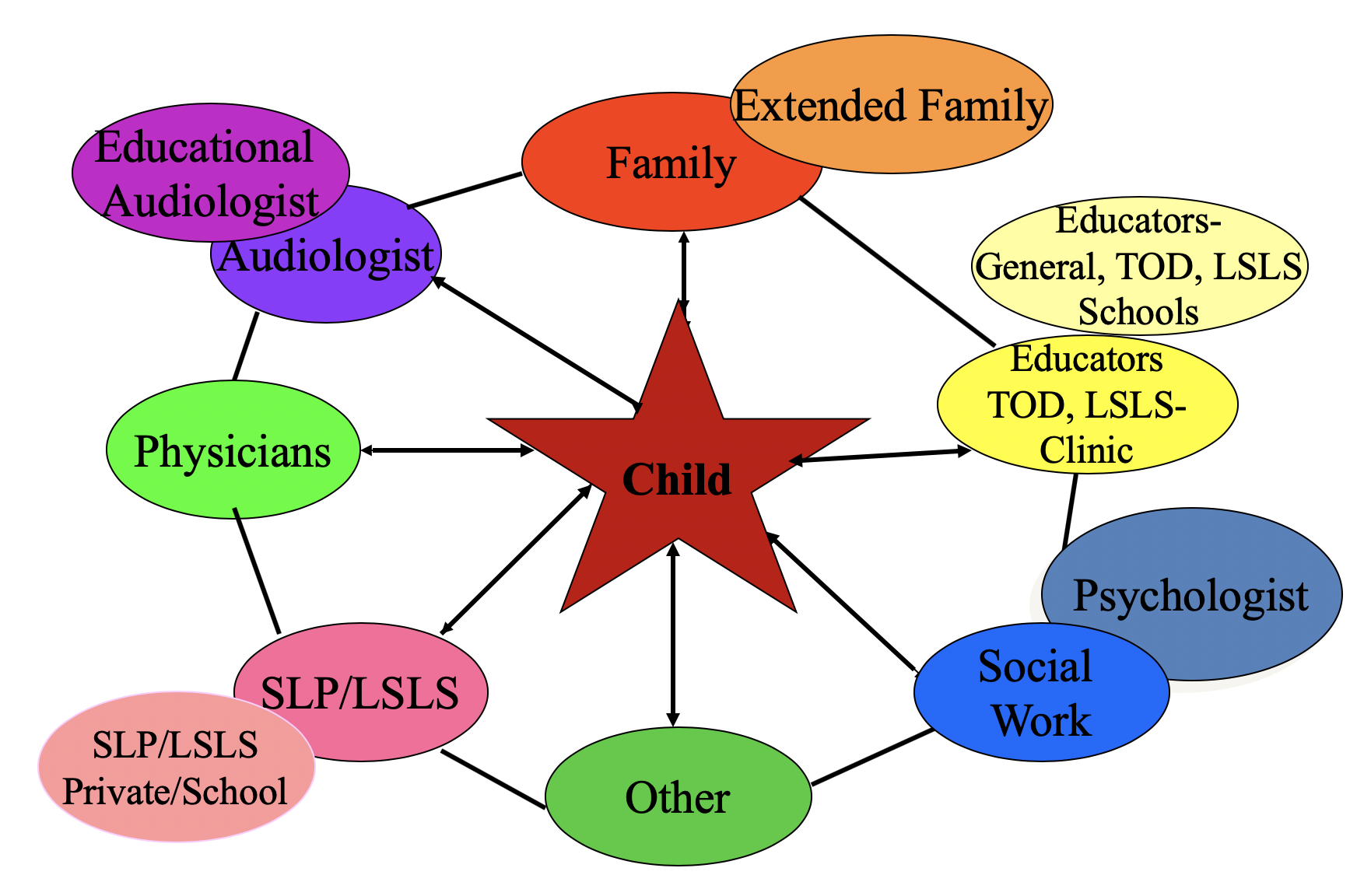
Figure 1 shows the child in the center of the figure, and all the people who are critical in supporting the child to be successful. These include the family and extended family, the educational audiologist, the clinical audiologist, the physicians, and the speech-language pathologist. Social workers, psychologists, and educators are critical people in this child's world. We need to be sure they are all communicating with each other if this child is going to succeed.
Figure 1. The support network for children with hearing loss, with the child at the center. Copyright 2019 Jane Madell, www.janemadell.com.
Roles of Different Practitioners
Here is a short summary of the roles of the different practitioners in the support network for children with hearing loss:
- Audiologists: Diagnosis of hearing loss, evaluation and management of technology, counsel parents and children about the effect of hearing loss, help school staff understand how to manage a child with hearing loss.
- Speech-Language-Auditory Pathologists/Listening and Spoken Language Therapists: Evaluate speech-language-auditory skills, develop treatment plan for building skills, provide therapy, monitor progress
- Physicians: Medical evaluation and treatment
- Educational Psychologists: Psycho-educational evaluations to identify learning issues
- Social Workers: Counseling and support for families and children
Client-Centered Counseling
Client-centered counseling puts the client in the middle of the procedure. Counseling that tells the family what we think we should do is not always in the family’s best interest. This does not always work well because it does not empower families to build their own skills to move forward.
Client-centered counseling in the diagnostic process begins when we first have contact with the family. If a hearing loss with the child is identified at birth, parents do not have a lot of information about the baby to share. But if a child is diagnosed later, then there is information that the parents can tell us about what they see at home and what a child is hearing. At this stage, it is important to let parents share their feelings about what they have seen and what they are observing about their child. They need to be allowed to tell their story to determine what they have seen and what they suspect.
Parents as Co-diagnosticians
It is important to involve parents in the diagnostic process. In audiology, we can sit the parent in the test booth with the child so they can see everything that is happening. That helps diminishes the denial mechanism of, "I'm sorry, I just don't believe he has a hearing loss" because they are in the room with the child. It also builds confidence between the parent and the clinician because the parent can see how the clinician is making a clinical judgment about whether the child has a hearing loss.
It is also important to include parents in speech and language evaluations that determine whether the child has a speech and language delay. Research shows that parental satisfaction with testing children who fail newborn hearing was a function of how empowered the parents felt in participating in the process. Parents have such a vital role because clinicians do not spend all that much time with children. What we do is important, but parents make the decisions about acting on our recommendations and how they are going to follow up.
In order to involve parents actively in audiology test procedures, we engage them as much as possible in seeing responses. When I am testing children in the sound booth, I involve the parents in watching the child’s responses. If we are doing an auditory brainstem response (ABR) testing, we can position the parents to see the equipment screen, so that they can see when there is a change in response.
When parents participate in the diagnosis, they are more likely to accept the diagnosis. They can see responses in behavioral testing, the ABR testing, and otoacoustic emissions testing (OAEs). We can let them observe what the child responds to with and without technology, and that helps them accept what the child is hearing. With corroborative testing in the sound booth, we can have one parent sit with the child and have them point out responses. If there are two parents, we can have the other parent sit with the audiologist and have them describe what they see and what they think. In speech-language evaluations, let the parent observe testing and comment on performance. Parents are often surprised when their children show language deficits because they do not see the child the same way we see them. The parent is working with the child alone, but they may not delving into difficult language situations, such as complex wording. When a speech-language pathologist does an evaluation and the child is making errors, it helps if the parent can see the errors because that helps them understand what they have to do at home.
Listening Bubble by Karen Anderson
It is important that families understand the Listening Bubble concept that Karen Anderson developed some years ago.
The Listening Bubble refers to the range of hearing within which speech can be fully heard. The Listening Bubble can be used to describe hearing loss in terms of how far away a child can be to fully understand someone speaking. A person with hearing loss has a smaller listening bubble than someone without hearing loss. For example, a child with normal hearing will hear you speaking at an average volume level from 10 or 15 feet away, but a child with a hearing loss may not hear or understand from that distance. When we describe to parents and families what a child can hear, it is very helpful to talk about a listening bubble. It explains why a child with hearing loss may hear loud sounds but not soft sounds, or may hear when you are close to them, but not when you are far away. The listening bubble gets even smaller when there is competing noise in the environment. When there is noise in the environment, it will be more difficult for a child with hearing loss to hear and understand.
Different voices can be easier for a child to detect. A father with a low-pitched voice may be easier to understand than a mother whose pitch may be higher as hearing loss is often greater for higher pitch sounds. In this case, we can explain that the child’s listening bubble is bigger when her father is speaking and smaller when her mother is speaking. The concept of the listening bubble is also very useful for children to help them understand their own hearing loss.
Another concept that is important when working with children with hearing loss is speech understanding. Speech perception testing is usually described in percentage, but not all people understand it. An audiologist may explain that a child has 88% word recognition ability, but what does this mean to parents? Some people have found it is easier to describe it in terms of pieces missing from a puzzle. Imagine looking at a jigsaw puzzle that is put together but has several pieces missing. For example, if you have a 100-piece puzzle and you are missing 12 pieces, you don’t see the entire picture. This analogy may be helpful for families in understanding speech perception testing scores.
The Counseling Role Following Diagnosis
Regarding counseling after diagnosis, all decisions made for a child are based on parent choice. They will decide whether the child will wear technology and what kind of communication mode a child will participate in. Therefore, we need to provide parents with information that will help them make educated decisions. We need to help parents become empowered because they need to feel that they can make a decision for their child and follow up on it.
I ask families about the goals for their child. Where do you want them to be when they are five, and 10, and 15, and 20? Almost every parent says that they want their child to be able to go to school and play with other kids. I ask them about what they think it will take to get them there because if they want their child to go to school, they need to be able to develop good listening and spoken language. We need to be honest when describing all the options because we have different expectations for children who are in an auditory program versus children who are in a signing program, and we need to talk to families about what those expectations are. We are not saying that one is better than the other, we are just being clear about what you will expect in terms of one program versus the other.
This question always comes up: how much should we answer for a family? This is common with cochlear implants and when parents are trying to decide about a communication mode. Parents may sometimes ask us, If this was your child, what would you do? This is a trap we need to avoid. For example, if I say if I were deciding for my own child, I could choose a cochlear implant, then parents want me to decide which cochlear implant. We cannot do that because that sends a message to the parent that they are not competent enough to make decisions for their child. We see successful outcomes by making sure that the family is making the decisions. Families do not learn to become responsible for their decisions if they do not make them for themselves.
Here are some questions that are useful counseling tools:
- I can see that you're having a hard time with this decision, can you tell me why this decision is difficult for you?
- Do you have questions I can answer to help you make this decision?
Let the parents talk through the answers to these questions. This can be difficult for them, but it is important to have the parent make the decision in their own good time. We also need to routinely and actively engage parents in dialogue about the goals for their child and what they have to do to carry over those goals. What do they have to do at home? We need effective dialogue to help them become knowledgeable about what it takes to succeed. What is the parent's role if they choose? For example, what is the parent's role if they choose sign language? We need to help them be familiar with normal speech, language, auditory, and cognitive development. It is essential that we listen to the parents. This is a stressful time for them and we need to arrange for parent support. Parent-to-parent support is effective because those who are a year or two ahead of a newly diagnosed family are in a different place. The initial panic is over and they have a child who they see is progressing, and can help newly identified families be optimistic. Validating parents’ feelings is also critical when working with families.
Support When Considering Cochlear Implants
When a child is not doing well enough with hearing aids, professionals may have to make the decision to move on to cochlear implants. Moving towards cochlear implants can be traumatic. That is difficult for families of newborns, too. If we know the baby has a profound hearing loss, we know we are going to have to move onto cochlear implants right away. But for a child with a moderately-severe hearing loss who starts out making progress but then progress slows, talking about cochlear implants can be very hard for families. It is always stressful for parents when they have to think about surgery for their baby. We need to help parents understand what kind of benefit the child will get if they choose an implant. You may need to explain that hearing aids are not working well enough and show them what we expect from children with cochlear implants.
Having parents meet children with cochlear implants is very helpful. Speech-language pathologists can demonstrate why the speech and language skills are not progressing at a sufficient rate and social work services can help families develop realistic expectations and provide emotional support. We cannot expect a child without speech and language to be speaking in three-word sentences two days after surgery.
Even when we have explained about realistic expectations with parents or older children, they may not believe us and think everything will be perfect from the beginning with cochlear implants. Sometimes that is a problem. Families and children need to understand that it takes time to build skills and that a CI alone doesn't provide magic benefits. Children still need auditory-based therapy and mapping of their cochlear implants on a regular basis.
Support for Children
Children with hearing loss are, for the most part, educated in mainstream school settings: 85% of children with hearing loss are educated in the mainstream. The advantages of mainstream education are that the kids have normal language models and the school has normal developmental, academic, and social expectations, so the kids have a better opportunity as adults because of their language skills. The disadvantage is that they are often the only child with a hearing loss in the school and have no contact with other children with hearing loss. That is a problem because they have difficulty hearing in school and may have questions about management of their hearing loss or technology. If their language skills are not at typical hearing levels, children with hearing loss will have limited social opportunities.
Support Groups for Children with Hearing Loss
Children who are a part of mainstream activities are in a situation where they have better academic and language models but feel isolated, and their friends often don’t understand the issues of hearing loss. If they go to someone's house and have a sleepover, they take off their technology to go to sleep and they cannot hear anything that is happening. As they get older, social issues become more significant. Children in special education classes may feel less isolated but have lower expectations. They may need assistance dealing with people outside of school because they don't have language skills that enable them to do that.
Counseling Children with Hearing Loss
Children need both informational counseling and support counseling. We do not always think that we need to provide the same kinds of counseling to children but we need to do that as soon as the children are ready. Social skills are dependent on language age. Children socialize well with other children as long as they have the language to communicate. They may do really well in preschool through first grade. By the middle of second grade, if their language skills are not equal to their peers, they are going to start having socialization problems because they cannot follow games being played or participate as much in discussions.
By the age of eight or nine, children begin to recognize that they are different. As children get older and are more aware of their hearing loss, they begin to resist things that can help, such as wearing an FM system or other hearing technology. Some resist going to therapy or decide they are not going to wear their technology. Children with disabilities are also more likely to experience bullying, and it is the responsibility of all of us who work with these children to check in and see if they are having these problems. When a child comes in and says they want to take off their FM system, the first thing I wonder about is whether they are being bullied. We need to think about ways we can help children deal with being bullied, so we counsel children as they are ready for it.
In terms of topics to cover in counseling, children need to understand the degree of hearing loss and it means. They need to understand hearing technology and why they have a hearing aid or a cochlear implant. We need to give them an opportunity to talk about their feelings towards having a hearing loss. It is not fair and I am sorry this is happening to you, but it is happening and we have to do some things to fix it. We need to help them talk about the social issues that are related to hearing loss. What kind of problems do you have and what can we do to fix it? We also need to help them build self-advocacy skills so they can ask for help. If they do not understand something one of their friends is saying, they need to be able to say, “I didn't hear that, can you say that again?” They also need to be able to say that to teachers at school. But we also need to give them permission to feel bad about the fact that they have a hearing loss and are in a situation they do not want to be in.
Counseling Older Children with Hearing Loss
When we test a child who is old enough to understand, we need to describe to them what they are hearing with and without technology. It is important to discuss how this affects everyday listening. If you have an audiogram that has all the phonemes on it, you can help them understand which phonemes they are missing without their technology. We also need to talk about the difficult listening situations they have and how technology can help.
We need to be careful about how much information we provide. We need to determine what the child wants to know and what they are ready for at that time. We say, “Tell me what you want to know about your hearing loss.”
These are questions that children may ask:
- When will I be old enough not to need hearing aids?
- Will my hearing loss go away?
- Will my hearing get worse?
- What will happen if I don’t wear hearing aids?
I once had a six-year-old boy want to know when he would be old enough to no longer need hearing aids. His mom and I looked at each other and realized that we had not made it clear that this was going to be a lifelong situation. We also need to talk with them about their language, as well as their future. I had a middle school student who said he did not want to wear hearing aids anymore and asked what would happen if he did this. I said to him, “Do you want to go to college?” He said yes. “Where do you want to go to college?” He said Harvard, Princeton and Yale, which are good goals. “Okay, let's think about what your grades will be if you're missing half of the phonemes.” So we need to just talk things out. If they ask a question, answer it. Offer the information on a regular basis so they know what we are trying to tell them. We need to talk about why they need speech-language therapy, as well as discuss skills and what they need. They need to know about what can be done to build skills and that hearing helps them learn a language.
Running Support Groups
With today's technology, most children are educated in the mainstream, but they may not be able to contact other children with hearing loss. It is important for them to have someone else who understands the situation that they are in and give them an opportunity to talk about how they feel. In those situations, there needs to be a moderator that can help them understand, either somebody to type it on a screen or write on a blackboard what the concerns are. Then we can go around in a circle and all make suggestions for how to handle those concerns. I had a situation where a child with a hearing loss was giving up their technology. I could not make a change, but the other kids in the group helped her understand what she was doing if she gave up using technology. They can provide support for each other.
When I run a group, I set it up by age and communication mode. I do not worry about the degree of hearing loss because with whatever technology they are wearing, they should be hearing well and able to communicate. To start the group I ask, "Tell me something funny about having a hearing loss.” It is often mentioned that a teacher forgot to turn off the FM microphone and the child heard things they were not supposed to hear. Then I suggest that they name five or 10 things that their family and friends know about them. It is very interesting how many of them will say in that list that they have a hearing loss, while others will say that is not something that matters. I ask, “Is there anything good about having a hearing loss?” Some of them say they get more attention from parents.
Most importantly, I ask about the problems with having a hearing loss. We list all the problems on the board, then have everyone make suggestions. We talk about social issues, including bullying and teasing. I bring those topics up myself if the children do not. Most kids do not want to leave at the end of the hour. It is something that they crave and we need to work on it for them.
Counseling Issues with Children
A typical issue is fear of parent anger. Children have been yelled at in the past for not hearing or for losing a hearing aid. Parents are concerned about how much hearing aids cost, so the children do not want to tell them if their hearing aid is not working well. There is also ridicule from siblings or other children. The refusal to wear hearing aids happens often, especially with those who have relatively mild hearing loss, and sometimes kids with profound hearing losses who are not doing well. With younger children, rejection of hearing aids is usually the result of parent attitudes, since they can see that their parents are upset about it. With older children, it is usually related to the attitudes of peers. We need to talk to parents about their concerns for the child having a hearing aid and provide them with support, but we also need to help them understand the effects of their child not wearing a hearing aid.
Helping Children Talk About Problems Listening
In order to help children talk about their problems we can ask questions, such as, “Do you only hear part of it when someone talks to you?” Encourage parents to share their concerns and behaviors they have observed under what conditions, and have the child there as well so they can hear that parents also recognize the situation. Mention that we all have problems hearing sometimes, even people with perfect hearing, but then discuss the situations where the child has a problem and see what we can do to fix it. Sometimes that helps families understand that it may be necessary to change technology.
With older children, if we test their speech perception using the loudspeaker in the soundbooth both with and without their hearing aids and/or cochlear implants, technology, we can demonstrate to them what they are missing. For example, we may find that at a normal conversational level they understand 86% of the words presented and at a soft conversational level, they understand 48%. We may also explain to parents or children that they will not hear unless the person speaking is standing no farther than three feet away, which means they will miss what is happening in a classroom. Audiologists should perform testing in noise as well. When hearing testing is only performed in quiet, scores are not representative of real world situations. Results of speech perception testing in noise can help to demonstrate how much the child is missing. Remind them that you understand this testing is difficult because we need to let parents and kids express their frustration and anger.
With teenagers, talk about the problem of the pieces missing from the puzzle. Talk about how they are getting new information in school and if they are only hearing part of it, they are not going to learn well. We also need to talk about the fact that hearing loss is fatiguing. Children with hearing loss have to listen much harder to fill in the blanks that they are missing due to hearing loss, so they are constantly doing extra work. But we also need to make children understand that other students will recognize that something is wrong if they decide not to wear their technology. The effects of hearing loss can be subtle but will be noticed by other students, and it would be better to deal with the hearing loss so that they can hear and communicate. We should also talk to teenagers about the lifelong impact of having a hearing loss. Adults who have hearing loss and wear hearing aids earn 50 percent more during their lifetime than those with hearing loss who do not wear hearing aids and instead try to get by without them. About 30 percent of people in prison have a hearing loss, which may lead to poor choices due to not hearing what was happening around them or not effectively navigating social situations and communication.
Self-Concept
We need to help children deal with self-concept. They may internalize the reactions of others, so when people look at them with annoyance due to their difficulty hearing, it makes the children feel bad. They are not ready to tune out the reactions of people who treat them badly. Children with hearing loss often have a relatively poor self-concept if they do not have the language to compete with their peers. Also, they may have fewer opportunities to interact with peers if their language is not as good. They have less opportunities to practice social rules and may misinterpret interactions. If they do not understand sarcasm or certain idioms, they will not be able to keep up in social situations. It is the job of everyone who is working with the children to make sure that they have the language they need. Hearing aids alone may cause a self-concept problem, since wearing the device may amplify the difference between the child and their peers. Children with hearing loss may have fewer options to socialize especially if their language skills are not at age level. We need to make sure that children with hearing loss have the vocabulary to express their emotions and help them learn to recognize emotions in others.
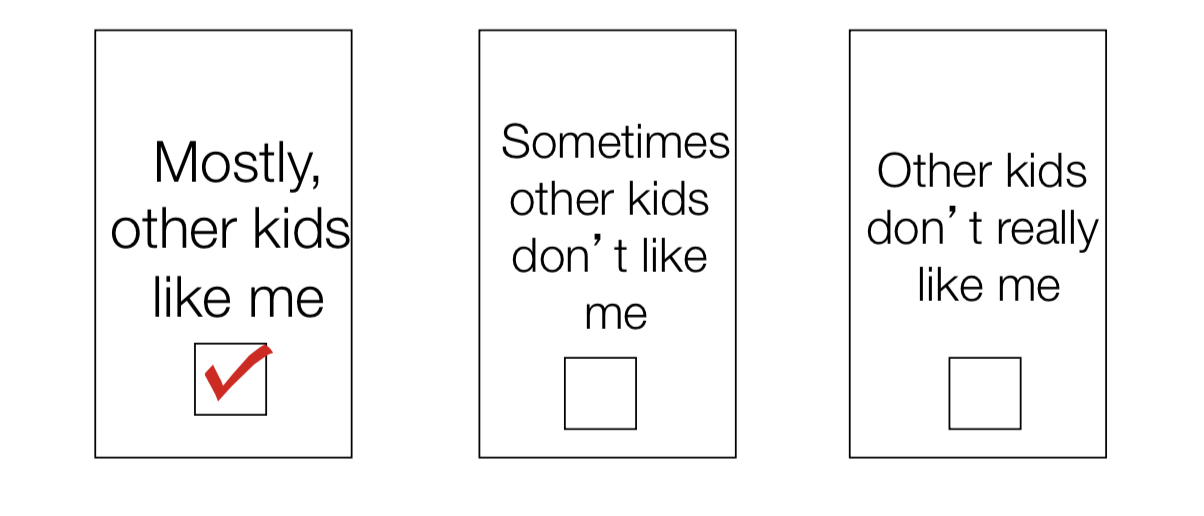
Figure 4. The Child Peer Relationship Scale.
Figure 4 is the child peer relationship scale. With this, there are eight discussion points we ask kids to fill out and then they can check the points. These statements can be about relationships with other kids or their feelings about school. If we get them to just check which best relates to them, we can get a better picture of where they are and what kind of assistance they need. It could be specific therapy assistance, technology assistance, a support group or counseling, and we can get that by looking at these responses.
We can use the Cappelli "I Start/You Finish" tool as a way of checking in with kids:
- I am happy when____
- I am sad when___
- The thing I like most in the world is____
- The thing I would change in the world is_____
- Because I have a hearing loss_____
Using this activity, we can get an understanding of where a child is and possibly refer them to a counselor to help them work through these issues.
There are some self-assessment tests for teenagers that are available on the Internet, including the Self-Assessment of Communication - Adolescents (SAC-A) and the Significant Other Assessment of Communication - Adolescents (SOAC-A). These also provide good information to help us figure out where a child is and what kind of help they need.
Using Scenarios
We can also do an exercise where we discuss different scenarios. For example, we can show children a picture of a student sitting at a desk and a teacher speaking at the front of the room. We can then ask, “Does your teacher do that? Is it hard to hear your teacher when your teacher is standing in the front of the room? How much of what the teacher is saying do you miss?” It is an opportunity to get kids to talk about these daily situations. Additionally, the Ida Institute has a game where you can set up situations and help children talk about their experiences relative to those situations.
When we are talking with children, we need to be sure that we are keeping the door open. We need to make sure that the children understand that we hear them and understand that they are struggling. We need to give them encouragement and show that we are listening. For example, if a child is struggling to describe a difficulty, we can say, “I think what you're saying is that you're having a hard time talking to kids in places like the lunch room where it's very noisy. Let's think about what we could do about that.” Acknowledge their feelings, then try to help them solve the problem. Any indication that you are struggling to understand the emotional content of what a child is saying makes it hard for them to go on and say more. It is difficult for people to change if they do not feel like they are understood, so we need to be sure we are making it very clear that we understand where a child is.
Counseling Missteps
My colleague and mentor David Luterman talks about counseling missteps. When we counsel families, we need to be sure that we do not give the impression that we have all the answers and they do not. This is a quote of how we do not want to come across:
“I have all this information and training. You do not. I will help you see it my way.”
It is possible to make this misstep without using these exact words. Presenting yourself this way is not the message we want to give to families. We may know more about some things, but they know more about the child. It is important to have counseling remind families that we are listening to them and that they are capable of coming up with the answers.
Case Example
In this example, a 10-year-old boy tells the school he left his hearing aids at home, and then tells his family he left the hearing aids at school.
What can we do to manage this? We have to think about why the child is doing this and what we can do to change the behavior. We cannot get upset with the boy that he is not wearing the hearing aids. We have to talk to him about what's going on and understand that he is most likely upset about the hearing aids if he is refusing to wear them. We can say, “Tell me about this. Is that what the problem is? Is it hard in school? Are kids teasing you? Does it make you feel bad that you have to wear hearing aids and other kids don't? Do the hearing aids help you? What do they help you hear?” We ask questions to allow the child to talk through the situation, as well as how they feel and how they want to move forward.
Summary
Here is a summary of key points I have discussed today:
● At all stages, it is essential that professionals empower parents and kids and help them process the emotions associated with hearing loss.
● Involve parents as co-diagnosticians for children of all ages.
● Simulations and descriptions using decibel levels and the “listening bubble” are more useful to help families understand hearing loss than labels and audiogram interpretation.
● Encourage parents to identify their goals for their child and present them with unbiased information about all options.
● Counseling is important for kids with hearing loss.
● Hearing testing in noise is critical for older children and teenagers.
● Provide fact-based information about the life-long impact of hearing loss with older children and teens.
● Give everyone the chance to express feelings.
● There are both positive and negative help-giver responses. Resist the urge to rescue!
Questions and Answers
Will a child with a cochlear implant have difficulty hearing in school without an FM system?
Yes, the child with a cochlear implant will still have difficulty hearing in school without an FM system. Every child with a hearing loss needs an FM system no matter what kind of technology they are using. When they get to be teenagers, they often reject them, but if we can help them understand how much better they hear with the technology, we are making a big difference.
At what age do children start to grieve?
It is about age eight or nine when they first start recognizing they are different that they start to grieve.
Do you recommend hearing loss simulators to help parents, family, and other people understand hearing loss?
I do not like the hearing loss simulators and only use them when I think parents are really resisting understanding the effects of hearing loss. The reason I feel this way is that I think it makes it sound so much worse than it is. If you listen to a simulator for a moderate hearing loss, parents may start to wonder whether there is any possibility that a child with a hearing loss can learn anything. However, if parents decide that the child will manage without hearing aids, then I will use a simulator to help families understand what it is like to have a hearing loss. But for the most part, I am not crazy about simulators because I do not like the effect they give. But if we can use a simulator, we also need to be able to show what it will sound like with the technology on.
How can social workers learn hearing loss basics and technology basics?
Social workers who work in programs for children with hearing loss should develop those skills by meeting with clinic staff, including audiologists and speech-language pathologists. I think it is easier than trying to read a basic audiology textbook.
You mentioned support groups for children with hearing loss in school, are there sometimes not enough kids in a school with hearing loss?
It is usually done by district. School support can be provided if there are several kids in one school, but that is usually not the case. School districts can arrange to have all the kids with hearing loss meet for lunch in one particular school, or have kids with hearing loss meet at the end of the day and have a support group that way. You can also get support groups outside of school. AG Bell, the Alexander Graham Bell Association for Deaf and Hard of Hearing, has a wonderful program in the summertime called Leadership Opportunities for Teens (LOFT). It is a group of teenagers that can meet other kids with hearing loss, and the people who run the group are young adults with hearing loss who have already been through the LOFT program. The kids who have been through it find that they get wonderful opportunities to share their thoughts with other people who have hearing loss.
What are some movie recommendations for kids with hearing loss?
I made a documentary called The Listening Project, with Emmy award-winning filmmaker Irene Taylor Brodsky. We interviewed 15 people whose hearing loss I had identified when they were babies and are now young adults. We talked about what it was like to grow up with a hearing loss. It is available in full on DVD, as well as a short version for schools. Schools have found it very helpful in giving kids in the school an understanding of what it is like for the kids with a hearing loss, as well as for teaching empathy. The kids with the hearing loss who have seen it said it allowed them to realize that there is somebody out there who feels what they feel. Thank you for participating in today's course.
References
References are included in the course handout.
Citation
Madell, J. (2020). Providing support to families of children with hearing loss. continued.com/social-work, Article 1. Available from www.continued.com/social-work
Nov 11, 2026
Documentation in Social Work for Private Practitioners
Gabrielle Juliano-Villani, LCSW, MSW
Editor's note: This text-based course is an edited transcript of the webinar, Documentation in Social Work for Private Practitioners, presented by Gabrielle Juliano-Villani, MSW, LCSW.
Learning Outcomes
After this course, participants will be able to:
- Create clear and concise progress and chart notes that accurately incorporate the contents of the mental health assessment.
- Create effective and efficient treatment plans with clients.
- Develop progress notes and treatment plans that meet insurers' standards.
- Consider the role of ethics in social work documentation.
Introduction
I am excited to be back again doing another presentation on a much-needed topic we do not discuss too often. Documentation is a huge part of social work, especially in private practice. I train folks on how to write progress notes and treatment plans. I have worked in child protection, where documentation was essential because they were court-ordered. I also have had to document very specifically to meet Medicare standards at a previous job. Now, I am in private practice, and we have been audited by Medicaid and other insurers several times. I gathered much of what I am discussing today from that audit and information learned over the years. Thus, I feel like I am well-versed in this topic.
Cultural Competence
For additional information regarding standards and indicators for cultural competence, please review the NASW resource: Standards and Indicators for Cultural Competence in Social Work Practice https://www.socialworkers.org/LinkClick.aspx?fileticket=7dVckZAYUmk=&portalid=0
Why Document?
- How is it used?
- How long does it need to be kept
- Who will read it
- Audit
- Disability
- Workman's comp
- Subpoenas
- DHS
- Clients
- Grievances
- Us
I often hear, "I'm in private practice and don't take insurance or keep notes." It is not just about insurance. Ethically, we are required as social workers, as are all other disciplines, to keep notes. Our documentation can be used for a lot of different things. Especially in private practice, nobody will read your notes unless you get audited, or you get grieved against, but we still need to document as if somebody were going to read it. I think about what I would say if an attorney were reading over my shoulder. I learned from child protection because that does happen. You also want to be vague, but not too vague, and we will cover that today.
Documentation is also critical if an insurance company audits you. They will read it and check it for medical necessity to ensure that no fraud occurs. They also want to ensure you are seeing the client because many issues are seen in Medicare and Medicaid billing, although not usually by social workers. You also give your notes to SSDI if someone is applying for disability. We have been getting many requests throughout the pandemic. I did one yesterday. Disability will want to see all of the notes on the client. Occasionally, they will accept a summary, but usually, they want progress notes and treatment plans. Workman's comp and short-term disability are other areas where they will want to see those notes. Documentation will need to support that an individual is struggling and how that affects their ability to work. If you have a client with an open case with DHS or any court case, your documentation might be subpoenaed for that case. Documentation is also needed for medical necessity to understand your client and their issues better. Clients own the record, and sometimes people forget that. A client may also request your notes. Of course, a grievance or a complaint requires your documentation. Lastly, we also document for us so we can remember week by week what our clients are working on and what they are saying and show the progress that clients have made.
Documentation needs to be kept for usually seven years and can vary state by state and board by board, but in Colorado, it is seven years that we have to keep those records. Even if clients are no longer active on our caseload, we will keep their records. You do that through an electronic health record or paper notes in a filing cabinet.
NASW Code of Ethics
- Section 3.04 Social Workers' Ethical Responsibilities in Practice Settings
- (a) Social workers should take reasonable steps to ensure that documentation in electronic and paper records is accurate and reflects the services provided.
- (b) Social workers should include sufficient and timely documentation in records to facilitate the delivery of services and to ensure continuity of services provided to clients in the future. (NASW, 2021)
- (c) Social workers' documentation should protect clients' privacy to the extent that is possible and appropriate and should include only information that is directly relevant to the delivery of services.
Our code of ethics requires us to document. We need to take reasonable steps to ensure that documentation in electronic and paper records is accurate and reflects the services provided. Again, this does not just protect our clients and their privacy, but it also protects us. If something were to happen, we want to show that we were seeing this person, and this was our intervention. I am not trying to scare everybody with these scenarios, as they rarely happen. But, if we do it on the front end and take thorough and timely notes, we do not have to worry about it later.
Our documentation should be timely and sufficient to facilitate delivery and ensure client service continuity. So we also have an obligation to future providers as well. "Here's where we left off, what we did and didn't do."
We should also protect clients' privacy to the extent possible and include only information directly relevant to the delivery of services. We want to be somewhat vague. For example, we do not need to say that our client told us their best friend Marsha was selling drugs on this corner. We do not need to document all of these specifics. We could say instead that our client is feeling anxious in her relationship with her best friend. We do not need to put every detail in there as the insurance company does not need to know that information. For example, they only need to know that the client is dealing with anxiety and relationships and how we responded.
Another helpful thing that I learned through my Medicaid audit is to use assessments because that backs up the evidence for medical necessity. For example, you can use the GAD7 (General Anxiety Disorder-7), the PHQ9 (Patient Health Questionnaire-9), et cetera to show the work you did up front to identify their diagnosis.
You also want to ensure that your practice policies and form consents are signed. This practice may vary depending upon insurance and state, but Medicaid and Colorado want the treatment plan and the initial mental health assessment intake signed by the client. I would suggest you do that for everybody to cover yourself and make sure clients are informed about the services they are getting and how we got to their diagnosis.
Assessments
- Use GAD7, PHQ9, PCL5, etc.
- Make sure all policies and consents signed
- Medicaid typically wants treatment plans, and the initial assessment signed.
People call an assessment a couple of different things. I usually call it an intake, and Medicaid calls it a mental health assessment. An intake is the first time you meet somebody; it is usually the longest session.
Each insurer, including Medicaid and Medicare, has different assessment timeliness and update guidelines. Medicaid in Colorado wants us to schedule clients within a week of when they contact us, and you need to sign notes within 48 hours. Completion of a treatment plan is 30 days, so that is what I follow. Medicaid guidelines are the most stringent, so we should be fine if we base everything on their rules. I am sure everybody watching this has been behind on their notes before. I try to get my documentation done as soon as possible, so they do not pile up.
Components of Assessment
- Assessment timeliness, updates
- Barriers to tx
- Chief complaint/ problem statement
- Complete MSE
- Dx- meets DSM criteria
- Date/POS/Modality/Clinician Name/Signature
- Complete biopsychosocial (can be gathered from other sources)
I want to go through the assessment components because this is what insurers want. If you check all these boxes from the list above, you should be okay with an audit or any other reason somebody might want to look at your notes. You usually get this information when you first meet with them.
If this client returns, you will want to update your assessment with any new information. First, we start with the question, "Why are you here?" or, "What's going on?" Their answer will be their chief complaint or problem statement.
You will also want to note any barriers to treatment. There may be cognitive deficits or logistics like they do not have a computer or a bus pass. You will want to document those as well.
Each insurer, including Medicaid and Medicare, has different guidelines on assessment timeliness and updates. Medicaid in Colorado wants us to schedule clients within a week of when they contact us, and our notes need signing within 48 hours. A treatment plan needs to be completed within 30 days, so that is what I base my timelines on, as Medicaid guidelines are the most stringent. If we base everything on their rules, we should be fine.
I am sure everybody watching this has been behind on their notes before. I try to get my documentation done as soon as possible, so they do not pile up.
An MSE (Mental State Examination) should always be completed. You also want to talk about their mood, affect, how they were dressed, if everything was within normal limits, and their diagnosis. You can do some of that before you meet with them. I like sending clients the assessments, like the PHQ-9 and the GAD-7, ahead of time. If I think they are coming to me for PTSD, I will also send them the PCL-5 (Posttraumatic Stress Disorder Checklist for DSM-5).
Usually, from their chief complaint, you can start to understand what their diagnosis might be, but you want to make sure it meets the DSM criteria. I copy and paste the symptoms they are telling me from the DSM. That way, it is all right there and using the DSM-specific language.
You will want to have the assessment's date and place of service. You must document if it was telehealth or if you met with somebody in the community, at their home, or in your office. You also want to include any modalities that you used. However, intervention is not typically done in an assessment, so you do not need to say that you did CBT (cognitive behavioral therapy) or anything like that. Make sure that it is signed with your name and credentials.
A biopsychosocial summary should include the clients' work, legal, military, and family histories. You can gather this information from other sources if needed. Medicare puts this in its guidelines. One example would be collecting a child's history from their doctor, referral source, or parents. I document, "Parents are reporting this," or "The referral came from a social worker in home healthcare, and they are saying this."
- Risk assessment - HI/SI ◂ Safety plan
- Medical and psychiatric hx
- Psychiatric/MH hospitalization hx
- Readiness for admission
- Substance abuse
- Duration and start/end time
- Plan for next contact and any follow-up
- Legible!
During a risk assessment, you must determine if there is any homicidal or suicidal ideation and make sure you document that. I am very blunt about this question. Sometimes people ask me about how I assess for that. I usually frame it as me getting to know the client. "I need to know if you have any homicidal or suicidal ideation." They might initially say no, but make some concerning statements during the conversation. I will then need to reassess that. If they report anything, you want to document a safety plan and put it into their chart.
You also want to ensure you are documenting if they have had any psych hospitalizations. I may ask, "Have you been in therapy before? Were you diagnosed with anything at that time? What did that look like?" If you are working with mandated clients and looking at readiness for admission, they might never be ready. However, we should document the stage of change and if they are appropriate or not appropriate for treatment. We then need to note if we are referring them out and why.
If there is any substance abuse, we need to document that. We need to know if we are a good fit for them. In my practice, we do not have many people with substance abuse experience, so we refer cases out.
You must document the start and the end time as all insurances want to know the duration. This is also how we bill and where a lot of fraud happens. We want to bill appropriately for that time. They are very picky in Colorado and want to know the precise times. If you did not start your session until 2:03 PM, you put 2:03 PM and exactly when you ended.
Are you going to be seeing this client weekly? Are you seeing them next week? Are you seeing them on March 14th, 2022? Put those dates and any other follow-up with third parties they may need. If you need to get a release of information signed or if you already have one signed for their case worker, you need to follow up with the caseworker about them.
All documentation needs to be legible. Poor handwriting is not an excuse if you do not use an electronic health record. Your notes need to be able to be read. Again, this not only protects the client, but it also protects you. It shows that you met with them and your interventions so that you can get paid for your time.
- Support with medical necessity
- Medication
- Client's name on pages/record
- Document their ability/willingness to adhere to tx plan
- How and why do they meet criteria for this level of care?
- Impact on functioning
Insurances want to know that everything you are doing is medically necessary or that they will not pay for it. I always ask clients to give me their med list so that we have that, especially for Medicare and Medicaid.
Other tips to help you pass an audit include ensuring the client's name and date of birth are on their record or any pages. If you use an electronic health record, it will do this for you. You also want to document their ability and willingness to adhere to the treatment plan. I will talk about that a little bit more later. We do not want to give clients unrealistic treatment plan goals they will never meet because their treatment will not be covered. You also want to document how they meet this level of care criteria. Are they meeting you for outpatient therapy once a week, or is this somebody in crisis and struggling with suicidal ideation and self-harm? If so, this might be more appropriate for intensive outpatient or even hospitalization, depending on the situation. The impact on functioning is crucial to document. How does depression, anxiety, anger, or whatever impact their functioning? Are they not able to go to work or school?
How do we get to a diagnosis and treatment plan when 800 different things happen in their lives? We want to string all these components nicely together. It is called the golden thread. First, I ask about any previous diagnoses because that can be helpful. For example, they may have five different issues that they are having. I am going to look for themes and patterns. I might also ask the client to give me a problem list. Where are the problems in your life and the precipitants to this current episode?
I will often hear, "It came out of nowhere. I just started feeling this way." We all know that is not always true. I may ask, "What was going on when you started feeling this depression? What was the catalyst for that?" I hear things as my mom died or we moved. I ask about any current behaviors related to that so that I can understand it a little bit better.
How does hopelessness look? Does that mean you are sad or want to die? Or does that mean you are not getting out of bed? Beliefs, thoughts, and behaviors tie all of this together so we have a better understanding of how we can build their treatment plan.
We also want to know their goals. "What do you want to work on together? What will it look like when our work is done?" This can be a tricky question for people to answer. It was a hard question for me to respond to with my therapist. They may want to get on meds or get out of bed in the morning and not feel so sad. Knowing this information is a good starting place.
Case Conceptualization
- Make sure you are asking of any previous dx
- Look for themes and patterns
- Problem list
- Precipitants to current episode or to problem
- Current beliefs/thoughts
- Current behaviors
- What are their goals?
- How will we know when our work is done?
- Look for themes and patterns
This information helps us to conceptualize the case, especially with current events. An issue at work or conflict with their mom or boyfriend may cause anger or anxiety. I write these down because that helps me visualize everything and make a treatment plan. In my experience, that is not how it always works, but whatever their goal is ("get out of bed"), I will write that up in their language.
Treatment Plans
- Client participation
- Timeliness - usually within 30 days of first contact
- Treatment plans are:
- Measurable
- Specific, objective, realistic
- Culturally sensitive
- Individualized
- Strengths-based
Again, the treatment plan should be completed within 30 days of first contact. Goals need to be measurable, specific, objective, and realistic. If someone says, "I'm depressed, and I can't get out of bed and brush my teeth." We will not say, "Okay, your goal is to run a half marathon in the next six months." We need it to be realistic. Again, it might be something minimal, and that is fine.
Goals also need to be culturally sensitive. We can always be better as social workers. We want to examine the client's culture and how it relates to their diagnosis or goals.
They also need to be individualized as every person is unique. We will not have the same treatment plan for every client. Some clients are into meditating and using some mindfulness to manage their anxiety, and other clients do not. They may want to do something else like go for a run.
Goals should be strength-based. This type of treatment is ingrained in us as social workers, but we want to document it in a strength-based way. I learned a good lesson a long time ago working in child protection. I had written some things in a client's treatment plan that were not strength-based, as I was on autopilot and did not think about it. It was court-ordered, read in front of the client, and did not go over well. It was a good learning experience to slow down and make sure I use culturally sensitive and strength-based language.
SMART Goals
- S - Specific
- M - Measurable
- A - Attainable/Achievable
- R - Realistic
- T - Timely
**Wiley
It is vital to make your goals SMART. They must be specific, measurable, attainable, realistic, and timely. This helps us and others know when they have met them. How will they take steps to meet those goals if they are not specific, or how will they know if goals are satisfied if not measurable? If they cannot meet them, they are not achievable. Most will not be in treatment for 20 years, so the goals need to be timely.
I have a little note down here for Wiley. If you are in private practice, community mental health, or working with clients in therapy in some way, I highly recommend that you buy this book. It is $20 on Amazon and has a PDF version that comes on a CD-ROM (if you still have one of those). This is where I start the foundation for my treatment plan. Figure 1 is an example of a treatment plan that is not smart.
View Full Size Image Figure 1. An example of a treatment plan with goals that are not smart.
This is a screenshot from my EHR (electronic medical record); obviously, Johnny Appleseed is a fake client. Every EHR is different; particularly in simple practice, you can easily make treatment plans. They have uploaded "Wiley" in there, which is fantastic. You can go from the diagnosis, and then you can click a bunch of checkboxes. However, they are not smart goals. Figure 2 is the same treatment plan with a smart goal.
View Full Size Image Figure 2. An example of a treatment goal that is smart.
The objectives are always more specific than the goals. The goal is bigger, the objective is smaller, and the interventions are how you will meet those. Let's take the example of Johnny Appleseed. He is seven years old and has a generalized anxiety disorder. The presenting problem is anxiety. He has excessive or unrealistic worry that is difficult to control, occurring more days than not for at least six months about several events or activities. It is written like this as it is part of the criteria for generalized anxiety disorder.
His goal is to stabilize his anxiety level while increasing his ability to function daily. But how, when, where, how often is he going to do that? We want to explore the client's schema and self-talk that mediate his fear response, assist him in challenging the biases, and replace the distorted messages with reality-based alternatives. Positive, realistic self-talk will increase his self-confidence in coping with irrational fears. To improve this, I can put in a scale to either increase or decrease the anxiety level.
Again, we want our treatment plans to be appropriate, individualized, and culturally sensitive for our clients. You do not need to spend hours upon hours writing unique treatment plans for each client. You can easily add in different language to make it individualized and smart. You can see that both EMRs have the same diagnoses, presenting problems, and behavioral definitions. The smart goal in the second one is to stabilize his anxiety level to a five out of 10 from a reported eight out of 10 while increasing his ability to function daily over the next six months. Previously, we did not have any of that in there as we were just going to stabilize his anxiety level. I also added that he reports his anxiety as an eight out of 10 daily. We want to get it down to a five out of 10, and we will do that every day for the next six months while we work together.
In the objective, I used the same language of "identify, challenge, and replace bias, fearful self-talk with positive, realistic, and empowering self-talk, but I added that he would do that at least once a day, every day for the next six months. That might be too much for someone, and I could downgrade it to three times a week, and he is going to report that to you.
I also added more specific language to the intervention. Previously, the client was going to increase his self-confidence when coping with irrational fears without documentation of how to do that. I added that we would do CBT (cognitive behavioral therapy) and weekly therapy sessions. These changes took me about four minutes to change on the EMR. I added different language to make it a smart goal.
As I mentioned earlier, I like to use a scale. For example, ask your client, "How bad is your anxiety on a day to day? What is the average?" They may say it is 20 out of 10. I may say, "Do you think you can get it to an 18 out of 10 when working with me? Use that with your clients, and then add the words increase and decrease.
Medical Necessity
- Healthcare services that a provider, using clinical judgment, would provide to a patient for the purpose of evaluating, diagnosing or treating an illness/disease
- In accordance with the generally accepted standards of medical practice
- Clinically appropriate, in terms of type, frequency, extent, site and duration, and considered effective for the patient's illness, injury, or disease; and,
- Not primarily for the convenience of the patient or physician, and not more costly than an alternative service or sequence of services at least as likely to produce equivalent therapeutic or diagnostic results as to the diagnosis or treatment of that patient's illness, injury, or disease. (Cigna)
I will switch gears to medical necessity, which is the basis for insurance, Medicaid, and Medicare. They need to see that something is medically necessary to cover it. As a social worker, I think medical necessity can be complicated and layered. We can certainly use our clinical judgment to best help our clients and show that services are medically necessary, just like MDs. Physicians will not automatically approve different meds or procedures because it would not be appropriate. The same thing happens to us, unfortunately. Medical necessity are services that a healthcare provider using clinical judgment would provide to a patient to evaluate, diagnose, or treat an illness or disease. In all our assessments, we use our clinical judgment to treat or diagnose our clients' mental concerns.
We also treat following accepted standards of medical practice. We probably would not see somebody coming to us for a moderate depressive episode or see them five times a week. That is, as far as I know, a type of treatment not generally accepted. If it was in an intensive outpatient facility and something deeper going on, then that may be an accepted standard of medical practice, and we would document that. Again, we would need to use our clinical judgment. This is the evidence the client is showing me, which is why it meets that level of care.
We also must ensure our treatment is clinically appropriate in terms of type, frequency, extent, site, duration, and considered effective for the patient's illness, injury, or disease. I had a client who was in crisis, and I had to see them twice a week. I ended up doing three sessions because we also had to do a family session. It was clinically appropriate with what was happening with that client, and we needed the family there. I made sure to document all of that. I do not do that level of treatment with other clients or every week. Still, it was appropriate when that client was specifically in crisis and needed that additional support to prevent a higher level of care.
You may not have your license at first, but you have your judgment. I do not want people to be afraid about everything I just said and feel empowered that you know what you are doing. I have been there many times with an insurance company pushing back on me. However, I am in control as I know what is happening with my client, and they are experts in what they need.
Your services cannot be for the convenience of the patient or the physician, nor can they be more costly than an alternative service. Insurance companies always want to pay for the least invasive level of care. They will ask why somebody has to go to an intensive outpatient or a partial hospitalization program.
- Evidence-based
- Views of healthcare providers practicing in clinical areas
- Specialty Society Recommendations
We must back up medical necessity using evidence-based practice, as we should in all treatments. CBT, DBT (dialectical behavioral therapy), and EMDR (eye movement desensitization and reprocessing) are all evidence-based and can be helpful. You can consult with other social workers, use a consulting group, collaborate with the client's primary care doctor, or see if NASW has some recommendations to back up medical necessity. I talk about medical necessity in every progress note that I write. We have a little check box that we use to deem why it is medically necessary. For example, "We need to see this client for a more extended session because we are doing internal family systems work, or "We're doing EMDR, and it's medically necessary because of new emerging symptoms to stabilize the client.
Expectations of Outpatient Treatment
- The therapist and individual will collaborate to establish clearly defined treatment objectives and to identify ways to measure improvement.
- From time to time, individuals may occasionally have other unresolved problems, but their level of functioning has been restored to baseline. The presence of unresolved issues does not necessarily indicate that continued outpatient therapy is medically necessary.
- The type and degree of functional impairment will be reflected in the treatment plan.
I also put in some expectations of outpatient treatment. I got these from United Healthcare. You and the individual collaborate to establish clearly defined treatment objectives and to identify ways to measure improvements. Hopefully, you can do that in the treatment plan with the client. If not, you are considering what they have told you and putting that into some clinical language.
Individuals might have unresolved problems, but their level of functioning has been restored to baseline. Or their baseline is a lot higher than you or the client would like, but that is their baseline. Unresolved issues do not necessarily indicate that continued outpatient therapy is medically necessary. You may have a lot of things to say about this, but they say something not resolved is not a reason to continue treatment. These scenarios happen all the time. Things might not get fixed, but they may now have better coping skills, so they do not need to see you anymore.
You also want to document the type, and degree of functional impairment as this will impact the client, so you want to put that in your treatment plan. We are hopefully reducing or alleviating the individual symptoms. For example, we may see their anxiety going from an eight to 10 to a five to 10, or we are getting them to their baseline or improving their level of functioning. You always want to get them to a higher level of care. "We need to meet with this client twice weekly to prevent them from a more intensive level of care."
I want to mention family therapy as I see this a lot. People ask, "How do you bill?" or "How do you work with a family if you are doing couples therapy?" If you want to bill insurance, that family unit is seen as the patient, but to play the game, you need to have an identified patient if you are doing family therapy.
Purpose of Outpatient
- Reduce or alleviate the individual's symptoms,
- Return individual to baseline or improve the level of functioning; and/or
- Prevent imminent deterioration that would lead to a need for admission to a more intensive level of care.
- Family- need identified patient
We are hopefully reducing or alleviating the individual symptoms. We may see their anxiety is going from an eight to 10 to a five to 10, or we are getting them to their baseline or improving their level of functioning. You always want to get them to a higher level of care. "We need to meet with this client twice weekly to prevent them from a more intensive level of care."
I want to mention family therapy as I see this a lot. People ask, "How do you bill?" or "How do you work with a family if you are doing couples therapy?" If you want to bill insurance, that family unit is seen as the patient, but to play the game, you need to have an identified patient with a diagnosis if you are doing family therapy. The work you are doing together needs to alleviate the client's issues.
Components of Progress Notes
- Nature and Frequency of services correspond to those ordered on the tx plan (document if a change is needed)
- DOS
- Place
- Time
- Duration
- Who is present
- CPT
- Signed with credentials
Progress notes have specific components to cover yourself and meet insurance standards for medical necessity. First, you need to have the nature and the frequency of services. These services need to correspond to what is on the treatment plan. This was a big one with my Medicaid audit. If we say that we are going to meet the client weekly in that treatment plan, and then we decide we will meet them every other week, we need to document that.
The date of service (DOS) is crucial. When did you see them and where? You also want to document the time and the duration. Again, if you started at 2:03 PM, put that on there. If you have an EHR, this does all that stuff for you. But if you are writing paper notes, you want to ensure that you are writing those timestamps down. Who was there? Was it just your client? Or did they have their mom or caregiver there? Who else is involved? The CPT code is the billing code. The EHR will do this for you as well. If you do not have one, you will have to write it on there. CPT billing could be a whole other training. Finally, it needs to be signed with your credentials, which is a specific requirement of Medicaid. If you get audited, they can easily see what you are working on, when, and how.
Each note refers to the goals and objectives from the current treatment plan being addressed in that session. When I type my note, we have check boxes and a narrative section where I say what we worked on and how the client responded. I also assign it to a particular goal like, "Per goal one, objective two of the treatment plan." I say that in every single note, and then I just leave it every week, or if we are working on something else, I change it.
Clinical interventions and techniques also need to be in your progress note. I also have check boxes for these and a note template I made. I include psychoeducation EMDR, CBT thought record, DBT distress tolerance skills, IFS work, ACT, and Gottman on those boxes. You can add whatever you do to the record along with the client's response to that. They may be into it and want to add some meditation, or they may resist and say, "I don't want to do that." I document all of that.
If you need an interpreter, you also want to document that. I mentioned earlier that you must always document suicidal or homicidal ideation ethically and for liability. If somebody talks about suicidal ideation the prior week, and then you do not document the next week, that will be a problem. You want to ensure you are addressing that issue until it resolves. If they are feeling better this week, you need to document that and note if this is resolved or if you are still working on it.
A referral is needed if they discuss medical, dental, or substance abuse issues. We do not want to cross the line by giving medical advice. However, we need to document and refer or empower the client to do that independently.
If somebody does not show up or drops out of services, you want to document that you reached out to them because there is a liability if something happens. "This client no-showed last Tuesday. I called them on Tuesday and left a message but didn't hear back. I called them again on Wednesday and sent them a text, but I didn't hear back. Thursday, the client texted and apologized and said that they were in the hospital." It is essential to cover yourself.
Summary
You want to make sure that you have all of that stuff documented. And that is it. Thanks for attending.
Questions and Answers
What typically prompts an audit?
It can be a lot of different things. Some people never get audited, and some people get audited more often. Usually, they just randomly select people like every quarter. I know Anthem does this. Some things can be a red flag. If you are billing a lot and seeing a client two or three times a week for months, this might initiate an audit. Another reason could be the types of billing codes that you use. There are normal billing codes, and then there are a bunch of add-ons that you can do to get some extra money if there is a crisis or you need a longer assessment. Using those add-on codes may also trigger an audit.
What are some common mistakes you see in the documentation that social workers can avoid?
A common mistake is not putting the exact duration. This is the number one issue in fraud cases, specifically with Medicare billing. I cannot emphasize enough to document the start and end times. Social workers also need to ensure that the codes match. Each note also needs to refer to the goal and objectives of the current treatment plan. Many do not do that every single time, but it will cover you if an issue arises.
Should there be a two-factor authentication if we use an electronic medical system? And do paper records need to be behind a lock?
If you are keeping paper records in Colorado, it needs to be behind two locks. My documentation is in a locked filing cabinet and a locked office. Electronic documentation should be encrypted. I also back up data in case something ever happens.
You spoke about case conceptualization. What is the best practice for conceptualizing a case or articulating that in writing? We want to ensure we are not giving too much but clearly articulating what is happening with our client.
I do not document every detail, but I will write down what they report to me. I always think about the impact on functioning and focus on behaviors, patterns, symptomology, and how that impacts their functioning.
References
Boylan, M. Teays, W. (eds.) (2022). Ethics in the AI, technology, and information age. Rowman & Littlefield Publishers.
Cigna Standards and Guidelines for Medical Necessity. (2020, April). Cigna for Health Care Providers. https://www.cigna.com/static/www-cigna-com/docs/health-care-providers/medicalnecessitycriteria.pdf
Kivistö, M. & Hautala, S. (2020). Structuration processes of client-oriented and system-oriented social work practice: The viewpoint of client documentation. Nordic Social Work Research. DOI:10.1080/2156857X.2020.1848907
Merrill, C. A., Maheu, M. M., Drude, K. P., Groshong, L. W., Coleman, M., & Hilty, D. M. (2022). CTiBS and clinical social work: Telebehavioral health competencies for LCSWs in the age of COVID-19. Clin Soc Work Journal. https://doi.org/10.1007/s10615-021-00827-7
Miller, C. A. (2021). Social work documentation: A guide to strengthening your case recording, 2nd edition. Nancy L. Sidell. Social Work, 66(1), 84. https://doi.org/10.1093/sw/swaa044
Nadler, L. E., Ogden, S. N., Scheffey, K. L., Cronholm, P. F., & Dichter, M. E. (2021). Provider practices and perspectives regarding collection and documentation of gender identity. Journal of Homosexuality, 68(6), 901–913. https://doi.org/10.1080/00918369.2019.1667162
National Association of Social Workers (NASW). (2021). NASW - National Association of Social Workers. https://www.socialworkers.org/About/Ethics/Code-of-Ethics/Code-of-Ethics-English
Reamer, F. G. (2005). Documentation in social work: Evolving ethical and risk-management standards. Social Work, 50(4), 325–334. https://doi.org/10.1093/sw/50.4.325
Savaya, R. (2010). Enhancing student awareness of the importance of full and accurate documentation in social work practice. Social Work Education, 29(6), 660-669. DOI: 10.1080/02615470903552006
Schwartz, A. L., Chen, Y., Jagmin, C. L., Verbrugge, D. J., Brennan, T. A., Groeneveld, P. W., & Newhouse, J. R. (2022). Coverage denials: Government and private insurer policies for medical necessity In Medicare. Health Affairs, 41(1), 120–128. https://doi.org/10.1377/hlthaff.2021.01054
Singh, S., Kolinski, J., Alme, C., & Sinson, G. (2022). The growing epidemic of insurance denials: A frontline perspective. Journal of Hospital Medicine, https://doi.org/10.1002/jhm.2775
Zerden, L. de S., Lombardi, B. M., Richman, E. L., Fraher, E. P., & Shoenbill, K. A. (2021). Harnessing the electronic health record to advance integrated care. Families, Systems & Health: The Journal of Collaborative Family HealthCare, 39(1), 77–88. https://doi.org/10.1037/fsh0000584
Citation
Juliano-Villani, G. (2022). Documentation in social work for private practitioners. Continued Social Work, Article 160. Available from www.continued.com/social-work
Aug 19, 2022
1 CE CreditHIPAA for Allied Health Professionals
Kim Cavitt, AuD
Editor’s note: This text-based course is an edited transcript of the webinar, HIPAA for Allied Health Professionals, presented by Kim Cavitt, AuD.
Learning Outcomes
After this course, participants will be able to:
- List the main components of HIPAA.
- List the 18 pieces of protected health information.
- Identify specifics of the Privacy Rule and explain how it applies to texting, email, and marketing in a healthcare setting.
Components of HIPAA
HIPAA was a bipartisan piece of legislation in the Clinton administration. HIPAA stands for the Health Insurance Accountability and Portability Act of 1996. The main website for HIPAA information is https://www.hhs.gov/hipaa/, but you will see specific links in this presentation (copy and paste them into your browser) that will direct you to additional information typically from Health and Human Services in the Office of Civil Rights, specifically related to the government and HIPAA. As links often change, please search from the main website previously listed if the link doesn't work.
After 2013, HIPAA has civil and criminal penalties and addresses the following:
- Standard Transaction and Code Sets
- National Provider Identifier
- National Employer Identifier
- HIPAA 5010
- Security
- HITECH (Breach Notification)
- Privacy
- Marketing
- Business Associates
The first thing to think about regarding HIPAA is, are you a covered entity under HIPAA? A general rule of thumb is if you transmit any information electronically, then you are subject to HIPAA rules. You are a covered entity anytime you're submitting a claim to a third-party entity or submitting health information or medical records to a third party.
Standard Transaction and Code Sets
Let's start with standard transaction code sets. HIPAA requires that all covered entities use standard transaction and code sets such as CPT (Current Procedural Terminology), ICD 10 (International Classification of Diseases, 10th revision), or HCPCS (Healthcare Common Procedure Coding System), which are the codes for hardware and the services surrounding the hardware or the pharmaceutical (or that type of entity). These are the code sets that you're supposed to follow.
National Provider Identifier (NPI)
Your national provider identifier (NPI) is your unique personal identification number that is now going to follow you for your entire career. That is given out by the national plan and provider enumeration system, or NPPES. You can go to their website at https://nppes.cms.hhs.gov/#/ to get an NPI or look up an NPI, especially if you need it to go out on a claim. Just like the NPI, this number moves with a provider from employer to employer throughout their career. If you submit the information correctly the first time, a new NPI number is usually generated in one to three hours.
National Employer Identifier
The next item is the national employer identifier (EIN). The EIN is a unique number that's assigned to your business by the Internal Revenue Service. It's oftentimes also known as your tax identification number. Every business has an EIN except for businesses that are sole proprietors, where the business is operating under the social security number of the owner. Your practice or organization needs an organizational NPI. Remember, the NPI is going to be given out by the NPPES system and the EIN is going to be given out by the IRS.
HIPAA 5010
HIPAA 5010 was a systems update that went into effect in 2012. This change allowed for the additional characters of ICD 10 and really affected office management systems, electronic health record systems, electronic medical record systems, software vendors, and clearinghouses. Also, this is where they made the switch from working in a CMS 1500 format, where the electronic format mirrored the form, to working in a format now that's called an 837P format.
The 837 claims submission format was set forth by HIPAA 5010. You should ask your office management vendor or electronic health system (EMR) vendor how your system operates. Many systems, except for certified EHRs, still operate in a 1500 format. Your clearinghouse is doing the conversion to the 837 format. The CMS 1500 format is everything around the paper form that's read, including its electronic version. If your system operates in the 1500 format, or you're still using paper, everything is going to be converted to an 837, either at your clearinghouse or the payer.
Protected Health Information (PHI)
Let's talk about the 18 pieces of protected health information. All 18 pieces are equally protected. That means that they cannot be shared without the patient's authorization except for three exceptions, which we'll talk about in a moment.
- Names
- Street number and name, city, and last two digits of the zip code
- Dates directly related to the individual (birthdate)
- Phone number
- Fax number
- Email address
- Social security number
- Medical record number
- Health insurance member number
- Account numbers
- Certificate or license numbers
- Vehicle identifiers and serial numbers
- Device identifiers and serial numbers
- URLs
- IP addresses
- Biometric indicators
- Finger, retinal, and voiceprints
- Photos
- Any unique identifying number, characteristic or code
Someone's first and last names are protected. In my case, Kimberly Cavitt is a piece of protected health information. Your street number, name, city, and last two digits of your zip code are protected. For example, 2480 State St., Chicago, 60 is protected. Any dates directly related to the individual, such as a birthday, are protected. Your phone number, whether cell or landline, and your fax number are protected. Your email address and social security number are also PHI. I want to really reiterate here that someone's name is equally protected as their social security number. Your medical record number, health insurance member number, account number, certificate or license number, and vehicle identifiers or serial numbers are protected as well.
Any device identifiers or serial numbers are included as PHI. If your patient has hardware, such as a hearing aid or an augmentative communication device, that has a serial number and that number is uniquely assigned to that patient, that serial number is protected. In addition, URLs, IP addresses, and biomedical indicators including finger, retinal, and voiceprints are protected. I cannot stress enough that a patient's image is protected. Before you put a video with a patient on social media, you really need to make sure that you get the patient's authorization to use their image. Again, any unique identifier number, characteristic, or code is also protected.
HIPAA Security Rule
The Security Rule is an extension of the Privacy Policy and went into effect on April 20, 2005. HIPAA security is about protecting the electronic formats that are controlling patient information. Electronic patient health information is called ePHI. HIPAA security is around ePHI and everything that you store. When it comes to security, you have to think about everything in your office that stores or transmits patient information. Providers need to have administrative safeguards, physical safeguards, and technical safeguards. You also need written policies and procedures related to these security provisions. In addition, you need to document how people have been trained and what your audit and sanction processes are in your security policies. We're going to break this down a little bit.
Risk Assessment
The first thing you need to do is a risk assessment. What do allied health professionals need to think about when they're thinking about HIPAA? You need to think about computers, phones, tablets, fax machines, and answering machines. Remember, a patient's voice and any protected health information they've shared on an answering machine are protected and you need to go through a risk assessment on it. Also think about any test equipment that stores or transmits ePHI as well as your EHR, EMR, and OMS vendors because they have access to your information. While NOAH is unique to audiology, it would also be included in this list. You need policies around anything that is storing or transmitting information and how that information is being protected.
Administrative Safeguards
The first step is administrative safeguards. What do you have in place to reduce the risk of breaches of protected health information that is stored electronically? What policies and procedures do you have? Every practice needs a security officer. You need to know who is responsible for the securitization of this ePHI. If we are talking about a hospital or large clinic, you probably have a security officer that is the head of IT or the CIO at your entity or facility. Those of you in private practice or nonprofit, you are going to need to assign someone as your security officer. If you have a practice manager in a bigger entity, they or the executive director of a nonprofit would be your security officer. If it's an ownership of a private practice, it's typically the owner that is the security officer.
All the security officers and every facility need to regulate who has access to protected health information and by what means. For example, what equipment can they access PHI on? Can they use personal devices or access the PHI at home? Can every employee access it or do some folks have more access than others? It's all about minimally necessary access. You need to look at each one of your staff members and determine for that position, how, where, and when can they access electronic protected health information. You need training and accountability. You should authorize and document either by individual name or by position who has access to ePHI including where, when, and how. You need to train staff on these policies and procedures once they're created. Audit your staff to make sure you're following the policies and sanction staff who do not comply. That sanction has to be documented. I strongly recommend that you have a process of sanctioning that's outlined in your HR materials including employee manuals. It can include firing or termination.
Physical Safeguards
Physical safeguards are about the actual hardware that is storing and transmitting things. You have to limit access and control to that hardware. Think about who can have access to the equipment, when, and how. Are laptops and other hardware locked down? How can people move laptops or personal devices from location to location? Can they take them home? You need to have facility access and control over any hardware that stores and transmits EHR. You should have workstation and device security, including proper use of electronic devices and workstations. Ensure that you have policies and procedures related to the transfer, removal, disposal, and reuse of both ePHI and the hardware that is storing ePHI. How do you get rid of a laptop? How do you get rid of a personal device that has access to ePHI? You have to have this all documented for your practice.
Technical Safeguards
Technical safeguards include how we control access to the software. That is typically through password protection or authentication. How are you gaining access from a software perspective to systems that hold ePHI? One thing that a lot of entities are looking into is two-step authentication so information is not just password protected. There's a second step of authentication. You're going to need to audit and determine how you are going to take your policies and make sure your staff is following them. You have to audit how your policies are being followed. Be sure that whatever electronic system you are using to store or transmit ePHI does not allow things to be improperly altered or destroyed.
If you are using a notation system for your notes, you need to have a system that doesn't allow those notes to be permanently deleted. Certified type systems, like if you had a certified EHR, will let you hide things that you've amended, appended, or modified, but they never can be deleted. They can never permanently go away. It's something that you can always see and pull up if need be. You should never be operating in any form of an electronic patient management system that lets you delete information. I know I'm saying this repetitively in a lot of different ways, but it's really important. You should never be working in a system where you're just putting notes, for example, in Notes on an Apple device or in Word or in Excel and then you can just delete it and wipe it. You have to be able to be in a system that cannot be altered. Then you need to put in place all of the software around transmission security so that you can reduce the risk of being hacked.
Mobile Devices and HIPAA Security
HIPAA has a lot of implications and things you have to consider around using mobile devices. I'm going to consider mobile devices for us today to be a laptop, a tablet, a phone, or a smartwatch. We have to be very cognizant of all of the rules around these mobile devices.
Every practice needs to consider if they want to allow, by policy, their staff to access ePHI on mobile devices that the facility or practice does not own? That's your first decision. If you do allow that, then you need to make policies around those two separate pathways. Many entities that work in large medical facilities would never allow people to access ePHI on a personal device. They have a lot of rules around that and you have to log into a portal to be able to do anything using multi-step authentication. You have to determine what the rules are for your practice. Let's say you are allowing access to ePHI on a mobile device. You need to make sure that you use a password or user authentication. There have to be steps to be able to open the device itself before getting into the software. The first step is having to use a password to get into the laptop or other device.
You need to enable and install encryption. We should not be communicating any ePHI to any entity, including the patient, without going through an encrypted service. You can communicate with the patient about an appointment. You can communicate with the patient about services they need, such as a COVID test, what your policies are, or reminders. But you cannot communicate any ePHI, any test results, or anything specific to that patient without going through an encrypted service.
Install and activate remote wiping and/or remote disabling. I am an Apple person, so that's what I'm going to give an example of. Essentially, that's where you find your iPhone and you kill your iPhone remotely. At any point in time, you can go to a third-party site and literally make that device a brick so that it doesn't actually function anymore. That's what you need to be able to do. If you have a device that is transmitting or storing ePHI, you need to be able to remotely shut that device down and remotely wipe it.
Disable and do not install or use file-sharing applications, such as Dropbox that multiple people, including people outside your facility, can access or utilize. This is especially important in your home or other location. You don't want to use file sharing when you're communicating about ePHI. The entity that might be file sharing with you may not be allowed access to that ePHI. The rule of thumb is to turn off all file sharing unless you're keeping everything internal-only in your practice.
Install and enable a firewall as well as security software, such as Norton or another protection software. Keep your software up to date. When your service vendor provides a software update, whether that's Microsoft, Android, or Apple with an iOS update, make sure you download it and keep your software updated. Many times the iOS updates are around bugs and security fixes. That's why you always want to keep that up-to-date and current.
Maintain physical control. If you have a device that you're traveling with that stores or transmits ePHI, you want to make sure you keep that device on your person as much as possible. If you are doing work and accessing ePHI, you should not be on a public Wi-Fi network, whether that's at the library, Starbucks, or in your own hospital. You should never be doing report writing or communicating with your patients or anything that involves protected health information on a public unsecured network. Make sure that before you recycle a laptop, a tablet, your watch, or a phone you have completely wiped that device. Delete everything off the device before it's either recycled or destroyed.
Telehealth and HIPAA Security
Medicare defines telehealth as "the use of electronic information and telecommunications technologies to support and promote long-distance clinical health care, patient and professional health-related education, public health and health administration. Technologies include videoconferencing, the internet, store-and-forward imaging, streaming media, and terrestrial and wireless communications.” Store-and-forward means that it is recorded and stored, and then it is forwarded to another entity. Store-and-forward is asynchronous because it's not happening in real-time. That's an important distinction because many health insurers don't pay for asynchronous telehealth. Telehealth can include streaming media and terrestrial and wireless communications such as online, telephone, and video. Synchronous is real-time telehealth. Asynchronous is typically store-and-forward where it's not happening in unison.
Before they begin providing telehealth, allied health professionals have to ensure that their transition systems meet all the HIPAA security requirements and that they are able to maintain the confidentiality, integrity, and availability of ePHI that they create, retain, maintain, or transmit. You are responsible for making sure that the transmission from your end is secure. You cannot control the patient end. If it is with your facility, whether from you to the patient, a technician that might be with a patient, or a student, or somebody at another location that works for you, you are responsible for controlling the security of those transmissions. The only transmission you are not responsible for is if the patient is doing telehealth in their home or office and the transmission back to you.
As a general rule of thumb, we cannot use FaceTime, TikTok, Facebook Live, Messenger, Google Hangouts, Twitch, SMS, Skype, Zoom, or unencrypted email (to store or forward) for telehealth. When I say all of these things, I'm talking about software that is free, such as the free versions of Skype and Zoom. Skype and Zoom also have healthcare versions. I'm talking about their free versions of things or any unencrypted email for telehealth. That is the general non-COVID rule of thumb. As I mentioned before, you can buy paid services through Skype and Zoom that are HIPAA compliant. Those free versions, as a rule of thumb, are not allowed for telehealth because of HIPAA security provisions. There have been COVID allowances that will expire when the public health emergency expires. So if in your state your public health emergency has already expired, a lot of those provisions have already expired.
At the time this course was created, the federal government, which is the main controller of HIPAA, has not gotten rid of the public health emergency yet. When they do, those HIPAA allowances will go away. The HIPAA allowances for COVID included allowing FaceTime, Messenger, Google Hangouts, Zoom, and Skype. As a general rule of thumb, those are not allowed under the HIPAA compliance provisions. I recommend to people before they get into telehealth that they hire an IT consultant to make sure that their transmissions are secured. Have someone help you set up a program at the outset to make sure you're going to meet all these HIPAA security provisions.
Business Associates
A business associate is a person or organization, other than a member of a covered entity's workforce, that performs certain functions or activities on behalf of, or provides certain services to, a covered entity that involves the use or disclosure of individually identifiable health information. Business associate functions or activities on behalf of a covered entity include claims processing, data analysis, utilization review, and billing.
To break this down, a business associate is someone that you are sharing protected health information with during the processing of your business. For example, you might share PHI with a vendor if you are ordering a product for the patient. The patient gave you their information as a covered entity and now you are giving it to a third party. That third party is a business associate. You as a provider are responsible for your business associates securing your patients' health information. Every practice needs to have a business associate agreement between themselves, one that you and your practice generate, and the business associate, the entity that you are sending protected health information to.
This needs to be supplied by you, not the vendor. Many vendors may want you to sign their business associate agreement, but that means that they're the covered entity, and it's going to all be adjudicated in their state. You are the covered entity who has gotten the information from the patient. They should be completing your business associate agreement. Some common business associates include medical device manufacturers and vendors, such as those who manufacture or sell hearing aids, augmentative communication systems, or compression equipment for patients. Other business associates are your accountant if they have access to ePHI through your QuickBooks or your attorney because you're transmitting information to them. Your EHR, EMR, or OMS (office management system) vendors are also business associates.
Your clearinghouse, the entity between your computer and the computer of the payer, also needs a business associate agreement since you're giving them ePHI. So does your cloud services provider, because they again are storing your information, and any IT consultants you may hire that you're bringing in and giving access to your systems. If you were in a buying or management or cooperative group where you're sharing information with a business development team, they need to sign a business associate agreement, because they're typically able to access your systems. You can see a sample business associate agreement when you go to the HHS.gov website that can be customized to a degree.
Hitech-Breach Notification
The HITECH-Breach notification applies to both paper medical records and electronic medical records. It addresses how to handle a breach, which is an impermissible or unauthorized use or disclosure of PHI. This is a good time to give you my general rule of thumb about HIPAA. You want to do unto others as you want to be done unto you. We are all HIPAA consumers and we are all someone's patient. Before you do an action, you want to think about what you would want someone to do for you. I really want to bring this up as we talk about a breach. If someone lost your medical record or sent your information to the wrong person, what would you want to be done for you? The government requires you to do a risk assessment if you believe that there is a breach. The risk assessment is taking a look at what the risk is of this ePHI or PHI being used for illicit or nefarious purposes.
I'm going to give you a few examples. Let's say you were going to fax or email a report to a physician and you sent the report or patient information to the wrong physician's office, either by email, mail, or fax. In this case, I would consider it low risk. You are sending information to another entity, which is also a HIPAA compliant entity. I would think the risk of that information being used for illicit or nefarious purposes would be very low. In this case, you would contact the physician's office that you sent it to incorrectly and request that they destroy it by whatever means, either deleting the email or shredding the fax or mailed copy. Then you would go into the affected patient's medical record and document that breach. Next, you need to go to the portal at this link. Here you will document the breach including what occurred and that it was a low-risk breach. You have to document all of your breaches.
Now let's look at another situation. You emailed or mailed a report to the wrong patient. You sent information or documents from a patient's medical records and put them in the wrong envelope or sent it to the wrong email address. In this case, you don't know the end entity and what they could use that information for. In that case, I would consider it a moderate to high risk and you should notify the patient. You have 60 days from the date of a breach to notify a patient of that breach and you have the burden of proof to show that you notified them. You want to notify them in a way that you can prove receipt. If you can do that by email and you have systems that you feel like you can prove receipt, you could do it by that mechanism. Lots of folks do it by certified mail because they can prove that the person signed for it and received it. If business associates have a breach, they have the burden of proof to tell you, but you have to notify the individual within 60 days of the breach. You also then need to give them identity theft protection. The standard in the industry is for you to give them a year of identity theft protection.
Let me give you another example. Let's say you are still working with paper charts and records and you lose a paper chart. I can tell you from my experience of being in this industry for a while, that's actually where I've seen some of the biggest HIPAA problems and things being used illicitly. Someone stole a paper chart and then tried to take on that person's identity. I've seen that more with paper records, but I've also seen that with electronic records on small, singular breaches. I recommend that you try to find the lost chart. If you don't, consider that a high or moderate breach and notify that patient accordingly.
Let's say someone hacks into your system. Many of you may have gotten a letter in the mail from a health system saying that someone breached their systems. If someone hacks into your system, and it's a large breach of over 500 people, you have to notify your local media and health and human services. That large breach is absolutely something you have to report in the portal. Any breach, no matter the size or if it's at low risk, needs to be reported in the portal at the link I provided earlier. Big breaches must immediately be reported to your local media, to health and human services, and then all the affected patients need to be contacted. Again, think about how you would want someone to treat you.
Privacy Rule
The privacy rule is really the hallmark of HIPAA. This was the first thing created, and it is the meat and bones of HIPAA. All of the other things are equally important, but this is the one that really affects us the most in daily practice. It protects both electronic and paper formats and was first set forth in 2003 and later updated in 2013. We should expect an update to HIPAA in 2023 from the government. Every time the government makes an update, we typically have to make updates to our notice of privacy practices in all our forms, documents, processes, and procedures. Everyone needs to be prepared that there could be an update in 2023.
HIPAA privacy protects "individually identifiable health information" including demographic data. In a nutshell, it's everything that's in your medical record. Everything that's stored either by paper or electronically in a patient's medical record is subject to HIPAA privacy. Everything that's there, even things from other providers is still covered under the HIPAA privacy umbrella. This includes an individual's past, present, and future physical and mental health or conditions, the provision of their healthcare, their past or future payments, all payment information, and any of those 18 pieces of individually identifiable health information. All of that is protected under HIPAA privacy. It's the 18 pieces plus all of their records, chart notes, test results, inventories, inquiries, and invoices that the patient has access to and is protected under privacy.
Notice of Privacy Practices
Every practice needs to have a notice of privacy practices. These are your practice's rules and policies around the privacy policy and protecting health information. You can find a template on the health and human services website. You have to have the patient sign an acknowledgment of the receipt of your privacy policy. Most patients will never read it, but you have to be able to give them the opportunity to read it if they so choose. Most big healthcare systems are constantly changing their privacy policies and updating privacy officers so they typically have people sign it every visit. There is no requirement to have people sign at every visit. The requirement is that any time you make any change at all, whether it's a word, letter, or you make something plural, you have to have the patient sign a new acknowledgment and all changes need to be dated. You always need to have the date on your privacy policy reflect the last time it was changed. Acknowledgments need to be replaced every time you change your privacy policy, even if all you did was change your privacy officer, all your privacy policies need to be updated.
If your privacy policy is dated prior to 2013, it isn't valid. That should have been updated with 2013 information. If your acknowledgment was signed prior to 2013, it's not valid. You need a new, signed acknowledgment. The notice must be readily available to your patients so you must prominently post it in your office and you must have copies available if the patient wants a copy of your privacy policy. In the practice I used to run, we had a supply of printed copies for patients who requested a copy of the policy. We could just hand it to them. Some people have posters in their offices and others have a brochure of it that is in a brochure holder. Some people have it bound in a booklet that sits in their lobbies and exam rooms. You just have to make it prominently available. The biggest way you make it prominent is to put it on your website. Everyone's website needs to have their notice of privacy practices on the site. You have to make a good-faith effort to get the acknowledgment of the notice of privacy practices signed. If that cannot be obtained or the patient refuses, you need to document that in the patient's medical record. You have to document what happened and why you didn't get it signed. It's very important that that documentation exists.
Transfer From Paper to Electronic Records
Some people ask me all the time, what happens when I transfer records from paper to electronic? The first thing you have to do is always consult your state's medical record retention laws. HIPAA's requirements are to retain records for six years. But many states have rules that exceed that. You need to know what your individual state or territory's medical record retention policies are. My next question is, was it a one-to-one transfer? What that means is, was every piece of paper in the paper file transferred over and scanned in electronically? If the answer is yes, you can properly destroy the paper file. If the answer is no, you need to retain the paper record through the state medical record retention policies.
Disclosures that Do Not Require Authorization
There are three times that you can disclose protected health information without the patient's written authorization. They are for treatment, payment, or health care operations. Let's take a closer look at each of these.
You can disclose PHI without the patient's written authorization if you are communicating with the ordering and referring physician or the physician or healthcare practitioner you're referring to because that's all-around coordination of care. I am always going to tell you to err on the side of being conservative. Here's an example. A physician referred a patient to your practice. You could send results back to that physician and not need the patient's authorization to do so. But let's say a different physician reaches out to you and wants a copy of the patient's records. You should get authorization from the patient to send to that new entity or to transfer your records to another provider. You should get authorization from the patient. Let's say a school system reaches out to you. I would not send results to a school without the patient's authorization.
You do not need a patient's authorization to send claims to their insurance company. It's important to note that patients can restrict disclosures to their insurance company and waive their insurance benefits if they want. Health care operations generally include anything around your business. This could be administrative, financial, legal, and quality improvement activities of a covered entity that are necessary to run its business. Remember, you're going to have business associates' agreements with your accountant and your attorney, things regarding accreditation, and insurance or other audits and you do not need the patient's authorization. You can disclose information that's in your medical record that was provided by another provider because it's now part of your record.
Privacy Rule Specifics
Regarding the privacy rule, there are several specific things you need to do. You need to keep disclosures to the minimum necessary. You need to have a privacy officer. I would have that privacy officer be consistent with what I had spoken of about the security officer. It could be the practice administrator, executive director, owner, or manager. All your staff needs to be trained on privacy. This includes all new hires within 90 days of hiring and all of your staff that should be trained annually on privacy. This course can be used for that purpose. You must have a complaint process that is clearly documented on your notice of privacy practices. That is complaining both to you, the practice, through your privacy officer, and directly through health and human services or the office of civil rights.
You must have record safeguards for the storage, disposal, and access of protected health information. You can think back to some of the security provisions, but think about how would you secure things for paper? How is your paper stored? It doesn't have to be locked if it's got a staff member in front of it all the time. If not, is it locked up? Is it somewhere behind a secure door when your business is closed? Think about how those things are stored and secured. How are you going to destroy them? HIPAA records have to be kept for six years from the last encounter with the patient. Remember, state record retention policies really vary and they vary a lot around children so you want to be very aware of what those are.
I'll give a disposal example. I was always taught that if you're going to dispose of medical records, you pulverize them. When I had medical records in my office here in Chicago, I hired someone to come destroy them. I can account for what records I was having destroyed. They were scanned into a secured system. Mine was batched by dates and not by individual names, so I wouldn't have ePHI held in my system, but you could have it by individual records. Once the information was scanned in, I literally had it pulverized into dust and then that vendor gave me a receipt to show what had happened on which date. Then I scanned that in with the documents that I had destroyed. You should always keep a record of what was destroyed, when, why, and how.
Texting and Email
Again, ePHI should only be submitted through encrypted email service providers and text providers. Your practice needs a written policy and email and text need to be mentioned in your notice of privacy practices. Again, you need to have an email and text consent from your patients that you can communicate ePHI via text and email. Some patients may not want that. That's why you need to give them the opportunity to opt-in. I'm going to tell you the same for telehealth. You need to have a telehealth informed consent policy that states patients want to participate in telehealth systems.
Use and Disclosure
Use and disclosure is the HIPAA version of a medical release. Again, this includes who information can be disclosed to and what can be disclosed. It's a very specific HIPAA form. It allows the patient to list what they want to be disclosed and to whom. They can also restrict disclosures here if they don't want some information disclosed to certain parties.
Marketing
The Privacy Rule defines marketing as making a communication about a product or service that encourages the recipients of the communication to purchase or use the product or service. The HIPAA marketing provision only applies to a communication sent to your database. HIPAA is very clear that if a third party is paying in whole or in part for communication, then that becomes marketing, even if it's merely educational. It's really important that if you are going to communicate to your database, you pay for your own communications.
Testimonials
It's also important that you have the patient's acknowledgment if you are going to use testimonials in your marketing. You can't share ePHI in a testimonial, published review, or response review. You really shouldn't respond to negative reviews online without consulting your attorney and having them give you guidance on how you should best respond. You need a patient's authorization to use their image, their review, or their name. Your notice of privacy practices needs to outline your use of testimonials and reviews and all your staff needs to be trained on these policies and that training must be documented. One physical therapy practice had a pretty hefty HIPAA fine of about $25,000 over the inappropriate use of testimonials in their communications.
Marketing Versus Education
Let's talk about the difference between marketing and education. Marketing requires authorization. It is always going to be marketing if a third party is paying in whole or in part for the communication, if you're trying to get a patient to purchase an item or service, or if you're marketing a specific price, product, or promotion. That is marketing, and it requires authorization. Education is when you're just training people. That's when it's informational only. You don't talk about a specific product, price, brand name, or anything of that nature. You are talking about general healthcare topics or general information about your practice locations and staff. That's educational. That's allowed without authorization. But the minute you're trying to drive a purchase, whether it's the purchase of your services or purchase of a product, it becomes marketing. Again, HIPAA marketing provisions only apply when you're communicating to your database.
Marketing Authorization
There are two different types of marketing authorization. Let's say you want to market to your database. There are two different requirements based upon who's paying for the communication and if money is exchanging hands. You can have a short authorization that you get at intake. See the example of a short form below. The short form is used when there is no remuneration, in cash or in kind, and no money is exchanging hands in any form for products you market. If you are marketing something and paying for it yourself or marketing another product and they aren't giving you anything back in return, such as free training, a lease, a loan, or a trip, you can use the short form. Once you receive anything of that nature you need to disclose it on a long form marketing authorization.
Example of short form:
By initialing this section and signing below, I authorize Clinic A to send me educational and/or marketing information on the products and services offered by Clinic A. No remuneration is involved in this communication. I understand that I may revoke this authorization, in writing, at any time.
You need a long form the minute any money, in cash or in kind exchanges hands. You have to disclose to your patient what you got in return, and who paid for what. It is a very long form that you're going to need your attorney to help you create. I will tell you from experience that patients are not going to be excited to sign that form. It has a lot of perceptions of your practice. A great rule of thumb that I really want you to take away is if you want to market to your database, get a short form marketing authorization. You cannot market to them without authorization. Pay for every one of those communications and pay for everything around your business yourself. Don't let vendors pay for them.
Omnibus Rule
The Omnibus Rule was a change to HIPAA that became effective in 2013. It meant that business associates are responsible for notifying you of breaches. That includes business associates and their contractors and subcontractors. If you store protected health information electronically, the patient has the right to access it and receive it electronically. They have the right to request that you send a copy of their electronic medical record, often as a PDF, to them through secured encrypted systems. They have the right to restrict disclosures to their insurance company and waive their insurance benefits so that you are not sending any information to them. You will need a specific insurance waiver form.
Marketing has been redefined as any patient communication where a third party is paying for that communication in whole or in part. Even if it's educational it's deemed marketing and you have to go through the marketing provisions. You can't sell protected health information. There must be a defined breach notification process where any breach, even a minor one, has to go through a risk assessment process and be documented, both in the patient's record and to the government.
Omnibus allows for broader uses of ePHI for fundraising and research. Again, in those situations, I would have your attorney involved to help define it for you and your situation because sometimes state laws can come into play. Finally, the penalties for HIPAA got bigger because people were just saying, well, I'll just pay the fine. Now they've made the fine up to $1.5 million per calendar year, and now you can go to jail because they have criminalized HIPAA provisions.
HIPAA and Social Media
Remember, don't disclose any ePHI on any form of social media format. This includes sites such as Facebook, Twitter, LinkedIn, Instagram, Yelp, Google, etc. This includes, but isn't limited to, responding to reviews. Responding to a review confirms the patient was seen in your practice and could be deemed a privacy violation. Always start by contacting that patient who gave you the review directly and not in a public forum. If you've worked it out, ask them if they'll remove their review. Before you post anything on social media around a patient, ask your attorney because this is a complaint-driven process. You want to make sure that you know how this should legally be handled before you start responding online, posting testimonials, patient pictures, or patients' test results for feedback. Remember, patients' test results are protected. You can't just post it on social media to get feedback from your colleagues without the authorization of the patient.
Examples of HIPAA Violations
Here are some examples of HIPAA violations within healthcare.
Physical Therapy:
Complete P.T., Pool & Land Physical Therapy, Inc. has agreed to settle violations of the Health Insurance Portability and Accountability Act (HIPAA) Privacy Rules with the U.S. Department of Health and Human Services Office for Civil Rights (OCR). Complete P.T. is a physical therapy practice located in the Los Angeles area. The settlement agreement is an admission of civil liability by Complete P.T., requiring payment of $25,000, adoption and implementation of a corrective action plan, and annual reporting of compliance efforts for a one-year period. On August 8, 2012, OCR received a complaint alleging that Complete P.T. had impermissibly disclosed numerous individuals’ protected health information (PHI), when it posted patient testimonials, including full names and full-face photographic images, to its website without obtaining valid, HIPAA-compliant authorizations. OCR’s investigation revealed that Complete P.T.:
▪Failed to reasonably safeguard PHI;
▪Impermissibly disclosed PHI without authorization; and
▪Failed to implement policies and procedures with respect to PHI that were designed to comply with HIPAA’s requirements with regard to authorization”.
▪https://www.hhs.gov/hipaa/for-professionals/compliance-enforcement/agreements/complete-pt/index.html
Respiratory Therapy:
"A former respiratory therapist has been convicted on criminal HIPAA violations by a federal jury in Ohio. The jury agreed with prosecutors that the protected health information of patients was wrongly obtained and that PHI was used to seek and obtain intravenous prescription drugs. Jamie Knapp was employed as a respiratory therapist at the ProMedica Bay Park Hospital in Oregon, Ohio. Over a period of 10 months, Knapp improperly accessed the medical records of 596 patients. Knapp was permitted access to patient records in order to conduct her work duties; however, she was only permitted access to the records of patients she was treating. Knapp abused her access rights and viewed the PHI of other patients without authorization, according to the prosecution.”
▪https://www.hipaajournal.com/respiratory-therapist-convicted-criminal-hipaa-violations-3486/
Additional examples:
- https://www.hhs.gov/hipaa/for-professionals/compliance-enforcement/agreements/index.html
- https://etactics.com/blog/social-media-hipaa-violations
- https://www.hipaajournal.com/hipaa-violation-cases/
- https://healthitsecurity.com/news/ocr-settles-with-dental-provider-for-potential-hipaa-violation-on-yelp
- https://assets.hcca-info.org/Portals/0/PDFs/Resources/Rpt_Privacy/2016/rpp0716.pdf
Resources
Here are some professional resources from your associations. If your profession isn't listed here, it's because they don't have specific HIPAA guidelines or those HIPAA guidelines were behind a member-only firewall that I could not access. If you are a member of a national association in your profession, see if that association has HIPAA provisions that can help guide you specifically to your profession.
- American Physical Therapy Association: https://www.apta.org/your-practice/compliance/hipaa
- American Speech-Language-Hearing Association: https://www.asha.org/practice/reimbursement/hipaa/privacy/
- National Association of Social Workers: https://www.socialworkers.org/About/Legal/HIPAA-Help
Citation
Cavitt, K. (2022). HIPAA for allied health professionals. AudiologyOnline, Article 28262. Available at https://www.audiologyonline.com
May 13, 2022
1 CE CreditFERPA: Family Educational Rights and Privacy Act
PJ Winters, EdD
Editor’s note: This text-based course is a transcript of the webinar, FERPA: Family Educational Rights and Privacy Act, presented by PJ Winters, EdD.
Learning Outcomes
After this course, participants will be able to:
- Identify the rights described in FERPA.
- List key components to the complaint process of FERPA.
- List ways this law relates to their practice when working with schools.
Introduction
I appreciate the opportunity to share with you the Family Educational Rights and Privacy Act (FERPA). It is important not only for educators but for people that work in public schools to understand how the law relates to what they do in their everyday practice. I always tell people working for schools to follow the policies and procedures of their school district. However, it helps if you know the law as it helps you ask better questions as a practitioner, especially if you hear something that you think might be a violation of FERPA. You will want to bring that forward to someone so that you can protect yourself and the school from complaints through the FERPA process.
Presenter Information
- Dr. PJ Winters
- 21 years in education in Oklahoma and Texas, P-16.
- Currently Director of M.Ed. Programs and Associate Professor at East Texas Baptist University in Marshall, TX.
- DISCLAIMER! I am not an attorney. I am an informed educator who teaches this material to graduate students. This training is not meant as a substitute for legal advice.
This is some information about me. I am not an attorney. I am an informed educator that teaches this material to graduate students. This talk is not meant as a substitute for legal advice. This is simply how I interpret the law as it relates to educational records and record keeping.
What is FERPA?
- Federal law passed in 1974
- FERPA protects student records
- Gives parents and eventually, students (eligible students) access to educational records
- Students become eligible at their 18th birthday when the transfer of the rights to them
This is the big question that we are going to try to answer today. Why do we need such a law at the federal level? Back in the 1800s, schools started keeping registers of enrollment and attendance for students. At that time, the educational record was born. This educational record accumulates information from the time the child enters school until they are no longer involved in the educational system.
According to some people, it can destroy the people that it was meant to protect. This record was created to be efficient, but there are times when this process becomes quite inefficient. We live in an age where we want access to information quickly and can do so with smartphones and computers. To be honest, snooping in our society has become the norm. People seek out information about people, even those they do not know. Open TikTok if you do not believe me. Many TikTok videos show people who they feel have wronged them. This is the current culture. This makes protecting students' records just as important now as it was back in 1974 when this federal law was passed.
In the seventies, you could see a personal record if you were official-looking or flashed a badge. If the school secretary believed that a person was part of a government process, they could most likely get access to whatever record they wanted, including things like psychiatric evaluations and medical records. And, it was unlikely that parent or student would even know that this information was being shared. In addition, a parent might be refused access to all of that information due to confidentiality. "No, that is confidential and for the use of the school only." Decisions were being made without parents' permission, and parents also had no access to the information. An example might be a father learning during a routine parent-teacher conference that the teacher commented that his son was interested in girls. We would look at that today and say, "That's not pertinent to his education." However, back then, there was not a lot that we could do to remove that type of information from the record.
The author of FERPA served on the New York City Board of Education's Committee to revise student records. He cited several things as to why FERPA was necessary. These are readily available for you to read. I am going to go through some real-life examples. A secretary at a private tutoring agency called a public junior high school to inquire about a child's reading level. The principal opened the child's record and gratuitously informed the unseen caller that the child had a history of bedwetting. In addition, the mother was an alcoholic, and a different man slept at the home every night. When the disclosures were reported to the Board of Education, the principal denied the incident even happened, and his superiors backed him up. This obviously was an invasion of privacy. Another example was a teacher getting a summary of a student's past academic year with comments such as frequently absent, truant, stubborn, very dull, verbal only about outside topics, states irrelevant facts, can barely read, a huge accomplishment to get this far, etc. As a former principal, these comments shock me. Lastly, there was a Black father who worked for a school system. He had a teacher show him his bright daughter's confidential record. In that record, there was a critique of how his own community activities as a "Black militant" were "causing his daughter to be too challenging in class."
This is the behavior that FERPA was meant to curb; showing records to people that did not really have an educational need to know and people putting down biased opinions about other people in an official record. The Family Educational Rights and Privacy Act is a Federal law that protects the privacy of student educational records. This went into effect in 1974 and applied to public and private schools that received any funds from the U.S. Department of Education. This includes, but is not limited to, public school districts, local school districts, charter schools, and higher education institutions.
It is designed to protect these records from people who do not have an educational need to know and gives parents and eligible students, the right to control who sees what is in their educational records. Parents get control of this until the child's 18th birthday. At that point, the rights are "mostly" transferred to the child. I put in that caveat because if the 18-year old is still carried on a tax return as a dependent, parents can access some of that information. As a worker in higher education, we deal with students over 18 all of the time. As long as the 18-year old has given a parent permission, we share that information with parents.
What Rights Do They Have?
- Right to inspect and review records maintained by the school
- Right to request a school correct records they believe are incorrect
- Right to give permission before schools disclose some information about the student
What rights do the parents have? First, they have the right to inspect and review records maintained by the school. This includes grades, testing, and anecdotal notes. It could be in the official school record or a record that a teacher or therapist keeps on the child. It is important that when a record is going to be kept, we use only facts and not any disparaging opinions. Obviously, as a professional, you will have some opinion based on your assessment, but it should be based on data and not simply your gut feelings about things. It also should not include inflammatory language that is going to cause parents to raise a stink.
These rights apply to both custodial and non-custodial parents unless a court has ordered that the non-custodial parents do not have these rights. The school must have a court order on file. For example, when I was a principal, I had to copy a student's report card every six weeks and send it to her father in North Carolina because he wanted to see it. We will talk about the copying issue later because the law says, "Review and inspect." It does not use the word copy. However, he was the non-custodial parent and had rights to every single educational record that that school kept on file on his child.
Parents have the right to request a correction or amendment to the educational record that he or she believes is incorrect, misleading, or violates the right of privacy. Generally, though, a FERPA amendment process is not used to do things like challenging a grade, a disciplinary decision, or any other substantive decision made by a school official. Those things can be handled locally with local school districts and parents. This does not go through the FERPA process. They have no interest in determining whether your child needed an A or a B in a class. The school has the right to refuse to make the change because the law says that the parent only has the right to request the change. If the school decides not to make the change, then the school must inform the parent or eligible student of their right to a formal hearing on the matter. The parents or students are allowed to have representation by their attorney at their own expense at the hearing. They must be provided with the opportunity to present evidence at the hearing. The hearing's decision must be written and based solely on the evidence presented. Even after the hearing, the parent's request for amendment of the record could be denied. If that is the case, the parent or eligible student has a right to include a statement in the record why they believe that information contained in the education record is incorrect, misleading, or violates their right to privacy. They could even write a statement that says why they disagree with the hearing decision or both. Even if a parent is denied the right to have it officially changed, they can still have their voice/statement put in that record not to be removed for as long as that record exists.
It is also important to note that under FERPA, a school is not generally required to maintain a particular education record or records that contain specific information. They are only required to provide the privacy protections for the education records that they do maintain. Unless there is an outstanding request by an eligible student to inspect and review education records, FERPA does permit the school to destroy records without notifying the student.
Right to Inspect and Review Records
- These are records maintained by the school. They could include:
- Grades
- Transcripts
- Class lists
- Course schedules
- Health records
- Financial records
- Discipline files
- Supplementary service records
- Schools are not required to provide copies of the records for inspection.
- Must provide for inspection within 45 days of receipt of the request
I have listed a few things that are part of FERPA, things like grades/report cards. Grades are recorded on the permanent record. There are also transcripts from any school that the student has attended. Class lists often include the names of other students. We will talk about this a little later. This class list is considered directory information. This may be eligible to be released under FERPA. Parents have the right to know what classes their child is going to and when. Health records like visits to the nurse or outside educational evaluations like with a psychiatrist are also included. Financial records are usually things like financial aid, mostly at the higher education level. We do not see a lot of financial records in public schools. Disciplinary files are also included. Lastly, supplementary service records fall under FERPA, including records from social work, counselors, occupational therapy, et cetera.
FERPA does not require schools to provide an eligible student with access to academic calendars, course syllabus, or general notices and announcements. There is no need for them to retain that type of information in the educational record. Note that under FERPA, schools are not required to provide information that is not maintained, nor is it required to create an educational record in response to an eligible student's request. For example, they are not required to provide a student with updates on their progress in a course unless that report already exists. So, those midterm progress reports that parents often get are not required for the school to maintain. However, if they maintain it, it then becomes part of the record.
Education records may include things like date and place of birth, parents and/or guardian addresses, and where parents can be contacted in case of an emergency. Special education records are also a part of that. Schools must provide the records for inspection within 45 days of the receipt of the request. Of course, we hope that the request is in writing to have a date/time stamp. They have 45 days from the date of this request. Again, many will want the information quickly, but the school has a month and a half to get that information for parents to be able to inspect it. In my experience, schools typically provide that information sooner. However, if a parent has been particularly demanding about something, I have seen schools take every day that they have. I am not saying they should, but it does happen.
FERPA Does Not Include
- School employee records
- Teacher personal records
- Law enforcement records (mostly)
FERPA does not include school employee records. I said earlier that records that the teacher maintains could be considered releasable under FERPA. However, if the teacher is taking anecdotal notes about students in the classroom or having some of these types of notes as a therapist, this is not a part of the educational record and will not be included.
If the school initiates a law enforcement investigation and retains that record at the school, it is covered under FERPA. But if law enforcement comes to the school and they create the record, they do not have to release that record. In this case, FERPA does not apply because that record does not become a part of the educational record.
Example: Little Sally Sue
- Little Sally Sue’s mom has requested that her daughter be evaluated for OT services. The district has you perform this evaluation, and during the IEP meeting, you let the team know that Little Sally Sue did not qualify for OT services. The parent decides that she will seek outside private testing for her daughter for a second opinion. She wants copies of all your testing documentation to take to the private company. Does the school have to provide this to her?
This is just a little scenario to talk through. Earlier, I said the law says, "Review and inspect." The law does not cover copying. There are several instances on the U.S. Department of Education's website where they state that schools are not required to provide copies to parents. This goes back to reasonableness. I do not know personally of a school that has refused to provide a copy because schools are in the business of helping students. Most people tend to have that mindset. The parent is trying to get help for their child. Most would be happy to provide this service, but the law says they are only required to let a parent/child look and inspect it. In this day of smartphones, parents could take pictures.
Records Correction
- Right to request correction of records they believe are inaccurate or misleading
- Schools can refuse if they disagree. The parent has a right to a hearing about the accuracy of the record.
- If the school prevails, the parent is allowed to add a notation to the record stating their disagreement
Under FERPA, a parent has the right to request that inaccurate or misleading information in his or her child's education records be amended. Again, the wording here is important, "The right to request." It does not say they have the right to have it changed. While a school is not required to amend it, the school is required to consider it. We already talked about what happens after we have the hearing. Even if the school prevails and you put a notation in the educational record, a complaint can be filed. We will talk about complaints in a little bit.
The complaint process may not be used to challenge a grade, an opinion, or a substantiative decision. I talked a little bit about opinions earlier. You need to make sure that the opinions you write and that will become part of the educational record are fact-based and that you are not using inflammatory language.
This is where records correction stands. A parent can request a record correction, but the school has the right to say no. Then, the next step is a complaint process.
Release of Records
- Generally, parents or eligible students must give permission before a school is allowed to give access to the student records. This permission must be in writing.
- There are some exceptions:
- School officials with a legitimate educational interest
- Other schools to which a student is transferring
- Officials auditing or evaluating the school/district
- Parties in connection with a student’s financial aid
- Organizations conducting studies on behalf of the school
- Accrediting organizations
- To comply with judicial order or subpoena
- Officials involved in the case of a health or safety emergency
- State and local authorities within a juvenile justice system
Under FERPA, a school may not generally disclose personally identifiable information from a minor student's education records to a third party unless that student's parent has provided written consent. There are some exceptions to that rule.
Under these exceptions, schools are permitted to disclose personally identifiable information without consent. One of the exceptions is school officials with a "legitimate educational interest." A legitimate educational interest means that you need this information to help make decisions about the student. For example, if I am a fourth-grade teacher or an occupational therapist and some information might be helpful while I am currently working with this student, then I would not have to go through the approval process to get that information. Access to that information is covered under FERPA. In contrast, if I am a fourth-grade teacher and want to check on a student I absolutely loved and worked hard to get them up to a grade-level performance, I cannot check their eighth-grade record. Out of curiosity, I cannot ask the eighth-grade counselor if I can review their records. I no longer have a legitimate educational interest. My heart might be in the right place, but this FERPA exception is not designed for people who just want to know because they want to know. The school will determine if there is a legitimate educational interest.
They often will make an exception and disclose personally identifiable information to another school in which the student seeks to enroll. For example, if a student is moving from one school to another, the sending school may make the disclosure that they will do that, but they do not have to notify the parents in advance. This is usually done annually, and we will talk more about this in the next topic. If the parent requests, the school must provide the parent with a copy of the records that they sent.
Directory information is defined as information in the educational record that would not generally be considered harmful or an invasion of privacy. The way the law is written says that directory information is probably not harmful. However, there is extensive personal information in there such as the student's name, email address, telephone number, date/place of birth, major field of study, participation in any officially recognized activities and sports, weight and height (members of athletic teams), dates that the student has attended the school, any degrees or awards received, grade level, and sometimes photographs. To release directory information, a school must provide notice to parents what information they are planning to release. This is not specific to each time they release directory information. There is usually a notice that comes at the beginning of the school year that says, "The school collects the following directory information and has the right to release those as they see fit." Parents have a right to opt-out of that, but it is usually an all-or-nothing deal. Parents can say, "No, you may not release any directory information of my child." Or, they can say, "Sure, that's fine." Parents do not realize that if they opt-out of directory information, that usually means that their child will be excluded from all things. For example, if the school is taking pictures of science fair winners for the local newspaper, their child will not be included. Additionally, their name must be omitted because they are not included in the release of directory information. Oftentimes, this means that the child is not going to appear in the school yearbook either. It can be a double-edged sword for parents on whether or not they want to release directory information. As an example, we fostered a child and adopted him. In the beginning, we did not want him included in directory information. When reminded that this would mean he would not appear in his school yearbook or any releases, we had to discuss that. Was his protection more important than his image being out for multiple people to see?
There are some exceptions. We already talked about school officials with a legitimate educational interest and the other schools to which a student is transferring, but some officials are auditing or evaluating the school districts. Perhaps the school is a failing school, and district officials need to determine what is going on curriculum-wise. They have an obligation to look at those records without parental consent. Parties in connection with a student's financial aid would be privy to that information, and that is protected. Any organization that the school has hired that is conducting a study on the school. Studies can be done for efficiency and effectiveness or be around financial planning. Governing bodies accredit most schools and institutions of higher learning, and they are allowed access to records should they desire them. Any time the school has records subpoenaed would be another instance. The school record is sent immediately, which requires no parental consent. Any time that the child has a health or safety emergency would be another example. Child Protective Services or another social service agency may be involved and need to access a child's records. This is allowed under FERPA. And, any state and local authorities within a juvenile justice system can have access to educational records.
Directory Information
- Directory information can automatically be disclosed without the permission of the parent. However, parents must be given the option to opt-out of the release of directory information.
- The option to opt-out must be provided annually and in writing. The method of delivery is a matter of local control.
- Directory information includes:
- Name
- Address
- Telephone number
- Date and place of birth
- Honors and awards
- Dates of attendance
We already talked about directory information. Remember, the above information is available for schools to disclose without parental permission unless they opt-out.
Example: Eli the Eighth Grader
- You provide speech services to Eli as a contract employee with the school district. Eli is in the eighth grade and has made so much progress you think it may be time to dismiss him. You would like to call his parent and discuss his progress with them. However, the parent has opted out of the release of directory information. Can the school legally give you Eli’s parent’s phone number?
The answer to this is yes. You, as a provider of speech services, have an educational interest in having this information. You need to discuss this with the parents. If the local school policies allow for that, they have to give you that information.
Example: Sara the Second Grader
- You provided PT services to Sara as a contracted district employee when Sarah was in Kinder and first grade. In the second grade, Sarah came off your caseload and was assigned to another PT. You really enjoyed working with Sara and wanted to touch base with her mom to see how she likes her new provider. Sara’s mom has opted out of the release of directory information. Can the school give you her mother’s phone number?
We talked about a similar scenario earlier. The parent has opted out of the directory information, and you no longer have a legitimate educational interest. The school cannot give that information to you under FERPA.
Right to File a Complaint
- Parents and eligible students also have a right to file a complaint with the Department of Education.
- 180 days post violation or when the complainant should have reasonably known about the violation
- Can be filed by parent, eligible student, advocate, or attorney acting on behalf of parent or eligible student
The right to file a complaint with the U.S. Government should a parent want to is a big issue. It has been my experience that when people want to file a complaint, they usually want to know that they are right. The response is usually not what they want to hear. They typically want the school to be punished because they have not done what they need or have broken the law. Usually, it does not get to that level of punishment. Oftentimes, it is retraining staff on how to do it correctly the next time. However, parents have the right to file a complaint. It has to be a written complaint. The right to file a complaint can either come from the parent or the student if the student has turned 18 years of age. There are some guidelines to filing a complaint. First, the complainant needs to the FERPA section on the U.S. Department of Ed's website and review all of the guidelines to determine if there has been a FERPA violation. There are many resources on there to think about and discuss before the complaint filing process.
If they have reviewed these materials and still believe that there has been a violation, they have 180 days to post the complaint. The clock starts once the violation happened or once the parent/child reasonably should have known that the violation happened. This is important because the law does not allow something to happen in first grade, and then in fourth grade, the complaint is made. The response is going to be, "If signs of these things were happening since the first grade, you should have known back then."
The complaint is filed online, and there are instructions there for them to do that. Before a FERPA complaint is filed, the U.S. Government likes for these cases to be handled at the local level, if at all possible. They do not want to get involved in a FERPA violation if a reasonable solution can be made at the local level.
The Privacy Act of 1974 governs the collection and maintenance, and dissemination of information in systems and records by Federal agencies. It prohibits disclosing a record absent the prior written consent of the individual to whom the record pertains. Thus, if you open a complaint with FERPA, they have to have consent for them to release the records they have. Again, there are circumstances where that is not the case. The government can disclose personal information from the complaint form without consent. For example, they may need to reveal personal information to officials at the school to verify facts or gather additional information.
Reasons Complaints Are Filed
- Student’s personally identifiable information has been disclosed without permission
- Wrongfully denied access to records
- Right to request inaccurate information be amended
- Note: the feds would like all complaints to try and be resolved at the local level before filing a complaint.
These are typical reasons why complaints are filed. The student's personally identifiable information has been disclosed without permission. Parents were wrongfully denied access to records. Oftentimes, this is a timing issue. Remember, schools have 45 days to provide these records for inspection. Sometimes, they take longer than that as school officials can get busy or forget. Other times, schools have denied access to the records or the right to request inaccurate information be amended.
The federal government does three things once a complaint is filed. They will either dismiss the complaint. They will try to mediate between the school and the parent to try to solve the problem. Or, they will find that the school is in violation and try to solve how the school handles record releases and the protection of personally identifiable information. This is usually the extent of what happens with a FERPA violation. There is not a lot of recourse other than to get the schools to shore up their system. I suppose that future legislation could include financial penalties if this becomes problematic, but stiff penalties do not exist in the way FERPA is currently written.
Filing a Complaint
- All complaints must be submitted in writing to the Department of Education
- Complaint must include the facts of why the complainant feels a FERPA violation has occurred
- Resolution:
- Dismissal
- Initiate informal remediation or resolution
- Initiate a formal investigation
- If a violation is found, there could be corrective action in the form of revised policies and procedures or mandatory training for the school/district.
We talked about filing a complaint ad all of these different bullets. It is important to know that the complaint must include why the parent/student feels a FERPA violation has occurred.
Example: Darrell the Dad
- Darrell sent his son’s school administrator an email requesting that he be allowed to come to inspect his son’s disciplinary records. His son has quite an extensive record regarding discipline in the schools. The administrator responded that he would get the appropriate staff member to get these records together and will contact him when they are ready for inspection. Time passes, and Darrell realizes that it has been 20 days since his original request to inspect the records. He contacts the school administrator again, who apologizes and says they will get right on that. 10 more days pass without word from the school. Darrell decides to file a complaint with the Department of Education. Has a FERPA violation occurred?
The answer to this question is no. A FERPA violation has not occurred because the school has 45 days to provide those records for inspection. Darrell may think that that is unreasonable as his son goes to a small school, and they could easily make those records available for inspection. However, they have 45 days. He has the right to file a complaint, but it will likely be dismissed at the federal level because it is not a violation.
What Are My Responsibilities?
- Accurate record-keeping; facts not feelings
- Be careful about disclosure
What are your responsibilities as a therapist, social worker, or someone coming into the school as a contracted employee? It is important to keep accurate records. You want to make sure that everything you report that will be a part of that educational record is true and accurate. You do not want to get into a situation where your records are needing to be amended. This could affect whether or not a school or a third-party employer wants to continue using your services.
Remember to document facts, not feelings. Everything in that record should be based on data. "I'm basing this off of these scores or this assessment." It should not just be, "I've been providing speech services to this child for three years, and he does not do what I tell him at home to practice. There is no need to provide services for him anymore because he won't listen." These statements reflect a lot of feelings and frustration. It would be better to say something like, "I've been working with this student for three years. During this time, he has grown this much or has achieved this much. It is my opinion that he could achieve even more if these things were occurring outside of our speech therapy time." This statement makes some assumptions that he is not doing what he needs to do but removing the negative feelings. We need to take all of that emotional language out of the educational records.
Also, please be careful about disclosure. Oftentimes, this is done innocently without people meaning to do it. It could happen around the water cooler or the coffee pot when talking to a therapy friend. This might be because you need to vent, or you have had a rough day. If you are giving personally identifiable information away about a child, that is a FERPA violation. I am not saying that you should not have an opportunity to vent to your coworkers. We all need an opportunity to blow off a little steam, but you need to do that in such a way that you are not disclosing information.
There is another easy way that is very easy for people to disclose information. I call this sort of the "small town paradox." You run into somebody's aunt at the grocery store. You have known this woman for years, and she is a good friend of yours. She wants to talk to you about her niece and how well her niece is doing with therapy. It is very easy to get caught up in a conversation with a person who is the parent. You have to be very careful that you do not disclose information in the educational record. Even though you are not giving access to the educational record, you are giving that information to someone that is not supposed to have it.
Review
- Rights under FERPA
- Complaints Process
- What are my responsibilities?
Let's review a little bit, and then we will run through a few more scenarios to wrap up.
What are rights under FERPA? Parents/children (over 18) have the right to review and inspect items in the educational record. They have 45 days from the time that they request that to be able to inspect those records. It is their right to have those records amended if there are inaccuracies like a violation of privacy or paint an incorrect picture of what is happening. The right is simply to request and be heard. School districts do not have to amend the record. If they choose not to, they have to inform the parent of the right to a hearing. This can be a full-blown hearing. Parents can have attorneys at that meeting, and the school district will decide whether or not to amend the record. If they choose not to amend the record, then the parent has the right to put something in the record that states why they disagree with the decision or why they believe the record should have been amended in the first place. It also gives the parent the right to file a complaint against the school.
After a supposed FERPA violation has occurred, hopefully, the parent or eligible student has taken the time to go to the school district to resolve the issue. If it is not resolved to the parent's/child's satisfaction, they can fill out a form on the Department of Education's website. The Department of Education will then review the form and decide whether or not the case has merit. If it does not, they will dismiss the complaint, act as a mediator between the two parties to resolve the situation, or find fault with the district. Then, they will provide the district with either additional training or procedures to shore up their process to prevent future FERPA violations. Remember, it is unlikely that any restitution or violation is going to come from a FERPA complaint. This office is concerned with is how to make practices better.
What are your responsibilities as a therapist or a social worker going into this facility? You need to ensure that your records are accurate and fact-based. Feelings should be kept out of documentation, and all opinions should be based on data. You also need to be very conscious about disclosing personally identifiable information to any non-parent of a student. You can discuss personal information with the child's principal, a counselor, or anyone that is currently dealing with this child in their educational realm. You cannot talk to last year's teacher or an aunt at the grocery store. You have to be very careful about disclosure.
Let's go through a few more scenarios to help tie a lot of this together.
Example: Larry, the Litigant
- You are providing outside counseling services to a student. After your first counseling session, you had a medical emergency and did not get a formal report typed up from your anecdotal treatment notes. Larry is desperate to get the results of this first session, but you are incapacitated and have taken a leave of absence from the job. He requests to see this record, and 45 days pass. At this time, you are still not able to give him access to the records. Does Larry have a legitimate complaint under FERPA since the school did not provide him with the records he sought in the 45-day time window?
The answer to this question is yes. Larry does have a valid FERPA complaint. I understand that you might be medically incapacitated or whatever happened that you cannot get this information to him, but that is not a concern of FERPA. In these types of situations, it is best for the school or the company that you work for to assign him to a different caseworker to complete a session and get a record created to avoid a FERPA violation. If there were no anecdotal notes, there might not have been a record to share or a FERPA violation. However, as there were notes, we have to at least provide something that went on.
Example: Tammy the Therapist
- She goes into a counselor's office at a junior high school because she is working with a child in physical therapy. She needs to be able to see some things that are in that educational record to help that child during the therapy sessions. Does the counselor have to give her that to her?
This one should be easy. If Tammy is the current therapist, she has a legitimate educational interest. However, she has to be searching for something that will relate to what she is doing in therapy, not whether they were on the honor roll. This is an important distinction. To do her job, is there something in that record that will help her understand the child better to provide optimal physical therapy? If the answer is yes, then absolutely she can have access to those records. Schools have to keep a record of who accesses these records. Tammy would have to sign something to inspect the child's record. It would include how long you had the record and when you returned it.
Example: Henrietta the Helicopter Mom
- Henrietta, the Helicopter Mom, was appalled that the school published a picture of her child in the newspaper as part of a STEM project in their kindergarten class. She goes to the school and revokes the directory release. Now, the honor roll has been published in the paper, and her child's name is not listed. She is now not happy about that. Does she have a FERPA violation? Does she have a complaint under FERPA?
The answer to that question is no. That should have also been a fairly easy one. If you have opted out of directory information, this means everything. Some schools might allow you to determine what directory information they can release and what they cannot, but they do not necessarily have to. They can say, "Here's what we use for directory information. You tell us if we can use that or not."
Example: Isaac the Investigator
- Isaac is investigating issues of child abuse. He comes to the school and wants to see the occupational therapy notes. Can he have access to those records?
The answer is yes. Isaac can access those records because it is within the scope of what he is trying to do. He is a part of state and local authorities that are investigating a safety or medical emergency. Schools cannot deny these investigations. They typically go to the school to get those records, not directly to the therapist. This inquiry may not affect the therapist directly.
Example: Gladys the Gossiper
- Gladys is a gossiper and calls you on the phone to talk about her bad day. She starts telling you about all the children she served and why it caused her to have a bad day. Has she violated FERPA?
The answer to that question is maybe. If she does not tell you about the students she served that day, she has not violated FERPA. She can tell you all about generic scenarios using names like student A or a fake name. As long as she does not give you the student's real names, she can vent to you. However, if she says, "Oh, you know Missy's child Xavier," now we have a FERPA violation.
Example: Marietta the Messy Student
- Marietta went into the counselor's office, retrieved an educational record, and posted all this information on social media. Does the school have a FERPA violation?
The answer to that question is yes. The school has a FERPA violation because they did not protect the educational record. If Marietta had not broken into the counselor's office and posted all this from memory, then there would be no FERPA violation. She accessed the student's educational record without the school knowing, and the school failed to protect that educational record. Therefore, that is a FERPA violation.
References
Available in the handout.
Questions and Answers
How long does a school need to keep educational records?
School records are not governed under FERPA. As far as length is concerned, this is determined by the state legislature. In Texas, it is usually five years for most educational records. Schools should follow the policies of both their state law and whatever organization they are working for as far as record retention.
You mentioned that schools have 45 days to get the records available for the parents to inspect. Is that 45 calendar days, or is that 45 business days?
It is 45 calendar days. They essentially have a month and a half to get that together so that parents can inspect that.
If all the documentation said they have the right to view and inspect, does this include verbal discussion, say in a store?
They are; however, I would caution about doing it in a public place. Be aware of your surroundings. There is one other point of clarification that I should make. I want to stress that the school district is not required to make copies. They are, however, if it is unreasonable for the parent(s) to come and inspect. This goes back to the parent that was in North Carolina. I was required to make those copies because that parent could not get to the school to inspect the record.
That concludes this course. Thank you for participating, and I hope you find the information helpful with your work in the schools.
Citation
Winters, P.J. (2021). FERPA:Family Educational Rights and Privacy Act. Continued Social Work, Article 128. Available at www.continued.com/social-work
Dec 14, 2021
1 CE Credit