Course Articles
Social Work Ethics: Setting and Maintaining Healthy Boundaries
Mary L. Held, LCSW, PhD
Editor’s note: This text-based course is an edited transcript of the webinar, Social Work Ethics: Setting and Maintaining Healthy Boundaries, presented by Mary L. Held, PhD, LCSW.
Learning Outcomes
After this course, participants will be able to:
- Consider the ethical implications of upholding healthy boundaries with clients.
- Identify situations that pose risks to healthy boundaries.
- Develop and apply critical analysis skills in ethical decision-making related to setting and maintaining healthy boundaries.
Introduction
Hello everyone. Today, we will be talking about social work ethics and how we set and maintain healthy boundaries in our practice. I want to start with a definition of ethics.
Ethics
Definition of Ethics
- “A system of moral principles and perceptions about right versus wrong and the resulting philosophy of conduct that is practiced by an individual, group, profession, or culture. Emerging from value conflicts, expressions or guidelines distinguishing right from wrong and describing a community’s positive moral standards.”
Social Work Dictionary (Barker, 2003, p. 147)
I will be talking about ethics as it applies to social work practice, to us as social workers in all settings of our work, and looking specifically at ethical challenges related to boundaries.
What Drives Ethical Decisions?
What drives ethical decisions? Several factors can influence how we make ethical decisions. One might be affected by religious or faith-based beliefs, another might be achieving or striving to achieve the greater good, and another might be influenced by what we believe other people think about our actions. We may engage in acts that we believe externally look like correct sound actions.
Can Ethical Behavior Be Taught?
- Socrates said yes!
- Most psychologists agree
- What is the impact of social workers learning ethical behavior?
(Velasquez, Andre, Shanks, & Meyer, 1987)
Can ethical behavior be taught? Socrates says yes, and most psychologists agree. We as social workers abide by the NASW or National Association of Social Work Code of Ethics. We, as social workers, are taught the ethical code specific to being social workers. This training begins when we enter a social work program as a student.
One of the impacts of learning ethical behavior is knowing what code each other is being upheld. If I engage another social worker in another setting, I understand what code of ethics the social worker follows. I know what to expect from a colleague from an ethical standpoint and vice versa.
Also, when working with clients who have previously engaged with social workers, they know what to expect from us from an ethical standpoint because we are all abiding by the same code of ethics.
NASW Code of Ethics
Accountability
- In the beginning, it was a guide.
- Now:
- Model for practice across all realms of practice
- Incorporated into social work licensure in many states
(NASW, 2021)
The National Association Code of Ethics is what we are all held accountable to as social workers. In the beginning, the code of ethics was simply a guide, but today it is a model of practice across all realms of social work practice. It is also incorporated in social work licensure in many states. For instance, when social workers are accused of committing an ethical infraction, the code of ethics is used to hold them accountable and evaluate whether or not our actions were appropriate.
Who is Accountable to the Code of Ethics?
- All social workers – for example:
- Students
- Practitioners
- Educators
- Researchers
- Supervisors
(NASW, 2017)
Who is accountable to the NASW Code of Ethics? All social workers, including students, practitioners, educators, researchers, and supervisors, are responsible for abiding by the code of ethics. Any time we interact with another social worker in any role, they are accountable to the same code of ethics. Students must be aware of the code of ethics. When I talk with prospective students interested in social work, I ask them to review the NASW Code of Ethics to see if it resonates with them. Students must be accountable to the code of ethics in the classroom and their fieldwork placement settings. This requirement then follows them throughout all aspects of our careers.
Four Elements: Code of Ethics
- Preamble: profession’s mission and core values
- Purpose
- Ethical Principles
- Ethical Standards
(NASW, 2017)
There are four elements of the code of ethics. The first is a preamble that covers the profession's mission and core values. Then, we have the purpose, the ethical principles, and the ethical standards.
Six Core Values of Social Work
- Service
- Social justice
- Dignity and worth of the person
- Importance of human relationships
- Integrity
- Competence
(NASW, 2017)
The six core values of social work are service, social justice, dignity and worth, the importance of human relationships, integrity, and competence. These are the values that guide all of us in our social work profession.
Code of Ethics: 6 Purposes
- ”identifies core values on which social work’s mission is based”
- “summarizes broad ethical principles that reflect the profession’s core values and establishes a set of specific ethical standards that should be used to guide social work practice”
- “is designed to help social workers identify relevant considerations when professional obligations conflict or ethical uncertainties arise”
- “provides ethical standards to which the general public can hold the social work profession accountable”
- “socializes practitioners new to the field to social work’s mission, values, ethical principles, and ethical standards”
- “articulate standards that the social work profession itself can use to assess whether social workers have engaged in unethical conduct”
(NASW, 2017)
There are also six purposes of the code of ethics. The first one is that it identifies core values on social work's mission (seen above). The second is that the code of ethics summarizes broad ethical principles that reflect the profession's core values and establishes a set of specific ethical standards that should be used to guide social work practice. The third is that the code of ethics is designed to help social workers identify relevant considerations when professional obligations conflict or ethical uncertainties arise. The next one is that the code of ethics provides ethical standards to which the general public can hold the social work profession accountable. This comes back to the same point I made earlier about knowing when we engage with social workers. The same ethical standards will apply. If I engage with a social worker in my personal life in any setting, I can trust, hopefully, that that person is held accountable to the code of ethics. The code of ethics also helps socialize practitioners new to social work's mission, values, ethical principles, and ethical standards. As I mentioned, students and social work programs are held accountable to the code of ethics. The code of ethics helps students to know what is expected of them. And then finally, the final purpose is that the code of ethics articulates standards that the social work profession can use to assess whether social workers have engaged in unethical conduct. As I mentioned earlier, if a social worker is accused of engaging in unethical conduct, the code of ethics is the standard used to assess whether or not the behavior was unethical.
Ethical Standards
- Social workers’ ethical responsibilities:
- To clients
- To colleagues
- To practice settings
- As professionals
- To the social work profession
- To the broader society
(NASW, 2017)
Social workers have an ethical responsibility to almost anyone in the professional context that they engage. We have an ethical obligation to our clients, to our colleagues, to the practice setting, and to our practice settings. Also, as professionals, we have the ethical responsibility to abide by the code of ethics for the social work profession as a whole and to the broader society. I am going to take a look at the first of these, the ethical responsibility to clients.
Ethical Responsibilities to Clients
- Commitment to clients
- Self-determination
- Informed consent
- Competence
- Cultural awareness and social diversity
- Conflicts of interest
- Privacy and confidentiality
- Access to records
- Sexual relationships
- Physical contact
- Sexual harassment
- Derogatory language
- Payment of services
- Clients who lack decision-making capacity
- Interruption of services
- Referral of services
- Termination of services
(NASW, 2017)
We have a set of ethical responsibilities to clients. The first one is a commitment to clients. We are committed to upholding what clients wish to receive from us in terms of services. This commitment also promotes self-determination among clients to achieve the goals that they set for themselves. If we are concerned about the client's risk of harm to self or others, then our ethical responsibility shifts to ensuring the safety of the client and others. We also have an ethical responsibility for informed consent. We have to ensure that clients understand the services provided and consent to the services that are being provided. We have an ethical obligation to ensure that a client is either competent or upholds the client's dignity, worth, and values. If the client is not qualified, we need to collaborate with someone capable of consenting to services on the client's behalf.
Regarding cultural awareness and social diversity, we have an ethical responsibility to understand what culture means to clients regarding behavior and services. We also have a responsibility to maintain cultural humility in all that we do as social workers. For conflicts of interest, we have to make sure that we avoid conflicts of interest whenever possible. For example, if I am serving clients, but I am also selling a product on the side, this would be a conflict of interest if I attempted to sell those products during work.
Privacy and confidentiality are also crucial. We should not request private information that we do not need to have. We need to take all necessary actions to maintain the confidentiality of clients. It is also essential to know that clients can have access to records, and it is our ethical responsibility to facilitate that access to records for clients.
Social workers should not engage in sexual relationships with clients or their family members. Physical contact can be a bit trickier. We need to assess whether or not physical contact may carry risks or harm for clients. There have been times in a hospice setting where a client wanted to hold my hand as we talked. I have also had a client who wanted a hug. We need to be aware of the intention or the risk of harm for any form of physical contact. Of course, no form of sexual harassment or derogatory language is tolerated. We need to be aware of our language in all settings, not just when we face clients. Payment of services should be fair, and as social workers, we have an ethical responsibility to consider a client's capacity to pay for services. For clients who have decision-making capacity, we want to make sure that we respect their wishes to the extent that we can do so.
With the interruption of services, referral of services, and termination of services, we want to ensure the continuity of all. For example, if we have to leave an agency or terminate services with a client before the services are finished, we want to work to ensure the continuity of those services. There may be times when we are working with a client and realize that we cannot provide the best services to that client. In that case, we are responsible for referring clients to services where those goals can be met. Finally, we are required to terminate services when services are no longer needed so that we are not misusing time or money. However, we also want to make sure that we do not abandon clients with the termination of services.
Social Work's Mission
- “The primary mission of social work profession is to enhance human well-being and help meet the basic human needs and empowerment of people who are vulnerable, oppressed, and living in poverty” (NASW, 2017, p.1)
- Mission ties directly to ethical behavior
Social work's mission is to enhance human well-being and help meet the basic human needs and empowerment of people who are vulnerable, oppressed, and living in poverty. This mission ties directly to ethical behavior and the core values of social work practice. Again, it guides who we are and what we do as social workers.
Ethical Theories/Frameworks
- Deontological theory: “duty-based” ethics
- Focused on strict adherence to laws
- About obedience, not outcomes
- Teleological theory:
- Focused on "just" outcomes
- About producing a good outcome, not blindly following laws
- The Code of Ethics does not prescribe to one theory
(Ahronheim and colleagues, 2004; Linzer, 1999; Loewenberg Ball, 2000; Reamer, 1993, 1999, 2005)
I want to touch on two ethical theories or frameworks before we talk more about ethical challenges that we can face. One is a deontological theory, which is also called duty-based ethics. This focuses strictly on adherence to laws or policies; it is about obedience, not the outcomes of the situation. Conversely, the teleological theory focuses on "just" outcomes and focuses on yielding a good outcome instead of blindly following laws.
The code of ethics does not prescribe to one theory or the other. We can consider these two theories when we think about ethical challenges. One example would be if a social worker is working in a hospital setting and has a child client where the family cannot visit very often due to distance and economic hardship. This family might visit on a Saturday and bring the patient's sibling. If the sibling is hungry and the parents do not have any more snacks with them, the social worker may intervene in two different ways in this situation. If the hospital has a policy that free meals are only provided to patients only with no exceptions, a social worker following the deontological theory or duty-based ethics might tell the family very strictly that due to hospital policy, they could not provide a meal to the sibling.
In contrast, a social worker following the teleological theory would likely take a very different stance and focus on the "just" outcome and get a meal for the hungry child and possibly even for the parents. Again, the code of ethics does not adhere specifically to either one of these theories. Still, these were two theories that we can consider when we think about our practice and the ethical challenges we might encounter.
What is an Ethical Conflict?
- “circumstances in which legal standards conflict with the profession’s ethical standards or at least practitioners’ interpretation of the profession’s ethical standards”
- Ethical Errors:
- Commission
- Omission
(Reamer, 2005)
We have talked about ethics, but what is an ethical conflict? An ethical conflict is when there is not a good answer to a situation. It is when legal standards, like a policy or a federal or local law, conflict with the profession's ethical standards, or at least with how the social worker is interpreting the profession's ethical standards. In the previous example that I gave, if the social worker is interpreting that their responsibility is to families and vulnerable clients, this would include this hungry child and this family who has a lower income status. This would be a conflict because the ethical standard would conflict with what the hospital's policy allows.
Another situation may be a supervisor or a coworker who asks for private health information or HIPAA-protected information about one of our clients. They do not need to know this information. This is not an ethical conflict because it is evident that we cannot provide that information. This scenario is not a dilemma, but it may be uncomfortable.
There are two ways that ethical errors can happen. One is an error of omission where we might omit information. If I were to ask for a meal to be delivered to the patient's room and omitted the fact that the meal was for a family member, this would be an ethical error of omission. We can commit errors, or we can omit information that would lead to an error.
For Your Own Consideration
- Consider an ethical dilemma that you have experienced in your practice
- Think about what factors made the situation an ethical dilemma
Think about a time that you have encountered an ethical dilemma in your practice. I want you to also think about what factors made that situation an ethical dilemma. Remember, abiding by the code of ethics is not an ethical dilemma. Ethical dilemmas arise when we have a difficult time because there is no clear, correct answer that we feel like we can follow. We may see multiple solutions to the same problem and struggle to determine the most ethical approach.
Five Areas of Legal Consideration
- Constitutional Law
- Statutory Law
- Regulatory Law
- Court-Made Law and Common Law
- Executive Orders
(Reamer, 2016, 2005)
We are going to talk briefly about legal considerations. While a discussion of laws is well outside the scope of this conversation today, I want to draw attention to five areas of legal consideration: constitutional law, statutory law, regulatory law, court-made law, common law, and executive orders. I will also mention that organizational policies can conflict with our code of ethics at times. Whatever area you are practicing in, it is essential to know the laws in your specific area of practice to help you identify when these ethical dilemmas arise.
4 Types of Ethical-Legal Interactions
- Simultaneous Legal and Ethical Compatibility
- Homicidal ideation
- Simultaneous Legal and Ethical Incompatibility
- Avoiding romantic relationships with clients
- Legal Compatibility – Ethical incompatibility
- Mandatory reporting
- Ethical Compatibility – Legal incompatibility
- Access to services with set criteria
(Reamer, 2005)
There are four types of ethical, legal interactions that can influence our decision-making or that may lead to an ethical challenge. The first one is when the legal and ethical compatibility is simultaneous or when the situation will not present an ethical dilemma in terms of what actions we will take. If we have a client expressing homicidal ideation, we have an ethical and legal responsibility to report that if we know that someone's life may be in danger.
We can also have legally and ethically incompatible situations, such as avoiding romantic relationships with clients. We know that having a romantic relationship with a client is incompatible with the code of ethics. Often, an organization will also have a policy that disallows romantic relationships with clients. Thus, having a romantic relationship with a client is incompatible with legal and ethical standards.
We can face challenges when we have legal compatibility but ethical incompatibility. Mandatory reporting is one of those situations that could present with incompatibility. In many situations, mandatory reporting is compatible both legally and ethically because it is the ethical duty to report. An example may be a mother who has to work outside of the home, but her children are not in school due to the pandemic. The children are too young to care for themselves, but she did not have any childcare. And, if the mother is an undocumented immigrant, this is the only way to support her children. A social worker that knows this family may feel that this situation is ethically incompatible. They may look at the code of ethics and recognize a commitment to clients and self-determination. Still, legally if those children could be in danger, they have a legal responsibility to make that report. These types of situations can be challenging for us as social workers. We also know that we could lose trust with the family in that situation. Of course, we are required to report when we are concerned about a child being in danger in every situation. It probably will not feel good to report in this situation, but we still need to do it.
Another challenge can come up when a situation is ethically compatible but not legally compatible. This could be access to services with set criteria. For example, I may work at an organization that has a required income cutoff for receiving services. There may be a family that needs these services, but their monthly income is $25 over the agency's cutoff. Providing services to this family would be legally incompatible because they do not meet the set criteria of the agency. However, from a social work standpoint, think about the code of ethics and serving vulnerable clients. It may feel ethically compatible with providing access to services for this family. This is one of those situations where an ethical challenge can arise, and we have to figure out the best approach in those situations.
I'll pause here for a little bit of dark humor. In a cartoon, a patient asks a physician, "Will you be truthful with me, please?" The physician says, "Sorry, that's against medical ethics." We know that in both physical and mental health, providers have not always been transparent with clients. It is crucial to provide accurate information, and there are many ways we do that today. One is improved record access for clients. As I mentioned earlier, this is a part of our code of ethics. Another approach that is emerging is called concurrent documentation. Clients may be present when we are documenting in their charts. We may even work directly with clients by providing concurrent documentation to ensure that we are being as transparent as possible with the services that we are providing. Lastly, we can ensure that clients have access to their charts and do not withhold information.
Boundaries
Definition
- “the limits that allow for a safe connection based on the client’s needs”
- As social workers, we balance building rapport and trust while upholding boundaries
(Peterson, 1992, p. 74)
Boundaries are defined as the limits that allow for a safe connection based on the client's needs. We always want to focus on the client's needs as opposed to our needs as social workers. Our needs do come into play, but the boundaries are first and foremost for clients. As social workers, we balance building rapport and trust while also upholding boundaries with our clients.
Purpose of Boundaries
- Power differential exists in the social worker-client relationship
- ”Allow for a safe connection based on the client’s needs”
(Peterson, 1992, p. 74)
The purpose of boundaries is multifold. One is that it helps because there is a power differential in the social worker-client relationship. That power differential is present, and we work to navigate that power differential to build rapport and trust and maintain those professional boundaries so that we do not step out of that provider role. These boundaries allow for that safe connection based on the client's needs. It is so important to understand that boundaries are about building secure relationships.
Setting Boundaries
We have probably all encountered someone in our life who we believe had crossed a boundary before they understood what the boundaries were. We do not want to face this situation with our clients. We can better serve our clients by being very clear about the boundaries from the beginning to make sure that clients understand the boundaries and the rationale for those boundaries.
Who Sets and Maintains Boundaries?
- Social worker is in a position of power and is always the one responsible for discussing and managing boundaries in client relationships.
- Maintaining boundaries is in the best interests of social workers and clients.
(Cooper, 2012; Reamer, 2003; Reamer, 2002)
Who sets and maintains boundaries? We, as social workers, are in the position of power and are responsible for managing the boundaries in client relationships. Clients may also share some of their boundaries. For example, we may have a client who says, "I want to have no physical contact." That is a client boundary that we can easily respect. Clients may set some of their boundaries, but we set professional boundaries that align with our code of ethics. Setting boundaries early and maintaining these from the beginning is in the best interest of both parties.
When to Set Boundaries?
- Set expectations from the beginning
- Reduces anxiety or concerns about the relationship
- A social worker can serve as a role model for setting/maintaining boundaries
- As boundaries challenges arise, a social worker can refer back to the initial conversation
(Cooper, 2012; Reamer, 2003; Reamer, 2002)
We should set boundaries the first time we meet with a client. Setting boundaries has a few benefits. One is it reduces anxiety or concerns about the relationship. I have had clients in the past who indicated an interest in being friends outside of the professional relationship. However, setting this boundary early meant that I could go back and reference that boundary later on with that same client when this request arose.
Social workers can also serve as role models by setting and maintaining boundaries from the beginning. Clients can learn positive boundary setting that can be applied in their personal lives as well.
Discussing Boundaries
- State clearly: don’t leave any room for doubt or debate
- Be compassionate, empathetic, and authentic
- Ensure the client understands the boundaries and the benefits of the boundaries
(Cooper, 2012; Reamer, 2003; Reamer, 2002)
When we discuss boundaries, it is vital that we are very clear and do not leave any room for doubt or debate. One example would be if a client expresses romantic interest and asks the social worker to go on a date. There are many ways that the social worker can respond. We may say, "I'm sorry, I have a partner (spouse, relationship, etc.)." This could convey to the client, which may not be the social worker's intent, that this would be a possibility if they were single. If we say, "I can't because it's against agency policy (or the social work code of ethics)," this may convey that if they were not a social worker or worked somewhere else, they would go on a date. Instead, we can state very clearly, in whatever words make the most sense, that "I abide by an ethical code that I never engage in a romantic relationship with a client so that I can serve the person as a social worker."
We want to own the boundaries that we set. We also want to be compassionate, have empathy, and have authenticity when engaging with clients. We want to be kind and understanding while we are very clear about the boundaries that we are setting. Finally, when we have these discussions, we want to ensure that clients understand the boundaries and understand the benefit of the boundaries for the professional relationship.
Types of Boundaries
There are multiple types of boundaries. This slide here has a range of images that can show different types of boundaries.
Healthy and Unhealthy Boundaries
Boundaries may be very flexible or can be rigid and inflexible. Ideally, we want our boundaries to be apparent, not difficult to see, but we need reasonable flexibility when situations call for that.
Loose Boundaries: Examples
- Placing clients needs before your own
- Performing additional favors for clients (outside of the social work role)
- Oversharing personal information
(Cooper, 2012)
When we have boundaries that are too loose, they can come across in multiple ways. One could be placing clients' needs before our own. If we, for example, say we are not going to work any Wednesday evenings because of a family commitment but meet with a client during this time, we are putting the client's needs before our own.
Another example could be performing additional favors for clients outside of the social work role, like dropping off a work application for an individual without a car or taking them to a place of employment. This may be outside of our role in some settings as social workers, while this may be within our role in other locations. We need to consider our role in that setting, and if it is outside of our role, we need to set that boundary.
Another scenario could be the oversharing of personal information.
Loose Boundaries: Consequences
- For Clients
- Unrealistic expectations
- Creates dependence
- Difficulty with closure
- Sets client up for disappointment with future social workers
- Fails to empower clients
- For Social Workers
- Overworked
- Resentment
- Compassion fatigue
- Burnout
There are several consequences of loose boundaries both for clients and for social workers. Clients can have unrealistic expectations if we have loose boundaries. For example, if we drive a client to drop off a job application, they may expect that we will do that each time there is a need. It creates dependency, and then we need to help that client find another way to have their non-social work-related needs met.
It can also be difficult with closure. If we share too much information and have a more personal relationship, then closure will feel like they are losing a close friend. It also sets clients up for disappointment with future social workers. Also, if we have gone above and beyond to serve a client in ways that were unexpected or unnecessary in my role, or possibly even inappropriate, then that client is going to expect that from future social workers possibly. We are failing to empower our clients.
One of our goals as social workers is to help clients recognize their strengths and find the resources in their lives so that they can meet their needs when services are terminated. Social workers with loose boundaries can feel overworked, resentful, exhausted, or experience burnout.
Social workers want to support clients and can be well-intentioned when helping to try to improve a client's life. However, if that is outside of the scope of their job description and the client does not get that job or whatever, we have not helped the client find a solution for themselves in the long term.
Rigid Boundaries: Examples
- Hiding behind professionalism
- Demonstrating low empathy for clients
- Intellectualizing discussions with clients
- Lacking reasonable flexibility
(Cooper, 2012; Zur, 2018)
Rigid boundaries can also show up in practice. An example is hiding behind professionalism. For example, if we set a rigid boundary and do not provide context to the boundary, we are saying this is against my professional ethics. Another would be demonstrating low empathy for clients or not listening to what the client is going through. Intellectualizing discussions with clients is another example. A client is sharing symptoms after going through a traumatic event, but we are saying things like, "Research shows that your symptoms are normal, and that's exactly what we would expect after a traumatic event." This is intellectualizing the discussion as opposed to showing empathy. Lastly, we may lack reasonable flexibility to help when needed and appropriate.
Rigid Boundaries: Consequences
- For Clients
- Lack of connection with the social worker
- The hindered trust of social worker
- Fear or hesitancy asking for help
- For Social Workers
- Appear unconcerned or uncaring
- Lack of connection with clients
- Less satisfied with work
(Cooper, 2012; Zur, 2018)
There are consequences to rigid boundaries for both clients and social workers. Once again, clients may feel less connected and trusting of the social worker. A client may also have fear or hesitancy asking for help because if they see rigid boundary-setting. Social workers can appear unconcerned or uncaring, and their lack of connection with their clients may lead to lower satisfaction with their work. Sometimes social workers who previously had looser boundaries and were burned out may have more rigid boundaries. At any point, if you find that your boundaries are too loose or too rigid, I would encourage you to talk with a supervisor or a trusted colleague to help you think through how to have healthy boundaries in practice.
Boundaries-Considering Specific Situations
Situations With Clearer Boundaries
- Agreeing to see family members or friends as clients
- Inviting clients to social events
- Asking clients to do favors
- Engaging in sexual activities with clients
Situations with clearer boundaries may be less likely to lead to an ethical challenge. One problem with a clear boundary is agreeing to see family members or friends as clients. I say that these are "clearer" boundaries and not completely clear boundaries because problems may be challenging to avoid depending on some situations or settings. Suppose the social worker is the only provider who treats a specific diagnosis or service in a rural community, and a friend is seeking services. In that case, there may be some difficulty avoiding that dual relationship. As with any ethical challenge situation, we need to have conversations with any clients we see where there could be a dual relationship. We also need to talk to a supervisor, a trusted colleague, or even our licensure board if required. We also do not want to invite clients to social events, ask them for favors, or engage them in sexual activities. These are definitely against our code of ethics.
Situations For Further Discussion
- Self-disclosure
- Accepting gifts
- Invitations: weddings, graduation, birthday
- Running into clients outside of work (e.g., a store, a friend’s get together)
- Dual relationships
- Having clients you like
- Social media
(Reamer, 1997, 1998, 2003)
Other situations can lead to ethical challenges. I will go through each of these in a separate slide.
Self-Disclosure.
- When is it okay?
- Once the relationship is established
- When the client will benefit
- How much is okay to share?
- Just enough to benefit the client
- Immediately return focus to client
- Considerations
- What is your purpose for sharing?
- How might the information benefit or hurt the client?
(Anderson & Mandell, 1989; Chapman, 1997; Reamer, 1997, 1998, 2003)
The first one is self-disclosure. The general rule is that self-disclosure is okay once the relationship is established, and the client will benefit. There are exceptions to this rule. For example, suppose I see a client who has been through a challenging situation, and the client tells me that they have never known anyone else to go through the situation. In that case, I may briefly say, "I've been through a similar situation and come out of it." Or, we may want to wait until we have a relationship with a client to assess how the self-disclosure might impact the client.
How much do we share? We should only share what will benefit the client, and then we immediately should return the focus to the client.
A few things should be considered. What is our purpose for sharing? Are we sharing to benefit the client? Are we sharing because we are worried about what the client thinks of us? Are we concerned that the client does not trust us, or are we trying to justify our competence or skills? These last few scenarios are meeting our own needs. We also want to consider how the information might benefit or hurt the client. If I share this information, could it potentially cause harm to the client? Again, this is one of the reasons that we want to wait until the relationship is established.
Gifts.
- Examples
- Card or thank you note
- A homemade or small gift (under $10)
- Large gift (over $50)
- Considerations
- Client’s history with boundaries
- Meaning and circumstances of the gift
- Unintended consequences (client expectations)
- What to say to the client
(Reamer, 2003)
Clients will sometimes want to give us gifts. There can be a wide range of gifts. It might be a card or a thank you note, a homemade gift, or a small gift that's under $10. However, some clients may try to give more significant gifts that are over $50. There are many factors to consider, such as a client's history with boundaries, the meaning and circumstance of the gift, any unintended consequences, and what we will convey to the clients. It might mean a lot to the client to give a thank you note or a small gift to us, especially if it is at our last visit with the client, we are terminating services, or we helped a client through a particularly tough time. It might be beneficial for the client to provide that. More significant gifts are much more concerning. Larger gifts may convey a different connotation and shift the dynamics in terms of what clients expect of us and how we perceive our responsibility to clients. If a client were to give us a large gift card to our favorite restaurant, for example, we might have a hard time maintaining our boundaries with that client.
With any gift, no matter how small, we want to think about the client's history with boundaries. Is this a chance to set a boundary with a client? We do not necessarily need not accept a thank you note or a small gift, but does this mean that we need to have a conversation about boundaries at that time? It may or may not. We need to understand the individual client and the client's history with boundaries. We also want to think about the meaning and circumstance of the gift, which can lead to unintended consequences in some situations. Do we have a client who has had a difficult time with boundaries, and we find that we continuously have to set boundaries? Or, do we have a situation where a client gives us a gift and then asks us for a favor? We must consider the meaning of gifts no matter how small and any unintended consequences. Again, when we convey information to clients about boundaries, we want to be very clear, say the purpose of boundaries, and show empathy. We can explain why we have the ethical boundaries that we have and do it compassionately. And, we can let the clients know that we appreciate the gesture of the gift.
Invitations.
- Examples
- To meet for lunch
- To attend a graduation
- To attend a birthday party
- Considerations
- Client’s history with boundaries
- Purposes of the invitation
- What does the invitation mean to the client?
(Anderson & Mandell, 1989; Chapman, 1997; Reamer, 1997, 1998, 2003)
Clients can invite us to meet for lunch, attend graduation, or come to a birthday party. Again, we need to consider if the client has a history of setting or accepting boundaries. This could then influence how we respond to the invitation. What is the purpose of the invitation, and what does the invitation mean to the client? Is the client inviting us thinking we are going to now be friends or enter into a romantic relationship? In the graduation example, is this a student graduating from high school and inviting the social worker who helped them achieve this honor? If so, the social worker may opt to go and stand in the back and then leave after graduation. A birthday party is a little more personable and would most likely include the client's family and friends. As such, this might not be the most appropriate to attend. For the lunch example, it would depend upon the circumstances. I spent years doing in-home work. I could envision a situation of meeting a client at a local restaurant if say their electricity was out, and I could not meet them at their home.
Running Into Clients Outside Of Work.
- Prepare, prepare, prepare!
- Plan ahead: discuss with client in the first session
- Be clear about how you will handle the situation
- Talk clients through their possible reactions and the potential consequences.
If we do meet a client in public, we need to be very aware of privacy, confidentiality, and the conversation that we are having. It is also essential to prepare if you run into clients outside of work. This is a conversation to have with clients from the first session and be clear about handling this situation. I have told clients that I would not approach or wave to them if I saw them in public. Letting them know this on the front end prevents them from thinking that we are intentionally ignoring them. Instead, it lets them know that we are empowering them to decide how to handle the situation. We can also help clients think through their possible reactions and consequences. When I work with adolescents, for example, I say, "If you were to approach me in public, what might that feel like if you're explaining who I am to your friends or your family members? Think about the possible consequences so that you can make the best decision for yourself."
Dual relationships.
- Possibly Inadvertent dual relationships
- Have mutual friends who host a social event
- Belong to the same faith or social group
- Client in class with your child
- Other potential dual relationships
- Client or client’s parent teaches a class you want to take (e.g., guitar, yoga, etc.)
- The client works at your favorite store
(Corey & Herlihy, 1997; Reamer, 2003)
There are times that we have inadvertent dual relationships that will be very difficult to avoid or avoid the personal side of the dual relationship. We may not know that we share a friend with a client until we both show up at a social event.
Another instance would be belonging to the same church, social group, or larger community-based organization. For example, there could be a situation where a child client is in class with your child or a niece or nephew. These are situations where we need to assess if we are the right person to be the social worker for this client, or is this somebody that I should transfer to another social worker?
There are other dual-relations situations where we can navigate or shift how much we engage with someone outside of the professional relationship. Perhaps one of your clients or your client's parents teaches a class (like music, art, etc.) that you want to take. You may make a choice not to take the class. A client may also work somewhere you frequent and often engages with you. This is a situation where you may not go to that store or location until you can determine the client's hours in an ethically appropriate way.
- Dual Relationships: Considerations
- What is the potential harm to the client?
- What is the motivation for seeing this client?
- Can this client be transferred to another social worker?
- Is the dual relationship avoidable (going to a different yoga instructor or store?)
- Is the client being taken advantage of?
In dual relationships, what is potential harm to the client? What is the motivation as a social worker for seeing this client? Can a client be transferred to another social worker? Is a dual relationship avoidable? It is essential to weigh the dual relationship and consider other factors, including the client's history with boundaries.
Having Clients You Like.
- What is your level of attraction?
- Are you overly invested in the client’s life?
- Feeling overly excited or concerned?
- Are you attempting to learn more about the client (e.g., via social media or Internet searches)
- Are you delaying or dreading termination of services?
(Reamer, 2003; Simon, 1999)
There can be cases where you are attracted to a client or are overly invested in their life? Do you feel highly excited or excessively concerned, more so than for your other clients? Is it an attraction in terms of a friendship attraction, or is it a romantic attraction to the client? Are you attempting to learn more about the client? Are you searching for the client via social media or the Internet, crossing another ethical boundary? Are you delaying or dreading termination of services?
- Clients You Like: Coping
- Talk with a colleague or supervisor
- Transfer client if necessary
When you have a situation like this, it is important to consider these factors and talk with a supervisor or a trusted colleague. Can the client be transferred?
Social Media.
- Social media friend requests
- How to handle
- Managing privacy settings of your account
- Viewing clients’ social media pages
(Reamer, 2018)
It is ideal for managing privacy settings on your accounts on the front end to prevent friend requests. Again, make sure that clients know on the front end that you are not going to be their friend on social media. Viewing a client's social media pages can also be risky as this may be information that the client is not choosing to share with the social worker. If we learn something concerning to us, like the client harming themselves or others, we have not put ourselves in a dire situation of having to report on information that we obtained in an unethical manner.
Setting Health Boundaries: Protecting Clients and Yourself
How do we protect clients and protect ourselves?
- Questions to Ask Yourself
- Could this action be harmful to the client?
- Whose needs does this action serve?
- Is this action in the client’s best interest?
- Who benefits from this action?
- Would I feel comfortable telling my colleagues about my action(s)?
- What are some unintended consequences?
- Am I taking care of myself outside of work?
(Mitchell, n.d.)
There are some questions that we can ask: could this action that I am going to take or not take be harmful to the client? Whose needs do my actions serve? Is the action in the client's best interest? Who benefits from this action? Would I feel comfortable telling my colleagues about my actions? This is a good gut check. What are some unintended consequences of any actions that we might consider? And then finally, am I taking care of myself outside of work? If we find that we have looser or more rigid boundaries, are we taking care of ourselves outside of work? Have we neglected our self-care so that we may engage in behaviors to meet our own needs with our clients instead?
Boundary-based Ethical Dilemmas Will Arise
They are not avoidable in practice. Ethical dilemmas are not the situations where we know what to do but are the situations where it is a more challenging decision to make or where the legal or policy guidelines conflict with our ethical guidelines.
Challenges to Decision-making
- The NASW Code of Ethics is a valuable source of information
- While fairly comprehensive, it does not cover all potential situations
- Can use the index and read relevant principles and standards
- Consult other sources as needed
The code of ethics is an exceptionally valuable source of information. It is pretty comprehensive, but it does not cover all potential situations. We can use the index and read the relevant principles and standards, but we also need to consult other sources when we do not find a concrete answer in the code of ethics.
Considering a Framework
- Making decisions when facing ethical dilemmas is not easy
- Multiple decision-making frameworks have been proposed for social work
(Congress, 1998; Linzer , 1999; Loewenberg and colleagues, 2000; Reamer, 1999)
We can also consider a framework for ethical decision-making. There are various frameworks, and I am going to share one of those here.
Ethical Decision-making Steps
- Identify the ethical dilemma: “conflicts between the ethical and legal expectations and requirements”
- Identify all parties who will be affected by the decision
- Identify potential courses of action: who will be affected, the benefits, risks, and consequences of each
- ”Thoroughly examine the reasons in favor of and opposed to each possible course of action, considering relevant ethics and laws”
- Consult colleagues, experts, NASW, Licensure board
- Implement and DOCUMENT
- Evaluation of the process: monitor the impact and outcomes
(Reamer, 2005)
One ethical decision-making framework includes first identifying the ethical dilemma? What is the conflict between the ethical and legal expectations and requirements? What is the conflict or the dilemma that we are trying to decide?
Who will be affected by the decision made around this ethical dilemma, and what are the potential courses of action? With each course of action, consider who will be affected by that course of action, the benefits, the risks, and the consequences to each party of the potential course of action. Then, we can thoroughly examine the reasons in favor and opposition to each possible course of action, considering the relevant ethical and legal guidelines.
We can consult colleagues, experts, NASW, and our licensure board. I cannot understate the value of consulting with NASW. The code of ethics is a part of the National Association of Social Work. NASW and your licensure board have experts who can help provide support. You can also reach out to experts in your specific practice area. Additionally, colleagues, supervisors, or former faculty members may be good resources.
You then implement your decision and be sure to document it. Once we take those steps, we want to evaluate the process and monitor the impact? What were the outcomes of the decision? Would I have made that decision again? And, does the decision still feel like the right decision in terms of who was affected, the benefits, risks, and the consequences of that decision?
Case Vignette #1: Melinda
- You are at a restaurant with a close friend and are having dinner and a drink. During your meal, you recognize a client’s mom, Melinda, who is a waitress. You were not aware that Melinda worked at this restaurant. Melinda catches your eye and rushes to your table. She begins discussing a problem your client had at school yesterday, asking you several questions about how the client is doing in therapy.
Ethical Value
- Importance of Human Relationships
- Integrity
(NASW, 2021)
Thinking about ethical values and the code of ethics, one is the importance of human relationships. This applies to the human relationship with the client and knowing that the client trusts you with what the client has shared. There is also the human relationship with the mother and understanding some of the mother's motives for reaching out. It sounds like the mother may be dealing with some anxiety over her child's situation, sees you, and reacts pretty quickly.
Integrity is where you discuss private information about your client. You are not in a social work role out at dinner. Thus you need to maintain your integrity as a social worker in this scenario.
Standard Ethical Responsibility to Clients
- Commitment to Clients
- Privacy and Confidentiality
Thinking about the ethical responsibility to clients, one is a commitment to clients. The child is the client, but the mother is also a part of that. What has been discussed with the client and how much is discussed with the parent needs to be considered in terms of what you, the client, and the parent have discussed.
Considering where you are at that moment, it is crucial to maintain the privacy and confidentiality of that client. This is a challenging situation, and while there may not be a dilemma in terms of whether or not you are going to discuss the client's situation but rather how to handle the situation as a whole.
Ethical Decision-making Steps
- Identify the ethical dilemma: “conflicts between the ethical and legal expectations and requirements”
- Identify all parties who will be affected by the decision
- Identify potential courses of action: who will be affected, the benefits, risks, and consequences of each
- ”Thoroughly examine the reasons in favor of and opposed to each possible course of action, considering relevant ethics and laws”
- Consult colleagues, experts, NASW, Licensure board
- Implement and DOCUMENT
- Evaluation of the process: monitor the impact and outcomes
(Reamer, 2005)
Thinking about the ethical decision-making steps, you have the dilemma of a parent who, in other circumstances, would have the right to know how things are going in therapy. The mother may not have explicitly asked for private information, but she has the right to know how things are going. Are things progressing? Are things going well in therapy on a broad level? There is the ethical concern of sharing any information at that moment and the ethical concern of the boundary that was crossed by the mother approaching you in that setting. Those who could be affected by the decision would be the mother, the client directly affected by the situation, and your friend at the table. This situation is interrupting your time and engagement with your friend. Other people may also be able to hear the conversation.
At this moment, multiple potential courses of action could be taken, but this decision would have to be made quickly. Do you ask the mother to step away from the table or to step outside of the restaurant? Do you let the mother know immediately that you cannot talk and feel free to set up a time to talk with you when back in the office?
How will each person be affected? It is essential to uphold your integrity to the client, maintain confidentiality, and ensure that the mother does not feel ashamed or uncomfortable. You have to balance the human relationships at that moment with the risks that come with setting the boundary. Thoroughly examine the reasons in favor and opposition to each possible course of action, considering relevant ethics and laws.
We know that information should not be shared in that situation. The question also is how much to you share. Do you simply share things are going well, which still confirms in front of others that that client or that child is your client? Evaluating what the best solution is will be informed by knowing the family and client.
In this situation, you may not be able to consult with experts or colleagues. It may be something that you need to process after the fact and document the situation. Later, you may think about how you would handle it differently in the future. Is this something in the future that I will talk about with clients with their caregivers in the future? Or, am I going to ask that you not approach me with any questions about therapy?
Case Vignette #2: Alice
- Alice is 88 years old, lives alone, and can no longer ambulate independently. She is also incontinent, so sits on her sofa on a blue pad during the day. Her niece, Becky, lives nearby and stops by every morning and evening but worries a good deal about her aunt’s safety.
- You and Becky know each other fairly well because you worked together in the past. You have grabbed dinner together several times over the years.
- Becky has asked you to tell Alice that she must move into a facility where she can be safe and better cared for. Becky is most concerned that something, such as a fire, could occur in the home when Alice is there alone.
Ethical Value
- Dignity and Worth of the Person
- Social workers behave in a trustworthy manner
(NASW, 2021)
Some of the ethical values to consider are the dignity and worth of the person who does have decision-making capacity and is possibly in a life-threatening situation in the home. Also, social workers need to behave in a trustworthy manner, so will we discuss a client situation with someone we know socially without a consent form?
Standard: Ethical Responsibility to Clients
- Commitment to Clients
- Self-determination
- Privacy and Confidentiality
Some ethical responsibilities come into play with this case. First and foremost, the commitment is to Alice, the client. Can Alice make the decision herself on her level of safety and what level of risk she is willing to accept? We also need to look at privacy and confidentiality when asked about a client by someone else.
Ethical Decision-making Steps
- Identify the ethical dilemma: “conflicts between the ethical and legal expectations and requirements”
- Identify all parties who will be affected by the decision
- Identify potential courses of action: who will be affected, the benefits, risks, and consequences of each
- ”Thoroughly examine the reasons in favor of and opposed to each possible course of action, considering relevant ethics and laws”
- Consult colleagues, experts, NASW, Licensure board
- Implement and DOCUMENT
- Evaluation of the process: monitor the impact and outcomes
(Reamer, 2005)
The first ethical dilemma is that we do not want to share information with a family member. This client has decided to stay at home alone, even in light of these risks. There is an ethical conflict. We need to uphold the right to self-determination among clients and have a responsibility to help protect clients from harm. We need to think about all parties who will be affected by the decision. Alice will be affected but so will the family member because they are worried about her.
For courses of action, we may decide to talk to the client and tell her that it would be best if she went into a facility. This does not respect self-determination but does look at the potential harm to the client. Are there other approaches that we might consider when meeting with a client and asking if she wants to meet with other family members or a team of providers? We need to understand what is our ethical obligation as a social workers.
We would then thoroughly examine the reasons in favor of and opposed to each possible course of action, considering relevant, ethical, and legal implications. We need to consult as needed and then implement, document, and evaluate the process to monitor the impact and outcomes. I also want to point out that self-determination is an essential part of our code of ethics and that a client who is alert and oriented and has a decision-making capacity will be able to have the right to decide where to live. That does not mean that we do not want to explore options with the client or have the tough conversations we need to have with clients.
Case Vignette #3: Rosie
- Your client (of the past year who you have come to know fairly well) has a child named Rosie, who is the same age as your daughter. While planning an in-home birthday party for your daughter, you learn that Rosie is in her class and is your child’s “new best friend at school.” Rosie is at the top of the birthday invitation list.
Ethical Value
- Dignity and Worth of the Person
- Importance of Human Relationships
- Integrity
(NASW, 2021)
Ethical values that may come into play are the dignity and worth of the person. We need to value a client's confidentiality and privacy here but also value that Rosie and your child are friends. How are you going to uphold privacy and confidentiality and the importance of human relationships in this scenario? What is the best approach to make sure you are keeping your integrity as a social worker?
Standard: Ethical Responsibility to Clients
- Commitment to Clients
- Conflicts of Interest
- Privacy and Confidentiality
- Referral for Services
Ethical responsibilities are the commitment to the client. If Rosie and your client come to the party, you face a conflict of interest with a dual relationship. Again, privacy and confidentiality are at stake. You should consider a referral for services if Rosie and your daughter stay good friends and are together outside of school.
Ethical Decision-making Steps
- Identify the ethical dilemma: “conflicts between the ethical and legal expectations and requirements”
- Identify all parties who will be affected by the decision
- Identify potential courses of action: who will be affected, the benefits, risks, and consequences of each
- ”Thoroughly examine the reasons in favor of and opposed to each possible course of action, considering relevant ethics and laws”
- Consult colleagues, experts, NASW, Licensure board
- Implement and DOCUMENT
- Evaluation of the process: monitor the impact and outcomes
(Reamer, 2005)
Once again, you would go through the ethical decision-making steps of recognizing what the conflict is. The bottom line is that there is a dual relationship in this situation. You are bound not to share this information with your child. You cannot share information, but that is not an ethical conflict. However, there is a potential dual relationship in this situation that can affect your client, your client's child, and your child.
What are the potential courses of action, and who should be involved in helping to inform that decision? While you as a social worker are likely to make the final decision, do you want to talk with your client? Would that be important? Do you want to speak with a supervisor? With a colleague? Who will be the best person or who are the best people to help inform that decision?
Thoroughly examining the reasons in favor of and opposition to each possible course of action is good practice. Consider the relevant, ethical, and legal implications and consult as needed. Finally, it is crucial to implement, document, and then evaluate the process at the end.
References
Ahronheim, J., Moreno, J., & Zuckerman, C. (2004). Ethics in clinical practice. Jones & Bartlett Learning: Burlington, MA.
Anderson, S., & Mandell, D. (1989). The use of self-disclosure by professional social workers. Social Casework, 70, 259–267.
Chapman, C. (1997). Dual relationships in substance abuse treatment. Alcohol Treatment Quarterly, 15, 73–79.
Cooper, J. (2012). Professional boundaries in social work and social care. Jessica Kingsley Publishers: Philadelphia, PA.
Corey, G., & Herlihy, B. (1997). Dual/multiple relationships: Toward a consensus of thinking. In Hatherleigh Editorial Board (Ed.), The Hatherleigh guide to ethics in therapy (pp. 183–194). New York: Hatherleigh Press.
Dempsey, M. M. (2021). Coercion, consent, and time. Ethics,131(2), 345–368. https://doi.org/10.1086/711212
Gujar, Y., Higgs, C., Sanders, C., Fichtel, M., McIntosh, T., Turner, M. R., Connelly, S., & Mumford, M. D. (2021). Active vs. intuitive sensemaking: Examination through the lens of generation, evaluation, and revision in ethical decision-making. Ethics & Behavior, 31(4), 215–244. https://doi.org/10.1080/10508422.2020.1845172
Linzer, N. (1999). Resolving ethical dilemmas in social work practice. Allyn and Bacon: Boston, MA.
Loewenberg, F., Dolgoff, R. & Harrington, D. (2000). Ethical decisions for social work practice (6th ed.). Itasca, IL: FE Peacock.
NASW (2021). History of the NASW Code of Ethics. Retrieved from https://www.socialworkers.org/About/Ethics/Code-of-Ethics/History
NASW (2017). Code of ethics. Retrieved from https://www.socialworkers.org/About/Ethics/Code-of-Ethics/Code-of-Ethics-English
Peterson, M. R. (1992). At personal risk: Boundary violations in professional-client relationships. W.W. Norton & Company: New York
Reamer, F. G. (2021). Reflective equilibrium in social work ethics: An essential concept. Journal of Social Work Values & Ethics, 18(1), 105–114.
Reamer, F. (2016). Eye on ethics. Retrieved from https://www.socialworktoday.com/news/eoe_0416.shtml
Reamer, F. (2005). Ethical and legal standards in social work: Consistency and conflict. Faculty Publications. Paper 177. https://digitalcommons.ric.edu/cgi/viewcontent.cgi?article=1176&context=facultypublications
Reamer, F. (1998). The evolution of social work ethics. Social Work, 43(6), 488-500.
Sadzaglishvili, S., Gotsiridze, T., & Lekeshvili, K. (2021). Ethical considerations for social work research with vulnerable children and their families. Research on Social Work Practice, 31(4), 351–359. https://doi.org/10.1177/1049731521996457
Simon, R. I. (1999). Therapist–patient sex: From boundary violations to sexual misconduct. Forensic Psychiatry, 22, 31–47.
Zur, O. (2021). To cross or not to cross: Do boundaries in therapy protect or harm? Retrieved from https://www.zurinstitute.com/boundaries-in-therapy/
Citation
Held, M. L. (2021). Social work ethics: Setting and maintaining healthy boundaries. continued.com - Social Work, Article 125. Available at www.continued.com/social-work
Nov 11, 2026
Decoding Coercive Control: Advanced Strategies for Proficient Domestic Violence Assessment
Sybil Cummin, LPC, ACS, MA
Editor’s note: This text-based course is an edited transcript of the webinar, Decoding Coercive Control: Advanced Strategies for Proficient Domestic Violence Assessment, presented by Sybil Cummin, MA, LPC, ACS.
Learning Outcomes
After this course, participants will be able to:
- Critique the difference between the incident model of domestic violence and the pattern-based model of coercive control and how this impacts victims and survivors.
- Apply the model of pattern-based coercive control to assessment practices when working with victims and survivors of domestic violence.
- Apply ethical decision-making skills when assessing and working with victims and survivors of domestic violence.
Risks and Limitations
Risks
- Mental health professionals should be aware of the legal and ethical boundaries associated with domestic violence (DV)/intimate partner violence (IPV) and must ensure that they are providing legally appropriate and ethical services.
- Domestic/intimate partner violence is a sensitive and potentially triggering topic. Participants, especially those who have experienced DV themselves, may find the content emotionally distressing.
Limitations
- Domestic/intimate partner violence is often characterized by complex power dynamics, manipulation, and control tactics. Understanding and navigating these dynamics can be challenging for mental health professionals, and supervision is encouraged and recommended.
- This training is not inclusive of the various cultural norms, values, and attitudes surrounding domestic violence. Therefore, practitioners are encouraged to seek additional training on cultural humility and intersectionality to be better able to honor each client’s diversity and unique challenges.
- This training provides generalized information regarding DV/IPV and does not provide state-specific information or client-specific information.
Introduction and Definitions
Let's begin with a fundamental definition of domestic violence or intimate partner violence. As the risks and limitations suggest, there's a variance in definition depending on the state of residence. In fact, each of the 50 states offers its own legal interpretation of domestic violence. Consequently, assessing and holding individuals accountable becomes considerably more challenging. Furthermore, different definitions may apply within advocacy or therapeutic contexts, complicating the overall picture.
Domestic violence, also known as intimate partner violence, is a systematic and willful pattern of power and control perpetrated by one intimate partner against another and includes, but is not limited to intimidation, physical assault, sexual assault, psychological and/or emotional abuse, and economic coercion. Three takeaways from this definition are that it's not solely physical violence, it is a systematic process, and it is willful.
Let's delve into the concept of coercive control. Renowned expert Evan Stark, highly regarded in this field, aptly characterizes victims of coercive control as "hostages at home." Coercive control manifests as a pattern of behavior that systematically strips the victim's liberty, freedom, and sense of self. In the context of working with survivors of domestic and intimate partner violence, it becomes evident that many lack a strong sense of identity. They grapple with profound self-doubt and find themselves unable to assert their own decisions for themselves and their families. The absence of freedom is palpable.
Another definition of coercive control is making a person subordinate or dependent by isolating them from sources of support, exploiting their resources and capacities for personal gain, depriving them of the means needed for independence, resistance, and escape, and regulating their everyday lives” (Stark, 2007; WHO, 2021).
When evaluating whether someone is a victim of intimate partner or domestic violence, it's crucial to scrutinize the areas where their autonomy is compromised. Victims often find themselves dependent on their partners, stripped of the ability to make decisions for themselves, and subject to stringent regulation of their daily lives by another individual. These hallmarks of coercive control serve as red flags, signaling the presence of abuse and the need for intervention and support. By recognizing and addressing these indicators, we can better identify and assist those trapped in abusive situations.
Domestic Violence Stats and Common Reactions
Some of the statistics surrounding intimate partner violence are truly alarming, and it's essential to bring them to light for those who may not be familiar with this issue. Consider this: 1 in 3 women and 1 in 4 men have experienced some form of physical violence at the hands of an intimate partner. This encompasses a spectrum of behaviors, ranging from slapping to shoving and pushing (WHO, 2021).
It's important to note that many instances of intimate partner violence may not fit traditional perceptions of domestic abuse. In fact, a staggering 58% of all cases involve coercive control—a crucial aspect to focus on. Understanding the presence of coercive control is pivotal for assessing the potential lethality of a situation and determining the feasibility of interventions like couples therapy.
Furthermore, the aftermath of leaving an abusive partner presents its own challenges. Up to 90% of women report experiencing continued harassment, stalking, or abuse post-separation (Hardesty et al. 2012, Mitchell et al. 2021). This is where my expertise lies. I specialize in supporting survivors navigating the complexities of post-separation abuse, particularly within the family court system. While some of my clients are still in abusive situations, many come seeking assistance after leaving their partners. This has been my focus for over five years, and I remain committed to providing tailored support to those in need.
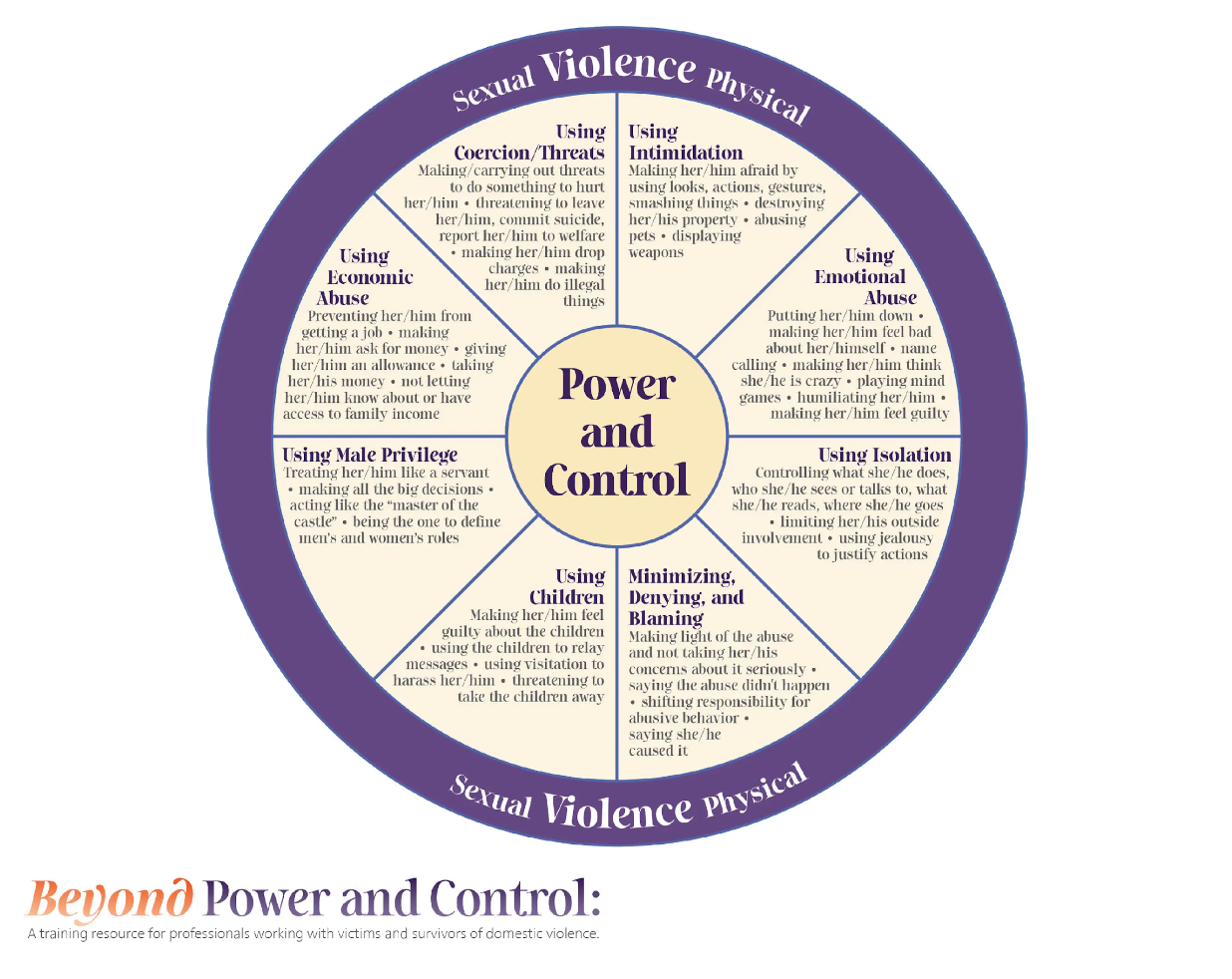
Figure 1 shows the Power and Control Wheel, which we won't cover extensively here, as you can find a detailed explanation in the resources section provided at the end. However, it's crucial to understand that physical and sexual violence within intimate relationships is often intertwined with various elements of coercive control. In essence, these forms of violence are underpinned by coercive control tactics. Without addressing these coercive control dynamics, it's challenging to fully grasp the dynamics of abuse in such relationships. Distinguishing between situational violence and domestic terrorism is important. Situational violence may involve isolated physical incidents, whereas domestic terrorism encompasses a broader spectrum of coercive control tactics, often without direct physical violence.
Figure 1. Power and control wheel. (Click here to enlarge this image.)
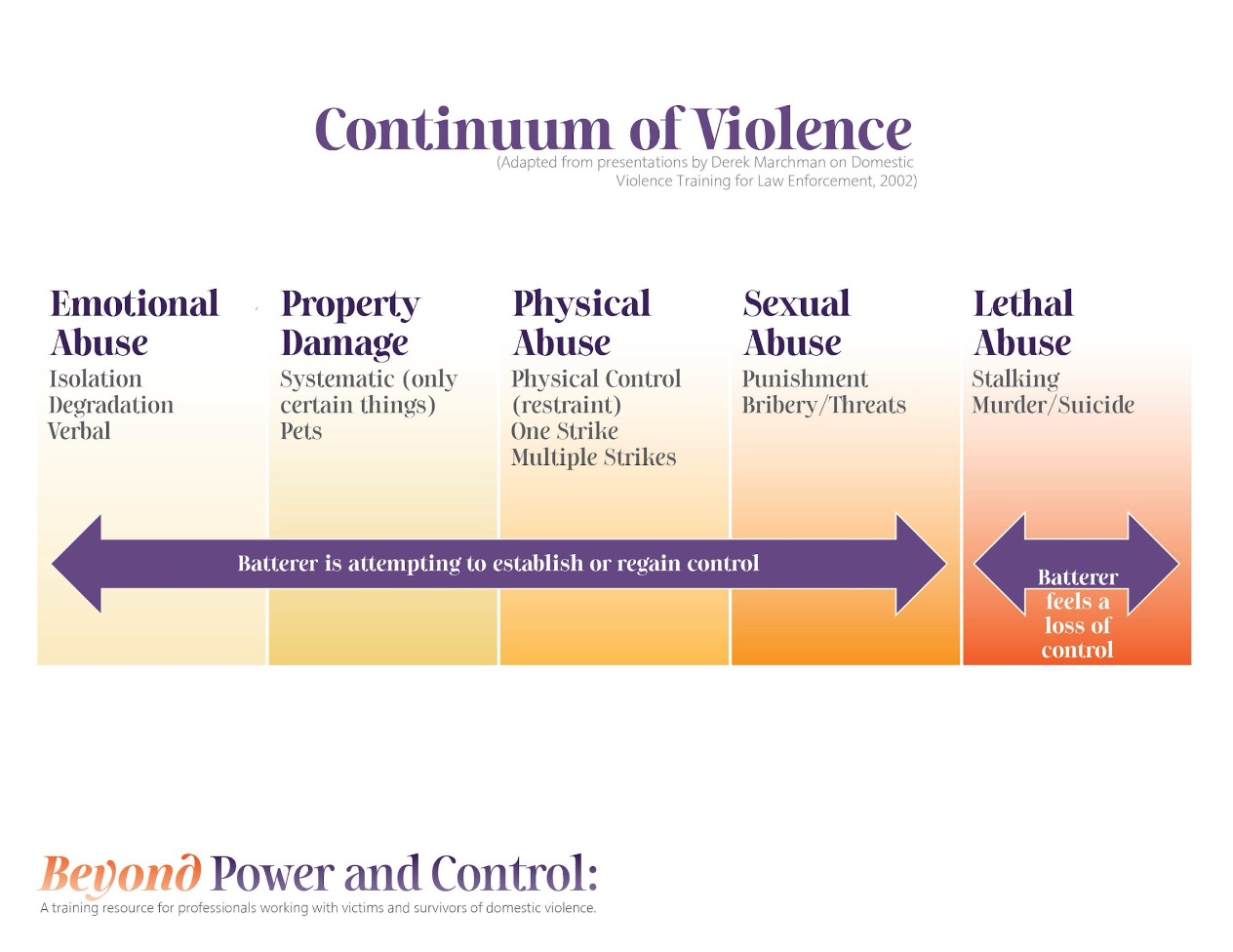
To illustrate some of the behaviors associated with coercive control, let's briefly touch on the continuum of violence, as seen in Figure 2. Perpetrators of abuse may escalate their tactics as they perceive a loss of control over their partner. This escalation can include increased physical, sexual, and even lethal forms of abuse. It's crucial to recognize that even in relationships without a history of physical violence, there's still a risk of lethality. Recent cases in the media highlight this unfortunate reality, where fatalities occurred despite no prior instances of physical abuse. As clinicians, it's imperative to adeptly assess for coercive control dynamics, as they serve as the primary indicator of potential escalation to lethal levels of abuse.
Figure 2. Continuum of violence. (Click here to enlarge this image.)
The Incident Model of Domestic Violence
Let's address the prevailing myth of the incident-based model in the context of how intimate partner violence is perceived and handled within our legal and judicial systems. Currently, many criminal courts, family courts, and child protection agencies operate under the premise of an incident-based model when addressing cases of domestic violence. However, this approach stands in stark contrast to our understanding of the complex dynamics inherent in intimate partner violence.
In criminal court proceedings, for instance, the focus tends to narrow solely on the specific incident of abuse that led to police involvement and subsequent arrest. The broader patterns of abuse leading up to that incident are often overlooked or deemed irrelevant. Similarly, in family court settings, if there's no formal conviction of domestic violence, judges may overlook available statutes designed to protect victims and survivors. This is symptomatic of the pervasive belief in the incident-based model, which oversimplifies the complexities of domestic violence dynamics.
Traditionally, the cycle of violence model has perpetuated this myth, emphasizing a cycle of tension, incident, and reconciliation. However, this framework fails to acknowledge the insidious nature of coercive control and its role in sustaining abusive relationships. In reality, the elements of coercive control—such as isolation, manipulation, and economic exploitation—are often more pervasive and damaging than individual incidents of physical violence.
The implications of adhering to an incident-based model extend beyond legal proceedings and into the realm of mental health treatment. Many survivors of intimate partner violence experience trauma that transcends singular incidents of abuse. The trauma is deeply intertwined with the erosion of autonomy and the systemic response to their experiences. Interactions with the legal system, including disbelief, reluctance to report, or fear of repercussions, often exacerbate this trauma, overshadowing the physical abuse itself.
In essence, the incident-based model fails to capture the full spectrum of abuse experienced by survivors of intimate partner violence. It is imperative that we shift towards a more comprehensive understanding of coercive control dynamics to better support survivors and address the systemic barriers they face in seeking justice and healing.
The Pattern-Based Model
To effect meaningful change in how we address intimate partner violence, it's imperative to shift from the entrenched incident-based model to a pattern-based approach. This paradigm shift is crucial across various professional spheres, whether you're a clinician, law enforcement officer, hospital staff member, or working in child protection. Rather than fixating solely on individual incidents, we must focus on identifying and understanding the patterns of coercive control that underpin abusive relationships.
Domestic violence doesn't suddenly materialize during a single incident—it often begins insidiously, sometimes even before the first date, particularly in the era of online dating. Elements of coercive control, such as manipulation and isolation, may manifest early in the relationship and escalate over time. By recognizing these non-physical forms of abuse as red flags, we can intervene before situations escalate to physical or sexual violence, potentially averting tragic outcomes such as homicide.
Indeed, the current rate of intimate partner homicides is alarmingly high. However, by shifting our collective focus to early intervention and prevention strategies rooted in understanding coercive control dynamics, we can reduce these devastating statistics. This shift requires a concerted effort to educate and raise awareness among professionals and the broader community about the insidious nature of intimate partner violence and the importance of identifying and addressing coercive control behaviors. By breaking free from the constraints of the incident-based model and embracing a pattern-based approach, we can work towards a future where fewer lives are lost to domestic violence.
Situational vs. Domestic Terrorism
When distinguishing between the incident-based and pattern-based models, particularly in contexts like couples therapy or child protection assessments, it's crucial to differentiate between situational abuse and domestic terrorism. Situational abuse typically stems from a deficit in conflict resolution skills or emotional intelligence, resulting in heated arguments or occasional physical altercations. While fear may be present, there's often a lack of pervasive patterns of control or autonomy deprivation within the relationship.
On the other hand, domestic terrorism, as conceptualized by Gottman and echoed in Sue Johnson's Emotionally Focused Therapy (EFT), involves systematic patterns of power and control throughout the relationship. This encompasses various forms of abuse, including financial coercion, emotional manipulation, gaslighting, and minimizing behaviors. Notably, perpetrators may employ "love bombing" tactics early in the relationship, presenting a false facade to align with their partner's values before gradually revealing their controlling nature after commitments are made.
Importantly, domestic terrorism or intimate partner violence is not mutual or bidirectional. Instead, it's characterized by unilateral control exerted by one partner over the other, often involving coercive control tactics aimed at depriving the victim of autonomy and agency within the relationship. By recognizing these distinctions, professionals can better assess and intervene in cases of intimate partner violence, tailoring interventions to address the underlying dynamics at play.
Assessments
As a clinician, your role in working with clients affected by intimate partner violence may vary, influencing the assessments you choose to utilize. Formal assessments can offer valuable insights into the dynamics of coercive control and the level of danger faced by survivors. Here are some assessments commonly used in this context:
- Danger Assessment: Widely utilized by advocacy agencies, the Danger Assessment is adept at gauging levels of danger and assessing elements of coercive control. It is a 20-question assessment that provides valuable information for safety planning and intervention strategies.
- Lethality Assessment: Primarily utilized by law enforcement, the Lethality Assessment focuses on assessing the risk of lethality, particularly regarding the presence of weapons or instances of strangulation. It's a crucial tool consisting of four questions for determining immediate safety concerns.
- DALE Assessment: While less commonly known, the DALE Assessment boasts higher validity and reliability rates than the Lethality Assessment. It is an 11-question assessment also utilized by law enforcement to assess the likelihood of homicide. It specifically targets elements of coercive control. However, its cost may deter widespread use.
- Coercion in Intimate Partner Relationship Scale: This assessment stands out as the sole instrument currently available that comprehensively measures various tactics of coercion (Dutton et al., 2007), including economic, sexual, emotional, and psychological coercion. It offers a holistic understanding of the dynamics at play in abusive relationships.
Each of these assessments serves a unique purpose and can inform tailored intervention strategies. However, it's essential to recognize the challenges associated with using formal assessments, including cost, accessibility, and limitations in capturing the full spectrum of coercive control tactics. As such, a combination of formal assessments, clinical judgment, and ongoing evaluation is often necessary to effectively support survivors of intimate partner violence.
Limitations of Formal Assessments
Using formal assessments with clients affected by intimate partner violence comes with several limitations that must be acknowledged. Firstly, safety concerns may hinder survivors from answering truthfully, particularly if they fear repercussions from their abuser. This underscores the importance of creating a safe and supportive environment for disclosure.
Additionally, the language used in formal assessments may not resonate with survivors' understanding of their experiences. For instance, terms like "narcissistic abuse" may or may not align with survivors' perceptions of their relationships. It's crucial to use language that reflects survivors' realities and validates their experiences, even if it diverges from traditional terminology associated with domestic violence.
Furthermore, many formal assessments primarily focus on physical abuse and may not adequately capture the full spectrum of coercive control tactics, such as emotional or financial abuse. This limited scope can overlook the nuanced dynamics of abusive relationships and hinder accurate assessment and intervention.
Moreover, formal assessments are often normed based on specific demographics, such as cisgender male offenders and cisgender female victims, and may not account for diverse experiences or contexts. This can lead to misinterpretation of survivors' responses and overlooking their situations' complexities.
In response to these limitations, it's essential for professionals to approach assessments with cultural humility, sensitivity, and a trauma-informed lens. This includes actively listening to survivors, validating their experiences, and considering the broader context in which abuse occurs. Supplementing formal assessments with open-ended questions and qualitative inquiry can provide a more comprehensive understanding of survivors' needs and experiences. Ultimately, the goal is to empower survivors to share their stories in a safe and supportive environment, facilitating effective intervention and support.
Behaviors of Coercive Control
When assessing for behaviors of coercive control, professionals should consider a range of factors that may indicate the presence of abuse. While this list is not exhaustive, it highlights key behaviors that warrant attention.
- Isolation
- Excessive monitoring
- Denying autonomy
- Gaslighting and minimization
- Economic abuse
- Reinforcing traditional gender roles
- Using children
- Controlling access to medical care
- Making all sexual relationship decisions
- Threatening to harm pets/children
- Post-separation abuse
Isolation is a significant red flag. Professionals should assess the level of isolation experienced by the survivor, probing when it began and how it manifested. Isolation tactics may include limiting contact with friends and family, controlling communication, or monitoring movements.
Excessive monitoring is another concerning behavior to watch for. Signs of excessive monitoring may include constant check-ins, GPS tracking, or surveillance. It's important to explore how monitoring behaviors started and the methods used, including technological means.
Denying autonomy can erode a survivor's sense of agency. Professionals should evaluate whether the survivor has autonomy over personal decisions, such as clothing choices, religious preferences, or hairstyle. Denial of autonomy can manifest in various aspects of life and contribute to feelings of powerlessness.
Gaslighting and minimization are manipulative tactics commonly employed by abusers. Gaslighting involves manipulating the survivor's perception of reality, while minimization downplays the seriousness of abusive behaviors. The extent of gaslighting and minimization should be carefully examined.
Economic abuse is a pervasive form of control. Professionals should investigate the dynamics of economic abuse, which may involve financial control, exploitation, or sabotage. Economic abuse can take various forms, including restricting access to funds, ruining credit, or coercing financial decisions.
Reinforcing traditional gender roles can perpetuate power imbalances. It's important to identify instances where the abuser reinforces traditional gender roles without mutual agreement or through coercion. This may involve imposing rigid expectations related to gender roles and responsibilities.
Using children to further abuse is a particularly concerning behavior. Professionals should pay attention to whether children are used as tools to perpetuate abuse, both during the relationship and after separation. This can include using children to manipulate or control the survivor or engaging in parental alienation tactics.
Controlling access to care is another significant indicator of abuse. Professionals should assess whether the abuser controls the survivor's access to medical care, sexual health decisions, or threatens harm to pets and children. These behaviors can further entrench power imbalances and inhibit the survivor's ability to seek help.
Post-separation abuse can continue even after separation. Professionals should recognize that coercive control can persist, with abusers using various tactics to maintain control over the survivor's life. This includes harassment, stalking, legal manipulation, and undermining efforts to establish independence.
By carefully evaluating these behaviors and their impact on the survivor, professionals can gain a deeper understanding of the dynamics of coercive control and tailor interventions to promote safety and autonomy.
Assessing as a Clinician
As a clinician, assessing for coercive control and domestic violence may involve a nuanced approach that extends beyond formal assessments. Whether or not to use formal assessments depends on various factors, such as the specific goals of the assessment and the context of the client's situation.
Formal assessments may be useful if the goal is to determine the presence of abuse claims, especially in situations where caseworkers are involved. These assessments can provide valuable insights that inform safety planning and intervention strategies.
Additionally, formal assessments may be beneficial for determining the scope of practice or suitability for working with a particular client. For example, couples therapists may utilize assessments like those in Gottman's work to assess for the presence of domestic violence or terrorism within the relationship.
However, it's essential to consider the limitations of formal assessments, particularly in cases where safety or truthfulness may be compromised. Survivors living with their abusive partners may be hesitant to answer questions truthfully for safety reasons, potentially impacting the validity of the assessment results.
In such cases, clinicians can supplement formal assessments with targeted questions during intake or initial sessions. These questions can help gauge the level of autonomy and decision-making within the relationship, providing valuable insights into the dynamics of coercive control. Here are some examples of questions for your initial sessions.
- How are decisions made in your relationship?
- Does it seem like you have lost relationships with friends and family over the last X number of years?
- Has your physical health changed in the last X number of years?
- How has your confidence level changed over the last X number of years?
I often inquire about the decision-making dynamics within the relationship, prompting clients to provide examples. This helps me gauge the level of autonomy they possess in their relationship. Follow-up questions are essential for further elucidating this aspect.
Another question I frequently pose relates to changes in the client's relationships with friends and family over time. In cases of abuse and coercive control, the answer often reveals significant distancing from loved ones. Follow-up questions delve into the specifics of these changes, exploring factors such as geographical relocation, jealousy, lack of support, or conflicts with the partner.
Assessing changes in physical health is another important aspect of my evaluation. Victims and survivors of intimate partner violence commonly experience significant physical health challenges. I probe for any shifts in health status, such as the onset of autoimmune conditions or unexplained pain.
Additionally, I inquire about changes in the client's confidence levels over time. Many survivors experience a decline in self-assurance, which can be indicative of the psychological impact of coercive control. Exploring these changes provides valuable insights into the client's well-being.
These questions serve as valuable tools for assessing the presence of coercive control within relationships. While I no longer engage in couples therapy, I used to incorporate these inquiries into couple sessions as well. I approach these questions with sensitivity, particularly when suspecting the presence of domestic violence, to ensure the client feels safe and supported.
Why Are They Coming To See You?
As you assess clients, it's crucial to understand their primary reason for seeking therapy. Even if my expertise lies in working with survivors of domestic violence, narcissistic abuse, and coercive control, clients may arrive with different presenting problems. They might have been referred to me by another therapist due to symptoms like severe anxiety, unexplained weight loss, or identity struggles. Therefore, it's essential to explore the underlying reasons for their visit.
Individual Work
- Is the presenting problem IPV/DV?
- Would they resonate with the term “domestic violence”
- Where are they in the healing process?
For instance, severe anxiety might be linked to living in a coercive control environment, leading to trauma, dysregulation, and possibly depression. Assessing their relationships is paramount in understanding their mental health landscape.
Rather than immediately labeling them as victims of domestic violence, it's more effective to discuss specific behaviors they're experiencing and ask questions in a non-judgmental manner. By examining patterns over time, we gradually introduce psycho-education about their experiences. This approach fosters understanding without imposing labels prematurely.
However, prompt safety planning becomes imperative if the client faces imminent danger due to high lethality risks.
Another crucial aspect of assessment is gauging where clients are in their healing journey. Are they still in the relationship, feeling trapped in a trauma bond? Or have they managed to leave but remain dependent? Some may be ready to delve into trauma work, indicating progress in their healing process. Understanding their current stage aids in tailoring interventions to their specific needs.
Couples Work
- Are they safe enough to be honest?
- Assessing between situational violence and domestic terrorism?
When conducting couples therapy, it's crucial to determine if the clients feel safe enough to be honest with each other. Additionally, it's essential to differentiate between situational violence and domestic terrorism, which encompasses coercive control and intimate partner violence (IPV). If one or both partners are experiencing domestic terrorism, it's contraindicated to proceed with couples therapy.
Therefore, it's vital for therapists working with couples to feel confident and comfortable in assessing for signs of domestic terrorism. This ensures the safety and well-being of both partners and facilitates appropriate interventions tailored to their specific needs.
Child Therapy
- Is it ethical to continue working with them?
Clients seeking therapy for their child raise important considerations, particularly regarding the potential impact of domestic violence and coercive control on the child's well-being. While it may not be definitive, it's highly probable that children are affected by such dynamics in the home, even if the parents have separated due to post-separation abuse.
In instances where children are brought in for therapy, such as play therapy, it's imperative to conduct thorough assessments for signs of domestic violence and coercive control. Despite the focus on child therapy, these assessments remain essential.
Given the complexity of the situation, therapists must carefully evaluate the ethical implications of continuing therapy with the family. This involves considering whether it's appropriate to proceed with therapy and if the therapeutic environment is conducive to the child's well-being. The importance of ongoing assessment and ethical decision-making cannot be overstated when providing therapy for children impacted by domestic violence and coercive control.
Safety Planning and Continued Assessment
Once you've completed the assessment, the next steps are crucial. If the risk level is relatively low, meaning there hasn't been physical abuse, weapon use, or strangulation, and the pattern isn't escalating, your approach will differ. You'll focus on safety planning, particularly around high-risk behaviors and any threats that have been identified, including the rapid cycling of abusive incidents.
Safety planning around court decisions is paramount for survivors navigating the family court system post-separation. The period following separation, especially the first year, carries the highest risk of lethality. This is also a critical time to address child safety, as child homicides often occur when court decisions oppose the perpetrator's wishes. Continuous assessment and active listening remain essential, even if the survivor has left the abusive situation years ago.
In the provided resources, downloadable safety plans and videos are available. One is tailored for those still residing in the home, while the other is designed for individuals who have left. Additionally, there's a resource dedicated to tech safety, addressing concerns about potential monitoring through devices like cars and computers. Given recent instances of invasive monitoring tactics, such as key loggers where a partner can see every single keystroke made on the computer, it's crucial to remain vigilant and provide support and resources as needed.
Assessment Over Time
Assessment over time is crucial, especially considering that as your client improves, particularly if they're still in the same environment, the lethality risk may rise. This stems from the dynamics of coercive control, where the abusive individual escalates their behavior to maintain dominance when they sense losing control. Even if there hasn't been physical violence yet, it doesn't guarantee safety, even after leaving the situation. The normalization of coercive behaviors often hampers early assessment efforts. Clients may downplay, excuse, or even conceal aspects of their experiences as a survival mechanism rooted in a lack of trust in themselves and others.
This process can be gradual, and therapists may find themselves grappling with self-doubt and frustration over what seems like slow progress. It's important to acknowledge that these cases often progress at a different pace and require patience and persistence. Despite any challenges, therapists should recognize their efforts and the inherent difficulty of addressing abuse within the therapeutic setting.
Aha Moments
Your "aha" moments in therapy often stem from maintaining a non-judgmental stance and fostering a safe space for your clients. Prioritizing safety and trust-building lays the groundwork for accurate assessment and effective intervention. Unless there are immediate threats of violence or harm, your primary focus should be on creating an environment where clients feel secure and supported. This foundation of safety enables them to engage in the therapeutic process and absorb the psychoeducation and insights you provide.
When discussing coercive control and domestic violence, it's essential to begin with specific behaviors rather than labeling their experiences outright. By exploring these behaviors and identifying patterns, you empower clients to recognize the dynamics in their relationships. Additionally, it's crucial to respect their autonomy throughout the therapeutic journey. Avoid replicating the power dynamics of the abuser by allowing clients to make their own choices and decisions about their lives.
Your role as a clinician is to help clients reclaim their sense of self, rediscover their values, and regain autonomy over their lives. By fostering a collaborative and empowering therapeutic environment, you support clients in their healing journey for themselves and their families.
Examples
Example 1
Here's an example to illustrate the importance of understanding coercive control, even in cases where physical violence isn't present.
Kate, “But he never hit me.”
- Late 40s, one child, graduate degree
- Married 12 years
- Attended same church
- Moving her away from family, friends, job, church
- Slow shift in preventing her from making financial decisions
- Indirect emotional abuse
- Feigning concern for mental health
- Spiritual abuse
- Abuse ramped up after separation
A client sought therapy feeling completely off balance and anxious, yet she didn't perceive herself as a victim of domestic violence because her partner never physically harmed her. Despite this perception, her therapist referred her to me, noting my specialization in working with domestic violence survivors. In our sessions, she revealed a complex story: married for 12 years with a child, she seemed to have a stable life until she became pregnant, and subtle shifts began.
Initially, it seemed like a reasonable decision—moving for better opportunities and climate—but gradually, she was isolated from family, friends, her job, and church. Financial autonomy slipped away, and emotional abuse insidiously crept in, particularly targeting her family of origin. Her partner feigned concern for her mental health but weaponized it against her. There was also significant spiritual abuse.
After deciding to leave, the abuse escalated post-separation. Legal battles became relentless, draining her financially and emotionally. The constant court appearances hindered her job search, trapping her in a cycle of control and manipulation.
This case underscores the need to recognize coercive control beyond physical violence. Despite the absence of overt abuse, the client endured a systematic erosion of her autonomy and well-being. Her reluctance to seek help initially highlights the pervasive myths surrounding domestic violence, emphasizing the importance of understanding and addressing coercive control in therapeutic practice.
Example 2
Here's a case study involving a couple, AJ and Sandy, who initially sought therapy for communication issues and postpartum support. Despite eight months of therapy, Sandy's anxiety symptoms worsened. When the therapist inquired about physical violence at home, both denied any occurrence.
The narrative shifted from the couple's issues to escalating concern for Sandy's mental health, leading to a referral to a psychiatrist. The clinician reported starting to "feel something was not right" and sought consultation, prompting a discussion on restructuring sessions to focus on couple dynamics and probing into decision-making, finances, and care for the child. As the therapist held AJ accountable and asked probing questions, the sessions became tense, eventually culminating in a physical altercation that hospitalized Sandy.
Remarkably, throughout their relationship, there had been no prior incidents of physical violence. This case underscores the importance of ongoing assessment, as subtle signs of coercive control may not be immediately apparent. Recognizing these dynamics early on could have prompted a referral to individual therapy for Sandy before attempting couples work, as it became evident that the relationship dynamics posed significant risks.
Coercive control's insidious nature often keeps it concealed, making it challenging to detect. Our preconceptions about domestic violence and coercive control can blind us to its presence. The relationships affected by these dynamics may appear normal on the surface, further complicating identification. Moreover, victims themselves may struggle to recognize the extent of their situation.
Wrapping It Up
In conclusion, it's imperative to transition away from an incident-based approach to addressing domestic violence and coercive control. This shift is crucial because relying solely on isolated incidents overlooks a significant portion of abuse, limiting our ability to prevent further harm and protect vulnerable individuals, including children. Embracing a pattern-based model enables us to intervene more effectively and mitigate the risk of lethality, physical violence, and the psychological impact on children.
While formal assessments have their limitations, they remain valuable tools in our efforts to address coercive control. However, it's essential to recognize that assessing coercive control is a nuanced process that requires time and trust to navigate successfully. This is particularly true in couples therapy, where establishing rapport and understanding the dynamics of the relationship are paramount. Communicating this need for time and patience upfront can help clients appreciate the complexity of the assessment process and foster a collaborative approach to addressing their concerns.
Resources
NetDoctor. (2020). Coercive control. https://www.netdoctor.co.uk/healthy-living/a26582123/coercive-control/
Psych Central. (2023). Coercive control. https://psychcentral.com/health/coercive-control#humiliation
Stalking Awareness Organization. (n.d.). Definition FAQs. Accessed on 4/1/2024. Retrieved from: https://www.stalkingawareness.org/definition-faqs/#1537978411858-2c051fd6-222b
Beyond Power and Control. (2024). Physical Safety Checklist. https://www.beyondpowerandcontrol.com/uploads/8/3/2/8/83280480/bpac_physicalsafetychecklist.pdf
New South Wales Government. (2015). Domestic Violence Safety Assessment Tool (DVSAT). http://www.domesticviolence.nsw.gov.au/__data/assets/file/0020/301178/DVSAT.pdf
Rising Beyond Power and Control. (2024). Resources. https://www.risingbeyondpc.com/resources.html
YouTube. (2023). [Is My Ex Tracking Me? Tips to Protect Yourself and Your Family]. https://www.youtube.com/watch?v=Ku07ZyBfDlU&t=2356s
Centers for Disease Control and Prevention. (2022). Fast Facts: Intimate Partner Violence. https://www.cdc.gov/violenceprevention/intimatepartnerviolence/fastfact.html
References
Crossman, K. A., Hardesty, J. L., & Raffaelli, M. (2016). “He could scare me without laying a hand on me”: Mothers’ experiences of nonviolent coercive control during marriage and after separation. Violence Against Women, 22(4), 454–473. https://doi.org/10.1177/1077801215604744
Dichter, M. E., Thomas, K. A., Crits-Christoph, P., Ogden, S. N., & Rhodes, K. V. (2018). Coercive control in intimate partner violence: Relationship with women's experience of violence, use of violence, and danger. Psychology of Violence, 8(5), 596-604. https://doi.org/10.1037/vio0000158
Johnson, M. P. (2008). A typology of domestic violence: Intimate terrorism, violent resistance, and situational couple violence. Northeastern University Press.
Jones, M. S. (2020). Exploring coercive control, PTSD, and the use of physical violence in the pre-prison heterosexual relationships of incarcerated women. Criminal Justice and Behavior, 47(10), 1299-1318. https://doi.org/10.1177/0093854820920661
Kennedy, A. C., Bybee, D., Mccauley, H. L., & Prock, K. A. (2018). Young women’s intimate partner violence victimization patterns across multiple relationships. Psychology of Women Quarterly, 42(4), 430–444. https://doi.org/10.1177/0361684318795880
Lohmann, S., Cowlishaw, S., Ney, L., O’Donnell, M., & Felmingham, K. (2024). The trauma and mental health impacts of coercive control: A systematic review and meta-analysis. Trauma, Violence, & Abuse, 25(1), 630-647.
Spearman, K. J., Hardesty, J. L., & Campbell, J. (2022). Post-separation abuse: A concept analysis. Journal of Advanced Nursing, 00, 1–22. https://doi.org/10.1111/jan.15310
Stark. (2007). Interpersonal violence. Coercive control: How men entrap women in personal life. In Interpersonal violence. Coercive control: How men entrap women in personal life (Editor). Oxford University Press.
Stark, E., & Hester, M. (2019). Coercive control: Update and review. Violence Against Women, 25(1), 81–104.
Yaxley, R., Norris, K., & Haines, J. (2017). Psychological assessment of intimate partner violence. Psychiatry, Psychology and Law, 25(2), 237-256. https://doi.org/10.1080/13218719.2017.1356211
Additional Current References
Please Note: The following resources have been included so members can view additional resources associated with this topic area. The presenter did not use these resources when creating this course.
Becker, P., Miller, S. L., & Iovanni, L. (2024). Pathways to resistance: Theorizing trauma and women’s use of force in intimate relationships. Violence Against Women, 1. https://doi.org/10.1177/10778012241233000
Cardenas, I., Graham, L. M., Sarmiento Mellinger, M., & Ting, L. (2024). Individuals who experience intimate partner violence and their engagement with the legal system: Critical considerations for agency and power. Journal of Health Care Law & Policy, 27(1), 113–144.
Juarros-Basterretxea, J., Fernández-Álvarez, N., Torres-Vallejos, J., & Herrero, J. (2024). Perceived reportability of intimate partner violence against women to the police and help-seeking: A national survey. Psychosocial Intervention, 33(1), 55–64. https://doi.org/10.5093/pi2024a3
Lohmann, S., Cowlishaw, S., Ney, L., O’Donnell, M., & Felmingham, K. (2024). The trauma and mental health impacts of coercive control: A systematic review and meta-analysis. Trauma, Violence & Abuse, 25(1), 630–647. https://doi.org/10.1177/15248380231162972
Peeren, S., McLindon, E., & Tarzia, L. (2024). “Counteract the gaslighting” – a thematic analysis of open-ended responses about what women survivors of intimate partner sexual violence need from service providers. BMC Women’s Health, 24(1), 1–11. https://doi.org/10.1186/s12905-024-02943-1
Citation
Cummin, S. (2024). Decoding coercive control: Advanced strategies for proficient domestic violence assessment. continued.com - Social Work, Article 257. Available at www.continued.com/social-work
Apr 15, 2024
1 CE Credit