Course Articles
Introduction to Sand Tray Therapy
Katie Fries, LCSW, MSW
Editor's Note: This text-based course is an edited transcript of the webinar, Introduction to Sand Tray Therapy, presented by Katie Fries, MSW, LCSW.
Learning Outcomes
After this course, participants will be able to:
- Identify the various categories of sand tray miniatures and the ways in which clients of various ages frequently use them in therapy.
- Explain the difference between directive and non-directive sand tray prompts and benefits to both.
- Identify the importance of being grounded in clinical theory when utilizing sand tray therapy.
Diversity, Equity, and Inclusion
Continued.com is committed to infusing the principles of diversity, equity, and inclusion (DEI) into its continuing education courses. Please ensure that your course meets the following DEI criteria:
- The course content discusses treating a range of different populations/backgrounds and how different groups may be affected.
- The course content acknowledges differences between populations.
- The course addresses limitations and where necessary, specific limitations related to DEI.
- The course uses inclusive and culturally sensitive language. The following resource may be helpful: APA Inclusive Language Guidelines.
Introduction
Thank you so much, and hello, everyone. I’m delighted to be here with you today to explore a topic that I hope you’ll find engaging and thought-provoking. We’ll dive into a therapeutic approach that offers an alternative to traditional talk therapy—something a little different but incredibly meaningful in its application.
When most people think of therapy, they often picture sitting and talking about how their day went or working through challenges verbally. While talk therapy is undoubtedly valuable and effective, today we’ll discuss sand tray therapy as an alternative or complementary approach. We’ll explore how it works, why it’s impactful, and how it can benefit different populations.
Throughout this presentation, I hope to spark your curiosity and help you envision how sand tray therapy could expand the ways we support clients in their journeys. Let’s get started!
Limitations/Risks
Sand tray therapy is a specialized therapeutic tool that can be integrated with various therapeutic approaches, depending on the modality or theoretical framework you align within your practice. For instance, sand tray therapy can be applied through a cognitive behavioral lens, a psychodynamic perspective, or even within an internal family systems framework. However, it’s not just a general technique—it is a unique and nuanced practice that requires specific training and expertise to use competently and ethically.
I want to emphasize that this webinar serves as an introductory overview. We will be scratching the surface, offering a broad introduction rather than an in-depth training or certification. If this material resonates with you and interests you in delving deeper, the resource handout accompanying this presentation includes excellent books and training opportunities. Many of the authors listed provide comprehensive clinical training in sand tray therapy. While there are numerous sand tray therapy trainings available online, I strongly encourage clinicians to pursue education, certification, and supervision to ensure their competency in this area.
Another crucial point to recognize is the cultural nuances of symbols and metaphors in sand tray therapy. The meanings of these elements can vary significantly across different cultural backgrounds. Clinicians must approach this work with cultural humility and sensitivity, as we’ll explore further during the presentation. Understanding the symbolic language of clients requires not only training but also an ongoing commitment to cultural competence.
It’s equally important to be mindful of the emotional intensity that sand tray therapy can evoke. This modality taps into a deep, symbolic, and emotional part of the brain, often engaging the limbic system, which stores some of our most profound emotional experiences. Because of its unique capacity to access these deeper layers, sand tray therapy may elicit strong emotions or memories that clients may find overwhelming.
As therapists, it is our responsibility to manage these risks effectively. This includes ensuring client safety, providing emotional regulation strategies, and offering resources to support clients as they navigate this often intense therapeutic process. Whenever we use modalities designed to access the deeper parts of a person’s emotional or neurological experience, we must be equipped to handle what emerges. This requires both training and practice in grounding techniques to help clients feel contained and supported, especially when exploring emotionally charged content.
What Is Sand Tray Therapy?
Let’s dive into what sand tray therapy is. Some of you might already be familiar with this approach, while for others, it might be entirely new. For today’s training, our focus is on the practical techniques of sand tray therapy and how it looks in a clinical session. While we won’t delve deeply into its history, I encourage you to explore it further if this topic sparks your interest. The development of sand tray therapy has a fascinating background that enriches the understanding of this modality.
One distinction I want to make clear is the difference between what we’re covering today and what is often referred to as sand play therapy, particularly from a Jungian perspective. Sand play therapy, especially in its Jungian form, involves specific training and a unique framework for interpreting symbols. This is different from the approach I’ll be presenting. It’s not a matter of one being better or worse—they are simply different modalities with unique philosophies and methods.
What I’ll be teaching today is focused on sand tray therapy, which has its techniques and applications. While both share similarities and overlap in using symbols and metaphors, the processes and theoretical underpinnings differ significantly. To illustrate, the image shown here (Figure 1) is from my practice and offers a glimpse into how I approach sand tray therapy in a clinical setting.
Figure 1. Example of a sand tray.
The image shown here is a real representation of the miniatures and sand tray we use in our practice—not a stock photo from the internet. These are actual tools we have in our office, and this particular setup was created by some of my colleagues selecting items from the shelf and placing them in the tray. It’s important to note that this isn’t a depiction of anyone’s emotional or internal experience. Nothing about this image reveals private or therapeutic content.
When you look at this picture, consider what it evokes in you. What questions or curiosities arise as you observe the items in the tray? You might notice fences, a snake, some hands, or even recognize a character like Sadness from Inside Out. There’s a toilet, a ring of fire, and other items. If I were processing a sand tray with a client, I wouldn’t direct them by saying, “Tell me about the fire” or “Explain the fences.” Instead, I’d simply say, “Tell me about this.” This allows the client to define their meaning. What appears to be a fence to us might represent a wall or a barrier to them, and what we interpret as fire could symbolize something entirely different. It’s critical to avoid projecting our interpretations onto the client’s creation.
Sand tray therapy is a form of play and creative expressive therapy that can be used across all ages. This versatility is one of its strengths. While miniatures, or figures, might resemble toys to younger children—an entirely valid perception—they are tools for expression for anyone, not just children. Sand tray therapy can be highly effective with adults, families, couples, or groups, offering unique opportunities for shared exploration and communication.
Why Sand?
When working with sand in sand tray therapy, the sand itself often becomes part of the environment being represented. For example, a client might shift the sand to one side to create the appearance of a hill or a valley. The blue base of the tray might suggest water, although it’s important to remember that clients might interpret or use these elements in entirely different ways. The flexibility and open-ended nature of the sand allows it to serve as a canvas for a client’s imagination and emotional expression.
One particularly valuable aspect of sand tray therapy is how the sand can function as a regulating resource. Many clients find comfort or soothing simply by raking their hands or objects through the sand. This tactile engagement can provide a sense of calm and grounding. For those familiar with EMDR (Eye Movement Desensitization and Reprocessing) or other therapies that incorporate the concept of a safe or calm place, this may sound familiar. The beach, for example, is a common setting that clients often associate with relaxation and comfort. Just imagining the sensations of being at the beach can elicit a deeply embodied sense of calm for many people.
Similarly, physically interacting with the sand—whether with hands, tools, or funnels—can have a calming effect, providing regulation and comfort without the need to include miniatures. This quality makes sand tray therapy not only expressive but also a resource for grounding and emotionally soothing, adaptable to clients of all ages.
The sand in sand tray therapy can function as a therapeutic tool, even beyond its metaphorical use. Simply interacting with the sand—sifting, shaping, or smoothing it—can give clients a sense of grounding and regulation. This tactile engagement creates a safe and soothing starting point for deeper therapeutic work.
Use of a Metaphor
Now, let’s turn to the central component of sand tray therapy: metaphor. Metaphors are powerful tools in therapy because they allow clients to express ideas or emotions that they may not fully understand or articulate yet. For instance, imagine a client describing their dynamic with a boss as "hard to put a finger on." They may feel triggered or dysregulated in this relationship but struggle to pinpoint why. By creating a sand tray representation of their relationship, they can choose symbols that bring clarity to their experience, enabling them to explore and articulate the complexities of their feelings in a way that words alone may not allow.
Metaphor also facilitates the expression of subconscious material just beginning to emerge into awareness. Through the selection and arrangement of miniatures, clients may unconsciously reveal patterns, dynamics, or emotions that can then be explored more consciously in therapy. This process allows deeper insights to surface gently and organically, guided by imagery and symbolism rather than direct confrontation.
Similarly, metaphor can serve as a bridge when clients are not yet ready to bring certain issues fully into consciousness. For example, a child dealing with bullying might feel too vulnerable to explicitly state, "I am being bullied." Instead, they might use a miniature dog and a larger dinosaur to represent their feelings. The client doesn’t have to verbalize the connection between the figures and their real-life situation. They might simply arrange the figures in the tray or act out a scene. The therapist can then engage with the symbolism at a safe distance, asking open-ended questions like, "I wonder what it’s like for the dog to be this size compared to the dinosaur." This approach provides the client with a safe therapeutic distance, enabling them to explore challenging emotions without feeling overwhelmed.
This distance is particularly helpful when working with younger children, who might use play to express their experiences. By engaging with the symbols and scenarios in the sand tray, the therapist can help the child process their feelings indirectly. For instance, rather than asking directly about the client’s sense of powerlessness, the therapist can explore the dynamic between the miniatures, fostering reflection and insight in a way that feels safe and non-threatening.
Metaphor also makes it possible to communicate something that is difficult to say outright. This difficulty might stem from vulnerability, emotional intensity, or lacking the right words to express the experience. The saying "a picture is worth a thousand words" aptly captures the power of sand tray therapy. A single miniature or arrangement in the tray can convey complex emotions, experiences, or relationships far more deeply than verbal language might allow.
By leveraging metaphor, sand tray therapy helps clients externalize their inner experiences, offering both a mirror and a safe container for exploration. Whether working with children, adults, or groups, this approach allows for deep, meaningful work while maintaining a sense of safety and regulation.
Frequently Used Figures By Age Group
Let’s discuss the figures frequently used in sand tray therapy across different age groups. It’s essential to start by acknowledging that clients of any age might select and use any figure to represent a wide range of feelings, experiences, or metaphors. The meaning of each figure is deeply personal, and its significance is entirely determined by the client’s unique perspective. That said, certain symbols do tend to resonate more frequently with specific age groups, which can provide helpful context for understanding the choices clients might make.
I’ll show a few examples of sand tray miniatures I have here. These miniatures can help illustrate the kinds of items that are often included in sand trays and how they might be used in practice. Take Figure 2, for example, which I describe as a wave. This is a versatile symbol that could mean different things depending on the client’s interpretation. For a child, it might represent a beach scene, a place of play, or a source of comfort. For an adolescent or adult, the wave might symbolize a feeling of being overwhelmed or a representation of life’s ebb and flow. The beauty of sand tray therapy is that the meaning of any figure, including something as seemingly straightforward as a wave, is fluid and shaped entirely by the client’s narrative.
Figure 2. A miniature of a wave.
For example, a client might use a wave figure to represent their safe and calm place, such as being at the beach—a setting that brings them comfort and relaxation. Another client might use the same figure to depict a happy memory, like a vacation involving water. Alternatively, someone could use the wave to express the feeling of being overwhelmed by stress, perhaps at work. In that scenario, they might even place a small person in the tray alongside the wave to symbolize how it feels to have the wave crashing over them, embodying their sense of being engulfed by stress or responsibility.
The key point here is that there is no right or wrong way for clients to use these symbols or miniatures. Each figure’s meaning is entirely subjective, shaped by the client’s personal experience and narrative. Hopefully, this gives you a sense of the versatility and depth of how a single sand tray miniature can explore a wide range of emotions and experiences.
2-7 Years Old
When working with young clients, the sand tray miniatures they often gravitate toward include houses, people, trees, fences, and animals. Interestingly, younger clients frequently prefer using animals over people figures, though they may still select miniatures like babies, parents, houses, or even bathroom fixtures to represent their world or emotions. These choices often reflect their way of processing experiences and expressing feelings symbolically.
One critical guideline when working with clients, especially younger ones, is to refrain from labeling the items in the tray until the client does. As we discussed earlier, instead of saying, “Tell me about the tree” or “What does the rabbit represent?” it’s better to ask something open-ended, like “Tell me about that.” For instance, while we might see a wave and naturally label it as such to the client, it might represent something entirely different, like a cloud or a nest. By allowing the client to define the miniature’s meaning, we open the door to their unique perspective and encourage them to take ownership of their narrative.
This approach helps ensure the therapeutic process stays client-centered and free from projection, allowing the client’s voice and experiences to emerge authentically.
7-11 Years Old
For clients in the 7-11 age range, it’s common to see sand trays that include elements like additional trees, farm scenes, cars, wedding figures, fire, knights, and soldiers. Of course, this isn’t a hard and fast rule, and it’s important to stress that the absence of these items in a client’s tray doesn’t indicate something is wrong or clinically significant. Sand tray work is deeply personal, and what a client includes—or doesn’t include—reflects their unique experiences and preferences.
However, for therapists who are newer to sand tray therapy or building their collection of miniatures, it can be helpful to know what items are frequently chosen by different age groups. This insight can help you ensure you have a diverse selection of miniatures that resonate with the clients you work with most often.
For example, in my practice, I’ve noticed that younger clients, particularly those under 11, tend to gravitate toward animals as one of their primary choices for depicting their world. This is not to say that older clients won’t use animals—they do—but animals are often the go-to choice for younger clients. Being aware of these tendencies can help you anticipate what miniatures might be most meaningful or engaging for your clients while still leaving plenty of room for individual expression.
Age 11 Years and Up
For clients aged 11 and up, it’s helpful to have miniatures that allow them to create towns or villages, including schools, places of worship, or other community structures. This age group often uses figures to depict experiences or environments tied to their growing sense of identity and their place in the world. Additionally, landscaping elements like trees and bridges are frequently chosen alongside more mythical or fantastical figures such as princesses, dragons, or dungeons. These symbols often represent themes of imagination, adventure, or personal challenge that resonate with this developmental stage.
Age 21-65 Years
When working with adults, generally between the ages of 21 and 65, the themes explored in sand tray therapy often shift to reflect significant life experiences and relationships. Miniatures such as houses, trees, places of worship, wedding items, and figures representing couples are frequently chosen. These symbols align with common experiences adults navigate, such as partnerships, marriage, family dynamics, or significant personal milestones. These miniatures can serve as powerful tools for clients to explore and express their emotions and experiences in a tangible and meaningful way.
It’s important to remember that these tendencies are not universal or prescriptive. Each client will bring their unique perspective, and their choices in the sand tray will reflect their individual stories and needs. However, understanding these general trends can be helpful when selecting miniatures for your collection. Having items that resonate with the life stages of the populations you work with most frequently ensures that clients have access to various symbols to construct representations of their inner experiences in ways that feel authentic and relevant to them.
Late Adulthood
When working with individuals in later adulthood, the miniatures they choose may often reflect themes of spirituality, mystery, or the unknown. These figures might symbolize existential questions or struggles related to end-of-life challenges, transitions, or reflections on legacy and meaning. The selection and arrangement of these figures can provide a profound way for clients to explore and express emotions and thoughts that may be difficult to articulate verbally.
There’s a quote that I find particularly meaningful in explaining the power of sand tray therapy:
"When the sand play figurines become symbols, they begin to express the language of our unconscious. Connection to what is unconscious in us supports emotional healing and personal development."
This beautifully captures why sand tray therapy is such an impactful tool. It allows clients to access and give shape to deeper emotional experiences, connecting them to parts of themselves that might otherwise remain unspoken or unrecognized. The figurines become conduits for healing and growth, offering a safe and creative way to engage with the complexities of their inner world.
Main Categories of Miniatures
To start building a sand tray miniature collection, it’s helpful to focus on a few main categories. One key category is environmental and structural items, such as bridges, trees, rocks, houses, and fences. These items help clients create a physical setting in their tray, allowing them to represent environments that feel meaningful to them.
Another important category is people and character figures. These should reflect the population you work with. For example, if you primarily work with children, your collection should include figures that look like children, not just adults. Similarly, if you’re working with adults, it’s important to have figures that represent adults. Beyond age, it’s essential to include diverse representations in your collection. Figures should reflect the racial, cultural, and religious backgrounds of your clients to ensure they feel seen and supported in the therapeutic process. Tailoring your collection to the demographics of your client base makes the sand tray experience more relevant and meaningful.
It’s also worth considering the level of abstraction in your miniatures. For younger clients or individuals in a more concrete developmental stage, figures that are more literal and specific may be easier to work with. These clients may find it challenging to project onto abstract miniatures. On the other hand, older clients or adults often appreciate more abstract miniatures, as these can invite deeper reflection and projection, allowing them to explore their experiences in a symbolic way.
To give a sense of what this might look like, I’ve brought some examples from my own collection. Here’s one miniature (Figure 3) depicting a person holding a new baby. This could resonate differently for each client, representing anything from a nurturing relationship to a memory or a life transition.
Figure 3. A miniature of a person holding a new baby.
If you’re working in a shared space where not everyone uses sand tray therapy, it’s important to organize your collection thoughtfully. For instance, using shelves with doors can significantly reduce visual clutter, creating a calmer environment. This is especially beneficial for clients who may feel overwhelmed by excessive visual stimulation. Having a well-organized, contained space helps maintain the functionality of the shared area while ensuring the sand tray collection is accessible and inviting for clients.
Although I can’t display my entire collection right now, I’ve brought a few examples to give you an idea of what a versatile selection of miniatures might include. For instance, Figure 4 shows a miniature of heart hands. This figure can hold a variety of meanings depending on the client’s perspective—symbolizing love, connection, or even self-compassion. Its versatility allows it to serve as a meaningful tool for clients of various ages and backgrounds.
Figure 4. A miniature of heart hands.
By curating a thoughtful and well-organized collection of miniatures, you create a therapeutic environment that supports a wide range of client needs and enhances the therapeutic experience. Again, you can see how emotionally evocative these can be.
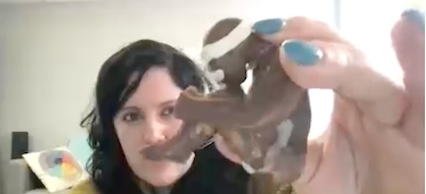
Figure 5 shows a miniature of a person with what looks like a blindfold over their eyes and mouth. This figure can hold various meanings for different clients, as a powerful symbol to explore complex emotions or experiences.
Figure 5. A miniature of a person with a covering over their eyes and mouth.
Next is a miniature of what looks like a person looking at their phone or a screen and a child reaching up to them (Figure 6).
Figure 6. A miniature of a person looking at a screen with a child looking up at them.
And often, this miniature can be used to describe experiences like emotional neglect. There are so many different miniatures available, and if you’re interested in exploring this further, you’ll find an incredible variety of figures that can represent a wide range of experiences.
Other common categories of miniatures include transportation and machines, animals and creatures, and general objects or "things." As those familiar with play therapy may already know, it's important to emphasize that miniatures can serve as a client’s words. This applies not only to children but to people of any age. Essentially, the more miniatures you have available, the more "words" your clients have to articulate and describe their experiences in the sand tray. This diversity allows for richer and more meaningful exploration of their inner worlds.
Non-Directive Sand Tray
Now, let’s talk about an example of what a non-directive sand tray session might look like. In a non-directive approach, you might invite the client to select as many or as few miniatures as resonate with them. One way to do this is by prompting clients to choose the miniatures they are positively drawn to and those they feel negatively repelled by. For example, they might say, "I like this one," or experience a visceral reaction of dislike toward another. The invitation would then be for them to place these chosen items in the tray in any way they feel fits, followed by a processing discussion.
Another approach could involve a simple, open-ended prompt, such as, "Create your world in the tray." This can be an introductory way for the client to explore the sand tray and for you, as the therapist, to gain insight into what feels significant in their internal or external world.
For example, you might notice whether the world they create feels sparse, with few items placed, or chaotic and full of activity. These observations can inform your understanding of what might be important in the client’s life and offer a starting point for deeper exploration.
Directive Sand Tray
Examples of directive sand tray prompts might include inviting a client to create a scene about a specific topic, such as, "Create a scene about what school feels like." This prompt is versatile and adaptable for clients of all ages, whether in first grade, ninth grade, college, or graduate school. It highlights how sand tray therapy can meet the needs of individuals at different stages of life.
You could also ask clients to create a scene about a relationship, such as a romantic, family, or peer relationship. Another idea is to invite them to depict an abstract concept, like "Create a tray about what love feels like." These prompts encourage clients to explore their inner experiences in a symbolic way that can provide meaningful insights.
A particularly impactful prompt is asking clients to create a tray about their safe or calm place. This approach is especially useful in trauma therapy or when helping clients develop grounding and resourcing skills. It aligns well with polyvagal theory, a framework developed by Stephen Porges and expanded upon in clinical practice by Deb Dana. Polyvagal theory explores how different states of the nervous system impact our experiences and behaviors.
Incorporating polyvagal theory into sand tray therapy might involve asking the client to create a tray that reflects the different states of their nervous system. For example, you could have them divide the tray into three sections and depict what it feels like to be in the ventral vagal state, often associated with connection, rest, and safety. They could then create a tray about the sympathetic state, reflecting anxious, heightened, or jittery energy. Lastly, they might depict the dorsal vagal state, often characterized by low energy, withdrawal, or depressive feelings.
What the client creates and the miniatures they select to represent these states can offer a window into their experiences. This process can be a powerful way to help clients understand and articulate their internal states, fostering self-awareness and promoting regulation in a way that is both accessible and deeply personal.
Important Sand Tray Skills
Let’s talk about some foundational skills for sand tray therapy. One critical aspect is the importance of reflecting on what the client creates without interpreting or judging it. This approach might differ from other modalities that use sand or miniatures. For example, if a client places a wave-like figure in their tray, it wouldn’t be helpful to ask, "Why did you put that in there?" or to say, "That doesn’t belong—it looks like something from a beach, but everything else you’ve placed looks like animals." Similarly, just as we wouldn’t tell clients in talk therapy that their feelings or statements are incorrect, we must avoid suggesting a "right" or "wrong" way to create their tray.
We also avoid interpreting their choices or projecting meaning onto what they’ve created. For example, if they use the wave figure, we wouldn’t say, "You must have chosen a wave because you’re overwhelmed." Instead, we might ask open-ended questions like, "Tell me about what you placed over there," or, "I’m curious about this part of the tray." This leaves space for the client to share their interpretations and insights, ensuring the process remains centered on their experience.
Another key component of sand tray therapy is maintaining a mindful presence. This means staying fully attuned to the client’s verbal and nonverbal communication throughout the process—whether they’re selecting miniatures, arranging their tray, or discussing it. For example, if a client picks up a figure and hesitates, perhaps cringing or showing tears before setting it down or placing it in the tray, these actions can offer valuable insights into their emotional world. How they interact with the miniatures—whether they place them gently or quickly, keep or put them back—can hold significant meaning. If we’re distracted, perhaps looking out the window or checking a phone, we risk missing these subtle but important cues. This attunement is essential for creating a therapeutic connection and understanding the client’s experience.
Equally important is respecting the client’s ownership of the tray. The sand tray is their sacred space to depict their experience, so we should refrain from physically interacting with the tray or its contents. For example, we don’t run our hands through the sand while they’re working, as this could feel invasive or disruptive. There is an exception to this, often when working with younger children who might create what is called a "moving world." In these cases, the client may invite the therapist to participate, saying, "You be this figure, and I’ll be this one." If the client invites this kind of participation, you can use your clinical judgment to decide whether and how to engage. However, unless invited, keeping your hands out of the tray is important to preserve the client’s sense of control and safety.
By respecting the client’s autonomy, staying present, and avoiding judgment or interpretation, we can create a space where clients feel supported and free to explore their inner worlds authentically and safely.
General Helpful Questions
Here are some additional examples of questions that can be helpful to ask during a sand tray session. For example, “As you look at the tray from different angles or sides, what feelings are you noticing or sensing?” This question can be particularly powerful because creating a sand tray allows clients to externalize their internal experiences. By doing so, they may notice or access emotions that have previously felt trapped or inaccessible. This process can open up new insights, but it’s important to approach it slowly and thoughtfully. Rather than rushing to make meaning or interpret the tray, inviting the client to tune into their emotional or physical sensations while observing their creation can be equally significant.
Another useful question is, “If this picture, or the sand tray, had a title, what would the title be?” This question can help encapsulate the overarching theme of what the client has created. For example, imagine you give a child the prompt to create a tray about what school feels like. After they finish, you ask them to give their tray a title, and they respond with something like I Am Invisible, The War Zone, or Useless Place. Their chosen title can be deeply revealing, offering a clear window into their perspective or emotional experience regarding the depicted situation.
You might also ask, “Are you located in the tray anywhere?” This phrasing avoids implying that they should have placed themselves in the tray, which could create unintended pressure or expectations. Whether they include themselves or not can provide valuable clinical insight. For instance, their choice might reflect how they see themselves in the scene, whether they feel included, excluded, or even absent from the experience they are depicting.
These open-ended, non-directive questions allow clients to reflect on their creations in ways that honor their unique experiences and perspectives, fostering a deeper understanding of the emotions and meanings behind their work.
Deepening the Process
There are several ways to deepen the sand tray therapy process through thoughtful questions and prompts. One example is asking the client, “Are there any pieces in the tray with something to say to you?” This invites the client to imagine the figure or object as having a voice, potentially uncovering new layers of meaning. Similarly, you might ask, “Are there any pieces you have something to say to?” This can encourage the client to externalize their feelings and engage in a dialogue with parts of their tray.
From an internal family systems perspective, you could ask the client to notice how they feel toward a specific piece in the tray. This can help identify whether the figure represents a part of themselves or an aspect of their experience. Processing these feelings metaphorically and externally can offer a safe way to explore internal conflicts or unresolved emotions.
You might also ask, “Are there any pieces in the tray that have something to say to each other?” For instance, a wave figure might “speak” to another object it covers, saying, “I’m going to consume you,” or “I will overtake you if you don’t move.” While the meaning behind this interaction may not be immediately clear, it allows the client to explore their internal world through imagery and metaphor. This reinforces the idea that the sand tray reflects the client’s experience, with no predefined expectations about what they should create or feel.
Another way to deepen the process is by asking, “Is there anything in this scene that you want to change or shift, even just a little?” This question can be especially powerful in couples, families, or group sessions. For example, if a family creates a scene that reflects emotional disconnection, the creator of the tray might adjust the figures to depict a desire for connection by moving them closer together. Conversely, the client might move the figures further apart in cases of enmeshment or lack of individuation. Either response offers valuable insight and an opportunity for curiosity and further exploration.
In family or group settings, this process can also allow other members—whether parents, partners, or group participants—to witness aspects of someone else’s experience. By depicting it in the tray, they can observe from a safe distance rather than engaging in direct conversation, which may be challenging for various reasons. This externalized perspective can foster understanding and connection within the system while respecting the emotional needs of each individual.
Importance of Being Grounded in Theory
Let’s discuss why it’s crucial to be grounded in your clinical theory when guiding interventions or developing prompts for sand tray sessions. Your theory serves as a roadmap, helping you determine how to utilize sand tray therapy best to support your client’s specific needs and experiences. Here’s an example to illustrate this point: imagine working with a 16-year-old girl navigating her first breakup. She is isolating, experiencing depression, and her parents dismiss her feelings as dramatic. While this scenario is fictional, it’s a relatable situation many therapists encounter.
Understanding your clinical theory will shape how you approach this case. For instance, if you work from an internal family systems (IFS) perspective, which emphasizes exploring parts of the self, you might invite the client to create a tray representing the different parts of herself that are responding to the breakup. You could then guide her in exploring these parts by asking, “How do you feel toward this part?” or “Does this part have anything it wants to say to the others?” The use of miniatures can facilitate the externalization and exploration of her internal system, making abstract concepts more tangible.
If your approach is cognitive behavioral therapy (CBT), which focuses on the interplay of thoughts, emotions, and behaviors, you might use prompts to explore how her cognitions influence her emotional experience. For example, you could ask her to create a tray depicting how she feels when she has the thought, It’s all my fault. Then, you might invite her to create another tray based on the thought, I did the best I could. This process could help her identify and understand the emotional shifts that occur when her perspective changes.
For therapists using family systems theory, which examines how family dynamics shape individual experiences, a prompt could be, “Create a tray about what love, emotions, or struggle looks like in your family.” This exercise might reveal dynamics that contribute to her current emotional state, providing valuable insights for intervention.
If you work from a dialectical behavior therapy (DBT) framework, you might incorporate the concept of the “wise mind,” which integrates the emotional and logical minds. A helpful prompt could be, “Make a tray about what your wise mind says about the breakup.” Alternatively, you could explore her inner conflict by asking her to create separate trays for how her emotional and logical minds view the breakup, facilitating a discussion about how these states interact and influence her decision-making.
These examples highlight how grounding your sand tray interventions in your clinical theory ensures that the process aligns with your therapeutic goals. Your theory not only guides the prompts you offer but also informs what you observe and assess in the client’s creation, deepening the therapeutic experience and tailoring it to the client’s unique needs.
Main Things to Track During Sand Tray Therapy Sessions
Some main things to track during a sand tray therapy session are critical for understanding the therapeutic process and can also help guide parents or caregivers when observing their child’s sand tray creation. Observations can be made on multiple levels, including the client, the therapist, and interaction.
First, we want to observe the client's engagement with the metaphorical process. For instance, is the client creating the sand tray quickly, or are they taking their time? Do they frequently look at you for approval or validation? Are they asking questions like, “Did I do this right?” Does their selection process seem hesitant, with miniatures being picked up and put back repeatedly? What emotions or states are visible in their nonverbal expressions during the different stages of the session—selecting miniatures, placing them in the tray, and processing the creation? Do they seem calm, present, anxious, or perhaps dissociated? These behaviors provide valuable insights into how the client is experiencing the process and what it might reveal about their internal world.
Equally important are observations about yourself as the therapist. You should ask yourself, “What is occurring in me as I witness this tray?” Are you feeling calm and grounded, or do you notice anxiety, frustration, or worry? For example, are you wondering if you gave the right prompt or feeling overwhelmed by how the client engages with the materials, such as taking a long time to choose or dumping many miniatures into the tray? These reactions are part of countertransference, which, as in talk therapy, can provide important clinical information. While sharing these reactions with the client may not always be appropriate, they are crucial to track and reflect on as part of the therapeutic process.
Another key element to observe is your communication through presence. Ask yourself, “Am I fully present and attuned to this client?” Your presence is a powerful therapeutic tool, and clients should be able to feel your care, empathy, attunement, focus, and responsiveness. This is essential because, as clients create their tray, they are externalizing and exploring deeply personal aspects of their experience. The process is significant whether they are approaching this from a left-brain perspective—choosing a wave to explicitly symbolize overwhelm—or from a right-brain, intuitive perspective, where they are unconsciously drawn to the wave without fully understanding why.
Recognizing the depth of what is being communicated through the tray, both verbally and nonverbally, underscores the importance of maintaining a grounded, attentive, and empathetic presence. Creating a sand tray is not merely about arranging objects; it is a form of expressing and processing profound emotional and experiential truths. Just as in talk therapy, being attuned to all levels of communication ensures that the client feels supported and understood as they engage in this deeply personal work.
Common Fears of New Sand Tray Therapists
Let’s talk about some of the common fears that new sand tray therapists may experience as they consider incorporating this modality into their practice. These concerns are normal and worth exploring to build confidence and normalize the process.
One of the most common fears is the thought, This is expensive. Many therapists worry about the cost of building a large collection of miniatures. While it’s true that miniatures can add up, there are creative and cost-effective ways to start a collection. Thrift stores, garage sales, and estate sales often have unique and evocative items at a fraction of the cost. For instance, I once found a set of Winnie the Pooh miniatures at a garage sale, which was a wonderful addition. These characters—Tigger, Piglet, Eeyore, and others—can represent various emotional experiences. A client might select one of these figures, not necessarily to identify with its emotional qualities but perhaps because it evokes a personal memory, such as a connection to childhood.
Another option is to create miniatures using clay, 3D printers, or resin. Many therapists also use online resources to purchase starter packs of miniatures, which can provide a good foundation. Building a robust collection takes time, but it doesn’t have to be prohibitively expensive.
Another common fear is that I won’t have what my client needs. Therapists may worry that a client will require a specific miniature, like a rain cloud, and its absence will disrupt the session. It’s important to remember that no collection will ever include every possible item, and that’s okay. Clients are remarkably creative and resourceful. If a client wants to depict a rain cloud but you don’t have one, they might use a snowball, crumble a piece of paper, or even repurpose part of another miniature to represent it. This adaptability is a valuable part of the therapeutic process and often leads to meaningful expressions of their experience.
Another concern therapists often have is that I won’t be able to interpret or understand what their sand tray depicts. This fear stems from the misconception that the therapist must analyze or decode the client’s creation. In the type of sand tray therapy I’m describing, interpretation is not your responsibility. Your role is facilitating the client’s self-expression, asking open-ended questions, and cultivating curiosity about their creation.
For instance, rather than assigning meaning to a wave figure in a tray, you might ask, “What does this piece mean to you?” or “Tell me about this part of your tray.” This approach empowers clients to articulate their insights and ensures the process remains client-centered. Trust that the meaning resides within the client’s experience and that your role is to provide a safe and supportive space for them to explore.
It’s also worth noting that different approaches to sand tray therapy, such as Jungian sand play therapy, may emphasize interpretation more. However, my teaching framework prioritizes the client’s autonomy and self-expression, removing the pressure to analyze or decode their creations. By addressing these fears and embracing the client-centered nature of this work, you can approach sand tray therapy with confidence and curiosity.
Summary
I want to reinforce that many wonderful resources are available to learn more about sand tray therapy. Depending on your specific clinical orientation, you can find books and materials tailored to integrating sand tray therapy with your preferred modality or population. These resources can help you deepen your understanding and application of this powerful therapeutic tool.
It’s also important to recognize that using metaphor and imagery in therapy doesn’t have to involve sand. Some clients may dislike the texture of sand for sensory reasons, and it’s essential to approach this work with flexibility and adaptability. Sand tray therapy should always be offered as an invitation rather than an expectation. If a client is uncomfortable with sand, alternatives such as rice can be used, or the tray can be covered, allowing the miniatures to be used without direct contact with the sand. This ensures the process remains accessible and client-centered, honoring their preferences and needs.
Ultimately, sand tray therapy provides a modality that helps clients process and access deeper aspects of their experiences—parts of their emotional world that may be difficult to reach through words alone. Attuning to each client’s specific needs and preferences is key, as this work is about meeting them where they are rather than imposing any predetermined structure or expectation.
Thank you so much for your time and attention. I think that wraps up our session for today.
Questions and Answers
Is there a standard sand tray size that is often utilized?
You can easily look up the specific standard sand tray size, which is often the size shown in the original slide with the picture from our office. This standard size is widely used because it provides a good balance—offering enough space for clients to create a meaningful scene while remaining manageable in a therapy setting.
That said, it’s important not to feel restricted to the standard size. Depending on the context, there are benefits to using smaller and larger trays. For instance, smaller trays can be useful when working with a family, allowing each family member to have their tray. This can encourage personal expression while still being part of a collective experience.
In contrast, a bigger tray can be beneficial when working with a larger group, such as a classroom of students. This allows all participants to contribute their miniatures to a shared space, promoting collaboration and highlighting group dynamics.
Ultimately, the size of the tray you use should depend on your therapeutic goals and your clients' needs. The flexibility to adapt tray sizes to the session’s context ensures that the process remains inclusive and effective.
Resources
Some resources listed in the resource sheet include books exploring the pros and cons of using different-sized sand trays. I encourage you to read those for a deeper understanding.
In response to the question about which age group feels most comfortable using this modality, I’ll share my experience. Younger children, typically up to about ten or twelve, often embrace sand tray therapy without hesitation or insecurity. To them, it naturally feels like a form of play, which is already a familiar and comfortable medium for expressing themselves.
With older children, teens, or adults, there’s sometimes a greater need for psychoeducation to build buy-in. These clients may initially feel hesitant or uncertain about the modality, perceiving it as overly playful or wondering how it could apply to their situation. Providing some brain science-based psychoeducation can help them understand how sand tray therapy facilitates deeper emotional exploration and can convey thoughts or feelings that might be difficult to articulate with words. This explanation can normalize the process and help them see the value of the work.
While I’ve successfully used sand tray therapy with clients of all ages, I’ve found that adults often benefit from a brief introduction or explanation to ensure they feel respected and understand the modality's purpose. This step is important to avoid any misconceptions that the approach is only for children or to prevent them from feeling like they’re being treated as such.
That’s everything for today. Thank you!
References
Please refer to the additional handout.
Citation
Fries, K. (2024). Introduction to sand tray therapy. Continued.com, Article 282. Available at www.continued.com/social-work
Jun 10, 2024
1 CE CreditSelf-Care and Systems Change for Behavioral Health Professionals
Sophie Nathenson, PhD
This is an edited transcript of the webinar, Self-Care and Systems Change for Behavioral Health Professionals, presented by Sophie Nathenson, PhD.
Learning Outcomes
After taking this course, participants will be able to:
- Describe a system-changer is and how it can be applied in a behavioral health setting.
- Identify three factors associated with system-change that contribute to burnout for behavioral health professionals.
- Identify four domains of self-care for behavioral health professionals.
Introduction: Healthcare Systems Change Context
This course will adopt a sociological approach. I hope that you will derive some valuable insights from it, even if it's just the validation of your existing knowledge or the sowing of seeds for new ideas.
In this discussion, we're starting with a focus on the United States, though these concepts can apply globally, particularly in the context of healthcare and behavioral healthcare systems. We're looking at population health, which involves studying the overall well-being of communities and societies, examining the root causes of health issues. These causes include socioeconomic factors and cultural elements. Additionally, we consider the impact of various systems and institutions like government, healthcare, mental health services, media, education, and religion. These systems can significantly influence health outcomes, and understanding their role is crucial in the field of medical sociology.
In this sociological context of population health, our focus isn't on one-on-one approaches. Instead, we emphasize prevention and examine upstream factors - elements of society that have far-reaching impacts on how people handle stress and their health behaviors. Further downstream, we deal with issues that can quickly lead to emergencies or mortality. While it's vital to allocate resources to emergencies, we're also considering the potential of system and community structure adjustments to affect a larger population positively.
A relevant concept here is "structure versus agency." Agency refers to our individual choices, attitudes, motivation, and the extent to which we can make choices. However, agency is somewhat constrained by societal structures or "life chances and life choices." This concept is central to our work in systems-change. For instance, providing education can enhance agency, but if structural barriers prevent individuals from exercising their choices, the success of such educational initiatives may be limited.
In the broader context, legislative changes also play a significant role. For instance, in 2008, we saw the introduction of the Mental Health Parity and Addiction Equity Act, which can greatly affect the ability of individuals and organizations to participate in systems-change efforts. A recurring question in the population health and systems-change realm is: Who bears the responsibility for creating programs and initiatives that can influence the system, whether on a large scale or within a smaller organization or group of individuals?
When it comes to health professionals, especially those in behavioral health like therapists, counselors, and addiction treatment specialists, engaging in system-change work alongside their one-on-one responsibilities can add a significant load to their already demanding work. This process is undeniably collective but challenging because it often requires additional effort beyond the norm. Some of you might already be involved in system-change efforts, while others might be contemplating it. Regardless, it's worth considering, especially in the post-COVID era, as psychology literature increasingly calls for systemic changes. The stress our systems endured during the pandemic spotlighted their broken and inefficient aspects.
Who is a “System-Changer”?
Now, who qualifies as a "system-changer"? Despite some research, it's unclear who first coined this term. It frequently arises in discussions of social innovation and entrepreneurship, where we explore a spectrum between for-profit, profit-focused organizations and entirely mission-driven ones, rather than seeing it as a strict dichotomy. The notion of a "system-changer" emerges from the idea of shifting organizations along this spectrum, making it a fluid and evolving concept.
A system-changer, when we attempt to define this term, is someone who not only identifies problems within a system but actively embraces this role as a primary focus. Not everyone consistently takes this broad view. Beyond recognizing issues, a system-changer possesses a compelling drive to take action. It's akin to the stages of change in the Theory of Planned Behavior, where the behavior is actively working to adjust a given system, be it on a large or small scale, whether within an organization, group, or at local, regional, national, or international levels. There's a multitude of examples of system-change efforts today, covering a vast array of issues.
Ultimately, system-changers are united by a shared desire and commitment to address broader societal problems. This aspiration leads them to delve upstream, scrutinizing the social, economic, cultural, and political contexts in which these issues manifest within a population.
Characteristics of System-Changers. Expanding on the concept of system-changers, it’s important to recognize the presence of an entrepreneurial mindset in these individuals. This mindset can lead to the establishment of businesses, and many behavioral health professionals have ventured into side businesses. These ventures might involve resource exchanges to provide services that aren’t available within their primary healthcare system or could take the form of nonprofit or grant-funded programs, distinct from their regular work. Importantly, this entrepreneurial mindset involves a willingness to innovate, which doesn’t always mean creating something entirely new; it can also involve revisiting past policies or programs that may have lost funding over time. The ebb and flow of funding in response to legislative changes can significantly impact these initiatives.
Moreover, at the core of being a system-changer is a profound concern for others in society. We’ll delve into how this relates to burnout later, but this sense of being others-centered is what drives these individuals to address the root causes they encounter in their daily work. Often, when providing care, they’re acutely aware of underlying issues that may seem beyond their control but are affecting the effectiveness of the care they provide. This awareness compels them to explore or take action on these matters.System-changers often possess a visionary outlook, enabling them to perceive alternative possibilities. While recognizing systemic problems is relatively straightforward, these individuals go further by envisioning, independently or collaboratively, how things could be different. They frequently adopt growth-centered thinking, which is essential for their own well-being in the context of system-change. This mindset involves viewing challenges as valuable lessons, embracing feedback, engaging in self-reflection, and maintaining humility when confronted with resistance during change efforts. System-changers can be deeply other-centered and exhibit leadership qualities, not necessarily confined to formal decision-making roles; they lead through example. Additionally, a strong commitment to social justice typically underpins their motivations, a theme we'll explore further in relation to system-change.
What Can or Should Change?
When considering what can or should change, we confront the question of whether a system is fundamentally broken or if there are opportunities for either cultural or practical change. Practical and procedural changes often become entrenched when cultural shifts don't accompany them. To catalyze change, individuals must envision something different, not merely identifying problems but actively imagining alternatives. This growth-centered thinking is vital for personal well-being amid system-change efforts. It involves viewing challenges as valuable lessons, embracing feedback, self-reflection, and maintaining humility in the face of resistance. System-changers often exhibit a deep concern for others in society, driven by a desire to address root causes that affect the efficacy of care. Recognizing systemic issues typically hinges on noticing trends among clients, patients, or community members that extend beyond random chance.
Change can manifest in various ways. It might involve shifting organizational culture, even if it seems daunting, particularly in situations where divisions like administrators versus employees or employees versus clients persist. Yet, culture is malleable and can transform, even when deeply ingrained. Changes can also stem from shifts in funding structures and performance incentives, influenced by legislative changes such as the Affordable Care Act in 2012. This legislation pushed healthcare systems to prioritize population health outcomes over individual care. The move to electronic health records added to the data available for assessing patient outcomes and identifying issues affecting the majority. Data now includes social determinants of health and disparities among different groups, aiding in targeted interventions. Coordinated care organizations, responsible for a defined population's care and costs, further incentivize population health. Changes in healthcare policies and other policies affecting mental health, addiction services, and drug legalization or decriminalization also play significant roles in system change.
Breaking down silos between sectors is crucial for effective collaboration, as issues often intersect with multiple systems. However, it's essential to be mindful of resource allocation, as an excessive focus on a single problem, like the opioid crisis, can hinder broader, systemic improvements. Collaboration across organizations and sectors is pivotal but demands extra effort. In summary, system-change presents personal and professional challenges, emphasizing the importance of understanding these complexities.
System Change and Social Justice
System-change is also tied to social justice. For a lot of people, that is a big part of the motivation to engage in system change. So, addressing health disparities. There is a disproportionate prevalence of social problems, social determinants of health, meaning different groups, marginalized populations, disadvantaged and disinvested communities. They have a higher prevalence of mental health issues, behavioral health issues across the board, social problems, interactions with the criminal justice system. So, looking at the social institutions that affect those individuals, looking at the criminal justice system, the healthcare system, behavioral health, those systems are part of the root causes of these disproportionate issues that affect these kind of subpopulations. Looking at networks is also important because networks and social networks are one of the most protective elements that serve as a buffer for interactions with criminal justice, with homelessness, with interactions with behavioral healthcare.
So looking at those community networks is very powerful and can highlight some of those issues. So, if it's systemic, we're looking at policy, we're looking at culture change, we're looking at social policy to drive some kind of improvement with disparities. Health disparities in some cases are narrowing, in many cases are broadening. And so, we have to ask ourselves if cultural competency is widespread as far as training. And we have all of these initiatives at different levels, the state level, the national level, to reduce health disparities, but we're still seeing them across time, that is really a trend and a set of trends that signals we may not be getting to the roots of those issues. There's also the role of social media, mass media, and we really saw that in COVID, especially when the containment measures were at play and there was a lockdown, we had this interesting situation, it was like a social experiment and we had people across the globe that if they had access to the internet through a computer or phone, they were all tuning in to the same issue, the pandemic.
And so with all eyes on media during that time, there were a lot of social justice issues that just blew up. And in the field of medical sociology and many other disciplines, disparities have been studied for decades upon decades. So, it wasn't new information to a lot of people, but it was new information to many people in society. And for the first time I was seeing statistics by social factors on the mainstream news outlets. And so, that played a role in highlighting all these issues and spurred this desire to focus on systemic change.
Examples of Systems Change
So now we'll go through some examples of systems-change. These might be familiar to you, they might be new ideas and they represent a range of the small to the large scale.
"Re-Imagining Mental Health Systems."
The phrase "Re-Imagining Mental Health Systems" encapsulates a notable example of system-change. The COVID-19 pandemic, though not fully in the rearview mirror, has exposed vulnerabilities within healthcare systems, including mental health. This crisis has sparked a renewed interest in system-change efforts, prompting a reevaluation of established models like the bio-psychosocial and ecological frameworks. Researchers are once again turning their attention to the impact of various communities and community characteristics, reinvigorating a research field that had seen a period of relative dormancy.
Addressing the Emotional Capacity of Communities
Addressing the emotional capacity of communities signifies a significant paradigm shift, moving beyond the conventional individual focus. It entails assessing the potential for change within the social, economic, and political context of a community. This shift prompts us to question the extent of transformation that's achievable, a crucial consideration when engaging in individual therapy and service provision while also participating in group-level initiatives. Understanding how the broader context impacts the effectiveness of treatment is paramount, marking a transition from the traditional individual lens to a broader population-level perspective.
Social Determinants
Social determinants significantly influence mental health disparities among communities, and adopting a population-wide view helps identify key issues. Examining why some communities experience higher addiction rates than others, this analysis extends beyond borders, comparing societies and regions. These disparities are often rooted in social and economic factors like poverty, housing challenges, and racism, both within systems and externally. These stressors can detrimentally affect individuals emotionally, mentally, and physically, highlighting the interconnectedness of mental and physical health. Behavioral health professionals increasingly integrate into healthcare to address these complex challenges, serving as agents of systems change. Collaborative coalitions spanning various sectors work to address social determinants and reduce disparities, providing a platform for behavioral health professionals to advocate for their role and educate other sectors.
Participatory Change
Another example of system change involves participating in participatory change, a practice linked to engaging clients within their communities and obtaining feedback from community members. This approach allows for insights into external issues that might influence the system.
Coalition Driven
System changes often rely on coalitions, as the prevalence of mental health conditions varies significantly from one community or group to another. For instance, a community might show a reduction in suicide rates, but disparities based on race, class, sexuality, or gender identity may reveal an increase in suicidal ideation or attempts among certain groups. Using coalitions with representatives from diverse sectors, including education, local churches, and recreational organizations, provides a way to work collaboratively and establish community priorities and tailored initiatives. This approach to system change is often more effective than applying a one-size-fits-all, evidence-based intervention from one community to another without a nuanced understanding of the population served.
Inclusion of Non-Clinicians
Another critical aspect of system-change, as noted in the literature, is the involvement of non-clinicians as experts within population-serving institutions. The behavioral healthcare landscape comprises numerous fragmented organizations that often lack cohesion. When crafting policy changes, even at the organizational level, it's valuable to engage external experts, community members, individuals from academia, and those within healthcare, considering them as experts. Their input can facilitate the development of novel interventions and drive shifts in how systems operate.
Task Sharing
Embracing the concept of task sharing involves moving away from individual or organizational efforts to impact a particular issue or drive organizational change. Instead, it encourages collaboration where people assume different roles. This approach often aligns with public health and healthcare interventions that involve empowering community health workers to enhance their capacity and incorporating backup care. How does this tie into the broader system? Well, even if a behavioral health organization achieves excellent outcomes, disparities between the demand for behavioral healthcare and the supply of professionals can significantly affect a community's mental health status. This challenge is particularly pronounced in places like Oregon, where there's a substantial gap between the number of professionals and those in need of services. Thus, developing strategies to ensure some level of care reaches those underserved individuals and creating pathways to care becomes imperative.
Prevention
Engaging in system change involves challenging the specialist model, questioning hierarchical decision-making, and expanding beyond excessive medicalization to consider prevention within the system. It also entails addressing systemic issues like racism and sexism, applying an equity lens, and transitioning towards trauma-informed care. This might involve educational efforts to inform individuals. While there are many high-level initiatives advocating for the integration of an equity lens, the question remains: How do we achieve this, and whose responsibility is it to make it happen?
The Suffering of System-Changers
Now, let's address the challenges faced by system-changers, which will tie into the discussion of combining system change and self-care. It's important to note that there's a significant issue of burnout among those passionate about system change, and this can negatively impact their career sustainability and overall well-being. While I don't engage directly with the population served, I work closely with program developers, witnessing their idealism, their efforts for change, and the frustration that can follow. This often leads to taking on too much responsibility, which can lead to burnout and disillusionment. The key question is: How can we prevent burnout and prioritize the well-being of those pushing for systemic change?
- Disillusionment; low autonomy or control/influence
- Alienation; lack of peers or support
- Feeling overwhelmed and stuck
- Imposter syndrome; hesitancy in stance
- Burnout; frustration, perceived lack of effectiveness
- Can be compounded by other minority or marginalized statuses
Engaging in system change can be mentally and socially challenging. Feeling unheard or thinking differently from others, especially when administrators are heavily focused on funding, can create social stress. Recognizing the system as broken, ineffective, or unjust, and witnessing a lack of empathy or acknowledgment of social issues, can lead to burnout, exhaustion, cynicism, and even dishonest behavior or alcohol abuse. These issues are common among deeply dedicated individuals. Notably, research shows that independent practitioners experience less burnout compared to those in larger organizations, where clashes between hierarchy levels can be more frequent. It's crucial to protect individuals from burnout and its negative consequences.
Measuring Burnout
To recap, measuring burnout involves assessing a combination of emotional exhaustion, depersonalization (developing a negative attitude towards work or the people you serve), and a sense of reduced personal accomplishment. It's not a binary measure; instead, it exists on a continuum. You can experience varying degrees of these feelings, ranging from a state of well-being and vitality to total burnout and detachment from your work. It's important to recognize that individuals can move along this continuum, and burnout is not necessarily a permanent state.
- Emotional Exhaustion (EE): feeling maxed out and not able to offer emotional support
- Depersonalization (DP): negative/cynical attitude towards/of the patient
- Personal Accomplishment (PA): is reduced, plus escapism
- NOT dichotomous
Pain Points in Systems Change
System change in the context of behavioral healthcare often involves shifting culture, paradigms, and approaches, which can be challenging and sometimes seen as counter to the traditional medical model, particularly when it involves changing how we view the root causes of mental health issues. These shifts can contribute to the factors related to burnout among system-changers.
Job scope, Time Constraints
Burnout in the context of system change can also be related to short-term coping with workload and feelings of ineffectiveness. It may increase with years of experience and is influenced by the scope of your job and time constraints when taking on extra responsibilities related to system change. Additionally, the global nature of the problems may not always align with your sphere of influence. In response to system change efforts, new professional roles can emerge, often grant-funded, but they might be temporary, coming and going as needed.
Bureaucracy, Hierarchy
Bureaucracy and hierarchy within organizations can indeed create challenges for system-changers. Conflict between employees and administrators, as well as mismatches between programs or ideas and funding criteria, can add to the pressure. Dealing with bureaucratic red tape is a significant cause of burnout, leading to moral distress when top-level decision-makers may not be implementing positive changes for legitimate reasons.
Organizational Culture
The organizational culture can become a pressure cooker when infighting or tensions arise among different groups and individuals regarding how to approach a problem. This can often be a clash between the biomedical model, emphasizing over-medicalization, and a more holistic approach that includes social factors and policy changes to address disparities. Such conflicts go beyond day-to-day practice. The ethical climate within an organization can also be influenced by this, and many have experienced situations where they were proud to work somewhere with a clear mission and purpose, only to see changes in administration lead to a values mismatch or ethical concerns. When such discrepancies occur, it can be challenging to maintain positive momentum towards your goals, affecting your ability to perform at your best and having a psychological impact.
Self-Care
Self-care is not only important but protective, especially when dealing with the various stressors and risk factors that come with engaging in system change. It's essential to shift the stigma around self-care, viewing it as mission-critical rather than selfish. Focusing on basic needs and avoiding codependency – where you overly prioritize others' needs – is crucial. By taking responsibility for your self-care, you regain power and improve relationships and overall well-being.
Incorporating practices that enhance your overall wellness is key. Additionally, it's essential to separate your identity and self-worth from your career, as tying them too closely can lead to emotional highs and lows that affect your self-esteem and well-being. Decoupling your identity from your career allows you to offer better care by preventing emotional exhaustion. Cultivating emotional and interpersonal boundaries is also important for maintaining your well-being and preventing overwhelm from systemic and individual challenges.
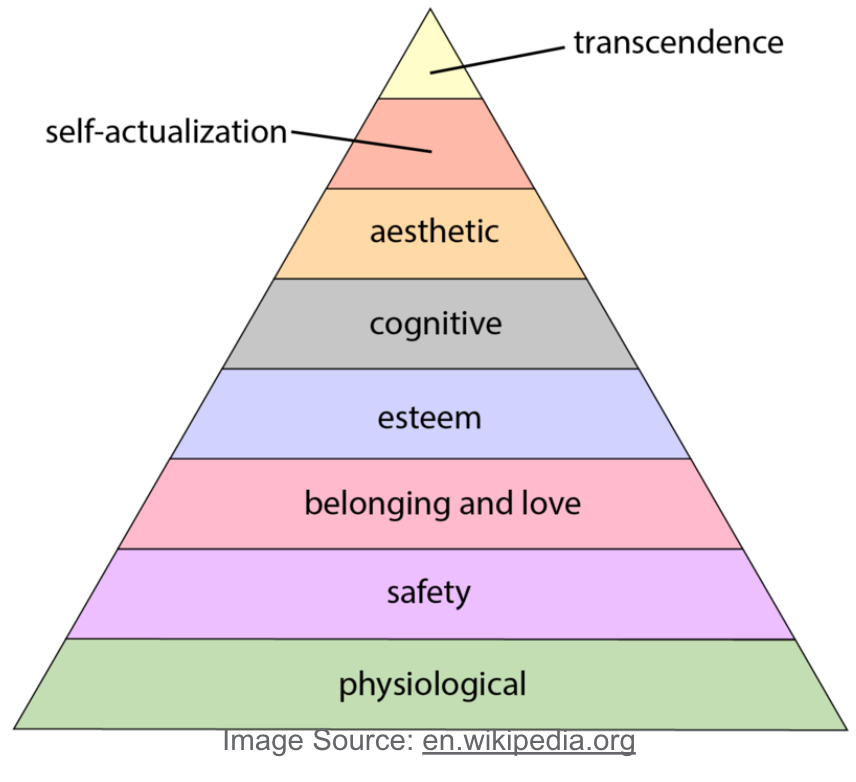
Human Needs
Understanding and addressing human needs is a crucial aspect of self-care. These needs can be categorized into various levels, with physiological and connection with others being some of the top priorities when it comes to self-care. Ensuring your physiological well-being, which includes things like sleep, nutrition, and exercise, is fundamental for your overall health. Likewise, maintaining strong connections with others, such as friends and family, can provide emotional support and a sense of belonging, which is essential for your mental and emotional well-being. Building self-care routines around these needs can significantly contribute to your overall well-being and resilience, especially in the face of the challenges associated with system change work.
Figure 1. Maslow's hierarchy of needs.
Barriers to Self-Care
Engaging in self-care can be challenging due to various barriers. These obstacles include attachment to unhealthy behaviors or addiction, a lack of motivation, difficulty deciding when to adopt healthy behaviors, challenges in maintaining these behaviors without social support, dealing with multiple health conditions (multi-morbidity), experiencing significant life events such as relationship endings or loss, and having an inadequate response to the symptoms of burnout. Additionally, there may be a stigma associated with seeking help for self-care, particularly among health professionals who provide care to others but may hesitate to seek support for themselves. Recognizing and addressing these barriers is essential for promoting self-care and overall well-being, especially in high-stress roles like system-change work.
Self-Care in Practice
In self-care, you can start anywhere, but it's essential to cover various domains. Begin with physical well-being, which you may already be practicing. Next, set healthy boundaries, manage emotions effectively, and release negative feelings to think clearly and make sound decisions. Embracing your inner spirituality, regardless of religious beliefs, can offer a protective perspective that turns life's challenges into valuable learning experiences. This simplified paragraph maintains the core concepts while improving readability.
Physical Nurturing
Physical nurturing primarily revolves around the vital aspect of rest. It's crucial to remember the HALT concept: when you're hungry, angry, lonely, or tired, rest becomes your best ally. This is my catchphrase, "Rest is best." Additionally, your diet, exercise, and physical activity, which can encompass simple movements like standing up and down, dancing, or spending time outdoors in nature, play pivotal roles in regulating your overall well-being. Don't underestimate the significance of basic hygiene practices such as teeth brushing, hair care, and showering; they are integral to your physical nurturing. Lastly, engaging with healthcare professionals when needed and adopting other wellness practices further contribute to your holistic self-care routine.
Boundaries
Let's talk about boundaries, a key factor in your well-being and career sustainability. First, there's work-life balance, where setting clear time limits matters, even if it feels challenging in environments where work bleeds into personal time. Emotions come into play too; it's important to distinguish what's yours from what's others'. Plus, professional boundaries ensure you don't get overly involved with colleagues to the point where you lose your own identity. Remember, boundary-setting can be a lifelong process, especially if you've never learned it before; it often starts in adulthood and takes time to develop fully. So, be patient with yourself as you work on it.
Locus of Control
This also ties into the concept of your locus of control, which involves recognizing what you can and cannot control. This distinction becomes particularly crucial in effecting system-level change. Focusing excessively on things beyond your direct control can drain you emotionally. It's not that you can't contribute to changing the system, but it's important to differentiate between what falls outside your control, such as people, places, and external factors, and what you can control, which includes your responses and behaviors. While thoughts, emotions, and feelings can sometimes feel less controllable, they also fall within your influence and can change over time.
Emotional Regulation and Expression
It's crucial to recognize and identify your emotions. Sometimes, without clear boundaries or when you're overly focused on others, pinpointing your feelings can be challenging. Practicing mindfulness can help create a separation between strong emotions and your neutral inner self. Techniques like deep breathing, talking to a friend, journaling, engaging in art, participating in activities, singing, or even venting can serve as valuable outlets to express and process your emotions, which is essential for your well-being.
Spirituality & Your Inner-Self
To reiterate, spirituality involves connecting with your identity beyond your social and professional roles, potentially seeking support from a higher power when you're overwhelmed or uncertain about your path. This could involve practices like prayer and meditation, which offer valuable guidance. It also includes identifying your personal and professional values, finding solace in nature, and for some, spirituality is intimately tied to the natural world. How does all this help in your daily life? It provides you with a centered foundation, ensuring that the ups and downs of your professional life don't easily toss you about, helping you maintain a sense of inner calm and stability.
Social Support
Social support stands out as one of the most effective preventive measures for mental health issues, especially at a broader population level. This is even more crucial when you're involved in system change efforts. Seek out like-minded support groups, consider individual counseling or therapy, and if you're adopting new health behaviors, having a supportive buddy can be immensely beneficial. Building a strong support network can significantly bolster your well-being and your ability to navigate challenges effectively.
An Appropriate Outlet
In summary, my message, while not from a behavioral health professional, is grounded in real-world experiences involving programs, policies, initiatives, and organizational adjustments aimed at addressing pressing social issues. Undertaking such endeavors can indeed be daunting, but they can also be deeply inspiring and drive meaningful change. Our systems may have flaws, but they are amenable to improvement through ongoing innovations and initiatives, which you can explore through readily available resources.
Self-care plays a pivotal role in this journey because without prioritizing your well-being, progress becomes elusive. However, the key is to identify an appropriate outlet for your efforts. It involves discovering where you can make a difference, whether it's within your current role or beyond it, while understanding your limitations regarding time, workload, and emotional investment. The goal is to find the smallest difference you can make within your capacity, as this will fuel your energy for sustained work. Attempting to tackle something too vast can be overwhelming, akin to getting electrocuted, so the metaphor here is to find an appropriate outlet.
I've provided references for further reading, and I'm open to offering additional resources. Your time is greatly appreciated, and I welcome any comments or questions. I wish you the best of luck in your endeavors, whether they involve small or large changes. That concludes this course.
References
Belkin, G., Appleton, S., & Langlois, K. (2021). Reimagining mental health systems post COVID-19. The Lancet Planetary Health, 5(4), e181-e182.
Balch, C. M., Oreskovich, M. R., Dyrbye, L. N., Colaiano, J. M., Satele, D. V., Sloan, J. A., & Shanafelt, T. D. (2011). Personal consequences of malpractice lawsuits on American surgeons. Journal of the American College of Surgeons, 213, 657-667. doi:10.1016/j.jamcollsurg.2011.08.005
Bruce, C. R., Miller, S. M., & Zimmerman, J. L. (2015). A qualitative study exploring moral distress in the ICU team: the importance of unit functionality and intrateam dynamics. Critical Care Medicine, 43, 1–9.
Dzeng, E., & Curtis, J. R. (2018). Understanding ethical climate, moral distress, and burnout: a novel tool and a conceptual framework. BMJ Quality & Safety, 27(10), 766-770.
Maslach, C., & Jackson, S. E. (1981). The measurement of experienced burnout. Journal of Organizational Behavior, 2(2), 99-113.
O’Connor, K., Neff, D. M., & Pitman, S. (2018). Burnout in psychotherapists: A systematic review and meta-analysis of prevalence and determinants. European Psychiatry, 53, 74–99. doi:10.1016/jeurpsy.2018.06.003
Pawson, R., Greenhalgh, J., Brennan, C., & Glidewell, E. (2014). Do reviews of healthcare interventions teach us how to improve healthcare systems? Social Science & Medicine, 114, 129-137.
Reith, T. P. (2018). Burnout in United States healthcare professionals: a narrative review. Cureus, 10(12).
Riegel, B., Dunbar, S. B., Fitzsimons, D., Freedland, K. E., Lee, C. S., Middleton, S., ... & Jaarsma, T. (2021). Self-care research: Where are we now? Where are we going? International Journal of Nursing Studies, 116, 103402.
Welp, A., Meier, L. L., & Manser, T. (2015). Emotional exhaustion and workload predict clinician-rated and objective patient safety. Frontiers in Psychology, 5, 1573. doi:10.3389/fpsyg.2014.01573
Wilkinson, H., Whittington, R., Perry, L., & Eames, C. (2017). Examining the relationship between burnout and empathy in healthcare professionals: A systematic review. Burnout Research, 6, 18-29.
Yang, Y., & Hayes, J. A. (2020). Causes and consequences of burnout among mental health professionals: A practice-oriented review of recent empirical literature. Psychotherapy, 57(3), 426.
Citation
Nathenson, S. (2023). Self-care and systems change for behavioral health professionals. Continued Psychology, Article 24. Available from www.continued.com/psychology.
May 11, 2023
1 CE CreditBalance Over Burnout for Mental Health Professionals
Khara Croswaite Brindle, LPC, ACS, CFT-I, MA
Editor's Note: This text-based course is a transcript of the webinar, Balance Over Burnout for Mental Health Professionals, presented by Khara Croswaite Brindle, MA, LPC, ACS, CFT-I.
Learning Outcomes
- After this course, participants will be able to identify the symptoms of burnout.
- After this course, participants will be able to explain self-care strategies for successful restoration for professionals within the mental health field.
- After this course, participants will be able to create a wellness plan against burnout.
Introduction
We will talk about burnout, prevention, and signs of burnout. It will be wonderful, and I know it is very applicable to everyone watching this presentation. You will be able to create a wellness plan against burnout. You will have some tangible tools that will help you and the clients you serve. What I love about this presentation is not only are you getting tools for yourself, but for any professional you might be serving who is experiencing burnout, these tools are also applicable to them.
Limitations and Risks
- Limitations include a Western perspective of burnout, self-care, and burnout recovery that reflects access to resources and some privilege.
- Risks include 1) presented strategies impacting self of therapist where additional support could be helpful. 2) These strategies are not a one-size-fit all approach and do not substitute your own work.
Limitations include that this is a Western perspective of burnout, self-care, and burnout recovery that reflects access to resources and some privileges—recognizing that for a lot of people, burnout recovery is, in fact, about having resources and being able to do something, in particular, to get out of burnout. It does not happen. There has to be some intentionality there. Risks include presented strategies impacting the self of the therapist where additional support could be helpful. By no means, by taking this training, will you have yourself recover from burnout. That would be wonderful, that would be amazing, but for today, we want to make sure that you have the strategies to implement, knowing that you probably have some more work to do if you resonate and realize that you might be in your burnout journey.
These strategies are not a one-and-done, are not a one-size-fits-all approach, and do not substitute your work. Hopefully gives you a sense of direction for yourself, but if you do find yourself in burnout currently or somewhere in the future, these are not the one thing that is going to get you out of burnout. This is the start of the journey, not the end.
Flossing
Burnout recovery is like flossing. Why? How could that possibly be? is what you might be asking yourself. How is burnout recovery like flossing? Well, let's think about it. Flossing is something that we are told to do. We are told it is important. We are told that a long-term strategy is good for our health. Burnout, recovery, and self-care is the other part of this combination. Also, when you ask people honestly how often they floss, they are like, "Eh, maybe not very often. Maybe right before my dentist appointment. Maybe like the month before I am supposed to be seen. Maybe it is sporadically when I remember or have time."
Flossing itself feels like effort, which is for a lot of you. Burnout and burnout recovery, burnout prevention and recovery feel like effort. Maybe when you think about burnout and self-care, you feel like a cringing person. "Ew, I do not like to do this." Versus someone who is like, "I have got this down. This feels good to me."
In the long run, it is good for our health. Obviously, most of us want to avoid burnout but recognize that it is possible in our mental health profession. Burnout recovery is like flossing. It takes effort. It requires some repetition and self-care practice, which we will cover in today's presentation. As you think through some of these things, you will continue to have a reflection, something to pause and think about.
Self-Reflection #1
- What puts mental health professionals at greater risk for burnout?
Self-reflection number one asks what puts mental health professionals at greater risk for burnout. Thinking to yourself, what shows up? What would your answer be? Is it the possibility of vicarious trauma for mental health professionals? Is it compassion fatigue? Is it directly related to the population that we serve? If we are working with people who have had significant trauma, are we more likely to put ourselves into burnout? These are questions that might be coming up for you. It might not surprise you that 75% of working Americans feel like they have already experienced signs or symptoms of burnout while in the workplace, 75%. That is not even mental health professionals. That is across the whole American workforce. Burnout is common and is on the rise as we come out of a pandemic and build a new life. What puts mental health professionals at much greater risk? For some of you, it is everything you give to your clients and the fact that you want them to be healthy and do well and that you want them to succeed. That comes at a cost, which might be our health and wellness as we look at this further. Notice what comes to mind as you see this question and how you might respond.
Overview
- Burnout
- Values
- Self-Care
- Wellness Plan
Today's presentation will cover four topics: burnout, values, self-care, and a wellness plan. As we started to talk about already, we are looking at burnout prevention, but all four of these exercises are going to hopefully help you in either burnout prevention or burnout recovery, depending on where you are in your professional journey.
The first exercise to introduce to all of you is values. If you have had a values exercise, you might have had it in undergrad and grad school as part of a psychology course, or as a mental health professional, you might have introduced a values exercise to your clients because it can be a very powerful tool. For some of you, this might look familiar. For others, it might be completely new. All of the exercises from today's presentation have handouts attached to them. You will have access to those.
Exercise #1 Values
For right now, let's look at them here. There are about 40 values here in Figure 1.
Figure 1. Forty values from https://www.leadingfromwithin.net.
If you were to complete this exercise, the first thing I would have you ask yourself is, what value describes you as an individual? Looking back at this list, most people must start by narrowing down all these values. Your first task might be to narrow down your top 10 values because this is quite a list. From there, maybe you have a strategy to get down to your top five, then your top three, and then your top one.
Values and Burnout
- Think about what value describes you as an individual.
- What value describes you in your career?
- What value would you like to strengthen or improve?
What is a value that describes you as an individual? In my experience administering values exercises for the last decade, I will say that most people's values do not change significantly as they age. Maybe you have done a values exercise before and recall what those values showed up for you.
They tend not to change very often as you get through your lifespan. Thinking again, what value describes you as an individual? Is that value different from than one that describes you in your career? For example, as an individual, your top value is personal growth, but then in the workplace or in your career, it is maybe education is important to you. Recognizing how those differ in your individual life and your professional life. The third one to think about is what value you would like to strengthen or improve. Is it one of the two you have already named, as our example, personal growth versus education, or is there a different value that you would like to strengthen or improve?
Self-Reflection #2
- What are your top three values?
As you think about your top values and identify those top two or three, there is an overlap for many people. Even when you look at this full list, there are things that you might say, "Oh, I can say that both are important," but pick one to narrow it down. That is one strategy. For today's example, let's say personal growth versus education. Maybe for that third question, I say, "I want to strengthen leadership." As you start to notice those, how does that contribute to your burnout? If personal growth is important to you as an individual and education is important to you in your career, is it possible that they contribute to your burnout somehow?
Are you pushing yourself in an educational space to take on more than you can hold? Are you trying to pursue multiple degrees at once? Are you taking on a dozen pieces of training as a mental health professional? Notice how that might show up as part of your top value of education. Do you feel you always have to learn something and push for personal growth? Are you doing your therapeutic work as you support other clients in their mental health work? How does that contribute to burnout for you? Remain curious as you do this exercise to see how that might contribute to your burnout or burnout recovery. As we started to think about it, name what your top three values are now.
The examples I gave today personal growth, education, and leadership. If leadership is the one I want to strengthen, what does that imply when it comes to my burnout journey? Are your top three values showing up in your life right now? If we take this to the next level, what happens or what does it mean to you if your values are absent or neglected? If my top value is personal growth, but I have not done anything to feel like I am growing in the last year, how could that impact me? If I think leadership is important, but I have not done anything in the leadership arena or taken on a leadership role, how could that impact me?
Next Level With Values
- What does it mean if your values are absent or neglected?
- What can you do about it?
As part of this values exercise and how it ties back to burnout if you have these values and you are telling yourself they are important, but they are not present, that could be a warning sign for you. Something is amiss if we say they are important and not there. Something is off. This is part of why we want to start with values because values are part of who we are as professionals, mental health professionals, and people. If our values are not present, that could be a contributing factor. What you can do about it is another question to ask ourselves. Some of you might start to say from this exercise I remember my three values, and now I feel motivated to keep them present. I am going to do something in personal growth next quarter. I am going to figure out something in education. I am going to step up and go out of my comfort zone into a leadership role. Those might be examples that you might do to say, "This is how I am showing up and embodying my values." Then add goals specific to those values in the next three, six months, and next year to see how that might shift how you feel as a person and as a professional. Jot down a few things about what you think you can do if your values feel neglected or absent. How can you bring those back to the forefront for yourself?
What is Burnout?
Figure 2. Images showing burnout.
As we move into the second part of the equation, we have started talking about burnout. Burnout is a buzzword showing up everywhere. I said that burnout's on the rise. We have talked about 75% of the American workforce has experienced burnout symptoms. What is it? Maybe if you look at these first three images in Figure 2. You will start to get a sense of what you think burnout is. What could it be? Maybe you are writing down some of those things that are coming to mind. Is burnout a loss of focus? Are burnout, stress, and anxiety-like this middle image? Is burnout isolation being withdrawn? Is burnout about feeling overwhelmed? Many things go into the burnout experience. What if I told you there are more than 40 symptoms to keep track of for yourself and clients experiencing burnout? We are going to look at those.
Exercise #2 Burnout Symptoms
Exercise number two is about identifying the symptoms of burnout for yourself or, if you were to work with a client on this, having them identify them for themselves. Here on this list in Figure 3 are 40 symptoms of burnout.
Figure 3. Forty symptoms of burnout from www.Vitalhearts.org.
I can tell you, as a professional that has gone through burnout one and a half times in my career far, I knew about quite a handful of these, but there were still some that caught me by surprise. Let's talk about the ones that we kind of know and that have been normalized in our community. Number two, "I feel more irritable than I would like?" Short-fused might be how a client describes this to you. Maybe it is about feeling like you have no energy.
Number eight, "I have no energy to listen to my family when I get home." Maybe it is about number 21. "I do not share my work with my friends. They do not get it." Especially as mental health professionals, it is hard to feel we have to hold for confidentiality, but also that some of the things we hear are super heavy and traumatizing. We cannot open up to our friends or family about what we have done daily as mental health professionals.
Maybe you resonate with number 25. "I feel pessimistic as the result of my job." Well, there is that vicarious trauma, compassion fatigue combination that, if you are working with intense trauma or abuse, or neglect, can impact your worldview and how you see the world outside of the work you do as a professional. Some of us avoid violent movies, dramas, or TV shows that feel like work. I can tell you, as a professional myself, I do not like watching heavy content because it feels like work. I would rather have light and fluffy, funny movies, comedies, rom-com, something that feels lighter than the reality of what we do for a living.
Maybe it is number 31. "My health has declined." In my first professional burnout experience, I can admit that it took about two years to recognize I was in burnout and about a year to recover. That is disheartening for some of you to hear because a year feels like a long time to recover from burnout. Yet I went two years as a mental health professional ignoring my symptoms, being able to talk to clients about their health and wellness, but ignoring my own. I kept chalking it up to, "Oh, I am stressed. I am stressed. It is fine." I was working with a difficult population at the time. I had justified all the things.
It took my declining health to wake me up. For some of you, it might be a medical crisis or your health declining in some way for you to say, "Oh, this is not chronic stress. This is something more, and I want this to feel differently." My personal favorite on the list is number 35. "My road rage has gotten worse." Some of you might be like me and say, "Oh my gosh, I did not even realize that was connected to burnout," and yet it is. As part of that short fuse, irritability, number two can manifest as "I am angry on the road. I have a short fuse while driving or a low tolerance for other drivers."
When I went through my first burnout recovery and started processing this number 35 with colleagues, I said, "Wow, that is eye-opening." For some of you, you might feel called out, and it is like a more playful way. As you look at this list of 40, notice what shows up for you. Which ones would you endorse? Which ones would you say, "Yep, I have experienced that"? Are there any that are missing from this list for you as you think about what it would be like to create your list of symptoms for burnout? If you have experienced it, maybe you have experienced and have healed from it, maybe you are in the midst of it right now, or even as part of burnout prevention, are these the things you are going to be looking for to make sure that you are paying attention to the warning signs?
I would love for people not to go through two years of ignoring it, like I did, to get the support and wellness they need. You are all here because you want to avoid that burnout.
Self-Reflection #3
- What’s one symptom of burnout for you?
As you reflect on this, what is one symptom you related to? What was one symptom from that list of 40 that you are like, "Yep, that is me." Even if it is not here and now, is there something in the past that would have shown up? If you find yourself stuck and not recognizing a symptom, you can always ask someone who knows you well. A loved one, a spouse, or a child. Hopefully, an adult child, we do not want to add stress to them.
Somebody who knows you, "What did I look like at that time in my life?" Sometimes they are the ones to say, "Oh, you were irritable. Oh, you ate a lot of sweets. You did not want to talk about work. You slept a lot more." Whatever it is. Sometimes our loved ones can be the ones to hold up the mirror, saying, "This is what you looked like." Burnout is not about having one symptom. If so, we would be done. As you saw, there are 40 symptoms because they all interplay with each other.
Next Level Burnout
- What does burnout look like for me?
If we were to take this to the next level, the next worksheet that I would want you to consider is the one that says, "What does burnout look like for me?" What does this look like, customized for you? Or, if you were to engage a client, how would you walk them through this worksheet together in Figure 4?
Figure 4. Burnout worksheet (Croswaite, K., 2017).
There is something very powerful about the visual of seeing all of your symptoms organized this way. Starting with physical, what would be some burnout symptoms for you or a client that would show up in the Physical box? What are some examples? Physically is it that they gain weight, have no energy, break out with eczema, or are losing their hair? Maybe they feel like they have a puffy face, are pale, or are moving slowly. Their limbs are very heavy. Recognizing that those are some quick examples of what might show up physically, what would you put in your box?
As we move to Emotionally, what does burnout look like for you? Is it that short fuse or irritability? Is it a loss of focus? Is it you cry much easier? I hear a lot from clients and colleagues that it shows up under the surface. Maybe you feel numb. In contrast, maybe you are not crying. Maybe you are dumb. Do not feel anything at all. Recognizing the Emotional box can also be eye-opening if you have already completed this for yourself or a client.
Intellectually, what shows up for you when you are in burnout? Are you having trouble with deadlines, again, unable to focus? Do you feel you are distracted easily and cannot retain information? Maybe you are trying to learn something new, and it is not sticking. Intellectually, noticing how you function in the workplace. Is it about having that tip-of-the-tongue phenomenon where you are like, "I can remember the thing, but I cannot articulate it"? Are you tripping over your words? Are you noticing that your brain is moving faster than your mouth, and you are feeling discombobulated? Those are some examples of what might show up in the Intellectual box.
Spiritually, now for this box, I always put the disclaimer that spirituality is not specific to religion. It might be spiritual. How you show up in the world: mindfulness, beauty, being present. Spiritually, when you are in burnout, what happens? What do you look like? Are you going through the motions? I had one client who described they were stuck on their phones. They were not noticing their environment. They did not notice the colors of the leaves changing, it was getting dark outside, or there was snow. They were focused on the phone. Spiritually, not being able to appreciate the things around you. Beauty, seeing different things, and smelling different things. How would burnout show up for you spiritually if you identify with religious practice? Are you questioning your beliefs? Are you feeling dejected? Are you feeling, you know, a different way about your religion than you normally would?
Additionally, the Work box is specific because most people, when we think about burnout, think about work. That 75% of the American workforce is thinking about work, yet burnout shows up in all different parts of our lives. That is what we saw with those 40 symptoms: they do not apply to work. They ripple out into our relationships, personal lives, and4 interests or lack thereof. I wanted to separate our work from the physical, emotional, intellectual, and spiritual because work might look very different. Your burnout shows up differently at work than at home, or at least that is my experience as someone who is through professional burnout.
At work, how do you show up? Are you now a workaholic because you are compensating? There is a running joke for mental health professionals that we would rather focus on other people's problems than our own. I say that with love and a smile because sometimes that is what keeps us going is focusing on someone else. As we are crashing and burning at home, maybe we are feeling solid at work because we are focused, and this is where our energy is going. At work, maybe your burnout is showing up as workaholism. Or are you checked out? Are you a disengaged employee or contractor? Are you fantasizing about selling your own business? Are you fantasizing about starting over or doing something completely different outside of mental health?
Those are all things I can normalize in the work that I have done with fellow clinicians. In your relationships, how does burnout show up? If we have that short fuse or are quick to cry, how does that show up in relationships? That is an example of some of the symptoms. Are we checked out? Is our tank empty because we give it all to our clients? We have nothing to give our family, loved ones, and pets when we come home. Is it about avoidance? "I do not want to talk about anything deep. I do not want to fight with you. I am exhausted." Is it about conflict because we feel that short fuse? However this relates, the hope is if you were to take this exercise to heart, you would fill it out so it is completely representative of your experience, not anyone else's.
If you decide to apply this with a client, what impact would it have to see all of those things listed in each box for them to say, "Wow, I did not realize my burnout showed up quite like this," or, "Now it feels more real." Is there motivation to do something about it? This exercise is about putting it on paper and seeing a whole picture of how burnout shows up in all the different spheres of your life.
Self-Care Strategies
Figure 5. Self-care strategies.
Now that we are aware of our burnout and have reflected on our values, self-care is the third category. For any of you who decide to see my TEDx talk, you will know that I hate the word self-care because of the pictures you see in Figure 5. Self-care has been commercialized. And for mental health professionals, many of us would say we do not do it well. We stuck at it. I say that with love and zero judgment because that is me, or it was me in my burnout journey. If you are thinking about this with clients or want to give yourself some self-compassion, identify that self-care has shifted but, for a while, looked like these things. These pictures represent some of the commercialized self-care we expect to d? Everything from meditation or yoga practice to travel, massages, manicures, and pedicures, bubble baths. Like, we have got all these stereotypes of what self-care could be.
Now, if you were a mental health professional at the beginning of the pandemic, you saw all these things go out the window quickly. It was like, "Nope, cannot do any of them. Cannot leave. Have to stay home." All of a sudden, self-care, by this definition, was not accessible. That is a problem. That is a problem for you and me. That is a problem for our clients. Self-care should not be these things. Self-care should be specific to what works for each person. Many clients we serve do not have the mental or financial resources to go on vacations, take time off of work, or have a massage. We need to get more crafty with our self-care strategies that are not the stereotypes you see here.
Exercise #3 Self-Care Wheel
Before we do that, we should probably start with the foundations of what self-care could be. Figure 4 shows the Self-Care Wheel that I love from Rachel Lane.
Figure 6. Self-Care Wheel (Lane, R., 2017).
I have used it for years and years because I think it is a powerful representation of our self-care when it comes to the traditional categories of functioning. Not massages and vacations, but here is how you show up in everyday existence. If you were to engage in this exercise, I would first encourage you to define each category for what it means to you, or if you were to do this with a client, what it means for them.
For example, in the top-right box, getting restful and enough sleep. One person's answer could be, "I get enough sleep if I get eight hours." Another person's answer could be, "If I fall asleep before 2:00 AM, that is a victory for me." Keywords "restful" and "enough" and having them measure and quantify those. What is restful and enough? Is it about not waking up five times? Is it about going to sleep quickly? Is it about a certain number of hours of sleep? have the person define that first before they jump into the exercise fully. as we work our way around the wheel, another personal favorite is what about exercise? What do clients think we are asking when we say, "Tell me about your exercise?"
Well, for the most part, in my experience, it has been, "Oh, I must be failing that exercising because I do not go to a gym." Now, I work with clients of all different financial backgrounds. A gym is not a high priority, financially or otherwise. We want clients to challenge themselves to think about exercise from a different lens. Is it about how often they are moving around? Is it that they work a job on their feet, for example? Are they walking to the bus stop and back? Do they have a pet that they walk after work? Those are all forms of exercise that have nothing to do with the gym. That could be another way to define this category before they make assumptions about, "I am doing it well" or "I am doing it horribly."
As we move around the circle, socializing with friends is a category. Pretty self-explanatory. What do they like to do with their friends? Do they like to play video games? Do they like to go out? Do they like to eat? Do they like to watch movies? What do they enjoy with their friends? Now, even introverts can socialize with friends. It might be less time. It is not a big part of their self-care, but it is still a part. What do they enjoy with their friends, even for a couple of hours versus a whole day? The bottom two are personal favorites for me as a mental health professional because you can have your client define this any way you want and for yourself.
Keeping a positive mindset and perspective might be all about boundaries, right? As mental health professionals, we love boundaries. What does keeping a positive mindset and perspective look like? Is it having healthy boundaries with other people? Is it about doing a gratitude practice? Is it about journaling? Is it about sharing your victories and your goals with others? Like, how do we keep that positive mindset? For many people, it will be unique to each of them, but maybe it is about gratitude and saying out loud what they have accomplished as two possibilities. In contrast, protecting your energy from negative influences still has that boundary component about who we share our energy with and our time. Especially if we are in a burnout place, we do not have a lot of energy, to begin with, let alone how are we going to give it to others or spend it on others?
Protecting your energy might be, "I am going to limit how much time I spend at that family function," or "I am going to bookend this heavier conversation with a colleague with something positive after, taking a walk or taking a nap to reset." Those kinds of things. For those that usually say, "Well, I have some pretty heavy interactions with family." We cannot necessarily restrict all of that, nor should we. Maybe it is about being intentional with what you do before and after and even how long you spend with that person so you do not feel completely zapped after the fact—using music or movies to soothe your stress. I would also add reading to this category.
If you have people who love to read, that could also be in this category. It could be read as music, reading, or movies to soothe your stress. And what does that look like? Is that something they enjoy? Is there one particular thing they like over another? Having people define that category for themselves. Moving up to eating well, another favorite 'cause what the heck is eating well? Each person's going to define this differently. One client will say eating well is remembering to eat at all during the day. Another client will be like, "I feel victorious if I have eaten breakfast." Another person might be, "I like to snack all day, and that feels good to me," versus someone who says, "I want three meals a day."
Eating well can be defined completely uniquely to the person before they even go into how they are showing up in this arena. We want to make sure it is very clear to them how they define it before they jump in. And last but not least, engaging in humorous and fun activities feels like a repetition of socializing with friends, but as you will notice, this could be independent and separate. These could be things you do by yourself. To me, it is about, you know, watching a funny show, listening to comedy, doing something playful like dancing around your house. Does not require others. For the introverts in the room, this category might be yours. "I enjoy doing things by myself," and that is why I think Rachel Lane separated this into a different category.
We have defined all of the categories. The next step is to identify the number and numerical value we would put on each. On the worksheet you have access to, the directions say 1- completely dissatisfied and 7 -completely satisfied. Recognizing this is a snapshot in time, this wheel will look different from moment to moment, day to day, week to week, and month to month. If you were to use this with a client, it is a visual snapshot of where they are in the moment that you are talking to them or as their homework, depending on if you like homework. For yourself, if you were to do this with me at this moment, it is a visual snapshot of where you are right now.
Having a person circle the numerical value they feel fits where they are in this moment. 1, completely dissatisfied. 7, completely satisfied. Going around the wheel, circling off the numbers, with the last instruction to connect the dots. What is powerful, why I like this visual much, is the question asks us, what kind of shape did you make when you connect the dots around the wheel? It is very rare for me to see a circular shape. I usually see a starfish or some geometric shape where there are some solid numbers, like 5, 6s, and 7s, and then a couple of 2s and 3s. It looks a little more jagged. The question to ask ourselves is, if this was a wheel, how well would it roll?
For most of you, if you are a visual learner like me, that is a powerful question to ask. If I have a zig-zagged, jagged shape, and we are asking how well it would roll, it would kind of start-stop, clunk along, where there is maybe a rounded edge and then a big old chunk missing. In terms of self-care, we are not looking for perfect 7s. In 12 years of doing this, I have only seen one where it was perfect 7s, and I did not even believe them because they did not put a lot of thought into it. I could tell that this was not an exercise they had a lot of value in. For everyone else, because we see that weird shape, we can say it is about having balance.
Keyword balance. We are not looking for perfect 7s. We are looking for a well-rounded, well-balanced shape. If we have a lot of 6s and 7s on humorous activity and enough sleep but 2s and 3s on protecting negative energy and keeping a positive mindset, how do we balance that out? Those are questions to ask ourselves.
Self-Reflection #4
- Pick a category you feel you can focus on this week. What category did you pick?
As you think about your wheel, if you went ahead and decided to try this exercise and put your numbers out there, what is one category you feel you can focus on this week? What category did you pick? Coming back to our wheel, let's say you say, "Okay, I wanted to focus on socializing with friends. I was at a 3 or 4.
I would like to see that higher. My friends are important to me. I have not had a lot of time lately. I am going to pick that as my homework, my self-care homework." Maybe it changes your whole outlook on spending some time with your friends. Does it hold you accountable to say, "I need to reach out and schedule a lunch or a dinner, a walk with a friend," and see how that improves your mood and self-care? By no means are we taking all of the categories and saying, "Fix all of them right now," but you might have some intentional homework for yourself around, "I am going to pick one or two categories to improve upon and see if that changes my whole self-care strategy."
That can be the powerful element of watching your wheel get a little bit more well-rounded from your efforts. If we were truly to take self-care to that next level, this is where I would redefine it when I said I hate the word self-care. If I could scrap the word self-care, I would. I redefine it as rest versus restoration. If people are saying, "Self-care, do self-care," we have been hearing this since grad school, "Do self-care, do self-care," but none of us knew exactly what it looked like. If we can redefine it this way, I think we can be more effective in doing and implementing it.
Next Level With Self-Care
- How do you define rest?
- How do you define restoration?
(Croswaite, K., 2021)
What do I mean when I say rest? What comes to mind for you? Rest could be everything from having nothing on your calendar to having a day off of work to unplugging from your technology and turning off your phone. For many Americans, it might be, "I am going to sit on my couch and watch a show or binge-watch a show and order takeout and relax." If that is your definition of rest, that does have value in our self-care plan. However, it is common for clients and colleagues to come back to me after a weekend of rest and still not feel great. Maybe they are saying, "I feel worse now than ever because I went from 60 miles an hour work-week to zero, and now I feel like I have been hit by a truck."
Rest is a part of the equation, but we are missing a component: that restoration that has helped many of us through the pandemic and beyond. Yes, we want some rest in that recipe, but we also need restoration. What is restoration? When I introduce this to clients and colleagues, restoration energizes you, reinvigorates, boosts you up, and makes you feel alive again if you are feeling depleted. With that very quick definition, what would you put in your restoration for yourself? What restores you? What kinds of activities would show up here? If the rest is, "I am going to hang out and not have anything on my calendar after feeling scheduled or overscheduled all week," that is a part of it, but what will restore you to having that free space in your calendar?
Is it taking a nap? Is it dancing around your house? Is it doing something playful? Is it in nature? For some of you, it is baking. Others might be jigsaw puzzles, art, gardening, or dog walking. Each person's unique in what they will answer as restoration. For many of you, it is about starting to craft your list of things that do restore you. That is what I invite you to do with this slide define your rest and what that could look like, but then also define restoration and have some examples at the ready. When you have that next intention of, "I need to do some self-care," you have got some ideas right there that make it that much easier to do the self-care we are all told to do.
Wellness Plan
Figure 7. Wellness Plan.
Our wellness plan is our last exercise to cement all these things together. We have talked about values and how those show up and put us at either greater risk of burnout or prevent burnout if we are living in our values. We have talked about burnout symptoms. Now we have talked about self-care and what that can look like now, more than ever. The last piece is to put it all together with a wellness plan. Now, some of you have heard of wellness plans before because there is something called a Wellness Recovery Action Plan, a WRAP plan, and that is what we are modeling in this next portion of the presentation. The images in Figure 7 show a big contrast to the self-care images when we think about wellness.
Self-care, we saw meditation or yoga, vacation, and massages. What is being embodied in these pictures? Is wellness about connection? Is wellness about nature and movement? Is wellness about laughter and joy? Hopefully, it is all those things for you because that would be a nice balancing act for the self-care strategies we are discussing.
Exercise #4: WRAP
Let's look in real-time at what a WRAP plan would be. I call it a Personal Wellness Plan. It is a Wellness Recovery Action Plan, and this is one of your handouts from today's presentation in Figure 8.
Figure 8. WRAP Plan (https://brss-tacs-decision-tool.samhsa.gov/DA_files/LearnMore_Wellness_Toolbox.html).
It is similar to our burnout worksheet: boxes, nice white space for you to jot down a few things. Starting in the top-left, what does it look like when I am well? Pull in some of that information from the burnout conversation, pulling it from your awareness of yourself. Physically, what does it look like when I am well? How do I know when I am doing well emotionally, intellectually, and spiritually? Super powerful when working with clients for them to have self-awareness on this question. Do they know what it looks like when they are doing well? Maybe it is easier to start on the right-hand side with what it looks like when I am not well. Sometimes they are opposites of each other. If they start with a, "I am not well, physically I am lethargic, I am feeling heavy, my body hurts," maybe on the well side, "I feel energized, I feel like my posture is better, I am not in pain," might be the contrast.
Emotionally, what does it look like when I am not well? Again, tearfulness, short fuse, irritability, numbness, checked-out verses, in contrast, "I am present, I am engaged, I am animated." Sometimes clients are aware of their facial expressions changing from flat affect to being present again. That could be powerful to see on paper. Intellectually, that loss of focus, taking in new information, remembering deadlines, remembering important things, having someone repeat themselves versus a lost train of thought. All those kinds of examples there versus that spiritual component. Yet again, not about religion, but about spiritual showing up in the world, presence in the world. Can I notice beauty? Can I notice changes in my environment versus being stuck looking at my feet and phone? Going through the motions?
Internal warning signs are similar to some of the safety planning you have done in other training. Warning signs, internally, what shows up for you or for a client if you are doing this with a client? What shows up on the inside that tells 'em that they are not doing well? Things like restlessness, irritability, feeling like they are on pins and needles, and feeling physically off. One client described it as their muscles jumping, and they had all these muscle ticks and twitches happening, which was very distracting. Other warning signs like negative thoughts, suicidal thoughts, catastrophizing, and black-and-white thinking might be warning signs on the internal side for you or a client.
In contrast, triggers are external things. What is happening outside of you or a client that would be adding to them not feeling very well? Maybe it is a fight with a partner, a trauma anniversary, a recent event, a political component, or something that stresses them out. Maybe they are having financial hardship, or they are having a hard time at work. Maybe their relationship is rocky. Maybe their dog is sick. You know, different things would contribute to them not feeling very well at this point in their life. Again, a snapshot in time.
The next would be My Supports as we move further down the list. My Supports has a primary, secondary, and then a relationship that I want to improve or, like, have more contact with. Who are your primary supports? Would this be a spouse or partner? Would this be a nuclear family member versus extended family, or a mentor or godparent versus friends, colleagues, or coaches? Having people think about who their supporters are. This one can be a mixed bag of emotions for folks, especially if they feel they have avoided or withdrawn from people as part of their burnout. Be very careful about how you tread on this topic because some people will get a little bit heavier, realizing that they have let some of their relationships go or have ghosted as part of their burnout, holding some compassion for that.
When Things Are Breaking Down is my favorite box. When things are breaking down as in, how do they know when things are spiraling out of control? We can have "I am not looking well" warning signs and triggers, but when does it get to that next level where it is, "Ew, I need some support, or I need something to change, or this is going to spiral out, and it is not going to be good." Maybe now they are picking fights, maybe they are self-sabotaging, maybe they are using substances or other negative coping skills. Maybe they are trying to attend to their grief through compulsive shopping or things of that nature. Noticing self-awareness, what would they put in this box for that reason?
As people are crafting these boxes, there are two more below this: What Do I Need from Others, a very powerful box to ask or to fill out, I should say. I am asking it of you. Hopefully, you are filling it out. What do I need from others? Do I need them to leave me alone? Do I need a hug? Do I need support? Do I need a distraction? Do I want someone to, you know, help me tackle laundry? What will help the person feel like they are returning to a place of wellness? And that is a vulnerable question of, "What do I need from others?" I recognize that can change from moment to moment, "I need a distraction" versus "I want to be left alone" are the two contrasts I hear—holding space for all of that if you do this with a client or for yourself.
Self-Reflection #5
- What’s one idea in your plan of action for when things are breaking down?
As you have crafted your wellness plan, what is one idea in your plan of action for when things are breaking down? You know, is there something you want to do to stop the spiral? Is it reaching out for support? Is it talking to a friend? Is it talking to a colleague? Even someone who has been through this. Who has been through their burnout? Can you understand how tricky it can be? Because it is hard to recover from something when you are still living in it. Is there a step you want to take? Taking some time off, if you have that ability?
Does that cause you stress and anxiety to think about taking time off? is it more about being intentional with the time off on your weekends or your scheduled days off from work? Thinking about what is that one idea in your plan of action for when things are breaking down and how we implement that would be that next step. Recognizing that this wellness plan can be as much, it can be as helpful or as unhelpful depending on how much you put into it. How much energy do you put into it? To take that to the next level, I have some suggestions. It does not become another piece of paper that you have written some stuff on and forget about, because, I say, again, that with no judgment because that happens.
Next Level With Wellness Plan
- Accountability Buddy
- Feedback from Others
- Month Check-in
- Compassion Satisfaction and Fatigue Test
Here are some ideas to have the wellness plans serve you the best possible. First of which is an accountability buddy. When I first learned how to do a wellness plan, they had to sit alongside someone and had to share all of those components in each of those boxes, not from a place of vulnerability but that someone could, like, ask clarifying questions, recognize, "Okay, is there an action step that we have forgotten?" "You said this is important, but it is not in this box." That can be empowering to have somebody sit alongside you but also check-in and ensure the things are represented. In those action steps, the accountability buddy can say, "Hey, did you take that time off?
Did you do some rest? Did you do a restoration activity? How did that go for you?" Many of you are familiar with accountability for lots of different therapeutic exercises. This is another area where that could apply. it is about getting feedback from others. If you find yourself trying to fill out your wellness plan and you have a mental block or writer's block in trying to put something on the sheet, who can you ask that can help you fill out and flush out what you look like when you are well, unwell, what the triggers and warning signs are? Who knows you the best? Who can help you with this? Now, the biggest task of vulnerability is asking someone who knows you well to help fill in the blanks if you feel like you cannot.
Sometimes what they have to say is somewhat painful, "Oh yeah, that is true." "Ouch." Feedback from others matters. Sometimes it is about flushing out the areas you cannot think of or addressing that writer's block if you have it, but it can be a very powerful tool in connecting with people around how you are doing. I use them in therapy a lot, the mirror image. Holding up a mirror and showing us how we are showing up to others and having a trusted person do that is powerful. I encourage .you to identify someone in your life who can hold up that mirror and say, "Hey, here is how you are showing up."
Here is how you are looking right now," and give you a chance to adjust and reflect. The monthly check-in is like the accountability buddy, but more, it could be a monthly check-in with yourself. What would it be like if you crafted it, handwrote your wellness plan, or typed it up? Putting a reminder in your phone to revisit it in a month and see how it is applying? Is it a gentle reminder to keep doing a couple of things? Is it, "Oh my gosh, I did none of those things?" Is it, "Oh, I forgot about this completely, let's try some goals for next month." By doing a monthly check-in, it stays fresh.
It does not be a one-and-done. You can revisit it, revamp it, rewrite it, whatever it takes to feel like the wellness plan is serving you or your client if that is the person you are doing this with. Last but not least is the Compassion Satisfaction and Fatigue Test. Now, this is a public document, that is. I believe 63 questions long. It is quite robust that way, but it is a document that people can administer to check in on satisfaction versus fatigue when it comes to compassion. A powerful weighing out of both compassion satisfaction and fatigue. I enjoy doing this with teams to ensure that my team is healthy. It gives them a chance to give me, you know, kind of an almost anonymous way of saying, "I am not doing well," or, "Here is where I am feeling good about my client work," "Here is where I am struggling," but also gives them that visual.
It can be a mile marker of, you know, here we are, and then six months from now, how is that looking? Did your satisfaction come down? Did your fatigue go up? Is there vicarious trauma we need to adjust and navigate in that way? Great for teams, but it also can be another touchpoint for you as a clinician to gauge your functioning. Where are you in satisfaction versus fatigue? Of course, it has a category of burnout as well. That document is also part of your handouts for this presentation to grab and utilize how you see fit. Again, 63-plus questions give us a sense of some powerful things we can ask ourselves but also measure that satisfaction-fatigue and burnout combination.
Other questions that come up before we do our wrap-up. The big one I started to talk about is how long it takes to recover from burnout. In most people, at minimum, it is going to take a year because it is one of those things that requires intentionality, like flossing, right? You gotta create a habit out of it. They say any good habit takes at least 30 days to cement. And if we are talking about that and then having to build off of different habits to get to a place where you do not feel like you are in burnout any longer, it is pretty easy to see how that could take a year or longer for us to do.
It does not mean you have to do it on your own. For that reason, you can have the support of colleagues, friends, supervisors, coworkers, consultants, and coaches to have someone hold you accountable and help you keep slowly chipping away at that burnout and getting back to a place of wellness. That is one of the biggest questions. Another question that I get a lot is, is there anyone who is not at risk of burnout? I do not think that happens. I do not think burnout discriminates. I think burnout is a human experience of being overworked and out of balance when it comes to work and life. I know work-life balance is another buzzword, and I want to introduce you to another concept: flow.
Instead of work-life balance, now we are talking about work-life flow. And some of you might like that terminology better because balancing implies that they have to be equal, right, that work has to be an equal amount of time to home life. For many of us who identify as entrepreneurs and mental health professionals, that might not be possible. Maybe it is more about permission, "I am going to work hard for six weeks and then take a week off," or "I am going to be in the flow because I am going to have this strong flow of working with clients for a couple of weeks and then have a flow of taking some more downtime." "Or going into the holiday season where I have fewer clients, or summer where I have less to do," and giving yourself permission to go with the ebb and flow.
Some of you might like that terminology better: work-life flow instead of balance. Other questions that come up. What is another one? What prevents burnout from happening? That is a huge one. Probably not a one-and-done situation, but a couple of things help prevent burnout from being such a high risk for folks, including us as mental health professionals. The boundary is a big part of it, but in any workplace, there are a couple of other things to name, one of which is feeling like you have autonomy. Some of the research that is come out is saying if you feel like you have a say, if you feel like you are being appreciated, if you feel like you are valued in the workplace. These three things would prevent burnout because now we feel emotionally invested in our work and appreciated for our work.
As a mental health professional, I do not think that it is a foreign concept to be like, "Hey, everyone wants to be appreciated. Everyone wants to feel valued." We are providing a safe space for clients to echo that, and now we are looking at it for ourselves in our burnout recovery and prevention. If you are desperately trying to prevent burnout as part of your professional journey, you know, making sure that you are in a workplace that respects you, values you, provides autonomy and allows you to grow. These are the points of contact that people are noticing that prevent burnout from happening. Hopefully, that resonates, and it does not make completely nonsensical sense because we all want those things as humans.
Those things come up. Let's see, what else can I tell you that people have asked a lot about? Oh, here is a good one. in addition to those 40 symptoms of burnout, there was one significant thing that happened in 2020 that was another sign of burnout that we had not seen before: cracked teeth. According to US American dentists, we saw more cracked teeth in 2020 than we would see six years prior. Wow, more cracked teeth in 2020 than we would see in all six years prior. Well, that tells you we are under immense stress. It was the beginning of the pandemic. That was a factor. It was people working from home. Another factor was a lot of the stress and the poor work-life balance or poor work-life flow.
That all got tossed up in the air and disrupted as part of that pandemic. Not only are we looking at road rage and comfort in sweets and irritability and avoidance and all these things we have named, but we are also now looking at cracked teeth as a sign or symptom of burnout. That is pretty wild, too. With all this being said, if you are looking for additional strategies for your burnout recovery, we have looked at five today, right, four in real time, plus that Compassion Satisfaction and Fatigue Test. There are also some other great trainings out there. One I like to reference today would be the VitalHearts training. It is compassion fatigue training, also called secondary trauma training.
That is a two-day intensive where people get a look at their burnout symptoms but also start to recover from those symptoms. That was part of my burnout recovery journey. I did mention I have been in burnout 1.5 times. I playfully say one and a half because I started to see some of those same warning signs we talked about today, and I had to change to not go back into burnout a second time. I want to normalize that for everyone.
Wrap Up
Burnout is a challenge. It is an ongoing thing we must monitor, like self-care. As we look at the next steps, do not forget to floss is the analogy again. Creating habits. Habits take 30 days. Implement some of these strategies for clients, if not for yourself, because burnout does not discriminate. Anyone who is in the workplace or going through any amount of significant stress has the risk of burnout. That is something to think about. Noticing how we can make a difference and make burnout not part of the mental health experience as much as possible.
Question and Answer
That is interesting that you talked about cracked teeth. About 2021, when we were still having COVID issues, I started having a lot of teeth problems. I had to have wisdom teeth removed, and they said I was grinding my teeth. I did not have any issues with my teeth before that.
I appreciate you sharing that. I think people were more likely to say they were grinding teeth or would have tension headaches because they were clenching their jaw much with the stress of everything we were going through. If it was not cracked teeth, it was one of those other two, of tension headaches or grinding their teeth down to nubs. Mouthguards became popular again, and we were all trying to navigate it in a way that the dentists were saying, "What is happening?"
My dentist said, "You are grinding your teeth." I said, "Well, I have never grinded my teeth. I have never done that before, but now I notice it." If I have any stress or tension, I will feel it is very tense back here. That is a very interesting thing that they found in that study. It reminds me of one of my favorite activities, which is very simple, in the mental health sphere that I am sure participants here would appreciate if they are not already doing it, which is a lot of times when we are trying to drop into a space, whether it is work or being with a partner, getting ready for sleep, or winding down. It is doing a quick body scan, putting our feet flat on the floor, noticing our feet, and slowly coming up the body. Every time I get people to their chest, they recognize, "Oh, I am not breathing very deeply," and then they will start to breathe better. We get to the jaw, and I say, "Soften our jaw." They say, "Oh my gosh, I was clenching my teeth, and I had no idea I was clenching my teeth until you said, soften it." That can be something that can be a gentle reminder for each of us at night or whenever to let's do a quick body scan. Let it all loosen up and soften the jaw because most of us do not even recognize that we are carrying our jaw that way. I want to normalize that.
One of the first things they say when you are in a yoga session is, "Everyone, open your mouth and let your mouth hang open," releasing that tension. I always thought that was strange until I realized why they were doing that. Another thing I have been doing to help me sleep is I love lavender. It relaxes me. I put that on as hand lotion when I go to bed. I am a side sleeper and have my hands up by my face. I think it helps me to sleep.
Are there other tips or tools that you have similar to that engage the senses?
I think the sleep piece was a huge disruption and continues to be a disruption in burnout, where people are either sleeping too much, getting poor sleep, or not sleeping enough. I love lavender, essential oils, and things like that. It is all part of what we call sleep hygiene. What is your routine to get ready for bed to tell your body it is time to wind down? Everything from 20 minutes off your electronics, which is hard to do, to lavender or brushing your teeth or any of the things that would be a routine. To your question, one of my favorite activities is activating all five senses and figuring out a coping kit with all five senses accounted for.
I usually start with what you like to look at that brings you joy or comfort or calms you down. It might be pictures of family, pets, or nature that you could pull up on your phone when you are stressed. What are smells? That could be lavender or a familiar cooking smell, grass. Sometimes people like nature smells, like, fresh rain. Having them walk through all five senses can create a coping kit where they can start compiling those things to have them handy. If it is nature, it might be, "I need to get outside and take a walk in green grass." "I need to pull up a picture of my mom." Make it accessible.
My favorites are the sense of taste because those are the most intentional. Do you like mint and have that on your desk? Can you have like something spicy if you like spicy? Do you chew gum? Any of the things that people are not thinking about can have a significant impact on them feeling more relaxed quickly.
Did you find once you incorporated some of the sleeping and things in your journey, you felt better later on? For example, going back to work, did that help relieve some of that pressure?
For me, it was the boundary of not working 24/7. I had to set a regular bedtime and get up even though I did not feel like getting up. I know it is hard for many of us when we are feeling depleted, but I learned very quickly that I needed a certain number of hours of sleep to feel functional. I would not even say happy but functional. I had to start there. Then getting up every day, even on weekends, I had to get up at the same time. I would not do that whole, "I want to catch up on all my sleep and sleep until noon," but that did not work for me, and for most of my clients, it does not either because it is disruptive.
If you get up at 6:00 on a weekday, you are getting up at 6:00 on the weekend. That does not mean you do not get a chance to have a nap. By all means, have a nap. Letting the body have that rhythm, "Oh, this is when we wake up, this when we go to bed," has been helpful for mood and burnout.
References
Ensari, N. (2021). Pandemics and burnout in mental health professionals. Industrial and Organizational Psychology, 14(1-2), 71-75. doi:10.1017/iop.2021.6
Johnson, J., Hall, L.H., Berzins, K., Hons, J.B., Melling, K., & Thompson, C. (2018). Mental healthcare staff well-being and burnout: A narrative review of trends, causes, implications, and recommendations for future interventions. International Journal of Mental Health Nursing, 27(1), 20-32.
Northwood, K., Siskind, D., Suetani, S., & McArdle, P. (2021). An assessment of psychological distress and professional burnout in mental health professionals in Australia during the COVID-19 pandemic. Australasian Psychiatry, 29(6), 628-634. doi:10.1177/10398562211038906
O’Connor, K., Neff, D.M., & Pitman, S. (2018). Burnout in mental health professionals: A systematic review and meta-analysis of prevalence and determinants. European Psychiatry, 53.
Posluns, K., & Gall, T.L. (2020). Dear mental health practitioners, take care of yourselves: A literature review on self-care. Int J Adv Couns, 42(1), 1-20. doi: 10.1007/s10447-019-09382-w. Epub 2019 May 23. PMID: 32435076; PMCID: PMC7223989.
Rivera-Kloeppel, B., & Mendenhall, T. (2021). Examining the relationship between self-care and compassion fatigue in mental health professionals: A critical review. Traumatology. Advance online publication. https://doi.org/10.1037/trm0000362
Seward, M.W., Marso, C.C., Soled, D.R., & Briggs, L.G.. (2020). Medicine in motion: Addressing physician burnout through fitness, philanthropy, and interdisciplinary community building. Am J Lifestyle Med., 16(4), 462-468. doi: 10.1177/1559827620983782. PMID: 35860365; PMCID: PMC9290178.
Tanios, M., Haberman, D., Bouchard, J., Motherwell, M., & Patel, J. (2021). Analyses of burn-out among medical professionals and suggested solutions—a narrative review. Journal Of Hospital Management And Health Policy, 6. doi:10.21037/jhmhp-20-153
Citation
Croswaite Brindle, K. (2022). Balance over burnout for mental health professionals. Continued Psychology, Article 198. Available from www.continued.com/psychology.
Dec 18, 2022
1 CE Credit