Course Articles
Self-Care for Social Workers: Personal and Professional Supports for Sustainability
Nicole Steward, MSW, RYT
Editor’s note: This text-based course is an edited transcript of the webinar, Self-Care for Social Workers: Personal and Professional Supports for Sustainability, presented by Nicole Steward, MSW, RYT
Learning Outcomes
After this course, participants will be able to:
- Define secondary traumatic stress, its symptoms and understand its relationship to burnout
- Identify the 2 categories of self-care and 3 domains of personal self-care
- Recognize the connection between personal self-care and organizational self-care/workplace wellness.
Introduction
We are going to talk about self-care for social workers with both personal and professional support for sustainability.
Self-Care is Critical to Social Work
Self-care is critical to social work practice because it is a part of our ethics. The National Association for Social Workers says that self-care is an essential underpinning to best practice in the profession of social work. It is critical to the survival and growth of our profession. We have to focus on self-care, especially now, as we have a lot of work to do in the coming months and years. We need to be able to take care of ourselves as an essential underpinning of our work.
Starting with reality, you want to get honest about the work that we do as social workers. We love our work, but we have to be honest about the ways that we do our work and under what conditions. I appreciate this quote on secondary traumatic stress: “there is a soul weariness that comes with caring.” This is the first line in the second edition of “Secondary Traumatic Stress.” We all love to care for people, but we have to acknowledge that there is a weariness that comes along with that.
Understanding Traumatic Stress
The soul weariness we experience has different names. There are four different definitions for various nuances of stress and burnout:
- Compassion Fatigue: physical and emotional exhaustion over time, the “Cost of Caring.”
- Secondary Traumatic Stress: natural, predictable, treatable, and preventable consequence of working with suffering people.
- Vicarious Trauma: gradual, unconscious changes in view of self, others, and worldview.
- Burn-out: gradual draining of energy leaving no joy in the work that used to excite & energize.
The first type is compassion fatigue. Recognize that this is physical and emotional exhaustion that happens over time. It does not just happen once and it does not happen immediately. We may be in our profession for years before we start to feel compassion fatigue. That is why this is labeled as “the cost of caring.” We often pay with our physical and emotional exhaustion, as well as our energy.
The second one is secondary traumatic stress. This type of stress is natural and treatable. It is also a preventable consequence of working with suffering people. We come into social work knowing that we are engaging with folks in times of trauma and stress. We do this work because we want to support these folks and increase their quality of life. Therefore, it is important to keep in mind that it is preventable and treatable.
The third one is vicarious trauma. Recognize that vicarious trauma can be unconscious, but it creates changes in who we are and how we show up for others and our work. This is important for us as social workers because if our worldview or view of ourselves shifts, it will impact the way we do our work. The difference between secondary traumatic stress and vicarious trauma is the amount of time it takes. Primary stress is the type that directly happens to you. Secondary stress is when it happens to someone that is close to you. Vicarious trauma is dealing with compassion fatigue and secondary traumatic stress. Over time, this creates many changes. Secondary traumatic stress can feed into vicarious trauma. Secondary stress can happen in an instant or situation, whereas vicarious trauma is cumulative.
The last type of stress is burnout, which many of us are familiar with. Burnout is a gradual draining of energy. It is the absence of joy where there used to be energy, joy, and passion. We are no longer interested in doing our work and we do not feel like we fit in any organization that we serve. Burnout can happen in any occupation. However, the ultimate effects of compassion fatigue, secondary stress, and vicarious trauma can lead to burnout. It can also have some physical and physiological consequences. Therefore, it is important to understand why we need self-care and why we need to recognize the reality of our work while working with suffering folks.
Secondary Traumatic Stress
We need to be aware of how often this stress comes up for social workers. The work we are doing is trauma-specific. Even if we are working on a case that is not as overwhelming, it can just be stressful knowing you are a part of an organization that works on domestic violence, rape crises, and so on. According to a survey, 70 percent of social workers who were asked about traumatic stress said that they had experienced at least one symptom.
Symptoms of Secondary Traumatic Stress
Here are the symptoms of secondary traumatic stress:
- Intrusion
- Unexpected thoughts about clients.
- Disturbing dreams about clients.
- A sense of reliving others’ traumatic experiences.
- Avoidance
- Inability to recall information.
- Efforts to keep clear of clients.
- Detachment from others; emotional numbing.
- Arousal
- Sleep disturbances and difficulty concentrating.
- Irritability, hypervigilance, and exaggerated startle responses.
Intrusion can come up as unexpected thoughts about clients. They can be either good or bad. Another symptom can be having disturbing dreams about clients or their outcomes. This can give you a sense of reliving others’ traumatic experiences. If we go home and are still thinking about a family that we know is living and sleeping in their car, that is intrusion. It is great that we care about those folks, but intrusion is not good.
Avoidance can look like the inability to recall information. It can feel like a block or a lack of focus. Procrastination can also be a form of avoidance. This can look like an effort to keep clear of clients. Also, there is detachment from others and emotional numbing. This happens both in our work and our personal life. With emotional numbing, some people might call this self-care when it is not. For example, we might say we are so stressed out, we have to do one thing. However, your responsibilities at home might require you to do something else. When we do not want to feel the stress of our work, we may start pulling in some numbing behaviors.
Arousal can look like sleep disturbances or difficulties concentrating. It can also be irritability, hypervigilance in our nervous system, and exaggerated startle responses. I want you to take a moment and look at these symptoms in order to recognize if you are experiencing them. When I started my social work career in rape crisis, my partner asked me a few questions about it and I began to notice that it was impacting me. Anytime he put his hand on my shoulder, I would jump a few inches. My whole body was in a state of hypervigilance because of all of the traumatic content I was being exposed to. It impacted me with secondary traumatic stress. We need to be honest with ourselves about our work and recognize that self-care has to be a lifestyle.
I have a quote from a book called “A‑to‑Z Self‑Care Handbook for Social Workers and Other Helping Professionals.” It says, “self-care is a lifestyle, not an emergency response.” This reminds us that when we talk about self-care, people say they are stressed and they need to do something to get it off their mind. However, that is an emergency response. The goal is to pull in little practices of self-care as a lifestyle, which will become habits that are a part of daily life.
Two Categories of Self-Care
The two main categories of self-care are personal self-care and professional self-care. This is important to remember because we have to be able to separate them. As social workers who love what we do, we sometimes embody our work. It is important for us to make clear boundaries. We also want to recognize that personal self-care is about the things we are responsible for while professional self-care is about the organizations and agencies that we serve.
Personal self-care includes activities and practices that we adopt for health and personal wellbeing. It is not just doing something to feel better during a crisis. This is about what you are doing every day to buffer yourself. We often talk about filling your cup before you fill others’. What I want you to think about instead is overflowing your cup. What we are then giving to other people is actually from our overflow in order to have a full cup all the time. It also may involve engaging in a fulfilling hobby, spending time with a supportive friend, exercising, using humor, or meditating. Professional self-care is in the context of our work. This includes how we do our work, which also might involve attention to our workload and overwork.
3 Domains of Personal Self-Care
The three domains of personal self-care are self-awareness, self-regulation, and self-efficacy. We are going to break them down and recognize how they relate to self-care.
Personal Self-Care: Awareness
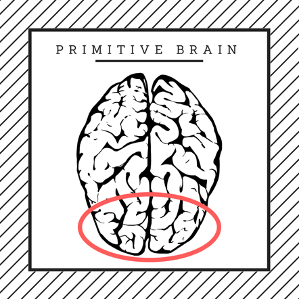
Self-awareness is knowing the signs of stress. You may not be able to name it, but you know something is off. This can include lack of focus, a challenge in irritability, forgetting things, bumping into things, or being clumsy. This can be an early sign of stress because oftentimes the first kind of impact to our brain around stress is in our reptilian brain. This is the base of our spine and is responsible for balance. If you are experiencing this sign, it is your body telling you that there is something going on. Forgetfulness is a sign of stress as well.
You also want to be able to recognize your own patterns and behavior habits. Recognize if you always take a certain action when something happens or if you find your mood shifting once it reaches a certain time of day. For example, after attending certain staff meetings in the past, I would feel not good for the rest of the day. During the meetings, the supervisor would say, “This is a safe space to bring any complaints or issues.” However, anytime someone brought up an issue that made them uncomfortable, her response would be, “There are two sides to every story.” Her intention was to say she wanted to hear both sides, but I understood it as her not believing the person. That would put my whole body into a state of stress because it triggered something from my own childhood. For me, finding this out took months of self-awareness. I was able to talk to that supervisor and let her know that it was triggering for me. She was appreciative that I brought it to her attention and shifted her ways. Therefore, we want to be aware of those signs of stress.
Also, acknowledge the impacts of our work. Recognize that as much as we love it, it is still challenging and has an impact.
Ten Occupations with High Rates of Burnout
In recognizing when stress is happening, it is important this is part of the validation of the work. Looking at this list, notice that social work is one of the top occupations for burnout:
1. Physician
2. Nurse
3. Social Worker
4. Teacher
5. School Principal
6. Attorney
7. Police Officer
8. Public Accounting
9. Fast Food/Retail
10.Customer Service
A survey from the Mayo Clinic says that the two highest risk groups for burnout are emergency service personnel and healthcare and social service providers. It is important to know that our work is hard and can lead to burnout, so we want to figure out how to prevent that.
Job Burnout Risk Factors
You might be more likely to experience burnout if you lack a work-life balance. It is important that we have clear boundaries between the two. We might have a high workload that includes overtime work. Personally, I do not believe I have ever worked an eight-hour day in all my years of being a social worker. We are also trying to be everything to everyone because of all the systemic, personal, familial, and community suffering we know of. We may start to feel like we have little or no control over our work, or our job becomes monotonous. Take note if you recognize any of these factors within yourself.
Possible Causes of Burnout
Some of the factors that can cause burnout include a lack of control. This could be when decisions are made without input from those of us who are in the field and have direct contact with our clients. That information is then sent down to us and we are asked to do things that do not actually have any impact on those we serve.
Another factor is unclear job expectations. In the public education world, we get a lot of duties as assigned or unfunded mandates. You think you have your job description, but other duties are then added to it.
There are also dysfunctional workplace dynamics. Recognize if there are bullies in your workspace. For some of us, we may, unfortunately, experience sexual harassment or racism.
Another factor is about the extremes of activity. This means that our job is super chaotic or super boring. Recognize that either one can lead to burnout.
There is also the lack of social support, especially when we do not have colleagues that we can connect with. We are separating personal and professional aspects of life, but we still need to have some peers and connection to our work.
Finally, there is the work-life imbalance, which is a huge issue for us. Again, we need to be able to separate those two things.
Personal Self-Care: Regulation
Self-regulation is about mastery over our thoughts and emotions. This does not mean the lack of feeling emotions or having challenging thoughts. Instead, we want to notice those emotions when we have them. We then do something to regulate ourselves. It is okay to be upset, angry, frustrated, or sad as long as we are in control of that. I do not mean control in terms of deciding to feel one emotion over another. Being in control means having the ability to feel an intense emotion and taking responsible action.
Be able to reframe distressing and hopeless situations using self-regulation, which is similar to our job as social workers. We take tough situations and provide strength, support, resources, and hope. However, part of that self-regulation is noticing when we, as the caregivers, are in a state of hopelessness. Self-regulation can also include relaxation and mindfulness as soothing practices.
Self-Awareness and Regulation
Self-awareness and self-regulation are important in order to understand how they show up and what happens in our brain.
The first part of this is recognizing our fight, flight, or freeze response. When we feel an intense emotion or a threat in our environment, our body and brain go into our fight, flight or freeze response. It is not always a physical or visceral response. It can present itself subtly in our behavior, which is the important part to pay attention to. We might have a fight response in our nervous system based on the stress we are experiencing. This can look like agitation at work, pushing back on management or colleagues, or having a chip on your shoulder. With the flight response, it can look like taking a sick day or going from job to job. Regarding the freeze response, it can present itself as procrastination, missing deadlines, or showing up late for meetings. All of these are ways that our nervous system is trying to keep us in a state of regulation, while also responding to threats in our environment.
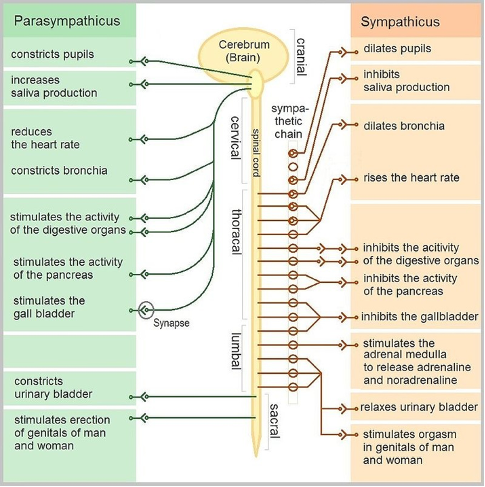
The opposite of the fight, flight, and freeze response is the rest and digest response. In our autonomic nervous system there is the sympathetic nervous system, which has our fight, flight, or freeze response. Whenever we feel stressed, our sympathetic nervous system comes online to help us figure out how we can meet the threat and survive. Once we have met that threat and everything is fine, we come down and shift from the sympathetic nervous system to the parasympathetic nervous system. The parasympathetic nervous system is responsible for the rest and digest response. It is the system that tells us we are safe. This is good because we want to be able to work from a state where we are fully in our own consciousness.
The relaxation response is the antidote to the stress response. It is about getting your body into a state of rest. What that means is calming down your limbic system and giving your body and brain a point of clarity and safety. This way we can recognize what relaxation feels like in our bodies. One technique for stressful situations is deep breathing for a period of time. Once we regulate ourselves, we can make better choices. We can be less reactionary and more responsive, and that will have better outcomes for those we serve. If we want to help other people, we need to show up for them with a regulated nervous system.
Personal Self-Care: Efficacy
Self-efficacy looks like the ability to persist in the face of insurmountable odds, which can happen often in social work. We are given cases where all odds may be stacked against someone and it is our job to help them seek a sense of efficacy and agency. The only way we can do that is if we understand what efficacy feels like within ourselves. Self-confidence in our work as social workers is part of that efficacy. That is hard to have if you are feeling overwhelmed or overworked. When we have too much on our caseload, we cannot do a good job for everyone. This continues to impact how we show up for work, which can ultimately lead to burnout.
Our self-efficacy is also associated with high levels of human caring. Research says that when we have self-efficacy, we feel effective in our work. It increases our levels of human caring and actually makes us want to work more. It is a great loop for us to be in because it allows us to care more.
Challenges to Social Work Efficacy
Here are some of the challenges to our efficacy:
- Faced with insurmountable demands.
- Uncontrollable conditions & situations.
- Expected to do magic & achieve miracles.
- Inadequate resources to achieve impossible results.
The first challenge is being faced with insurmountable demands. We are often given uncontrollable conditions and situations. We are given cases and scenarios where we cannot have control over what is happening, whether it is interpersonal dynamics or a situation in courts or in schools.
Additionally, we are expected to do magic and achieve miracles. I happen to be the only social worker in my school district. With some cases I get, I have to remind folks that I only have so much power and I appreciate that they think I can do all these things, but I cannot move mountains. We are sometimes asked to do things that are just not possible.
We are also asked to do our work with inadequate resources. It is obvious why we might face some lack of self-efficacy when we are being asked to do things that are impossible. We are either not being supported or the systems are pushing back against us. When you first get into certain systems, you recognize the injustices and it can feel defeating. When you think everybody will agree with you about it, it then seems like no one cares. It is important for us to focus on self-care that will help support us when we feel defeated.
I appreciate this quote that says, “workers with high self-efficacy were less affected by high-stress conditions and exhibited reduced levels of burnout and compassion fatigue.” When we have a certain level of efficacy, we can make decisions and have a sense of control in some of our work. With that support, we are less impacted by burnout and compassion fatigue. We have people in our corner telling us that they appreciate what we do. This way, we can do challenging work from a place of full support.
Self-Care is Multi-Dimensional
Recognize that self-care is multi-dimensional. When we talk about self-care in general, we often only think about physical self-care. This refers to how we feel and how we look. We need to realize that caring for ourselves is achieved through multiple areas. This includes psychological, emotional, social, spiritual, leisurely, and professional.
Making a list of some practices within each category is a helpful action to take. You will want to do this in the rest and digest state because that will allow you to have more available options at that moment. This is for when you are in a crisis and in need of that self-care. This is because if you are trying to think about what to do in a time of crisis, you are either not going to be able to think about it or you might end up doing something that is more harmful.
Basic Self-Care and Wellbeing
I like to break self-care into three different categories. The first is basic self-care, which refers to what we need to survive and live as humans. You need to eat food, preferably healthy food. You need plenty of water. You also want to participate in regular exercise. This means moving your body for 30 minutes or more each day, not just 30 minutes of walking around at work.
You also want restful sleep. Some folks will say you need eight or more hours, and that is accurate. It is also important to recognize if you cannot get eight hours or more, it is not the end of the world. Restful sleep is more important than the hours. For example, 10 hours of sleep that is not restful is not helpful. Regarding naps, they can be helpful if your workday is hectic. You can take a half-hour nap in the afternoon and still have a restful sleep at night.
It is important to have connections with others. This connection does not have to include another person. I highlight this because we may get sick of people after our work. You can have connections with pets. Animals are wonderful with helping us self-regulate.
Also, I want to mention the word “hangry.” It means being so hungry that you get angry. You want to recognize when you have not eaten, slept, or had anything to drink. This is important because we can get dysregulated easily. Anyone who has raised a child from birth knows that the first years of trying to get them to sleep are exhausting. When you have not gotten a good night's sleep, we can feel like zombies. If we have not eaten, we can get irritable.
Deep/Contemplative Self-Care
Deep and contemplative self-care is about pulling into spiritual connections. This could be religious connections or your own personal connections. For example, you can connect to folks who have passed away by pulling in a mindfulness practice. You want to remain aware in the present moment without judgment about what is happening. An example of this is being mindful when we are in meetings with our clients or other colleagues. We also want to be mindful when we are making challenging decisions with families.
This mindfulness practice is good self-care because it also helps us depersonalize our work. When we are sitting with a client, this will help us focus on what their needs are and pay attention to any of our own issues that may be trying to intervene. This can also prevent our own biases, traumas, and frustrations from entering a conversation.
Meditation and breathwork, stillness, and moving are also important. Seated meditation can be a helpful activity. If you are not a regular meditator, I recommend starting with 1 to 5 minutes of silence and allowing your mind to open up. I have a timer that I use with the young people that I serve. I can ask my students when they come into my office, “How long do you want to breathe?” Afterwards, that student can have an easier time telling me what is going on. A calm nervous system can allow them to make solutions. Walking, yoga, tai chi, and qi gong are some other deep-care practices.
There are also connections to a bigger purpose. Again, this does not have to be religious. This is about feeling your own connections to this deeper work that we are doing. I truly believe that social workers are changing the world. We change families’ lives and communities. However, it is important for us to be connected to that macro-level. This is for those times when we get upset or want to drop everything and run. Recognize that there is a bigger purpose. My goal is not just to help these individual students, but also to help shift the culture in education.
Radical Self-Care
There is also my own concept of radical self-care. This idea is a product of my 20 years in this work and of three major burnouts. I often notice that we all get sick when we have vacation time. Another issue could be having a week off, but it takes three days for us to come down from our work and enjoy the vacation. Be aware of when this happens. I got sick on our Christmas break and on the morning of my birthday, I got shingles. It was painful and unflattering.
Through those moments I have come to this concept of radical self-care. This is the concept of remembering why we come to social work. Nobody accidentally falls into this work. It is important for us to recognize why we come into this work. It could be because we had an amazing childhood and we want everyone to experience that, or we did not have the best childhood and we do not want anyone to experience that. Regardless of the cause, we have to remember why we do the work. We then want to reconnect with that passion. Once we do this, that excitement that brought us into the work can act as a self-care practice.
Another point here is about regulating our nervous system. There are ways that we can take control of our regulation, even if other systems are trying to pull us out of that. Once we are regulated, it is important that we then rebalance our boundaries.
Again, we talked about personal and professional aspects that overlap. Recognize that it is important for us to know when we are burnt out from caregiving. We will also want to pull in our boundaries around our energy and our time.
We want to pull in some rituals and routines that keep us intentional in our work. It is important for us to create routines in order to have a sense of the flow of our day. For example, it is often that I am on autopilot when I make my coffee in the morning. Lately, I have been trying to bring intention to making my coffee. It still only takes me about 5 to 10 minutes, but I am fully present when I am doing it. This means listening to the beans as I scoop them and smelling the coffee when I transfer it into my cup. This gives my whole body the ability to rest and be regulated. This also helps me focus. You can also do this for other drinks or meals you have when starting your day. You can then be intentional about resting because that is the antidote to the stress response.
There is a woman I follow on social media and her concept is the nap ministry. She talks about how rest is radical. In our work, we are constantly doing things for others and ourselves. Even though my day ends at 3 p.m., the crises keep going into the evening. Even now with social media, I have some teenage students who contact me at all hours of the night. They are allowed to call me and talk to me whenever, but my response will be within the workday due to the boundaries I have set. However, it is important to prioritize. You want to be able to turn off your laptop and your phone and get away from work. Turn your weekends into opportunities to do something different from what you do during the week. This can be spending time with family, going out into nature, or anything that pulls you into the rest and digest state.
We do these self-care practices in order to embody them. The trick is when we are in a staff or team decision-making meeting, we can then pull back and embody the practices that we have done at other times. This is helpful because I know what rest feels like in my body when I am not at work. I want to be able to bring my body back into that rest state, even if I am not in a restful environment.
Again, the whole purpose of this is making self-care a lifestyle. It helps us show up for the world in a way that we are happy with. This way, we do not fall apart or stress out when crises arise. That is where our confidence and self-efficacy come in.
Professional Self-Care
Professional self-care is important as well. It is often that when we talk about self-care we make it individualized. However, it is also important that we talk about how the organizations we serve have an impact on whether or not we are able to do self-care. Recognize that professional self-care includes our relationship with the organization. It also includes our shared values and beliefs when we have those with colleagues and the organization. We are often drawn to the mission and vision of the organization, but when we get there, is that mission still being held up?
You also want to consider mission alignment with your administration and their actions. This also includes areas of fit or mismatch. I have heard this when people are being fired: “they were not a good fit.” I always question if they were not a good fit or the organization just did not make room for them.
Also, recognize the disconnection between administration and line staff. This is disheartening for me as someone who has been on both ends. When I am in line with staff, I feel like the administration does not hear us. I have also been on the administration side where I feel like some folks ask for so much and do not understand all the things we have to pay attention to. In order to make change, it is important that we all work together, especially in social work.
Organizational Self-Care
When we talk about organizational self-care, it is important to pay attention to its potential barriers. I have a quote that says, “It is increasingly clear that to support diversity, we must have inclusive environments that ensure that differences can thrive.” This is very important, especially right now. There are conversations going on around police brutality against Black folks, and one is about shifting funds away from police and bringing in more social workers. However, progress towards anti-racism can only be made if the social workers that we bring in are not just duplicating oppression and white supremacy. That is why social workers need to pay attention to personal biases because we all have them. Many of them are unconscious. It is important that we are self-aware and always investigating ourselves. Why did I have that response to that person? Was it because of their skin color, gender, or ability?
An important factor in this is cultural competency. Diversity is important, but not if we are not doing anything inclusive. Having different folks who do not feel like they are part of the organization does not help; it is actually tokenization. An example of this could be when an organization hires one Black social worker and thinks their work is done. However, do they feel included?
Another factor of cultural competency is being compassionate with ourselves because the only culture we are fully competent in is our own. It is incumbent upon us to learn something. I was raised a Christian, but when I went to a Catholic church, it was a whole different culture that I was not competent in. We should all ask questions about cultures in order to be competent. Another example is that I am a cis-gendered, heterosexual woman. I have to recognize that I do not know the experiences of my queer brothers and sisters and transgender folks. Additionally, we need to consistently check ourselves and our biases because they tend to be unconscious. It is our job to make sure that they are not impacting how we interact with our colleagues or serve others.
We also want to remember that our duty to challenge social injustice is in our Code of Ethics. It is our job to challenge social injustice. There is a video of an older white man tearing down Black Lives Matter signs from a neighborhood. The woman who was filming said, “Black Lives Matter” and the man said, “not to me, they do not.” He then continued to rip signs down and curse at the woman. We soon learned that that man is actually a family court judge in Philadelphia. This is significant because being a family court judge in Philadelphia, he makes judgments about Black families. This is the organizational racism and oppression that we as social workers want to work against. It is our duty to challenge injustice when we see it, and this family judge is only one example of that injustice.
Workplace Wellness
Workplace wellness includes the following aspects:
- Employee involvement in decision-making
- Asking for input from those impacted by the decision
- Supported work-life balance
- Flexible work schedules/leave options
- Assistance with child/elder care
- Employee growth & development
- Quality supervision
- Professional development as self-care
- Employee health & safety
- Interpersonal safety to speak up & seek support
- Employee recognition
Employees’ involvement in decision-making is essential. This is about bridging the gap between administration and line staff or field workers. What are you experiencing in the field? What policies would help you stay safe or be more productive? How can we do that? You can then take that input and put it in action.
You also want to help support a work-life balance for staff. We talk about our individual self-care practices and life-work balances, but then our organizations are requiring 14-hour days, ridiculous caseloads, and no childcare. This can restrict our own self-care. That is where personal and professional self-care meet. Our organizations have to support the work-life balance if we are going to be asked to do self-care.
Employee growth and development are also part of workplace wellness. Do you feel stuck where you are? Can you expand or work up? Is there any room for improvement? Quality supervision is important as well. Additionally, professional development is self-care. Does your organization invest in you? Do they think that you are competent?
Employee health and safety is certainly an aspect of workplace wellness. This includes physical safety. Can you get to your workplace without getting injured? However, this is also about interpersonal safety. Can I seek support or will I be told that I am not competent enough? I once had a job that I was asked to do. There was a ridiculous amount of work and when I asked for support, I was given an evaluation that said I blamed others when I could not get the work done. After that, I did not feel safe at that job because I knew that I could not ask for support.
Finally, there is employee recognition. If we are doing challenging work, it is especially important to be appreciated. I do not just mean telling someone that they are doing a good job. Appreciation can mean bonuses, extra time off, more flexibility in our time, or monetary compensation. When we are doing hard work, it is easier to continue that hard work if we are being recognized.
Also, you might want to take note if these exist in your workplace. If you are in an emergency department or are a supervisor, think about the ways that your workplace is either encouraging these things or not. Supporting work-life balance is key here. You cannot ask social workers to do self-care if the organization is not supporting the work-life balance. You want to allow people to take sick time or mental health days without it being a stigma.
Professional Development as Self-Care
Consider professional development as self-care. Hopefully, you are being supported by your workplace to do this professional development because it can be empowering. It is a long-term investment that builds us as social workers. It is also a connection to others who are doing similar work. I offer professional development, and the validation that other social workers get is a beautiful connection that we can make to each other and to others doing the work.
It can also change how we see our own work, as well as the profession as a whole. We all recognize that there are always changes in our work. There are always new policies to pull into. Even our awareness of trauma and how it impacts folks has changed in the last 15 years. That professional development allows us to continue the amazing work that we do.
Self-Care for Social Workers
To summarize, self-care for social workers is a critical foundation of an effective, ethical practice. We have that in our code of ethics from NASW. It is also important to remember that self-care is understood in two dimensions of personal self-care and professional self-care. Recognize that those two sections are dynamically and implicitly interconnected. Self-care is most effective when engaged in proactive and intentional self-awareness, self-regulation, and advocacy.
Remember that secondary traumatic stress is preventable and treatable. The preventable part is when we are pulling in self-care practices all the time. The treatable part is when we are looking to those self-care practices when we are in a state of crisis. Self-regulation promotes self-awareness and mindful responsiveness rather than reactiveness. It also allows us to engage in and with our environment. Self-care empowers us as practitioners to exert agency over our holistic health and wellbeing.
Finally, it is important as social workers to know why we do this work. Self-care is a vehicle for change in the professional culture and in social work. Just in our social culture we are noticing that this is an opportunity for us to build self-care for the work that is ahead.
Change the World with Self-Care
I want to leave you with this quote from Angela Davis: “anyone who wants to make change in the world has to learn how to take care of herself, himself, or themselves.” It is important that we take care of ourselves. This way, we can make change and see the positive outcomes that we want in those we serve. This will allow us to thrive in our work and do it long-term without it debilitating our health and wellness.
I encourage you to look at the recent research from NASW that was published in January of 2020. The content of the journal is all about self-care. I encourage you to go ahead and grab that book. If you would like more information on cultural competence, you can look at the NASW resource standards and indicators in social work practice.
References
Refer to the course handout for a complete list of references.
Steward, N. (2020). Self-Care for Social Workers: Personal and Professional Supports for Sustainability. continued.com - Social Work, Article 69. Available at www.continued.com/social-work
Nov 11, 2026
Addressing Complex Trauma Across the Lifespan
Patrice Berry, LCP, PsyD
Editor’s note: This text-based course is an edited transcript of the webinar, Addressing Complex Trauma Across the Lifespan, presented by Patrice Berry, Psy.D., LCP.
Learning Outcomes
After this course, participants will be able to:
- Define complex Trauma and understand how it can present across the lifespan.
- identify the appropriate assessment tool to match the setting.
- Identify clinical approaches to consider with children, families, and adults that present with complex trauma.
Introduction
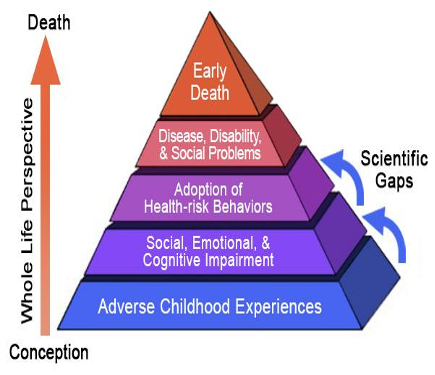
One disclaimer that I want to give is that I will be going over larger programs that you may need an additional certification for, so this course will not give an exhaustive explanation of the different training. This topic applies to almost any setting, and you will encounter individuals with complex trauma if you have not already. These individuals are often difficult to engage, and taking different approaches can help them meet their treatment objectives. This course does assume a foundational knowledge of the Adverse Childhood Experiences study and a basic understanding of trauma-informed care. This care goes from looking at what is wrong to looking at what happened to you. This is important because it is often that the history of the person is not considered. Going into that detailed history can often give you a better understanding of how to help an individual.
Complex Trauma
According to the National Child Traumatic Stress Network, “the term Complex Trauma describes both children's exposure to multiple traumatic events, often of an invasive, interpersonal nature, and the wide-ranging, long-term impact of this exposure.” That exposure can be emotional, social, cognitive, behavioral, or physical. It is not an official diagnosis within the Diagnostic and Statistical Manual of Mental Disorders (DSM-5), and people often refer to it as complex post-traumatic stress disorder (PTSD). However, it is not an official diagnosis. Experts tried to work on including developmental trauma or complex trauma within the DSM-5, and instead lowered some of the restrictions for kids. This is because practitioners realized that kids were not meeting full criteria for PTSD, and it did not fully describe all that was going on with the individual. Maybe it will be included in the future.
Clinical Presentation Across Lifespan
Early Childhood (0-5)
- Developmental delays
- Difficulty separating from caregiver
- Crying and/or frequent screaming
- Difficulty with appetite
- Nightmares
- Dysregulated behaviors
In early childhood, you may notice developmental delays. These children have had significant neglect during their early years, so there may be speech delays, cognitive delays, or issues with sensory processing. They may have difficulty separating from their caregiver, or there may be excessive crying or frequent screaming that goes beyond what you would expect for that age range. This may be a child who is difficult to console, and you may see issues with appetite. In working with their social worker and treatment team, you can see how to address those issues. The child may also be experiencing nightmares, which is one of the DSM criteria for PTSD. That is a re-experiencing symptom where kids often do present dysregulated behavior and maybe a little all over the place. Often you will get complaints from daycares, or if they are able to engage in preschool programming, they may struggle within those environments.
School Age (6-12)
- Commonly misdiagnosed as ADHD
- Tantrums
- Difficulty accepting limits and “no”
- Express emotional issues (depression or anxiety) as behavioral issues
- Physical and/or verbal aggression
- Academic problems
- Social withdrawal or poor boundaries
- Hypervigilance/Fearful
- Guilt/Shame
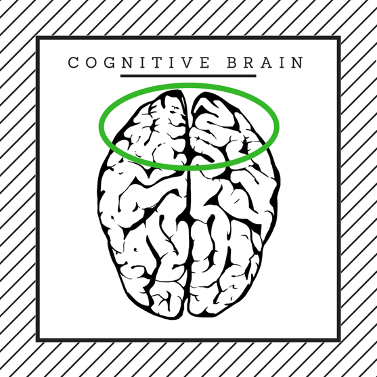
Research shows that children in their school-age years are commonly misdiagnosed with Attention Deficit Hyperactivity Disorder (ADHD) because you may see similar behavioral dysregulation. I describe this to families by telling them that dysregulation that comes from ADHD is a prefrontal cortex, which is a frontal lobe issue, whereas trauma is from an overactive amygdala. If it is more of an emotional dysregulation, that may be trauma-related whereas ADHD is a frontal lobe issue. Watch for individuals with complex trauma who are prescribed stimulant medication because you may see an increase in negative behaviors, and that is when families should talk with their prescribing physician to discuss options. I have had families want to see if they could get used to the medication. However, I always advise them to immediately discuss their options with their provider because the medication stimulates the entire brain.
Regarding a child with complex trauma, they may have an increase in behaviors at times. That is why it is important to get a good assessment of what is going on. Someone can have ADHD and trauma symptoms and it is important to get some of the trauma symptoms under control. This is because regulating those emotions can help before going forward, and that is when you should work closely with their prescribing physician. You may see tantrums for a variety of different issues, especially in difficulty accepting limits or being told no. That is when you might see an increase in physical aggression or behavioral issues anytime a limit is set. You may get a referral to your office if the family is having difficulty managing the child's behavior. They may be more likely to express emotional issues such as depression or anxiety.
For adoption and foster care, it is often that when a child comes out of a honeymoon period, families will often feel that the behavioral issues are intentional. I view that as survival behavior, and it can be difficult for them to let go of that because it may have kept them safe in a different environment. Individuals with complex trauma may have had to fight for food or fight their siblings within their families of origin, so giving up that physical aggression may make them feel unsafe. That is why having a good understanding of the child's history is important. You may see academic problems and difficulties with learning, and that is when you want to work with the school to make sure they are not only focusing on academics but also on relationships. You may see complete social withdrawal, difficulty engaging with peers, formation of superficial relationships, or struggle with having deeper relationships. They may be hypervigilant, fearful, or jumpy, which are symptoms of PTSD. There also may be guilt and shame related to their trauma if they start to understand their experience in a different way. There may be self-blame, shame, and low self-esteem with that as well.
Adolescence (13-18)
- Depression and/or Anxiety
- Anger
- Feelings of loneliness/social withdrawal
- At-Risk Behaviors (e.g. running away, unsafe sexual behaviors, substance abuse)
- Poor peer relationships
- Poor academic performance, lack of academic motivation, and/or frequent referrals
- Legal problems
With adolescents, we see an increase in depression or anxiety, and their emotions begin to be expressed as anger. There may also be an increase in feeling lonely, as well as social withdrawal. They may begin to engage in risk behaviors and often get involved with the juvenile justice setting. These actions include running away, substance abuse, stealing, or unsafe sexual behavior. They have poor peer relationships and are seemingly addicted to drama. They may recreate the chaos that they feel in their different relationships. With those individuals, I try to have them increase their ability to calm because they are used to chaos, not positive interactions within a relationship. There also may be poor academic performance, lack of academic motivation, or frequent referrals from school. This is often when the school’s social worker gets involved. We take their history and find out if we need to switch to a trauma-informed approach or refer them to other programs. There may be legal problems around this age as well.
Adults (19+)
- Behavioral Issues: impulsivity, substance abuse, treatment interfering/self-sabotaging behaviors
- Emotional Issues: (e.g. affect lability, rage, depression, and panic)
- Social Issues: poor boundaries, frequent drama/conflict, domestic violence (victim and/or aggressor)
- Somatization
Adults often present with similar behavior issues, but now you may start to see ingrained patterns that can be difficult to break. You will see impulsivity, substance use or abuse, treatment-interfering behaviors, or self-sabotaging behaviors. They may also engage in behaviors that damage their relationships, as well as emotional issues and difficulty regulating their effect. They may display rage, depression, or panic. You may see poor social boundaries or frequent drama and conflict. There may be some domestic violence where they could be the victim or the aggressor. There may also be an increase in somatization, where there are frequent physical issues and complaints. The more Adverse Childhood Experiences (ACEs) the individual had in the past will usually mean more medical issues. Trauma has an impact on the physical body, and I want to mention The Body Keeps the Score by Dr. Bessel van der Kolk. It talks about how trauma and the body can be linked and how people have found healing with that. These individuals may present to a medical hospital, but not to counseling or other social services. That is where the social worker, being aware of the background, can often help the person get the right type of treatment.
Borderline Personality Disorder versus Complex Trauma
An individual can present both borderline personality disorder (BPD) and complex trauma. Some research has shown that individuals with complex trauma can have a higher rate of being diagnosed with personality disorders, but there is other research that shows significant differences. If someone does not have certain symptoms then they may meet criteria for a trauma-related disorder and not borderline personality disorder. The DSM criteria for borderline personality disorder starts with frantic efforts to avoid real or imagined abandonment, a pattern of unstable or intense interpersonal relationships, and identity disturbance, so that is where there may be an unstable sense of self. There can be impulsivity in a few different areas involving self-damaging or suicidal behavior, whether it be gestures, threats, or self-harm. They may experience highs and lows that go over a long period of time. This is more of a personality shift versus a biological mood that you may see within a mood disorder. Chronic feelings of emptiness, inappropriate and intense feelings of anger, difficulty controlling anger, transient paranoid ideation, or severe dissociative symptoms may be prominent as well.
Take note that some of these symptoms are similar to complex trauma, but there are some specific differences. In looking at the two, they both have an impact on the self and the identity. But within borderline personality disorder, it is about an unstable sense of self, while complex trauma includes a chronic, negative self-image. An individual with BPD may have days where they feel good about themselves, but changes in relationships bring down their sense of self. With complex trauma there is a negative self-image in which they almost always feel badly about themselves. Often they cannot remember a time when they felt positively about themselves. These individuals may have had histories of emotional abuse when the negative things that they play in their mind are things that someone else has said about them. They may have someone else's voice internalized as their own.
Within both cases, you also can see interpersonal issues. With borderline personality disorder, it is more so about fear of abandonment, as well as unstable relationships due to black and white thinking. With complex trauma there is the chronic avoidance of relationships and isolation, and not feeling like they ever belong within the family. I often see this with individuals who have been adopted and teenagers going into adulthood. They may feel like they do not have a place in the world. They do not go back and forth from love to hate because they often do not feel love from their family. I describe that as there being no bottom to their cup. Regarding individuals with complex trauma, it does not matter how much love you put in their cup because everything just pours out. This can relate to a family that might describe how they spent all day with one foster child, but then that child did not feel cared for the minute they spent time with another child. Also, both BPD and complex trauma have issues with emotion regulation. Within borderline personality disorder, there tends to be more impulsivity and difficulty with regulating mood. With complex trauma, it is ineffective coping and reactive anger. It is chronic difficulty versus not having the right skills. That is why there are treatments that can be effective for both.
Assessment
There are many different types of assessments that look at trauma and a person's history. If you have time to do a thorough social history and ask specific questions, then that would be preferred. You also want to give someone a nonverbal way to share their story in case some are not comfortable talking. I have worked with many patients for a period of time who disclosed their past trauma later on. It may be difficult for them during that initial intake because of an underlying feeling that they will not be understood or will be judged. I think a detailed intake is a great place to start if you have the time. If you are a foster care social worker, you are going to get that detailed social history. If you are working in an outpatient setting, you will be able to get a thorough understanding.
On the other hand, if you have a larger caseload and are only able to do a brief screening, I recommend the Adverse Childhood Experiences Scale. It lists 10 different adverse life experiences that someone may have went through, ranging from divorce to physical or sexual abuse. It is important to ask about negative life events versus trauma because people may not view what they went through as trauma; they see it as normal, or they somehow have found a way to cope. That is why using the Adverse Childhood Experiences Scale can be a good way to do a screening. If you are in a setting where you have to do a screening, such as the juvenile justice setting, every student undergoes this to see what their ACEs is. Individuals with lower ACEs typically have less of the behavioral, emotional, social, or cognitive problems. Individuals with higher ACEs can bring up some of those problems and may end up requiring additional support.
There are symptom checklists to look at, such as the Trauma Symptom Checklist for Children, as well as others for adults. There is a checklist for parents, where they fill it out for their young children. You can also do a more comprehensive assessment by using a Child and Adolescent Needs and Strengths assessment. I see these done within social services, or with a child that has been referred to residential treatment. This is because you are then able to take the time and get a more comprehensive assessment of the child's trauma. I like how that assessment includes their strengths because individuals who have been through complex trauma are also resilient. Those strengths may present in ways that cause issues for them because they may be good at advocating for themselves, but it comes off in an aggressive way. That is where we might tweak their expression of that particular strength because there is always traumatic growth that we can move towards. Even though the person has had those difficult life experiences and cannot change the past, they can turn it into positive change and they need help and support in doing that.
Multidisciplinary Model
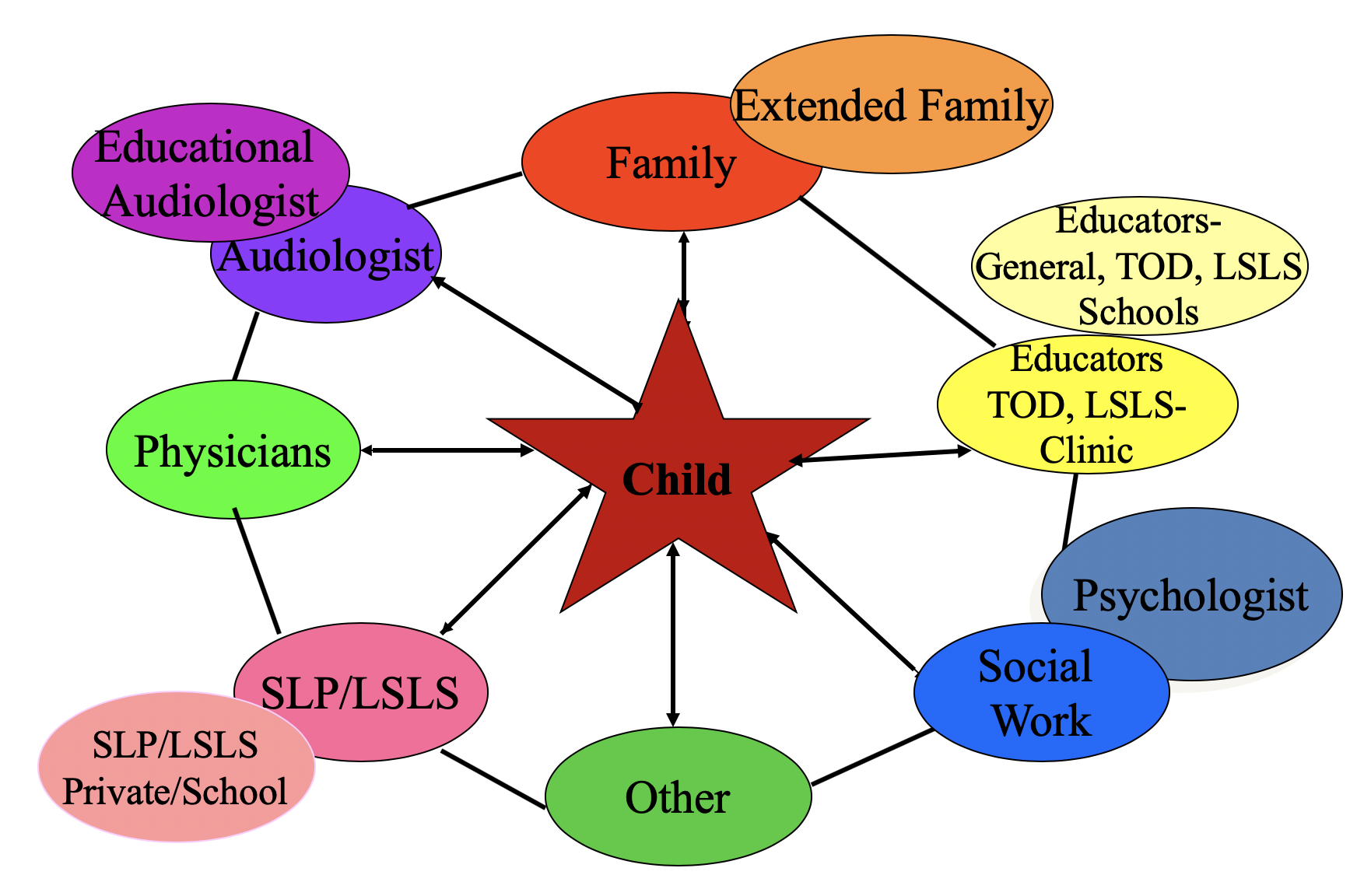
With treatment, I think it is best to take a multidisciplinary model to look at all the different people within their life and their home. Within the school you want to be able to collaborate with teachers whenever possible. You can do this by having teachers do updated reports periodically. If they are involved with social services, you want to make sure you are communicating with their social worker. I recommend that individuals with complex trauma be in some type of therapy because it does affect them across the lifespan. There may be times where the trauma is seemingly resolved at age six or seven, but then at around nine or 10 they need to go back to therapy. They do not have to stay in therapy forever, but I want them to view therapy in a positive light, like going to the doctor for an annual checkup. There may be times when they need to attend therapy again and de-stigmatize it. It is to remind them that they are not wrong or crazy. The skills that individuals acquired previously may not work after a period of time, so they can go back to therapy and learn new skills. When I meet with individuals with complex histories of trauma, I prepare families with the knowledge that they can discontinue therapy for a time. However, something may happen in life where they need to return.
Some states have community-based services and I am licensed in the State of Virginia, so we have intensive home-based and school-based services that are available. There are other states that do not have those types of resources available, so you will have to research the resources that are available within your area. This is important because there are times when social services will approve certain programs that aren't approved by insurance. Are there any intensive programs that are within the child's home? At times, people do need to go to higher levels of care. In Virginia, we try to limit referrals to higher levels of care because it is the assumption that kids do best within their home. However, there are times when kids are not able to be stabilized within their home and need that referral to a higher level of care.
You also want to make sure that you are collaborating with their doctor because these individuals can present with a variety of physical symptoms. I do not want to call something somatic without checking with doctors, and then realize the patient has a vitamin D deficiency or sleep apnea. If eating is an issue, I rely on the doctor to help the different treatment providers understand whether or not the individual is in a healthy range. We will most likely intervene more if they are not healthy at that time and collaborate with their psychiatrist. Many individuals with histories of trauma, especially kids and teens, can have sensory issues that are triggered by different things. I have worked with some people who use headphones and that allowed them to do things in their community without becoming overwhelmed with sensory input. Regarding individuals with complex trauma, you will want to be mindful of these factors in your office or the different settings they are involved in. Are they too stimulating? There may be too much going on in their classroom. Within trauma-informed schools, they will often recommend teachers still decorate their classroom in a fun way, but have it be more organized and predictable. For younger children with developmental delays, physical therapy could be helpful. If they have some issues with motor skills, they may need physical therapy.
Neurosequential Model of Therapeutics
Another treatment model is the Neurosequential Model of Therapeutics. It was developed by Bruce Perry to address the impact of early trauma on brain organization. It is a bottom-up model that describes how the brain develops from the brainstem to the limbic system, as well as the different areas of the brain that are impacted by complex trauma. If an affected individual is in their thirties or forties and they have a trauma trigger, they may revert to lower levels of the brain that were not fully developed. It is useful to have a multidimensional lens and a useful picture to assess someone's strengths and vulnerabilities. Bruce Perry also talks about how viewing the client through this lens allows the treatment team to develop interventions to meet their specific needs. This particular model talks about movement and how that repetition can help individuals regulate lower levels of the brain that may not be as well-developed. It is an evidence-based, developmentally sensitive and trauma-informed program.
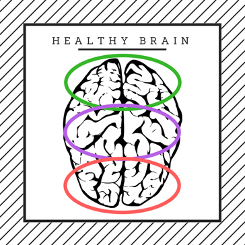
The brain develops from the bottom-up, and the majority of brain organization takes place within the first four years. Starting with the brainstem, we describe that as the primitive brain that is responsible for basic survival skills. That is where the fight, flight or freeze part of the brain is. From the brainstem we move up to the midbrain, which is where the motor skills are developed. If someone has motor issues, they may have originated in the brainstem and the midbrain was not fully developed. There may be issues within the limbic system because that is after the midbrain. The next part of the brain with traditional development is the limbic system, which is the emotional center. If you are working with someone that has a lot of emotional reactivity and certain triggers, they may be getting stuck in the limbic area of their brain. The last part of the brain to develop is the cortex, which is where reasoning and judgment happen. If I am working with a 12-year-old, there could be times when they emotionally revert to age two or three. Someone's developmental age may change based on the situation.
I work with some people who have certain triggers and revert to different areas of the brain. Some examples of interventions for this include music and repetitive movements. I have a friend that would use jump rope because that repetitive movement helps develop those lower areas of the brain for motor skills. There are some interventions that use yoga or mindfulness cards that can include the entire family. Eye movement desensitization and reprocessing (EMDR) is an example of one of the larger systems that helps reprocess traumatic memories from the affected part in order to prevent flashbacks. It is an effective treatment that has been shown to help work on lower areas of the brain that may not be developed. Drumming can be great as well because of the repetitive movement. Some people benefit from equine therapy or a therapy dog that was specifically trained to help the individual. Maybe the dog helped predict their flashbacks or can tell when they are about to have a panic attack. If some people have companion animals when they are having a difficult moment, it can help calm them. Art therapy and drama therapy are additional examples of interventions that can help develop the lower regions of the brain.
Rolling with Resistance
Working with individuals with complex trauma are often my more difficult cases. But I understand, which does not excuse their behavior but helps me explain it. This is because when I take this approach and decide to roll with resistance, it keeps me from getting frustrated with the individual I am working with. I train and supervise mental health professionals, and I work with my staff on not working harder than their client. This is because it is often that I see mental health professionals get frustrated when they want the client to do more than they are willing. If we meet clients where they are, maybe they will move to a different level down the road. However, getting frustrated with them because they are not doing what I want them to do will often hurt treatment because relationships are one of the most important things in working with trauma survivors. I like to remind myself that both the client and their families are doing the best that they can. My concern is that they are still not being safe, or maybe their best is causing problems for them. Are they willing to learn some different skills?
As a clinician, you want to be aware of your own triggers and reactions. This is because individuals with complex trauma can read emotions extremely well. They will be able to find that trigger and push it to see what happens within the relationship. As the social worker, that is when you use the skills we teach our clients to regulate your emotions and appropriately respond. It is fine to say, "In this room, I will never disrespect you, so I'd really appreciate you making sure to not be disrespectful of me.” I define respect as an appropriate tone, not name-calling, and not taking personal hits. I remember talking with someone about how they did not have to like the person that they were working with, but they did need to respect them. It is important to set limits and boundaries because sometimes clients push those buttons to get a reaction.
My belief is that I have to agree to be manipulated because if I can see manipulation coming, I can change my response and then the person does not get what they wanted. But we are all human and that is where I have to manage my emotions after the session. If it is a very difficult client and I am in outpatient practice, I may schedule a shorter session with that client. If they are not responding to redirection, maybe I bring the parent in to see how I can adjust things to be emotionally safe for both the client and myself. Make sure to be flexible because a big part of trauma-informed care is giving the client some choice. For individuals with complex trauma I typically have a range of three to four things I might try, but if I present all of those things and the client declines them, I can ask them what they want to do. I present these options early into treatment so I can learn what clients like. Maybe some will want to pick an appropriate song and listen while we talk about it, if they are willing. We can also pull up the lyrics if it is a song that is really important to them. Being flexible with your treatment is helpful because inflexibility can lead to triggering the emotional part of the brain that is often overactive within individuals with complex trauma.
It is also important to not give up. There is a difference between telling parents that the client is not a good fit for you, versus canceling treatment because the client will not talk. I have received clients after another professional discharged them without having a final session. It is difficult to engage these clients in treatment because they may learn that if they do not engage, they can get out of it. As a social worker it is important to try and meet people where they are and not lose hope. Not losing hope could mean redefining what success means for this client because your goals for them might be different from their own. We want to keep a nonjudgmental posture because these clients are very good at picking up when they are being judged. There is a difference between providing feedback on behavior versus judging the client. Always keep a nonjudgmental attitude towards the person. I might have concerns about specific behaviors, and you may have to be intentional in separating the two because these individuals are riddled with guilt and shame. That is often when I see them have difficulty accepting responsibility for their behavior. It goes between believing they did nothing wrong to thinking they are worthless and hopeless.
In regards to individuals with complex trauma, be consistent with scheduling, predictable in sessions and following through with appointments. When I went on vacation, I knew that I would have to rebuild the relationship because of the break in consistency. Through preparing myself for that, it helped me not be as frustrated with having to restart the therapeutic process. If we were working on deep topics before I had a planned vacation, we would come back with a check-in in order to build those relationships again. If you have to refer to another provider or terminate services, make sure to do appropriate discharge planning.
Parent Training and Involvement
Parent training and involvement is one of the most important things to consider while working with individuals with complex trauma, especially children and teens. This is because therapists can work on rebuilding the relationship, but that typically occurs over a short period of time. If the parent can get on board with taking a different approach, I have seen progress happen quicker with clients. This way, parents feel less frustrated because if they make changes within their home setting, families have success in reframing behavior. Once again, this is not excusing behavior, but it does help us explain it. One of my favorite examples for this is stealing food. If an individual has had a history of neglect from an early age, we will often refer to that as hoarding food. The word “stealing” has serious consequences while hoarding is more of an impulsive behavior, so families do not get as upset over hoarding. Educating yourself on how to address behaviors without blaming or shaming is important because these individuals already shame themselves in their own minds. We are going to address behaviors, but we are going to do it in a way that targets the behavior and not the person. I recently heard someone say, “Discipline should teach, punishment hurts,” so we want to make sure that we are teaching them about changing their behaviors.
Having parents explore the root of why certain behaviors are triggering them is important as well. Maybe stealing or lying triggers something that is often from their own childhood. They might be fearful of what that means for the child down the road. When we parent out of fear, we typically make more harsh or rash decisions than when we parent from a more mindful place. Teach parents to recognize their trigger, and then you might find out that their family was always lying for one another in the past. This may have led to the parent saying, "When I'm older and have my own family, they're never going to lie.” One of my interventions I do for lying is not asking a question that you already know the answer to. If the child has cookie crumbs all over their face, do not ask them if they ate a cookie. Even kids without complex trauma are going to say no at times because it is a part of the developmental process for children. That is often why I recommend asking, “Show me your homework,” versus “Did you do your homework?” A parent with a child with complex trauma is going to need to be in constant communication with the school because the child may come home and say, "The teacher said there is no homework for the rest of the year.” The teacher did not say that, so being in communication is going to be very important or the child will continue to hold to that lie. Even when you say, "Hey, I'm emailing the teacher,” they will still say, "Yes, she said it.” I also try to have families use humor when talking with the other professionals, or if they can get into a parent group for those with foster kids. It can often be validating to hear that other people are struggling with the same things.
When I have parents come in for their first session I often start by talking about typical examples of things kids with histories engage in, and the parents have a look of relief that says, "I thought it was a bad parent. I thought I was a bad person.” Doing that has often helped families disarm some of their defenses in being able to open up to me. I do not have a judgemental attitude towards the parents because I feel that they are doing the best they can. I want to help give them different skills to try because I might recommend something that may not work for their child. It is important to make sure that they are increasing their toolbox because things may work for only a period of time, which is why the relationship with an ongoing provider can be important. They continue to get additional updates, such as getting creative with ways to say yes instead of saying no all the time. With one specific treatment called Trust Based Relational Intervention (TBRI), they talk about ways to deal with children that have issues with food. Parents can have a “yes” table, in which children asking to have nutritious food is always a “yes.” However, it may be yes with a condition. For example, if the parent is cooking dinner and the child asks for a piece of fruit, instead of saying, "No, dinner is almost ready," shift a different way and say, "Okay, you can have it. Set it at the table and you can have it once you finish your dinner.” It is that often the child never eats the banana. If they do, they do not feel like their basic needs are being deprived.
Regarding children that have histories of significant trauma before the age of four, their brains can easily go into survival mode. That is why I think saying no can be triggering because they are reacting and responding as though this is the individual that is abusing and neglecting them. I have had students that get into rages, saying, "Why don't you care about me? Why won't you feed me?" In some cases they may have just been asking for a snack and they were told no. Now you will have to say no to certain things, but you want to save those no's for big things. The parent may have to let some of the smaller things go, but this is just a different way of thinking about things. We want to focus on safety-related behaviors while letting go of minor annoyances because the child may chew with their mouth open, but they have a history of significant trauma. Instead it would be beneficial to focus on the speed that they eat instead of how they eat, because that might be a safety issue. Focusing on major things and letting go of some minor things can be good for building a relationship because people do not want to be in a relationship with those who always tell them no. With parents, they feel like they should always be mindful of their child. Letting a few minor things go can often be very helpful.
Creating “Felt Safety”
As I mentioned before, TBRI is an intervention that has been developed by Karyn Purvis. There is a treatment protocol and a free chapter available online. It talks about creating physical, emotional, social, and cultural safety. With felt safety, it is a feeling in which you can be physically safe, and still not feel safe. It is often that individuals with complex trauma rarely feel safe, and I want to talk to those clients about the areas of their life where they feel safe. Is it when they are all alone and no one is around? For some people, being alone is when all their thoughts come. They may feel more safe when they are with a trusted caregiver, so it is important to learn about what makes them feel safe and unsafe.
With physical safety, we may learn that they feel unsafe in their bedroom at night. They may be 15 years old, but maybe bad things happened at night and having a nightlight would help them. This would also help them save face if there are some other children living in the house. Maybe sleeping with the door open could be another safety precaution. "We're going to start sleeping with the door open, just so I can check in at night.” Having the door open with the hallway light on helps get some additional light into the room. Trying to find those creative ways to help clients feel safe when they are physically safe is important. If they are not in a safe situation, we want them to get out of it. However, we want to increase the times that they feel safe when they are physically safe. There are a lot of interventions that you can do around that.
Creating emotional safety is where we let clients know that emotions are neither good or bad, they just are. Have them get comfortable with their emotions because often they want the emotions to go away. Social safety can be created within their peer group. Some helpful resources include The Deepest Well by Dr. Harris, The Connected Child by Karyn Purvis, and other additional books by Bruce Perry and Daniel Siegel. I have also included video resources. I have families who struggle with finding time to read a whole book, and quick links work better for them. With these links, it may be appropriate for the patient to watch and get an understanding of what is going on with them as well, which can be validating.
Resources
- The Deepest Well: Healing the Long-Term Effects of Childhood Adversity by Nadine Burke Harris, M.D.
- The Connected Child: Bring hope and healing to your adoptive family by Karyn B. Purvis, David R. Cross, & Wendy Lyons Sunshine
- The Boy Who Was Raised as a Dog: And Other Stories from a Child Psychiatrist's Notebook- What Traumatized Children Can Teach Us About Loss, Love, and Healing by Brue D. Perry & Maia Szalavitz
- The Body Keeps the Score: Brain, Mind, and Body in the Healing of Trauma by Bessel Van Der Kolk, M.D.
- The Neurosequential Model in Education: Introduction to the NME Series: Trainer's Guide (NME Training Guide) by Bruce D. Perry & Steve Graner
- The Whole-Brain Child: 12 Revolutionary Strategies to Nurture Your Child's Developing Mind by Daniel J. Siegel & Tina Payne Bryson
- The Connected Parent: Real-Life Strategies for Building Trust and Attachment by Lisa Qualls, & Dr. Karyn Purvis
- Attached: The New Science of Adult Attachment and How It Can Help You Find and Keep Love by Amir Levine & Rachel Heller
Video Resources
Karyn Purvis Institute of Child Development: https://www.youtube.com/channel/UCBW9RKLvTR5C46ey7gy3NuA
Survival Brain versus Learning Brain (Jacob Ham): https://www.youtube.com/watch?v=KoqaUANGvpA
The Repair of Early Trauma: A Bottom Up Approach (Beacon House): https://www.youtube.com/watch?v=FOCTxcaNHeg
What is Complex PTSD (BetterHelp): https://www.youtube.com/watch?v=NeQ8bgUAnFg
How Childhood Trauma Affects Health Across a Lifetime (Nadine Burke Harris)
Summary
In summary, we were able to define complex trauma and understand its different presentations across the lifespan in order to avoid misdiagnosis. We then talked about assessing complex trauma and some different clinical approaches that focus on a multidisciplinary approach, including the whole team to create safety and address complex trauma across the lifespan. For more information regarding culturally competent practice, please review the NASW resource Standards and Indicators for Cultural Competence in Social Work Practice.
References
Alisic, E. (2012). Teachers' perspectives on providing support to children after trauma: A qualitative study. School Psychology Quarterly, 27(1), 51–59.
Briere, J. (1996). Trauma Symptom Checklist for Children (TSCC), Professional Manual. Odessa, FL: Psychological Assessment Resources.
Ford, J. & Courtois, C. (2014). Complex PTSD, affect dysregulation, and borderline personality disorder. Borderline Personality Disorder Emotion Dysregulation 1, 9
Fox, B., Perez, N., Cass, E., Baglivio, M., & Epps, N. (2015). Trauma changes everything: Examining the relationship between adverse childhood experiences and serious, violent and chronic juvenile offenders. Child Abuse & Neglect. 46.
Giourou, E., Skokou, M., Andrew, S., Alexopoulou, K., Gourzis, P., & Jelastopulu, E. (2018). Complex posttraumatic stress disorder: The need to consolidate a distinct clinical syndrome or to reevaluate features of psychiatric disorders following interpersonal trauma?. World journal of psychiatry, 8(1), 12–19.
Greeson, J., Briggs, E., Kisiel, C., Layne, C., Ake, G., Ko, S., Gerrity, E., Steinberg, A., Howard, M., Pynoos, R., & Fairbank, J. (2011). Complex trauma and mental health in children and adolescents placed in foster care: findings from the National Child Traumatic Stress Network. Child welfare, 90(6), 91-108.
Hyland, P. Shevlin, M. Fyvie, C., Cloitre, M., & Karatzias, T. (2020). The relationship between ICD-11 PTSD, complex PTSD and dissociative experiences. Journal of Trauma & Dissociation, 21(1), 62-72, DOI:10.1080/15299732.2019.1675113
International Society for Traumatic Stress Studies (ISTSS). (2020, March). Trauma assessment. https://istss.org/clinical-resources/assessing-trauma
Luyten, P., Campbell, C., & Fonagy, P. (2020). Borderline personality disorder, complex trauma, and problems with self and identity: A social-communicative approach. Journal of Personality, 88(1), 88– 105. https://doi.org/10.1111/jopy.12483
Lyons J. (2009). The Child and Adolescent Needs and Strengths. In: Communimetrics. Springer, New York, NY
Murphy, A., Steele, H., Steele, M., Allman, B., Kastner, T., & Dube, S. (2016). The Clinical Adverse Childhood Experiences (ACEs) Questionnaire: Implications for trauma-informed behavioral healthcare. In R. D. Briggs (Ed.), Integrated early childhood behavioral health in primary care: A guide to implementation and evaluation (p. 7– 16). Springer International Publishing.
Perry, B. (2009) Examining child maltreatment through a neurodevelopment lens: Clinical applications of the neurosequential model of therapeutics. Journal of Loss and Trauma, 14, 240-255. DOI: 10.1080/15325020903004350
Perry, B., & Dobson, C. (2013). The neurosequential model of therapeutics. In J. D. Ford & C. A. Courtois (Eds.), Treating complex traumatic stress disorders in children and adolescents: Scientific foundations and therapeutic models (p. 249– 260). The Guilford Press.
Purvis, K., Cross, D., & Sunshine, W. (2007). Disarming the fear response with felt safety. The Connected Child (pp. 47-72). New York: McGraw-Hill.
Rusch, H., Shvil, E., Szanton, S., Neria, Y., & Gill, J. (2015). Determinants of psychological resistance and recovery among women exposed to assaultive trauma. Brain and Behavior, 5(4), e00322. DOI:10.1002/brb3.322
Ryan, K., Lane, S. J., & Powers, D. (2017). A multidisciplinary model for treating complex trauma in early childhood. International Journal of Play Therapy, 26(2), 111– 123
Spacious Therapy. (2017, October). Negative coping to stress, trauma, and PTSD. Available at www.spacioustherapy.com
Stowkowy, J., Goldstein, B. I., MacQueen, G., Wang, J., Kennedy, S. H., Bray, S., Lebel, C., & Addington, J. (2020). Trauma in Youth At-Risk for Serious Mental Illness. Journal of Nervous & Mental Disease, 208(1), 70– 76. https://doi.org/10.1097/NMD.0000000000001069
Substance Abuse and Mental Health Services Administration (SAMSHA). (2020, March). Recognizing and treating child traumatic stress. https://www.samhsa.gov/child-trauma/recognizing-and-treating-child-traumatic-stress#signs
The National Child Traumatic Stress Network. (2020, March). What is a trauma screening tool or process? https://www.nctsn.org/treatments-and-practices/screening-and- assessments/trauma-screening
The National Child Traumatic Stress Network. (2020, March). What is child trauma. https://www.nctsn.org/what-is-child-trauma/trauma-types/complex-trauma
U.S. Department of Veteran Affairs. (2020, March). PTSD: National Center for PTSD. https://www.ptsd.va.gov/professional/treat/essentials/complex_ptsd.asp
Vasilopoulou, E., Karatzias, T., Hyland, P., Wallace, H., & Guzman, A. (2020). The Mediating Role of Early Maladaptive Schemas in the Relationship between Childhood Traumatic Events and Complex Posttraumatic Stress Disorder Symptoms in Older Adults (>64 Years). Journal of Loss & Trauma, 25(2), 141– 158. https://doi.org/10.1080/15325024.2019.1661598
Citation
Berry, P. (2020). Addressing complex trauma across the lifespan. continued Social Work, Article 14. Available at www.continued.com/social-work
Nov 11, 2026
Understanding Trauma Part 1: What It Is and How It Shows Up
Nicole Steward, MSW, RYT
Editor’s note: This text-based course is an edited transcript of the webinar, Understanding Trauma Part 1: What It Is and How It Shows Up, presented by Nicole Steward, MSW, RYT.
Learning Outcomes
After this course, participants will be able to:
- Define trauma, the different types of trauma, and trauma’s impact on our health.
- Explain (simply) the three-part brain model and each level’s attributes.
- Identify the ways trauma impacts social work practice.
Introduction
I am going to present Understanding Trauma. This is a two-part series. This first part talks about what trauma is and how it shows up.
Why Trauma?
First, I want to start by just saying why trauma? We know that young people from five to 18 are in school, therefore that is the most impactful place for us to find data and statistics. The National Child Trauma Stress Network says that one out of every four children attending school has been exposed to a traumatic event that can affect learning and/or behavior.
What is Trauma?
Trauma is very simple and complicated at the same time. Trauma is a deeply distressing or disturbing experience. It can occur once, it can occur multiple times, and it can occur at any stage in our lives. It is an experience that is overwhelming to our system.
Miriam-Webster Dictionary defines it (trauma) as a disordered psychic or behavioral state resulting from severe mental or emotional stress or physical injury.
I think it's also important to remember the root of the word. The root of the word trauma means “wound”. As social workers, we know that most of the folks that we serve are showing up with some level of a wound, some level of trauma, so it's really important for us to really understand it.
Types of Trauma
There are a few different types of trauma and I think this is where the nuance comes in. I talk about big “T” and little “T” trauma. Not to minimize any trauma but recognizing that trauma shows up in different ways. Types of trauma include:
- Acute
- One-time traumatic event
- Chronic
- Multiple, different traumatic events
- Complex
- Ongoing, repeated trauma
- System-Induced
- Exposure to traumatic systems
The first type of trauma is acute trauma, which is a one-time traumatic event. For example, I have a friend who recently was at a retreat and twisted her ankle, actually broke her ankle at that retreat and she described that as an acute traumatic event, a one-time event. Acute trauma can happen at any stage in our lives.
The next type of trauma is chronic trauma. Chronic trauma is when we experience multiple traumatic events but those are different events. So maybe we break a bone, maybe we are in a car accident, maybe we experience being a victim of a crime; different traumas but multiple within our lifespan.
Then there's complex trauma. This may be one that many of us in child welfare or in public education work with often. Complex trauma is when the traumatic event is ongoing and repeated and potentially the same trauma. This is where child abuse comes in and fits in as complex trauma. You know, when a child is in a home or in a family where they are constantly being traumatized; whether it's physical abuse, emotional abuse, or sexual abuse. Complex trauma can also be war; when a soldier or someone in the military has to go into war, after war, after war for a long period of time, the same traumatic event.
And then there is system-induced trauma. This type of trauma is kind of a newer one but it's really important for us as social workers to keep it in our minds. What this means is exposure to traumatic systems. And ultimately what that means as many of our systems intend to do well or to do good by us; whether it's our healthcare system, our education system, our criminal justice system, the foster care system; they're intended for good but they may have unintended negative consequences or even traumatic impacts. An example might be the way we do discipline in public education. Now that's shifted a lot because many of us as social workers have come to the table and said this is a little traumatic. But when we push kids out, when we expel or suspend kids and push them out of school and tell them they have to be at home for a period of time, that can be traumatic to a child who is constantly being rejected and feels as though they're being pushed away and told that we don't want them in school. So, it's things like that that we just have to be aware of as members of systems, as social workers.
What is the Impact of Trauma?
I really appreciate Judith Herman's work. She has a book called "Trauma and Recovery", it's a great book to read, it's really intense and heavy but a good one for us social workers to have under our belts. And what she says is, "Traumatic events overwhelm the ordinary systems of care that give people a sense of control, connection and meaning."
What she says is that control, connection, and meaning are the things that make us human. That's what makes us different from our primate ancestors. The fact that we have a sense of control of some aspects of our lives, the feeling that we have a level of connection to the people in the world around us, and that we have some meaning.
When we wake up in the morning, we feel like there’s a reason to wake up and get out of bed and go and do our work or live our lives. And when we experience a traumatic event it shakes all of those foundations, so we feel like we are out of control, we have lost connection either because we feel like we can’t stay connected to certain people because it’s not safe or because maybe when a traumatic event happens some people tend to move away from us because they don’t want to deal with the discomfort of that trauma or the impact of that trauma. And then sometimes we lose our sense of meaning when we experience a traumatic event. What is this world? Why am I here? What’s the purpose of life? So, I think this is a really succinct definition of the impact of trauma.
Traumatic Situations
There are a plethora of ways and situations in which we can experience trauma. This is certainly not an exhaustive list but this is a list of some of the ways that we know folks are traumatized:
- Bullying
- Community violence
- Poverty/Homelessness
- Physical or Sexual Abuse
- Abandonment or neglect
- Acts of threats of terrorism
- Natural disasters/Pandemic
- Witnessing domestic violence
- Migration/Refugee experience
- The death or loss of a loved one (or pet)
- Medical trauma (own or that of a family member)
I have added pandemic to this list. We are recording this in April of 2020 while we are all in-home quarantine due to the COVID-19 virus. And this is a global trauma, this is an experience that many of us are realizing we are not in control of.
We may have lost a little bit of connection to the life that we knew before or the people in our environments that we used to be able to connect with very closely. And we might even have a little bit of a loss of sense of meaning especially for those of us who identify very strongly with our work and we can't be doing that right now. So, it's really important to recognize that we are currently experiencing a trauma. And any of these other things that are listed are also traumatic.
Now you may have experienced something on this list and feel like it wasn't that traumatic for you and that's what I meant when I said big “T” and little “T” trauma. We can all experience the same kind of traumatic event and it be seen as a traumatic event and not be fully impacted by that event.
I will talk a little bit later about protective factors and why some people are impacted more than others. It is not about personal weakness, it's about the fortification of our resilience. So that's where we as social workers come in and that's our role in undoing some of this trauma. But by just taking a look at this list recognizing, again it's not exhaustive and things that may have not been traumatic for you might be for the next person.
This is also a really good reminder that we have to validate everybody's trauma because you may have experienced something and it wasn't a big deal but the person sitting next to you experienced the same thing and it was overwhelming for their system.
What is the Impact of Trauma?
Again, the impact of trauma is really important when we think about development and again many of us as social workers whether we're in child welfare or not we might be working with an adult population or even an elderly population but we know that these things all come back to developmental stages. So, it's really important that we recognize that developmental trauma negatively impacts the social, emotional, and cognitive or neural development in a person. We are normally talking about birth to about age five when we talk about developmental trauma.
We could even go back and say prenatal to five if we want to talk about epigenetic or generational trauma. But it's really important that we remember that infants depend on their caregiver for their basics:
- survival
- warmth and love
- protection and safety
- emotional modulation
For basic survival we seek our caregiver, we seek warmth and love from that caregiver and we certainly seek protection and safety. Now one of the things that we seek from our caregiver is emotional modulation. Recognizing that when something scares a baby they look to their caregiver to see should I really be scared am I not safe or am I just having a really brief reaction but I look at you and you tell me everything's okay and I know I'm safe and my nervous system can regulate? As you can imagine it's important for infants to have that kind of a caregiver but not everybody does.
Developmental Trauma
I really appreciate this quote from Dr. Robert Stolorow, he says, "One consequence of developmental trauma relationally conceived, is that affect states take on enduring, crushing meanings. From recurring experiences of malattunement, the child acquires the unconscious conviction that unmet developmental yearnings and reactive painful feeling states are manifestations of a loathsome defect or of an inherent inner badness."
What this quote gets at is that when there is disorganized or dysregulated attachment when that caregiver isn't responding to that child and helping that child modulate their emotions, children and infants especially. They're very self-centered, they are the center of their universe as they must be for survival. And when those needs aren't met the only option for them to understand it is to make it about themselves and make it about their own defects or inability to be loved. That is the work that many of us social workers have to undo to depersonalize the traumatic experiences that many of those that we serve had in the past from who they are now in their sense of self-worth and self-esteem.
That's why self-esteem is such an important topic and I know when we start to talk about self-esteem we can get some eye rolls. But self-esteem comes from an adequate attachment and childhood, knowing that you are worthy of love and you are worthy of care and attention.
Chronic & Developmental Trauma
Chronic trauma interferes with the neurobiological development of a child and their capacity to integrate the sensory emotional and cognitive information. As we go through our lives, we're getting information from our environment and from the people in our environment constantly. And when we have a healthy nervous system, we can integrate what we're hearing, what we're feeling, what we're tasting, the temperature in the room, the behavior coming from other people, and the words other people are speaking; we can kind of pull all that together into a cohesive whole. If we experience chronic trauma (and remember a chronic trauma is different traumas but multiple traumas over the time) that impacts our neurobiological development and it almost makes our nervous system incapable of integrating the inputs in our environment.
Developmental trauma sets that stage for an unfocused response to subsequent stress. So, what happens is when we experience developmental trauma over our lifespan it becomes really challenging for us to integrate and to be able to focus on the modulated emotional response from any inputs. It's interesting that developmental trauma can lead to increases in the use of medical, correctional, social, and mental health services.
Again, this is the work we do as social workers. We are undoing developmental trauma all the time whether you work with elders, infants, school-age children, or you work in a college or you work in corrections. We are undoing developmental trauma.
Impact of Developmental Trauma
Some of the impacts of developmental trauma include:
- altered schemas of the world
- disturbed attachment patterns
- complex disruptions of affect regulation
- aggressive behavior against self and others
- failure to achieve developmental competencies
- anticipatory behavior and traumatic expectations
- loss of bodily regulation around sleep/food/self-care
- rapid behavioral regressions/shifts in emotional states
- multiple somatic problems (gastrointestinal distress to headaches
- lack of awareness of danger, resulting in self endangering behaviors
- self-hatred and self-blame and the chronic feelings of ineffectiveness
These are the impacts that many of us are mitigating with our clients and those we serve. When someone is impacted with developmental trauma their schema of the world, their way of thinking about how the world operates and trusting that it will operate in that way consistently gets altered. Their caregiver was not consistent. The care and love that they got, and the support and the warmth and love that they got and emotional modulation wasn't there. So why would they trust that the world would be what it is or what it says it is?
These are disturbed attachment patterns. Attachment issues from childhood can expand into our adult lives, they can impact our romantic relationships, they can impact our professional relationships.
Disruptions of affect regulation. Affect regulation is really important. When someone says something funny, are you laughing at it or are you angry? Like what does your face look like when you are experiencing that thing? Many of us if you've been in social work a long time, when you work with folks who experience trauma at least in my experience. I can be sitting across from someone and they're relating a very traumatic and overwhelming experience to me while laughing about it. A very different effect than I might expect from someone who may not be traumatized. And this actually happens a lot for me when I work with foster youth.
I'm a foster parent so I have three wonderful kids, they're all older now, they're 25, 26 and 27 but my 27-year-old is back with me. And I noticed that when he tells me stories of his childhood and kind of wants to relive those, he's telling me horrible stories of abuse but he's laughing the whole time. His affect regulation is just a little bit off.
We might find folks who experience aggressive behavior either towards themselves or toward others. Inability or failure to achieve developmental competencies. This is when we notice that we're working with someone who might be college-age but their ability to regulate or their ability to really understand things is at a younger age level. There may be also anticipatory behavior and traumatic expectations. So, this is when, you know, young people or whoever we're working with expects us to be mean to them, expects us to yell at them or curse at them or cancel an appointment. What that might actually look like though in our work is that if we have to cancel an appointment with a client or someone we're serving because of something really benign, right? Maybe we just have to take our dog to the vet so we have to reschedule that appointment, they might take that as, "Oh see, that she doesn't want to be with me, I'm a loser, I'm useless. Of course she doesn't want to help me, of course she's canceling this." And it becomes a bigger issue for them than just a canceled appointment. It's an expectation that there is more behind that.
There can also be a loss of bodily regulation specifically when we're talking about self-care. The inability to feed themselves or get good rest or sleep. Hygiene can become an issue. We also will notice rapid shifts in their emotional states and this may or may not be something that's diagnosable. It may not be a bipolar disorder or some kind of schizophrenia or anything related to pathology. It may just be that inability to modulate their emotions because again they didn't get that from the caregiver and if we aren't teaching that in schools or we're not sharing that with our clients they have no tools to do that. So, their emotional states may shift, they might have some levels of regression in their behavior as well.
Multiple somatic problems. This one I think is really important especially, you know, someone who works with school-aged children we often see stomach aches or headaches that may not have any medical diagnosis or medical grounding, that's what we call somatic. It's still in the body, they are still experiencing that pain or that issue, there just may not be any medical explanation for it. This is really important because this may be one of the first tells that a young person or an older person is trying to relay to us that they might be experiencing some level of trauma.
I find a big one is lack of awareness of danger. When kids have developmental trauma or they've experienced developmental trauma their ability to sense danger is a little bit compromised partly because they've been experiencing that danger from, again maybe, a caregiver or in their home and that's normal. So, when they are outside of the home or in a different environment their ability to know when something is about to happen or to sense danger either for themselves or if they have a young child with them. That can be challenged and compromised. Again, I've seen this with the young people I've worked with in foster care especially the young mothers that I've worked with. That sometimes their inability to see the dangers to themselves may shift when they have a child and then they are able to see danger related to that child, hopefully, right? That's where we want them to be.
And then this last one I think is, again is really important and this is a lot of the work that we do as social workers. Developmental trauma can cause self-hatred and self-blame or chronic feelings of ineffectiveness and this comes directly from those who are traumatizing us, right? They may tell us very directly, "This is your fault.” "I wouldn't do this but I have to because you've done this." "If you didn't do this I wouldn't have had to do that." Those are all lies, absolute lies around trauma. The victim is never ever at fault or the cause of trauma but that causes us to kind of internalize and self-blame especially when we're not getting any messages to the contrary. Unless someone is stepping in to stop that trauma and to say this is not right, you don't deserve this and this is not your fault the impact is long-term. Again, that is the beautiful work that we as social workers get to do is to remind those that we serve that this trauma is not theirs to hold.
Attachment Theory
And then we get to attachment theory. I'm not going to go too far into attachment theory, that's a whole other course we could pull into for another hour. But I really want us to remember attachment theory as a kind of grounding and a routing of our work. Attachment is a deep and enduring emotional bond that connects one person to another across time and space, that's such a beautiful way of explaining it, and especially now when we are quarantined and we're all kind of separated from those that we love and those that we normally have contact with.
Some of us notice this attachment is really strong, we might be able to still feel that that emotional bond to those that we can't quite be in the same space with. And this happens again in childhood. This is happening from birth to age five where we're getting that understanding of how we are attached to those that are caring for us. When an attachment is in children it's seeking a connection to a caregiver whenever they are upset or threatened. When a child cries, the hope is that a caregiver will be attentive to them. Now those of you who have toddlers you know that this doesn't mean that any time your child cries you give them what they want, it's anytime they cry you give them the attention that they need, right? You focus your gaze at them, you try to figure out what's happening. Now if your child is crying because they want, you know, another bowl of ice cream you're not going to necessarily give them that ice cream but you are going to attend to that need, right? You can turn to them and say, you know, I know you're really upset because you really want that bowl of ice cream but not tonight, we can have another bowl tomorrow after dinner. But you're giving that child that level of attachment, that level of care so that they know that their cry is listened to and heeded.
It's the same when we're trying to sleep train a baby. I've had the pleasure of having two of my foster daughters live with me when they had babies for the first two years of those babies' lives. And I got to do nighttime duty while they were working or in school. So it was one of those things where yes, I put them down and then I'm going to hear a cry and I'm going to go into the room, I'm going to be attentive to that cry but I'm not going to get them out of the crib and where it's not playtime at midnight, right? They know that they are cared for, they know that their cry or their seek for attention will be managed and they know that they're safe but they may not get what they want, right? That's very different.
When we look at attachment in adults that may be responding sensitively and appropriately to that child's need. So again, attachment is so important for the work we do as social workers because it's a generational thing. When we are working with mothers, you know, when my daughters were living with me, I was very much paying attention to what they needed from me as a parent but I was also watching how they engaged with their babies, and their ability to respond sensitively and appropriately when their babies needed them. There were some challenges, some of it was “why are you crying, I'll give you something to cry about,” which is not good attachment. But eventually, with the right modeling it was, “okay, I see now that I need to be attentive to the crying even if I don't give the baby what they need or what they want in that moment.” I'm going to give them what they need which is my attention. And that's when infants know how to regulate their system. If I cry like this, this is what I get, if I make no noise I won't get anything. Or I do know that someone will come, someone will see me, I'll get soothed a little bit. So, attachment is so important, and again this is its own workshop so we'll move along.
Trauma and the Brain
I really want to expand a little bit on the brain. And it's really important that we understand how trauma shows up in the brain for those we serve but it's also really important for us to recognize this as well. In part two we'll talk a little bit more about our own trauma as social workers, we're not getting away from that. But recognizing when I go through these parts of the brain, what I'd like you to do is really think about your own childhood and your own situation as well as maybe choosing one or two of your clients or those folks that you serve to think about as we talk about the brain and its development.
Reptilian Brain
Figure 1 is an image of the reptilian brain:
[Figure 1]
The reptilian brain is the base of the brain stem. It's the cerebellum and the brain stem. And if we remember from biology 101 in high school, our central nervous system is the brain and the spinal cord, right? That's the central nervous system. That's a two-way communication from the body to the brain and brain to the body. Our reptilian brain is the cerebellum and the brain stem that attaches directly to the spine. This is the part of our brain that is on autopilot. You all are sitting here, you're breathing, you're blinking, you're swallowing, the reproductive organs are working, your digestive organs are working, right? Everything is working in your body without you having to direct it. You don't have to sit here and go, breathe, blink, swallow, breathe, blink, swallow, breathe, blink, swallow, right? Your brain stem and cerebellum are taking care of all of that regulation for you.
The challenge is if we experience any injury to this part of the brain, a brainstem shearing, or any injury to the brain stem, those activities might cease. If we have a brainstem injury we may not be able to breathe on our own or swallow on our own or digest on our own. So that's really important to pay attention to. It's a part of our brain we don't have to think about but it's a really important part of our regulation.
This is also called the primitive brain, it's called the reptilian brain because every reptile has this part of their brain but only this part of their brain and that's why they do very impulsive things. A reptile can only think about survival, they think about I need to sun on this rock, so get some energy and then I'm going feed and eat some bugs and then I'm going to go to sleep and hibernate and I'm going do it again and again. No emotion, they're not worried about what that rock looks like or how they look or who their friends are, it's just survival every day.
This is the part of our brain that's online at birth as well. That's why babies can eat, they can go to the bathroom, they can cry, and they can sleep. Infants when they're first born don't have the larger developmental parts of their brain yet, so it's the brain stem and the cerebellum. In addition, this is the part of the brain that regulates our body's vital functions. This is the part of the brain also we have to think about when we're thinking about body temperature. When we sweat or when we shake because we're cold, that happens with our brain stem and cerebellum. Our heart rate, our rate of breathing, and our balance are also controlled here.
One of the things of the three-part brain to note is that we have to start from the base of the brain and build up for us to have full capacity and full use of our brain. Our brain stem has to be regulated before we can pull into our limbic system and then into our cortex. This is why we feed kids before we give them tests because we know that if we regulate their reptilian brain by feeding them and making sure they get rest the night before, they'll be able to pull into their higher-level thinking skills. This is also why breathing exercises and yoga physical movement work to help regulate the brain and the body because we're accessing heart rate, we're accessing breathing, and we may be accessing balance. That's the reptilian brain, the brainstem.
Mammalian Brain
Figure 2 is an image of the mammalian brain:
[Figure 2]
This next part of the brain is called the mammalian brain or the limbic system, it's the middle part of the brain. If you were to take an arrow and draw between your ear and your eye, where they would connect in your head, this is where your mammalian brain is. It’s kind of just midline from the eyes to ears. This is the part of the brain that makes decisions and some judgments. This is also our emotional brain, the emotional center of our brain. This is where we take in and perceive emotions. And the magical organs here as you've probably heard are the amygdala, the hippocampus, and the hypothalamus. The amygdala and the hippocampus are where the magic happens.
The amygdala is the fear center of the brain and the hippocampus is the learning or memory center of the brain. Now they have a converse relationship. The hippocampus kind of sits in the brain like a little half-circle, kind of behind the ears and eyes, and at the ends of the hippocampus, on either end is a cluster of neurons called the amygdala. When the amygdala is set off; when we experience some level of fear in our environment, real or perceived; our brains take in either a real or perceived danger. So, when we experience that our amygdala starts to fire saying, "Oh wait a minute, we're not safe, we have to do something to keep ourselves safe." When the amygdala is triggered, the hippocampus, the learning center, and the memory center of the brain goes offline. That's important to know because what that means is when we experience fear in the body our ability to remember details or to take in information is compromised.
We know this because when a kid is sitting in a classroom and they're worried about, “Is mom going to be safe when I leave home?” Or “Where are we going to sleep tonight?” Or “Am I going to have dinner tonight?” Their ability to focus in school and to really learn is compromised.
I want to be very clear that this does not mean that these kids are not smart. It literally means their brain is in a different state and it's not allowing them to record those memories because it's got to do something to survive. And what happens is when the amygdala is triggered the hypothalamus releases chemicals into the body and those two main chemicals when we feel a state of fear, are adrenaline and cortisol. Adrenaline physically moves our body so that we can do the thing we need to do and cortisol actually acts as a pain reliever.
Evolutionarily we know that if we have to take action to keep ourselves alive we're probably going to get hurt and if we get hurt we're probably going to stop doing that thing that we need to do to stay alive. So, our brains and our bodies do this perfect harmony dance where they say, "Okay, something happened. You need to get safe, you need to run away, you need to fight this, or you need to freeze in the moment and we're going to help you do that. Here's some adrenaline to move the body and here's some cortisol so we don't feel pain so we can stay in this survival mode."
Now what happens is once we get safe and we're no longer threatened by that trauma in our environment or that danger in our environment our body can dissipate those chemicals. So, the adrenaline and the cortisol can be dissolved into our blood system. If we experience trauma over and over again like a chronic trauma or a complex trauma, every day we have to experience that trauma and there's no escape, we can't run away from it, we can't fight it, and freeze might work for a period of time but we're still experiencing that trauma; cortisol stays in the blood in the body a little bit longer.
What we know (we'll go into ACEs a little bit later) is that cortisol in the body over a long period of time causes inflammation in the body and inflammation is the base of almost every disease that we know whether it's cancer or hypertension or diabetes or heart disease. This is why when we talk about trauma impacting the lifespan this is so important, it's the level of cortisol in the body from that stress response that is beautiful in a short moment of survival but long term over and over again is detrimental to our bodies.
This part of the brain is our connection to others, this is where we relate. We regulate in the brain stem and we relate in the mammalian brain or the limbic brain. Our value judgments and emotional regulation are here. Being able to take in input and modulate our emotions, our recorded memories and learning, and then unconscious influences on behavior.
An example of this amygdala, hippocampus relationship that you've probably experienced is, have you ever driven from work to home or home to work and you got there safely but you didn't remember anything about the drive? All right, when I say this in a conference is a bunch of hands go up. That is the weirdest experience, isn't it? When you know you just drove but you don't remember anything about the drive. What happened was in your brain something was worrying you, whether it was you were worried about a client that you had just seen on your way home and you were thinking about them or you were on your way to work and you had your to-do list in your mind, your amygdala was triggered and your hippocampus went offline. Now because you've navigated going home and work and work to home several times, that was on autopilot for you, isn't that beautiful? But that's how our brains and our bodies work together to protect us.
Rational Brain
Figure 3 is an image of the rational brain:
[Figure 3]
The last part of the brain is the rational brain. When you think of a brain, this is the top of it and the outside coating. This is where cognition and learning happens. There's reasoning, this is the neocortex or the thinking brain. This is where we get an accurate representation of ourselves and the world. But again, we have to get all the way up to this part of the brain which means we have to be regulated and we have to feel a sense of connection in some way before we can come into this rational brain.
What that means is when I'm in schools and I'm working with my teachers I remind them we have to make sure that these kids are regulated, that they've slept enough, that they've had enough to eat, that they're hydrated. Then we need to make sure that they feel connected to school, that they know that you want them in your classroom.
When you say hi to them every morning. You know these teachers that have the handshakes for every kid, that's great. You don't have to have something like that but just to look at each kid as they come into the classroom with a smile so they know they're wanted there, that's that connecting to the limbic system. Then those kids can pull into their neocortex and learn and share information and do well on a test.
We have to build that brain up first. This is the rational part of our brain, so it’s regulate, relate, and being rational. This is what makes us who we are. Our self-efficacy and our self-image. This is where abstract and rational thought comes in, foresight, hindsight, and insight come in, imagination, judgment, and logic as well as a developmental in our understanding of language.
I can speak to you and you hear exactly what I'm saying and you're making sense of what I'm saying and you could repeat back to me what I'm saying, you've learned or understood what I said. This is the part of the brain that doesn't fully develop until age 25. I've even seen some studies that are saying now at 27.
This is really important because a lot of policy is made based on this brain science. If you are in the justice system or corrections, you know that recently there's been this information to say that if someone has committed a crime, a non-violent crime before the age of 25, they may not have known fully what they were doing or the consequences of that action so many of those cases are being put down to lower courts or from prisons to local jails so that those folks can be rehabilitated and reintroduced into the community. That social policy and corrections is being influenced by the brain science on this.
Limbic System: Emotional Center
Figure 4 is an image of the limbic brain:
[Figure 4]
So again, we have our reptilian brain that regulates, our mammalian brain that relates, and our rational brain that helps us be rational and we need all three of those. That limbic system as I mentioned was that emotional center in the mid part of the brain. One of the important parts, I know many of us are familiar with fight, flight, or freeze and those are immediate responses, right? If we can fight a stress or a danger away we'll fight, it if we can't fight it then we might try to run away from it. If we can't fight or run away from it, the most common response is to freeze and allow what's happening to happen and knowing that we'll deal with it later.
When I say freezing and letting what's happening happen that does not mean in any way that we're giving consent to what's happening. I want to be very clear on that. It just means our body and our brain are acknowledging, "We have nowhere to go here, we can't fight and we can't run away so just hunker down." This is also when folks tend to dissociate. Come out of their body because what they're experiencing in that freeze response is too upsetting or too hurtful. They may dissociate and come outside of their bodies. Freeze is the most common response, it's also the response that elicits the most kind of trauma afterwards because we start to ask ourselves, "Why didn't I run? "Why didn't I fight? "Why didn't I scream? "Why didn't I kick back?" And other people then start to ask us those same silly questions, "Why didn't you do this? "Why didn't you do that?" When our body chooses a survival response it is always the right response. Let me say that again, when our body chooses a survival response it is always the right response. Even if it was a freeze. I think that's really important for us to remember.
Another fear Response is fawn. This one is actually what we find a lot with caregivers and social workers and those of us who serve others, is that we tend to in a crisis seek to take care of other people, that's what fawning means. We take care of everybody else's needs, maybe to the detriment of our own. This is why we are social workers but it's something that we really have to take into account and we have to be very aware of and honest with ourselves.
Sometimes that fawn response is wonderful when we can take action and help someone else in a situation, that actually can lessen our own trauma. And I'm finding that during this pandemic, the fact that I can actually continue to work and find my kids and connect with them is making this feel like less of a big trauma for me. And we also have to remember when fawning it may not be in our own best interest. We'll talk about that in part two when we're talking about self-care.
It's really important to recognize that the amygdala is also responsible for some impulse and some aggression control. You can tell that if that is not regulated we might have a child or an older person experiencing aggression or lack of impulse control. The hippocampus is the memory storage and the recall, that spatial memory, and navigation as well as proprioception which is knowing where we are in space, where our body ends and the next one begins.
So again, when we can drive from home to work or work to home and not remember the drive but get there safely that's because our navigation, our spatial memory, and our proprioception are working behind the scenes even while our amygdala is triggered. Now there is research that shows that you can strengthen our hippocampus so that when our amygdala gets triggered our hippocampus stays online and kind of reminds us, "Wait a minute, we've been here before, "we've experienced this before, "we know how to get out of this trauma, we're good." And then the body can calm down, the brain can be regulated and we can take action.
The hypothalamus as I mentioned, releases pituitary hormones, which are responsible for growth, our blood pressure, the sex organs, metabolism, and reproduction. This might be why we may notice that someone who has experienced a lot of trauma especially during developmental stages might actually have growth issues, where they haven't grown because of the trauma they've experienced.
In fact, I had one foster child in my own home who once he came to live with me, I think he was 16. No, he was almost 17 and a half actually 'cause it was toward his aging out. He grew like five inches after he had lived with us for a few months. Once he began to feel safe and regulated in our home and he was so thrilled 'cause he wanted to be really tall. He actually grew five inches and everyone had said he was done growing, he was just going be a little shorty but his body was able to re-regulate to safety and his pituitary hormones kicked in and he was able to grow a little bit, so he was thrilled about that.
Recognizing that this part of the brain also modulates sleep and circadian rhythms, fatigue and pain relief, and input or important aspects of our parenting and attachment behaviors. This is why when we're stressed out we have trouble sleeping, we might not be able to find pain relief. I know for me my sciatic nerve just bangs on me when I'm experiencing stress. So, paying attention to that and how the brain and the body work together to help us understand our trauma and our stress.
Trauma and the Nervous System
Figure 5 is a graph depicting the impact of trauma on the nervous system:
[Figure 5]
Figure 5 is an interesting graph on trauma and the nervous system. What happens when we are experiencing a traumatic event, our sympathetic nervous system, the one in orange comes online. Our pupils dilate so we can take in more information. We might actually lose our peripheral vision but our pupils dilate so we can take in more. We might notice that we get a dry mouth right away, our heart rate rises. Our heartbeat becomes a little stronger. But what happens is our other organs kind of shut down.
When our body is experiencing stress it knows it has to kind of meeting that challenge. And we don't need digestion to meet that challenge, we don't need reproduction to meet that challenge. So those systems kind of go into a freeze state. This is why folks who experience trauma may experience stomachaches or fertility issues even. Those parts of the body get shut down or frozen. And that's when we might have a young person, I know I've worked with a lot of kids in foster care who've had their guts get really locked up because their brain and body is always in survival mode.
This is really important for us to remember when we have a child with somatic complaints of stomach aches. It all ties back. What happens is we want to shift the body from that state of fight-or-flight in our sympathetic nervous system to a state of what we call to rest and digest and that's in the parasympathetic nervous system.
So when we can engage in some kind of work, whether that is talk therapy, CBT, DBT work or we can physically move our bodies. Taking a walk, getting out in nature, maybe doing some yoga or some breath work, some meditation, some mindfulness we can actually shift our nervous system to the parasympathetic side. And again it's called rest and digest because then our digestion system can come online, our circadian rhythms tend to equal out so we can actually get to sleep. We feel a sense of calmness in the body. The body starts to work, the heart rate gets regulated and all of these other things are happening in the body. The pancreas works, the kidneys work, the liver's working, everything is working well and in coordination when we're in the parasympathetic nervous system.
Take a little bit of time to look at this graph or maybe even google a little bit more about this, it's really fascinating and I think it gives us as social workers really good information when we're working with our clients and those we serve.
Behaviors you might observe
This is a list of some behaviors you may observe when someone has experienced trauma:
- Absenteeism (work/school)
- Increased somatic complaints
- Changes in school performance
- Changes in behavior:
- Increase/Decrease in activity level
- Withdrawal from others or favorite activities
- Angry outbursts and/or aggression
- Decreased attention and/or concentration
- Difficulty with authority, redirection, or criticism
- Distrust of others with both adults and peers
- Inability to interpret and respond appropriately to social cues
- Anxiety, fear, and worry about the safety of self and others
- Increased distress (unusually whiny, irritable, moody)
- Over (or under) reacting to bells, doors slamming, sirens, physical contact, lighting, sudden movements, changes in plans.
If you can notice changes in behavior, changes in performance, changes in effect, missing work, missing school, distrusting folks, noticing a sense of fear and anxiety about the world, about leaving home, about being with other people. And I think just having that oversensitive system where something goes off, we kind of have a startled response.
Again this is the work that we do, right? We get called in when these things happen. As a social worker I get called in schools if a student is missing a lot of school, or behaviors or grades have changed. That's usually a key, hey you know, a little awareness that something might be going on for that child. What's important though to remember and this is something that I have noticed in my work in the last 10 years. If we're only looking for these signs to see if a child needs our support we are going to miss some of the kids who can regulate a little bit more and kind of cover-up these trauma effects.
And what I mean is this, I had a young man who was a straight-A student, perfect attendance, never on anyone's radar until one day he blew up at his math teacher, cursed her out up and down and at the end of it he said, "You have no idea what I'm dealing with." There was an aide in that classroom who had been to one of my presentations about trauma and that aide said, "You need to go talk to miss Nicole." When that student came into my office, we talked a little bit about the outburst and then I asked him, "Well, what is it that "your teachers and I, you know that your teachers "have no idea what you're dealing with?" And that's when this child proceeded to tell me that he and his family were living in an RV. They had been homeless for almost a year and had been living in an RV without any electricity or running water.
You would have never known that if we were only looking at negative behaviors or dissociation or changes in behaviors. Now to be fair it was a change in behavior that brought him to my attention. But until he had that outburst in his class, he wasn't on anybody's radar. It's important for us to remember that sometimes when kids experience trauma they can overachieve to cover it up. They become the straight-A student, the perfect attendance, the kid that does everything and says everything right because they're hoping that if they do that maybe someone will pay attention to them, maybe that's when they'll be worthy of their love instead of the pain and the trauma that they're experiencing. So that's a very important thing to remember as social workers.
Optimum Brain Development & Brain Engagement
Figure 6 is an image of a healthy brain:
[Figure 6]
What we know is for optimum brain development we need all three of those parts of the brain working together. We need to be regulated, we need to feel connected, and we need to have some level of cognitive challenge.
Risk Factors
It's important that we recognize risk factors. Again this is a lot of our work as social workers. Risk factors are defined as any event, condition or experience that increases the probability that a problem will be formed, maintained, or exacerbated. This is our work, finding those risk factors; what is it that's causing this issue? What is this that's causing the problem, right? What is the event, the condition, or the experience that our client has had that has maintained this challenge or formed this challenge or exacerbated this challenge, right?
Adverse Childhood Experiences
This is where we get to adverse childhood experiences. ACEs are a risk factor. This has been done as a really comprehensive study. The reference to this report and the study is in the reference pages at the end of this presentation. This is a really important study for those of us in this work to really digest and understand.
It was a study done between 1995 and 1997 and it was about 17,000 patients which is a really good number when we're talking about research. What they found is when they basically gave 17,000 patients a checklist of 10 items and all they had to put was a yes or a no on each of those items and then they got a score from a one to a 10 or zero to 10 based on how many yeses they had. Those 10 items were; emotional abuse, physical abuse, sexual abuse, emotional neglect, and physical neglect. Anyone experiencing mental illness in the household, parental separation, or divorce.
This one's important, I think it's really important that we remember that divorce is a trauma for children. They have no idea what's going on, they just know that their world is being torn apart. While parents might feel like their divorce was really amicable or they talked about it and they knew exactly what they were going to do and split things evenly, for children that is still a really big trauma.
I will say in schools most of the challenges that I deal with are kids who are experiencing pain from their parents' divorce. If you've ever had anyone in the household that had a criminal background or had been arrested or incarcerated, if the mother or stepmother or mother figure had been treated violently, domestic violence or if there was any substance abuse in the household mostly by a caregiver and older sibling.
These were the basic 10 factors for ACEs that they decided to study the first time:
- Emotional abuse
- Physical abuse
- Sexual abuse
- Emotional neglect
- Physical neglect
- Mental illness in the household
- Parental separation or divorce
- Criminal household member
- Mother treated violently
- Household substance abuse
What they found were two-thirds of those folks that they had studied reported at least one ACE. What they were also able to do is tie the number of ACEs, so the dosage of adverse childhood experiences directly correlating those to adverse outcomes in health later in life. So, if you had this many ACEs you're this much more likely to have heart disease or to experience Alzheimer's or dementia as an older person. So, this dose-response relationship is what the ACEs study really brought out and this is vital for our work as social workers.
I have included a link here to the TED Talk from Dr. Nadine Burke Harris. She is the first Surgeon General of California, I'm so excited and proud of her. This TED Talk, she did in 2014 really explains ACEs beautifully and explains the impact on those we serve. I really would encourage you to take time, I think it's less than 20 minutes to really watch that TED Talk. Dr. Nadine Burke Harris also has a book called "The Deepest Well" where she talks about childhood adversity and how we heal it, it's really important. She talks a little bit about how this is a great and dose-response relationship. We know if the dosage of trauma in childhood has impacts on later life health outcomes.
This is a graph (Figure 7) showing the outcomes for ACEs. This is something I really encourage you as social workers to dig into a nerd out on, this is really important for our work. It helps us understand those we serve, it helps us understand kind of our role and what is within our control and what isn't and it also helps us understand ourselves.
Protective Factors
Risk factors are what we are looking at all the time as social workers and that's usually what's being flagged for us. When the risk factor shows up everyone else can say what we need to talk to the social worker. It's protective factors though that we want to get to as social workers and this is where the magic happens. If we can give children those protective factors, preventively. Maybe we can prevent some of the trauma they're experiencing. But it can also be done post-trauma. So that's the other beautiful thing about this is trauma is never the final word.
We can always heal trauma. It may take some time and it might take a little bit more time to undo depending on how complex or ongoing that trauma was for you but trauma healing is possible and that's the beauty of our work. With protective factors what we're looking for is the overall resiliency and that would include these things:
- Courage
- Social skills
- A positive outlook
- Internal locus of control
- Motivation to overcome hardship
- Higher internal valuation of one’s worth (self-esteem and self-efficacy)
A positive outlook, internal locus of control, recognizing what they can control and the power that they have internally. I would also say really having agency which is kind of that an internal valuation of oneself but having agency, knowing that you can make choices for yourself is really important as part of that resilience.
These are skills that we can teach kids and in public education, we talk about social-emotional learning, we talk about building kids resilience toolbox and that's really beautiful, that really can help buffer some of this trauma. And that's really the only way for us to do this work is to prevent or to buffer the trauma and if we can't do those things then it's our job on the back end to try to help heal some of that trauma.
There are individual protective factors and there are community protective factors. Community factors include:
- Equitable access to education
- Childcare and family economic supports
- Positive parenting and parenting support
Having equitable access to education is a protective factor for young people, having child care and economic supports seriously and obviously. I'm not sure why health care and child care are not universal, they should be but that's really important as well. And then positive parenting and parenting support. It can be really easy to demonize parents and to be frustrated with parents if they are traumatizing their children but it's important for us to remember, again, that this is a generational cycle. So that parent might have also had a really disorganized or dysregulated attachment in childhood themselves, they may have experienced trauma and developmental stages themselves so they don't know how to parent a child. That's where we come in again as social workers to offer positive parenting and parenting support. Recognizing that these parents have the capacity to do and love their children and to provide that safe and caring attachment if we can give them the skills and that is really challenging work but it's such valuable work when we are giving parents those skills.
Domains of Protective Factors
There are four domains of protective factors:
- parental resilience
- social connections
- concrete support in times of need, and
- social and emotional competence in children.
Parental resilience is one, social connections are another one. Again, being connected, that part of the brain needs connection. Concrete support in times of need. I am the homeless advocate in my school district. So, when a family needs food I'm giving them food, when they need housing I'm trying to find housing; but maybe we get them into a hotel or we find some other safe place for them to be a shelter or something, concrete support. Not just like, oh, okay, well, we'll get to that or we'll talk about that. Here's what you need.
And then that social and emotional competence of children. These are some things that we as social workers have a direct impact on and isn't that beautiful? That we can be part of that protective factor for those we serve.
And that brings us to the pivot. If we are going to do this work and if we are going to serve those that we serve in a competent way, in a regulated way, in a very centered and present way we must take into account our own trauma, we must understand our own trauma, right?
Understanding Our Trauma
We have to know when we are being triggered when our past traumas are being triggered, and we also have to know if our own dysregulation is driving our behavior in any kind of way. It's a very humbling process and it's always ongoing but we have to understand our own trauma if we want to do this work well.
I love this quote by Naomi Rachael Remen. She says, "the thought we can be immersed in suffering and loss daily and not be touched by it is as unrealistic as expecting to be able to walk through water without getting wet."
We know when we are serving folks who are experiencing trauma we are absorbing that trauma as well. Our nervous system is absorbing that trauma and then our past traumatic issues may be agitated and it's really important for us to be aware of that.
Burnout & Compassion Fatigue
Burnout and compassion fatigue are real. I'm giving just a really quick rundown of what I want to share in part two of this two-part series. So we'll talk a little bit more about these topics in the next series or in the next part. But just to recognize that burnout and compassion fatigue are real in this work. Given what we just talked about all the trauma that we are holding for other folks, you know, and you may see I don't even know how many clients in one day so that is trauma after trauma after trauma after trauma. And we're sitting usually with it, right? Unless we can do walking meetings or we work in a nature preserve or we have the ability to move our bodies while we absorb this trauma but that impacts us, right? There is no way for us to do this work without getting wet.
I appreciate this definition of compassion fatigue. It's a syndrome of emotional exhaustion, depersonalization, and reduced personal accomplishment that can occur among individuals who do "people-work" of some kind. And I like that concept of social work as "people-work". But recognizing that there are times when we hit a wall and we might feel that exhaustion, we might even feel a little bit of depersonalization from the work and when we experience reduced personal accomplishment, really feeling like we're not doing enough to help those we serve or feeling like we're not coming to the table with enough tools that can impact us and cause burnout.
Burnout can feel like headaches, a low-grade cold, having a cold for a long time, or having a cough for a long time, and/or feelings of helplessness. I know when it comes to housing in the Bay Area where I work there's a sense of helplessness in trying to find affordable housing for my homeless families.
We can experience fatigue and exhaustion. And what I say is, this is beyond tired. When your bones are tired, when you are tired when you wake up, that's fatigue and exhaustion. We might experience tightness in the chest or in the body, in different parts of the body, or a lack of interest and engagement in our work. Now, this lack of interest and engagement seems really simple but this is detrimental to our work. When we are not engaged with those we serve, when our whole body and brain isn't fully working toward solutions for those we serve, the outcomes for those we serve are impacted directly. If I'm having a bad day and I am not fully aware of what's happening for me and I'm burnt out, I may make a decision for a foster kid that is going to impact their lives negatively for the rest of their lives. So it's vital for us to take our own self-care very, very seriously and show up for those we serve in a way that doesn't take away from their outcomes.
Vicarious trauma
Vicarious trauma is kind of the deeper level between burnout and compassion fatigue. I like this definition too. It's the emotional residue of exposure from working with people with a trauma history. Emotional residue, I think that's important. But vicarious traumatization refers to a cumulative transformative effect or condition experienced by working with specific populations of survivors of traumatic life events. Cumulative transformative effect. So, the trauma that we absorb in our work actually transforms us and it's a cumulative thing. You might not get burnt out year one, year five or year seven but maybe year 10, right? That accumulation comes. It's very important for us to notice when we are feeling that way and things are building up.
How We Carry the Work
Another really important thing for us to consider is how we carry the work. And again I'm going to talk more about this in part two. So, I just want to briefly talk about transference and countertransference.
Transference is the unconscious transferring of feelings and attitudes from a person or situation in the past onto a person or situation in the present. Isn't that our work? When we're sitting in front of someone and they're talking to us they might be seeing us as someone in their past or they might be seeing the situation we've created, the environment we've created as reminding them of something in the past and they are going to behave as they did in the past. It's our job then to do that countertransference, where we recognize what they're transferring and we hold that line. When we experience countertransference that's when we have an emotional reaction to what is being unconsciously communicated to us. That reaction is provoked by their behavior.
I like this concept of emotional entanglement with another person. And this is the balance and the dance of our work and again we'll go into this deeper in part two.
Triggering of personal trauma
I've already mentioned that when we are working with traumatic material or folks experiencing trauma it can trigger our own personal trauma. It's important for us to check in with ourselves as a situation is unfolding to notice if we're experiencing any bodily sensations or any thoughts about what's happening. So, what about the student, parent, or the situation, the child in front of me is bringing out what within me and where is that coming from? We'll explore that a little bit more in part two as well.
Personal & Professional Effects
And finally recognizing that our work has personal and professional effects. When we experience the trauma that our clients and those we serve have experienced we have impacts on chronic stress, impacts on our health and wellness. It's important that we recognize that this can impact the choices we make at work, and the choices we make at home. It can cause more stress unless we take it very seriously and try to counteract these implications.
Summary
We will talk a lot more about burnout, compassion fatigue, and vicarious trauma in part two. I hope you'll join me for part two; Understanding Trauma: You Are the Intervention. I'll close for now. Here's my contact information: Nicole Steward, MSW, RYT (nicole@radical-tendencies.com). I would love to hear more from you. If you really appreciated this, if you have more questions, if you want to nerd out with me on any of the concepts, please shoot me an email.
And I always close with this quote because this is how I approach my work as a social worker. It's a quote from Lila Wilson who was an Aboriginal healer, a feminist, and an activist and she says, "If you've come here to help me you're wasting your time but if you have come because your liberation is bound with mine then let us work together."
Thank you so much for taking this time to learn more and to support yourself in the work that we do. This was just part one of a two-part series and part two I think will be a little bit more engaging about our own trauma and how we show up for this work.
If you want to nerd out on any of these things you can dig in a little bit deeper. I do want to share that if you want additional information on cultural competence regarding the standards or indicators for cultural competence, please check out the NASW resource on cultural competence. Recognizing that cultural competence is something that is throughout our work, we are recognizing that trauma impacts people at different levels based on different cultural practices that they may have that might bring resilience and we'll talk a little more about that in part two as well. Thank you so much for your time. Thank you for, again trying to grow in your work as a social worker and for being curious about trauma.
References
Refer to the course handout for a complete list of references.
Steward, N. (2020). Understanding Trauma Part 1: What It Is and How It Shows Up. continued.com - Social Work, Article 87. Available at www.continued.com/social-work www.continued.com/social-work
Nov 11, 2026
Using What We Know About How We Grow: Utilizing Development as an Assessment Tool for Early Childhood Services
Alison D. Peak, LCSW, IMH-E
Editor’s note: This text-based course is an edited transcript of the webinar, Using What We Know About How We Grow: Utilizing Development as an Assessment Tool for Early Childhood Services, presented by Alison D. Peak, MSW, LCSW, IMH-E.
Learning Outcomes
After this course, participants will be able to:
- Identify an array of developmental milestones in both the physical and social-emotional domains.
- Identify both structured and unstructured methods of assessing development.
- Consider the role of development in understanding traumatic experiences and identifying treatment interventions.
Introduction
My lens is in this place of early childhood trauma. My clinical work is with children who have experienced trauma before the age of six. That often entails working with children, either in the child welfare system or with international adoptions. While this is my lens, that often means that this is the place where my stories draw from, and my lived experience is. But so many of the things that we talk about are generalizable outside of the early childhood field. One of the things that I often talk about, when I get the opportunity to train and to teach at local universities, is this piece that makes early childhood unique is that being a child has a universality. We don't always know what it is to have had a substance abuse issue or to have been in a domestic violence situation, but we all know what it is to be three-years-old. We all have an inherent experience of what it is to try to get our needs met and for someone to not understand us or to be the smallest person in the room and not always have people understand that we have a perspective and experience at hand. Being able to recognize that universal experience and how it plays into the development of individuals as a whole, their personality formations, identity formation, ability to engage in relationships, and manage stress across the lifespan, is essential to the work that we do, as social workers. It's essential to being able to really consider the whole realm of what's occurring in a client's life and how we best meet their needs where they are.
Child Development
- Generally all Social Work programs require some level of HBSE education and childhood development training
- Few programs emphasize child development as marker for assessment and intervention
- An awareness of developmental milestones and frameworks assists social workers in understanding an individual’s strengths, areas of growth, experience as a child, and current foundation for relationships
Generally speaking, in all social work programs and social work education, there is some level of Human Behavior in the Social Environment (HBSE) education. At some point, some of us in a BSW program learned some basic information about child development from prenatal and pregnancy through death and dying. We have all had that to some extent. But, oftentimes that really is the only look at child development that we get from an educational standpoint. We are really trying to cover the entire lifespan in one semester. That can often get complicated and it also means that maybe we didn't get a super thorough dive. Very few programs really look at child development in an intensive way, and even fewer of those really talk about how that developmental knowledge and awareness translates into a place of assessment for treatment planning and intervention, and long-term conceptualization of presenting issues. I think that this is going to be an interesting conversation as we take some of those base concepts that we all know and look at what that means for us in a point of action and how we take it to a place of engagement. This also allows us to be able to identify the strengths of individuals, areas of growth, and what we in psychodynamic early childhood work refer to as an internal working model. Just as in Cognitive Behavior Therapy (CBT) it would frequently be considered your core belief, like the thought of what is it internally that I know about myself and how I am with the world and how the world is to me. These things are rooted in the place of what our experiences are that overlay, much like an old-school transparency, with our child development at that time.
Child Development Review
- Social Smile at 6 weeks
- Stranger Anxiety at 8 months
- Pointing by 12 months
- Should be increasing ability to self-soothe, move away from caregivers to engage in interesting activities by 18 months
- Walk by 1, Talk by 2
- Vocabulary by 2: 250 words, by 3: 500
- Night terrors are typical around age 3
Let's review for a bit. At some point, we all probably had a quiz on these things. Very rarely is it the thing that we pull out of our back pocket and turn into an active place of assessment. From the moment of birth, we know that all children are born with three capacities. They are born knowing the smell of their mother, knowing their mother's voice, and with some sense of fear of heights or fear of falling. That's really a survival mechanism. Babies fear falling because if they fell, more likely than not they would die. Outside of that, at the point that you're born, you can only see about six inches from your face and you can't see anything in color. Our capacities are limited. Newborns are not blank slates. They are not completely feelingless, thoughtless blobs, as has been sometimes the assumption historically. We know from T. Berry Brazelton's work that even hours after birth we can get babies to be able to regulate themselves in their own body temperature and regulate their own emotional states. They will turn their heads to follow sounds, especially the sound of their mother's voice. They will track objects and they show a keen interest in what is going on around them and how they are taking in that greater world.
By six weeks we're looking for the development of a social smile. Many parents will be very insistent that babies smile before six weeks. That happens sometimes, but it is pretty rare. By six weeks we're looking for babies to smile with the intent that there is an emotion associated with it, that they do feel happy, and that, typically, with that social smile, they have also associated that someone is going to smile back at them. This is an indication of connection and of joining.
By eight months we are also looking for babies to be able to identify clear stranger anxiety. This goes into that thought of diagnosis around separation anxiety. At eight months, we want to see some separation anxiety. We want to see that if someone a child has never seen before walks into a child care center and picks up a nine-month-old, that baby should shriek. Again, there is survival inherent in that. "I don't know this person and I don't know that they're going to keep me safe." The assumption is that this is dangerous and I need to let somebody know. We're really looking for infants to have developed this sense of seeking out their primary caregivers and wanting to maintain close proximity to them. At this point in development, we're not looking at that from a place of concern or a place in which a later diagnosis of separation anxiety would be plausible. That later diagnosis looks at a bit more age and a bit more intellectual capacity to really anticipate separation, and to fully understand object permanency in some of those pieces. We can't see really intense separation anxiety in young kids, two to three years old, but we are looking for it as a positive developmental marker by eight months.
We also want to see pointing by 12 months. I can remember years ago when the first article on the impact of pointing was published. It was such an interesting landmark piece around something that many people had often taken for granted. Children pointing by age one was indicative of so much, including the sense that adults would enjoy what children found enjoyment in and that adults would be able to identify what they were looking for. Children pointing are attempts at shared connection and at some level of communication. Pointing also is a signal in early childhood that children are aware that their thoughts are not identical to those of adults.
One of the first markers that we see for children on the autism spectrum is that they did not develop the capacity to point and that when adults point, they often cannot track it. They know you're pointing, but they cannot figure out why, or where, or what you're referencing in that gesture. Pointing by 12 months is indicative of this place of positive connection, of independent thinking, and of beginning development of theory of mind. It's also a place where in situations of high levels of neglect we see that this is a milestone that often won't develop. There hasn't been shared connection, there hasn't been an experience that people see and hear me, or that someone is going to know that I want something through this gesture. That piece of social communication will often lag.
By 18 months, we're looking for an increased ability to self-soothe and to move away from caregivers and engage in other activities. We are also looking for them to come back. Often in relationships, we talk about this piece of looking for kids to make a circle. We are looking for them to start with caregivers, go out to explore, and come back to be admired, in that very classic circle of security language. They should come back, meet this reference point, and know I am safe to move out and go away and look at new things. Also, there will be a point I need to come back. I am not constantly on my own. I am not alone in the world. There are times that I'm going to need adults to meet my needs. The classic adage is walk by one and talk by two. We're looking for kids to be able to walk somewhat independently by 12 months. Some kids are more stable than others. There are definitely babies that walk by nine months. But, we start to get concerned about gross motor skills if babies are 13 months plus and still not walking.
It’s the same thing with talk by two. The standard is that by two we're looking for kids to have some level of language. Single words are sufficient. We're not looking from a developmental trajectory for words to be paired until between two and a half and three years. Even at that point we're still looking at just two to three-word sentences. Again, some kids develop quickly in that area and other kids are a little more behind. But by two, we are looking that there's some capacity for language. Generally speaking, by two, kids should have about 250 words in their vocabulary. When we add up words such as ball, milk, cookies, dog, cat, mom, dad, and grandma, it's not difficult to get to 250 words without there being a lot of linking. In linking, we are thinking about that idea of putting words together such as, "Ball go?" "Outside?" We want there to be some kind of intentionality and that the words are more complex than just naming objects.
Definitely by three years we are looking at a vocabulary of about 500 words. Again, we are really looking for those words to begin to get connected and to see some level of verbiage and some general grammatical structure.
One of the other pieces that we know is kind of a precipice for parent anxiety. In this birth to three age range is the development and existence of night terrors. Night terrors are these super intense horrific dreams that kids at about age three will have. They often wake up in the middle of the night in cold sweats, are shrieking and screaming, completely inconsolable, and totally unconscious. They don't remember it the next morning. They have no recollection of it. They are incredibly anxiety-provoking for adults who watch kids go through that process, and not at all anxiety-provoking for children themselves. Part of what causes night terrors in this classical developmental sense is that kids are not fully regulated in their sleep patterns, and so they drop into a really heavy REM sleep, but can't bring themselves out of it. That kind of REM cycle starts and is pretty heavy and they're stuck down there for a while. Whereas adults, when we get too deep we know to come back up, so our body regulates in that sleep cycle a lot easier. Kids who struggle with night terrors are really, really asleep. In that place we'll often see referrals around this age. We will often see lots of communication with pediatricians about concerns for sleep. It is much more related to their bodies beginning to process sleep cycles and less to do with actual anxiety-provoking events for the child themselves.
Child Development 3-5
- Increased vocabulary to generally appropriate grammar and 5,000 words by age 5
- “Trying on” of different roles through play and projection
- Egocentrism - I make everything in the world happen and bad things that happen are all my fault
- Beginning of friendships with peers. Lots of imaginative play. Use of play as a method of mastery
- Capacity to follow parental expectations when parents aren’t present
- Increased ability to regulate self when parents aren’t physically present
By five years we are looking at a vocabulary of about 5,000 words, and grammar should be pretty close to appropriate. We will see kids at this point misconjugate verbs from time to time. They will say things such as, "They was," or "He done gone," things that, again, are not grammatically correct, but there is this clear sense of past and present tense, of multiple sections to a sentence, and of using a verb. By five we are also looking for kids to have a clear marker around the use of "I" and "me." For example, "I went to the playground.” "They gave the ball to me." Not, "Me went to the playground." That shows a clear understanding of how to utilize those words and pronouns. Grammar is an ongoing work of art, but, by five, most kids have a pretty good grasp on it.
From ages three to five we are also seeing a lot of what we call trying on, or mastery of different roles, through play and projection onto play. Playing house and dress up, being superheroes and Power Rangers, fighting off bad guys, and working in that place of mastery through play, help children manage things that they are concerned about.
From ages three to five we also see heavy amounts of egocentrism, which is completely developmentally appropriate, and at times frustrating. One of my favorite stories is about my nephew who was probably two and a half to three and a half years old. He had an Elmo doll and when you pushed Elmo's chest it would say, "Elmo is happy to see you." He would always say, "Elmo is happy to see me" as if Elmo was programmed specifically for him and not anybody else in the entire world. At that age it really does feel, from our perspective, that the entire world revolves around us as individuals.
There is a certain level to which egocentrism hangs on throughout our lifetimes. I think, generally, one of the conditions of humanity is that we all believe we control things, way more than we probably have any impact on. We associate that things are much more quickly our fault, and being able to give grace to that. When we really are in this age of three to five years, egocentrism really does dictate that everything that happens in the world, good and bad, are as a result of something we have done. For example, I took a nap and then the dog died. It must have been because I fell asleep, not because the dog ran outside and got hit by a car. We don't have the ability to connect cause and effect in those ways. Because we feel that everything in the world is our fault, that associates to even the very big things. When we talk about this place of childhood trauma, then that also goes with the sense of I have experienced abuse because I am bad. I made those people that angry. I did something that resulted in getting punched, burned by cigarettes, or left outside on the porch for extended periods of time.
In this three to five range we also see the beginning of friendships with peers. Between three and five lots of kids are in some kind of child care setting, whether that’s voluntary pre-K, preschool, or something else. With that, there is the beginning of deeper friend relationships. Prior to about three years old, we see opportunistic play. "I wanna play with the blocks, Joey's also in the blocks. Joey and I are friends as long as we're in the blocks.” But, in 15 minutes when I wanna play outside, then “Brandon's outside and now I'm gonna play with Brandon." But, from three to five years, we see kids seeking out other peers out of preference, really preferring to engage in activities because of who is engaging in the activity, less than the activity itself. We start to see them really engaging in imaginative play with peers, whether that is playing house where everybody has a role, or everyone is playing Power Rangers and gets their own spot. Think about how those concepts then kind of build on top of each other.
Three to five is also the place where we see the beginning of kids’ capacity to follow parental expectations when parents aren't present. "You stand right here. I'm going to walk around the corner and I'll be right back." The kids can hold on to the expectation that they are supposed to stay in one place. Think about Kohlberg's moral development and the idea of the marshmallow test, when the child is given the marshmallow and told, “If you don't eat it then I'll give you two when I come back.” Then adults can exit the room. Not all kids, but a fair number, are able to hold that expectation internally in anticipation of what's to come.
Also, kids at this age are at an increased capacity to regulate themselves when parents are not present. When we think about infants, they really have to have an adult to be able to self-soothe. They have got to have somebody who will pick them up, who will hold them, who will rub their back, who will give them food, and blankets, and bottles, and pacifiers, and all of the myriad of things. By three to five, kids are spending lots of time out of their day without their primary caregiver. They can begin to engage in self-soothing by saying, "I am sad and I need some time alone” or, "I really need to go find my teddy bear” or, "I want to call my mama." They can ask for what it is that they are after, and much more clearly be able to regulate their own emotions without having that caregiver right by their side.
Child Development 5-10
- General slowing of developmental milestones, by deepening of foundational capacities - fine motor skills improve, grammar and syntax expand, friendships are more stable and consistent
- Formulation of individual hobbies, routines (dance, basketball)
- Ability to predict patterns of behavior
- Resolution of fantastical thinking by age 8
- Beginning to identify perspectives of others
In that five to 10 range, what we see is a general slowing of developmental milestones. Between birth to five, the brain’s capacity for development and learning and increases through synapses are pretty intense. Then we see that narrow down between five and 10 as kids are not growing as rapidly. The percentage of growth between when kids are born and when they are five is exponential. While kids do continue to grow between five and 10, it is not on the same scale. What we do see is rather than this rapid development of new milestones, a fine-tuning, and a deepening of the milestones that do exist. We've learned to walk, we've learned to run and now we spend lots of time practicing how to be the fastest. We have learned to begin to draw and write, so now we spend time practicing handwriting. We are taking milestones we've already hit and fine-tuning them to a place where they're much more adult-like in their capacities and able to get a deeper learning from those.
We also see, between five and 10, that kids really do develop their own hobbies and routines and that they have an activity that they really prefer to engage in. They are beginning to set their own typical routines. "Every Saturday morning I have Cheerios, and then I watch this on TV, and after that, I play outside." They have rhythms to their daily process that are pretty consistent and stable.
Kids in this age range are also able to predict patterns of behavior. "I spilled my juice on the carpet and I know that's gonna make Mama mad. And when Mama gets mad, then sometimes she sings, and that means I should go play in my room." They can clearly connect cause and effect and have a really good idea of what is to come. For example, "I know that if I get in trouble at school because I hit somebody on the playground, then Dad's gonna be upset when he picks me up." We're looking in that same place of being able to predict patterns of behavior, that kids are also beginning to be able to identify perspectives of others who are engaged in that behavior. "I kicked somebody on the playground, and then Sarah cried because it hurt and her feelings were sad." They may not be able to fully realize all of the layers of how now Sarah doesn't want to be your friend because this is the third time you kicked her this week. But they can begin to associate with what that perspective is, and what the feelings may have been for the other child or adult, or whoever in question in this situation.
By age eight kids usually have a pretty clear resolution to fantastical thinking. Fantastical thinking is the line between what is real and what is fantasy. By age eight, they should know that unicorns don't exist and should have some real doubt and conversation about doubt around things like Santa and the Tooth Fairy. One of my kids is six right now and is super fascinated with this. He will watch TV and say, "Mom, Paw Patrol's not real, right? Like, they're not down the street, right? Like, we can't go meet them." He has this idea that these are characters that he knows and things that he understands about them, and they have feelings and likes and dislikes, but yet they don't exist.
There's a real play at this six to eight age around understanding what is real and what is make-believe. When we see fantastical thinking extend beyond age eight, it is definitely a place for assessment of what is motivating that. There are some real reasons why kids would hang on to fantastical thinking beyond that, and some of them do include developmental delays and some kind of cognitive difficulty. There are others, but those are generally primary.
Neurological Development
- Synaptic connections develop rapidly in the first 3 years of life
- Generally the idea of “if you don’t use it you lose it” but also “what fires together wires together.”
- Oxytocin and Cortisol are used by the brain from birth to regulate emotions and to send clear signals about activities and relationships that are un/safe.
- Increased levels of oxytocin and cortisol act as reinforcers within the neurological system that result in increased number of oxytocin/cortisol receptors for life.
- Neurological developments occur from the brain stem forward, resulting in greater development in complex areas of through as we age.
When we think about neurological development, as I said a few minutes ago, one of the things that we think about often is the time between birth and 36 months because the number of neural connections that are made is about a million a minute. Those synaptic connections are rapid and constantly firing. We know that if you don't use it, you lose it. If we are not developing capacities in a wide range in early childhood, then it's a lot harder, later on, to make your brain do those things. One of the things in my background is that I speak fluent Spanish, which I learned to do later in life during college. It was really hard. Often, we see kids in this birth to three range that when they have grown up in bilingual households, gone to bilingual schools, and engaged in TV that's in English and Spanish both, it just comes second nature to speak both languages. They didn't spend money on a degree and several years practicing to be able to limp their way through a good conversation. There is this piece of if you don't use it, you lose it.
There is also the saying, “What wires together fires together.” Within the brain, there are groupings of synapses that go together. Certain muscle movements are associated with emotional release. Our feelings and our stress center also impact our development in gross motor functioning. If those things are wiring together and there is a delay in one of them, then there will also be a delay in the other piece that is wiring side-by-side.
Thinking about the neurological aspect, if there has been a developmental delay in one area, there will also be side effects in others. The other thing about understanding child development in relation to child trauma is that oxytocin and cortisol are essential hormones in looking at danger and proximity in early childhood. From the moment of birth, the brain emits both of these hormones to say what is safe and what is dangerous. I often talk about this being almost the Applied Behavior Analysis (ABA) of neurology, that if we are in a place where people are kind to us and they meet our needs and we feel comfortable, our brain will elicit oxytocin that says, "This is a positive thing you want to repeat." When we are in situations of danger, or when people are angry at us or don't meet our needs, then our brain will elicit cortisol that essentially says, "This is a behavior you do not want to repeat." There are really clear signals about activities and relationships that are safe and unsafe. It’s important to establish that neurological reinforcer.
Those developments really do occur from the bottom up. Thinking through brainstem up to the frontal cortex, which is also associated with greater complexity and development, the frontal cortex piece of our brain is the last to develop because it is the most complex. When our brain is able to feel safe and calm, then it will speed through this process of development in the back part of the brain and spend more time developing that frontal cortex. In situations where we have felt high stress and threat, then the opposite is true. Our brain spends more time in the back and base of our brain and not nearly as much time building this frontal cortex. If we don't use it, we lose it.
Trauma and Development
- Trauma in early childhood “arrests” development at the age in which it occurs.
- Trauma in early childhood frequently results in delays in both social-emotional and gross motor development
- Social-Emotional Development (The developmental milestones around relationships, self-regulation, social skills)
- Gross Motor (Physical development such as ability to speak, run, skip, etc.)
We often think about that trauma in early childhood essentially arrests development at the stage in which it occurs. We talked about how development occurs in waves and through milestones, and that there is the concept of both social-emotional and gross motor development. Trauma essentially sticks wherever that development is. If we have a kid where there's been a major increase in chronic trauma, or one really large trauma at age four, then we're going to see that development maintain there until the trauma is addressed, even if our chronological development continues. We look older, we're taller, we have more weight, and we're in the fourth grade, but we still function in this place from the moment when the trauma occurred. It really does delay, pretty frequently, both social-emotional and gross motor development.
The area of social-emotional encompasses developmental milestones around relationships, self-regulatory capacity, and social skills. Gross motor is the physical development side, such as the ability to speak, or run, or skip. We do see delays in both domains for children who have experienced trauma, and especially for children who have experienced multiple ongoing trauma. That can look like poor development of personal relationships with peers. It may also look like difficulty in regulating when big emotions arise. It can also show up as speech delays.
A lot of kids from early histories of trauma are quite clumsy. Their fine motor and gross motor skills are just not fully up to par. Their vestibular internal sense of balance is not where we would think of it to be for their typically developing peers. For children with early histories of trauma, it is observable that interactions with the world feel much younger than those of our same-aged peers and are often times lagging.
Trauma and Child Development
- Interpersonally, early childhood trauma frequently results in dynamics that are reflective of the age of trauma.
- Problem-solving and self-regulation capacities that are much younger than the client’s age
- Difficulties in understanding perspective of others
- Prolonged belief in fantastical figures
- Interpersonal relationships reflective of younger dynamics
When we think about child development, not only does trauma delay further child development, but it also delays development in general. Early childhood trauma frequently results in dynamics that are reflective of that age of trauma. The example I gave was of trauma at age four that impacts a fourth-grader, but it goes beyond that. It often shows up in our work with adults or in marriage and couples counseling. You might see this if there was a trauma at age 13, and at 35 continue to expect that social relationships are going to mimic that of our relationships at 13, or that we continue to regulate our own senses of stress and find identity in the same ways that we typically would if we were still 13.
There is a persistent theme similar to the idea of Erikson's Stages of Development. I had a professor who would refer to it as the idea of packing a bag in that you pack your bag with what you have at that stage of development and then you move on. When we haven't packed the bag with what we need for the next stage, we just stay for a while until we figure out what that need is, and then are able to meet that need and move forward.
Those problem-solving skills reflect the age where trauma occurred and the regulation capacity of the person. Again, throughout not only adolescence, but into adulthood, it will come up that adults who have experienced chronic trauma as children often are much more impulsive, have a lot of difficulty engaging in really healthy relationships, and are in that place of constant fight or flight. Part of that is because that's the way that children function. We remain there neurologically because we haven't yet gone through that stage.
We will also see continuing difficulties in understanding perspective of others. We talked about the capacity to understand alternative perspectives developed between ages of six and eight. Even at that point, the understanding of another's perspective is really rudimentary. We can get to the place of like, "I kicked somebody on the playground and they were sad," but often we don't get to understanding that that person had also had a hard morning and their other friend had been mad at them, and so they were extra sad because it felt like everybody was mad at them. We'll see that carry through often in adolescents when they're questioned such as, "Why did you do a thing?” or, "How did we decide that this was our best course of action?" They will respond with a shoulder shrug and “I don’t know.” They know there had to be a reason, but cannot give words to it in that space. The same thing happens as those individuals get older. We still see this very flat understanding in the perspective of others. They can say, "I'm sure she was sad," but they really can't step outside of themselves to alternate perspective and think about what the full experience might have been like for somebody else.
We do see prolonged belief in fantastical figures when children have had experiences of trauma early on. Again, a lot of that is delayed development. It's also due to delayed object permanence where they think, "I'm not 100% sure what exists when I'm not around. And where people go or what happens from there." Kids will often hang on to these fantastical figures as a comfort for all of the really rough things that they have been through. The idea that there is something magical and that there is someone out there in the world who's really good can be highly comforting. We will see those 12 or 13-year-old kids continuing to believe in Santa Clause and the Easter Bunny. This furthers some of what we have talked about with delayed social skills because the other kids in their classroom, who are typically developing same-aged peers, are really going to have a hard time with that. They will often think, "What is this kid in my seventh-grade class who still believes that Santa's a real thing?" That creates secondary opportunities for there to be strife in peer relationships and potentially for other traumatizing events. Our mismatch in development now creates a space where there's going to be a response, and a potentially negative response from greater society.
We have talked about how relationships, interpersonally, are also going to be reflective of younger dynamics, that there are expectations that people are going to respond the way they did when we were in seventh grade, and that we can engage impulsively in relationships and that people easily forgive and forget, much like early high school. There's still a lot of that implied juvenile formations of relationships, because we are still operating from this is the place where time stopped. The developmental assessment is a piece that can be really helpful in gaining a clear picture of what all is going on for the child in question.
This can also be helpful when looking at transitional 18 to 25-year-old adults, and even older adults. Think through with them and reflect individually as practitioners on what are some of those things that we are seeing, interpersonally, cluster with this client. What are the things that we see that they're doing really well in? What are the things that seem to be a consistent struggle? What might that help us understand about their early experience?
Developmental Assessment
Structured Developmental Assessments
- Provide clear questions/answers to milestone achievement
- Are often set up to be self-report by parents
- Are easily used by clinicians who are newer to work with children or who don’t see children on a regular basis
- MCHAT (Assessment given at age 2 to identify symptoms of global developmental delays)
- ASQ & ASQ-SE (Self-report screeners that identify delays in gross motor development and in social-emotional functioning
- PSC-17 (Self-report that identify symptoms of attention difficulties, anxiety, depression, and interpersonal struggles)
The assessment piece can be done in a couple of different ways. Structured developmental assessments are helpful if you're in something other than a clinical kind of practice. This can include if you are in a situation where you're doing integrated care or providing services, like an addendum to some kind of medical setting, or if you are providing some level of case management or case consultation and don't have time to sit and do a super thorough assessment.
Structured developmental assessments will give you pretty clear questions and answers to whether or not milestones have been achieved, and are generally pretty quick to complete. Most of them are also set up to be self-report by parents. Thinking through if you're in a medical model, these can be included in typical intake packet paperwork. They are just checked off, somebody reviews them, and in three to five minutes you've got a pretty good idea of what's going on with this child and family and in their world. They are also much more easily accessible for clinicians who don't see children on a really regular basis, or who are newer to the use of development as an assessment point.
There are a variety of structured developmental assessments that are available. A few to consider are listed below. Some of those structured developmental assessments, like the MCHAT, and the PSC-17 are public domain and are free to access.
Pediatric Symptom Checklist (PSC-17)
The Pediatric Symptom Checklist (PSC-17) has 17 questions. They always sound official, but they are not nearly that intimidating. It is a self-report and identifies a pretty broad range of symptoms that might be present in younger kids. It looks at everything, from attention difficulties and anxiety and depression, to interpersonal struggles and academic achievement, the whole nine yards.
Modified Checklist for Autism in Toddlers (M-CHAT)
The MCHAT is an assessment that is generally given to kids between about 12 months and four years of age. It looks much more into global developmental delays and ruling in or out the possibility of an autism spectrum disorder. Again, it's going to give you a pretty clear cluster of symptoms around object permanency, theory of mind, ability to take perspectives of others, speech and language development, and use of reciprocal language. It’s much less from a perspective of I want and I need, but in questions and looking for conversational response.
Ages and Stages Questionnaires (ASQ & ASQ-SE)
The Ages and Stages Questionnaires required a paid subscription. The ASQ-SE is the social-emotional version of the screener. The ASQ looks much more at fine and gross motor skills, asking questions such as, "Can they crawl? Are they cruising? Do they walk? Can they throw a ball overhanded?" The SE version looks much more at the social-emotional development of the child. Both the ASQ and the ASQ-SE are self-report and are to be completed by whoever the primary caregiver is. They both give a thorough perspective among multiple domains. The ASQ and ASQ-SE both also shift by six-month age ranges, so that the questions, and what they're looking for in regards to what children can do, are going to consistently shift. That says this child should now be at a different level. We should have different responses now than we would have a year ago. Not the same set of questions, not the same set of answers. Those are really good places to begin some foundational assessment around development, and to also begin to expand understanding for us, as providers, of what we're looking at, and how to utilize that as a point of intervention.
Unstructured Developmental Assessments
- Allow for observation to be the primary method of data collection
- Allow for observation of parent-child interactions
- Require the clinician to be well versed in the administration of the assessment
- Marshack Interaction Method
- What to Look for In Relationships? Assessment
- General observation of the child or child & parent
There are also unstructured developmental assessments. These provide their own set of strengths and areas of awareness. Unstructured developmental assessment means that these are not a screening tool. They don't have a series of questions that can be completed in the self-report format and they take much longer than about five to 10 minutes to complete. These do allow for observation of parent-child interactions. It is much more that the clinician is looking at some kind of observation with a specific lens, looking to see certain markers, positive or negative, and the awareness comes from the clinician’s perspective and is not so much symptomology presented by the parent themselves. Again, with screeners, parents are going to be the ones who raise the red flags around whatever is being asked. With unstructured developmental assessments it does require that the clinician in question be well versed in the administration of that assessment. They really need to know what it is that they're going to layout for this family, and they also really need to know what they're looking for and looking at. For example, when children or parents engage in a certain way or when there is a response in a certain manner, there should be an awareness by the clinician that this is an area of concern, or this is a real strength within this place of attachment relationship.
There are a variety of these unstructured developmental assessments. Some of them are almost observation of free play among a family. The What to Look for in Relationships? Assessment is a guide for some of those free-play interactions to have a list and say, "Okay, these are the things I saw. These are the things that I'm looking for."
There's still some level of structure in the idea of having a containment, or some type of activity that has the possibility of creating good observable material, as is the case with the Marshack Interaction Method, or with the Krol Assessment. Both of those have a series of identified activities that are to be completed by the parent and child together which allows a clinician to look at specific things. Those include a parent’s capacity to understand a child's developmental perspective, a child's capacity to follow directions, a parent's capacity to set expectations appropriately and follow-through, and being able to give and receive nurture among a dyad. Those are structured in the sense that they're not just a general observation of free play, but they are not structured in, again, the actual clinical material comes from the clinician's assessment and not from parent or child report. Oftentimes when we look at these unstructured assessments on the front end it can make you wonder, “What could we possibly see in such a short amount of time?” or, “How could such a question elicit any real kind of information?”
Marshack Interaction Method (MIM)
The Marshack Interaction Method is the one that I use most frequently. When using the MIM, you select five activities from a variety of domains. Then you allow the parent and child to work through them untimed. It is up to them how long it takes, what they do with it, and where they are headed. One of the cards that I frequently pull is that a parent will show a child something that they don't know. That's all it says. The card says, "Parent will teach a child something they don't know." This is always a very curious thing to observe. Sometimes we get parents who decide they're going to teach kids how to play hopscotch or that they'll teach kids how to draw a circle. One time I had a father who taught his three-year-old son how to tie his shoes for 45 minutes. We don't generally have the fine motor skills to be able to tie shoes until we're right around five. The expectation for the activity was a little off to begin with. Then, consistently maintaining the activity for 45 minutes was far beyond what was developmentally appropriate for a three-year-old. This simple prompt allowed me to see clearly that Dad's expectations of what this little boy could do on a daily basis created a lot of frustration for this kiddo, and resulted in further conflict between he and Dad.
They do require that the clinician know what you're looking for and have a good history of using development as a place of assessment. It’s also important for the clinician to feel really comfortable in that role of observing and making inferences from the material that is seen. They can be really rich, in that there's a depth to them that you don't get out of structured assessments.
Developmental Assessment in Intervention
- Using developmental tools can assist in identifying areas to target for intervention in clinical work.
- These assessments can also be reflective of the age in which development slowed as a result of trauma.
- Many early childhood trauma intervention models assert that optimal functioning is gained by scaling back expectations and clinical focus to target the social-emotional age of the child vs. the chronological age.
- Use of structured and unstructured assessments can assist in identifying the social-emotional age of the client.
- Dialectical Developmental Psychotherapy leverages that adjusting expectations/interactions to the social-emotional age allow children to “catch up” to age-appropriate expectations more quickly.
- ost parents can quickly and accurately identify level of functioning through the exercise of “Stop acting like a ____-year-old.”
- Assisting families in identifying appropriate expectations for the identified social-emotional age
- Bruce Perry’s Neurosequential Model utilizes a formalized assessment to identify the areas of the brain where development is “stuck”
- Promotes use of a variety of interventions from a developmentally appropriate approach
- Emphasizes the idea of “regulate, relate, respond”
- Encourages interventions that “wire together”-such as engaging in sensory activities while engaging in talk therapy
- A variety of other trauma interventions can be well utilized when combined with developmental assessment
All of those things then allow us to identify where the areas are that might need intervention in clinical work. Again, back to that example that I gave about the dad and the little boy. It was quite clear that one of the places we were going to start was some general psychoeducation around child development. It was important to talk through with Dad and say, "What is it that you're hoping for him? He worked really hard and you worked really hard. You both got really frustrated. What is it that you want him to learn in these places? What are you hoping for him in the future?" It does help in goal setting, being able to identify those points for intervention, but also, again, with when we think about adults and adolescents.
When we are looking at the developmental perspective, if we are seeing consistently that this child cannot hang up their clothes, has bleached three loads of laundry, and has been in fights with peers at school six out of the last seven school days, then we are going to look back and say, "What things are we doing well?" For example, what age are we really functioning at? It’s the idea of identifying kids from their place of social-emotional maturity, rather than their chronological age and looking at where their birth certificate says they should be. When we are able to pull back and recognize that this is where we're functioning and use that as a point of intervention, then we will really see shift in developmental change pretty quickly in that area.
These assessments can also be reflective of the age in which development was slowed due to trauma. Many times, we will have this piece with developmental assessment where everything feels like this 30-year-old is still 16 and still functioning in this place as though we're in high school. Sometimes there may be a red flag in the back of our head that helps us go back and ask questions such as:
- Tell me about what high school was like for you.
- Tell me about what you did on a day-to-day basis.
- Who were your peers?
- How did you engage?
- Where were you in the social system that existed at that point?
- What were your goals?
- Who did 16-year-old you think that 30-year-old you would be?
Those assessments also help us to open up potentially where trauma might be that people aren't readily recognizing. That happens frequently and we will get individuals who say, "Yeah that happened, but it wasn't a big deal." Or, "I thought that happened to everybody." These assessments really can open up and create conversation where it didn't previously exist. In that place, many early childhood trauma intervention models assert that the optimal functioning for a child will be attained when we scale back the expectations to meet that place of social-emotional age versus the chronological age.
Dan Hughes' work with Developmental Dyadic Psychotherapy looks at that. Bruce Perry's work under the Neurosequential Model talks about identifying where within the brain and where within the social construct children who have had chronic exposures to pretty intense trauma really do engage. For example, what's the level they're functioning well at? What is the point when we pull back the expectations to where they have been successful and then build scaffolding, or supports around them to move forward? At that point kids will make success quite rapidly. However, I'm sure if you've ever been in a room with an eight-year-old and the expectations are beyond what are within the capacity to be accomplished by that child, frustration ensues. Then everybody gets frustrated. The kid's frustrated because they can't do it and the caregiver's frustrated because they won't do it, and now everybody's in a standoff.
Being able to recognize that the internal part of this child, or adolescent, or a 30-year-old is functioning very differently than the external body of this individual can make a considerable difference in the way we approach a case, but also in the long-term outcome for that individual participating in services. Again, this shows how the use of structured and unstructured assessments can really help us in identifying that social-emotional age of the client.
As I previously said, the ASQ and the ASQ-SE are really good at that. If you can find the place within those ASQs we're really starting to fall behind developmentally, then you can go back to the earlier editions. For example, if we didn't do well at the 60-month assessment, what do we look like if we scale back to the 36-month? Are we successful at that point or do we need to go back to the 30-month? Where is the point in those structured assessments that says, "Oh, here's where we were successful." In unstructured assessments we can often see frustration in kids faster than the caregiver because we are not in it in that moment. We are not talking, we are not playing, and we are not juggling multiple conversations. Our sole goal in is to watch and to see what there is that maybe hasn't been seen so far.
We talked about Dan Hughes and the Dialectical Developmental Psychotherapy, but Bruce Perry's Neurosequential Model has a similar approach, that adjusting the expectations really allows for kids to catch up. I always tell families that if we're functioning like we're 18 months old and we're four, it's not going to take the same amount of time to catch up, as if we were actually 18 months old and have to get to being four. We go back to that analogy from earlier about packing suitcases in Erikson's Developmental Stages. Sometimes there's some stuff already in that suitcase. We missed a couple of really big pieces. Maybe somebody managed to forget a left shoe. That's going to be hard. You can't go hiking without both of your shoes, but we're not going back looking for both of them. We're not going back looking for everything. We're going back to scale back expectations to create an environment where we can then pull together the things we did pick up along the way and catch up much faster.
One of the ways that I'm able to get a preliminary sense of this is to ask parents and caregivers, "How often do you find yourself fussing at this child and saying, ‘Stop acting like a ___ year old’?" Most caregivers can fill in that blank pretty rapidly. "Oh, I swear he's two” or “I'm telling you, there are times that he is five and I don't know how we have gone from 14 to five in three minutes." Then they will tell you that there is something within them that resounds to the idea that this child's social-emotional development is stuck at a certain place. They know that there is a place where they are successful, where they are continuing to engage from a specific perspective over and over and to the point of lots of frustration. It’s important to work to help families and caregivers and support relationships to identify what's appropriate in thinking through scaling back to the child’s social-emotional age. This is hard. Clinically, I get a lot of pushback around it. To say, "Yes, I know this child is nine, but he acts three and so I'm going to ask that we scale back expectations to as though he were three."
Parents get really wary. I use the term parents loosely here. Sometimes it's biological parents, sometimes it's a kinship placement, it could be foster parents, or it might be a caregiver that they've lived with forever. Whoever that primary person is often says, "My frustration is that they're not mature enough and you want me to treat them like they're younger?" We have to talk through and hold this frustration and conflict that they're experiencing and discuss how we get to a place where decreased frustration and decreased conflict results in decreases in cortisol and better capacity for our neurology to learn. We want parents to have this goal. The goal may be for them to be independent and have friends and go on a playdate. For some of my kids a win would just be getting an invitation to a birthday party.
It's also the clinical hat use of negotiation around helping families identify what they are willing to scale back. Some families will also say, "I'm not doing that." So, how do we say, "Okay, I hear you. You are not willing to reset expectations on that, but where can we do that?" We ask and hope for a really broad range answer.
I had a 14-year-old who was adopted from a country internationally when he was 12. That was a really big shock for him, not only from a developmental perspective, but also from a cultural lens of going from a place and a country that English was not his predominant language and things were dealt with much differently, to being placed in a home in a rural community where everybody spoke English and everybody looked alike. There was an assumption that everybody did things the way that this community did. One example is this 14-year old, who acts like he's three, and needs a bedtime routine. If he were three, he'd have a bedtime routine. Another example is my 11-year-old who has a history of cancer. He had lots of time in hospitals and exposure to chemo and radiation. If you just hand him a toothbrush and toothpaste he's going to brush his teeth for about 30 seconds, and he might actually brush three of them. We have to stand there and make sure he brushes, spits, rinses, and does his mouthwash, as though he were five, because that's where we're at.
When we can shift those expectations, as controversial as it often is, we'll see parents’ frustration drop and kids’ frustrations drop. When the relationship has an opportunity for connection and positive mutual regard, then people are suddenly willing to do things for each other. Kids will say, "All right mom, I'll go take care of that" or, "Okay, Grandma, I got that for you." Now we can start to make progress in some of those areas where we've expressed frustration about lack of responsibility, lack of maturity, and lack of follow-through.
Bruce Perry's Neurosequential Model is a much more formalized assessment on identifying chronological age than those examples that I gave earlier. They do a pretty thorough assessment around obtaining medical records, academic records, and looking at EEGs. It's like a full medical workup where they create a thorough brain map and can pinpoint exactly where development got stuck and what areas are doing really well and what areas are lagging behind. It's a pretty impressive model in being able to quickly conceptualize that level of information and provide it to clinicians to really look at how does this impact intervention? How do we make those shifts in our clinical decision making? Then we are able, generally, to catch up and make progress more quickly, because we are targeting both the pieces where the brain is strong and the pieces where there is weakness. This is a model you have to be trained on independently and you have to pay for it. It's not really a thing you can just read a book and do.
While it identifies that the brain is stuck, one of the pieces about the Neurosequential Model is that they promote, from a clinical lens, a pretty wide variety of clinical approaches. They may say, "We're going to have to tweak this to meet the developmental needs in this section of the brain." But you can use Trauma-Focused Cognitive Behavioral Therapy (TF-CBT), Eye Movement Desensitization and Reprocessing (EMDR), child-parent psychotherapy, whatever it may be, we're just going to make some adjustments and accommodations.
They really are complimentary to multiple kind of approaches to trauma and trauma treatment. In that place, the Neurosequential Model also emphasizes the idea of regulate, relate, and respond. Throughout all trauma approaches hold this idea that we don't do trauma work until we are calm. We don't do trauma work when we're in the middle of trauma. From that, the adage within the Neurosequential Model is we have to be able to teach kids how to regulate themselves, we have to have them in a regulated place, and then we build the connection, we engage in that place of relationship, we engage in relating between caregiver and that child, or partner and the other partner, clinician and that identified client. Once that person is regulated and we have engaged in relationship building, then we can respond. Then we can say, "We are going to take some deep breaths. I know that you are so sad and I see your tears. You know that I care about you. You cannot go swimming outside. It is 50 degrees." We can give that hard information that is the piece that kind of pushes boundaries with that child, or family, or individual in this process of regulate and relate and respond. These are the other pieces we talked earlier about that neurologically things that wire together fire together.
The Neurosequential Model pulls a lot on that concept and tries to pair interventions that wire together. Remember, we talked about the map where they look at places where the brain is really strong and places where muscularly it's really weak. They will say, "Use this thing that's strong. We know that the part that really is attracted to music in this brain is a big deal so let's play some music and talk about feelings at the same time." We are going to use what's strong and what's really weak and be able to pair those two together, because when they can wire together, then they'll fire together. From my perspective, this really allows for the creation of some pretty creative intervention models. I think that it is also really fun to be able to just look at those places and be able to pair things together.
You can really use a variety of whatever your preferred clinical approach is and consistently hold in the back of your mind overlaying this piece of what does development tell me about what may be going on? What does developmental assessment tell me about where I might best make my move, make a commitment, or shift my intervention just slightly, in hopes for kind of a better grasp from that client and improved long term outcomes?
References
Bruce, D. P. (2009). Examining child maltreatment through a neurodevelopmental lens: Clinical applications of the neurosequential model of therapeutics. Journal of Loss and Trauma, 14(4), 240-255, DOI: 10.1080/15325020903004350
Campbell, C., Roberts, Y., Snyder, F., Papp, J., Strambler, M., & Crusto, C. (2016). The assessment of early trauma exposure on social-emotional health of young children. Children and Youth Services Review, 71, 308-314.
Choi, K.R., & Graham-Bermann, S. A. (2018). Developmental considerations for assessment of trauma symptoms in preschoolers: A review of measures and diagnoses. Journal of Child and Family Studies, 27, 3427-3439.
Davies, D. (2011). Child development: A practitioner’s guide. New York: The Guilford Press.
Denton, R., Frogley, C., Jackson, S., Jphn, M., & Querstret, D. (2017). The assessment of developmental trauma in children and adolescents: A systemic review. Clinical Child Psychology and Psychiatry, 22(2), 260-287.
Frankel, K. A., Harrison, J. N., & Njoroge, W. (2019). Clinical guide to psychiatric assessment of infants and young children. New York: Springer International.
Harel-Gadassi, A., Friedlander, E., Yaari, M., Bar-Oz, B., Eventov-Friedman, S., Mankuta, D., & Yirmiya, N. (2018). Developmental assessment of preterm infants: Chronological or corrected age? Research in Developmental Disabilities, 80, 35-43.
Hughes, D. A. (2000). Facilitating developmental attachment: The road to emotional recovery and behavioral change in foster and adopted children. Maryland: Rowan & Littlefield.
Kisiel, C. L., Fehrenbach, T., Torgersen, E., Stolbach, B., McClelland, G., Griffin, G., & Burkman, K. (2014). Constellations of interpersonal trauma and symptoms in child welfare: Implications for a developmental trauma framework. Journal of Family Violence, 29(1), 1-14. https://doi.org/10.1007/s10896-013-9559-0
Phua, D., Kee, M., & Meaney, M. (2020). Positive maternal mental health, parenting, and child development. Biological Psychiatry, 87(4), 328-337.
Weitzman, C. (2003). Developmental assessment of the internationally adopted child: Challenges and rewards. Clinical Child Psychology and Psychiatry, 8(3), 303–313.
Zeynel, Z. & Uzer, T. (2020). Adverse childhood experiences lead to trans-generational transmission of early maladaptive schemas. Child Abuse & Neglect, 99.
Citation
Peak, A.D. (2020). Using what we know about how we grow: Utilizing development as an assessment tool for early childhood services. continued Social Work, Article 12. Available at www.continued.com/social-work
Nov 11, 2026
1 CE CreditProviding Support to Families of Children with Hearing Loss
Jane Madell, CCC-A/SLP, LSLS Cert AVT, PhD
This text-based course is an edited transcript of the webinar, Providing Support to Families of Children with Hearing Loss, presented by Jane Madell, PhD, CCC-A/SLP, LSLS Cert. AVT.
Learning Outcomes
After this course, participants will be able to:
- Explain effects of hearing loss on families and the support that parents need when a child has hearing loss.
- Explain key components of support groups for parents of children with hearing loss, and of support groups for children with hearing loss.
- Describe ways professionals can help children with hearing loss and their families to advocate for themselves about issues related to hearing loss.
Effects of Hearing Loss on Families
Jane Madell: When I started my career many years ago, newborn hearing screening was not in effect, as it is today. Hearing loss was not identified in children until their parents noticed that they were not developing speech and language. Parents already had a relationship with their baby when the diagnosis of a disability was made, but that's not the case anymore. Now with the advent of newborn hearing screening, babies are identified with hearing loss at birth, so families do not develop a bond with their baby before they get the information. They don't have time to recognize that something might be wrong. Ninety-five percent of children born with hearing loss are born to families with no family history of hearing loss, so parents are stunned when they get this information. They do not know anything about hearing loss. If they know anything about hearing loss, it is usually some like a grandparent has age-related hearing loss and wears a hearing aid that they dislike. They really do not know what to expect or how to proceed. Parents need help accepting that there is in fact a hearing loss. They need help understanding that hearing loss is a manageable disorder, that if we do what we need to do this child will have a positive outcome. We can only help them understand that if we absolutely believe that ourselves.
We also need to discuss what needs to be done in terms of medical evaluations. Additionally, technology is an important area to discuss with parents. We need to help them accept the fact that the child will need hearing aids or other amplification, and talk about the value of an auditory-based therapy program. We also need to tell parents what all the options are, and to be honest about those options. Parents need to know what kind of language a child will develop if they have one kind of therapy, if their parents choose one communication mode versus what happens if they choose a different one.
When Do Families Need Support?
I think every family of a child with a disability, and that includes hearing loss, needs support groups to help them feel that they are not alone in this situation. They need support groups in the beginning when the child is first diagnosed, as parents are so overwhelmed. A support group can help them meet other families who have recently been through it and are a little further ahead, so they can feel like they are not alone in this world. Parents may also need support groups when a child's technology is changed. If a child wears hearing aids and needs to move to cochlear implants, that can be traumatic and parents may need help. They need help when a child needs cochlear implant (CI) surgery. Parents may need support when the child is starting school or changing schools; those are times that are stressful for most families and especially for those with a child who has hearing loss. When there are major life events like Confirmation, or Bar or Bat Mitzvahs, families want to know if their child with hearing loss will be able to do those things. At those times families may need a little more support either from professionals or from other families.
How Do We Provide Support to Parents?
Most hearing loss is identified at birth, and there are significant advantages to that. Children can be fit with hearing aids a few weeks after birth and start therapy early, so that language delays can be minimized or eliminated. The child's listening age will be the same as their chronological age, or very close. When I started in this field, we didn't know the kids had hearing losses until they were between 18 months and two years of age, so their listening age was two years behind their chronological age. That makes a big difference in the way they develop language and it makes a big difference in the way that families feel about their children. The disadvantage of early identification of hearing loss is that the parent didn't know and love the child before getting the information that the child had hearing loss.
Support Groups
Scheduling parent and family support groups can be challenging. If children go to a center where a lot of children have therapy, then we can schedule parent support groups during therapy times. There are several families at once who are together at the same time and having therapy. If we schedule support groups in the evening, parents who work can be involved. In some cases afternoons may be better or weekends may be better. It may be a group that meets weekly, monthly, or occasionally at whatever intervals are best for the group so that families are able to attend and participate.
The advantages of a support group for parents of children with hearing loss or other disabilities is that it enables parents to communicate with others who have been through the same experience. The audiologist, physician, speech language pathologist, and auditory verbal therapist may know a lot about hearing loss but most of us have not been through the experience of having a child with a hearing loss. We know some things, but we don't know other things that a parent who is living it can know.
There are different ways to compose support groups. Topic-based groups are centered around a specific topic. For parents who are very busy, they're more likely to take time out to go to a meeting that is focused on a specific topic than one that is focused on themselves. They may want to learn about how to improve speech and language, how to get their child to do something, how to transition or pick a school, etc. When planning a group, you need to consider what is going on with the families and what kind of group would be most beneficial to them. There are groups for parents whose children were newly diagnosed, and groups specific for mothers or fathers. Even today, mothers and fathers often have different concerns about their children. Mothers may have more social concerns, and fathers may worry about what will happen to this child as an adult and will they need long term care (which is not usually the case). There are also grandparent groups. Grandparents have a particular interest in how children are doing and how they are developing. Support groups for grandparents help us talk to grandparents about their role. Sometimes grandparents can be a benefit and sometimes they can be a difficulty. I have had grandparents who told the parents that when they were babysitting for a child with hearing loss, the grandparents didn't want the child to wear their hearing aids. That is obviously a problem for speech and language development, as hearing aids should be worn during all waking hours. There are other grandparents who just assure parents that everything will be OK but do not make any effort to support the family's goals for that child. If they are people who are caring for children on a regular basis, that's something we need to work on. It is also important to have sibling groups. Siblings of children with disabilities really struggle. The child with the disability gets an enormous amount of attention from the parents, and sometimes other children feel overlooked. They may not really be overlooked, but siblings need a little support. And for the child with hearing loss, support from other siblings is sometimes very helpful.
Informational support groups may focus on technology, school, or dealing with other family members. And then there are support groups that deal with emotional issues. The groups for mothers or fathers, mixed groups, siblings groups, and grandparents groups can all deal with emotions.
Basic Information about Technology
It is critical to have basic information about hearing technology when working with families of children with hearing loss. Here are some important things to know:
- Hearing aids work well for children with mild to moderate hearing loss.
- Cochlear implants work well for children with severe and profound hearing loss. Before children are considered for a cochlear implant they will have had a trial period with hearing aids.
- Some children with moderately-severe hearing loss will do well with hearing aids, but others will need cochlear implants.
- All children with hearing loss will need a frequency modulation (FM) system in school and in other listening situations where there is background noise. An FM system is a wireless system that transmits sound directly from a sound source (such as a teacher's microphone) to a receiver (attached to the child's hearing aids or cochlear implant). As children get older they may not want to use an FM system, but if they do not they will have difficulty hearing people in school who are more than three feet away. More information on FM systems can be found here.
Supporting the Child with Hearing Loss
Figure 1 shows the child in the center of the figure, and all the people who are critical in supporting the child to be successful. These include the family and extended family, the educational audiologist, the clinical audiologist, the physicians, and the speech-language pathologist. Social workers, psychologists, and educators are critical people in this child's world. We need to be sure they are all communicating with each other if this child is going to succeed.
Figure 1. The support network for children with hearing loss, with the child at the center. Copyright 2019 Jane Madell, www.janemadell.com.
Roles of Different Practitioners
Here is a short summary of the roles of the different practitioners in the support network for children with hearing loss:
- Audiologists: Diagnosis of hearing loss, evaluation and management of technology, counsel parents and children about the effect of hearing loss, help school staff understand how to manage a child with hearing loss.
- Speech-Language-Auditory Pathologists/Listening and Spoken Language Therapists: Evaluate speech-language-auditory skills, develop treatment plan for building skills, provide therapy, monitor progress
- Physicians: Medical evaluation and treatment
- Educational Psychologists: Psycho-educational evaluations to identify learning issues
- Social Workers: Counseling and support for families and children
Client-Centered Counseling
Client-centered counseling puts the client in the middle of the procedure. Counseling that tells the family what we think we should do is not always in the family’s best interest. This does not always work well because it does not empower families to build their own skills to move forward.
Client-centered counseling in the diagnostic process begins when we first have contact with the family. If a hearing loss with the child is identified at birth, parents do not have a lot of information about the baby to share. But if a child is diagnosed later, then there is information that the parents can tell us about what they see at home and what a child is hearing. At this stage, it is important to let parents share their feelings about what they have seen and what they are observing about their child. They need to be allowed to tell their story to determine what they have seen and what they suspect.
Parents as Co-diagnosticians
It is important to involve parents in the diagnostic process. In audiology, we can sit the parent in the test booth with the child so they can see everything that is happening. That helps diminishes the denial mechanism of, "I'm sorry, I just don't believe he has a hearing loss" because they are in the room with the child. It also builds confidence between the parent and the clinician because the parent can see how the clinician is making a clinical judgment about whether the child has a hearing loss.
It is also important to include parents in speech and language evaluations that determine whether the child has a speech and language delay. Research shows that parental satisfaction with testing children who fail newborn hearing was a function of how empowered the parents felt in participating in the process. Parents have such a vital role because clinicians do not spend all that much time with children. What we do is important, but parents make the decisions about acting on our recommendations and how they are going to follow up.
In order to involve parents actively in audiology test procedures, we engage them as much as possible in seeing responses. When I am testing children in the sound booth, I involve the parents in watching the child’s responses. If we are doing an auditory brainstem response (ABR) testing, we can position the parents to see the equipment screen, so that they can see when there is a change in response.
When parents participate in the diagnosis, they are more likely to accept the diagnosis. They can see responses in behavioral testing, the ABR testing, and otoacoustic emissions testing (OAEs). We can let them observe what the child responds to with and without technology, and that helps them accept what the child is hearing. With corroborative testing in the sound booth, we can have one parent sit with the child and have them point out responses. If there are two parents, we can have the other parent sit with the audiologist and have them describe what they see and what they think. In speech-language evaluations, let the parent observe testing and comment on performance. Parents are often surprised when their children show language deficits because they do not see the child the same way we see them. The parent is working with the child alone, but they may not delving into difficult language situations, such as complex wording. When a speech-language pathologist does an evaluation and the child is making errors, it helps if the parent can see the errors because that helps them understand what they have to do at home.
Listening Bubble by Karen Anderson
It is important that families understand the Listening Bubble concept that Karen Anderson developed some years ago.
The Listening Bubble refers to the range of hearing within which speech can be fully heard. The Listening Bubble can be used to describe hearing loss in terms of how far away a child can be to fully understand someone speaking. A person with hearing loss has a smaller listening bubble than someone without hearing loss. For example, a child with normal hearing will hear you speaking at an average volume level from 10 or 15 feet away, but a child with a hearing loss may not hear or understand from that distance. When we describe to parents and families what a child can hear, it is very helpful to talk about a listening bubble. It explains why a child with hearing loss may hear loud sounds but not soft sounds, or may hear when you are close to them, but not when you are far away. The listening bubble gets even smaller when there is competing noise in the environment. When there is noise in the environment, it will be more difficult for a child with hearing loss to hear and understand.
Different voices can be easier for a child to detect. A father with a low-pitched voice may be easier to understand than a mother whose pitch may be higher as hearing loss is often greater for higher pitch sounds. In this case, we can explain that the child’s listening bubble is bigger when her father is speaking and smaller when her mother is speaking. The concept of the listening bubble is also very useful for children to help them understand their own hearing loss.
Another concept that is important when working with children with hearing loss is speech understanding. Speech perception testing is usually described in percentage, but not all people understand it. An audiologist may explain that a child has 88% word recognition ability, but what does this mean to parents? Some people have found it is easier to describe it in terms of pieces missing from a puzzle. Imagine looking at a jigsaw puzzle that is put together but has several pieces missing. For example, if you have a 100-piece puzzle and you are missing 12 pieces, you don’t see the entire picture. This analogy may be helpful for families in understanding speech perception testing scores.
The Counseling Role Following Diagnosis
Regarding counseling after diagnosis, all decisions made for a child are based on parent choice. They will decide whether the child will wear technology and what kind of communication mode a child will participate in. Therefore, we need to provide parents with information that will help them make educated decisions. We need to help parents become empowered because they need to feel that they can make a decision for their child and follow up on it.
I ask families about the goals for their child. Where do you want them to be when they are five, and 10, and 15, and 20? Almost every parent says that they want their child to be able to go to school and play with other kids. I ask them about what they think it will take to get them there because if they want their child to go to school, they need to be able to develop good listening and spoken language. We need to be honest when describing all the options because we have different expectations for children who are in an auditory program versus children who are in a signing program, and we need to talk to families about what those expectations are. We are not saying that one is better than the other, we are just being clear about what you will expect in terms of one program versus the other.
This question always comes up: how much should we answer for a family? This is common with cochlear implants and when parents are trying to decide about a communication mode. Parents may sometimes ask us, If this was your child, what would you do? This is a trap we need to avoid. For example, if I say if I were deciding for my own child, I could choose a cochlear implant, then parents want me to decide which cochlear implant. We cannot do that because that sends a message to the parent that they are not competent enough to make decisions for their child. We see successful outcomes by making sure that the family is making the decisions. Families do not learn to become responsible for their decisions if they do not make them for themselves.
Here are some questions that are useful counseling tools:
- I can see that you're having a hard time with this decision, can you tell me why this decision is difficult for you?
- Do you have questions I can answer to help you make this decision?
Let the parents talk through the answers to these questions. This can be difficult for them, but it is important to have the parent make the decision in their own good time. We also need to routinely and actively engage parents in dialogue about the goals for their child and what they have to do to carry over those goals. What do they have to do at home? We need effective dialogue to help them become knowledgeable about what it takes to succeed. What is the parent's role if they choose? For example, what is the parent's role if they choose sign language? We need to help them be familiar with normal speech, language, auditory, and cognitive development. It is essential that we listen to the parents. This is a stressful time for them and we need to arrange for parent support. Parent-to-parent support is effective because those who are a year or two ahead of a newly diagnosed family are in a different place. The initial panic is over and they have a child who they see is progressing, and can help newly identified families be optimistic. Validating parents’ feelings is also critical when working with families.
Support When Considering Cochlear Implants
When a child is not doing well enough with hearing aids, professionals may have to make the decision to move on to cochlear implants. Moving towards cochlear implants can be traumatic. That is difficult for families of newborns, too. If we know the baby has a profound hearing loss, we know we are going to have to move onto cochlear implants right away. But for a child with a moderately-severe hearing loss who starts out making progress but then progress slows, talking about cochlear implants can be very hard for families. It is always stressful for parents when they have to think about surgery for their baby. We need to help parents understand what kind of benefit the child will get if they choose an implant. You may need to explain that hearing aids are not working well enough and show them what we expect from children with cochlear implants.
Having parents meet children with cochlear implants is very helpful. Speech-language pathologists can demonstrate why the speech and language skills are not progressing at a sufficient rate and social work services can help families develop realistic expectations and provide emotional support. We cannot expect a child without speech and language to be speaking in three-word sentences two days after surgery.
Even when we have explained about realistic expectations with parents or older children, they may not believe us and think everything will be perfect from the beginning with cochlear implants. Sometimes that is a problem. Families and children need to understand that it takes time to build skills and that a CI alone doesn't provide magic benefits. Children still need auditory-based therapy and mapping of their cochlear implants on a regular basis.
Support for Children
Children with hearing loss are, for the most part, educated in mainstream school settings: 85% of children with hearing loss are educated in the mainstream. The advantages of mainstream education are that the kids have normal language models and the school has normal developmental, academic, and social expectations, so the kids have a better opportunity as adults because of their language skills. The disadvantage is that they are often the only child with a hearing loss in the school and have no contact with other children with hearing loss. That is a problem because they have difficulty hearing in school and may have questions about management of their hearing loss or technology. If their language skills are not at typical hearing levels, children with hearing loss will have limited social opportunities.
Support Groups for Children with Hearing Loss
Children who are a part of mainstream activities are in a situation where they have better academic and language models but feel isolated, and their friends often don’t understand the issues of hearing loss. If they go to someone's house and have a sleepover, they take off their technology to go to sleep and they cannot hear anything that is happening. As they get older, social issues become more significant. Children in special education classes may feel less isolated but have lower expectations. They may need assistance dealing with people outside of school because they don't have language skills that enable them to do that.
Counseling Children with Hearing Loss
Children need both informational counseling and support counseling. We do not always think that we need to provide the same kinds of counseling to children but we need to do that as soon as the children are ready. Social skills are dependent on language age. Children socialize well with other children as long as they have the language to communicate. They may do really well in preschool through first grade. By the middle of second grade, if their language skills are not equal to their peers, they are going to start having socialization problems because they cannot follow games being played or participate as much in discussions.
By the age of eight or nine, children begin to recognize that they are different. As children get older and are more aware of their hearing loss, they begin to resist things that can help, such as wearing an FM system or other hearing technology. Some resist going to therapy or decide they are not going to wear their technology. Children with disabilities are also more likely to experience bullying, and it is the responsibility of all of us who work with these children to check in and see if they are having these problems. When a child comes in and says they want to take off their FM system, the first thing I wonder about is whether they are being bullied. We need to think about ways we can help children deal with being bullied, so we counsel children as they are ready for it.
In terms of topics to cover in counseling, children need to understand the degree of hearing loss and it means. They need to understand hearing technology and why they have a hearing aid or a cochlear implant. We need to give them an opportunity to talk about their feelings towards having a hearing loss. It is not fair and I am sorry this is happening to you, but it is happening and we have to do some things to fix it. We need to help them talk about the social issues that are related to hearing loss. What kind of problems do you have and what can we do to fix it? We also need to help them build self-advocacy skills so they can ask for help. If they do not understand something one of their friends is saying, they need to be able to say, “I didn't hear that, can you say that again?” They also need to be able to say that to teachers at school. But we also need to give them permission to feel bad about the fact that they have a hearing loss and are in a situation they do not want to be in.
Counseling Older Children with Hearing Loss
When we test a child who is old enough to understand, we need to describe to them what they are hearing with and without technology. It is important to discuss how this affects everyday listening. If you have an audiogram that has all the phonemes on it, you can help them understand which phonemes they are missing without their technology. We also need to talk about the difficult listening situations they have and how technology can help.
We need to be careful about how much information we provide. We need to determine what the child wants to know and what they are ready for at that time. We say, “Tell me what you want to know about your hearing loss.”
These are questions that children may ask:
- When will I be old enough not to need hearing aids?
- Will my hearing loss go away?
- Will my hearing get worse?
- What will happen if I don’t wear hearing aids?
I once had a six-year-old boy want to know when he would be old enough to no longer need hearing aids. His mom and I looked at each other and realized that we had not made it clear that this was going to be a lifelong situation. We also need to talk with them about their language, as well as their future. I had a middle school student who said he did not want to wear hearing aids anymore and asked what would happen if he did this. I said to him, “Do you want to go to college?” He said yes. “Where do you want to go to college?” He said Harvard, Princeton and Yale, which are good goals. “Okay, let's think about what your grades will be if you're missing half of the phonemes.” So we need to just talk things out. If they ask a question, answer it. Offer the information on a regular basis so they know what we are trying to tell them. We need to talk about why they need speech-language therapy, as well as discuss skills and what they need. They need to know about what can be done to build skills and that hearing helps them learn a language.
Running Support Groups
With today's technology, most children are educated in the mainstream, but they may not be able to contact other children with hearing loss. It is important for them to have someone else who understands the situation that they are in and give them an opportunity to talk about how they feel. In those situations, there needs to be a moderator that can help them understand, either somebody to type it on a screen or write on a blackboard what the concerns are. Then we can go around in a circle and all make suggestions for how to handle those concerns. I had a situation where a child with a hearing loss was giving up their technology. I could not make a change, but the other kids in the group helped her understand what she was doing if she gave up using technology. They can provide support for each other.
When I run a group, I set it up by age and communication mode. I do not worry about the degree of hearing loss because with whatever technology they are wearing, they should be hearing well and able to communicate. To start the group I ask, "Tell me something funny about having a hearing loss.” It is often mentioned that a teacher forgot to turn off the FM microphone and the child heard things they were not supposed to hear. Then I suggest that they name five or 10 things that their family and friends know about them. It is very interesting how many of them will say in that list that they have a hearing loss, while others will say that is not something that matters. I ask, “Is there anything good about having a hearing loss?” Some of them say they get more attention from parents.
Most importantly, I ask about the problems with having a hearing loss. We list all the problems on the board, then have everyone make suggestions. We talk about social issues, including bullying and teasing. I bring those topics up myself if the children do not. Most kids do not want to leave at the end of the hour. It is something that they crave and we need to work on it for them.
Counseling Issues with Children
A typical issue is fear of parent anger. Children have been yelled at in the past for not hearing or for losing a hearing aid. Parents are concerned about how much hearing aids cost, so the children do not want to tell them if their hearing aid is not working well. There is also ridicule from siblings or other children. The refusal to wear hearing aids happens often, especially with those who have relatively mild hearing loss, and sometimes kids with profound hearing losses who are not doing well. With younger children, rejection of hearing aids is usually the result of parent attitudes, since they can see that their parents are upset about it. With older children, it is usually related to the attitudes of peers. We need to talk to parents about their concerns for the child having a hearing aid and provide them with support, but we also need to help them understand the effects of their child not wearing a hearing aid.
Helping Children Talk About Problems Listening
In order to help children talk about their problems we can ask questions, such as, “Do you only hear part of it when someone talks to you?” Encourage parents to share their concerns and behaviors they have observed under what conditions, and have the child there as well so they can hear that parents also recognize the situation. Mention that we all have problems hearing sometimes, even people with perfect hearing, but then discuss the situations where the child has a problem and see what we can do to fix it. Sometimes that helps families understand that it may be necessary to change technology.
With older children, if we test their speech perception using the loudspeaker in the soundbooth both with and without their hearing aids and/or cochlear implants, technology, we can demonstrate to them what they are missing. For example, we may find that at a normal conversational level they understand 86% of the words presented and at a soft conversational level, they understand 48%. We may also explain to parents or children that they will not hear unless the person speaking is standing no farther than three feet away, which means they will miss what is happening in a classroom. Audiologists should perform testing in noise as well. When hearing testing is only performed in quiet, scores are not representative of real world situations. Results of speech perception testing in noise can help to demonstrate how much the child is missing. Remind them that you understand this testing is difficult because we need to let parents and kids express their frustration and anger.
With teenagers, talk about the problem of the pieces missing from the puzzle. Talk about how they are getting new information in school and if they are only hearing part of it, they are not going to learn well. We also need to talk about the fact that hearing loss is fatiguing. Children with hearing loss have to listen much harder to fill in the blanks that they are missing due to hearing loss, so they are constantly doing extra work. But we also need to make children understand that other students will recognize that something is wrong if they decide not to wear their technology. The effects of hearing loss can be subtle but will be noticed by other students, and it would be better to deal with the hearing loss so that they can hear and communicate. We should also talk to teenagers about the lifelong impact of having a hearing loss. Adults who have hearing loss and wear hearing aids earn 50 percent more during their lifetime than those with hearing loss who do not wear hearing aids and instead try to get by without them. About 30 percent of people in prison have a hearing loss, which may lead to poor choices due to not hearing what was happening around them or not effectively navigating social situations and communication.
Self-Concept
We need to help children deal with self-concept. They may internalize the reactions of others, so when people look at them with annoyance due to their difficulty hearing, it makes the children feel bad. They are not ready to tune out the reactions of people who treat them badly. Children with hearing loss often have a relatively poor self-concept if they do not have the language to compete with their peers. Also, they may have fewer opportunities to interact with peers if their language is not as good. They have less opportunities to practice social rules and may misinterpret interactions. If they do not understand sarcasm or certain idioms, they will not be able to keep up in social situations. It is the job of everyone who is working with the children to make sure that they have the language they need. Hearing aids alone may cause a self-concept problem, since wearing the device may amplify the difference between the child and their peers. Children with hearing loss may have fewer options to socialize especially if their language skills are not at age level. We need to make sure that children with hearing loss have the vocabulary to express their emotions and help them learn to recognize emotions in others.
Figure 4. The Child Peer Relationship Scale.
Figure 4 is the child peer relationship scale. With this, there are eight discussion points we ask kids to fill out and then they can check the points. These statements can be about relationships with other kids or their feelings about school. If we get them to just check which best relates to them, we can get a better picture of where they are and what kind of assistance they need. It could be specific therapy assistance, technology assistance, a support group or counseling, and we can get that by looking at these responses.
We can use the Cappelli "I Start/You Finish" tool as a way of checking in with kids:
- I am happy when____
- I am sad when___
- The thing I like most in the world is____
- The thing I would change in the world is_____
- Because I have a hearing loss_____
Using this activity, we can get an understanding of where a child is and possibly refer them to a counselor to help them work through these issues.
There are some self-assessment tests for teenagers that are available on the Internet, including the Self-Assessment of Communication - Adolescents (SAC-A) and the Significant Other Assessment of Communication - Adolescents (SOAC-A). These also provide good information to help us figure out where a child is and what kind of help they need.
Using Scenarios
We can also do an exercise where we discuss different scenarios. For example, we can show children a picture of a student sitting at a desk and a teacher speaking at the front of the room. We can then ask, “Does your teacher do that? Is it hard to hear your teacher when your teacher is standing in the front of the room? How much of what the teacher is saying do you miss?” It is an opportunity to get kids to talk about these daily situations. Additionally, the Ida Institute has a game where you can set up situations and help children talk about their experiences relative to those situations.
When we are talking with children, we need to be sure that we are keeping the door open. We need to make sure that the children understand that we hear them and understand that they are struggling. We need to give them encouragement and show that we are listening. For example, if a child is struggling to describe a difficulty, we can say, “I think what you're saying is that you're having a hard time talking to kids in places like the lunch room where it's very noisy. Let's think about what we could do about that.” Acknowledge their feelings, then try to help them solve the problem. Any indication that you are struggling to understand the emotional content of what a child is saying makes it hard for them to go on and say more. It is difficult for people to change if they do not feel like they are understood, so we need to be sure we are making it very clear that we understand where a child is.
Counseling Missteps
My colleague and mentor David Luterman talks about counseling missteps. When we counsel families, we need to be sure that we do not give the impression that we have all the answers and they do not. This is a quote of how we do not want to come across:
“I have all this information and training. You do not. I will help you see it my way.”
It is possible to make this misstep without using these exact words. Presenting yourself this way is not the message we want to give to families. We may know more about some things, but they know more about the child. It is important to have counseling remind families that we are listening to them and that they are capable of coming up with the answers.
Case Example
In this example, a 10-year-old boy tells the school he left his hearing aids at home, and then tells his family he left the hearing aids at school.
What can we do to manage this? We have to think about why the child is doing this and what we can do to change the behavior. We cannot get upset with the boy that he is not wearing the hearing aids. We have to talk to him about what's going on and understand that he is most likely upset about the hearing aids if he is refusing to wear them. We can say, “Tell me about this. Is that what the problem is? Is it hard in school? Are kids teasing you? Does it make you feel bad that you have to wear hearing aids and other kids don't? Do the hearing aids help you? What do they help you hear?” We ask questions to allow the child to talk through the situation, as well as how they feel and how they want to move forward.
Summary
Here is a summary of key points I have discussed today:
● At all stages, it is essential that professionals empower parents and kids and help them process the emotions associated with hearing loss.
● Involve parents as co-diagnosticians for children of all ages.
● Simulations and descriptions using decibel levels and the “listening bubble” are more useful to help families understand hearing loss than labels and audiogram interpretation.
● Encourage parents to identify their goals for their child and present them with unbiased information about all options.
● Counseling is important for kids with hearing loss.
● Hearing testing in noise is critical for older children and teenagers.
● Provide fact-based information about the life-long impact of hearing loss with older children and teens.
● Give everyone the chance to express feelings.
● There are both positive and negative help-giver responses. Resist the urge to rescue!
Questions and Answers
Will a child with a cochlear implant have difficulty hearing in school without an FM system?
Yes, the child with a cochlear implant will still have difficulty hearing in school without an FM system. Every child with a hearing loss needs an FM system no matter what kind of technology they are using. When they get to be teenagers, they often reject them, but if we can help them understand how much better they hear with the technology, we are making a big difference.
At what age do children start to grieve?
It is about age eight or nine when they first start recognizing they are different that they start to grieve.
Do you recommend hearing loss simulators to help parents, family, and other people understand hearing loss?
I do not like the hearing loss simulators and only use them when I think parents are really resisting understanding the effects of hearing loss. The reason I feel this way is that I think it makes it sound so much worse than it is. If you listen to a simulator for a moderate hearing loss, parents may start to wonder whether there is any possibility that a child with a hearing loss can learn anything. However, if parents decide that the child will manage without hearing aids, then I will use a simulator to help families understand what it is like to have a hearing loss. But for the most part, I am not crazy about simulators because I do not like the effect they give. But if we can use a simulator, we also need to be able to show what it will sound like with the technology on.
How can social workers learn hearing loss basics and technology basics?
Social workers who work in programs for children with hearing loss should develop those skills by meeting with clinic staff, including audiologists and speech-language pathologists. I think it is easier than trying to read a basic audiology textbook.
You mentioned support groups for children with hearing loss in school, are there sometimes not enough kids in a school with hearing loss?
It is usually done by district. School support can be provided if there are several kids in one school, but that is usually not the case. School districts can arrange to have all the kids with hearing loss meet for lunch in one particular school, or have kids with hearing loss meet at the end of the day and have a support group that way. You can also get support groups outside of school. AG Bell, the Alexander Graham Bell Association for Deaf and Hard of Hearing, has a wonderful program in the summertime called Leadership Opportunities for Teens (LOFT). It is a group of teenagers that can meet other kids with hearing loss, and the people who run the group are young adults with hearing loss who have already been through the LOFT program. The kids who have been through it find that they get wonderful opportunities to share their thoughts with other people who have hearing loss.
What are some movie recommendations for kids with hearing loss?
I made a documentary called The Listening Project, with Emmy award-winning filmmaker Irene Taylor Brodsky. We interviewed 15 people whose hearing loss I had identified when they were babies and are now young adults. We talked about what it was like to grow up with a hearing loss. It is available in full on DVD, as well as a short version for schools. Schools have found it very helpful in giving kids in the school an understanding of what it is like for the kids with a hearing loss, as well as for teaching empathy. The kids with the hearing loss who have seen it said it allowed them to realize that there is somebody out there who feels what they feel. Thank you for participating in today's course.
References
References are included in the course handout.
Citation
Madell, J. (2020). Providing support to families of children with hearing loss. continued.com/social-work, Article 1. Available from www.continued.com/social-work
Nov 11, 2026
Social Work Ethics: Setting and Maintaining Healthy Boundaries
Mary L. Held, LCSW, PhD
Editor’s note: This text-based course is an edited transcript of the webinar, Social Work Ethics: Setting and Maintaining Healthy Boundaries, presented by Mary L. Held, PhD, LCSW.
Learning Outcomes
After this course, participants will be able to:
- Consider the ethical implications of upholding healthy boundaries with clients.
- Identify situations that pose risks to healthy boundaries.
- Develop and apply critical analysis skills in ethical decision-making related to setting and maintaining healthy boundaries.
Introduction
Hello everyone. Today, we will be talking about social work ethics and how we set and maintain healthy boundaries in our practice. I want to start with a definition of ethics.
Ethics
Definition of Ethics
- “A system of moral principles and perceptions about right versus wrong and the resulting philosophy of conduct that is practiced by an individual, group, profession, or culture. Emerging from value conflicts, expressions or guidelines distinguishing right from wrong and describing a community’s positive moral standards.”
Social Work Dictionary (Barker, 2003, p. 147)
I will be talking about ethics as it applies to social work practice, to us as social workers in all settings of our work, and looking specifically at ethical challenges related to boundaries.
What Drives Ethical Decisions?
What drives ethical decisions? Several factors can influence how we make ethical decisions. One might be affected by religious or faith-based beliefs, another might be achieving or striving to achieve the greater good, and another might be influenced by what we believe other people think about our actions. We may engage in acts that we believe externally look like correct sound actions.
Can Ethical Behavior Be Taught?
- Socrates said yes!
- Most psychologists agree
- What is the impact of social workers learning ethical behavior?
(Velasquez, Andre, Shanks, & Meyer, 1987)
Can ethical behavior be taught? Socrates says yes, and most psychologists agree. We as social workers abide by the NASW or National Association of Social Work Code of Ethics. We, as social workers, are taught the ethical code specific to being social workers. This training begins when we enter a social work program as a student.
One of the impacts of learning ethical behavior is knowing what code each other is being upheld. If I engage another social worker in another setting, I understand what code of ethics the social worker follows. I know what to expect from a colleague from an ethical standpoint and vice versa.
Also, when working with clients who have previously engaged with social workers, they know what to expect from us from an ethical standpoint because we are all abiding by the same code of ethics.
NASW Code of Ethics
Accountability
- In the beginning, it was a guide.
- Now:
- Model for practice across all realms of practice
- Incorporated into social work licensure in many states
(NASW, 2021)
The National Association Code of Ethics is what we are all held accountable to as social workers. In the beginning, the code of ethics was simply a guide, but today it is a model of practice across all realms of social work practice. It is also incorporated in social work licensure in many states. For instance, when social workers are accused of committing an ethical infraction, the code of ethics is used to hold them accountable and evaluate whether or not our actions were appropriate.
Who is Accountable to the Code of Ethics?
- All social workers – for example:
- Students
- Practitioners
- Educators
- Researchers
- Supervisors
(NASW, 2017)
Who is accountable to the NASW Code of Ethics? All social workers, including students, practitioners, educators, researchers, and supervisors, are responsible for abiding by the code of ethics. Any time we interact with another social worker in any role, they are accountable to the same code of ethics. Students must be aware of the code of ethics. When I talk with prospective students interested in social work, I ask them to review the NASW Code of Ethics to see if it resonates with them. Students must be accountable to the code of ethics in the classroom and their fieldwork placement settings. This requirement then follows them throughout all aspects of our careers.
Four Elements: Code of Ethics
- Preamble: profession’s mission and core values
- Purpose
- Ethical Principles
- Ethical Standards
(NASW, 2017)
There are four elements of the code of ethics. The first is a preamble that covers the profession's mission and core values. Then, we have the purpose, the ethical principles, and the ethical standards.
Six Core Values of Social Work
- Service
- Social justice
- Dignity and worth of the person
- Importance of human relationships
- Integrity
- Competence
(NASW, 2017)
The six core values of social work are service, social justice, dignity and worth, the importance of human relationships, integrity, and competence. These are the values that guide all of us in our social work profession.
Code of Ethics: 6 Purposes
- ”identifies core values on which social work’s mission is based”
- “summarizes broad ethical principles that reflect the profession’s core values and establishes a set of specific ethical standards that should be used to guide social work practice”
- “is designed to help social workers identify relevant considerations when professional obligations conflict or ethical uncertainties arise”
- “provides ethical standards to which the general public can hold the social work profession accountable”
- “socializes practitioners new to the field to social work’s mission, values, ethical principles, and ethical standards”
- “articulate standards that the social work profession itself can use to assess whether social workers have engaged in unethical conduct”
(NASW, 2017)
There are also six purposes of the code of ethics. The first one is that it identifies core values on social work's mission (seen above). The second is that the code of ethics summarizes broad ethical principles that reflect the profession's core values and establishes a set of specific ethical standards that should be used to guide social work practice. The third is that the code of ethics is designed to help social workers identify relevant considerations when professional obligations conflict or ethical uncertainties arise. The next one is that the code of ethics provides ethical standards to which the general public can hold the social work profession accountable. This comes back to the same point I made earlier about knowing when we engage with social workers. The same ethical standards will apply. If I engage with a social worker in my personal life in any setting, I can trust, hopefully, that that person is held accountable to the code of ethics. The code of ethics also helps socialize practitioners new to social work's mission, values, ethical principles, and ethical standards. As I mentioned, students and social work programs are held accountable to the code of ethics. The code of ethics helps students to know what is expected of them. And then finally, the final purpose is that the code of ethics articulates standards that the social work profession can use to assess whether social workers have engaged in unethical conduct. As I mentioned earlier, if a social worker is accused of engaging in unethical conduct, the code of ethics is the standard used to assess whether or not the behavior was unethical.
Ethical Standards
- Social workers’ ethical responsibilities:
- To clients
- To colleagues
- To practice settings
- As professionals
- To the social work profession
- To the broader society
(NASW, 2017)
Social workers have an ethical responsibility to almost anyone in the professional context that they engage. We have an ethical obligation to our clients, to our colleagues, to the practice setting, and to our practice settings. Also, as professionals, we have the ethical responsibility to abide by the code of ethics for the social work profession as a whole and to the broader society. I am going to take a look at the first of these, the ethical responsibility to clients.
Ethical Responsibilities to Clients
- Commitment to clients
- Self-determination
- Informed consent
- Competence
- Cultural awareness and social diversity
- Conflicts of interest
- Privacy and confidentiality
- Access to records
- Sexual relationships
- Physical contact
- Sexual harassment
- Derogatory language
- Payment of services
- Clients who lack decision-making capacity
- Interruption of services
- Referral of services
- Termination of services
(NASW, 2017)
We have a set of ethical responsibilities to clients. The first one is a commitment to clients. We are committed to upholding what clients wish to receive from us in terms of services. This commitment also promotes self-determination among clients to achieve the goals that they set for themselves. If we are concerned about the client's risk of harm to self or others, then our ethical responsibility shifts to ensuring the safety of the client and others. We also have an ethical responsibility for informed consent. We have to ensure that clients understand the services provided and consent to the services that are being provided. We have an ethical obligation to ensure that a client is either competent or upholds the client's dignity, worth, and values. If the client is not qualified, we need to collaborate with someone capable of consenting to services on the client's behalf.
Regarding cultural awareness and social diversity, we have an ethical responsibility to understand what culture means to clients regarding behavior and services. We also have a responsibility to maintain cultural humility in all that we do as social workers. For conflicts of interest, we have to make sure that we avoid conflicts of interest whenever possible. For example, if I am serving clients, but I am also selling a product on the side, this would be a conflict of interest if I attempted to sell those products during work.
Privacy and confidentiality are also crucial. We should not request private information that we do not need to have. We need to take all necessary actions to maintain the confidentiality of clients. It is also essential to know that clients can have access to records, and it is our ethical responsibility to facilitate that access to records for clients.
Social workers should not engage in sexual relationships with clients or their family members. Physical contact can be a bit trickier. We need to assess whether or not physical contact may carry risks or harm for clients. There have been times in a hospice setting where a client wanted to hold my hand as we talked. I have also had a client who wanted a hug. We need to be aware of the intention or the risk of harm for any form of physical contact. Of course, no form of sexual harassment or derogatory language is tolerated. We need to be aware of our language in all settings, not just when we face clients. Payment of services should be fair, and as social workers, we have an ethical responsibility to consider a client's capacity to pay for services. For clients who have decision-making capacity, we want to make sure that we respect their wishes to the extent that we can do so.
With the interruption of services, referral of services, and termination of services, we want to ensure the continuity of all. For example, if we have to leave an agency or terminate services with a client before the services are finished, we want to work to ensure the continuity of those services. There may be times when we are working with a client and realize that we cannot provide the best services to that client. In that case, we are responsible for referring clients to services where those goals can be met. Finally, we are required to terminate services when services are no longer needed so that we are not misusing time or money. However, we also want to make sure that we do not abandon clients with the termination of services.
Social Work's Mission
- “The primary mission of social work profession is to enhance human well-being and help meet the basic human needs and empowerment of people who are vulnerable, oppressed, and living in poverty” (NASW, 2017, p.1)
- Mission ties directly to ethical behavior
Social work's mission is to enhance human well-being and help meet the basic human needs and empowerment of people who are vulnerable, oppressed, and living in poverty. This mission ties directly to ethical behavior and the core values of social work practice. Again, it guides who we are and what we do as social workers.
Ethical Theories/Frameworks
- Deontological theory: “duty-based” ethics
- Focused on strict adherence to laws
- About obedience, not outcomes
- Teleological theory:
- Focused on "just" outcomes
- About producing a good outcome, not blindly following laws
- The Code of Ethics does not prescribe to one theory
(Ahronheim and colleagues, 2004; Linzer, 1999; Loewenberg Ball, 2000; Reamer, 1993, 1999, 2005)
I want to touch on two ethical theories or frameworks before we talk more about ethical challenges that we can face. One is a deontological theory, which is also called duty-based ethics. This focuses strictly on adherence to laws or policies; it is about obedience, not the outcomes of the situation. Conversely, the teleological theory focuses on "just" outcomes and focuses on yielding a good outcome instead of blindly following laws.
The code of ethics does not prescribe to one theory or the other. We can consider these two theories when we think about ethical challenges. One example would be if a social worker is working in a hospital setting and has a child client where the family cannot visit very often due to distance and economic hardship. This family might visit on a Saturday and bring the patient's sibling. If the sibling is hungry and the parents do not have any more snacks with them, the social worker may intervene in two different ways in this situation. If the hospital has a policy that free meals are only provided to patients only with no exceptions, a social worker following the deontological theory or duty-based ethics might tell the family very strictly that due to hospital policy, they could not provide a meal to the sibling.
In contrast, a social worker following the teleological theory would likely take a very different stance and focus on the "just" outcome and get a meal for the hungry child and possibly even for the parents. Again, the code of ethics does not adhere specifically to either one of these theories. Still, these were two theories that we can consider when we think about our practice and the ethical challenges we might encounter.
What is an Ethical Conflict?
- “circumstances in which legal standards conflict with the profession’s ethical standards or at least practitioners’ interpretation of the profession’s ethical standards”
- Ethical Errors:
- Commission
- Omission
(Reamer, 2005)
We have talked about ethics, but what is an ethical conflict? An ethical conflict is when there is not a good answer to a situation. It is when legal standards, like a policy or a federal or local law, conflict with the profession's ethical standards, or at least with how the social worker is interpreting the profession's ethical standards. In the previous example that I gave, if the social worker is interpreting that their responsibility is to families and vulnerable clients, this would include this hungry child and this family who has a lower income status. This would be a conflict because the ethical standard would conflict with what the hospital's policy allows.
Another situation may be a supervisor or a coworker who asks for private health information or HIPAA-protected information about one of our clients. They do not need to know this information. This is not an ethical conflict because it is evident that we cannot provide that information. This scenario is not a dilemma, but it may be uncomfortable.
There are two ways that ethical errors can happen. One is an error of omission where we might omit information. If I were to ask for a meal to be delivered to the patient's room and omitted the fact that the meal was for a family member, this would be an ethical error of omission. We can commit errors, or we can omit information that would lead to an error.
For Your Own Consideration
- Consider an ethical dilemma that you have experienced in your practice
- Think about what factors made the situation an ethical dilemma
Think about a time that you have encountered an ethical dilemma in your practice. I want you to also think about what factors made that situation an ethical dilemma. Remember, abiding by the code of ethics is not an ethical dilemma. Ethical dilemmas arise when we have a difficult time because there is no clear, correct answer that we feel like we can follow. We may see multiple solutions to the same problem and struggle to determine the most ethical approach.
Five Areas of Legal Consideration
- Constitutional Law
- Statutory Law
- Regulatory Law
- Court-Made Law and Common Law
- Executive Orders
(Reamer, 2016, 2005)
We are going to talk briefly about legal considerations. While a discussion of laws is well outside the scope of this conversation today, I want to draw attention to five areas of legal consideration: constitutional law, statutory law, regulatory law, court-made law, common law, and executive orders. I will also mention that organizational policies can conflict with our code of ethics at times. Whatever area you are practicing in, it is essential to know the laws in your specific area of practice to help you identify when these ethical dilemmas arise.
4 Types of Ethical-Legal Interactions
- Simultaneous Legal and Ethical Compatibility
- Homicidal ideation
- Simultaneous Legal and Ethical Incompatibility
- Avoiding romantic relationships with clients
- Legal Compatibility – Ethical incompatibility
- Mandatory reporting
- Ethical Compatibility – Legal incompatibility
- Access to services with set criteria
(Reamer, 2005)
There are four types of ethical, legal interactions that can influence our decision-making or that may lead to an ethical challenge. The first one is when the legal and ethical compatibility is simultaneous or when the situation will not present an ethical dilemma in terms of what actions we will take. If we have a client expressing homicidal ideation, we have an ethical and legal responsibility to report that if we know that someone's life may be in danger.
We can also have legally and ethically incompatible situations, such as avoiding romantic relationships with clients. We know that having a romantic relationship with a client is incompatible with the code of ethics. Often, an organization will also have a policy that disallows romantic relationships with clients. Thus, having a romantic relationship with a client is incompatible with legal and ethical standards.
We can face challenges when we have legal compatibility but ethical incompatibility. Mandatory reporting is one of those situations that could present with incompatibility. In many situations, mandatory reporting is compatible both legally and ethically because it is the ethical duty to report. An example may be a mother who has to work outside of the home, but her children are not in school due to the pandemic. The children are too young to care for themselves, but she did not have any childcare. And, if the mother is an undocumented immigrant, this is the only way to support her children. A social worker that knows this family may feel that this situation is ethically incompatible. They may look at the code of ethics and recognize a commitment to clients and self-determination. Still, legally if those children could be in danger, they have a legal responsibility to make that report. These types of situations can be challenging for us as social workers. We also know that we could lose trust with the family in that situation. Of course, we are required to report when we are concerned about a child being in danger in every situation. It probably will not feel good to report in this situation, but we still need to do it.
Another challenge can come up when a situation is ethically compatible but not legally compatible. This could be access to services with set criteria. For example, I may work at an organization that has a required income cutoff for receiving services. There may be a family that needs these services, but their monthly income is $25 over the agency's cutoff. Providing services to this family would be legally incompatible because they do not meet the set criteria of the agency. However, from a social work standpoint, think about the code of ethics and serving vulnerable clients. It may feel ethically compatible with providing access to services for this family. This is one of those situations where an ethical challenge can arise, and we have to figure out the best approach in those situations.
I'll pause here for a little bit of dark humor. In a cartoon, a patient asks a physician, "Will you be truthful with me, please?" The physician says, "Sorry, that's against medical ethics." We know that in both physical and mental health, providers have not always been transparent with clients. It is crucial to provide accurate information, and there are many ways we do that today. One is improved record access for clients. As I mentioned earlier, this is a part of our code of ethics. Another approach that is emerging is called concurrent documentation. Clients may be present when we are documenting in their charts. We may even work directly with clients by providing concurrent documentation to ensure that we are being as transparent as possible with the services that we are providing. Lastly, we can ensure that clients have access to their charts and do not withhold information.
Boundaries
Definition
- “the limits that allow for a safe connection based on the client’s needs”
- As social workers, we balance building rapport and trust while upholding boundaries
(Peterson, 1992, p. 74)
Boundaries are defined as the limits that allow for a safe connection based on the client's needs. We always want to focus on the client's needs as opposed to our needs as social workers. Our needs do come into play, but the boundaries are first and foremost for clients. As social workers, we balance building rapport and trust while also upholding boundaries with our clients.
Purpose of Boundaries
- Power differential exists in the social worker-client relationship
- ”Allow for a safe connection based on the client’s needs”
(Peterson, 1992, p. 74)
The purpose of boundaries is multifold. One is that it helps because there is a power differential in the social worker-client relationship. That power differential is present, and we work to navigate that power differential to build rapport and trust and maintain those professional boundaries so that we do not step out of that provider role. These boundaries allow for that safe connection based on the client's needs. It is so important to understand that boundaries are about building secure relationships.
Setting Boundaries
We have probably all encountered someone in our life who we believe had crossed a boundary before they understood what the boundaries were. We do not want to face this situation with our clients. We can better serve our clients by being very clear about the boundaries from the beginning to make sure that clients understand the boundaries and the rationale for those boundaries.
Who Sets and Maintains Boundaries?
- Social worker is in a position of power and is always the one responsible for discussing and managing boundaries in client relationships.
- Maintaining boundaries is in the best interests of social workers and clients.
(Cooper, 2012; Reamer, 2003; Reamer, 2002)
Who sets and maintains boundaries? We, as social workers, are in the position of power and are responsible for managing the boundaries in client relationships. Clients may also share some of their boundaries. For example, we may have a client who says, "I want to have no physical contact." That is a client boundary that we can easily respect. Clients may set some of their boundaries, but we set professional boundaries that align with our code of ethics. Setting boundaries early and maintaining these from the beginning is in the best interest of both parties.
When to Set Boundaries?
- Set expectations from the beginning
- Reduces anxiety or concerns about the relationship
- A social worker can serve as a role model for setting/maintaining boundaries
- As boundaries challenges arise, a social worker can refer back to the initial conversation
(Cooper, 2012; Reamer, 2003; Reamer, 2002)
We should set boundaries the first time we meet with a client. Setting boundaries has a few benefits. One is it reduces anxiety or concerns about the relationship. I have had clients in the past who indicated an interest in being friends outside of the professional relationship. However, setting this boundary early meant that I could go back and reference that boundary later on with that same client when this request arose.
Social workers can also serve as role models by setting and maintaining boundaries from the beginning. Clients can learn positive boundary setting that can be applied in their personal lives as well.
Discussing Boundaries
- State clearly: don’t leave any room for doubt or debate
- Be compassionate, empathetic, and authentic
- Ensure the client understands the boundaries and the benefits of the boundaries
(Cooper, 2012; Reamer, 2003; Reamer, 2002)
When we discuss boundaries, it is vital that we are very clear and do not leave any room for doubt or debate. One example would be if a client expresses romantic interest and asks the social worker to go on a date. There are many ways that the social worker can respond. We may say, "I'm sorry, I have a partner (spouse, relationship, etc.)." This could convey to the client, which may not be the social worker's intent, that this would be a possibility if they were single. If we say, "I can't because it's against agency policy (or the social work code of ethics)," this may convey that if they were not a social worker or worked somewhere else, they would go on a date. Instead, we can state very clearly, in whatever words make the most sense, that "I abide by an ethical code that I never engage in a romantic relationship with a client so that I can serve the person as a social worker."
We want to own the boundaries that we set. We also want to be compassionate, have empathy, and have authenticity when engaging with clients. We want to be kind and understanding while we are very clear about the boundaries that we are setting. Finally, when we have these discussions, we want to ensure that clients understand the boundaries and understand the benefit of the boundaries for the professional relationship.
Types of Boundaries
There are multiple types of boundaries. This slide here has a range of images that can show different types of boundaries.
Healthy and Unhealthy Boundaries
Boundaries may be very flexible or can be rigid and inflexible. Ideally, we want our boundaries to be apparent, not difficult to see, but we need reasonable flexibility when situations call for that.
Loose Boundaries: Examples
- Placing clients needs before your own
- Performing additional favors for clients (outside of the social work role)
- Oversharing personal information
(Cooper, 2012)
When we have boundaries that are too loose, they can come across in multiple ways. One could be placing clients' needs before our own. If we, for example, say we are not going to work any Wednesday evenings because of a family commitment but meet with a client during this time, we are putting the client's needs before our own.
Another example could be performing additional favors for clients outside of the social work role, like dropping off a work application for an individual without a car or taking them to a place of employment. This may be outside of our role in some settings as social workers, while this may be within our role in other locations. We need to consider our role in that setting, and if it is outside of our role, we need to set that boundary.
Another scenario could be the oversharing of personal information.
Loose Boundaries: Consequences
- For Clients
- Unrealistic expectations
- Creates dependence
- Difficulty with closure
- Sets client up for disappointment with future social workers
- Fails to empower clients
- For Social Workers
- Overworked
- Resentment
- Compassion fatigue
- Burnout
There are several consequences of loose boundaries both for clients and for social workers. Clients can have unrealistic expectations if we have loose boundaries. For example, if we drive a client to drop off a job application, they may expect that we will do that each time there is a need. It creates dependency, and then we need to help that client find another way to have their non-social work-related needs met.
It can also be difficult with closure. If we share too much information and have a more personal relationship, then closure will feel like they are losing a close friend. It also sets clients up for disappointment with future social workers. Also, if we have gone above and beyond to serve a client in ways that were unexpected or unnecessary in my role, or possibly even inappropriate, then that client is going to expect that from future social workers possibly. We are failing to empower our clients.
One of our goals as social workers is to help clients recognize their strengths and find the resources in their lives so that they can meet their needs when services are terminated. Social workers with loose boundaries can feel overworked, resentful, exhausted, or experience burnout.
Social workers want to support clients and can be well-intentioned when helping to try to improve a client's life. However, if that is outside of the scope of their job description and the client does not get that job or whatever, we have not helped the client find a solution for themselves in the long term.
Rigid Boundaries: Examples
- Hiding behind professionalism
- Demonstrating low empathy for clients
- Intellectualizing discussions with clients
- Lacking reasonable flexibility
(Cooper, 2012; Zur, 2018)
Rigid boundaries can also show up in practice. An example is hiding behind professionalism. For example, if we set a rigid boundary and do not provide context to the boundary, we are saying this is against my professional ethics. Another would be demonstrating low empathy for clients or not listening to what the client is going through. Intellectualizing discussions with clients is another example. A client is sharing symptoms after going through a traumatic event, but we are saying things like, "Research shows that your symptoms are normal, and that's exactly what we would expect after a traumatic event." This is intellectualizing the discussion as opposed to showing empathy. Lastly, we may lack reasonable flexibility to help when needed and appropriate.
Rigid Boundaries: Consequences
- For Clients
- Lack of connection with the social worker
- The hindered trust of social worker
- Fear or hesitancy asking for help
- For Social Workers
- Appear unconcerned or uncaring
- Lack of connection with clients
- Less satisfied with work
(Cooper, 2012; Zur, 2018)
There are consequences to rigid boundaries for both clients and social workers. Once again, clients may feel less connected and trusting of the social worker. A client may also have fear or hesitancy asking for help because if they see rigid boundary-setting. Social workers can appear unconcerned or uncaring, and their lack of connection with their clients may lead to lower satisfaction with their work. Sometimes social workers who previously had looser boundaries and were burned out may have more rigid boundaries. At any point, if you find that your boundaries are too loose or too rigid, I would encourage you to talk with a supervisor or a trusted colleague to help you think through how to have healthy boundaries in practice.
Boundaries-Considering Specific Situations
Situations With Clearer Boundaries
- Agreeing to see family members or friends as clients
- Inviting clients to social events
- Asking clients to do favors
- Engaging in sexual activities with clients
Situations with clearer boundaries may be less likely to lead to an ethical challenge. One problem with a clear boundary is agreeing to see family members or friends as clients. I say that these are "clearer" boundaries and not completely clear boundaries because problems may be challenging to avoid depending on some situations or settings. Suppose the social worker is the only provider who treats a specific diagnosis or service in a rural community, and a friend is seeking services. In that case, there may be some difficulty avoiding that dual relationship. As with any ethical challenge situation, we need to have conversations with any clients we see where there could be a dual relationship. We also need to talk to a supervisor, a trusted colleague, or even our licensure board if required. We also do not want to invite clients to social events, ask them for favors, or engage them in sexual activities. These are definitely against our code of ethics.
Situations For Further Discussion
- Self-disclosure
- Accepting gifts
- Invitations: weddings, graduation, birthday
- Running into clients outside of work (e.g., a store, a friend’s get together)
- Dual relationships
- Having clients you like
- Social media
(Reamer, 1997, 1998, 2003)
Other situations can lead to ethical challenges. I will go through each of these in a separate slide.
Self-Disclosure.
- When is it okay?
- Once the relationship is established
- When the client will benefit
- How much is okay to share?
- Just enough to benefit the client
- Immediately return focus to client
- Considerations
- What is your purpose for sharing?
- How might the information benefit or hurt the client?
(Anderson & Mandell, 1989; Chapman, 1997; Reamer, 1997, 1998, 2003)
The first one is self-disclosure. The general rule is that self-disclosure is okay once the relationship is established, and the client will benefit. There are exceptions to this rule. For example, suppose I see a client who has been through a challenging situation, and the client tells me that they have never known anyone else to go through the situation. In that case, I may briefly say, "I've been through a similar situation and come out of it." Or, we may want to wait until we have a relationship with a client to assess how the self-disclosure might impact the client.
How much do we share? We should only share what will benefit the client, and then we immediately should return the focus to the client.
A few things should be considered. What is our purpose for sharing? Are we sharing to benefit the client? Are we sharing because we are worried about what the client thinks of us? Are we concerned that the client does not trust us, or are we trying to justify our competence or skills? These last few scenarios are meeting our own needs. We also want to consider how the information might benefit or hurt the client. If I share this information, could it potentially cause harm to the client? Again, this is one of the reasons that we want to wait until the relationship is established.
Gifts.
- Examples
- Card or thank you note
- A homemade or small gift (under $10)
- Large gift (over $50)
- Considerations
- Client’s history with boundaries
- Meaning and circumstances of the gift
- Unintended consequences (client expectations)
- What to say to the client
(Reamer, 2003)
Clients will sometimes want to give us gifts. There can be a wide range of gifts. It might be a card or a thank you note, a homemade gift, or a small gift that's under $10. However, some clients may try to give more significant gifts that are over $50. There are many factors to consider, such as a client's history with boundaries, the meaning and circumstance of the gift, any unintended consequences, and what we will convey to the clients. It might mean a lot to the client to give a thank you note or a small gift to us, especially if it is at our last visit with the client, we are terminating services, or we helped a client through a particularly tough time. It might be beneficial for the client to provide that. More significant gifts are much more concerning. Larger gifts may convey a different connotation and shift the dynamics in terms of what clients expect of us and how we perceive our responsibility to clients. If a client were to give us a large gift card to our favorite restaurant, for example, we might have a hard time maintaining our boundaries with that client.
With any gift, no matter how small, we want to think about the client's history with boundaries. Is this a chance to set a boundary with a client? We do not necessarily need not accept a thank you note or a small gift, but does this mean that we need to have a conversation about boundaries at that time? It may or may not. We need to understand the individual client and the client's history with boundaries. We also want to think about the meaning and circumstance of the gift, which can lead to unintended consequences in some situations. Do we have a client who has had a difficult time with boundaries, and we find that we continuously have to set boundaries? Or, do we have a situation where a client gives us a gift and then asks us for a favor? We must consider the meaning of gifts no matter how small and any unintended consequences. Again, when we convey information to clients about boundaries, we want to be very clear, say the purpose of boundaries, and show empathy. We can explain why we have the ethical boundaries that we have and do it compassionately. And, we can let the clients know that we appreciate the gesture of the gift.
Invitations.
- Examples
- To meet for lunch
- To attend a graduation
- To attend a birthday party
- Considerations
- Client’s history with boundaries
- Purposes of the invitation
- What does the invitation mean to the client?
(Anderson & Mandell, 1989; Chapman, 1997; Reamer, 1997, 1998, 2003)
Clients can invite us to meet for lunch, attend graduation, or come to a birthday party. Again, we need to consider if the client has a history of setting or accepting boundaries. This could then influence how we respond to the invitation. What is the purpose of the invitation, and what does the invitation mean to the client? Is the client inviting us thinking we are going to now be friends or enter into a romantic relationship? In the graduation example, is this a student graduating from high school and inviting the social worker who helped them achieve this honor? If so, the social worker may opt to go and stand in the back and then leave after graduation. A birthday party is a little more personable and would most likely include the client's family and friends. As such, this might not be the most appropriate to attend. For the lunch example, it would depend upon the circumstances. I spent years doing in-home work. I could envision a situation of meeting a client at a local restaurant if say their electricity was out, and I could not meet them at their home.
Running Into Clients Outside Of Work.
- Prepare, prepare, prepare!
- Plan ahead: discuss with client in the first session
- Be clear about how you will handle the situation
- Talk clients through their possible reactions and the potential consequences.
If we do meet a client in public, we need to be very aware of privacy, confidentiality, and the conversation that we are having. It is also essential to prepare if you run into clients outside of work. This is a conversation to have with clients from the first session and be clear about handling this situation. I have told clients that I would not approach or wave to them if I saw them in public. Letting them know this on the front end prevents them from thinking that we are intentionally ignoring them. Instead, it lets them know that we are empowering them to decide how to handle the situation. We can also help clients think through their possible reactions and consequences. When I work with adolescents, for example, I say, "If you were to approach me in public, what might that feel like if you're explaining who I am to your friends or your family members? Think about the possible consequences so that you can make the best decision for yourself."
Dual relationships.
- Possibly Inadvertent dual relationships
- Have mutual friends who host a social event
- Belong to the same faith or social group
- Client in class with your child
- Other potential dual relationships
- Client or client’s parent teaches a class you want to take (e.g., guitar, yoga, etc.)
- The client works at your favorite store
(Corey & Herlihy, 1997; Reamer, 2003)
There are times that we have inadvertent dual relationships that will be very difficult to avoid or avoid the personal side of the dual relationship. We may not know that we share a friend with a client until we both show up at a social event.
Another instance would be belonging to the same church, social group, or larger community-based organization. For example, there could be a situation where a child client is in class with your child or a niece or nephew. These are situations where we need to assess if we are the right person to be the social worker for this client, or is this somebody that I should transfer to another social worker?
There are other dual-relations situations where we can navigate or shift how much we engage with someone outside of the professional relationship. Perhaps one of your clients or your client's parents teaches a class (like music, art, etc.) that you want to take. You may make a choice not to take the class. A client may also work somewhere you frequent and often engages with you. This is a situation where you may not go to that store or location until you can determine the client's hours in an ethically appropriate way.
- Dual Relationships: Considerations
- What is the potential harm to the client?
- What is the motivation for seeing this client?
- Can this client be transferred to another social worker?
- Is the dual relationship avoidable (going to a different yoga instructor or store?)
- Is the client being taken advantage of?
In dual relationships, what is potential harm to the client? What is the motivation as a social worker for seeing this client? Can a client be transferred to another social worker? Is a dual relationship avoidable? It is essential to weigh the dual relationship and consider other factors, including the client's history with boundaries.
Having Clients You Like.
- What is your level of attraction?
- Are you overly invested in the client’s life?
- Feeling overly excited or concerned?
- Are you attempting to learn more about the client (e.g., via social media or Internet searches)
- Are you delaying or dreading termination of services?
(Reamer, 2003; Simon, 1999)
There can be cases where you are attracted to a client or are overly invested in their life? Do you feel highly excited or excessively concerned, more so than for your other clients? Is it an attraction in terms of a friendship attraction, or is it a romantic attraction to the client? Are you attempting to learn more about the client? Are you searching for the client via social media or the Internet, crossing another ethical boundary? Are you delaying or dreading termination of services?
- Clients You Like: Coping
- Talk with a colleague or supervisor
- Transfer client if necessary
When you have a situation like this, it is important to consider these factors and talk with a supervisor or a trusted colleague. Can the client be transferred?
Social Media.
- Social media friend requests
- How to handle
- Managing privacy settings of your account
- Viewing clients’ social media pages
(Reamer, 2018)
It is ideal for managing privacy settings on your accounts on the front end to prevent friend requests. Again, make sure that clients know on the front end that you are not going to be their friend on social media. Viewing a client's social media pages can also be risky as this may be information that the client is not choosing to share with the social worker. If we learn something concerning to us, like the client harming themselves or others, we have not put ourselves in a dire situation of having to report on information that we obtained in an unethical manner.
Setting Health Boundaries: Protecting Clients and Yourself
How do we protect clients and protect ourselves?
- Questions to Ask Yourself
- Could this action be harmful to the client?
- Whose needs does this action serve?
- Is this action in the client’s best interest?
- Who benefits from this action?
- Would I feel comfortable telling my colleagues about my action(s)?
- What are some unintended consequences?
- Am I taking care of myself outside of work?
(Mitchell, n.d.)
There are some questions that we can ask: could this action that I am going to take or not take be harmful to the client? Whose needs do my actions serve? Is the action in the client's best interest? Who benefits from this action? Would I feel comfortable telling my colleagues about my actions? This is a good gut check. What are some unintended consequences of any actions that we might consider? And then finally, am I taking care of myself outside of work? If we find that we have looser or more rigid boundaries, are we taking care of ourselves outside of work? Have we neglected our self-care so that we may engage in behaviors to meet our own needs with our clients instead?
Boundary-based Ethical Dilemmas Will Arise
They are not avoidable in practice. Ethical dilemmas are not the situations where we know what to do but are the situations where it is a more challenging decision to make or where the legal or policy guidelines conflict with our ethical guidelines.
Challenges to Decision-making
- The NASW Code of Ethics is a valuable source of information
- While fairly comprehensive, it does not cover all potential situations
- Can use the index and read relevant principles and standards
- Consult other sources as needed
The code of ethics is an exceptionally valuable source of information. It is pretty comprehensive, but it does not cover all potential situations. We can use the index and read the relevant principles and standards, but we also need to consult other sources when we do not find a concrete answer in the code of ethics.
Considering a Framework
- Making decisions when facing ethical dilemmas is not easy
- Multiple decision-making frameworks have been proposed for social work
(Congress, 1998; Linzer , 1999; Loewenberg and colleagues, 2000; Reamer, 1999)
We can also consider a framework for ethical decision-making. There are various frameworks, and I am going to share one of those here.
Ethical Decision-making Steps
- Identify the ethical dilemma: “conflicts between the ethical and legal expectations and requirements”
- Identify all parties who will be affected by the decision
- Identify potential courses of action: who will be affected, the benefits, risks, and consequences of each
- ”Thoroughly examine the reasons in favor of and opposed to each possible course of action, considering relevant ethics and laws”
- Consult colleagues, experts, NASW, Licensure board
- Implement and DOCUMENT
- Evaluation of the process: monitor the impact and outcomes
(Reamer, 2005)
One ethical decision-making framework includes first identifying the ethical dilemma? What is the conflict between the ethical and legal expectations and requirements? What is the conflict or the dilemma that we are trying to decide?
Who will be affected by the decision made around this ethical dilemma, and what are the potential courses of action? With each course of action, consider who will be affected by that course of action, the benefits, the risks, and the consequences to each party of the potential course of action. Then, we can thoroughly examine the reasons in favor and opposition to each possible course of action, considering the relevant ethical and legal guidelines.
We can consult colleagues, experts, NASW, and our licensure board. I cannot understate the value of consulting with NASW. The code of ethics is a part of the National Association of Social Work. NASW and your licensure board have experts who can help provide support. You can also reach out to experts in your specific practice area. Additionally, colleagues, supervisors, or former faculty members may be good resources.
You then implement your decision and be sure to document it. Once we take those steps, we want to evaluate the process and monitor the impact? What were the outcomes of the decision? Would I have made that decision again? And, does the decision still feel like the right decision in terms of who was affected, the benefits, risks, and the consequences of that decision?
Case Vignette #1: Melinda
- You are at a restaurant with a close friend and are having dinner and a drink. During your meal, you recognize a client’s mom, Melinda, who is a waitress. You were not aware that Melinda worked at this restaurant. Melinda catches your eye and rushes to your table. She begins discussing a problem your client had at school yesterday, asking you several questions about how the client is doing in therapy.
Ethical Value
- Importance of Human Relationships
- Integrity
(NASW, 2021)
Thinking about ethical values and the code of ethics, one is the importance of human relationships. This applies to the human relationship with the client and knowing that the client trusts you with what the client has shared. There is also the human relationship with the mother and understanding some of the mother's motives for reaching out. It sounds like the mother may be dealing with some anxiety over her child's situation, sees you, and reacts pretty quickly.
Integrity is where you discuss private information about your client. You are not in a social work role out at dinner. Thus you need to maintain your integrity as a social worker in this scenario.
Standard Ethical Responsibility to Clients
- Commitment to Clients
- Privacy and Confidentiality
Thinking about the ethical responsibility to clients, one is a commitment to clients. The child is the client, but the mother is also a part of that. What has been discussed with the client and how much is discussed with the parent needs to be considered in terms of what you, the client, and the parent have discussed.
Considering where you are at that moment, it is crucial to maintain the privacy and confidentiality of that client. This is a challenging situation, and while there may not be a dilemma in terms of whether or not you are going to discuss the client's situation but rather how to handle the situation as a whole.
Ethical Decision-making Steps
- Identify the ethical dilemma: “conflicts between the ethical and legal expectations and requirements”
- Identify all parties who will be affected by the decision
- Identify potential courses of action: who will be affected, the benefits, risks, and consequences of each
- ”Thoroughly examine the reasons in favor of and opposed to each possible course of action, considering relevant ethics and laws”
- Consult colleagues, experts, NASW, Licensure board
- Implement and DOCUMENT
- Evaluation of the process: monitor the impact and outcomes
(Reamer, 2005)
Thinking about the ethical decision-making steps, you have the dilemma of a parent who, in other circumstances, would have the right to know how things are going in therapy. The mother may not have explicitly asked for private information, but she has the right to know how things are going. Are things progressing? Are things going well in therapy on a broad level? There is the ethical concern of sharing any information at that moment and the ethical concern of the boundary that was crossed by the mother approaching you in that setting. Those who could be affected by the decision would be the mother, the client directly affected by the situation, and your friend at the table. This situation is interrupting your time and engagement with your friend. Other people may also be able to hear the conversation.
At this moment, multiple potential courses of action could be taken, but this decision would have to be made quickly. Do you ask the mother to step away from the table or to step outside of the restaurant? Do you let the mother know immediately that you cannot talk and feel free to set up a time to talk with you when back in the office?
How will each person be affected? It is essential to uphold your integrity to the client, maintain confidentiality, and ensure that the mother does not feel ashamed or uncomfortable. You have to balance the human relationships at that moment with the risks that come with setting the boundary. Thoroughly examine the reasons in favor and opposition to each possible course of action, considering relevant ethics and laws.
We know that information should not be shared in that situation. The question also is how much to you share. Do you simply share things are going well, which still confirms in front of others that that client or that child is your client? Evaluating what the best solution is will be informed by knowing the family and client.
In this situation, you may not be able to consult with experts or colleagues. It may be something that you need to process after the fact and document the situation. Later, you may think about how you would handle it differently in the future. Is this something in the future that I will talk about with clients with their caregivers in the future? Or, am I going to ask that you not approach me with any questions about therapy?
Case Vignette #2: Alice
- Alice is 88 years old, lives alone, and can no longer ambulate independently. She is also incontinent, so sits on her sofa on a blue pad during the day. Her niece, Becky, lives nearby and stops by every morning and evening but worries a good deal about her aunt’s safety.
- You and Becky know each other fairly well because you worked together in the past. You have grabbed dinner together several times over the years.
- Becky has asked you to tell Alice that she must move into a facility where she can be safe and better cared for. Becky is most concerned that something, such as a fire, could occur in the home when Alice is there alone.
Ethical Value
- Dignity and Worth of the Person
- Social workers behave in a trustworthy manner
(NASW, 2021)
Some of the ethical values to consider are the dignity and worth of the person who does have decision-making capacity and is possibly in a life-threatening situation in the home. Also, social workers need to behave in a trustworthy manner, so will we discuss a client situation with someone we know socially without a consent form?
Standard: Ethical Responsibility to Clients
- Commitment to Clients
- Self-determination
- Privacy and Confidentiality
Some ethical responsibilities come into play with this case. First and foremost, the commitment is to Alice, the client. Can Alice make the decision herself on her level of safety and what level of risk she is willing to accept? We also need to look at privacy and confidentiality when asked about a client by someone else.
Ethical Decision-making Steps
- Identify the ethical dilemma: “conflicts between the ethical and legal expectations and requirements”
- Identify all parties who will be affected by the decision
- Identify potential courses of action: who will be affected, the benefits, risks, and consequences of each
- ”Thoroughly examine the reasons in favor of and opposed to each possible course of action, considering relevant ethics and laws”
- Consult colleagues, experts, NASW, Licensure board
- Implement and DOCUMENT
- Evaluation of the process: monitor the impact and outcomes
(Reamer, 2005)
The first ethical dilemma is that we do not want to share information with a family member. This client has decided to stay at home alone, even in light of these risks. There is an ethical conflict. We need to uphold the right to self-determination among clients and have a responsibility to help protect clients from harm. We need to think about all parties who will be affected by the decision. Alice will be affected but so will the family member because they are worried about her.
For courses of action, we may decide to talk to the client and tell her that it would be best if she went into a facility. This does not respect self-determination but does look at the potential harm to the client. Are there other approaches that we might consider when meeting with a client and asking if she wants to meet with other family members or a team of providers? We need to understand what is our ethical obligation as a social workers.
We would then thoroughly examine the reasons in favor of and opposed to each possible course of action, considering relevant, ethical, and legal implications. We need to consult as needed and then implement, document, and evaluate the process to monitor the impact and outcomes. I also want to point out that self-determination is an essential part of our code of ethics and that a client who is alert and oriented and has a decision-making capacity will be able to have the right to decide where to live. That does not mean that we do not want to explore options with the client or have the tough conversations we need to have with clients.
Case Vignette #3: Rosie
- Your client (of the past year who you have come to know fairly well) has a child named Rosie, who is the same age as your daughter. While planning an in-home birthday party for your daughter, you learn that Rosie is in her class and is your child’s “new best friend at school.” Rosie is at the top of the birthday invitation list.
Ethical Value
- Dignity and Worth of the Person
- Importance of Human Relationships
- Integrity
(NASW, 2021)
Ethical values that may come into play are the dignity and worth of the person. We need to value a client's confidentiality and privacy here but also value that Rosie and your child are friends. How are you going to uphold privacy and confidentiality and the importance of human relationships in this scenario? What is the best approach to make sure you are keeping your integrity as a social worker?
Standard: Ethical Responsibility to Clients
- Commitment to Clients
- Conflicts of Interest
- Privacy and Confidentiality
- Referral for Services
Ethical responsibilities are the commitment to the client. If Rosie and your client come to the party, you face a conflict of interest with a dual relationship. Again, privacy and confidentiality are at stake. You should consider a referral for services if Rosie and your daughter stay good friends and are together outside of school.
Ethical Decision-making Steps
- Identify the ethical dilemma: “conflicts between the ethical and legal expectations and requirements”
- Identify all parties who will be affected by the decision
- Identify potential courses of action: who will be affected, the benefits, risks, and consequences of each
- ”Thoroughly examine the reasons in favor of and opposed to each possible course of action, considering relevant ethics and laws”
- Consult colleagues, experts, NASW, Licensure board
- Implement and DOCUMENT
- Evaluation of the process: monitor the impact and outcomes
(Reamer, 2005)
Once again, you would go through the ethical decision-making steps of recognizing what the conflict is. The bottom line is that there is a dual relationship in this situation. You are bound not to share this information with your child. You cannot share information, but that is not an ethical conflict. However, there is a potential dual relationship in this situation that can affect your client, your client's child, and your child.
What are the potential courses of action, and who should be involved in helping to inform that decision? While you as a social worker are likely to make the final decision, do you want to talk with your client? Would that be important? Do you want to speak with a supervisor? With a colleague? Who will be the best person or who are the best people to help inform that decision?
Thoroughly examining the reasons in favor of and opposition to each possible course of action is good practice. Consider the relevant, ethical, and legal implications and consult as needed. Finally, it is crucial to implement, document, and then evaluate the process at the end.
References
Ahronheim, J., Moreno, J., & Zuckerman, C. (2004). Ethics in clinical practice. Jones & Bartlett Learning: Burlington, MA.
Anderson, S., & Mandell, D. (1989). The use of self-disclosure by professional social workers. Social Casework, 70, 259–267.
Chapman, C. (1997). Dual relationships in substance abuse treatment. Alcohol Treatment Quarterly, 15, 73–79.
Cooper, J. (2012). Professional boundaries in social work and social care. Jessica Kingsley Publishers: Philadelphia, PA.
Corey, G., & Herlihy, B. (1997). Dual/multiple relationships: Toward a consensus of thinking. In Hatherleigh Editorial Board (Ed.), The Hatherleigh guide to ethics in therapy (pp. 183–194). New York: Hatherleigh Press.
Dempsey, M. M. (2021). Coercion, consent, and time. Ethics,131(2), 345–368. https://doi.org/10.1086/711212
Gujar, Y., Higgs, C., Sanders, C., Fichtel, M., McIntosh, T., Turner, M. R., Connelly, S., & Mumford, M. D. (2021). Active vs. intuitive sensemaking: Examination through the lens of generation, evaluation, and revision in ethical decision-making. Ethics & Behavior, 31(4), 215–244. https://doi.org/10.1080/10508422.2020.1845172
Linzer, N. (1999). Resolving ethical dilemmas in social work practice. Allyn and Bacon: Boston, MA.
Loewenberg, F., Dolgoff, R. & Harrington, D. (2000). Ethical decisions for social work practice (6th ed.). Itasca, IL: FE Peacock.
NASW (2021). History of the NASW Code of Ethics. Retrieved from https://www.socialworkers.org/About/Ethics/Code-of-Ethics/History
NASW (2017). Code of ethics. Retrieved from https://www.socialworkers.org/About/Ethics/Code-of-Ethics/Code-of-Ethics-English
Peterson, M. R. (1992). At personal risk: Boundary violations in professional-client relationships. W.W. Norton & Company: New York
Reamer, F. G. (2021). Reflective equilibrium in social work ethics: An essential concept. Journal of Social Work Values & Ethics, 18(1), 105–114.
Reamer, F. (2016). Eye on ethics. Retrieved from https://www.socialworktoday.com/news/eoe_0416.shtml
Reamer, F. (2005). Ethical and legal standards in social work: Consistency and conflict. Faculty Publications. Paper 177. https://digitalcommons.ric.edu/cgi/viewcontent.cgi?article=1176&context=facultypublications
Reamer, F. (1998). The evolution of social work ethics. Social Work, 43(6), 488-500.
Sadzaglishvili, S., Gotsiridze, T., & Lekeshvili, K. (2021). Ethical considerations for social work research with vulnerable children and their families. Research on Social Work Practice, 31(4), 351–359. https://doi.org/10.1177/1049731521996457
Simon, R. I. (1999). Therapist–patient sex: From boundary violations to sexual misconduct. Forensic Psychiatry, 22, 31–47.
Zur, O. (2021). To cross or not to cross: Do boundaries in therapy protect or harm? Retrieved from https://www.zurinstitute.com/boundaries-in-therapy/
Citation
Held, M. L. (2021). Social work ethics: Setting and maintaining healthy boundaries. continued.com - Social Work, Article 125. Available at www.continued.com/social-work
Nov 11, 2026
Boundary Issues and Dual Relationships in Social Work
Frederic G. Reamer, PhD
Editor’s note: This text-based course is an edited transcript of the webinar, Boundary Issues and Dual Relationships in Social Work, presented by Frederic Reamer, PhD.
Learning Outcomes
After this course, participants will be able to:
- Identify ethics and risk management issues related to professional boundaries and dual relationships.
- Apply relevant ethics standards to manage boundaries and dual relationships.
- Use protocols designed to protect clients and help prevent litigation and ethics complaints.
Introduction and Key Concepts
Let me start with several key concepts. First, I think it is important to acknowledge that until the 1990s, the social work profession did not explore boundary issues in great depth. We've always been aware of some obvious issues. For example, involving intimate or sexual relationships with clients and former clients. Beyond that, there was not much in-depth exploration of the nuances, the challenging issues until the 1990s, and this reflects what I think is the remarkable maturation of social workers’ understanding of and exploration of ethical issues in the profession.
It is easy, I think to demonstrate that in the 1990s, there was a sea change when along with many other professions, social workers began to really appreciate the complexity involved in ethical challenges that emerged in our work.
In my opinion, boundary issues occur when practitioners relate to clients in more than one relationship, and dual or multiple relationships can occur simultaneously or consecutively. Dual or multiple relationships can occur in three different contexts:
- They can arise in a professional relationship. For example, when a former client of ours becomes a colleague. I have been involved in a number of cases where that in fact has happened, where a social worker is attending a meeting in-person or via Zoom with staff members at the agency, and another participant was once a former client who got training in social work became a colleague and is now interacting in a professional way.
- They can arise in social relationships. Many of you, I suspect have encountered clients in the community. Sometimes these are very brief innocuous encounters that do not present any significant complications, but some of you may, for example, live in small and rural communities where it is virtually impossible, not to have social encounters with clients or former clients, and some of these can become quite complicated.
- They can arise in business relationships. You might be thinking, what business relationships? Who would go into business with a client? Well, I have in fact, testified in several litigation cases and licensing board cases where social workers entered into a business relationship with a client or former client, and it erupted and led to a lawsuit or a licensing board complaint or both.
This is kind of a global definition of boundary issues and dual or multiple relationships. There is a very important conceptual distinction between what we call simultaneous dual relationships and consecutive relationships that involve boundary issues.
Simultaneous Dual/Multiple Relationships
In my experience, sometimes we encounter clients simultaneously. For example, we may live in a small and rural community. We have children that are of similar ages, they are in class together, and we are interacting as social worker and client. And on other days of the week, we may be encountering each other as parents of our children who have become playmates in their respective third grade class. That is a simultaneous dual relationship.
Another example, you may be a social worker who goes to a church or a mosque or a synagogue, and you encounter a client in your congregation; whether it is in-person or a remote service, and you are interacting simultaneously, not in the very moment, of course, but during the period of time, when you are providing professional services, you are also interacting with your client in a place of worship.
Consecutive Dual/Multiple Relationships
Then there are so-called consecutive dual relationships where for example, social workers may encounter clients quite some time after they have terminated services. So, a year later, two years later, all of a sudden you find out that your former client is working in your place of employment. As I mentioned earlier, as an example, or in the digital age, sometime after termination of services, you get a Facebook friend request from a former client, and that raises an interesting boundary issue with regard to whether it is permissible to engage in an online relationship with a former client.
So, dual relationships can be simultaneous that is they occur during the time you are providing services to clients or consecutively following the termination of services.
Examples of Boundary and Dual Relationship Challenges in Social Work
Let me give you some examples of boundary and dual relationship challenges in social work. I have divided them into two groups:
- Before the digital age
- Since the onset of the digital age
When I first got involved in my exploration of boundary and dual relationship issues in the early to mid 1990s, there was no digital technology. I was not thinking about, I was not lecturing about, I was not writing about any boundary issues that involve online relationships, for example, or electronic communications, because the technology simply didn't exist. But now these issues have become quite pervasive in contemporary social work.
Before the Digital Age
Before the time we are in now, where many of us are providing services remotely to clients, we may have online or text exchanges with clients or email exchanges, before any of this technology was available, there were lots of boundary issues in social work, examples include:
- Responding to clients’ personal questions (self-disclosure)
- Managing gifts from clients
- Managing invitations from clients (e.g., lifecycle events)
- Managing boundaries in small and rural communities
- Hiring former clients (e.g., substance use disorder treatment programs)
- Intimate relationships with former clients
Responding to clients’ personal questions (self-disclosure)
I imagine all of you have been asked personal questions by clients. So how old are you? Lets say you are relatively young and you have a client who is an adolescent or a relatively young parent of a child who thinks you are not much older than them. How old are you? Where do you live?
Clients might look at your left hand to see if there is a ring on the finger. They are curious to know, whether you are married. They might ask you, are you married? Do you have any children? Are you a person of faith? If so, which one? If not, why not?
These are perfectly reasonable questions. We are not surprised when clients ask them, and social workers throughout history have had to make decisions about whether to disclose personal information to clients.
As it relates to self-disclosure, I think there are three options:
- One option is you do not disclose any personal information because of potential boundary issues.
- Option two is you answer the client's questions honestly and routinely.
- Option three, you are selective. You use your judgment about whether to disclose personal information to clients keeping in mind the client's clinical challenges and the possible ramifications of self-disclosure.
Self-disclosure is an issue that is been around a long, long time. So, nothing particularly new there.
Managing gifts from clients
I imagine that many of you have been offered gifts by clients. And you have had to make decisions about whether to keep the gift, whether to say to a client “I am not permitted to accept a gift because of the policy in my agency around boundaries.” These are clinical judgments that involve both ethical and boundary related issues. And you know option one is, never accept gifts from clients. Option two always accept a gift from clients. Option three, it depends on the nature of the gift, the client's clinical issues, the possible implications of accepting a gift and so forth.
Managing invitations from clients
I imagine that many of you have received invitations from clients. A client who invites you to the wedding, the graduation ceremony, the christening of the baby, because you are so important in the client's life. The client would like you to be there. Well, this is again, not a new issue and we have to make ethical and clinical judgments about whether to ever accept that invitation. Should we always say no? Or is it reasonable to go? If it is reasonable to go based on what considerations?
Managing boundaries in small and rural communities
Some of you may be living in relatively small and rural communities. Notice I say small communities. Over the years, I have had the opportunity to lecture in a number of international settings on military bases that employ social workers. These are social workers who live and work on military bases in Japan, in Italy, in Korea and other remote places in Bahrain, in Djibouti, and Diego Garcia in the middle of the Indian Ocean. These are not rural communities to the strict sense, but these are small communities and it is inevitable that social workers, (the ones I have met in these locations) will encounter their clients, some of whom are active duty military personnel or their dependents, their spouses, their children, their partners. They are going to encounter them on the base, at the swimming pool, at the mess hall, and/or at the exchange when they are shopping. They have to manage boundary issues in these small communities.
Hiring former clients
Again, these are not new issues. Some of you may work in settings that on occasion, or even as a matter of routine hire former clients. I see this most often in substance use disorder treatment programs where employers think that some former clients who are stable have a lot to offer clients because of their lived experience. They can empathize in a unique way because they have lived substance use challenges. I fully understand why some programs hire former clients, and I also recognize that can introduce some very complicated boundary issues.
A number of years ago, I testified in a case in a Southern State that was prosecuted literally prosecuted by the Attorney General's Office, who alleged that the social worker who was executive director of a prominent behavioral health agency violated state law and violated prevailing ethical standards because that social worker hired several former clients without allegedly complying with a prominent standard related to boundaries in dual relationships.
When I testified in that case, I did not say when I was on the witness stand, that I oppose hiring former clients in all instances, what I said in my testimony under oath is that I believe when social workers hire former clients, they must comply with widespread, widely embraced ethical standards related to boundaries and dual relationships, and conflicts of interest.
They have to hire them in a very specific way addressing issues related to privacy and confidentiality and potential conflicts of interest. You don't just hire them and leave it at that. But again, that is not a new issue. I know that a number of mental health agencies have also hired former clients who have struggled with mental illness who are stable and doing well. They can be of great help to other clients who are struggling with symptoms of schizophrenia or bipolar disorder, anxiety symptoms, other mood disorders, and so forth.
Intimate relationships with former clients
The final example, before the digital age, is intimate relationships with former clients. This is not a new issue. Throughout social work's history, there have been instances where there was evidence that a social worker became involved in an intimate or sexual relationship with a former client. The debate was whether that violated prevailing ethical standards.
Do we believe that once a client always a client, a client in perpetuity, there are no exceptions? Some of our sister behavioral health professions such as psychology, they have different ethical standards than social work does with regard to whether it is ever permissible to engage in an intimate relationship with a former client. The American Counseling Association, the Association for Marriage and Family Therapist, they have somewhat different standards than social work does with regard to this issue, but again, this is not a new issue.
Since the onset of the digital age
Since the onset of the digital age, I have seen a number of really complicated, rather novel boundary and dual relationship issues that I had never seen in my career until the emergence of online and distance technology. So here are some examples:
- Clients searching online for information about social worker
- Searching online for information about clients
- Responding to current clients’ Facebook “friend” request
- Managing Facebook relationships with former clients
- Managing after-hours digital communications
- Social workers and clients “see” each other’s homes during virtual sessions
These are not exhaustive. These are simply examples, I have been involved in all of these cases.
Clients searching online for information about social worker
Clients search online for information about you, and because their online searches are likely to find information about you, this can introduce some really complicated boundary issues. In other words, instead of asking you where you live, instead of asking you whether you have any children and so forth, they may be able to find out that information online by doing a Google search or a Facebook search. I know for a fact that there is a good chance clients will learn personal information about you, that they might bring up in a clinical session.
For example, I was involved in a case where a social worker was pulled over by the police for driving under the influence. It turns out that the social worker who did not have a history of driving under the influence, had been taking some medication for a medical condition, was not supposed to have alcohol, but did have some alcohol and was pulled over and charged with driving under the influence. Well, a client did an online search and found the “blurb” online, describing the social workers arrest, and brought it up in a clinical session. Ironically that client had been court ordered for counseling because that client had been charged on three different occasions with driving under the influence. So, you can imagine how that led to a very complicated clinical discussion.
Searching online for information about clients
The other side of that coin is that of course we have to make decisions about whether it is permissible to search online for information about clients. All of us have the capacity to turn on our computers or our smartphones or our tablets, and to search for information about clients without their knowledge or their consent. And if we were in a room together, which of course we are not, but if we were in a room together, I would ask how many of you know, what the current NASW Code of Ethics says about conducting online searches for information about clients without their knowledge or consent.
I had the opportunity and privilege to chair the national task force that wrote the Code of Ethics adopted by NASW in the 1990s, and recently served with several colleagues on a task force to update that code, to include new, very different standards pertaining to social workers’, use of technology. We added a very explicit standard having to do with social workers’ online searches for information about clients, without their knowledge or consent. That is a complicated boundary issue that did not exist when many of us became social workers.
If we were in a room together, I would ask how many of you are familiar with the relatively new practice standards? These are national practice standards jointly adopted by the National Association of Social Workers, the Association of Social Work Boards, the Council on Social Work Education, and the Clinical Social Work Association, that includes a number of boundary related standards having to do with our use of technology, including the issue that I just mentioned, conducting online searches for information about clients without their knowledge or consent.
I would argue every social worker must know what is in the current version of the Code of Ethics. Every social worker must know what is in these national practice standards related to our use of technology, specifically related to management of boundaries. We are held to these standards.
Responding to current/former clients’ Facebook “friend” request
Another example, responding to current clients’ Facebook friend requests, obviously that introduces a boundary issue. It introduces a dual relationship issue. And as I mentioned a little while ago, we also may get these so-called Facebook friend requests from former clients. Well, should the standards be the same as they are when we get a request from a current client, or is it different? If we get a request from a former client, does it depend on the nature of that relationship?
Managing after-hours digital communications
Because of technology, we now have the option to engage with clients after hours, after so-called normal working hours. So, what are the potential boundary issues? If you have an online exchange by text, by email, by Facebook private messaging, by LinkedIn, or something like that during the weekend, when you are not ordinarily working, what kind of boundary issue might that introduce?
Should you have guidelines regarding your after-hours online interactions with clients and should you be sharing those guidelines with clients? We never used to have to think about these issues, but we do now.
Social workers and clients “see” each other’s homes during virtual sessions
Many of you may be providing distance or remote services to clients that may have started when we first heard of COVID-19 and the pandemic, and may continue beyond that. As a result of the virtual services or the distance services we are providing to clients, you may now see the inside of client's homes.
You may meet their children who come on camera and they look at the camera, even though mommy or daddy said, "Leave me alone. Please don't come in. The door's closed. I am having an important meeting," but the four-year-old opens the door anyway and comes over to the laptop and looks and sees you and says, "Who's that mommy?" Starts waving, and then you have to respond.
What do you say? “For reasons I am not at liberty to disclose. I am not going to tell you who I am.” You know, you are not going to handle it that way, presumably, but you have to figure out what to say, how to manage that boundary when you are interacting with clients’ family members, during your virtual online counseling session.
You might see how tidy or untidy their homes are. You are getting information. It is like doing a virtual home visit in some limited respects, even though you are not providing home-based services in the literal sense that introduces a boundary issue.
The other side of that coin, is that your client may see the inside of your home. If you are providing services from home you may set up a virtual screen or you may have a private space, although we know that not every social worker has that luxury, and there are some social workers who have a difficult time finding private space in their own homes and clients may see the inside of some of their personal space.
Your child may march into the room, even though you said, "Please leave me alone. Please don't come into the room," but your three-year-old child may not read the sign on the door, may disobey, so to speak and all of a sudden your client is meeting your child. Who is now on-screen. Well, that is an interesting and challenging boundary issue.
Those are some examples of boundary and dual relationship issues that have been around a long time before the so-called digital age and then in more contemporary times now that we're using technology so pervasively.
Boundary Issues: Key Concepts
Let me share with you some key concepts. The first bullet point on slide six is a quote from colleagues of mine, Gutheil and Brodsky. I love this definition and this pertains to clinical relationships where they say, "A boundary is the edge of appropriate behavior at a given moment in the relationship between a client and therapist, as governed by the therapeutic context and contract."
I realize that may seem a little abstract, but let me break it down a bit. I love this concept of a “boundary is the edge of appropriate behavior”. The challenge in social work of course, is to try to figure out where that edge is and to not cross that edge. I do not think that is always easy.
Notice the use of the terms therapeutic context and therapeutic contract. So, what does that mean? One of the things I am going to argue is that some boundary issues are black and white. Do not have sex with a client. Okay, we all understand that. Do not exchange graphic-text messages, which we call sexting, a term that did not exist, when many of us became social workers. Do not engage in text or sext messages with a client. That is easy, that is a black and white issue.
Although I think that a lot of boundary issues are not black and white, but they're gray. And in fact, there are multiple shades of gray where reasonable, thoughtful, prudent social workers may disagree about how that boundary issue ought to be handled. The context, what Gutheil and Brodsky referred to as the “therapeutic context”, that makes a difference.
For example, are you providing home-based services? That is a therapeutic context, where by definition, the boundaries I think are likely to be somewhat looser or more elastic because you are in the client's home. If you live and work in a small community like a military base or a rural community, that is a different therapeutic context than if you are providing traditional office-based services in a large city, such as Los Angeles or Chicago or Boston or New York or Miami where the therapeutic context is different. You are not as likely to encounter those clients in the community. It is not as likely that your respective children are going to be playmates. We would not be shocked if that happened in a small rural community, right? That is not to say it ca not happen in Los Angeles or Chicago or Boston or New York or Miami. It is just less likely to happen. So, the context, I think, is important.
Here is another example. Some of you may work in agencies that provide addictions services, chemical dependency services. I know from my experience that, that is a unique therapeutic context to use Gutheil and Brodsky's language, by which I mean, and most of the programs that I have collaborated with or consulted with on occasion have people on staff who are in recovery, that is the model. Because of that therapeutic context, it is not unusual for staff, some of whom are social workers to share some of their personal story with clients. That is part of the reason why they are on staff, because they are in recovery. They are there as role models, and that is quite different from other settings where self-disclosure would not be permitted.
By way of another example, in addition to my duties as a professor, I have spent many years working in prisons. In a prison setting, a social worker typically does not share personal information with inmates. It is just not the norm.
Are there some exceptions? I am sure there are, but that (as in prison setting) therapeutic context is quite different from a community-based program that serves people who struggle with addictions, where some of the staff were hired because they are in recovery, different therapeutic context, and I would argue different norms pertaining to self-disclosure.
I would argue that dual or multiple relationships are not necessarily unethical. I do not believe that all relationships are unethical. I think some are, and I think some are not.
For example, I think there are times when it is appropriate for social workers to share some limited personal information with clients in some circumstances. Does that constitute a boundary issue? Yes.
Do I think it is inherently unethical? No. I think for example, that there are some limited circumstances where it may be appropriate for a social worker to accept a modest gift from a client. There may be relevant cultural issues to refusing that gift, and refusal of the gift could have dire clinical consequences. I think it may be permissible in some limited circumstances for a social group to accept a gift, I have done that. I also think there are other circumstances where I would not accept a gift. I think it is too loaded. The boundary issues are too complicated, and so it depends on the circumstances.
So, to reiterate, I think some dual or multiple relationships are unethical and some are not. It is important to distinguish between boundary crossings and boundary violations. I think this is a wonderfully useful and a very important distinction.
Boundary Crossings
We typically define boundary crossings as acceptable, perhaps inevitable or unavoidable dual relationships. So, let me break that down a bit. I would argue, that there are times when some limited carefully selected personal information might be disclosed by a social worker to a client without violating ethical standards. I think it is acceptable. You may live in one of those small or rural communities where it is inevitable that you are going to encounter clients in the community outside of the professional context. And that is a boundary crossing. That is not inherently unethical. It is just a fact of life, and it requires skillful management of those boundary issues.
You may have yourself, a spouse or a partner who works with your client. And so, this is a boundary crossing, right? You may be at a holiday event that your spouse or partner's firm has sponsored, you show up because you are invited, and then you discover that your client is there because your client works at that agency or has done some business with that agency. There you are in this social setting, does that mean it is an inherent boundary violation? I do not think so, but I do think it requires skillful management because it is a boundary crossing.
Boundary Violations
Boundary violations in contrast are unacceptable exploitation of clients. These involve serious conflicts of interest. As you might imagine, examples would be having a sexual relationship with a client or entering into a business relationship with a client. That kind of thing. It is unacceptable and often involves exploitation and an inherent conflict of interest.
Boundary Issues and Dual Relationships: A Typology
I have consulted on and testified in many litigation cases and many licensing board cases involving social workers where boundary violations were part of the evidence. A number of years ago, when I began to recognize how common or how pervasive boundary and dual relationships are in social work, I began to gather a lot of data. I teach research and I teach statistics, so I actually practice what I preach. I gathered a lot of data on social workers' encounters with a broad range of boundary issues. When I analyzed the data, I identified five patterns:
- Intimate relationships
- Emotional and dependency needs
- Personal benefit
- Altruism
- Unavoidable and unanticipated circumstances
I will summarize them briefly and then go into a bit more depth. Number one, intimate relationships. Notice it does not say sex. It includes sexual relationships with clients and former clients, but I was aiming for a somewhat broader concept of intimacy. It can be very intimate self-disclosure without sexual contact. There can be a very intimate friendship with a client or former client, that is not sexual in nature, but there is an element of intimacy. Then there is what I call emotional dependency needs. I know that is kind of a clunky label, and I wish I could have come up with something a bit more succinct and elegant. I did not succeed. What I mean by that, is that in my experience, based on the data that I have collected over many years is that some of the boundary and dual relationship issues that emerged in social work involve the intersection between our emotional needs, our dependency needs, and our interactions with clients. Sometimes our efforts to address our own emotional needs and to manage our own dependency issues will lead to some complex boundary issues, but not necessarily intimate in nature.
The third pattern that I found is what I call personal benefit. These are cases where the evidence suggests that the boundary issue, the dual relationship issue included some benefit to the social worker. For example, a social worker who did accept a rather expensive gift from a client, or a social worker whose client had some very unique, specialized skill as a physician, as a nurse, as an accountant, as a house painter, where the client performs favors for the social worker, where there is a personal benefit for the social worker. These are not abstract examples. I have testified in court cases and in licensing board cases where social workers allegedly derived a personal benefit from a client that constituted a boundary violation.
And fourth, cases involving altruism. One of the things that I really love about being a social worker and I mean this, is that it provides me with a regular opportunity, day-to-day, sometimes night to night, depending upon the context to encounter social workers who are very caring, giving people. I love the fact that our profession is filled with practitioners who care so much about others. I find that very satisfying. I would not be a very good business person. I am just not cut out to do that kind of thing.
I like being in a profession, surrounded by colleagues who care about others. I applaud that feature of our profession and our professional community. I have discovered there is a slippery slope. There is a downside, a potential downside. I have been involved in quite a few court cases and quite a few licensing board cases where the evidence suggested that the social worker was so nice, was so giving, performed favors for clients that crossed the line, that constituted either a boundary crossing that was problematic or a boundary violation. It was not out of some sort of self-serving intent. A social worker who gets involved sexually with a client that is self-serving, I am talking about cases where the evidence suggests the social worker was very giving, very generous, very altruistic, and it led to a major boundary problem.
The final category that I identified when I examined the data after this large-study that I conducted, I describe as unavoidable unanticipated circumstances. We did not see it coming. We did not intend for there to be a boundary problem, but it landed in our lap, so to speak.
Intimate Relationships
We do not have the time to explore these in great depth, although intimate relationships, examples include:
- sexual relationships (current and former clients): varied code of ethics standards
- physical contact: absolute v. relative prohibition
- providing services to former lover
- sexual relationships with clients’ relatives or acquaintances
- sexual relationships with supervisees, trainees, students, colleagues
- intimate gestures (e.g., notes, meals, gifts)
- sexualized messages online/social networking
I have examples of all of these, real life examples from my consultation with social workers around the United States and abroad and my consultation as an expert witness in court cases and my involvement as an expert witness in licensing board cases. So these are not hypothetical, these are drawn from real life cases, sexual relationships with current and former clients.
The ethical standards in social work are different from the ethical standards in psychology, which are different from the ethical standards in the counseling profession, mental health counseling profession, and so on.
Social work has the unique language in its Code of Ethics that my colleagues and I put in there for the first time in 1996, when we completely rewrote the Code of Ethics. We did not just revise. We came, we started over, and we had to make a decision about social workers' relationships with former clients. And as you may know, I hope you know, our code does not say, well, it cannot happen within two years of termination.
Psychology's code says that, ours does not. It does not say within five years, it says basically once a client, always a client, a client in perpetuity. Our code recognizes there may be some very limited exceptions depending on unique circumstances. It says that in our Code of Ethics, we are the only profession whose code says what I just said.
The reason we have that exception in there is that when my colleagues and I sat in Washington DC, and we drafted the Code of Ethics, we had this very honest conversation about whether we thought there was ever any exception to the prohibition along the lines of once a client, always a client, and all of us recognized, and maybe some very narrow exceptions, outside, for example, of clinical relationships, not all social workers or clinicians, should the same rules govern non-clinical relationships, right?
I remember that discussion very clearly from the 1990s when we came up with some very unique circumstances, which we thought constituted reasonable exceptions, but our code is very clear. The presumption is once a client, always a client, a client in perpetuity, and the burden is on the social worker to demonstrate that there are any grounds for any exception to that physical contact. Our Code of Ethics does not say, you are never permitted to have any physical contact with a client. What it says is physical encounters with clients are discouraged. They can constitute boundary violations, and that there may be some limited exceptions to that. So, I imagine many of you have shaken client's hands. You may have a client who during a clinical session was in deep emotional distress, and spontaneously reached out to hug you for comfort.
There was not anything sexual about it. It was for comfort. Well, are you suppose to back off and say, no, I can't hug you? How do you handle that? So, we acknowledge in the Code of Ethics that there may be some limited exceptions to this prohibition. The presumption is no physical contact, but there may be some limited exceptions. Providing services to a former lover. This is not hypothetical. I have been involved in cases where a social worker began clinical services, the delivery of clinical services to a client who years earlier had been a lover of that social worker. Well, that raises some interesting boundary issues where there is an element of intimacy. Sexual relationships with clients, relatives, or acquaintances obviously that can introduce some conflicts of interest that are quite complex. Sexual relationships with supervisees, with trainees, with students, or with colleagues, can clearly introduce very complicated boundary issues.
Intimate gestures
Many of you, I suspect over the years have received a very, very sincere, thank you note from a client and it might have been signed “love”, not in the, I love you intimate kind of way, but love with a different connotation as an expression of affection.
I have also been involved in cases where a client sent an affectionate note, saying “I am sorry” or a social worker sent an affectionate note to a client after the death of a client's spouse or a child, and the social worker signed it “love”, as an affectionate gesture. And that became an issue when that relationship ruptured for other reasons down the line, or when a client gives a very, very intimate gift to a social worker.
We know that some clients develop a crush on a social worker and may decide to give a gift, like chocolate chip cookies or a drawing. Nothing particularly intimate about that, but lets say it is an item of clothing, maybe even intimate apparel, right? This has actually happened, and a social worker has to manage that kind of intimate gift. Now with the advent of digital technology and sexualized messages, I have testified in several cases, three, and I am involved in a fourth right now where the evidence indicates that a practitioner and a client exchanged sexually explicit graphic online messages. This is known as sexting. Sadly, the evidence in the cases in which I have been involved in and the one case I am involved in right now, the evidence includes digital images exchanged between practitioners and clients. Very troubling.
Natural History of Boundary Violations
Some years ago, I came across this research conducted by Simon, a psychiatrist on boundary violations. When I read this years ago, I thought this is a very helpful overview of what I have seen occur when there are boundary violations involving intimacy. Simon, the psychiatrist also examined a large collection of boundary cases, boundary related cases, involving intimacy and outlined what he describes is the natural history of boundary violations.
Now I am not suggesting, and I do not think Simon suggests that this progression always occurs in this order. That it is always this linear. I do not think that is the case, but when I first read this years ago, I thought to myself, this is exactly what I have observed in many cases, there is a gradual erosion of the therapist neutrality where the social worker or the other mental health professional takes a special interest in that particular client. There is something about that relationship that is unique, and the boundary violation begins between the chair and the door. I think that is a lovely phrase that captures what I have observed in some of these cases where at the end of a clinical session, there's some chit-chat, you know, the client is getting up ready to leave the room.
What are you doing this weekend? "Oh, I am going to a concert, an Aerosmith concert." The client says, and the social casino." I love Aerosmith. Where is it? I didn't even know there was going to be a concert." And they chat about Aerosmith, and they are not talking about clinical issues, but they connect around a musical concert. But the violation begins between the chair and the door, and now with, virtual or distance counseling, it could occur online at the end of a clinical session, socialization of therapy, where there is increased time, spent discussing non-therapy issues.
The therapist discloses confidential information about other clients, because the relationship with this client is so special. But this is not hypothetical. I have interviewed clients who felt like they were violated by a social worker who said the social worker shared with me information about other clients, because the social worker thought I was so special.
Therapist self-disclosure begins where the social worker begins to share information with the client about her or his own life. What is going on in her/his own life. Why? Because the social worker trusts that special client. And when there is face-to-face or in-person counseling, not distance counseling, there may be some physical contact. The hand on the shoulder, the hand on the knee. Kind of subtle at first, where it is sexualized, the therapist gains control over the client where there is increased dependency. I testified in one case where the social worker ended up balancing the client's checkbook, because the client felt unable to do it, increased dependency, extra-therapeutic context occur, right?
When we do not have to physically distance, there is lunch, there is a drink after hours, therapy sessions extended in time, often scheduled for the end of the day, because there is no one waiting for the next session. In some of the cases I have been involved in and Simon as well, the therapist stops billing the client because we now have this unique relationship of dating and then sex. So, what Simon aptly describes as the natural history of boundary violations, again, not always this linear.
Emotional and Dependency Needs
The next category, what I describe as emotional independency needs that might include friendships with current and former clients, community contact with clients, where you encounter them at your church, at your mosque, at your synagogue, and you share this special interest; that is unrelated to your professional work together and there's some social contact. And it is very satisfying perhaps. Self-disclosure, as I mentioned a little while ago, I do not think all self-disclosure is inherently unethical. I think sometimes it is, as I say here, judicious, that is the term I like. It is very thoughtful. It is very purposeful. It is very limited. It is saying to the nine-year-old child, who is grieving the loss of a pet "I remember when I was about your age, my cat, oh, I loved that cat. My cat's name was Kitts, I love that cat. My cat died." It is empathy. That is self-disclosure judicious, right?
As opposed to what I call gratuitous self-disclosure, gratuitous means unnecessary above and beyond what's appropriate or necessary, where the social worker shares personal information with the client that it is not appropriate across the line. The client should not know about the social worker struggles in his own personal intimate relationships.
Unconventional interventions
I have testified in cases and I am not exaggerating here. This is not a hyperbole, whereas an alleged therapeutic intervention. The social worker traveled with a client, shared a room at a bed and breakfast. I am not making this up. They had dinner together. Candlelight, went on a camping trip together, and the social worker alleged in court, and I was there to hear the testimony that this unconventional intervention was legitimate. She called it “reparenting therapy” for this client who had a trauma history that the social worker believed that she was functioning as a surrogate parent to kind of normalize parenting, this vulnerable client.
That relationship ruptured, no great surprise. The client filed a complaint against the social worker. I testified in that case and heard that social worker try to defend traveling with a client, dining with a client, sharing a room at a bed and breakfast with a client all under the name of an allegedly therapeutic intervention.
Affectionate communications
Those notes signed “love” where there is an emotional quality to it. That suggests there may be something about this relationship, which goes beyond the professional.
Online Relationships: Social Media and Social Networking
And now with digital technology, text messages and email messages and Facebook posts that have an emotional element to them, right? And we have to think very differently. I would argue, but the way we interact with clients using technology because of the boundary issues that can emerge, I find that many people are so much more casual with their online communications. They do not edit it as carefully or they do not word them so carefully, and the wording might suggest to a client that this relationship goes beyond the professional, particularly if it is exchanged late at night or on weekends, outside of normal working hours.
Personal Benefit
The third category is personal benefit. Examples from real cases where a social worker ends up in a client's will, the client appreciated the social worker. That is an interesting boundary issue with clearly potential personal benefit to the social worker or where the social worker enters into a business relationship with the client or the former client.
I testified in a case where a social worker literally became an investor in a client's business and the relationship ruptured. I had to testify about the boundary issues involved when a social worker seeks to benefit personally by investing in a client's business.
I know of social workers who live in rural communities, for example, who may get paid in the form of fruit or vegetables or livestock, or where a client who doesn't have much money is the house painter and offers to paint the social worker's house, which clearly needs paint. The social worker has a home office. The outside of the house is peeling, and this is how the client wants to pay for social work services.
Our Code of Ethics has in it a very lengthy standard regarding bartering. If you do a word count, it is the longest standard in the Code of Ethics, and when we put that in there in the 1990s, we had a difficult time saying clearly and succinctly what the ethical standard ought to be. We do not prohibit bartering. What we say is we discouraged bartering because it can introduce all kinds of boundary issues. Suppose the client paints the social worker's home and six months later it begins to peel badly. Then the social worker has to address that issue with the client, “can you repair the defective paint?”, but they have a clinical relationship.
Therefore, our Code of Ethics discourages bartering, but it also acknowledges it, this is why it is a lengthy standard, because there may be reasonable exceptions because of the cultural context, living and working in a small rural community where bartering is part of the culture.
Some of you may have clients who have special skills and expertise as physicians, as nurses, as auto-mechanics, and stockbrokers who may offer to share their skill, their knowledge, or their expertise with you. With this potential personal benefit, they may want to perform favors for you. Clients may want to give you gifts, meals, and/or invite you to events where there is a personal benefit to you and an element of a conflict of interest.
Some of you may now have websites where you have considered having clients provide online testimonials. Well, you are likely to benefit from that. Is it appropriate to ask a client to give you a testimonial that you will post on your website? It is for your benefit, not theirs, right? Technology has introduced that issue.
Altruism
Giving clients gifts, offering clients favors, meeting clients in social or community settings, having a clinical session at the coffee shop, because it is more relaxed and is less formal, and you think this is going to be helpful to this client who is just not comfortable coming to the formal office. Or providing clinical services on your smartphone while you are walking because you want to be helpful to this client, who wants a more relaxed, informal way to interact.
Because of the technology you might decide to be available late at night to a client who is vulnerable in crisis, or on weekends, and you want to be accommodating. You are altruistic or caring, but those latenight communications, those weekend communications outside of normal working hours may introduce complex boundary issues.
As an aside, I now recommend that all social workers have what we call social media policies that explain to clients in very user-friendly language, how we handle boundaries online on the internet. We should say to them, we cannot be their Facebook friends and the reasons why in a very kind way and that we are not available at all hours of the day and night for online text and communications. We should explain when we are available and how to reach us if there is an emergency. I think we have to have these policies in place and share them with clients. When many of us started our careers, there was no need for that because of the technology did not exist.
Unavoidable and Unanticipated Circumstances
The final category, unavoidable and unanticipated circumstances. As I mentioned, several times, unique boundary issues that arise because some social workers live in close geographical proximity to their clients, and the norms in small and rural communities, I think, inevitably must be different. Boundaries there are more elastic almost by definition. We have personal lives. Some of us may be actively involved in church, synagogue, mosque communities, where we may interact with clients who are members of that same community.
You may be a member of a LGBTQ community, you may be involved in a Black Lives Matter effort that a client joins, where your lives intersect in the community whether in person or online. Professional encounters, the former client, who is so inspired by the help you provided that the former client decides to become a social worker and ends up becoming a colleague of yours. Those social encounters, where it turns out that your sister is dating somebody new who is going to join you for Thanksgiving dinner, and it turns out it is your client.
Unavoidable and unanticipated. How do you handle that one? And then the possibility of overlapping social networking or social media relationships. You may not be a Facebook friend with your client, but one of your Facebook friends, may be Facebook friends with a client. I call that the transitive property of Facebook.
You remember to call from like eighth or ninth grade, the transit of property in math, if A is greater than B and B is greater than C, then a is greater than C. I call this the transitive property of Facebook. You may not be friends on Facebook with the client, but your client may be Facebook friends with one of your Facebook friends. And because of the privacy settings, your client may see lots of stuff on your Facebook friend’s site that is about you. Your life may intersect that way.
The bottom line is, I think all of us in social work, encounter boundary and dual relationship issues. Some of them are easy. We know what to do, do not have sex with the client. We get that one, do not enter into a business relationship with a client. We get that one. But then, beyond these black and white issues are the issues that are saturated with gray and multiple shades of gray, where we have to make decisions sometimes very difficult decisions about how to handle these boundary issues. When we live in small and rural communities, when our agency has hired a former client, when we are considering sharing some personal information with a client for all the right reasons; and what I have found in my career is that this concept of standard of care is so helpful.
Standard of Care in Social Work: Managing Boundaries
The concept of standard of care has been part of the American landscape since the late 1800s. There is a very famous court case known as Coombs v. Beede, which introduced this concept into U.S. law. This is a case that started in Lewiston, Maine and ended up reaching the State Supreme Court. Without getting into all the details, what the Supreme Court said is whenever the court is trying to determine how a professional should have behaved in any circumstance, whether it is a doctor, or a nurse, or an engineer (in the late 1800s, social work was in its infancy, so the court was not thinking about social work), the standard should be what a reasonable and prudent professional, with the same or similar training would have done under the same or similar circumstances.
So, it goes like this, in my opinion, and this is my lived experience in court cases, in court rooms, in licensing board cases, in licensing board hearings (I have been involved in many of them) Courts of law and licensing boards are going to try to assess and determine how would a reasonable social worker have handled self-disclosure in that circumstance? How would a reasonable social worker have handled hiring a former client? How would a reasonable social worker have handled having a friendship or an intimate relationship with a former client? How would a reasonable social worker have handled the gift, the client offered? Et cetera, et cetera. We call it the reasonable person's standard. It is been in the law for a very long time.
Then there is prudent. The dictionary definition of prudent is careful and cautious. The expectation is that when a social worker, for example, thinks about the possibility of sharing personal information with a client, the social worker will be thoughtful about it. The social worker will be careful and cautious and will not be impulsive. Social workers who are impulsive about self-disclosure in my experience, find themselves in hot water. As I said earlier, I think there is such a thing as judicious self-disclosure, it is prudent, it is careful, it is cautious.
A social worker who makes a decision about how to handle a gift that a client has offered, does not simply say, "Hey, thank you very much. That was very sweet of you." I think it is important to be careful and cautious. What is the nature of the gift? What are the client's clinical issues? What would it mean to accept this gift from this client? Are there cultural issues to be considered here? That is careful, that is cautious.
Should I respond to the after hours text messages or email messages or Facebook posts that I am concerned about, or does that introduce a boundary issue? I need to be careful. I need to be cautious. I testified recently in a very complex licensing board case where a very caring social worker, someone who was truly altruistic in my opinion, and that was my testimony, was so concerned about a vulnerable teenage client that the social worker had late at night, online exchanges, lengthy exchanges, using Facebook private messaging, that in my opinion, crossed the line.
The social worker shared personal information during some of those exchanges, the teenager's postings were of a very intimate nature late at night. This case blew up because the child's mother discovered all of these exchanges online and filed a licensing board complaint. This very caring social worker in my opinion, was neither reasonable nor prudent. The social worker was not careful, was not cautious, and was sanctioned by the licensing board.
Two Views of the Standard of Care
- Substantive standard of care
- Procedural standard of care
- Consult colleagues and supervisors
- Review relevant ethical standards
- Review relevant laws, policies, and regulations
- Review national practice standards
- Review relevant literature
- Obtain legal consultation, when necessary
- Consult ethics committee, if available
- Document decision-making steps
I list two views of the standard of care, what I call the substantive standard of care, where we generally agree. We generally agree on what the standard of care is. Do not have sex with a client; do not enter into a business relationship with a client. Substantive standards of care related to boundaries and dual relationships.
But as I have said several times, I think often reasonable social workers can disagree. Especially with regard to self-disclosure, hiring a former client, and how to manage boundaries in a small rural community.
Reasonable minds can differ on some of these issues. And in those cases, I say a reasonable and prudent social worker, the elements of standard of care would think procedurally. That is why I call this the procedural standard of care. And very briefly, I would argue there are eight key elements, when in doubt about how to manage these boundary issues, get consultation, talk to your supervisor if you have one. Think it through with colleagues.
I think it is so important. Next review, relevant ethical standards. And the NASW Code of Ethics has a number of boundary related standards that did not exist until January 1st, 2018. They did not exist, but they are in there now. We have to know them. Review relevant laws, policies, and regulations regarding relationships with former clients. They may be embedded in your licensing statute and regulation in your state.
Next, national practice standards. As I mentioned, we now have national practice standards created by the task force. The task force that I was privileged to chair. National practice standards related to the use of technology. And we put in there, these standards adopted by NASW, ASWB, CSWE, and CSWA. We put standards in there specifically related to boundaries and dual relationships, and we are held to those.
Review relevant literature. There is literature, prominent literature in social work, on the issues that I have been discussing today. Judges, lawyers, and licensing boards consider that part of the standard of care, so it behooves us to know what is in that literature. When a necessary, consult a lawyer, if it is really complicated, for example, if you are considering hiring a former client. If a client offers a gift, I am not running to a lawyer. I got to think that through on my own or with colleagues. If a client asks me how old I am, where do I live, do I have any children? I am not going to run to a lawyer, but if I work in an agency and I am considering hiring former clients, I want a legal consult because that potentially could lead to some very complex risk management issues.
If I work in an agency that has an ethics committee I would consult that committee. And finally, I would document very carefully every step I took, the consultation, reviewing the Code of Ethics, reviewing relevant standards; I would document all of that, just in case questions surface.
Risk Management Strategy
- Set unambiguous boundaries at the beginning of the professional-client relationship.
- Evaluate possible dual relationship and boundary considering:
- amount of social worker’s power over client
- duration of relationship
- conditions surrounding termination
- client’s clinical profile
- prevailing ethical standards
- Consider whether a dual relationship in any form is warranted or justifiable.
- Is the relationship exploitative?
- Is the relationship likely to harm the client?
- Ask yourself “For whose benefit?” (Latin: Cui bono?)
- Pay special attention to incompatible roles (e.g., clinician-client, administrator-secretary, supervisor-supervisee, instructor-student)
- In ambiguous circumstances, consult with colleagues, ethical standards, agency policies, regulations, statutes.
- Discuss relevant issues with all relevant parties, especially clients.
- Work under supervision whenever boundary issues are complex and risk is significant.
- If necessary, refer the client to another professional to minimize risk and prevent harm.
- Document key aspects of the decision-making process and consultation.
This is a summary of a risk management strategy that I find very helpful. This is my effort to summarize key elements, to try to establish ambiguous boundaries at the beginning, and what we ought to keep in mind when we are evaluating possible dual relationships, including the nature of our relationship with clients and whether we have any power.
For example, if I am a probation/parole officer or a social worker, I have a lot of power over my client. I think it depends on how long the relationship has endured, the conditions surrounding termination, my client's clinical issues, and prevailing ethical standards. Therefore, I need to explore whether there is any alternative. Can I refer this client? If I work in a small rural community that may not be an option. Is there any evidence of exploitation? I love this Latin phrase. You'll see at the bottom of the left-hand side of this slide. In Latin cui bono, for whose benefit, if I am self-disclosing, for whose benefit? If I accept a client's gift, for whose benefit? I need to think about possible incompatible relationships. I need to think about whether the ethical standards in social work, would prohibit this kind of dual relationship, and so on and so forth.
Summary
I have shared with you a number of references that you may want to review. If you are interested in this topic, some of this literature explores boundary and dual relationships that do not involve technology. Some of this literature explores boundary and dual relationship issues that involve technology. I want to thank you for being a social worker. I hope you learned something that is very useful that you can take with you moving forward. And most of all, I hope you have come to appreciate how complex boundary issues and dual relationships are in social work.
Question and Answers
What would be your biggest recommendation for social workers that work in those rural environments, where their children go to school with their clients, or there is just, co-mingling of all those different relationships because they are in such a small environment?
This is a great question. So here is what I typically recommend, acknowledge the “elephant”, so to speak. In other words, if I am a social worker on the military base, and again, I have met many social workers that work on a military base in other nations, if I live in rural Idaho or Northern Maine or other rural communities. When I begin working with a client, I would say something like not first thing, but you know, in that first conversation, by the way, as this is a small community, whether it is a military base or another rural community, as you know, this is a small community and it is possible we are going to encounter each other in the community at the supermarket, at church, or we might know people in common, we might end up at the same parties.
Those things happen around here. And the client is going to understand that. So, I want to talk with you about how I handle those situations. If I bump into you in the community, I am not going to acknowledge you, please do not be assaulted. I want to respect your privacy and we can always talk about it later if we have these sort of awkward, uncomfortable encounters. But I want you to know that I am going to do my very best to maintain very professional boundaries with you, and some clients I think will understand that instantly they know exactly what the concept of boundaries on this. Others may not be very well-informed about this. You might have to spend a few minutes talking about the concept of professional boundaries and why that is so important for privacy reasons to avoid a conflict of interest.
But I guess bottom line is I would acknowledge this upfront at the beginning of the relationship. And that is something that somebody who is a clinician in the middle of Manhattan or in Los Angeles may not need to do in quite the same way. And by the way, I would add that I would also include at the front end of the relationship some acknowledgment of the kinds of boundary issues that might emerge online, right? So it is not just the geographical encounters like in-person, but you are in a rural community and you know we may intersect on Facebook and here is how I handle that. So, that is my advice.
References
Refer to the course handout for a complete list of references.
Citation
Reamer, F. (2021). Boundary Issues and Dual Relationships in Social Work. continued.com - Social Work, Article 120. Available at www.continued.com/social-work
Nov 11, 2026
Foundations of Supervision in Social Work Practice
Alison D. Peak, LCSW, IMH-E
Editor’s note: This text-based course is an edited transcript of the webinar, Foundations of Supervision in Social Work Practice, presented by Alison Peak, MSW, LCSW, IMH-E.
Learning Outcomes
After this course, participants will be able to:
- Identify supervision as a foundational aspect of social work practice.
- Examine the various styles of supervision and the purpose of each.
- Identify the responsibilities of the supervisor and supervisee in establishing a supervision relationship.
Introduction
I am excited to dive into this and to begin to think about foundationally what social work supervision means. I am a social worker through and through, an old school social worker who largely believes in collaborating with communities and families in the context of all the ways that they engage with the world.
I have spent the majority of my career as a clinician, working primarily with children who have backgrounds in hard places and from trauma. I have worked with children in child welfare, and I have worked with both international and domestic adoption, specifically around building and repairing attachment relationships. As I have gone through my career and lived some years and gained experience, I have had the great pleasure to be able to supervise interns and licensees as they go through their process. I have also had the opportunity to build projects and programs, that have required their own level of supervision and oversight of staff in a variety of ways. I am excited to be able to think about that today and what that means for us in regard to forwarding the future of social work as a profession and a field.
Supervision in Social Work
Supervision for social workers is a really big deal. It is part of how we begin to approach the work from the time that people are undergraduate candidates in BSW programs through the process of their careers. We are required to some extent in BSW and MSW programs to participate in supervision, and to receive supervision for a period of time after graduation if you are going to pursue a license.
We also know that this concept of supervision is best practice regardless of if you are licensed or not, and regardless of whether you are two years into the field or 25 years into the field. This concept of supervision is a hallmark to how social work sets itself apart from other professional disciplines. Supervision is a foundation of how we identify as a culture of being social workers.
The NASW Code of Ethics mentions this idea of supervision 16 times in its ethical standards, and challenges social workers to practice within their scope, but to seek feedback and to address ethical dilemmas to grow themselves in their own career development through the supervisory relationship.
This concept of supervision takes on a couple of connotations. It may be the supervision that we receive for licensure purposes, it may very well be somebody who is with us for that purpose, and it might also be supervision in the context of overseeing a program or overseeing the function of someone else's job.
Supervision, generally speaking within social work, also has a connotation given to it of a relationship, of there being space for learning, of there being an idea that something is going to occur together among this group or among this pair; that are meeting for the purposes of discussing cases, timelines, accountability to the position, and quality of documentation in a variety of different positions.
Supervision is a concept that is not necessarily held in other disciplines and can be confusing for people who are coming into social work, or when we are talking about interdisciplinary teams. For example, a social worker in a hospital setting with nurses, physicians, occupational therapists, and physical therapist, work with professionals who are not going to have a concept of supervision, and who may hear and infer “supervision” to mean administrative oversight.
Understanding supervision as a foundational aspect of social work practice, includes our responsibility to be able to explain why and how the supervision process allows us to be better social workers and better clinicians within the field.
Supervision is required by a qualified social worker for completion of field placement activities at all educational training levels. Qualified social worker varies based on whether or not this is a BSW placement or an MSW placement. Although, social work as a profession, considers supervision as a foundational training field for our future workforce, and holds that only social workers can supervise social workers. Social workers are experts of our own role, our own ethics, and our own way of being, therefore it is our responsibility as social workers to provide that to future social workers and to develop essentially an intergenerational pattern.
Supervision by qualified social workers is also required for clinical licensure in all 50 states. The amount, type, and frequency of that supervision varies across states, but there is still that requirement, that supervision is a gold standard to moving forward and being able to say, I have done advanced training in the field, and to say that training was done with someone who has walked that journey already, and also holds the same kind of ethics.
Supervision is from the CSWE through education, from NASW through the code of ethics, and also from the way that each state writes its own expectations around licensure behavior. Supervision is clearly essential to social work as a profession.
Defining Supervision
In 2013, the NASW and the Association of Social Work Boards defined supervision as the relationship between, (relationship being that there is a space, there is an entity, there is a process that occurs) between a supervisor and a supervisee, in which the responsibility and accountability for the development of competence, demeanor, and ethical practice take place.
The supervisor is responsible for providing direction, has to be able to apply social work theory, has to be able to communicate standardized knowledge, skills, competency, and applicable ethical content in the practice setting, and the supervisor assumes the responsibility for setting direction and being able to scaffold experiences for that supervisee's growth and development competency and accountability for the long-term. It is a lot of responsibilities to be charged in one relationship.
3 Roles of Supervision
There are three general roles within supervision:
- Education/Professional Development
- Administrative Oversight
- Emotional Process/Support
Educational/Professional Development
A general role within supervision is educational/professional development. How are we communicating theoretical knowledge? How are we communicating developmental standards, general practice standards, and what evidence-based practice is? What do all of those pieces look like? How are we helping to scaffold the professional development process of the individual in front of us?
Administrative Oversight
Supervision also holds the role of administrative oversight, of how are people juggling both the person of being the social worker and also the process of being the social worker. Many, many times, I am going to bank it is close to a 100%, we become social workers out of excitement of working with communities and legislatures and clients and families, and not because we thought it would be really fun to write a court report.
Sometimes in the duality of our role, it can be really easy for that administrative oversight to feel lost in what might really be the thing that catches, again, almost all of our attention, of being with people.
Supervision absolutely plays a role in administrative oversight, of ensuring that those social workers at all stages of their development really are able to understand how some of those processes connect to ensuring that the services provided continue, and that we are engaged in ethical and transparent practice.
Emotional Process/Support
The third role of supervision is emotional process and support. There is an aspect of showing up, of being present in places where hard stories are told and hard work is done, that it is important that we have another, someone else to go back to, to be able to recount that story, to be able to think together about what does it mean? What did we see? What did we hear? How do we hold onto that for our own experience, and also make meaning of it for the people that we were there with?
Those three roles of supervision, to some extent, are going to be found in lots of different places. It may be in licensure supervision, it may be in supervision of a field placement, and it might also be in supervision of a program where the individual in front of you is neither an intern or on licensure track.
Supervision in Research
Within the research world, recent studies in Australia and Europe both identified this idea of average career life. Thinking about how long does an individual, on average, stay within a career field before they either retire, find a different position, or say, "I quit," and go cut fabric at Joanne's.
How long do they typically say, "I stayed with this identified career trajectory before this concept of burnout just became so big." In that study, what they found was that generally, physicians will hang in on that identified career path for about 25 years post-graduate, so after medical school, so about 25 years before they either retire or say, "I'm going to cut back to part-time," or, "I've decided to take up becoming a bartender." For pharmacists, the average career life was approximately 28 years, whereas the average career life for a social worker is about eight years. It is considerably less than many other professional programs. In that same study, social workers, when asked, discussed high caseload, paperwork, and the urgency of the work in front of them as far more stressful than being with clients and families and their stories of hard places.
What we know is that at the end of the day most of us come to social work in this place of being prepared to hear hard stories, of having this desire to be with people. We do not generally come to the work prepared to fill out SOAP notes on 50 people. That is a process where we are not as well educated, we are generally not as well prepared on the front end, and it can feel as though the family and the client get lost in the midst of all of the systemic things when we do not have context, and someone to help us gain perspective and scope and to really be able to regulate in those places of feeling mismatch.
That same study, took a look at those social workers who really outpaced and surpassed this eight year career mark. They took that group that were over the eight year point and they said, "Why did you stay?” "Why did you keep doing this?" "What helped you keep going?”
The factors that this group of people pointed to were consistent supervision, the ability to externalize stressors with someone else present, not that somebody else made it go away, not that somebody else made the SOAP notes randomly disappear, but that somebody else could sit and be present and listen to feelings of being overwhelmed by broken systems, by paperwork, by expectations and deadlines; that there was a preserved time set aside for them as an individual.
That means that not only was supervision there and there was someone to listen to the stressors of the moment, but that there was also consistency for the time held; Every Tuesday at two p.m., every Thursday at eight a.m. There was a pattern and a predictability to the level of support. In addition, there was shared experience with another in the stress of the situation, that again, somebody in that supervisory relationship could say, "Yeah when I get behind, it is really hard.” "Yeah, I do not like it when I spend all day in court and then feel like I lost the entire day to do all the other things that are calling on me."
There is that place of not being alone, of being able to say, “oh, other people have gotten through this.” Also, being able to name the process in front of them and there was also mentorship. There was somebody that they could look up to, somebody that they felt had some answers, somebody who they felt had their best interest at heart.
When we talk about supervision as an option for the foundation of the field, as an option for preservation of future generations of social workers, part of the preservation of future generations of social workers is to keep them for longer than eight years. It is a lot of training and a lot of learning to just lose so frequently, and to rotate through all of these efforts. Supervision really does point to being one of the leading protective factors for keeping people in positions longer, and for being able to allow them to feel more supported in that process.
Research has also shown a connection between decreases in burnout and vicarious trauma when there is satisfaction with supervision. Whenever there are individuals who feel as though their supervision has met the needs in front of them, then they are less likely to feel burnt out and to have symptoms of vicarious trauma. On the flip side of that, individuals who feel frustrated and unheard in their supervision are more likely to have symptoms of vicarious trauma and to express feeling burnout.
What those factors in that place of perceived satisfaction within supervision were about, did they feel like supervision was frequent? Did the individual feel as though supervision provided them with perceived emotional support? And again, NASW describes this as a relationship, was the style of the relationship a fit between the supervisor and the supervisee?
Research has also shown that dissatisfaction in those areas generally leads to increased senses of burnout and also is really linked to increased turnover, long-term. In places where there are frequent turnover within programs or frequent turnover within agencies, it is a point of evaluation. Not a determining factor, but a point of evaluation of the supervision provided, meeting the needs of the individuals requesting it, and is it allowing for this place to have a style that matches the relationship being requested, is it frequent, and is it emotionally supportive?
Styles of Supervision
The Center of Excellent at Georgetown through partnership with HRSA and SAMHSA defines four styles of supervision:
- Administrative
- Clinical
- Modality
- Reflective
Administrative
Administrative supervision is the oversight on timeliness, documentation, policies, and procedures. This is supervision that everybody needs. This is supervision to say, "Hey, you forgot to sign this note, can you go do that?" Or, "Hey, remember, we've got this deadline coming up, "this audit is coming through, "it is really important that you make sure you do all your documentation in 72 hours.” "If not, there are these implications long-term." Administrative supervision plays its own very integral role in development of providers, but also in the functioning of agencies and organizations.
Clinical
Clinical supervision focuses on providing direct feedback on clinical concepts, such as theoretical knowledge, an assessment of the client or family or organization that the social worker is working with, thinking together about developing goals and treatment planning, selecting diagnoses, and thinking about which modality might be the best approach. Clinical supervision sometimes takes on the air of the answer to the question of what do I do now, that the new social worker comes and says, "Okay, I tried this thing, what do I do now?" Sometimes clinical supervision can be that place of setting direction for that next clinical step, kind of paves a path. Like, "we have walked this path five times now, you have a better expectation of what is coming than you did the first time you walked it, so tell me what you think we should do next?"
Modality
There is also supervision specific to modalities. When we think about specifically evidence-based practices under SAMHSA or evidence-based practices under the National Center for Child Traumatic Stress, there are learning collaboratives specific to those evidence-based practices that require additional supervision on the implementation of that modality. How are we doing it? What do we do next? Did we follow these steps? What was it like for you in that place when the family said, "I do not want to do that?" And, how do we navigate those places, in an effort to make sure that individuals in programs are meeting fidelity of those research-based, evidence-based practices?
Reflective
Last is reflective supervision. As it relates to styles supervision, I will acknowledge my own bias of this style of supervision, this is the place where I live most. This is the place that I enjoy. I enjoy being in a reflective stance that really sits with supervision focusing towards the emotional experience of providing services, of slowing down and thinking about, who is this child and who is this family and who is this person in front of me? What is the story of this organization and how they came to be in function, and what does it mean to be a part of them, or not a part of them? How do we, as providers, in whatever our capacity, show up to interface with these people who have asked to be in relationship with us?
Reflective supervision slows down in that place of focusing on details, of increasing awareness to the emotional process of the client. For example, what is it like for the client to be the other half of this clinical relationship? Or if the client is an organization, what is it like for them to seek consultation, for them to seek advisement on these things? What does it mean for them to be the other part of this relationship? What are their relationships around them like? And what is the emotional process of the social worker, of the clinician, who presents in that moment and says, "I will engage in this relationship, and now be with you?"
There are lots of overlap of the styles of supervision. There will be times that even in a really slowed down, reflective place, that I will say, "Oh, timeout. I need to know…" For example, I did reflective supervision with one of my staff a couple of weeks ago and we got into this conversation about this client the staff member is working with, and the staff stated, "he told me he was suicidal." My response was, "Timeout. I need to know if you called your direct supervisor. I need to know if you documented it. I need to know if they are safe and I need to make sure we did assessments." The administrative responsibilities in that moment took over.
Styles of supervision sometimes are clearly carved. There are different people who are doing different roles, and sometimes it is a Venn diagram of overlapping perspectives of how we show up to provide support to those who are engaged in the work. Within that, supervision styles are also like clinical styles. Some clinicians are trained to be really CBT focused, and others are trained to be really focused on internal family systems or psychodynamic.
There is always that place, goodness of fit, and oftentimes when we look at the research, there is not a ton of discrepancy about whether or not one is vastly more impactful than another. It is about relationship and goodness of fit. The same is true when we look at supervision and supervision styles. Supervisors are going to have different styles of how they show up, of what they are comfortable with, of how they negotiate that relationship, that space between, and yet supervision might often parallel the experience of the clinical space.
If this is a short-term program, like an intensive outpatient, and we have only got clients for 28 days, and we have these goals that we have to meet, it is likely that supervision will focus on, these are the goals that we have to meet, and we have a very short amount of time to get it done in. There will be parallel between the experience of the work being provided to the client and the experience of the supervision being provided to the staff. And so again, thinking about how those styles match up, thinking about what the organization and the supervisor hope to bring to this relationship for learning are really important beginning points when we start supervision with anyone.
Role of the Supervisor
As the supervisor, whether or not we are engaged with a new supervisee, or we're taking on a new position, we got a promotion, we switched agencies, whatever it may be, as the supervisor, our number one job is to begin to identify the purpose of the supervision.
Are we here to provide clinical direction? Are we here as a consultant to set trajectory for a learning cohort? Are we in this moment really supposed to hold space and slow down and think together about what clinical challenges might be in for this program?
What is our role? What is our lane? How do we sit and identify with the purpose of that?
Identify the Boundaries Inherent to the Relationship
We also want to think about identifying the boundaries of that relationship, because again, we might show up as supervisors in lots of places. We may be the supervisor within the agency, the consultant to the agency at large, or again, a place of that fidelity and implementation model. So, what is our relationship to the person being supervised? What is our relationship to their organization and work context? How is their relationship as an entity also going to impact the relationship between the supervisor and these entities? How is all of this going to work together?
Establishing Expectations for Supervision
Within that, we see consistently through the research that one of the places where supervision is communicated as most helpful is when it is predictable. We also know that relationships are at their healthiest when they are predictable, predictable in people's responses, predictable in the events that will occur, predictable in how we access someone. And so again, there is a parallel there, and the experience of what we know is good for humans and what we know is good for supervision of social workers.
Within setting some of that sense of predictability and safety, we really want to set up expectations. Some of those expectations come in routines. Is there an expectation that a supervisee bring a list of questions to supervision? Is there an expectation that supervision will always begin with a grounding activity? Is there an expectation that supervision will cover quality of documentation? What is the expectation for being together in that place?
What will the routines of your time together be? How will you negotiate them? Who gets to decide what the topic for focus is? Is it the supervisee, or is it the supervisor who reviews documentation and may have concerns? Who goes first? Whose concerns may be priority? How do you discuss that? How do we have the conversation of, "I hear that is really hard for you, but today I have got to talk about this.” "I have to know about this specific situation.” "How do we help you contain this until I can make sure that the priority is safe?"
We are also in that place of setting up for felt safety, and this is really specific to each individual idea. What does that mean for there to be felt safety around supervision?
There are lots of things that impact that, people's own stories of development, their own histories of early relationships and trauma, our experiences as supervisors, as well as the experience of the supervisee. If we are supervisors, we may be hoping to embody a style and a presence within supervision that either emulates someone that we really appreciated in our career growth, or is in direct contrast of someone we experienced in our career growth. Supervisor have to think through what is it that participants need in order to be able to be present in this moment, to allow themselves to focus on the task at hand, and to really consider themselves within the context of the work. In addition, supervisor want to make sure that supervisees clearly know what are the topics of focus.
Depending on your role as the supervisor, this is going to change. If you are there as a consultant on a learning cohort for a fidelity model, the topic probably is not going to be documentation timeliness. It is probably not going to be frustration with the new healthcare plan. Therefore, being able to say, "Oh, that is an important thing to talk about. Let us talk about who should hear that. Let us talk about what things should be brought here, and how we best negotiate use of our time together."
We are also looking in this beginning phase as the supervisor to identify supervisee development. This one I think is hard. I think this one really takes time. It takes time in the same way that it takes time to properly assess clients, and to really think about what that client's strengths are and their areas of growth.
There are lots of parallels when we think about the supervisory relationship. Does this supervisee really think about the work, think reflectively, and take ownership of their own experience? Are there experiences they have had that are getting in their way of being able to take feedback or to see the perspective of multiple people in the room? Is this a supervisee who maybe did not have a great intern experience, and so is coming to us with less hands-on work than somebody who has been in a BSW role for 15 years and decided to go back and get a Masters, and has really been in the field, maybe in a different capacity, but been present and been in the work for quite a while.
Within that, we are looking to really think about development for clinical capacity, but also for a reflective capacity. Can they make sense of another? Do people feel as appropriately complex as they should? Does it feel like a math problem to solve, that a staff quickly figures out, claps their hands and says, "see that was not so hard?" Are there consistent places of frustration or biases, blind spots that need to be addressed, maybe through training and technical assistance, maybe through direct conversation? Just like we talk about development existing across the lifespan, development also exists in a professional domain. There are places where people are really learning to crawl, and other people might be running down the hallway.
Scaffolding Learning and Growth Through Supervision
Within the infant mental health world, we have this adage of do for, do with, stand back, and admire. It is a pocket guide to what it means to scaffold, For example, when we think about children specifically, we start off doing everything for them. Infants do not feed themselves, they do not change themselves, and they do not hold their own heads up. We do everything for them, and as they get older, we begin to help them. "Oh, I will help you pour your juice.” "I will help you cut your sandwich.” "I will help you tie your shoes." As they (children) continue to develop, we stand back and we say, "Oh, look how good you did.” “Look how proud of you we are, look at all the things you have accomplished." And there is again, parallel to this in staff development.
As a supervisor, part of our role is to really think about the scaffolding. Is this a skillset that if we do for, do with, stand back, and admire, that a staff can grasp? They need to be shown how to input the form in the EHR, they need to be walked through an example of how we would develop a Trauma Triangle for TF-CBT. We ask them to bring it back to us, "Show me next time you do this, "let me check it with you first. "Let's talk about it before you present it to a family."
And then again, sit in that place of congratulatory praise around, "See how far you've come. Look at all the things you've learned to do." That is scaffolding, of remembering, we have got to start at that bottom floor and we go to build our way up. It helps us to set expectations both for ourselves as the supervisor, but also for the supervisee in front of us.
Highlighting Opportunities for Growth and Reflection
As supervisors we want to highlight opportunities for growth and reflection. We want to be able to think with that supervisee about what it means to be at this point in their career. One of the things that I hear so often from my new staff and by “new,” I mean, not yet licensed; is this idea of, “I should feel more comfortable,” “I should be more confident,” and “I should know what I'm doing.”
I tell them often you are on a developmental trajectory. You cannot know what you do not know. This is a process. People do not learn to speak a foreign language in six months, and people do not learn how to be present and really understand all of the complexities that present in front of us in clinical capacities.
This really does parallel in macro level work and organizational consultation and work with policymakers and legislators as well. When something new occurs, it takes us time to build a relationship, to understand all the dynamics at play, and to really get a good understanding of what is in front of us.
As the supervisor, we get this opportunity to highlight options for growth and reflection, and to think about the underlying emotional response to the issues."What was that like for you, when you were in that family session, and Mom and Dad started screaming at each other?" “What did you want to do? Not what you did, but internally, what would you as a human like to have done in that moment?"
It is also our opportunity to highlight clinical knowledge and gaps within preparation level, The role of the MSW program is to prepare people with sufficient knowledge to engage in introductory practice. MSWs are not given evidence-based treatment models, they are not trained specifically in how to do DBT or what it is like to run a residential treatment unit for kids who are going to be there for eight months.
They (new MSWs) do not have that level of experience. Therefore, our own lived experience as social workers, as the supervisor in the situation, is to say, "here is a place where we can learn." This is a place of saying, "let me give you some information to scaffold you to the next step, because trying to make that leap on your own will not be sufficient."
Within this, and highlighting those opportunities for growth and reflection, the supervisor is also challenged with highlighting both implicit and overt bias and cultural awareness. There is emphasis within the social work code of ethics on being aware of all of the cultures in which we serve, and again, of seeking supervision in places where we are outside of our scope of practice or when ethical dilemmas are raised.
So, this place of implicit bias and overt bias, not just the I was unaware blind spots, but the places we knew we had big strong opinions about an individual, about a lived experience, about the thing that is sitting in front of us at that moment. The awareness of cultures, and that may mean racial culture, that may mean of different countries, but it may also mean of organizations, of the culture of this organization. For example, the organizational culture may be one where we do not talk about things until they get really big and they blow up, or this is the point of problem solving, and so everybody goes to this individual to solve problems.
We are aware of the role that culture and that the worn paths and journeys in front of us play in an interfacing and engaging with others in the work. The supervisor's job is to help scaffold, to set expectations, to help that supervisee to take a step back and think about things from an externalized perspective, and begin to consider all the pieces at play in being the social worker present in that situation.
Social Justice
Recently, there have also been increased calls among the social work community that supervision is a place to highlight our dedication to social justice. Social work is a social justice field. I feel very strongly in that place and very proud of social work's efforts to say, it is not enough to just show up and say we are professionals. It is our job to be advocates for larger social justice movements outside of the work we do on a daily basis.
Part of that is that our role should filter that call to social justice through our supervision, and through supervision we are highlighting those roles, we are emphasizing what it means for there to be social justice concepts in the work in front of us.
Just this week, I had a conversation with a supervisee about what it would mean if Biden's economic rescue plan goes through, and earned income tax credits are an option for our families with children. What does it mean if their economic status suddenly changes? What does it mean for the problems in front of them? What does it mean for their need for services? Are they going to need us anymore? What will the implications on our work be when there are shifts within the system that are current events, that are moments of social justice that are right in front of us?
It is also the place in that of being in situations of confronting bias, and being able to highlight those. For example, after the murder of George Floyd, being able to sit down with the team and say, what does it mean for us to be a majority white organization serving a majority minority population? What does it mean for our clients? What is our role in dedication to social justice and being able to voice that, own it, push ourselves, recognize the places, and the opportunities for growth and reflection within those space? And again, this is a place that as the supervisor, if we are talking about setting expectations and setting routines, we have to early on in the supervisory relationship set the expectation that these topics of social justice, these concepts of race and equity are very much going to be part of the conversation at hand.
Role of the Supervisee
The supervisee also has a role. D.W. Winnicott in the 1950s described the relationship as a dance. Dancing alone does not get us very far. We are engaged in things like the tango. There is always two, there is always back and forth, and so while the supervisor bears a larger burden based on career trajectory, development, and experience; the supervisee also bears responsibility to what is in front of them.
Attend Consistently
The supervisee has to attend consistently. They have to show up, and sometimes, depending on their background, depending on their training field, depending on their internship maybe this got to be optional, maybe it was a sometimes thing or a supervision group, that they could pop by if they needed something. It may be that we have to expressly indicate that the supervisee has got to show up. Sometimes the beginning of the foundation of the relationship is just being present.
Bring Things to Discuss to the Supervisory Time
The supervisee has to bring things to discuss. Maybe it is in the form of a list, maybe it is concrete questions, maybe it is just a concept or a free-floating idea that they need to come with. But to come to supervision and be like, "Everything's great, "I've got it totally handled. "I need nothing, I'm on top of it" all the time leaves a whole lot of dead space in a relationship.
Identify Needs and Vulnerabilities
Relationships to be truly authentic must imply that there is some level of vulnerability and that there is some level of acknowledgement of need. This will progress over time. If it is the first supervision you have ever had with the supervisee and they come in and disclose their own personal traumas and how it shows up in a clinical session, most of us would be a little concerned. There should be, just as within the parallel to the clinical world, the parallel to our relationships as humans, there should be progression over time where those needs and vulnerabilities shift. In our scaffolding process that we as supervisors are naming, that process will grow and shift over time. They are also very much in the beginning a need for the supervisor to emphasize that saying, "I do not know," is not the same as, "I am incapable." Lots of times in the beginning, supervisees are very, very hesitant to say:
"I have no idea.”
"I do not know what to do with this client.”
"I didn't know how to respond."
"I said, 'Okay, thanks,' "because I wasn't sure what to do next."
Supervisees have a lot of concern about being inferior, about being incapable, and about the possibility that they will not be good enough for the position. Without expressly naming, the ability to say, "I do not know," supervisees may really hold back from that, and then that development of being able to express needs and vulnerabilities is also going to lag.
Learning to Sit with Discomfort
Supervisees also have to learn to sit with discomfort. Supervisees have to sit with their own discomfort in that growth place, their discomfort around not knowing, and their discomfort around being in a challenging first session with a client. Supervisees have to be able to hold space and learn which feelings really are theirs and which feelings are those that have been projected onto them, that now they got to figure out what to do with.
Leaning Into the Professional Growth Facilitated Through Supervision
The supervisee’s role is also to lean in to professional growth, to say:
"I'm here to learn."
"I'm here to listen."
"I'm here to be present."
"I am here to know the things I do not know."
That is not a reflection on someone's personal value or someone's capacity or potential for the future. It is about that in many ways, supervision is an apprenticeship within the social work field, that it is this process of, we learn from others who have been there before, and we hope that in that learning, we see some things that maybe they did not see, and they see some things that the supervisee has not yet seen.
Supervisory Relationship
Within that supervisory relationship we have talked about this place of there is a negotiation, there is that beginning, that ritual, that routine, that understanding of what are the scope and boundaries of this relationship in front of us?
Is it that I am here as a consultant for a six month period of time, or in some situations, supervisors are engaged without limit. The individual that I get supervision from, I have gotten supervision from for four years, with no intentions of stopping that contract. And so, what does that mean?
How are we setting up expectations on that relationship so that supervisees and the supervisor have an understanding on scope and boundaries and what that means? What are the goals? Are the goals fidelity to a model, are the goals to get somebody to licensure, are the goals to get them off of a performance improvement plan? What is the purpose of this time together?
Co-Creating the Supervisory Relationship
What do we need to know about each other? Is it important that I know that when you get overwhelmed, you take your dog for a walk? Is it important for my supervisees to know that I tend to talk in sports analogies, and sometimes if you are not a big football fan, that could be confusing?
How do we learn each other in this place of being in relationship? In that place of building satisfactory supervisory relationships, it is about co-creating, it is about thinking through things together.
How are we going to define those roles? How do we want to set ritual and routine? How do we want to be able to navigate when hard topics come up, when, a supervisor has to challenge a supervisee because they missed something, or because they avoided something?
Basically, how are we going to navigate that together? What is it going to look like to really show up in those roles and expectations. Brene Brown in her "Daring to Lead" book talks about this idea of painting done, of being able to sit down with a team with a project, however that may be, and to say, “what would it look like if we painted done?”
So at the end, when our predetermined time, again, depending on the goal of this relationship, is finished, what do we want to be able to say we accomplished? We are going to be together for six months, what are we hoping has been finished in that time together? What does it look like for you to show up and do that, and for me to show up and do that?
And so for, in that place, that co-creation of expectations, both the supervisor and the supervisee have very clear ideas of what they need to do to show up and paint done in this place.
Ethical Considerations in Supervision
Within supervision, there are also a considerable number of ethical considerations. This is a place that I think, as supervisors, we get there for a couple of reasons. We get there because we have had longevity with an agency and we got promoted. We get there because we were good at our documentation timeliness, and so that meant we got promoted because we had pretty good oversight over things. Sometimes being able to supervise the next generation of professionals is something we have always wanted to do. Although, sometimes we get to supervisory positions, without a pretty thorough training process and what it actually means to step into those roles.
Identifying the Supervisor’s Role and Responsibility to the Larger Agency
There are a lot of ethical considerations to think about when we take on that additional responsibility, and some of those responsibilities and ethical considerations are going to vary based in context. If you are supervising interns, that is going to look very differently than if you are a consultant within an agency overseeing staff who maybe are employed with your agency, but you do not actually have any oversight over them.
When we think about larger mental health organizations, it is not uncommon that the social worker who provides supervision may be within the adult unit, but they have got paid staff that they are providing licensure supervision for, that they do not oversee on a day-to-day basis, therefore they are not 100% familiar with how their workflow may be. So, what are the potential inherent difficulties based on the context in which we are providing supervision?
So, within that, the first piece is, what is the supervisor's role and responsibility to the larger agency?
Identifying What Information May be Taken Back for Annual Review or Performance Evaluation
Years ago, we had a staff where there were some real concerns around performance. The staff was not a social worker, and so we had to get outside consultation from somebody who did not work for our organization.
The beginning conversation was, what do we need to know? What are the points at which, I really do not care if you talk about all these things, but what are the red flags? What are the points that the organization has to know about the content of what is going on in supervision?
The answers to these questions have to be clear for both the supervisor and the supervisee. The supervisee must be aware that in entering into that supervision relationship (just like we tell clients these are the reasons I am going to break your confidentiality), these are the reasons I am going to call your employer.
These are the things that would cause me concern enough to talk about performance improvement plans and professional write-ups. We want to know what we are sending back for annual review, and also the things that need to go back more emergently. As well as the things that we would consider to be large ethical conflicts that someone needs to be notified immediately due to safety concerns.
What Is the Crisis Plan?
Another ethical consideration is what is the crisis plan? Does the agency have a crisis plan where the supervisor is involved, or that is sound enough that the supervisor does not need to be involved? Is there a crisis plan that if this is a supervisor who is outside of the employing agency, that they know how to communicate that there has been a crisis, and that they know how to ensure that checks and balances around safety have been insured?
Who is that supervisor's point of contact? How does all of this get navigated when a concern, especially around client safety comes up? If a crisis plan involves the supervisor in question, then what is the plan if the supervisor is absent? If there are expectations within an agency that you go to your licensure supervisor when there is suicidal ideation, what happens if your supervisor is out sick? How are we ensuring that everyone involved in the provision of services really is capable of doing that well to their own level of risk and liability?
How Will Ethical Dilemmas be Navigated?
The same thing comes up with ethical dilemmas. Ethical dilemmas are just that, the black and white things are never particularly difficult to solve. It is that place when we live in gray that things get complicated. If the supervisor has a concern that this is an ethical dilemma, how does that get communicated to the agency at large? What is the supervisee's relationship for taking up that ethical dilemma? What is the concern if not a social worker, but we had an intern who has agreed to go on a date with a client? Who gets notified about that? Who is the person who gets to call and tell the school? Who is the person who gets to have a conversation with the supervisee? Who is the person that gets to determine whether or not that is an ethical dilemma? How are we negotiating those things, and how do we have that written out so that everybody is aware on the front end of the beginning of that supervisory relationship?
Expressing Concerns About Work to the Supervisee
There will be difficult conversations about work. It was a difficult conversation with that particular supervisee about agreeing to go on a date. So how do we do that? How do we agree on the front end that part of growth means stretch, it means being pushed, it means that not everything is going to be comfortable the whole time? When those moments come, how are we going to navigate that? How are you going to accept feedback? What do you need to be able to hear the words that we have to say? What would be the place that we cross over from, "Let's talk about it," to, "I need you to listen?" We have to communicate those expectations in ways that are clear.
Summary
You have my contact information if you have any questions. I love to hear from people, so please know that. If you have any questions or anything that you have got curiosities about, do not hesitate to reach out. We did discuss a little bit in this presentation the role of race and equity and cultural awareness in a variety of settings, but if you want additional information, you can check it out on the NASW's website.
Questions and Answers
What would you say, especially for a new practitioner, is the single most important benefit of supervision?
When I started practice years ago, and it has been years at this point, I think it was the idea that someone knew where we were going. It was that place of having that co-pilot. It is almost like getting your driver's license of somebody who could say like, "Oh, oh, you're going to turn up here," like, "Yeah, the road's bumpy, "but that is not because you ran over something "and flattened the tires." Like, that there was a guide there who could say, "I see where we are going even if you do not," and that I could really ask those questions to, that again, that place of acknowledging need and vulnerability is such a big deal, of being able to say, "Hey I got a thing, and can I get some support?" And generally, people are really eager to show up in that manner, and to really be those co-pilots who help us find our way.
As far as social workers who want to be in the role of a supervisor or want to provide supervision, do you have any resources, any books or anything you recommend, that a practitioner could use to strengthen their supervisory skills?
Absolutely, there is a book by Sherryl Scott Heller and Linda Gilkerson, it is a "Guide to Reflective Supervision." I adore that book. Really it is about that place of really slowing down and thinking about emotional processes. That book provides some concrete examples, and it is digestible. You can read the chapters independently and it is not going to take days and days to get through. The chapters are five to seven pages, so it is accessible and really does provide some scaffolding, because just as we are in this process of doing for, doing with, standing back, and admiring on supervisees, if you're a new supervisor, you need somebody who can do that for you, too.
So, I would definitely encourage that book specifically. I also think that it is really important for people to get supervision on their supervision. If you are just now starting out and this is your first time being in a position where you have got interns, administrative oversight, or whatever that may be, that you have got your own person that you are going to, to be able to ask those questions, to be able to think together about what might be occurring. Because we all need somebody in those beginning phases of developmental trajectories, wherever we are at.
Can you kind of speak to how supervision plays into the obligation of self-care for social workers?
I tell people frequently that my supervision is my self-care. I do not say that lightly. I have had the same supervisor for four years. This is somebody I meet with three hours a month. And again, part of that is my belief that you need supervision on your supervision, but it is the place that I know is predictable, that I know somebody is going to have my best interests at heart, and is not going to ask me for something. As social workers, regardless of where you are in the field, people come to you with a list of things, and so just like therapy provides individuals with a place where no one is going to ask something of them in return, supervision does the same thing for us.
There is a lot of conversation in the research around supervision as the idea of therapy on the work. It is not therapy on your personal stuff, it is not therapy on your relationships, or your healthy and unhealthy coping skills; but it is about the emotional process of what it is to show up and do the work in front of us. Therefore, that is self-care, to be able to identify and contain your emotional response, to have somebody to help you ground and gain perspective on the things that are occurring. Those are pretty big deals, especially when we look at the research and the impact of supervision on vicarious trauma and burnout and turnover.
References
Refer to the course handout for a complete list of references.
Citation
Peak, A. (2021). Foundations of supervision in social work practice. Continued.com - Social Work, Article 119. Available at www.continued.com/social-work
Nov 11, 2026
Ethics Beyond Professional Codes: Wisdom from Buddhist Traditions for Behavioral Health Professionals
Allan Barsky, JD, MSW, PhD
This material is for educational purposes and does not replace clinical judgment or local policy.
Course overview
Professional codes of ethics and Western philosophical traditions form the backbone of ethics training for behavioral health professionals, yet these frameworks are not the only sources of ethical wisdom available to clinicians. Buddhist traditions offer a complementary set of concepts, compassion, mindfulness, impermanence, and non-harming, that align closely with existing professional obligations while adding useful language and practice tools. This article sets these four principles alongside familiar Western frameworks, including virtue ethics, deontology, and the ethics of care, and then applies them to three practice scenarios involving suicidal ideation, refugee resettlement, and end-of-life care. The treatment here is introductory rather than comprehensive, and clinicians working with Buddhist clients or communities are encouraged to pursue further reading, to participate in a local or online Buddhist community, and to practice cultural humility by learning directly from clients about what they see as Buddhist values and beliefs and how those beliefs affect their own decision-making.
Learning Outcomes
After completing this course, participants will be able to:
- Describe at least three Buddhist principles: compassion (karuṇā), mindfulness (sati), impermanence (anicca), and non-harming (ahiṃsā).
- Apply at least two Buddhist concepts: compassion (karuṇā), mindfulness (sati), impermanence (anicca), and non-harming (ahiṃsā) in ethical decision-making in mental health practice.
Evaluate how mindfulness and compassion practices may enhance ethical sensitivity, reduce bias, and support client well-being.
Limitations/Risks
Ethical and legal obligations may vary significantly between different regions and cultures. This training focuses on general principles and is not intended to be a substitute for consultation with your professional code of ethics, local laws, supervisors, or legal counsel.
Cultural Perspectives on Ethical Fidelity: This course provides a broad framework for ethical fidelity in mental health practice, but does not fully address how cultural values, norms, and traditions may influence ethical decision-making. Clinicians should consider culturally responsive approaches and seek guidance when working with clients from diverse backgrounds to ensure ethical fidelity aligns with both professional standards and cultural contexts.
Bias and Ethical Interpretation: Ethical dilemmas and concepts of fidelity may be interpreted differently based on cultural perspectives, systemic influences, and lived experiences. This training does not offer an exhaustive review of how implicit bias, power dynamics, and privilege may affect ethical decision-making. Clinicians are encouraged to engage in ongoing cultural humility training, supervision, and consultation to navigate these complexities effectively.
The specific answer to an ethical question depends on the ethical and legal obligations in a clinician's particular practice context, including local law and the cultural background of the people being served. Buddhist ethical principles, discussed in this article across behavioral health professions, should always be considered alongside, rather than as a substitute for, a clinician's own applicable code of ethics, since differences between professions depend on a clinician's particular professional background.
Ethics Codes
Several major behavioral health professions publish codes of ethics, and clinicians are reminded to always refer to their own applicable code. The American Association for Marriage and Family Therapy publishes a code of ethics governing marriage and family therapists (American Association for Marriage and Family Therapy, 2015). The American Counseling Association publishes the 2014 ACA Code of Ethics for professional counselors (American Counseling Association, 2014). The American Psychological Association publishes ethical principles and a code of conduct for psychologists (American Psychological Association, 2017). The National Association of Social Workers publishes a code of ethics for social workers (National Association of Social Workers, 2021). Links are also provided to codes for certified counselors, alcohol and drug abuse counselors, and Ohio's administrative rules for counselor, social worker, and marriage and family therapist licensure.
Agenda
This article proceeds through five parts. The first part introduces key concepts in Buddhist ethics. The second part compares Buddhist ethics with the ethics typically embedded in professional codes and training for behavioral health professionals. The third part addresses application and evaluation, meaning how a clinician might apply these principles in practice and subsequently evaluate how well the principles were applied. The fourth part works through three case scenarios. The fifth part addresses common clinical questions and closes with concluding observations.
Buddhist and Western ethical traditions are sometimes treated as entirely separate or even opposed, but a closer comparison reveals several clear overlaps between Buddhist ethics and the professional ethics commonly taught to behavioral health professionals in the United States and other Western-dominant societies.
Concepts
Each Sanskrit term discussed below is paired with an English translation that is necessarily approximate; some nuance of meaning is inevitably lost in translating a concept from one language and tradition into another, even though the English terms chosen here aim to stay as close as possible to the original meaning. Readers are not expected to know the Sanskrit terms themselves, only the underlying English concepts.
Buddhist Ethics
Buddhist ethics refers to moral principles grounded in the teachings of the Buddha and in the writings of Buddhist leaders, teachers, and scholars, including the Dalai Lama and other more recent scholars who have expanded on these teachings (Egan et al., 2017; Koh, 2024). Several features distinguish this tradition from some Western frameworks.
Buddhist ethics emphasizes a middle way, a deliberate avoidance of extremes in either direction, a logic comparable to Aristotle's principle of the golden mean. Ethical disagreements are sometimes resolved not by moving toward one extreme position or another but by identifying a middle path that can bring differing parties together.
Morality in this tradition is determined primarily by intent rather than outcome, aligning it most closely with deontological, or duty-based, ethics rather than teleological approaches that judge an act primarily by its consequences. A teleological framework asks not only whether an actor intended good but whether the outcome actually produced was good, whereas Buddhist ethics places its primary emphasis on the intent behind an act, for example, the intent to be non-violent, respectful, and oriented toward the good, while not disregarding outcomes altogether.
The principle of karma holds that wholesome actions tend to lead to good outcomes. Although morality is determined by intent rather than outcome, the tradition holds that good intentions, when expressed through action, are more likely to yield beneficial results over time.
Finally, the tradition emphasizes universal responsibility. Ethical obligation is not limited to a particular professional role or situation. Every person is expected to strive to act well in all circumstances, regardless of role or status in life.
Interest in Buddhist ethics has grown in the United States in part because of a march undertaken by Buddhist monks from Texas to Washington, D.C., intended to spread the principles of non-violence and peace beyond Buddhist communities to the wider society.
Compassion (Karuṇā)
Compassion, or karuṇā, is the first specific principle addressed in this article. The English translation is approximate, and the concept carries nuances beyond the ordinary English use of the word compassion. Three components define it: care and concern, empathy paired with a desire to act, and a heartfelt wish to relieve suffering (Avci, 2025).
Care and concern denote an awareness of another person's situation accompanied by an emotional response to that awareness, a sense that the situation matters. Empathy and desire to act extend this awareness into motivation, meaning that compassion is not simply an accurate understanding of where another person stands, including their grievances, pain, sorrow, or happiness, but also a wish to have a positive effect on that person's circumstances. A heartfelt wish to relieve suffering distinguishes compassion from pity or mere sympathy. Karuṇā is concern for the well-being of all people paired with a readiness to act, oriented toward healing, freedom from an ill or a problem, or relief from something painful in another person's life.
Mindfulness (Sati)
Mindfulness, or sati, is closely related to the awareness cultivated through yoga practice, one common route toward this kind of attentiveness (Berger et al., 2024; Monteiro et al., 2015; Shulman, 2025).
Awareness in this context has three related targets: the body, thoughts, and feelings. Awareness of the body means noticing bodily sensations, such as tension in the shoulders or head, as well as physical signs of nervousness or excitement. Awareness of feelings means noticing emotional states such as stress, happiness, or joy. Awareness of thoughts means noticing the cognitions running through the mind at a given moment, and recognizing how thoughts and feelings are connected. A clinician experiencing anger may perceive another person as threatening or difficult, even when the underlying issue is the clinician's own state of distress or fear; calming that emotional state can change how the clinician perceives and responds to the other person.
Four qualities characterize mindfulness practice: proceeding without judgment, reflecting, meditating, and centering. Without judgment means observing thoughts, feelings, and sensations as they are, without labeling them as good or bad. Anger is simply anger, happiness is simply happiness, a wish to be lazy on a given day is simply a thought that arises, not something to be judged, and physical pain in the legs after a hard day of exercise is simply acknowledged as present rather than judged as good or bad. This kind of non-judgmental awareness cultivates wisdom, can reduce suffering, and can feel liberating; it applies not only to concerns about oneself but also to concerns about friends, colleagues, and clients. Reflecting means considering an experience, either in the moment or after the fact, and noticing which elements produced hope or enthusiasm and which produced doubt or discomfort. Meditating can take many forms beyond seated stillness, including yoga, deliberate walking, tracing a labyrinth, or engaging in reflective drawing or art, each intended to calm the mind, reduce distraction, and deepen focus while avoiding a scattered, monkey mind quality of attention, all while maintaining a non-judgmental stance. Centering refers to pausing between activities, such as between client sessions, to set aside residual thoughts, feelings, and stress from a prior interaction before engaging with the next client. Even five to ten minutes between sessions devoted to this kind of centering can help a clinician return to a clear sense of professional role before the next session begins, supporting more deliberate, ethical, and mindful engagement with each subsequent client.
Mindfulness also underlies the emphasis, found across ethics trainings, on deliberation, the requirement that sound ethical decisions rest on engaged, reflective thinking rather than automatic or reactive responses. This connects to dialectical behavior therapy, which shares meaningful overlap with these principles, since helping clients manage difficult feelings, become aware of past trauma, and practice letting go or recognizing that a current difficult experience is impermanent is broadly consistent with the framework developed here. Models of practice should be informed not only by research evidence but also by the values and ethical commitments that underlie a clinician's approach to treatment. A structured daily routine, such as scheduled fifteen-minute breaks, offers a practical way to build a personal mindfulness practice into a clinical workday.
Impermanence (Anicca)
Impermanence, or anicca, is the recognition that nothing is fixed or eternal. All phenomena, including thoughts, feelings, bodies, possessions, relationships, and the world itself, arise and eventually pass away, much as a fragile object will eventually break. Professionals themselves will not always be young, will not always be early in their careers, and will not always carry the same level of energy. Life, clients, and social and political circumstances change continually. Recognizing this can allow a person to hold experiences and possessions more lightly; if a person breaks a fancy dish or a vase, the disappointment may be softened by recognizing that the dish or vase was going to break eventually, regardless. This same recognition applies not only to possessions but to all phenomena, thoughts, feelings, bodies, relationships, and the world itself, which arise, are sometimes destroyed or lost, and are continually replaced by new things coming into and passing out of a person's life.
Mindfulness can be used to raise awareness of impermanence by examining why a particular loss or ending feels difficult, and by approaching that difficulty without judgment. A therapeutic relationship, for example, may end through termination even when both clinician and client experienced the relationship as valuable, and framing that ending within the concept of anicca helps normalize the sense of loss that accompanies termination as an expected part of a relationship that was never intended to be permanent. If something about an ending continues to feel difficult, asking why it is bothering oneself, without judging that difficulty, is itself part of the practice, since something that mattered a great deal at the time may still need to be let go of gradually, without the letting go itself being judged as good or bad.
This principle extends naturally to caregiving contexts, such as a family caring for a relative living with dementia, including Alzheimer's disease. Focusing solely on the suffering, hardship, confusion, and anxiety associated with the condition can intensify a caregiver's own sense of suffering. Recognizing impermanence, including the impermanence of a person's capacities and memory, does not deny that suffering exists, but it may offer a way to hold that suffering with somewhat greater ease. This does not mean the suffering must be resolved; if it stays with a person, that is acceptable as well, without further self-judgment for the difficulty of letting go.
Non-Harming (Ahiṃsā)
Non-harming, or ahiṃsā, is the avoidance of causing harm to others, whether physical, emotional, or spiritual (Avci, 2025; Benerjee, 2024).
Physical harm in a clinical context could involve something as direct as getting into a physical altercation with someone or setting another person up for a physical confrontation, and it could also involve something more indirect, such as a referral for medication with side effects; the clinician's obligation is to ensure the client understands both the potential benefits and the potential harms of a given intervention, and to reconsider that intervention if the harms outweigh the benefits. Emotional harm might arise in the course of discussing trauma, sadness, or other difficult material with a client; the purpose of raising such material is to help the client work through it and move toward greater functioning, not to cause distress for its own sake. Spiritual harm concerns a person's sense of meaning and purpose, which they may define through religion, faith, volunteer work, parenting, or other sources of significance, and clinical practice should support rather than undermine that sense of purpose.
Ahiṃsā is sometimes translated as non-violence, which does not mean an absence of assertiveness or advocacy. A clinician may advocate strongly for something important, but should do so honestly, respectfully, and persuasively without seeking to harm or demean others in the process. This principle connects directly to compassion, since caring about a client's well-being should not come at the expense of others, including agencies or insurers on whose behalf a clinician may be advocating.
Parallels with Professional Ethics of MHPs
The four Buddhist principles already discussed align closely with concepts embedded in the ethical training and codes of behavioral health professionals (Barsky, 2023; Garg & Dahia, 2024; Koh, 2024; Muncaster, 2021; Shonin et al., 2014; Wallace, 2001).
A focus on a person's character parallels virtue ethics. Aristotle's account of virtue ethics emphasizes enduring personality traits, such as respectfulness, caring, and compassion, and this framework overlaps substantially with the Buddhist emphasis on cultivating virtuous character to generate good karma.
Universal duty, with an emphasis on intent, parallels deontology. Immanuel Kant's principle of treating people as ends rather than as means, echoed by later deontologists such as Bernard Gert, requires that a clinician not exploit one person to benefit another, but instead treat all people with respect. This connects to the virtue of conscientiousness, an awareness of one's responsibilities across all roles in life, not only as a professional but also as a parent, friend, neighbor, and citizen, reflecting the universal scope of Buddhist ethical responsibility.
Compassion, or karuṇā, parallels fidelity with clients and, in social work specifically, the profession's primary ethical obligation toward the people it serves. Codes of ethics for psychologists and other professions may not use the word compassion directly, but the underlying expectation, that clinicians view situations from the client's perspective and act with empathy, reflects the same principle. This aligns with the ethics of care associated with feminist ethicists such as Carol Gilligan, who emphasize attentiveness to others' needs and argue that caring must be expressed through action, not only through feeling. Compassion in this sense can be summarized as care plus action, and it also reflects the framing of the helping professions as service professions oriented toward improving mental health, social well-being, and a client's overall sense of purpose.
Mindfulness, or sati, including what might be described as an ethics of tension, parallels self-awareness and other-awareness, conscious use of self, reiterative empathy, and attention to one's own biases. Self- and other-awareness means being aware of one's own beliefs, biases, and habitual ways of doing things, so as not to stereotype, judge, or discriminate against the people being served. For example, a clinician who personally places a high value on punctuality and getting things done within a set time frame may be working with clients who hold a more flexible orientation toward time; mindfulness of this difference allows the clinician to be accommodating of the client's own approach rather than imposing the clinician's own time-related values. Conscious use of self means being deliberate about what personal information a clinician chooses to share with a client, disclosing only what will help the client feel understood and connected, rather than information that might undermine the client's confidence in the clinician. Reiterative empathy refers to the practice of shifting attention back and forth between awareness of the client and awareness of oneself, particularly important when working with families or groups, where full simultaneous awareness of every person, including the clinician, is not possible. A brief period of centering or mindfulness before a session can help a clinician set aside extraneous concerns, allowing more attention to be directed toward the client during the session. Attention to one's own biases means recognizing the limits of one's understanding when working with clients from different backgrounds, for example, a client who is blind or a client with Parkinson's disease, and engaging in cultural humility by treating the client as the expert on their own experience rather than relying on the clinician's own assumptions. This finally connects to the emphasis, found across ethics trainings, on deliberation, the requirement that sound ethical decisions engage the deliberative, executive part of the mind rather than resting on an automatic, gut-level reaction.
Buddhist concept
Professional ethics parallel
Focus on the character of the person Virtue ethics Universal duty, intent Deontology Compassion (Karuṇā) Fidelity with clients, primary duty to the client, ethics of care, plus action, service Mindfulness (Sati), including "ethics of tension" Self- and other-awareness, conscious use of self, reiterative empathy, attention to own biases, deliberation in ethical decisions Parallels with Professional Ethics of MHPs
The comparison continues with the two remaining Buddhist principles (Barsky, 2023).
Impermanence, or anicca, parallels the professional belief that people can change, as well as the related concepts of hope, strengths-based practice, and loss theory. Although no code of ethics explicitly uses the term impermanence, the theories that inform professional practice reflect a very similar orientation. Positive expectations for a client's outcomes are associated with better outcomes, and a client's own sense of hope or hopelessness likewise affects the client's capacity for change, paralleling the core conditions long associated with positive therapeutic relationships, empathy, genuineness, and unconditional positive regard, together with a belief that current difficulties are not fixed. A client may be in a genuinely difficult situation, having lost a house or a job, or living with chronic pain, and impermanence does not deny that difficulty; rather, it points toward the possibility that even a condition that cannot be cured might still be controlled, and that a person's perspective on pain can shift even when the pain itself does not disappear. A strengths-based approach, in which a clinician asks a client who has struggled in school to recall an example of doing better, or asks a client dissatisfied with a marital relationship to recall a positive memory from years earlier, embodies this same recognition of impermanence, showing that a difficult present state is not necessarily a permanent one. Loss theory, similarly, recognizes that grief moves through phases; rather than telling a client that they will get over their grief, which is not an appropriate message, accepting the grief as it is may itself be what allows a person to return to functioning over time.
Non-harming, or ahiṃsā, parallels the Hippocratic principle of non-maleficence, above all, do no harm, and the broader professional practice of risk management. Risk management training addresses the same underlying question that ahiṃsā raises: how to maximize benefit and minimize harm from a given intervention, and how to avoid interventions where the potential harm is too severe. This principle also parallels respect for the dignity and worth of all people, with the caveat that respect must be assessed from the client's own perspective, since an action intended as respectful by the clinician may be experienced differently by the client.
Buddhist concept
Professional ethics parallel
Impermanence (Anicca) Belief that people can change, hope, strengths, loss theory (acceptance) Non-Harming (Ahiṃsā) Hippocratic oath, do no harm, risk management, respect for dignity and worth of all Application & Evaluation
Application
Four practical steps support the application of these principles in day-to-day work.
Practice mindfulness. This might involve yoga, a five-minute centering period, journaling, or another routine that builds attentiveness to one's own thoughts, feelings, and bodily sensations, as well as mindful awareness of the other people being served.
Integrate Buddhist principles with principles from professional codes of ethics. This integration does not necessarily require a clinician to do something entirely new, but may involve applying familiar practices in a slightly different way, or adopting new terminology that reinforces existing habits.
Consult others with deeper knowledge of Buddhist ethics. This treatment offers only an introduction, and does not equip a clinician to teach yoga practice, Buddhist chanting, or prayer in any depth. Clinicians working with clients who practice these traditions should seek out consultation or further learning rather than relying solely on this article. A clinician does not need to personally practice Buddhist ethics in order to serve clients who do, but should be prepared to learn from those clients, from local or online Buddhist communities, and from further independent reading, approaching that learning with the same cultural humility discussed throughout this article.
Remain open to changes in oneself and others during ethics discussions. Clinicians and the people they work with can become frustrated when others do not share the same view of what is ethically correct. Recognizing that one's own frame of mind is itself impermanent and may shift with further experience, learning, or interaction with others supports more productive ethical discussion. A clinician's own attitude toward a contested issue such as medical aid in dying, for example, might change considerably over the course of a career.
Evaluation: How well did I apply Buddhist ethics in this situation?
Mindfulness. To what extent was I aware of my thoughts, emotions, and bodily sensations?
Impermanence. To what extent was I able to accept change, including how my ideas about the ethical situation may evolve?
Compassion. To what extent did I show care and concern toward the client, myself, and others?
Non-harming. To what extent was I able to avoid harm to the client, myself, and others?
This evaluation extends the reflective practice already described under mindfulness, and clinicians are encouraged to revisit these four questions periodically, perhaps using them as a personal checklist after a difficult session or interaction. For mindfulness, this might mean asking what could have been done differently to respond with more awareness and less reactivity, verbally or nonverbally, during a tense meeting. For impermanence, this might mean recognizing that even a very strong conviction or religious belief can evolve over time, without necessarily changing completely. For compassion, this might mean examining a situation that went well and identifying whether attentiveness to the other person was balanced with attentiveness to one's own role as a helping professional. For non-harming, harm sometimes occurs without intention, through accident, an unavoidable circumstance, or negligence, and the evaluative question is not only whether harm occurred but whether it was avoidable and whether anything should be done differently going forward; some harms cannot be avoided altogether, and a clinician can remain aware of that harm without judging themselves negatively for it.
Scenarios
Thoughts of Suicide
Consider a client with severe depression who states, I don't want to live anymore. Please don't hospitalize me. I can't stand the idea of being locked up.
Mindfulness in this situation requires attention to the clinician's own attitudes toward hospitalization and clarity about what the client is actually requesting, whether the client wants support to remain at home or is raising the topic of medical aid in dying, together with awareness of the clinician's own automatic reaction, professional judgment, and personal beliefs in response.
Compassion involves exploring what a higher level of care could offer while also taking the client's fear of being confined seriously and empathizing with it, rather than addressing only the potential benefits of hospitalization. Non-harming involves considering options short of hospitalization, such as staying with friends or family, adjusting medication, or clarifying that any hospitalization would be brief rather than prolonged.
Impermanence involves validating the client's current thoughts and feelings while helping the client understand that, with support and the exploration of different options, these thoughts may not persist in the same form. Mindfulness techniques grounded in the five senses can help a client set aside broader existential concerns and remain present, consistent with research showing that mindfulness practices can be helpful for people experiencing depression.
Ahiṃsā, or non-harming, in this context also includes reassuring a client that having thoughts of suicide or self-harm does not mean the client will act on those thoughts, and that it is preferable for the client to discuss such thoughts openly with a clinician rather than keep them hidden.
Refugee
Consider a client from a Buddhist culture who is seeking refugee status in the United States and receiving services for post-traumatic stress disorder. During intake, the client requests that Buddhist chanting be incorporated into treatment, while the agency maintains a policy prohibiting religious practice during therapy sessions.
Compassion in this situation can be expressed through motivational interviewing, and mindfulness can be expressed through a breathing exercise framed as a general practice rather than explicitly as a Buddhist practice, or by allowing the client to chant while the clinician mindfully bears witness to the practice. Chanting has a physiological basis: it can activate the vagus nerve and support a parasympathetic response, a framing that can help reconcile a clinician's professional standing with a client's request. This physiological basis can also be used to help educate an agency that the practice is not simply religious but has a scientific, evidence-based rationale. Grounding techniques using counting or sound offer additional options that may satisfy both the client's preference and the agency's policy.
Mindfulness in this scenario also applies to the clinician's own reaction, prompting questions such as whether the clinician is comfortable with Buddhist chanting, and if not, whether that discomfort stems from unfamiliarity with the practice or from uncertainty about how an agency might respond, for example, concerns about insurance reimbursement. A clinician uncertain about the reasoning behind an agency policy can ask directly what specific concern the policy is meant to address, since the underlying concern, once clarified, may be addressed in a way that does not require excluding the client's request altogether. Giving the client a moment before beginning the formal portion of an interview, or taking a brief pause during the interview itself, offers another way to accommodate the client's request without necessarily contravening the letter of an agency's policy.
End-of-Life Care
Consider a palliative care therapist supporting a family whose loved one is dying. The family asks the therapist to advocate for the medical team to do everything to prolong life, while the medical team indicates that further treatment will increase suffering without meaningful benefit.
Compassion here is oriented toward relieving suffering for both the client and family members and requires self-awareness of the clinician's own feelings about language, such as "do everything" (Avci, 2025). Medical and mental health professionals sometimes use language, such as describing a situation as beyond help or not worth pursuing further, that does not land well with family members, and part of the clinician's role is to use validating language and help the family clarify what do everything is actually meant to achieve, whether that goal is prolonging life specifically, or whether other goals, informed by the family's own beliefs, such as closure or the reduction of pain, might also be relevant.
Mindfulness in this context means being as present as possible with the time that remains, and choosing acceptance over spending limited remaining time resisting what cannot be changed, connecting directly to the principle of impermanence. Compassion toward a client does not require agreement with the client's choices, only genuine care, concern, and empathy, and this same compassion can be extended to family members, helping them explore what compassion toward their dying relative might mean to them.
Q&A
Questions for Discussion
Several recurring questions arise when applying these principles in practice. One concerns the relationship between yoga philosophy and the concepts discussed here, particularly the yamas and niyamas, which structure ethical conduct within yoga traditions and overlap substantially with the practices described above.
A second concern is the emphasis on intent over outcome, and the concern that outcome-focused judgment can unfairly characterize a person's motives; deontological reasoning does not disregard consequences altogether, but it recognizes that acting well according to duty may sometimes produce a less favorable short-term outcome while still serving the good of the wider system or society over the longer term. A third concerns how Buddhist philosophy relates to other religious traditions, such as Christianity, Judaism, or Islam, and whether adopting Buddhist-derived practices might conflict with a client's own faith; many elements discussed in this article are not mutually exclusive with other religious traditions, and a clinician can start by working within whichever mindfulness framework is consistent with a client's own religious beliefs, potentially introducing yoga or other Buddhist-derived practices later if appropriate, without requiring the client to adopt Buddhism itself or feel that doing so would offend their own faith.
A final and recurring question concerns how a clinician should think about holding contradictions, such as when a client holds beliefs that appear to conflict with other deeply held cultural values. Much of ethical practice involves holding two things as true at the same time. A client's belief may differ from a clinician's own view, and the client remains the clinician's primary obligation. The clinician does not need to impose a personal belief on the client, nor does the clinician need to adopt the client's belief personally. Ethical practice sometimes calls for a stance of yes, and rather than either-or, meaning that a clinician can build on what a client says without necessarily contradicting it, can validate the client's perspective while still holding a different personal view, and can respect a client's right to self-determination and the client's dignity and worth even while disagreeing with a particular choice. When this kind of tension becomes difficult for a clinician to manage internally, supervision, professional consultation, or, in some circumstances, the clinician's own therapy, may be an appropriate next step.
Conclusion
Key Takeaways
- Integrating Buddhist principles can enhance ethical decision-making and conduct
- Mindfulness is an ongoing practice
- Compassion = Empathy + Action
- Accepting impermanence may lead to creative problem-solving
- Ethics is not just about doing right, but also about avoiding harm
Ethics training often focuses narrowly on a clinician's own conduct, but encouraging clients and others to adopt similar principles in everyday life extends the reach of these values, including the broader aspiration of spreading non-violence throughout society. Mindfulness is not a state that a clinician achieves once and then sets aside, but an ongoing practice that continues throughout a career, including with clients who are themselves learning mindfulness skills on an ongoing basis. The question of which mindfulness practice is best resembles the question of which exercise is best, in that the most effective practice for a given person is generally whichever practice, whether taking walks in the park, journaling, or sitting peacefully in meditation, that person is actually more likely to sustain. Compassion is not only about understanding or thinking about another person's situation but requires empathy paired with helpful action. Accepting impermanence can help clinicians and clients move past a sense of being stuck in an unresolved disagreement or an unsolved problem, supporting more creative approaches to problem-solving.
Finally, ethical practice is not only about identifying and doing the right thing, but also about identifying and avoiding potential harm, including asking what steps can reduce the risk of harm in interventions that carry some degree of risk. In practice, this often calls for the same qualities emphasized under mindfulness throughout this article, slowing down, breathing, taking the time to think, and remaining aware of oneself, applied to one's own conduct as a professional and not only to the situations of the clients being served.
References
(See attachment)
Nov 3, 2026
1 CE CreditThe Sociology of Child Abuse & Evidence-Based Prevention
Sophie Nathenson, PhD
Course overview
This article develops a sociological perspective on child abuse and neglect, shifting the frame of analysis from the individual to the societal level. It examines how culture, norms, technology, economics, social relations, and policy shape the prevalence and distribution of child maltreatment across populations. The discussion moves from foundational definitions of abuse and neglect, through mandatory reporting obligations for health and behavioral health professionals, national and state-level trends and statistics, and an ecological model that situates individual and family risk within broader social conditions, before turning to evidence-informed prevention strategies at the policy, community, and practice levels. The material is intended for health, behavioral health, and social service professionals who want to integrate a population-level, contextual understanding of child maltreatment into direct practice with individuals and families. As structured, the activity is designed to occupy approximately one hour of independent study time, consistent with a single continuing education contact hour.
Course information
Limitations/Risks
- This presentation does not cover the entirety of research, statistics, or variation in types and prevalence of child abuse
- All research is at the population level and should not be applied to all groups or individuals as a whole
- Research seeking to explain the motivation and function of child abuse should not be interpreted as condoning behavior
- Research on social factors should not be interpreted as obscuring personal responsibility and individual choice
- All research is at the population level and should not be applied to all groups or individuals as a whole.
Learning Outcomes
After this course, participants will be able to:
- Explain the Child Abuse and Neglect Reporting Act as it relates to your professional role.
- Identify four community-level factors in child abuse and neglect.
- Describe two evidence-based approaches to preventing child abuse in communities.
Introduction
The Sociological Perspective
Sociology, like psychology, economics, political science, and anthropology, is a discipline concerned with human behavior. What distinguishes the sociological perspective is its unit of analysis. Rather than asking what makes a particular individual behave in a particular way, sociology examines rates of behavior and compares outcomes across groups, looking for patterns that suggest something about a group, a location, or a social experience that may be influencing the behavior in question, rather than something occurring to only a few isolated individuals.
That societal lens applies directly to child abuse and neglect. Any measurable characteristic of how a society functions can be examined for its relationship to social problems, including culture, which the United States contains many overlapping forms of. Norms are the expected ways of behaving within a given community. Technology represents a substantial influence on society as a whole, and the nature and pace of technological change differ from one society to another. Economic structure, including how an economy is organized and how resources are distributed, has effects that trickle down to shape individual lives. Social relations rank among the most significant influences on mental health, and policy, meaning laws and the workings of social institutions such as the healthcare system, the educational system, and the criminal justice system, represent another layer through which society shapes individual outcomes.
Most clinical, behavioral health, and social work training curricula focus heavily on preparing practitioners to work directly with individuals, leaving comparatively little curricular space for analyzing the social factors and environmental conditions that shape a client's life circumstances. Bringing a population-level, big-picture perspective to frontline practitioners is not offered here as a replacement for individual clinical skill, but as a complementary lens that can be folded into direct practice with clients and families, since the institutional and structural pieces of society, including the healthcare, education, and criminal justice systems, are what allow sociology to complement, rather than replace, the individually focused work done in psychology, social work, and other helping professions. That framing recurs throughout the sections that follow, each of which takes a phenomenon often understood primarily as an individual failing or an individual pathology and asks what group-level, environmental, or structural conditions might also be contributing to it.
This dual focus matters because clinical training and sociological training tend to answer different questions. A clinician trained to work one-on-one with a client is well equipped to ask what is happening for this particular person, in this particular family, at this particular moment. A sociologist is better equipped to ask why rates of a given outcome differ across neighborhoods, states, or demographic groups, and what that difference might reveal about shared conditions rather than shared personality traits. Neither question subsumes the other. A practitioner who can hold both questions at once, treating the individual in front of them with clinical attention while also recognizing the community-level patterns that individual's circumstances reflect, is in a stronger position to identify appropriate referrals, anticipate systemic barriers, and avoid mistaking a structural problem for a personal one.
Child Maltreatment
Child maltreatment is generally categorized into several forms, including physical abuse, emotional abuse, sexual abuse, neglect, and exposure to violence. Childhood emotional maltreatment (CEM) is defined as not receiving love and support, and may also involve verbal assault or demeaning treatment, such as being repeatedly called names (Massullo et al., 2023; Finkelhor et al., 2023). This category of abuse carries long-term effects comparable to those associated with physical or sexual abuse.
General neglect is defined as the failure to provide basic needs, including food, shelter, water, and medical care (Massullo et al., 2023; Finkelhor et al., 2023). A sense of belonging and community is also part of what a child requires to be well in society, although the formal definition of general neglect used in most research and policy contexts is limited to the basic survival needs listed above. A recurring theme in the literature is that most research attention is directed toward sexual abuse and fatal abuse, even though neglect is statistically the most common form of maltreatment affecting children (Massullo et al., 2023; Finkelhor et al., 2023).
Impact of Abuse on Wellbeing
Childhood maltreatment is associated with a wide range of adverse outcomes across the lifespan. On the physical health side, documented associations include diabetes, lung disease, vision problems, poor nutrition, sleep problems, and sexual difficulties. On the mental health side, associations include attachment difficulties, impaired executive functioning, posttraumatic stress disorder, depression, anxiety, suicidal ideation or attempts, self-harm, and body image issues (Daníelsdóttir et al., 2024). Some researchers characterize adverse childhood experiences as among the most impactful known contributors to diagnoses listed in the Diagnostic and Statistical Manual of Mental Disorders (DSM; Daníelsdóttir et al., 2024).
The adverse childhood experiences (ACEs) framework offers a structured assessment of experiences occurring between birth and age seventeen, including the various forms of child maltreatment described above as well as household exposure to substance use, domestic violence, and mental illness in a caregiver. An accumulation of these experiences is associated with substantially elevated risk of physical, mental, emotional, and social difficulties later in life. That elevated-risk trajectory reflects outcomes observed in the absence of intervention, and it is longitudinal research comparing groups with differing levels of childhood adversity that first allows the pattern to be identified at the population level. Impaired executive functioning is of particular interest because it may also play a role in the intergenerational continuation of abuse, insofar as adults who were themselves maltreated as children may carry functional impairments that affect their own parenting.
Impact on Youth Social Life
Childhood maltreatment also affects children's social functioning and relationships, including social cognition, emotional regulation, and sense of belonging. Research indicates that any type of maltreatment negatively affects sociality, popularity (measured by asking peers to name their friends), and social cohesion, while physical neglect specifically was found to affect all of these outcomes (Kamis & Copeland, 2024). In the sample referenced, more than 28 percent of children had experienced physical abuse, more than 4 percent had experienced sexual abuse, more than 17 percent had experienced emotional abuse, and more than 10 percent had experienced physical neglect (Kamis & Copeland, 2024).
These findings connect naturally to the concept of trauma-informed care: children experiencing abuse at home do not necessarily experience school as a place of reprieve, since the effects of maltreatment on emotional regulation and social functioning tend to follow a child into other settings. When children carrying these difficulties display behavioral or regulatory challenges at school, awareness of trauma-informed approaches can shift how educators and other professionals interpret and respond to that behavior. Trauma-informed care, as a practice framework, is not addressed in depth here, but the relationship flagged above warrants further professional development on its own terms.
Mandatory Reporting
Role of Health Professionals
Health professionals are mandatory reporters of suspected or confirmed child abuse. Social workers and behavioral health professionals, in particular, work with vulnerable populations, a term referring to groups that, compared with other groups in society, systematically have less access to resources, may be treated differently, or may experience a different life course that affects their ability to meet basic needs and maintain mental and emotional health. The existence of the social work profession reflects a societal response to these disparities, distributing support services to populations that need them, including children and individuals experiencing abuse.
Cultural competency, often required for professional licensure, follows naturally from this point. Cultural competency training has not been shown to have a large direct effect on patient outcomes on its own, in part because outcomes are also shaped by the structural and economic issues taken up later in this article. Cultural competency does not require a practitioner to become an expert on every culture encountered, nor does it require adopting the beliefs, practices, or attitudes of a given cultural group. Rather, it means recognizing that group and individual differences exist, avoiding assumptions, remaining open-minded, and making an effort to understand a client's context. That awareness can strengthen the therapeutic alliance between a practitioner and the people served, regardless of whether the practitioner shares the client's cultural background.
Child Abuse Reporting Act
Child abuse and neglect reporting requirements vary by state law. The general purpose of these statutes is to protect children from harm, and they require covered professionals to report suspected or confirmed cases of child abuse, whether encountered at work or outside of work. Reporting is required upon reasonable suspicion; a mandated reporter need not have witnessed the abuse directly or confirmed that it occurred before making a report.
Penalties for failing to report vary by state. As an illustrative example, the penalty in California for a mandated reporter who fails to report suspected abuse is up to six months of confinement in a county jail, a fine of up to $1,000, or both. Reporting laws of this kind are designed to place "eyes" on children across a wide range of settings by requiring a broad group of professionals who come into regular, close contact with children to receive training in recognizing and reporting suspected abuse. Worth noting as an editorial aside, not tied to a specific citation: certain settings associated with elevated abuse risk, such as some workplaces connected to trafficking, and certain professional roles that also work closely with youth outside of the categories below, are not explicitly named as covered professions, even though contact with children in those settings can be substantial.
Covered professionals
The category of mandated reporters is broad and includes the following groups, as identified on the accompanying slide:
- Physicians, dentists, medical residents or interns, hospital personnel and administrators, nurses, health care practitioners, chiropractors, osteopaths, pharmacists, optometrists, podiatrists, emergency medical technicians, ambulance drivers, undertakers, coroners, medical examiners, alcohol or drug treatment personnel, and persons performing a healing role or practicing the healing arts
- Psychologists, psychiatrists, and mental health professionals
- Social workers, and licensed or unlicensed marriage, family, and individual counselors
- Teachers, teacher's aides or assistants, school counselors and guidance personnel, school officials, and school administrators
- Child care workers and administrators
- Law enforcement personnel, probation officers, criminal prosecutors, and juvenile rehabilitation or detention facility employees
- Foster parents
- Commercial film and photo processors
Awareness of and training on suspected abuse indicators among frontline professionals, such as physicians and teachers, is a recognized element of early identification systems (Röders et al., 2024).
Trends & Variation
Stats
National data provide a sense of the scale of child abuse and neglect in the United States. In the most recent reporting year discussed on the slides, more than 3,081,715 children received some form of child protective services response, at a rate of approximately 7.4 children per 1,000, with the highest rate among children younger than 1 year of age. There were 546,159 confirmed victims of child abuse and neglect, of whom 64 percent experienced neglect only. Approximately 2,000 children died as a result of abuse or neglect in that year, and there were 422,117 identified perpetrators, an increase of nearly 20 percent compared with 2019. Approximately one in four cases involved a substance use factor, and approximately one in four involved a domestic violence factor. More than 1.76 million children received prevention services during the year. The overall prevalence of child abuse and neglect has not meaningfully decreased since the mid-1990s, despite increased investment in prevention efforts and expanded child protective services capacity.
The following table reproduces the core national statistics presented on the slide.
Measure Value Children with a child protective services response 3,081,715 Rate per 1,000 children 7.4 Confirmed victims of abuse and neglect 546,159 Share of victims who experienced neglect only 64% Child fatalities 2,000 Identified perpetrators 422,117 Increase in perpetrators since 2019 ~20% Cases with a substance use factor 25% Cases with a domestic violence factor 25% Children receiving prevention services 1,762,516 These figures likely underrepresent true prevalence, since many cases never come to the attention of any reporting authority, particularly when a child who is being controlled or coached by an abuser does not feel able to disclose what is happening.
State Differences
Reported rates of child abuse and neglect vary considerably by state. Massachusetts has the highest reported rate, at 16.5 per 100,000 (22,075 cases), followed by West Virginia, Iowa, Maine, and Alaska. New Jersey has the lowest reported rate, at 1.6 (3,146 cases), preceded by Pennsylvania, Washington, Virginia, and Kansas. Measured by raw number of cases rather than rate, Texas has the highest count, at 54,207, while Vermont has the lowest, at 672.
Several explanations account for this variation. States may define, count, and report child abuse differently, which limits the direct comparability of raw statistics across jurisdictions. Better-funded child protective services systems may also identify and record more cases simply because they have greater capacity to do so, meaning that a higher reported rate in a well-resourced state does not necessarily indicate a higher true prevalence of abuse. Legal treatment of practices such as corporal punishment also differs by state; in some states, including Oklahoma, corporal punishment such as spanking or slapping is treated as a matter of parental discretion unless it crosses into an excessive or injurious level, which is itself a subjective threshold.
Beyond definitional and administrative differences, sociological factors identified in connection with state and community "hotspots" of child abuse include housing instability, a lower volume of available services, unemployment, and substance abuse, particularly involving opioids and methamphetamine.
Digging Deeper
Self-report surveys that ask children directly about their own experiences provide an additional, and in some respects more complete, picture than administrative case data. According to national surveys of children's exposure to violence, 38.1 percent of children had experienced some form of maltreatment by age 17, with some sources placing the figure as high as half of all children. Of this experienced maltreatment, approximately 75 percent was neglect, 17 percent was physical abuse, 11 percent was sexual abuse, 4 to 7 percent was emotional abuse, and 0.2 percent involved trafficking.
Data drawn from the DHHS National Child Abuse and Neglect Data System for 2023 indicate that 90 percent of sexual abusers are known to the child, that one in four girls and one in twenty boys will experience sexual abuse in their lifetime, that 10.6 percent of children experience physical abuse only, that 7.5 percent experience sexual abuse only, and that 3.5 percent experience psychological maltreatment only.
The statistic that the large majority of sexual abusers are known to the child is sociologically significant on its own terms. Media coverage of child sexual abuse often emphasizes cases involving strangers or abduction, which are important but comparatively rare relative to abuse committed by someone already trusted by the child or the child's family, such as a relative, babysitter, or teacher. That pattern suggests that prevention efforts benefit from attention to family and other trusted relationship systems, in addition to stranger-danger messaging, even though this focus can feel uncomfortable or counterintuitive. Public attention to child abuse tends to concentrate heavily on cases involving a stranger or an abductor, coverage that is important and merited in its own right, but coverage of this kind can create a skewed public impression of where risk actually concentrates, since babysitters, teachers, relatives, and other trusted adults account for the substantial majority of sexual abuse cases.
Taken together, the scope of these figures supports the sociological argument that child abuse should be understood as what the discipline terms a public issue, meaning a problem so widespread that societal or environmental conditions are implicated, rather than solely a personal trouble affecting a small number of individuals. A personal trouble is an individual's private struggle or suffering; a public issue is a pattern that recurs across a large enough share of the population to suggest something happening at the level of the community, institution, or society, rather than only within a small number of disturbed or ill-intentioned individuals. That shift, from viewing child abuse as a personal trouble to viewing it as a public issue, is the central conceptual move underlying the analysis that follows, since it is this shift that justifies looking to community, economic, and cultural conditions, rather than exclusively to individual psychology, for both explanation and prevention.
Introduction
Ecological Model
The ecological model is a theoretical framework that integrates personal history, family systems, and societal-level factors to explain outcomes such as child abuse perpetration and victimization (Jip et al., 2025). At the individual level, the model considers a person's personal history and individual characteristics, including biological factors. At the family level, it considers the household's dynamics and functioning. At the societal level, it considers the broader social, economic, and cultural conditions in which individuals and families are embedded.
Effective prevention, under this framework, depends on a holistic and contextual understanding of a case or a population, rather than an exclusive focus on any single level of analysis (Jip et al., 2025). Existing research and intervention efforts tend to carry a bias toward individual risk factors, which can obscure the societal conditions that also underlie abuse rates (Jip et al., 2025). Socioeconomic conditions, cultural norms, and broader social problems contribute in layered ways to abuse rates (Jip et al., 2025). Consider a town whose economy depends heavily on a single large employer: when that employer closes or substantially reduces its workforce, subsequent community-level increases in substance use, depression, and anxiety can be observed, illustrating how an event affecting an entire community can raise risk across many individuals simultaneously, distinct from any one person's individual psychology.
Social Determinants
Individual/Psychopathological
At the individual level, mental health factors specific to a given person do not reliably predict whether that person will perpetrate abuse, and such factors are not generalizable to populations as a whole. Personality disorders, severe substance use, impulse-control difficulties, impaired cognitive functioning, low self-esteem, and needs related to power and control are among the individual-level factors that can contribute to the perpetration of abuse. Psychosocial comorbidities can also increase a child's risk of victimization. Carrying any of these individual risk factors does not mean that abuse will occur; these are population-level associations rather than deterministic predictions about any one person.
The sociological approach builds on this individual-level picture by analyzing the social conditions that can influence these same risk factors, effectively asking what is happening in a person's environment that may be shaping the individual vulnerabilities described above, rather than treating those vulnerabilities as freestanding or unexplained.
Focusing on Society
Reframed at the societal level, child abuse is best understood as a public health issue rather than solely an individual problem (Korbin, 1994; Luo et al., 2025). This framing is analogous to how public health has approached other large-scale problems, such as the opioid crisis or the COVID-19 pandemic, in which the effects extend well beyond any single affected individual, influencing healthcare costs, education costs, and social services spending across a population.
Addressing upstream factors, meaning the social and economic conditions that precede a crisis event such as a fatality, injury, or confirmed abuse case, is the most impactful point of intervention, since it affects the largest number of people before harm occurs, in contrast to downstream responses such as emergency services, removal of a child from the home, or punishment of a perpetrator after the fact. Individual development takes place within families, neighborhoods, and the broader sociocultural environment, meaning that all of these settings shape a child's outcomes, not the family alone (Korbin, 1994; Luo et al., 2025).
Social Factors
Social Factors
Certain social statuses are associated with increased risk of child maltreatment, including low socioeconomic status, low educational attainment, young parental age, single parenthood, having multiple dependent children, and low income (Hong et al., 2023; Nadan, Spilsbury, & Korbin, 2015). A social gradient is observed across these factors, meaning that differences in income, race, ethnicity, and LGBTQ+ status are all associated with differing levels of risk (Hong et al., 2023; Nadan, Spilsbury, & Korbin, 2015). Lower social status is associated with chronic stress arising from external conditions and unmet basic needs (Hong et al., 2023; Nadan, Spilsbury, & Korbin, 2015).
These comparisons are made at the group level and do not imply that individuals sharing a given social status are alike in other respects, nor that any one person in a higher-risk category will necessarily experience or perpetrate abuse. Rather, the purpose of identifying these statistically elevated-risk categories is to direct attention toward the structural conditions, such as educational access or income support, that may underlie the observed differences, rather than toward the individuals themselves.
Race & Social Statuses
Research on race and child abuse identification produces mixed results. Some studies find that Black and Hispanic children are overrepresented in the child welfare system and in hospitalization for abuse-related injury, indicating greater risk of family separation and higher associated healthcare costs (Salimi-Jazi et al., 2024). When socioeconomic status and other relevant variables are statistically controlled for, Black race continues to show an independent effect on these outcomes, while Hispanic ethnicity appears to serve as a buffer, a pattern attributable in part to cultural factors (Salimi-Jazi et al., 2024).
Assumptions made by reporters, clinicians, or other professionals about families from non-dominant racial or ethnic groups can themselves contribute to higher rates of reporting, independent of any underlying difference in the true prevalence of abuse. The concept of intersectionality, referring to the co-occurrence of multiple social statuses such as race, class, gender, and sexuality, is also relevant, since overlapping statuses can compound vulnerability to abuse and affect a family's access to protective resources.
Community Factors
A set of evidence-based community-level factors has been identified in research examining why some communities show markedly higher rates of child abuse than others (Sampson, Raudenbush, & Earls, 1997). These factors include the level of violence and crime in a community, the number of mandated reporters present, the availability of social support services, the concentration of children relative to adults (a higher concentration is linked to higher rates of abuse), low food access, social cohesion and integration, neighborhood disadvantage, and residential instability (Sampson, Raudenbush, & Earls, 1997). The overall level of social support available in a community, including help with childcare and positive role modeling, also affects maltreatment rates (Sampson, Raudenbush, & Earls, 1997).
Neighborhood disadvantage often follows a self-reinforcing pattern: higher crime and reduced business investment can lead to declining property values and lower property tax revenue, which in turn reduces funding available for local education and other public services, further compounding disadvantage over time. Because property tax revenue in most jurisdictions funds schools directly, this cycle also touches the concentration of mandated reporters described above, since schools and school-based staff are among the settings where sustained daily contact with children makes early identification of abuse most feasible; a neighborhood losing school funding is, in effect, also losing some of its reporting infrastructure at the same time that its other risk factors are increasing.
Culture: Norms & Socialization
Culture encompasses a society's beliefs, values, and norms, meaning its expected ways of behaving, and socialization is the process through which individuals learn to behave and express themselves within their given culture. Norms surrounding corporal punishment, gender roles, and stigma or silence around disclosure all affect both the prevalence and the reporting of abuse. State-level differences in the legal and normative treatment of corporal punishment, discussed above, illustrate how cultural norms shape what is considered acceptable parenting versus abuse.
Collectivist and individualist societies may differ in reporting patterns. The United States is generally described as an individualist society, whereas other societies or subgroups may be more collectivist. A collectivist orientation can serve as a protective buffer through greater social cohesion, but it may also be associated with lower reporting rates, as community reputation can create pressure against disclosure. Victim blaming, in which the person harmed is held responsible for the abuse, is also a cultural phenomenon, and abuse can become internalized by victims as a result.
Early Development & Abuse
Emotional bonds and attachment patterns formed early in life can increase the likelihood that a person will later perpetrate abuse, and low empathy and emotional awareness can impair a caregiver's ability to respond appropriately to a child's emotional needs. This perspective frames abuse as shaped, at least in part, by skill deficits or developmental gaps rather than exclusively as a product of deliberate ill intent.
That framing is offered as one lens among several, not as an excuse for abusive behavior. Consider a mother with attachment-related deficits, co-occurring substance use difficulties, and shame following the removal of her child: a skills-and-deficits framework applied to a case of this kind can identify additional points for intervention, such as building emotional regulation and parenting skills, without minimizing the seriousness or impact of the abuse itself.
Economic Drivers
Economic inequality, as distinct from the overall size or growth rate of an economy, is a major predictor of social problems generally, because it influences stress, social status, social trust, and the distribution of resources. Poverty and unemployment can lead to chronic stress, substance use, and erosion of mental and cognitive functioning, while housing instability and food insecurity directly undermine a family's ability to meet a child's basic needs. Poverty is one of the most consistently identified risk factors for child abuse and neglect in the broader research literature (Bywaters et al., 2022), and periods of economic insecurity have a documented temporal relationship with subsequent child maltreatment (Conrad-Hiebner & Byram, 2020).
Consider a parent facing simultaneous stressors, such as unemployment, housing precarity, and food insecurity: accumulated pressures of this kind can erode a parent's capacity to manage a child's ordinary behavioral challenges, without in any way excusing resulting harm. These economic conditions are best understood as contributing factors layered atop other individual and social factors, consistent with the ecological model discussed above. Human children have an unusually long period of developmental dependency compared with most other species, requiring near-constant care during infancy and early childhood; that extended dependency period helps explain why economic and housing instability during a child's earliest years carries disproportionate weight for outcomes such as neglect, and why the highest reported rates of child abuse and neglect response occur among children younger than one year of age, as noted in the Stats section above.
Social Isolation
Social isolation is one of the most significant risk factors affecting health and mortality outcomes generally, with some research suggesting its effect on premature death is comparable to or greater than that of heavy smoking, active alcohol use disorder, or a sedentary lifestyle. Weak social ties and disconnection from the community are associated with increased risk of perpetrating child abuse.
Societal disruptions such as the COVID-19 pandemic intensified social isolation and economic stress simultaneously. A study conducted only two weeks after the onset of the pandemic found that one in five adults in a broadly distributed sample had hit their child, with employment loss and isolation identified as risk factors net of other variables such as depression, income, and demographic characteristics (Lee, Ward, Lee, & Rodriguez, 2022). Perceived isolation, meaning an individual's own sense of being isolated, was also associated with changes in disciplinary behavior, including increased spanking and hitting, even among parents who reported that they would not otherwise have used these behaviors (Lee, Ward, Lee, & Rodriguez, 2022). Investigations conducted in specific jurisdictions during the pandemic period similarly documented shifts in the volume and pattern of child maltreatment investigations coinciding with pandemic-related disruption (Zhang, 2023).
Social Media & Technology
Image-based sexual abuse (IBSA) refers to harm caused through the creation, distribution, or misuse of explicit images, and is more commonly reported among sexual minority youth (Mitchell et al., 2025). More broadly, media content can normalize violence and exploitation, and experiencing abuse increases the likelihood of problematic social media use as well as body image dissatisfaction (Kircaburun, Griffiths, & Billieux, 2020). Problematic social media use associated with childhood maltreatment has also been linked to attachment difficulties and depression (Worsley et al., 2018).
Independent of other forms of sexual abuse or adversity, experiencing image-based sexual abuse specifically increases the odds of drug overdose, suicide attempt, and self-injury among affected youth (Mitchell et al., 2025). This area of risk receives comparatively little attention in standard psychology and social work curricula, despite its documented impact, and it warrants the same practitioner attention given to more traditional categories of abuse.
Prevention
Prevention: Policy
At the policy level, several categories of intervention are identified as evidence-relevant approaches to reducing child abuse and neglect. These include universal health care, the Earned Income Tax Credit (EITC), Temporary Assistance for Needy Families (TANF), and Department of Housing and Urban Development Community Development Block Grant funding that supports low-rent, stable housing in low-poverty areas. Additional systems-level change involves child welfare systems engaging more directly with income, employment, and housing conditions rather than operating in isolation from other social service systems. Reviews of potential structural solutions to reducing rates of child abuse and neglect similarly point toward income- and housing-focused policy levers as high-value targets for intervention (Heil, 2025).
Policies that improve family socioeconomic status have the greatest health impact on children because they increase a family's ability to meet basic needs and improve overall well-being. Many of the relevant systems, such as education, welfare, and criminal justice, tend to operate with limited coordination or communication, even though none of the underlying problems can be fully addressed within a single institutional silo.
This siloing has practical consequences for how prevention is funded and evaluated. A housing program and a child welfare program may each be judged by outcomes specific to their own mandate, housing stability on one hand and confirmed maltreatment cases on the other, without either program's evaluation capturing the interaction between the two. Yet the research summarized above suggests that the two are causally linked: stable housing reduces the chronic stress and instability associated with neglect, and a child welfare system that engages proactively with a family's housing and income situation is addressing a root cause rather than only a downstream symptom. Structural reviews of this problem point to the same conclusion: policy levers targeting income and housing consistently outperform narrowly targeted, abuse-specific interventions when measured by population-level impact (Heil, 2025).
Prevention: Community
At the community level, nurse family partnership programs are close to the gold standard among evidence-based interventions with a demonstrated impact on family outcomes (Levey et al., 2017). These programs typically involve home visitation, in which a nurse or trained case manager visits a family, often beginning before a child is born, and brings resources and support directly into the home. This model removes many practical barriers to service access, including transportation, comfort with clinical settings, and professionals' limited direct knowledge of home conditions, by bringing the intervention to the family rather than requiring the family to seek it out.
Additional community-level strategies include neighborhood representative groups and meetings focused on programs such as foster care, community organizing efforts that share information and resources directly among residents, and a broad range of support services, including parenting classes, mentoring, childcare, and healthcare support (Levey et al., 2017). Communities with high rates of child abuse often also have a low density of these support services, which reinforces the importance of considering service availability alongside other risk factors when planning prevention efforts.
Awareness & Advocacy
Awareness and advocacy strategies include media campaigns, integration of relevant content into school curricula, early childhood interventions such as preschool programming, and inclusion of child abuse as a topic in political and national news coverage, including coverage that uses individual cases to illustrate systemic problems. A further strategy involves explicitly linking the public issue of child abuse to economic, social, and healthcare policy discussions, since media coverage of child abuse is heavily weighted toward sexual abuse and trafficking, important topics in their own right, while economic and structural contributors to abuse receive comparatively little attention in public discourse.
Practice Applications
For professionals working directly with individuals and families, this material translates into several practical applications. These include looking beyond the individual to gain a fuller understanding of the motivations and context behind a case, identifying community resources that can help parents meet their children's basic needs, and attending to skills, emotional intelligence, and physiological or psychological impairments that may stem from a caregiver's own history of past abuse.
An open question worth sitting with: when a child is removed from a home following a confirmed or suspected abuse incident, it is often unclear how much support, whether recovery services, economic assistance, or mental health treatment, is subsequently directed toward the parent or caregiver involved, as opposed to resources directed solely toward the child. A parent with a substance use disorder or untreated mental health condition may lose custody following an incident, and in the absence of coordinated support for that parent's own recovery and economic stability, may experience worsening shame, isolation, and hardship that further compounds the underlying difficulties rather than resolving them. This is less an argument for a single fix than for a more coordinated, wraparound approach that considers the needs of the whole family system, including the parent, rather than treating removal of the child as the endpoint of intervention.
Identifying and connecting families to such resources is one of the more direct and achievable applications of this material for practitioners working at the individual and family level. Attending to physiological and psychological impairments that may stem from a caregiver's own history of past abuse expands a practitioner's understanding of a case beyond a simple moral judgment about a parent's fitness, without excusing harmful behavior, by bringing brain-based and skill-based factors explicitly into the clinical picture alongside social and economic context.
Closing Thoughts…
Several summary points follow from the analysis above. Professionals are cautioned against making assumptions about individuals based on group-level social statuses, since population-level research findings do not predict outcomes for any specific person. Social change is needed both in how child abuse is covered publicly and in how prevention efforts are targeted "upstream," toward conditions that precede abuse rather than only toward crisis response after abuse has occurred. Redistribution of resources stands out as an especially high-impact practice for reducing rates of abuse. Finally, perpetrators of abuse have complex, overlapping intentions and motivations, shaped by social, economic, physiological, and psychological factors together, rather than by any single cause.
None of this displaces individual accountability. Recognizing a social pattern behind an individual act is not the same as excusing that act, and the limitations stated at the outset of this article apply with full force here: population-level findings describe groups, not any single perpetrator's culpability, and a sociological account of why abuse clusters in certain conditions is a tool for prevention, not a defense. Held together, the individual, family, and societal levels of the ecological model give practitioners, policymakers, and researchers a shared vocabulary for locating where an intervention is likely to do the most good, whether that intervention is a single family's treatment plan or a state's housing policy.
Q&A
Questions arising from this material, comments, or requests for collaboration may be directed to info@widespreadwellness.org.
References
Bywaters, P., Skinner, G., Cooper, A., Kennedy, E., & Malik, A. (2022). The relationship between poverty and child abuse and neglect: New evidence. Nuffield Foundation.
Conrad-Hiebner, A., & Byram, E. (2020). The temporal impact of economic insecurity on child maltreatment: A systematic review. Trauma, Violence, & Abuse, 21(1), 157–178.
Daníelsdóttir, H. B., Aspelund, T., Shen, Q., Halldorsdottir, T., Jakobsdóttir, J., Song, H., & Valdimarsdóttir, U. A. (2024). Adverse childhood experiences and adult mental health outcomes. JAMA Psychiatry, 81(6), 586–594.
Finkelhor, D., Turner, H., Colburn, D., Mitchell, K., & Mathews, B. (2023). Child sexual abuse images and youth-produced images: The varieties of image-based sexual exploitation and abuse of children. Child Abuse & Neglect, 143, Article 106269.
Heil, L. C. (2025). Reducing rates of child abuse and neglect: An analysis of three potential solutions. The Mid-Southern Journal of Criminal Justice, 24(1), 2.
Hong, P. K. W., Santana, J. P., Larson, S. D., Berger, A., Mustafa, M. M., Taylor, J. A., & Petroze, R. T. (2023). Structural evaluation of child physical abuse in trauma: Social determinants of health at the population level. Journal of Pediatric Surgery, 58(1), 106–110.
Jip, J. V. G., van Koppen, M. V., Schoonmade, L. L., Vonk, M. J., & Harte, J. M. (2025). What we know about child maltreatment perpetrators: A scoping review of research focus and gaps. Aggression and Violent Behavior, Article 102122.
Kamis, C., & Copeland, M. (2024). Childhood maltreatment associated with adolescent peer networks: Withdrawal, avoidance, and fragmentation. Child Abuse & Neglect, 158, Article 107125.
Kircaburun, K., Griffiths, M. D., & Billieux, J. (2020). Childhood emotional maltreatment and problematic social media use among adolescents: The mediating role of body image dissatisfaction. International Journal of Mental Health and Addiction, 18(6), 1536–1547.
Korbin, J. E. (1994). Sociocultural factors in child maltreatment. In G. B. Melton & F. D. Barry (Eds.), Protecting children from abuse and neglect (pp. 182–223). Guilford Press.
Lee, S. J., Ward, K. P., Lee, J. Y., & Rodriguez, C. M. (2022). Parental social isolation and child maltreatment risk during the COVID-19 pandemic. Journal of Family Violence, 37(5), 813–824.
Levey, E. J., Gelaye, B., Bain, P., Rondon, M. B., Borba, C. P., Henderson, D. C., & Williams, M. A. (2017). A systematic review of randomized controlled trials of interventions designed to decrease child abuse in high-risk families. Child Abuse & Neglect, 65, 48–57.
Luo, Z., Chen, Y., & Epstein, R. A. (2025). Risk factors for child abuse and neglect: Systematic review and meta-analysis. Public Health, 241, 89–98.
Massullo, C., De Rossi, E., Carbone, G. A., et al. (2023). Child maltreatment, abuse, and neglect: An umbrella review of their prevalence and definitions. Clinical Neuropsychiatry, 20(2), 72–99.
Melton, G. B., & Barry, F. D. (Eds.). (1994). Protecting children from abuse and neglect. Guilford Press.
Mitchell, K. J., Colburn, D., Finkelhor, D., Gewirtz-Meydan, A., Turner, H. A., & Jones, L. M. (2025). Links between image-based sexual abuse and mental health in childhood among young adult social media users. Child Abuse & Neglect, 164, Article 107471.
Nadan, Y., Spilsbury, J. C., & Korbin, J. E. (2015). Culture and context in understanding child maltreatment: Contributions of intersectionality and neighborhood-based research. Child Abuse & Neglect, 41, 40–48.
Röders, M., Pauschek, J., Lehbrink, R., Schlicht, L., Jeschke, S., Neininger, M. P., & Bertsche, A. (2024). Early identification and awareness of child abuse and neglect among physicians and teachers. BMC Pediatrics, 24(1), Article 302.
Salimi-Jazi, F., Liang, N. E., Huang, Z., Tennakoon, L., Rafeeqi, T., Trickey, A., & Chao, S. D. (2024). Racial and ethnic disparities in child abuse identification and inpatient treatment. JAMA Network Open, 7(12), e2451588.
Sampson, R. J., Raudenbush, S. W., & Earls, F. (1997). Neighborhoods and violent crime: A multilevel study of collective efficacy. Science, 277, 918–924.
Worsley, J. D., McIntyre, J. C., Bentall, R. P., & Corcoran, R. (2018). Childhood maltreatment and problematic social media use: The role of attachment and depression. Psychiatry Research, 267, 88–93.
Zhang, Y. (2023). COVID-19 impact on child maltreatment: Evidence from abuse and neglect investigations in Texas. In SHS Web of Conferences (Vol. 178, Article 01022). EDP Sciences.
Nov 3, 2026
1 CE Credit