Course Articles
Recognizing and Identifying Teen Dating Violence
Kaytlyn Gillis, LCSW-BACS, MSW
Editor's Note: This text-based course is an edited transcript of the webinar, Recognizing and Identifying Teen Dating Violence, presented by Kaytlyn Gillis, MSW, LCSW-BACS.
Learning Outcomes
After this course, participants will be able to:
- Identify the various ways IPV takes place in teen relationships.
- Explain unhealthy vs healthy teen relationships.
- Identify best practices for developing a safety plan for teen victims of IPV and understanding when to report and/or involve parents.
Risks and Limitations
This course includes information about relationship abuse, addressing various forms, including those specific to the LGBTQ+ community. Given the wide range of abusive and traumatic experiences in relationships, this is not an exhaustive overview. Some experiences may differ from those described here. Participants are encouraged to analyze this material within the context of their professional climate and practice. The roles and practices of individuals who support survivors vary greatly, so these experiences may also appear differently depending on your specific role.
Presenter Positionality
Before we begin, I’d like to share a bit about my positionality to provide context for my perspective. I am a white woman, which affords me the privilege of presenting as white and benefiting from the societal advantages that come with that. I am also a member of the queer and LGBTQ+ community.
I have personal experience as a queer teen navigating the challenges of coming out. While I faced bias and discrimination related to my identity, I also carried the privilege associated with being white. Additionally, I am a survivor of intimate partner violence and relationship trauma. When I speak on these topics, I draw from both firsthand experience and professional expertise.
As a therapist, I work with survivors of family and relationship trauma across a broad spectrum, including those who have experienced domestic violence within their families or relationships. My clients span all ages, from young people to older adults. I regularly provide training on recognizing intimate partner violence and have worked extensively with the legal system, offering education and raising awareness about IPV, which is often overlooked in that context.
In terms of education, I earned my bachelor’s degree from Clark University, a master’s degree in social work from Tulane University, and am a current Ph.D. student at Michigan State University, focusing on domestic violence.
What is IPV?
Intimate partner violence (IPV) is defined by the CDC as abuse or aggression occurring within a romantic relationship. Broadly, it includes any intentional behavior in a relationship that causes emotional or physical harm. While this definition may seem vague, the flexibility is intentional to encompass the diverse ways IPV manifests.
Different behaviors qualify as abusive depending on the individual and the context. What one person considers harmful might not be perceived the same way by someone else. That said, there are clear criteria for identifying and categorizing domestic violence.
IPV can happen to anyone, regardless of gender, race, nationality, sexuality, faith, socioeconomic status, or age. It’s important to emphasize this point because certain groups—such as teens and older adults—are often excluded from discussions about IPV. These populations are frequently overlooked in IPV assessments and broader conversations, even within clinical settings. Ensuring inclusivity in these discussions is crucial to addressing IPV for all age groups.
Why is it Important to Learn About IPV in Teens?
Understanding IPV in teens is essential because healthcare workers are often the first point of contact for individuals experiencing abuse. Our work spans a variety of settings—healthcare facilities, clinics, schools, and policymaking spaces, among others. While I can’t list every role represented here today, it’s safe to say we work in diverse environments.
Most, if not all, of us will encounter a client who has been a victim of IPV at some point in our careers. However, many of us might not recognize that this has occurred. This isn’t necessarily a fault of the clinician; not every client will disclose their experiences, especially if it doesn’t feel relevant to the situation at hand.
Still, given the prevalence and relevance of IPV, it’s vital to understand our unique role. We are often the first professionals to identify abuse simply because of the nature of our interactions with clients. Whether in emergency rooms, social services, or other settings, we’re often the initial point of contact. By creating safe spaces for teens to disclose their experiences, we increase the likelihood that they’ll feel comfortable coming forward. Equally important is knowing how to respond and take appropriate next steps when they do.
Terminology
Before diving deeper, let’s review some key terms for this training:
- Victim and Survivor: I use these terms interchangeably, depending on the context. I recognize that people have strong preferences for one term over the other, and I aim to use both respectfully.
- Perpetrator: Refers to the individual committing the abusive act. This person is often the partner but not always.
- Intimate Partner Violence (IPV), Domestic Violence (DV), and Teen Dating Violence: These are related but distinct terms that I will use throughout the session, with context provided as needed.
Understanding and respecting these terms is critical as we navigate discussions about IPV.
2-Minute Reflection Exercise
The purpose of this quick reflection exercise is to help us, as clinicians, reflect on our biases—because we all have them. Consider this question: Is intimate partner violence (IPV) in teen relationships the same as in adult relationships? Why or why not?
There is no right or wrong answer. Experiences vary widely, and your response will be shaped by your own knowledge and perspective. Whether this is your first time learning about IPV or you’ve had personal or professional exposure, reflect on what you’re bringing into this discussion. Keep this in mind as we move forward, as this reflection will frame how you engage with the material.
Forms of Dating Violence in Teen Relationships
When discussing forms of dating violence in teen relationships, it’s essential to consider the context. Many terms will be familiar, either from working with adults or encountering them in social media discussions. However, teens often experience these behaviors in unique ways. Let’s explore some of these forms and how they may present in teen relationships.
Physical Abuse
Physical abuse is often the first form that comes to mind when people think of domestic violence. It includes actions like hitting, slapping, throwing objects, or using physical force to harm someone. Unfortunately, this type of abuse is frequently prioritized in legal assessments, sometimes overshadowing other forms of IPV. While physical abuse remains a critical concern, we now understand that IPV encompasses many other harmful behaviors.
Coercive Control
Coercive control involves behaviors aimed at dominating or manipulating a partner through threats, punishment, or retaliation. For teens, this might look like a partner threatening to break up, exposing private information, or sharing intimate photos on social media. Other examples include refusing to use—or lying about using—birth control, or pressuring a partner to do the same. These behaviors often exploit vulnerabilities unique to adolescents, such as social reputation or family dynamics.
Emotional Abuse
Emotional abuse includes actions like name-calling, intentional humiliation, and stonewalling (e.g., ignoring or giving the silent treatment). Teens may report partners calling them names or refusing to engage in communication as forms of punishment. It’s worth noting that these behaviors often overlap with other forms of abuse, compounding their impact.
Sexual Abuse
Sexual abuse can involve forced sexual contact, sharing intimate content without consent, or lying about sexually transmitted infections (STIs). Among teens, sharing explicit photos or videos on social media without permission has become an alarming trend. These violations of trust and privacy can have lasting emotional consequences and are increasingly prevalent among young people.
Psychological Abuse
Psychological abuse often includes manipulative behaviors like gaslighting, stalking, or spiritual abuse. While teens might describe their experiences using terms like "narcissistic abuse," it’s important to approach these statements with curiosity rather than judgment. For example, when a teen claims their ex is a "narcissist," it provides an opportunity to explore what they’re experiencing and how it’s affecting them. The goal is not to define or label but to understand and support.
Case Studies
Case Vignette 1: Jesse
Jesse, a 13-year-old student, was referred after being caught skipping class. She shares that her relationship stress has made school feel unimportant. Initially, her truancy appears to be the main issue, but through active listening, it becomes clear that her relationship is the root cause.
When Jesse describes her partner as “not in school anymore,” it raises a red flag. This vague detail prompts further exploration into her concerns and discomforts. By providing education on healthy versus unhealthy relationships and information about consent laws, clinicians can empower teens like Jesse without making them feel judged or pressured. Avoiding direct confrontation about her partner’s age helps maintain trust, ensuring she feels safe to share more when ready.
Case Vignette 2: Braden
Braden, a 15-year-old, seeks help, describing his relationship as “toxic.” Rather than imposing definitions, the focus is on understanding his perspective: What feels toxic? What’s happening? This allows Braden to define his experience in his own terms.
It’s crucial not to assume the gender of Braden’s partner. Using neutral pronouns like “they” creates a more inclusive environment, especially for queer teens who may fear disclosing their identity. Braden expresses concerns about being outed—a common fear among LGBTQ+ youth—and receives education on healthy versus unhealthy relationships, tailored to his situation.
Unique Factors of IPV in Teens
Intimate partner violence (IPV) among teens presents unique challenges, often making it difficult to recognize and address. Teens are frequently overlooked in IPV assessments, and many don’t realize they are experiencing abuse. This lack of awareness can stem from various factors, including behaviors being normalized, excused, or influenced by harmful trends on social media. Some teens may not understand what constitutes abuse because they come from family environments where abusive behavior is common. For these teens, what they experience in their relationships may feel normal, making recognition even harder.
Fear of getting into trouble can also deter teens from seeking help. Some may face restrictions about dating altogether or may worry about dating someone their parents disapprove of—whether that person is of the same gender, a different race, or a different faith. These fears can lead them to hide their relationships, further complicating their ability to address IPV.
How is Dating Violence Different with Teens?
Dating violence among teens differs significantly from that experienced by adults, and context is key to understanding these differences. While no age excuses bad or unhealthy behavior, it’s important to approach young relationships with an awareness of developmental factors. Teens are still learning about boundaries, emotions, and relationships. Labeling certain behaviors as abusive without considering context can sometimes complicate the conversation.
Take, for example, the term “gaslighting.” It was named Word of the Year recently, largely due to its prevalence on social media. While the concept holds merit in many situations, social media often dilutes its meaning, applying it broadly to any form of conflict or miscommunication. This highlights the importance of carefully assessing what teens are describing without immediately assigning labels.
How is Dating Violence Different with LGBTQ+ Teens?
Approximately 26% of female teens and 15% of male teens experience dating violence. While comprehensive statistics for LGBTQ+ teens are limited, it’s clear that teens of all genders face these challenges. For LGBTQ+ teens, the experience can be uniquely complex.
Take Braden’s story as an example. LGBTQ+ teens often fear being outed. Their families, schools, or communities may not be accepting of their sexuality or gender identity. Sharing their experiences of abuse or dysfunction can risk exposing their identities, creating a dangerous situation. For many, the potential consequences of being outed—such as rejection, hostility, or homelessness—are so severe that they choose to remain silent about the abuse.
Social environments often compound these difficulties. Teens may grow up hearing negative messages about LGBTQ+ people, internalizing fear and shame. Recent legal changes in some regions have only heightened this fear, discouraging teens from disclosing information that might reveal their identities.
For healthcare workers, it’s crucial to validate these fears. Disclosure for LGBTQ+ teens isn’t just a conversation—it can feel like a life-or-death decision. Some teens I’ve worked with have been kicked out of their homes at young ages, while others live in constant fear of such an outcome. The stakes are incredibly high for these individuals.
Abuse within LGBTQ+ relationships can also take specific forms. A partner may threaten to out the teen to their family or community if they attempt to leave or report the abuse. This coercion forces many teens to remain in harmful relationships, reasoning that enduring the abuse is safer than the potential fallout of being outed. Additionally, queer teens may experience unique forms of sexual abuse, such as being forced to have unprotected sex under the assumption that pregnancy is not a risk.
These layered complexities demand a nuanced and compassionate approach from those working with LGBTQ+ teens experiencing IPV.
Common Ways Teens May Excuse Abuse
Teens often rationalize or excuse abusive behavior in ways that reflect their environment, developmental stage, or lack of awareness. Some common examples include:
Intellectualizing: Teens may justify their partner’s actions, saying, “He was just angry; he’s not normally like this.”
Desensitization: Teens who grow up in abusive families or violent communities may have a diminished emotional response to abuse. They’ve been exposed to so much violence or trauma that they fail to recognize abusive behaviors as abnormal.
Excusing: Teens might downplay harmful behavior by attributing it to external stressors. For example, they might say, “She was just stressed about finals; it’s not usually like this.”
Beliefs About Gender Roles: Some teens internalize harmful societal norms. A boy might say, “Men just act like this sometimes. I shouldn’t get upset.”
Reasoning or Bargaining: Teens may try to negotiate with their abuser, saying things like, “Please don’t out me. I’ll stay with you, just stop doing this.”
Self-Blame: Like survivors of all ages, teens often blame themselves for the abuse. Developmentally, they are particularly prone to internalizing guilt for negative events, believing, “If something bad happened, it must be my fault.”
Denial: Many teens mimic the justifications they’ve heard in their families. A teen might say, “My boyfriend wasn’t angry, he was just tired,” echoing what they’ve heard parents say, such as, “Dad wasn’t angry, he was just tired,” or, “Mom wasn’t loud, she was just frustrated.”
This cycle of denial and minimization is deeply ingrained in many young people. It reflects a learned tendency to downplay bad behavior and compare it to others, often concluding, “It’s not that bad. Other people have it worse.”
By recognizing these patterns, we can better support teens in identifying unhealthy relationships and breaking free from harmful cycles.
“Toxic” Relationships
Let’s take a moment to talk about the buzzword “toxic.” If you’ve been on social media over the past couple of years or if you work with kids, you’ve likely encountered this term. It’s everywhere right now, and while it’s a useful descriptor in some cases, it’s important to understand how its meaning varies.
As clinicians, we know that not all toxic relationships are abusive. Toxicity exists on a spectrum. When I hear the term in a clinical setting, I associate it with specific behaviors—those that are abusive, extremely unhealthy, or even dangerous. However, teens often use the word differently.
For many young people, “toxic” might simply describe a personality conflict or an ongoing disagreement. There’s also a generational difference in how these terms are applied, which can create a gap in understanding between adults and teens. My goal is not to label their usage as right or wrong but rather to gain insight into their perspective.
I’ve worked with clinicians who, upon hearing a teen describe their relationship as “toxic,” immediately assume the teen is experiencing abuse. While that could be the case, it’s essential to pause and explore further. Jumping to conclusions—either to dismiss or validate their claim—can overlook the nuances of their experience. Treatment is most effective when it centers the teen’s perspective and meets them where they are.
What is “Normal” in Teen Relationships?
What qualifies as “normal” in teen relationships? It’s a complicated question, as adolescence is a time of exploration and growth. Here are some behaviors that often fall within the realm of normal:
- Occasional name-calling
- Arguments and disagreements
- Competition or jealousy
- Frequent changes in romantic interests
- Online arguments or drama
- Curiosity about sexuality
While these behaviors might not always be healthy, they are common developmental milestones for teens. Many of us can likely relate to some of these experiences from our own younger years.
On the other hand, certain behaviors cross the line and are decidedly not normal. These include:
- Physical violence (hitting, punching, etc.)
- Sexual violence
- Excessive name-calling
- Bullying or cruelty
Occasional name-calling, for instance, can fall into the realm of normal depending on the context. Teens often refer to it as “josing” or playful banter, and it’s important to assess whether the behavior is mutual or intended to cause harm. Bullying or intentionally cruel behavior, however, is never acceptable.
When discussing intimate partner violence (IPV) or teen dating violence, it’s vital to stress that bad behavior is never excusable. However, I encourage viewing each situation as an opportunity to educate teens about healthy relationships. By considering the context of their behavior, we can guide them toward better understanding and healthier interactions.
Younger teens, for example, might react with more extreme emotions due to their developmental stage. While it’s not acceptable for someone to endure this, understanding that they are still learning what is and isn’t okay can help frame conversations. Cultural differences may also influence what is considered typical behavior.
Ultimately, “normal” doesn’t always mean healthy, and it doesn’t mean acceptable. Everything—good or bad—becomes an opportunity to explore, educate, and guide teens toward healthier relationships while reinforcing that dating violence is never excusable.
IPV in Modern Times
Intimate partner violence (IPV) among teens has evolved in modern times, introducing challenges that are often overlooked in traditional IPV assessments. Technology plays a significant role, with issues such as tracking devices, stalking, and surveillance through social media becoming increasingly common. Social media, in particular, has become a powerful tool for perpetuating teen dating violence.
Teens often underestimate the permanence and impact of online activity. Many believe that platforms like Snapchat or Instagram stories are fleeting, thinking, “It’s only on my story, so no one will see it later.” They don’t always realize that content shared online rarely disappears entirely. As clinicians, our role includes educating teens about these risks, even if the information doesn’t seem to resonate immediately.
I recognize that when I bring up these topics with teens, it might go in one ear and out the other. That’s part of the challenge of working with this age group. If someone had tried to explain these concepts to me as a teenager, I might have dismissed it too. But our responsibility is to educate, persistently and patiently, and provide tools for navigating these modern risks. Small things like tagging locations or sharing check-ins might seem harmless to them, but they’re often used by others to monitor their movements or activities.
Why Teens May Seek Support
Teens come to us for a variety of reasons, and it’s not always obvious at first that IPV is involved. For example, as I mentioned earlier with Braden, a teen might openly say, “My relationship isn’t going well,” or use the word “toxic.” But more often, they come to us for unrelated issues, and only later do we uncover dating violence beneath the surface.
There are certain signs that may point to underlying IPV, such as:
- Poor self-esteem
- Mental health concerns like depression or anxiety
- Sleep difficulties
- Appetite changes
- Personality shifts
- Academic or behavioral changes
For instance, imagine a straight-A student who sits at the front of the class every day. Suddenly, they start failing their classes, sleeping through lectures, or showing no interest in school. Such drastic changes should prompt us to ask, “What’s going on here?”
Teens may also get into legal trouble or face disciplinary action at school, which can sometimes be connected to relationship stress or abuse. Parents often play a key role in these situations. Some will approach us saying, “Here’s my teen. Fix them. They’re the problem.” Others will be more supportive, expressing a desire to help their child navigate their struggles.
Supportive parents can make a significant difference. When a parent encourages their teen to engage in therapy or conversations about their challenges, it often creates a productive environment. However, in cases where the teen feels forced into counseling, it can backfire. For example, you might start a session by saying, “Well, since you’re here anyway, let’s play Uno while we talk.” This relaxed approach can help ease the tension and make the teen feel less pushed.
Whether a teen feels supported or pressured, the goal is to meet them where they are, gradually building trust and creating space for honest conversations about what they’re experiencing.
How Can We Support Teen Clients During this Time?
Supporting teen clients during this time involves many of the same principles we use with all clients, but with added sensitivity to their unique developmental needs. Listening empathetically and allowing them to share their story without interruption is critical. Often, clinicians worry about the smaller details, like exact times or dates, but those specifics aren’t our priority. If a teen says something happened on Friday night but isn’t sure if it was at 10:00 or 11:00, that’s okay. Our role isn’t to be detectives—it’s to help them process and heal. The healing begins when they feel heard.
Encouraging documentation can also be empowering. For example, if reporting is necessary, I model transparency by showing them what I’m writing. I explain, “This is the information I have, and here’s how it might be shared—whether that’s with a parent, school staff, or law enforcement.” This practice ensures they’re informed and minimizes surprises, helping build trust.
Having open conversations is equally important. For anyone working with young people, one crucial reminder is to avoid taking their anger or frustration personally. Teens often react with extreme emotions; it’s part of their developmental stage. While this doesn’t mean we should tolerate inappropriate behavior, it helps to remember that their reactions are rarely about us.
Avoid instructing them to leave their relationship. Saying, “You need to end it,” can alienate them, making them less likely to trust or confide in us. Similarly, trying to explain or reason with teens often backfires. They’re likely to push back even harder—sometimes just for the sake of arguing. I’ve had teens argue with me about the color of the sky simply because they wanted to challenge something.
Instead, take a nonjudgmental approach. If a teen says something like, “I have to stay in this relationship because I’m keeping them alive,” respond with curiosity rather than judgment. Say, “Tell me more about that.” Avoid insisting they report their situation unless legally required, as forcing this step can strip away their sense of autonomy.
Finally, avoid making assumptions about their gender, sexuality, or faith. Comments like, “This is God’s plan,” or suggesting they pray can be alienating unless you know their faith aligns with such sentiments. Instead, meet them where they are and let them guide the conversation.
Who is at Risk?
Which teens are most at risk for dating violence? Certain factors increase vulnerability. Teens who experience abuse or dysfunction at home are particularly susceptible. Those with poor self-esteem, depression, or other mental health struggles are also at higher risk.
Living in violent environments or witnessing domestic violence at home is another significant factor. In my work, I often see connections between unhealthy family dynamics and later relationship patterns. For example, a teen who grows up watching their father abuse their mother—or a grandfather mistreat an aunt—may come to view gender-based violence as normal. This normalization increases their likelihood of experiencing or perpetrating dating violence.
Research also highlights a link between early sexual or dating behaviors and higher risks of teen dating violence. While there are many theories about why this happens, it’s a pattern worth considering. Additionally, having friends who experience dating violence can normalize the behavior within social circles, further perpetuating the cycle.
How Will I Know if a Teen is Experiencing Dating Violence?
Identifying dating violence in teens isn’t always straightforward. Some teens will self-report, as in Braden’s case, directly telling you about their situation. Others might display visible signs, such as body language, physical injuries, or behavioral changes.
In some cases, external factors bring teens to your attention. Schools might mandate sessions with a counselor due to legal troubles, disciplinary issues, or behavioral concerns. For instance, a teen caught fighting might reveal they were defending themselves from a violent partner. Similarly, substance use or self-medication could indicate an underlying issue like dating violence.
Mandated sessions can go either way. Sometimes, they create an opportunity to connect with a teen, while other times, the teen resents being forced into therapy. When a teen is resistant, a low-pressure approach can help. For example, start with something casual like, “Since you’re here anyway, let’s play a quick game of Uno.”
Listen carefully to what teens say. Phrases like, “I’m afraid to break up with them,” or “My partner controls me,” can be red flags. Teens might also blame themselves, saying, “Maybe it’s my fault,” or express fear of retaliation, such as, “They’ll out me if I tell anyone.”
Social media complicates these situations. Sharing passwords is, for some reason, a current trend among teens, and it often enables controlling behaviors. A teen might say, “I can’t tell you what happened because they have my Snapchat password.”
Keep in mind that many teens won’t disclose their experiences immediately, or at all. You might work with a teen for weeks or months before uncovering signs of dating violence. Maintaining an open mind and a judgment-free environment is crucial to creating a space where they feel safe to share.
Assessing and Screening
When assessing and screening, the first step is ensuring confidentiality while being transparent about exceptions. When I work with teens, I start by reassuring them: “I’m not going to tell your parents what we talk about.” Most teens are deeply concerned about confidentiality, and for good reason. I explain that everything they share stays private unless it falls under specific exceptions, which I review with them to avoid surprises later.
Always conduct assessments alone—especially without parents present. This ensures the teen feels safe to speak openly. If a parent insists on being involved, I adapt my approach depending on the situation. Sometimes, I’ll explain that it’s policy to meet with the teen individually. Other times, I’ll agree to a joint meeting first, followed by private sessions with the teen going forward. In certain cases, I meet with the teen privately before bringing in the parent. There’s no one-size-fits-all approach, so flexibility is key.
Referrals and ongoing safety assessments are crucial. For instance, if a teen comes in with visible bruises or scrapes, they may need a referral to their primary care doctor. It’s important to provide clear, actionable resources so they know where to turn for additional help.
One critical reminder: never include information about dating violence on discharge paperwork. Teens often toss these papers into their backpack, where a parent, friend, or partner might find them. A discovery like that could put the teen in an unsafe situation. Instead, provide education verbally and create a safe space for them to process their experiences. Avoid trying to convince them they’re in an abusive situation—they’ll resist. Instead, focus on education and let them come to their own conclusions in a supportive environment.
Always ask about other forms of abuse, not just physical violence. While this is starting to change, many assessments still focus heavily on physical abuse. Stay gender-neutral and avoid assuming sexuality or gender. Use open-ended questions like, “What’s your relationship like with your partner?” or “How do they treat you?” rather than asking directly if they’ve been emotionally abused.
Teens may not immediately recognize or acknowledge their social supports. When creating safety plans, I’ve had kids suddenly remember a coach or teacher who has been a source of encouragement. These moments can be empowering and remind teens that they’re not alone.
Lastly, don’t rush to report unless there’s an immediate safety issue. Reporting is sometimes necessary, but it should never be done impulsively. I’ll address this in more detail later.
Documenting and Reporting
When documenting and reporting, accuracy and clarity are essential. Always record as much detail as possible in the teen’s own words, including the date, time, location, and specific events they describe. If they say something happened “Friday night after the football game,” write exactly that. It’s not our role to investigate whether it was 10:00 p.m. or sunset or who was present—we document what the teen shares, not what we suspect or assume.
Safety assessments, referrals, and resource recommendations should all be part of your notes. Always seek consultation or support when needed. No matter how experienced we are, it’s helpful to bounce ideas off a colleague, whether it’s to determine if something is reportable or to gain a fresh perspective on a safety concern.
It’s also important to remember that clinical notes are not the same as police reports. While this distinction may be familiar to many, it’s worth emphasizing. Police reports are investigative and involve gathering evidence, whereas clinical notes reflect the client’s narrative and our professional observations.
In summary, thoughtful documentation and collaborative consultation are key to providing effective support while maintaining ethical standards.
Legal Issues and Reporting
I’ve encountered situations where clinicians mistakenly shared their clinical notes with the police. It’s important to clarify that our documentation serves a different purpose. Clinical notes are for therapeutic and professional use, not for investigation. Legal requirements, however, vary depending on your state and professional license.
Each license comes with specific mandates. Some states require healthcare practitioners to report certain situations, while others do not. These laws are changing frequently, making it crucial to stay updated on current regulations.
Here are common examples of reportable scenarios:
- Sexual abuse or assault
- Threats of harm to oneself or others
- Dating violence involving a partner over 18
However, the specifics depend on your jurisdiction, license, and agency policies. For instance, some agencies may require reporting a sexual assault to a supervisor, even if it doesn’t meet state-mandated thresholds. Similarly, in schools, if a student discloses suicidal ideation with a plan, that may need to be escalated to administrators, parents, or law enforcement.
Confidentiality is critical when working with any client, especially protected populations. For example, if a teen has a younger sibling exposed to abuse or neglect, or if the teen is a parent themselves, reporting laws may apply differently. These considerations make it essential to understand both the specifics of the law and the unique circumstances of each case.
Different Types of Reporting Laws
There are four primary categories of reporting laws, though these can vary by jurisdiction:
- Injuries caused by weapons
- Abuse, neglect, or exploitation of children
- Abuse, neglect, or exploitation of vulnerable adults or elders
- Situations involving other exposed individuals, such as younger siblings or dependents
For example, if a teen comes to you with a baby, your reporting obligations may extend to the child’s safety as well. Similarly, you may need to report if the teen’s younger sibling is in harm’s way, even if the teen themselves isn’t the primary focus. Each situation requires a careful assessment of who is at risk and the context surrounding the abuse or neglect.
Unintended Consequences of Reporting
While reporting is sometimes necessary, it’s important to be mindful of unintended consequences. I’m not suggesting we avoid reporting, but we need to consider the potential risks.
For LGBTQ+ teens, reporting can unintentionally out them to their family or school, potentially placing them in a life-threatening situation. Forced outing may make them feel unsafe, isolated, or at greater risk of harm. Similarly, teens of color face disproportionate representation in the child welfare system. Historically, children of color have been removed from their families at much higher rates than their white peers, creating additional trauma and systemic inequities.
Other fears teens express include:
- Fear of Child Protective Services (CPS) involvement
- Fear of police or legal action
- Fear of retaliation from their family or abuser
Some teens, especially those from undocumented families, worry about the implications for their family’s immigration status. Others might have had negative past experiences with authority figures, healthcare workers, or law enforcement, further compounding their fears.
For many, the idea of involving parents can feel worse than the abuse itself. I’ve had teens tell me, “If you tell my dad, it’ll be so much worse than what I’m already dealing with.” In such cases, family violence or abuse may already be present, adding layers of complexity to the reporting decision.
Shame and embarrassment are also common barriers to disclosure, particularly for teens who feel they’re at the mercy of adults making decisions about their lives. These factors highlight the importance of balancing legal obligations with compassion and careful judgment.
Things to Be Mindful of When Reporting
When reporting, consider the following:
- Impact: Who will be affected, and how?
- Biases: Are implicit biases influencing your decision?
- HarmReduction: Assess the risks and benefits of reporting to ensure you minimize harm.
Consultation is invaluable. When I worked in a school, I often relied on colleagues to bounce ideas off of. Talking through a case can help you avoid rushing into a decision or missing something important.
When you must report, be honest with the teen. For older teens, I model transparency by saying, “Here’s what you told me. This is the information I’m required to share, and here’s who I’ll share it with.” For example: “You said it happened Saturday night after the football game, and you were sexually assaulted. That’s the information I’ll need to report.”
This approach ensures they’re not blindsided by a visit from CPS or law enforcement. It empowers them to understand the process and feel less helpless.
Should You Report?
Most situations aren’t clear-cut yes or no decisions. Some are obvious, but many require careful consideration. Here are a few examples to reflect on:
A gay teen discloses an abusive relationship with an older female partner, involving physical fights and name-calling.
Questions to consider: How much older is the partner? Does the behavior meet the threshold for abuse or reporting in your jurisdiction?A young teen reports living in a violent household with physical abuse, substance use, and a three-year-old sibling present.
Here, the risks extend beyond the teen to their younger sibling. Assessing the safety of everyone in the household is critical.A young male discloses that his female partner yells at him and makes him feel bad.
This might not warrant reporting, but it’s worth exploring further to determine whether there’s a pattern of abuse or harm.
In each scenario, the key is to weigh the risks, consult when necessary, and prioritize the teen’s safety and well-being.
Safety Planning
When working with teens on safety planning, the process is similar to working with adults but requires adjustments to suit their developmental stage and unique needs. Safety plans should always be personalized and tailored to the individual. They can be handwritten, saved in their phone, or even verbalized. What’s most important is that the plan is memorable.
In high-stress or crisis situations, teens are unlikely to pull out a written safety plan. Instead, the conversations we’ve had and the tools we’ve discussed stay in their minds, helping them recall where to go or who to contact. For instance, a teen might suddenly remember they can go to Coach Johnson’s office because we talked about it during safety planning. This process lights up those mental connections and reinforces their support network.
Start by identifying priorities. Protect living things first, and create a list of people they can call. Review their support system, including friends, school staff, or trusted adults. Having a point of contact at school is often crucial since that’s where teens spend most of their time. This could be a teacher, coach, school counselor, or social worker.
If applicable, explore their faith or social communities. Teens may find support through a youth pastor, a trusted neighbor, or older relatives like cousins or siblings. While parents are often the first line of support, extended family members can also play a vital role in providing safety and guidance.
Safe spaces are equally important. Ask where they feel secure. While many teens say their room, encourage them to think of other places as well. I’ve had teens say they feel safe in the choir room or other familiar spaces at school. Knowing where they can retreat during difficult times is an essential part of the plan.
Ongoing safety assessments are critical. In addition to evaluating risks related to dating violence, assess for suicidal or homicidal ideations, as these risks often escalate in crisis situations.
Crisis Resources
It’s also important to prepare teens to access crisis resources quickly. Go over how to call 911, as even simple actions like locating the emergency button on a phone can feel overwhelming during a crisis. Some teens freeze, unsure whether to press the red button, type “911,” or use the emergency lock screen. Reviewing these steps in advance can make a big difference.
Provide additional resources like the 988 Suicide & Crisis Lifeline and the teen-specific crisis text line (741741). For privacy, teens can save the number under a nondescript name like “Chris from Math Class” to avoid questions if someone looks through their phone.
Discuss online safety as well. Teens should change passwords if they’ve shared them with a partner or anyone else who might misuse them. While messages about not checking in or minimizing social media posts often go in one ear and out the other, repeating these points over time can help them sink in.
Finally, provide psychoeducation on laws and safety around sharing photos. This issue is prevalent, and while teens may not want to disclose whether it applies to them, giving them the information empowers them to make safer choices.
Examples of Safety Plans
Here’s an example of a safety plan for Braden. He identified his older cousin Erica as a key support, which is great, along with her mom. He also mentioned his favorite teacher, Miss Terry, as someone he could turn to for help.
We reviewed how to pull up emergency numbers on his phone. While this might seem basic, in a crisis, having practiced it can make all the difference. For crisis support, we identified his safe place: the teen LGBTQ+ center. Braden loves painting and playing Dungeons & Dragons, so we talked about how engaging with his D&D group chat could provide a positive distraction. Sending silly memes or connecting with the group is a small but meaningful way to cope.
We also addressed online safety. Braden changed the passwords for his Instagram and Snapchat accounts, which his boyfriend had previously accessed. Additionally, we discussed strategies for staying safe online, emphasizing the importance of privacy and protection.
Jessie’s safety plan followed a similar approach. Her support network included her mom, close friends, youth pastor, and volleyball coach. She saved crisis numbers like 911, the 988 lifeline, and the teen crisis text line (741741) on her phone.
For her safe place, Jessie chose her room, but we also explored other options. She listed coping skills that work for her, and we incorporated the same psychoeducation we provided to Braden. This included discussions on online safety and maintaining her privacy.
Why Safety Plans Matter
As you may notice, these safety plans include similar steps:
- Building a social support system
- Ensuring access to crisis numbers
- Identifying safe spaces
- Listing effective coping strategies
- Providing ongoing psychoeducation
The repetition is intentional. These steps reinforce critical tools and resources that teens might rely on during difficult moments. Most kids won’t pull out a written safety plan during a crisis. Instead, these conversations jog their memory when it matters most.
For example, if it’s a Saturday night and Jessie can’t reach her teacher or school counselor, she remembers she can text the crisis line or call a trusted friend. Similarly, Braden might think of his D&D group chat or the LGBTQ+ center when he’s feeling overwhelmed. Safety plans don’t just serve as lists—they create mental roadmaps, empowering teens to take action and access support when they need it.
Frequent Questions and Summary
One of the most common questions I receive during these trainings—especially over the past couple of years—is about how changes in laws or societal shifts are affecting clinicians, and whether these changes are relevant to teen dating violence.
This is a complex question, and the answer often depends on the state you’re in. It’s clear that many of us are grappling with this issue in various ways. The challenge lies in holding space for clients experiencing feelings of powerlessness. For example, when teens express frustration or fear about things beyond their control, it’s important to acknowledge their struggles without pretending we can solve them.
Sometimes, safety plans will need to be adapted to these circumstances. I may adjust how much I document or carefully consider the wording I use, always keeping the teen’s safety and privacy in mind. My focus in these situations often shifts to being present—holding space for their fear, uncertainty, and vulnerability. As clinicians, it can be difficult to sit with the reality that we can’t always provide immediate solutions, but the act of being there is powerful in itself.
Another frequent question I get is how therapists or clinicians with personal experiences of intimate partner violence (IPV) or family violence can use their history to help teens. This is an important topic, and I want to emphasize a few key points.
First, maintaining boundaries is essential. Each of us will have different relationships with the teens we serve, and it’s crucial to know what aspects of our history are relevant to the session. For instance, I once worked in a small town outside New Orleans, where everyone seemed to know everyone else. Many of the teens I saw were connected to teachers or counselors at their school. While I wasn’t from that area and didn’t share a history with them, some of my colleagues did. In those cases, maintaining professional boundaries became even more critical to avoid overstepping or bringing personal history into the session unnecessarily.
Second, use personal insight wisely. Remembering yourself as a young person can provide valuable perspective. For example, when discussing social media, I often reflect on how invincible I felt as a teen. If someone had warned me not to overshare on MySpace or similar platforms, I probably wouldn’t have listened. Now, with hindsight, I can frame my advice in a way that feels relatable rather than preachy.
Third, model resilience and recovery. Teens often assume that adults in helping roles have perfect lives and have never faced challenges. By normalizing the human experience, we show them that growth and healing are possible. For instance, acknowledging that everyone makes mistakes or faces struggles helps break down unrealistic expectations and creates a space for openness and connection.
As we close, I want to leave you with this: Continuous growth is a lifelong journey, both as individuals and as clinicians. Whether it’s examining our biases, reflecting on how our personal history shapes us, or finding ways to strengthen our practice, growth is about more than avoiding blame or shame. It’s about striving to be better for ourselves and the people we serve.
Ask yourself:
- How does my history impact who I am?
- How does it shape me as a clinician, a healthcare worker, a partner, or a member of society?
These reflections help us stay grounded in our work and support our ongoing evolution as professionals. By embracing growth, we can better serve our clients and make a meaningful difference in their lives.
References
Centers for Disease Control and Prevention. (2019). Understanding teen dating violence: Fact sheet. Retrieved from https://www.cdc.gov/violenceprevention/pdf/tdv-factsheet.pdf
Font, S. A., Berger, L. M., & Slack, K. S. (2012). Examining racial disproportionality in child protective services case decisions. Children and Youth Services Review, 34(11), 2188–2200. https://doi.org/10.1016/j.childyouth.2012.07.012
Foshee, V., McNaughton Reyes, H., Chen, M., Ennett, S., Basile, K., DeGue, S., Vivolo Kantor, A., Moracco, K., & Bowling, J. (2016). Shared risk factors for the perpetration of physical dating violence, bullying, and sexual harassment among adolescents exposed to domestic violence. Journal of Youth and Adolescence, 45(4), 672–686. https://doi.org/10.1007/s10964-015-0404-z
Gillis, K. (2021). Invisible bruises: Understanding and breaking the patterns of domestic violence. Lisa Nicole Publishing.
Harland, K. K., Vakkalanka, J. P., Peek-Asa, C., & Saftlas, A. F. (2021). State-level teen dating violence education laws and teen dating violence victimization in the USA: A cross-sectional analysis of 36 states. Injury Prevention, 27(3), 257–263. https://doi.org/10.1136/injuryprev-2020-043960
Pastor-Bravo, M. D. M., Vargas, E., & Medina-Maldonado, V. (2023). Strategies to prevent and cope with adolescent dating violence: A qualitative study. International Journal of Environmental Research and Public Health, 20(3), 2355. https://doi.org/10.3390/ijerph20032355
Rochford, H. I., Peek-Asa, C., Abbott, A., Estin, A., & Harland, K. (2022). United States' teen dating violence policies: Summary of policy element variation. Journal of Public Health Policy, 43(4), 503–514. https://doi.org/10.1057/s41271-022-00365-7
Taquette, S. R., & Monteiro, D. L. M. (2019). Causes and consequences of adolescent dating violence: A systematic review. Journal of Injury & Violence Research, 11(2), 137–147. https://doi.org/10.5249/jivr.v11i2.1061
The Trevor Project. (2021, February 12). Physical dating violence and suicide risk among LGBTQ youth. The Trevor Project. Retrieved from https://www.thetrevorproject.org/research-briefs/physical-dating-violence-and-suicide-risk-among-lgbtq-youth/
Zaza, S., Kann, L., & Barrios, L. C. (2016). Lesbian, gay, and bisexual adolescents: Population estimate and prevalence of health behaviors. JAMA, 316(22), 2355–2356. https://doi.org/10.1001/jama.2016.14741
Additional Current References
Please Note: The following resources have been included for members to view additional resources associated with this topic area. These resources were not used by the presenter when creating this course.
Ackard, D. M., & Eisenberg, M. E. (2024). Verbal, physical, and sexual dating violence among a population-based sample of teens: Does exposure to intimate partner violence in the home account for the association between dating violence and mental health? Child Abuse & Neglect, 147, Article 106581. https://doi.org/10.1016/j.chiabu.2023.106581
Brewer, N. Q., Thomas, K. A., & Guadalupe-Diaz, X. (2024). “It’s their consent you have to wait for”: Intimate partner violence and BDSM among gender and sexual minority youth. Journal of Interpersonal Violence, 39(1–2), 35–58. https://doi.org/10.1177/08862605231193445
Dasgupta, S., & Melvin, E. (2024). Technology-based intimate partner violence intervention services for Generation Z victims of violence. Social Sciences, 13(3), Article 169. https://doi.org/10.3390/socsci13030169
Hubbell, J. T. (2024). Elucidating intimate partner violence rate disparities between same- and opposite-sex couples: A demographic approach. Journal of Interpersonal Violence, 39(3–4), 651–675. https://doi.org/10.1177/08862605231197781
Nydegger, L. A., Blanco, L., Marti, C. N., & Kreitzberg, D. (2024). Moderation effects of gender on the association between intimate partner violence and suicidal ideation or attempt among adolescents: A secondary analysis of the 2017 YRBS. Archives of Suicide Research, 28(1), 310–323. https://doi.org/10.1080/13811118.2023.2173112
Citation
Gillis, K. (2024). Recognizing and identifying teen dating violence. Continued.com, Article 80. Available at www.continued.com/psychology
May 8, 2024
1 CE CreditDecoding Coercive Control: Advanced Strategies for Proficient Domestic Violence Assessment
Sybil Cummin, LPC, ACS, MA
Editor’s note: This text-based course is an edited transcript of the webinar, Decoding Coercive Control: Advanced Strategies for Proficient Domestic Violence Assessment, presented by Sybil Cummin, MA, LPC, ACS.
Learning Outcomes
After this course, participants will be able to:
- Critique the difference between the incident model of domestic violence and the pattern-based model of coercive control and how this impacts victims and survivors.
- Apply the model of pattern-based coercive control to assessment practices when working with victims and survivors of domestic violence.
- Apply ethical decision-making skills when assessing and working with victims and survivors of domestic violence.
Risks and Limitations
Risks
- Mental health professionals should be aware of the legal and ethical boundaries associated with domestic violence (DV)/intimate partner violence (IPV) and must ensure that they are providing legally appropriate and ethical services.
- Domestic/intimate partner violence is a sensitive and potentially triggering topic. Participants, especially those who have experienced DV themselves, may find the content emotionally distressing.
Limitations
- Domestic/intimate partner violence is often characterized by complex power dynamics, manipulation, and control tactics. Understanding and navigating these dynamics can be challenging for mental health professionals, and supervision is encouraged and recommended.
- This training is not inclusive of the various cultural norms, values, and attitudes surrounding domestic violence. Therefore, practitioners are encouraged to seek additional training on cultural humility and intersectionality to be better able to honor each client’s diversity and unique challenges.
- This training provides generalized information regarding DV/IPV and does not provide state-specific information or client-specific information.
Introduction and Definitions
Let's begin with a fundamental definition of domestic violence or intimate partner violence. As the risks and limitations suggest, there's a variance in definition depending on the state of residence. In fact, each of the 50 states offers its own legal interpretation of domestic violence. Consequently, assessing and holding individuals accountable becomes considerably more challenging. Furthermore, different definitions may apply within advocacy or therapeutic contexts, complicating the overall picture.
Domestic violence, also known as intimate partner violence, is a systematic and willful pattern of power and control perpetrated by one intimate partner against another and includes, but is not limited to intimidation, physical assault, sexual assault, psychological and/or emotional abuse, and economic coercion. Three takeaways from this definition are that it's not solely physical violence, it is a systematic process, and it is willful.
Let's delve into the concept of coercive control. Renowned expert Evan Stark, highly regarded in this field, aptly characterizes victims of coercive control as "hostages at home." Coercive control manifests as a pattern of behavior that systematically strips the victim's liberty, freedom, and sense of self. In the context of working with survivors of domestic and intimate partner violence, it becomes evident that many lack a strong sense of identity. They grapple with profound self-doubt and find themselves unable to assert their own decisions for themselves and their families. The absence of freedom is palpable.
Another definition of coercive control is making a person subordinate or dependent by isolating them from sources of support, exploiting their resources and capacities for personal gain, depriving them of the means needed for independence, resistance, and escape, and regulating their everyday lives” (Stark, 2007; WHO, 2021).
When evaluating whether someone is a victim of intimate partner or domestic violence, it's crucial to scrutinize the areas where their autonomy is compromised. Victims often find themselves dependent on their partners, stripped of the ability to make decisions for themselves, and subject to stringent regulation of their daily lives by another individual. These hallmarks of coercive control serve as red flags, signaling the presence of abuse and the need for intervention and support. By recognizing and addressing these indicators, we can better identify and assist those trapped in abusive situations.
Domestic Violence Stats and Common Reactions
Some of the statistics surrounding intimate partner violence are truly alarming, and it's essential to bring them to light for those who may not be familiar with this issue. Consider this: 1 in 3 women and 1 in 4 men have experienced some form of physical violence at the hands of an intimate partner. This encompasses a spectrum of behaviors, ranging from slapping to shoving and pushing (WHO, 2021).
It's important to note that many instances of intimate partner violence may not fit traditional perceptions of domestic abuse. In fact, a staggering 58% of all cases involve coercive control—a crucial aspect to focus on. Understanding the presence of coercive control is pivotal for assessing the potential lethality of a situation and determining the feasibility of interventions like couples therapy.
Furthermore, the aftermath of leaving an abusive partner presents its own challenges. Up to 90% of women report experiencing continued harassment, stalking, or abuse post-separation (Hardesty et al. 2012, Mitchell et al. 2021). This is where my expertise lies. I specialize in supporting survivors navigating the complexities of post-separation abuse, particularly within the family court system. While some of my clients are still in abusive situations, many come seeking assistance after leaving their partners. This has been my focus for over five years, and I remain committed to providing tailored support to those in need.
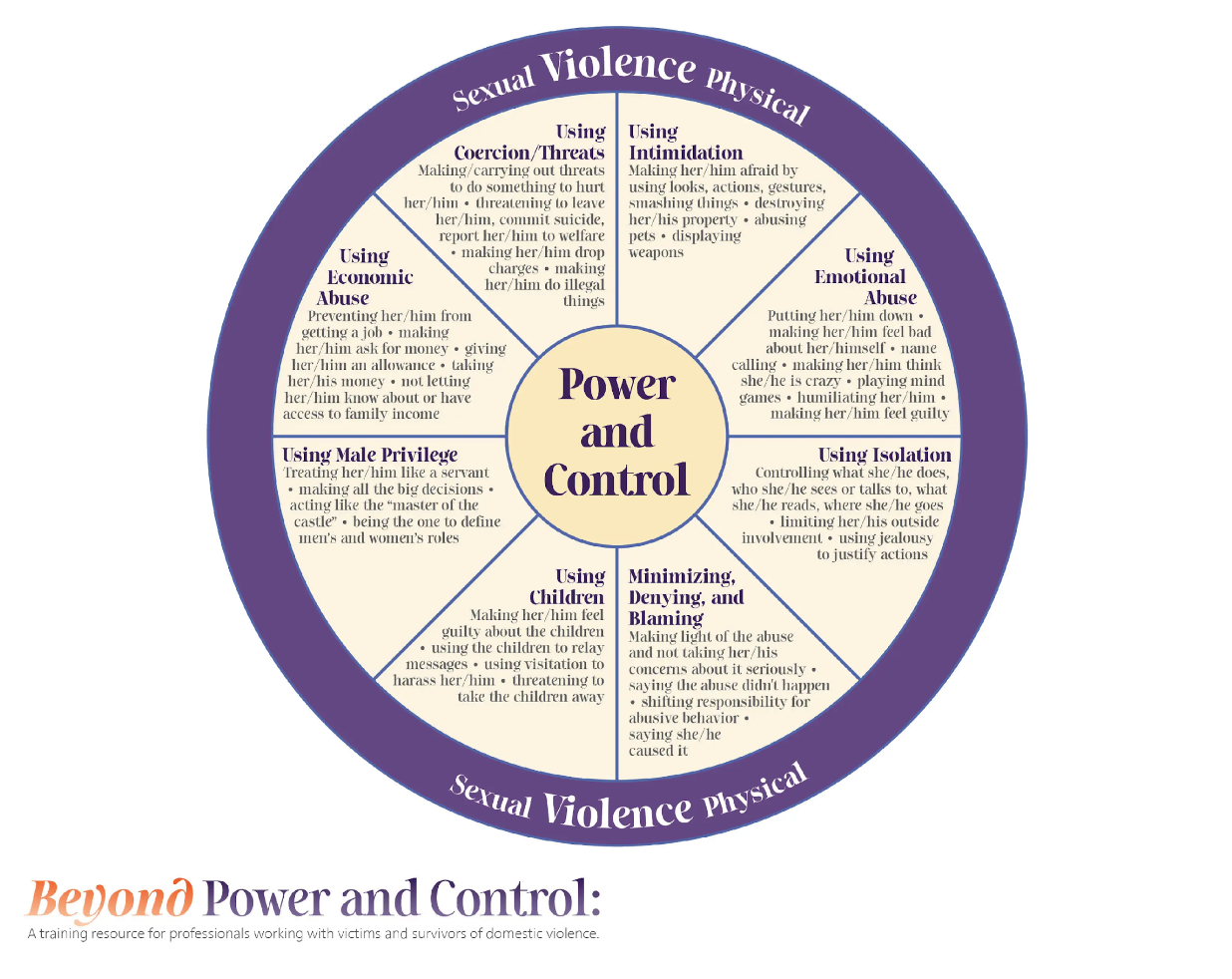
Figure 1 shows the Power and Control Wheel, which we won't cover extensively here, as you can find a detailed explanation in the resources section provided at the end. However, it's crucial to understand that physical and sexual violence within intimate relationships is often intertwined with various elements of coercive control. In essence, these forms of violence are underpinned by coercive control tactics. Without addressing these coercive control dynamics, it's challenging to fully grasp the dynamics of abuse in such relationships. Distinguishing between situational violence and domestic terrorism is important. Situational violence may involve isolated physical incidents, whereas domestic terrorism encompasses a broader spectrum of coercive control tactics, often without direct physical violence.
Figure 1. Power and control wheel. (Click here to enlarge this image.)
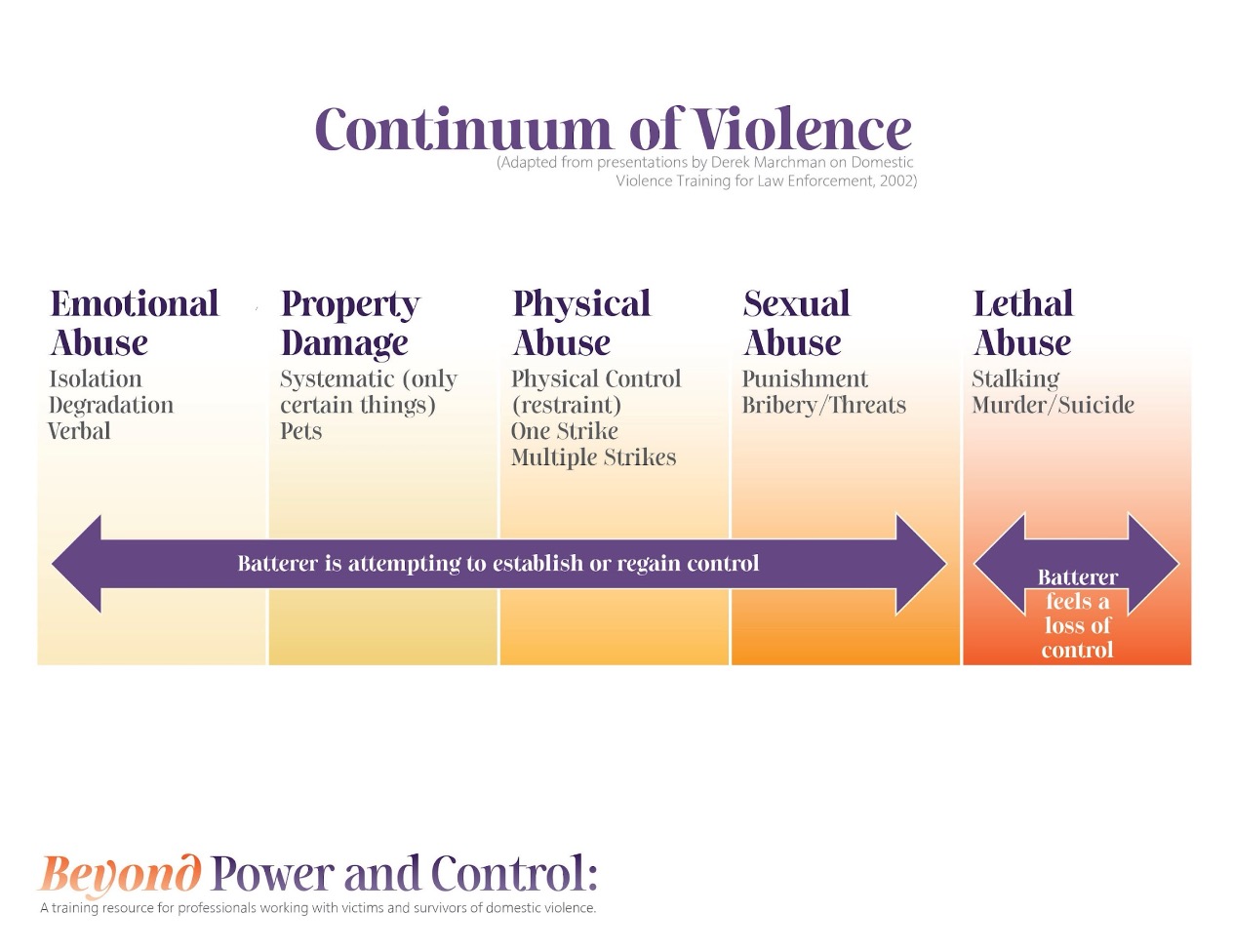
To illustrate some of the behaviors associated with coercive control, let's briefly touch on the continuum of violence, as seen in Figure 2. Perpetrators of abuse may escalate their tactics as they perceive a loss of control over their partner. This escalation can include increased physical, sexual, and even lethal forms of abuse. It's crucial to recognize that even in relationships without a history of physical violence, there's still a risk of lethality. Recent cases in the media highlight this unfortunate reality, where fatalities occurred despite no prior instances of physical abuse. As clinicians, it's imperative to adeptly assess for coercive control dynamics, as they serve as the primary indicator of potential escalation to lethal levels of abuse.
Figure 2. Continuum of violence. (Click here to enlarge this image.)
The Incident Model of Domestic Violence
Let's address the prevailing myth of the incident-based model in the context of how intimate partner violence is perceived and handled within our legal and judicial systems. Currently, many criminal courts, family courts, and child protection agencies operate under the premise of an incident-based model when addressing cases of domestic violence. However, this approach stands in stark contrast to our understanding of the complex dynamics inherent in intimate partner violence.
In criminal court proceedings, for instance, the focus tends to narrow solely on the specific incident of abuse that led to police involvement and subsequent arrest. The broader patterns of abuse leading up to that incident are often overlooked or deemed irrelevant. Similarly, in family court settings, if there's no formal conviction of domestic violence, judges may overlook available statutes designed to protect victims and survivors. This is symptomatic of the pervasive belief in the incident-based model, which oversimplifies the complexities of domestic violence dynamics.
Traditionally, the cycle of violence model has perpetuated this myth, emphasizing a cycle of tension, incident, and reconciliation. However, this framework fails to acknowledge the insidious nature of coercive control and its role in sustaining abusive relationships. In reality, the elements of coercive control—such as isolation, manipulation, and economic exploitation—are often more pervasive and damaging than individual incidents of physical violence.
The implications of adhering to an incident-based model extend beyond legal proceedings and into the realm of mental health treatment. Many survivors of intimate partner violence experience trauma that transcends singular incidents of abuse. The trauma is deeply intertwined with the erosion of autonomy and the systemic response to their experiences. Interactions with the legal system, including disbelief, reluctance to report, or fear of repercussions, often exacerbate this trauma, overshadowing the physical abuse itself.
In essence, the incident-based model fails to capture the full spectrum of abuse experienced by survivors of intimate partner violence. It is imperative that we shift towards a more comprehensive understanding of coercive control dynamics to better support survivors and address the systemic barriers they face in seeking justice and healing.
The Pattern-Based Model
To effect meaningful change in how we address intimate partner violence, it's imperative to shift from the entrenched incident-based model to a pattern-based approach. This paradigm shift is crucial across various professional spheres, whether you're a clinician, law enforcement officer, hospital staff member, or working in child protection. Rather than fixating solely on individual incidents, we must focus on identifying and understanding the patterns of coercive control that underpin abusive relationships.
Domestic violence doesn't suddenly materialize during a single incident—it often begins insidiously, sometimes even before the first date, particularly in the era of online dating. Elements of coercive control, such as manipulation and isolation, may manifest early in the relationship and escalate over time. By recognizing these non-physical forms of abuse as red flags, we can intervene before situations escalate to physical or sexual violence, potentially averting tragic outcomes such as homicide.
Indeed, the current rate of intimate partner homicides is alarmingly high. However, by shifting our collective focus to early intervention and prevention strategies rooted in understanding coercive control dynamics, we can reduce these devastating statistics. This shift requires a concerted effort to educate and raise awareness among professionals and the broader community about the insidious nature of intimate partner violence and the importance of identifying and addressing coercive control behaviors. By breaking free from the constraints of the incident-based model and embracing a pattern-based approach, we can work towards a future where fewer lives are lost to domestic violence.
Situational vs. Domestic Terrorism
When distinguishing between the incident-based and pattern-based models, particularly in contexts like couples therapy or child protection assessments, it's crucial to differentiate between situational abuse and domestic terrorism. Situational abuse typically stems from a deficit in conflict resolution skills or emotional intelligence, resulting in heated arguments or occasional physical altercations. While fear may be present, there's often a lack of pervasive patterns of control or autonomy deprivation within the relationship.
On the other hand, domestic terrorism, as conceptualized by Gottman and echoed in Sue Johnson's Emotionally Focused Therapy (EFT), involves systematic patterns of power and control throughout the relationship. This encompasses various forms of abuse, including financial coercion, emotional manipulation, gaslighting, and minimizing behaviors. Notably, perpetrators may employ "love bombing" tactics early in the relationship, presenting a false facade to align with their partner's values before gradually revealing their controlling nature after commitments are made.
Importantly, domestic terrorism or intimate partner violence is not mutual or bidirectional. Instead, it's characterized by unilateral control exerted by one partner over the other, often involving coercive control tactics aimed at depriving the victim of autonomy and agency within the relationship. By recognizing these distinctions, professionals can better assess and intervene in cases of intimate partner violence, tailoring interventions to address the underlying dynamics at play.
Assessments
As a clinician, your role in working with clients affected by intimate partner violence may vary, influencing the assessments you choose to utilize. Formal assessments can offer valuable insights into the dynamics of coercive control and the level of danger faced by survivors. Here are some assessments commonly used in this context:
- Danger Assessment: Widely utilized by advocacy agencies, the Danger Assessment is adept at gauging levels of danger and assessing elements of coercive control. It is a 20-question assessment that provides valuable information for safety planning and intervention strategies.
- Lethality Assessment: Primarily utilized by law enforcement, the Lethality Assessment focuses on assessing the risk of lethality, particularly regarding the presence of weapons or instances of strangulation. It's a crucial tool consisting of four questions for determining immediate safety concerns.
- DALE Assessment: While less commonly known, the DALE Assessment boasts higher validity and reliability rates than the Lethality Assessment. It is an 11-question assessment also utilized by law enforcement to assess the likelihood of homicide. It specifically targets elements of coercive control. However, its cost may deter widespread use.
- Coercion in Intimate Partner Relationship Scale: This assessment stands out as the sole instrument currently available that comprehensively measures various tactics of coercion (Dutton et al., 2007), including economic, sexual, emotional, and psychological coercion. It offers a holistic understanding of the dynamics at play in abusive relationships.
Each of these assessments serves a unique purpose and can inform tailored intervention strategies. However, it's essential to recognize the challenges associated with using formal assessments, including cost, accessibility, and limitations in capturing the full spectrum of coercive control tactics. As such, a combination of formal assessments, clinical judgment, and ongoing evaluation is often necessary to effectively support survivors of intimate partner violence.
Limitations of Formal Assessments
Using formal assessments with clients affected by intimate partner violence comes with several limitations that must be acknowledged. Firstly, safety concerns may hinder survivors from answering truthfully, particularly if they fear repercussions from their abuser. This underscores the importance of creating a safe and supportive environment for disclosure.
Additionally, the language used in formal assessments may not resonate with survivors' understanding of their experiences. For instance, terms like "narcissistic abuse" may or may not align with survivors' perceptions of their relationships. It's crucial to use language that reflects survivors' realities and validates their experiences, even if it diverges from traditional terminology associated with domestic violence.
Furthermore, many formal assessments primarily focus on physical abuse and may not adequately capture the full spectrum of coercive control tactics, such as emotional or financial abuse. This limited scope can overlook the nuanced dynamics of abusive relationships and hinder accurate assessment and intervention.
Moreover, formal assessments are often normed based on specific demographics, such as cisgender male offenders and cisgender female victims, and may not account for diverse experiences or contexts. This can lead to misinterpretation of survivors' responses and overlooking their situations' complexities.
In response to these limitations, it's essential for professionals to approach assessments with cultural humility, sensitivity, and a trauma-informed lens. This includes actively listening to survivors, validating their experiences, and considering the broader context in which abuse occurs. Supplementing formal assessments with open-ended questions and qualitative inquiry can provide a more comprehensive understanding of survivors' needs and experiences. Ultimately, the goal is to empower survivors to share their stories in a safe and supportive environment, facilitating effective intervention and support.
Behaviors of Coercive Control
When assessing for behaviors of coercive control, professionals should consider a range of factors that may indicate the presence of abuse. While this list is not exhaustive, it highlights key behaviors that warrant attention.
- Isolation
- Excessive monitoring
- Denying autonomy
- Gaslighting and minimization
- Economic abuse
- Reinforcing traditional gender roles
- Using children
- Controlling access to medical care
- Making all sexual relationship decisions
- Threatening to harm pets/children
- Post-separation abuse
Isolation is a significant red flag. Professionals should assess the level of isolation experienced by the survivor, probing when it began and how it manifested. Isolation tactics may include limiting contact with friends and family, controlling communication, or monitoring movements.
Excessive monitoring is another concerning behavior to watch for. Signs of excessive monitoring may include constant check-ins, GPS tracking, or surveillance. It's important to explore how monitoring behaviors started and the methods used, including technological means.
Denying autonomy can erode a survivor's sense of agency. Professionals should evaluate whether the survivor has autonomy over personal decisions, such as clothing choices, religious preferences, or hairstyle. Denial of autonomy can manifest in various aspects of life and contribute to feelings of powerlessness.
Gaslighting and minimization are manipulative tactics commonly employed by abusers. Gaslighting involves manipulating the survivor's perception of reality, while minimization downplays the seriousness of abusive behaviors. The extent of gaslighting and minimization should be carefully examined.
Economic abuse is a pervasive form of control. Professionals should investigate the dynamics of economic abuse, which may involve financial control, exploitation, or sabotage. Economic abuse can take various forms, including restricting access to funds, ruining credit, or coercing financial decisions.
Reinforcing traditional gender roles can perpetuate power imbalances. It's important to identify instances where the abuser reinforces traditional gender roles without mutual agreement or through coercion. This may involve imposing rigid expectations related to gender roles and responsibilities.
Using children to further abuse is a particularly concerning behavior. Professionals should pay attention to whether children are used as tools to perpetuate abuse, both during the relationship and after separation. This can include using children to manipulate or control the survivor or engaging in parental alienation tactics.
Controlling access to care is another significant indicator of abuse. Professionals should assess whether the abuser controls the survivor's access to medical care, sexual health decisions, or threatens harm to pets and children. These behaviors can further entrench power imbalances and inhibit the survivor's ability to seek help.
Post-separation abuse can continue even after separation. Professionals should recognize that coercive control can persist, with abusers using various tactics to maintain control over the survivor's life. This includes harassment, stalking, legal manipulation, and undermining efforts to establish independence.
By carefully evaluating these behaviors and their impact on the survivor, professionals can gain a deeper understanding of the dynamics of coercive control and tailor interventions to promote safety and autonomy.
Assessing as a Clinician
As a clinician, assessing for coercive control and domestic violence may involve a nuanced approach that extends beyond formal assessments. Whether or not to use formal assessments depends on various factors, such as the specific goals of the assessment and the context of the client's situation.
Formal assessments may be useful if the goal is to determine the presence of abuse claims, especially in situations where caseworkers are involved. These assessments can provide valuable insights that inform safety planning and intervention strategies.
Additionally, formal assessments may be beneficial for determining the scope of practice or suitability for working with a particular client. For example, couples therapists may utilize assessments like those in Gottman's work to assess for the presence of domestic violence or terrorism within the relationship.
However, it's essential to consider the limitations of formal assessments, particularly in cases where safety or truthfulness may be compromised. Survivors living with their abusive partners may be hesitant to answer questions truthfully for safety reasons, potentially impacting the validity of the assessment results.
In such cases, clinicians can supplement formal assessments with targeted questions during intake or initial sessions. These questions can help gauge the level of autonomy and decision-making within the relationship, providing valuable insights into the dynamics of coercive control. Here are some examples of questions for your initial sessions.
- How are decisions made in your relationship?
- Does it seem like you have lost relationships with friends and family over the last X number of years?
- Has your physical health changed in the last X number of years?
- How has your confidence level changed over the last X number of years?
I often inquire about the decision-making dynamics within the relationship, prompting clients to provide examples. This helps me gauge the level of autonomy they possess in their relationship. Follow-up questions are essential for further elucidating this aspect.
Another question I frequently pose relates to changes in the client's relationships with friends and family over time. In cases of abuse and coercive control, the answer often reveals significant distancing from loved ones. Follow-up questions delve into the specifics of these changes, exploring factors such as geographical relocation, jealousy, lack of support, or conflicts with the partner.
Assessing changes in physical health is another important aspect of my evaluation. Victims and survivors of intimate partner violence commonly experience significant physical health challenges. I probe for any shifts in health status, such as the onset of autoimmune conditions or unexplained pain.
Additionally, I inquire about changes in the client's confidence levels over time. Many survivors experience a decline in self-assurance, which can be indicative of the psychological impact of coercive control. Exploring these changes provides valuable insights into the client's well-being.
These questions serve as valuable tools for assessing the presence of coercive control within relationships. While I no longer engage in couples therapy, I used to incorporate these inquiries into couple sessions as well. I approach these questions with sensitivity, particularly when suspecting the presence of domestic violence, to ensure the client feels safe and supported.
Why Are They Coming To See You?
As you assess clients, it's crucial to understand their primary reason for seeking therapy. Even if my expertise lies in working with survivors of domestic violence, narcissistic abuse, and coercive control, clients may arrive with different presenting problems. They might have been referred to me by another therapist due to symptoms like severe anxiety, unexplained weight loss, or identity struggles. Therefore, it's essential to explore the underlying reasons for their visit.
Individual Work
- Is the presenting problem IPV/DV?
- Would they resonate with the term “domestic violence”
- Where are they in the healing process?
For instance, severe anxiety might be linked to living in a coercive control environment, leading to trauma, dysregulation, and possibly depression. Assessing their relationships is paramount in understanding their mental health landscape.
Rather than immediately labeling them as victims of domestic violence, it's more effective to discuss specific behaviors they're experiencing and ask questions in a non-judgmental manner. By examining patterns over time, we gradually introduce psycho-education about their experiences. This approach fosters understanding without imposing labels prematurely.
However, prompt safety planning becomes imperative if the client faces imminent danger due to high lethality risks.
Another crucial aspect of assessment is gauging where clients are in their healing journey. Are they still in the relationship, feeling trapped in a trauma bond? Or have they managed to leave but remain dependent? Some may be ready to delve into trauma work, indicating progress in their healing process. Understanding their current stage aids in tailoring interventions to their specific needs.
Couples Work
- Are they safe enough to be honest?
- Assessing between situational violence and domestic terrorism?
When conducting couples therapy, it's crucial to determine if the clients feel safe enough to be honest with each other. Additionally, it's essential to differentiate between situational violence and domestic terrorism, which encompasses coercive control and intimate partner violence (IPV). If one or both partners are experiencing domestic terrorism, it's contraindicated to proceed with couples therapy.
Therefore, it's vital for therapists working with couples to feel confident and comfortable in assessing for signs of domestic terrorism. This ensures the safety and well-being of both partners and facilitates appropriate interventions tailored to their specific needs.
Child Therapy
- Is it ethical to continue working with them?
Clients seeking therapy for their child raise important considerations, particularly regarding the potential impact of domestic violence and coercive control on the child's well-being. While it may not be definitive, it's highly probable that children are affected by such dynamics in the home, even if the parents have separated due to post-separation abuse.
In instances where children are brought in for therapy, such as play therapy, it's imperative to conduct thorough assessments for signs of domestic violence and coercive control. Despite the focus on child therapy, these assessments remain essential.
Given the complexity of the situation, therapists must carefully evaluate the ethical implications of continuing therapy with the family. This involves considering whether it's appropriate to proceed with therapy and if the therapeutic environment is conducive to the child's well-being. The importance of ongoing assessment and ethical decision-making cannot be overstated when providing therapy for children impacted by domestic violence and coercive control.
Safety Planning and Continued Assessment
Once you've completed the assessment, the next steps are crucial. If the risk level is relatively low, meaning there hasn't been physical abuse, weapon use, or strangulation, and the pattern isn't escalating, your approach will differ. You'll focus on safety planning, particularly around high-risk behaviors and any threats that have been identified, including the rapid cycling of abusive incidents.
Safety planning around court decisions is paramount for survivors navigating the family court system post-separation. The period following separation, especially the first year, carries the highest risk of lethality. This is also a critical time to address child safety, as child homicides often occur when court decisions oppose the perpetrator's wishes. Continuous assessment and active listening remain essential, even if the survivor has left the abusive situation years ago.
In the provided resources, downloadable safety plans and videos are available. One is tailored for those still residing in the home, while the other is designed for individuals who have left. Additionally, there's a resource dedicated to tech safety, addressing concerns about potential monitoring through devices like cars and computers. Given recent instances of invasive monitoring tactics, such as key loggers where a partner can see every single keystroke made on the computer, it's crucial to remain vigilant and provide support and resources as needed.
Assessment Over Time
Assessment over time is crucial, especially considering that as your client improves, particularly if they're still in the same environment, the lethality risk may rise. This stems from the dynamics of coercive control, where the abusive individual escalates their behavior to maintain dominance when they sense losing control. Even if there hasn't been physical violence yet, it doesn't guarantee safety, even after leaving the situation. The normalization of coercive behaviors often hampers early assessment efforts. Clients may downplay, excuse, or even conceal aspects of their experiences as a survival mechanism rooted in a lack of trust in themselves and others.
This process can be gradual, and therapists may find themselves grappling with self-doubt and frustration over what seems like slow progress. It's important to acknowledge that these cases often progress at a different pace and require patience and persistence. Despite any challenges, therapists should recognize their efforts and the inherent difficulty of addressing abuse within the therapeutic setting.
Aha Moments
Your "aha" moments in therapy often stem from maintaining a non-judgmental stance and fostering a safe space for your clients. Prioritizing safety and trust-building lays the groundwork for accurate assessment and effective intervention. Unless there are immediate threats of violence or harm, your primary focus should be on creating an environment where clients feel secure and supported. This foundation of safety enables them to engage in the therapeutic process and absorb the psychoeducation and insights you provide.
When discussing coercive control and domestic violence, it's essential to begin with specific behaviors rather than labeling their experiences outright. By exploring these behaviors and identifying patterns, you empower clients to recognize the dynamics in their relationships. Additionally, it's crucial to respect their autonomy throughout the therapeutic journey. Avoid replicating the power dynamics of the abuser by allowing clients to make their own choices and decisions about their lives.
Your role as a clinician is to help clients reclaim their sense of self, rediscover their values, and regain autonomy over their lives. By fostering a collaborative and empowering therapeutic environment, you support clients in their healing journey for themselves and their families.
Examples
Example 1
Here's an example to illustrate the importance of understanding coercive control, even in cases where physical violence isn't present.
Kate, “But he never hit me.”
- Late 40s, one child, graduate degree
- Married 12 years
- Attended same church
- Moving her away from family, friends, job, church
- Slow shift in preventing her from making financial decisions
- Indirect emotional abuse
- Feigning concern for mental health
- Spiritual abuse
- Abuse ramped up after separation
A client sought therapy feeling completely off balance and anxious, yet she didn't perceive herself as a victim of domestic violence because her partner never physically harmed her. Despite this perception, her therapist referred her to me, noting my specialization in working with domestic violence survivors. In our sessions, she revealed a complex story: married for 12 years with a child, she seemed to have a stable life until she became pregnant, and subtle shifts began.
Initially, it seemed like a reasonable decision—moving for better opportunities and climate—but gradually, she was isolated from family, friends, her job, and church. Financial autonomy slipped away, and emotional abuse insidiously crept in, particularly targeting her family of origin. Her partner feigned concern for her mental health but weaponized it against her. There was also significant spiritual abuse.
After deciding to leave, the abuse escalated post-separation. Legal battles became relentless, draining her financially and emotionally. The constant court appearances hindered her job search, trapping her in a cycle of control and manipulation.
This case underscores the need to recognize coercive control beyond physical violence. Despite the absence of overt abuse, the client endured a systematic erosion of her autonomy and well-being. Her reluctance to seek help initially highlights the pervasive myths surrounding domestic violence, emphasizing the importance of understanding and addressing coercive control in therapeutic practice.
Example 2
Here's a case study involving a couple, AJ and Sandy, who initially sought therapy for communication issues and postpartum support. Despite eight months of therapy, Sandy's anxiety symptoms worsened. When the therapist inquired about physical violence at home, both denied any occurrence.
The narrative shifted from the couple's issues to escalating concern for Sandy's mental health, leading to a referral to a psychiatrist. The clinician reported starting to "feel something was not right" and sought consultation, prompting a discussion on restructuring sessions to focus on couple dynamics and probing into decision-making, finances, and care for the child. As the therapist held AJ accountable and asked probing questions, the sessions became tense, eventually culminating in a physical altercation that hospitalized Sandy.
Remarkably, throughout their relationship, there had been no prior incidents of physical violence. This case underscores the importance of ongoing assessment, as subtle signs of coercive control may not be immediately apparent. Recognizing these dynamics early on could have prompted a referral to individual therapy for Sandy before attempting couples work, as it became evident that the relationship dynamics posed significant risks.
Coercive control's insidious nature often keeps it concealed, making it challenging to detect. Our preconceptions about domestic violence and coercive control can blind us to its presence. The relationships affected by these dynamics may appear normal on the surface, further complicating identification. Moreover, victims themselves may struggle to recognize the extent of their situation.
Wrapping It Up
In conclusion, it's imperative to transition away from an incident-based approach to addressing domestic violence and coercive control. This shift is crucial because relying solely on isolated incidents overlooks a significant portion of abuse, limiting our ability to prevent further harm and protect vulnerable individuals, including children. Embracing a pattern-based model enables us to intervene more effectively and mitigate the risk of lethality, physical violence, and the psychological impact on children.
While formal assessments have their limitations, they remain valuable tools in our efforts to address coercive control. However, it's essential to recognize that assessing coercive control is a nuanced process that requires time and trust to navigate successfully. This is particularly true in couples therapy, where establishing rapport and understanding the dynamics of the relationship are paramount. Communicating this need for time and patience upfront can help clients appreciate the complexity of the assessment process and foster a collaborative approach to addressing their concerns.
Resources
NetDoctor. (2020). Coercive control. https://www.netdoctor.co.uk/healthy-living/a26582123/coercive-control/
Psych Central. (2023). Coercive control. https://psychcentral.com/health/coercive-control#humiliation
Stalking Awareness Organization. (n.d.). Definition FAQs. Accessed on 4/1/2024. Retrieved from: https://www.stalkingawareness.org/definition-faqs/#1537978411858-2c051fd6-222b
Beyond Power and Control. (2024). Physical Safety Checklist. https://www.beyondpowerandcontrol.com/uploads/8/3/2/8/83280480/bpac_physicalsafetychecklist.pdf
New South Wales Government. (2015). Domestic Violence Safety Assessment Tool (DVSAT). http://www.domesticviolence.nsw.gov.au/__data/assets/file/0020/301178/DVSAT.pdf
Rising Beyond Power and Control. (2024). Resources. https://www.risingbeyondpc.com/resources.html
YouTube. (2023). [Is My Ex Tracking Me? Tips to Protect Yourself and Your Family]. https://www.youtube.com/watch?v=Ku07ZyBfDlU&t=2356s
Centers for Disease Control and Prevention. (2022). Fast Facts: Intimate Partner Violence. https://www.cdc.gov/violenceprevention/intimatepartnerviolence/fastfact.html
References
Crossman, K. A., Hardesty, J. L., & Raffaelli, M. (2016). “He could scare me without laying a hand on me”: Mothers’ experiences of nonviolent coercive control during marriage and after separation. Violence Against Women, 22(4), 454–473. https://doi.org/10.1177/1077801215604744
Dichter, M. E., Thomas, K. A., Crits-Christoph, P., Ogden, S. N., & Rhodes, K. V. (2018). Coercive control in intimate partner violence: Relationship with women's experience of violence, use of violence, and danger. Psychology of Violence, 8(5), 596-604. https://doi.org/10.1037/vio0000158
Johnson, M. P. (2008). A typology of domestic violence: Intimate terrorism, violent resistance, and situational couple violence. Northeastern University Press.
Jones, M. S. (2020). Exploring coercive control, PTSD, and the use of physical violence in the pre-prison heterosexual relationships of incarcerated women. Criminal Justice and Behavior, 47(10), 1299-1318. https://doi.org/10.1177/0093854820920661
Kennedy, A. C., Bybee, D., Mccauley, H. L., & Prock, K. A. (2018). Young women’s intimate partner violence victimization patterns across multiple relationships. Psychology of Women Quarterly, 42(4), 430–444. https://doi.org/10.1177/0361684318795880
Lohmann, S., Cowlishaw, S., Ney, L., O’Donnell, M., & Felmingham, K. (2024). The trauma and mental health impacts of coercive control: A systematic review and meta-analysis. Trauma, Violence, & Abuse, 25(1), 630-647.
Spearman, K. J., Hardesty, J. L., & Campbell, J. (2022). Post-separation abuse: A concept analysis. Journal of Advanced Nursing, 00, 1–22. https://doi.org/10.1111/jan.15310
Stark. (2007). Interpersonal violence. Coercive control: How men entrap women in personal life. In Interpersonal violence. Coercive control: How men entrap women in personal life (Editor). Oxford University Press.
Stark, E., & Hester, M. (2019). Coercive control: Update and review. Violence Against Women, 25(1), 81–104.
Yaxley, R., Norris, K., & Haines, J. (2017). Psychological assessment of intimate partner violence. Psychiatry, Psychology and Law, 25(2), 237-256. https://doi.org/10.1080/13218719.2017.1356211
Additional Current References
Please Note: The following resources have been included so members can view additional resources associated with this topic area. The presenter did not use these resources when creating this course.
Becker, P., Miller, S. L., & Iovanni, L. (2024). Pathways to resistance: Theorizing trauma and women’s use of force in intimate relationships. Violence Against Women, 1. https://doi.org/10.1177/10778012241233000
Cardenas, I., Graham, L. M., Sarmiento Mellinger, M., & Ting, L. (2024). Individuals who experience intimate partner violence and their engagement with the legal system: Critical considerations for agency and power. Journal of Health Care Law & Policy, 27(1), 113–144.
Juarros-Basterretxea, J., Fernández-Álvarez, N., Torres-Vallejos, J., & Herrero, J. (2024). Perceived reportability of intimate partner violence against women to the police and help-seeking: A national survey. Psychosocial Intervention, 33(1), 55–64. https://doi.org/10.5093/pi2024a3
Lohmann, S., Cowlishaw, S., Ney, L., O’Donnell, M., & Felmingham, K. (2024). The trauma and mental health impacts of coercive control: A systematic review and meta-analysis. Trauma, Violence & Abuse, 25(1), 630–647. https://doi.org/10.1177/15248380231162972
Peeren, S., McLindon, E., & Tarzia, L. (2024). “Counteract the gaslighting” – a thematic analysis of open-ended responses about what women survivors of intimate partner sexual violence need from service providers. BMC Women’s Health, 24(1), 1–11. https://doi.org/10.1186/s12905-024-02943-1
Citation
Cummin, S. (2024). Decoding coercive control: Advanced strategies for proficient domestic violence assessment. continued.com - Psychology, Article 61. Available at www.continued.com/psychology
Apr 15, 2024
1 CE Credit