Course Articles
Ethics Beyond Professional Codes: Wisdom from Buddhist Traditions for Behavioral Health Professionals
Allan Barsky, JD, MSW, PhD
This material is for educational purposes and does not replace clinical judgment or local policy.
Course overview
Professional codes of ethics and Western philosophical traditions form the backbone of ethics training for behavioral health professionals, yet these frameworks are not the only sources of ethical wisdom available to clinicians. Buddhist traditions offer a complementary set of concepts, compassion, mindfulness, impermanence, and non-harming, that align closely with existing professional obligations while adding useful language and practice tools. This article sets these four principles alongside familiar Western frameworks, including virtue ethics, deontology, and the ethics of care, and then applies them to three practice scenarios involving suicidal ideation, refugee resettlement, and end-of-life care. The treatment here is introductory rather than comprehensive, and clinicians working with Buddhist clients or communities are encouraged to pursue further reading, to participate in a local or online Buddhist community, and to practice cultural humility by learning directly from clients about what they see as Buddhist values and beliefs and how those beliefs affect their own decision-making.
Learning Outcomes
After completing this course, participants will be able to:
- Describe at least three Buddhist principles: compassion (karuṇā), mindfulness (sati), impermanence (anicca), and non-harming (ahiṃsā).
- Apply at least two Buddhist concepts: compassion (karuṇā), mindfulness (sati), impermanence (anicca), and non-harming (ahiṃsā) in ethical decision-making in mental health practice.
Evaluate how mindfulness and compassion practices may enhance ethical sensitivity, reduce bias, and support client well-being.
Limitations/Risks
Ethical and legal obligations may vary significantly between different regions and cultures. This training focuses on general principles and is not intended to be a substitute for consultation with your professional code of ethics, local laws, supervisors, or legal counsel.
Cultural Perspectives on Ethical Fidelity: This course provides a broad framework for ethical fidelity in mental health practice, but does not fully address how cultural values, norms, and traditions may influence ethical decision-making. Clinicians should consider culturally responsive approaches and seek guidance when working with clients from diverse backgrounds to ensure ethical fidelity aligns with both professional standards and cultural contexts.
Bias and Ethical Interpretation: Ethical dilemmas and concepts of fidelity may be interpreted differently based on cultural perspectives, systemic influences, and lived experiences. This training does not offer an exhaustive review of how implicit bias, power dynamics, and privilege may affect ethical decision-making. Clinicians are encouraged to engage in ongoing cultural humility training, supervision, and consultation to navigate these complexities effectively.
The specific answer to an ethical question depends on the ethical and legal obligations in a clinician's particular practice context, including local law and the cultural background of the people being served. Buddhist ethical principles, discussed in this article across behavioral health professions, should always be considered alongside, rather than as a substitute for, a clinician's own applicable code of ethics, since differences between professions depend on a clinician's particular professional background.
Ethics Codes
Several major behavioral health professions publish codes of ethics, and clinicians are reminded to always refer to the applicable code for their profession. The American Association for Marriage and Family Therapy publishes a code of ethics governing marriage and family therapists (American Association for Marriage and Family Therapy, 2015). The American Counseling Association publishes the 2014 ACA Code of Ethics for professional counselors (American Counseling Association, 2014). The American Psychological Association publishes ethical principles and a code of conduct for psychologists (American Psychological Association, 2017). The National Association of Social Workers publishes a code of ethics for social workers (National Association of Social Workers, 2021). Links are also provided to codes for certified counselors, alcohol and drug abuse counselors, and Ohio's administrative rules for counselor, social worker, and marriage and family therapist licensure.
Agenda
This article proceeds through five parts. The first part introduces key concepts in Buddhist ethics. The second part compares Buddhist ethics with the ethics typically embedded in professional codes and training for behavioral health professionals. The third part addresses application and evaluation, meaning how a clinician might apply these principles in practice and subsequently evaluate how well the principles were applied. The fourth part works through three case scenarios. The fifth part addresses common clinical questions and closes with concluding observations.
Buddhist and Western ethical traditions are sometimes treated as entirely separate or even opposed, but a closer comparison reveals several clear overlaps between Buddhist ethics and the professional ethics commonly taught to behavioral health professionals in the United States and other Western-dominant societies.
Concepts
Each Sanskrit term discussed below is paired with an English translation that is necessarily approximate; some nuance of meaning is inevitably lost in translating a concept from one language and tradition into another, even though the English terms chosen here aim to stay as close as possible to the original meaning. Readers are not expected to know the Sanskrit terms themselves, only the underlying English concepts.
Buddhist Ethics
Buddhist ethics refers to moral principles grounded in the teachings of the Buddha and in the writings of Buddhist leaders, teachers, and scholars, including the Dalai Lama and other more recent scholars who have expanded on these teachings (Egan et al., 2017; Koh, 2024). Several features distinguish this tradition from some Western frameworks.
Buddhist ethics emphasizes a middle way, a deliberate avoidance of extremes in either direction, a logic comparable to Aristotle's principle of the golden mean. Ethical disagreements are sometimes resolved not by moving toward one extreme position or another but by identifying a middle path that can bring differing parties together.
Morality in this tradition is determined primarily by intent rather than outcome, aligning it most closely with deontological, or duty-based, ethics rather than teleological approaches that judge an act primarily by its consequences. A teleological framework asks not only whether an actor intended good but whether the outcome actually produced was good, whereas Buddhist ethics places its primary emphasis on the intent behind an act, for example, the intent to be non-violent, respectful, and oriented toward the good, while not disregarding outcomes altogether.
The principle of karma holds that wholesome actions tend to lead to good outcomes. Although morality is determined by intent rather than outcome, the tradition holds that good intentions, when expressed through action, are more likely to yield beneficial results over time.
Finally, the tradition emphasizes universal responsibility. Ethical obligation is not limited to a particular professional role or situation. Every person is expected to strive to act well in all circumstances, regardless of role or status in life.
Interest in Buddhist ethics has grown in the United States in part because of a march undertaken by Buddhist monks from Texas to Washington, D.C., intended to spread the principles of non-violence and peace beyond Buddhist communities to the wider society.
Compassion (Karuṇā)
Compassion, or karuṇā, is the first specific principle addressed in this article. The English translation is approximate, and the concept carries nuances beyond the ordinary English use of the word compassion. Three components define it: care and concern, empathy paired with a desire to act, and a heartfelt wish to relieve suffering (Avci, 2025).
Care and concern denote an awareness of another person's situation accompanied by an emotional response to that awareness, a sense that the situation matters. Empathy and desire to act extend this awareness into motivation, meaning that compassion is not simply an accurate understanding of where another person stands, including their grievances, pain, sorrow, or happiness, but also a wish to have a positive effect on that person's circumstances. A heartfelt wish to relieve suffering distinguishes compassion from pity or mere sympathy. Karuṇā is concern for the well-being of all people, paired with a readiness to act, oriented toward healing, freedom from illness or problems, or relief from something painful in another person's life.
Mindfulness (Sati)
Mindfulness, or sati, is closely related to the awareness cultivated through yoga practice, one common route toward this kind of attentiveness (Berger et al., 2024; Monteiro et al., 2015; Shulman, 2025).
Awareness in this context has three related targets: the body, thoughts, and feelings. Awareness of the body means noticing bodily sensations, such as tension in the shoulders or head, as well as physical signs of nervousness or excitement. Awareness of feelings means noticing emotional states such as stress, happiness, or joy. Awareness of thoughts means noticing the cognitions running through the mind at a given moment, and recognizing how thoughts and feelings are connected. A clinician experiencing anger may perceive another person as threatening or difficult, even when the underlying issue is the clinician's own state of distress or fear; calming that emotional state can change how the clinician perceives and responds to the other person.
Four qualities characterize mindfulness practice: proceeding without judgment, reflecting, meditating, and centering. Without judgment means observing thoughts, feelings, and sensations as they are, without labeling them as good or bad. Anger is simply anger, happiness is simply happiness, a wish to be lazy on a given day is simply a thought that arises, not something to be judged, and physical pain in the legs after a hard day of exercise is simply acknowledged as present rather than judged as good or bad. This kind of non-judgmental awareness cultivates wisdom, can reduce suffering, and can feel liberating; it applies not only to concerns about oneself but also to concerns about friends, colleagues, and clients. Reflecting means considering an experience, either in the moment or after the fact, and noticing which elements produced hope or enthusiasm and which produced doubt or discomfort. Meditating can take many forms beyond seated stillness, including yoga, deliberate walking, tracing a labyrinth, or engaging in reflective drawing or art, each intended to calm the mind, reduce distraction, and deepen focus while avoiding a scattered, monkey mind quality of attention, all while maintaining a non-judgmental stance. Centering refers to pausing between activities, such as between client sessions, to set aside residual thoughts, feelings, and stress from a prior interaction before engaging with the next client. Even five to ten minutes between sessions devoted to this kind of centering can help a clinician return to a clear sense of professional role before the next session begins, supporting more deliberate, ethical, and mindful engagement with each subsequent client.
Mindfulness also underlies the emphasis, found across ethics trainings, on deliberation, the requirement that sound ethical decisions rest on engaged, reflective thinking rather than automatic or reactive responses. This connects to dialectical behavior therapy, which shares meaningful overlap with these principles, since helping clients manage difficult feelings, become aware of past trauma, and practice letting go or recognizing that a current difficult experience is impermanent is broadly consistent with the framework developed here. Models of practice should be informed not only by research evidence but also by the values and ethical commitments that underlie a clinician's approach to treatment. A structured daily routine, such as scheduled fifteen-minute breaks, offers a practical way to build a personal mindfulness practice into a clinical workday.
Impermanence (Anicca)
Impermanence, or anicca, is the recognition that nothing is fixed or eternal. All phenomena, including thoughts, feelings, bodies, possessions, relationships, and the world itself, arise and eventually pass away, much as a fragile object will eventually break. Professionals themselves will not always be young, will not always be early in their careers, and will not always carry the same level of energy. Life, clients, and social and political circumstances change continually. Recognizing this can allow a person to hold experiences and possessions more lightly; if a person breaks a fancy dish or a vase, the disappointment may be softened by recognizing that the dish or vase was going to break eventually, regardless. This same recognition applies not only to possessions but to all phenomena, thoughts, feelings, bodies, relationships, and the world itself, which arise, are sometimes destroyed or lost, and are continually replaced by new things coming into and passing out of a person's life.
Mindfulness can be used to raise awareness of impermanence by examining why a particular loss or ending feels difficult, and by approaching that difficulty without judgment. A therapeutic relationship, for example, may end through termination even when both clinician and client experienced the relationship as valuable, and framing that ending within the concept of anicca helps normalize the sense of loss that accompanies termination as an expected part of a relationship that was never intended to be permanent. If something about an ending continues to feel difficult, asking why it is bothering oneself, without judging that difficulty, is itself part of the practice, since something that mattered a great deal at the time may still need to be let go of gradually, without the letting go itself being judged as good or bad.
This principle extends naturally to caregiving contexts, such as a family caring for a relative living with dementia, including Alzheimer's disease. Focusing solely on the suffering, hardship, confusion, and anxiety associated with the condition can intensify a caregiver's own sense of suffering. Recognizing impermanence, including the impermanence of a person's capacities and memory, does not deny that suffering exists, but it may offer a way to hold that suffering with somewhat greater ease. This does not mean the suffering must be resolved; if it stays with a person, that is acceptable as well, without further self-judgment for the difficulty of letting go.
Non-Harming (Ahiṃsā)
Non-harming, or ahiṃsā, is the avoidance of causing harm to others, whether physical, emotional, or spiritual (Avci, 2025; Benerjee, 2024).
Physical harm in a clinical context could involve something as direct as getting into a physical altercation with someone or setting another person up for a physical confrontation, and it could also involve something more indirect, such as a referral for medication with side effects; the clinician's obligation is to ensure the client understands both the potential benefits and the potential harms of a given intervention, and to reconsider that intervention if the harms outweigh the benefits. Emotional harm might arise in the course of discussing trauma, sadness, or other difficult material with a client; the purpose of raising such material is to help the client work through it and move toward greater functioning, not to cause distress for its own sake. Spiritual harm concerns a person's sense of meaning and purpose, which they may define through religion, faith, volunteer work, parenting, or other sources of significance, and clinical practice should support rather than undermine that sense of purpose.
Ahiṃsā is sometimes translated as non-violence, which does not mean an absence of assertiveness or advocacy. A clinician may advocate strongly for something important, but should do so honestly, respectfully, and persuasively without seeking to harm or demean others in the process. This principle connects directly to compassion, since caring about a client's well-being should not come at the expense of others, including agencies or insurers for whom a clinician may be advocating.
Parallels with Professional Ethics of MHPs
The four Buddhist principles already discussed align closely with concepts embedded in the ethical training and codes of behavioral health professionals (Barsky, 2023; Garg & Dahia, 2024; Koh, 2024; Muncaster, 2021; Shonin et al., 2014; Wallace, 2001).
A focus on a person's character parallels virtue ethics. Aristotle's account of virtue ethics emphasizes enduring personality traits, such as respectfulness, caring, and compassion, and this framework overlaps substantially with the Buddhist emphasis on cultivating virtuous character to generate good karma.
Universal duty, with an emphasis on intent, parallels deontology. Immanuel Kant's principle of treating people as ends rather than as means, echoed by later deontologists such as Bernard Gert, requires that a clinician not exploit one person to benefit another, but instead treat all people with respect. This connects to the virtue of conscientiousness, an awareness of one's responsibilities across all roles in life, not only as a professional but also as a parent, friend, neighbor, and citizen, reflecting the universal scope of Buddhist ethical responsibility.
Compassion, or karuṇā, parallels fidelity with clients and, in social work specifically, the profession's primary ethical obligation toward the people it serves. Codes of ethics for psychologists and other professions may not use the word compassion directly, but the underlying expectation, that clinicians view situations from the client's perspective and act with empathy, reflects the same principle. This aligns with the ethics of care associated with feminist ethicists such as Carol Gilligan, who emphasize attentiveness to others' needs and argue that caring must be expressed through action, not only through feeling. Compassion in this sense can be summarized as care plus action, and it also reflects the framing of the helping professions as service professions oriented toward improving mental health, social well-being, and a client's overall sense of purpose.
Mindfulness, or sati, including what might be described as an ethics of tension, parallels self-awareness and other-awareness, conscious use of self, reiterative empathy, and attention to one's own biases. Self- and other-awareness means being aware of one's own beliefs, biases, and habitual ways of doing things, so as not to stereotype, judge, or discriminate against the people being served. For example, a clinician who personally places a high value on punctuality and getting things done within a set time frame may be working with clients who hold a more flexible orientation toward time; mindfulness of this difference allows the clinician to be accommodating of the client's own approach rather than imposing the clinician's own time-related values. Conscious use of self means being deliberate about what personal information a clinician chooses to share with a client, disclosing only what will help the client feel understood and connected, rather than information that might undermine the client's confidence in the clinician. Reiterative empathy refers to the practice of shifting attention back and forth between awareness of the client and awareness of oneself, particularly important when working with families or groups, where full simultaneous awareness of every person, including the clinician, is not possible. A brief period of centering or mindfulness before a session can help a clinician set aside extraneous concerns, allowing more attention to be directed toward the client during the session. Attention to one's own biases means recognizing the limits of one's understanding when working with clients from different backgrounds, for example, a client who is blind or a client with Parkinson's disease, and engaging in cultural humility by treating the client as the expert on their own experience rather than relying on the clinician's own assumptions. This finally connects to the emphasis, found across ethics trainings, on deliberation, the requirement that sound ethical decisions engage the deliberative, executive part of the mind rather than resting on an automatic, gut-level reaction.
Buddhist concept
Professional ethics parallel
Focus on the character of the person Virtue ethics Universal duty, intent Deontology Compassion (Karuṇā) Fidelity with clients, primary duty to the client, ethics of care, plus action, service Mindfulness (Sati), including "ethics of tension" Self- and other-awareness, conscious use of self, reiterative empathy, attention to own biases, deliberation in ethical decisions Parallels with Professional Ethics of MHPs
The comparison continues with the two remaining Buddhist principles (Barsky, 2023).
Impermanence, or anicca, parallels the professional belief that people can change, as well as related concepts such as hope, strengths-based practice, and loss theory. Although no code of ethics explicitly uses the term impermanence, the theories that inform professional practice reflect a very similar orientation. Positive expectations for a client's outcomes are associated with better outcomes, and a client's own sense of hope or hopelessness likewise affects the client's capacity for change, paralleling the core conditions long associated with positive therapeutic relationships, empathy, genuineness, and unconditional positive regard, together with a belief that current difficulties are not fixed. A client may be in a genuinely difficult situation, having lost a house or a job, or living with chronic pain, and impermanence does not deny that difficulty; rather, it points toward the possibility that even a condition that cannot be cured might still be controlled, and that a person's perspective on pain can shift even when the pain itself does not disappear. A strengths-based approach, in which a clinician asks a client who has struggled in school to recall an example of doing better, or asks a client dissatisfied with a marital relationship to recall a positive memory from years earlier, embodies this same recognition of impermanence, showing that a difficult present state is not necessarily a permanent one. Loss theory, similarly, recognizes that grief moves through phases; rather than telling a client that they will get over their grief, which is not an appropriate message, accepting the grief as it is may itself be what allows a person to return to functioning over time.
Non-harming, or ahiṃsā, parallels the Hippocratic principle of non-maleficence, above all, do no harm, and the broader professional practice of risk management. Risk management training addresses the same underlying question that ahiṃsā raises: how to maximize benefit and minimize harm from a given intervention, and how to avoid interventions where the potential harm is too severe. This principle also parallels respect for the dignity and worth of all people, with the caveat that respect must be assessed from the client's own perspective, since an action intended as respectful by the clinician may be experienced differently by the client.
Buddhist concept
Professional ethics parallel
Impermanence (Anicca) Belief that people can change, hope, strengths, loss theory (acceptance) Non-Harming (Ahiṃsā) Hippocratic oath, do no harm, risk management, respect for the dignity and worth of all Application & Evaluation
Application
Four practical steps support the application of these principles in day-to-day work.
Practice mindfulness. This might involve yoga, a five-minute centering period, journaling, or another routine that builds attentiveness to one's own thoughts, feelings, and bodily sensations, as well as mindful awareness of the other people being served.
Integrate Buddhist principles with principles from professional codes of ethics. This integration does not necessarily require a clinician to do something entirely new, but may involve applying familiar practices in a slightly different way, or adopting new terminology that reinforces existing habits.
Consult others with deeper knowledge of Buddhist ethics. This treatment offers only an introduction, and does not equip a clinician to teach yoga practice, Buddhist chanting, or prayer in any depth. Clinicians working with clients who practice these traditions should seek out consultation or further learning rather than relying solely on this article. A clinician does not need to personally practice Buddhist ethics in order to serve clients who do, but should be prepared to learn from those clients, from local or online Buddhist communities, and from further independent reading, approaching that learning with the same cultural humility discussed throughout this article.
Remain open to changes in oneself and others during ethics discussions. Clinicians and the people they work with can become frustrated when others do not share the same view of what is ethically correct. Recognizing that one's own frame of mind is impermanent and may shift with further experience, learning, or interaction with others can support more productive ethical discussion. A clinician's own attitude toward a contested issue, such as medical aid in dying, for example, might change considerably over the course of a career.
Evaluation: How well did I apply Buddhist ethics in this situation?
Mindfulness. To what extent was I aware of my thoughts, emotions, and bodily sensations?
Impermanence. To what extent was I able to accept change, including how my ideas about the ethical situation may evolve?
Compassion. To what extent did I show care and concern toward the client, myself, and others?
Non-harming. To what extent was I able to avoid harm to the client, myself, and others?
This evaluation extends the reflective practice already described under mindfulness, and clinicians are encouraged to revisit these four questions periodically, perhaps using them as a personal checklist after a difficult session or interaction. For mindfulness, this might mean asking what could have been done differently to respond with more awareness and less reactivity, verbally or nonverbally, during a tense meeting. For impermanence, this might mean recognizing that even a very strong conviction or religious belief can evolve over time, without necessarily changing completely. For compassion, this might mean examining a situation that went well and identifying whether attentiveness to the other person was balanced with attentiveness to one's own role as a helping professional. For non-harming, harm sometimes occurs without intention, through accident, an unavoidable circumstance, or negligence, and the evaluative question is not only whether harm occurred but whether it was avoidable and whether anything should be done differently going forward; some harms cannot be avoided altogether, and a clinician can remain aware of that harm without judging themselves negatively for it.
Scenarios
Thoughts of Suicide
Consider a client with severe depression who states, I don't want to live anymore. Please don't hospitalize me. I can't stand the idea of being locked up.
Mindfulness in this situation requires attention to the clinician's own attitudes toward hospitalization and clarity about what the client is actually requesting, whether the client wants support to remain at home or is raising the topic of medical aid in dying, together with awareness of the clinician's own automatic reaction, professional judgment, and personal beliefs in response.
Compassion involves exploring what a higher level of care could offer while also taking the client's fear of being confined seriously and empathizing with it, rather than addressing only the potential benefits of hospitalization. Non-harming involves considering options short of hospitalization, such as staying with friends or family, adjusting medication, or clarifying that any hospitalization would be brief rather than prolonged.
Impermanence involves validating the client's current thoughts and feelings while helping the client understand that, with support and the exploration of different options, these thoughts may not persist in the same form. Mindfulness techniques grounded in the five senses can help a client set aside broader existential concerns and remain present, consistent with research showing that mindfulness practices can be helpful for people experiencing depression.
Ahiṃsā, or non-harming, in this context also includes reassuring a client that having thoughts of suicide or self-harm does not mean the client will act on those thoughts, and that it is preferable for the client to discuss such thoughts openly with a clinician rather than keep them hidden.
Refugee
Consider a client from a Buddhist culture who is seeking refugee status in the United States and receiving services for post-traumatic stress disorder. During intake, the client requests that Buddhist chanting be incorporated into treatment, while the agency maintains a policy prohibiting religious practice during therapy sessions.
Compassion in this situation can be expressed through motivational interviewing, and mindfulness can be expressed through a breathing exercise framed as a general practice rather than explicitly as a Buddhist practice, or by allowing the client to chant while the clinician mindfully bears witness to the practice. Chanting has a physiological basis: it can activate the vagus nerve and support a parasympathetic response, a framing that can help reconcile a clinician's professional standing with a client's request. This physiological basis can also be used to help educate an agency that the practice is not simply religious but has a scientific, evidence-based rationale. Grounding techniques using counting or sound offer additional options that may satisfy both the client's preference and the agency's policy.
Mindfulness in this scenario also applies to the clinician's own reaction, prompting questions such as whether the clinician is comfortable with Buddhist chanting, and if not, whether that discomfort stems from unfamiliarity with the practice or from uncertainty about how an agency might respond, for example, concerns about insurance reimbursement. A clinician uncertain about the reasoning behind an agency policy can ask directly what specific concern the policy is meant to address, since the underlying concern, once clarified, may be addressed in a way that does not require excluding the client's request altogether. Giving the client a moment before beginning the formal portion of an interview, or taking a brief pause during the interview itself, offers another way to accommodate the client's request without necessarily contravening the letter of an agency's policy.
End-of-Life Care
Consider a palliative care therapist supporting a family whose loved one is dying. The family asks the therapist to advocate for the medical team to do everything to prolong life, while the medical team indicates that further treatment will increase suffering without meaningful benefit.
Compassion here is oriented toward relieving suffering for both the client and family members and requires self-awareness of the clinician's feelings about language, such as the phrase "do everything" (Avci, 2025). Medical and mental health professionals sometimes use language, such as describing a situation as beyond help or not worth pursuing further, that does not land well with family members, and part of the clinician's role is to use validating language and help the family clarify what do everything is actually meant to achieve, whether that goal is prolonging life specifically, or whether other goals, informed by the family's own beliefs, such as closure or the reduction of pain, might also be relevant.
Mindfulness in this context means being as present as possible with the time that remains, and choosing acceptance over spending limited remaining time resisting what cannot be changed, connecting directly to the principle of impermanence. Compassion toward a client does not require agreement with the client's choices, only genuine care, concern, and empathy, and this same compassion can be extended to family members, helping them explore what compassion toward their dying relative might mean to them.
Q&A
Questions for Discussion
Several recurring questions arise when applying these principles in practice. One concerns the relationship between yoga philosophy and the concepts discussed here, particularly the yamas and niyamas, which structure ethical conduct within yoga traditions and overlap substantially with the practices described above.
A second concern is the emphasis on intent over outcome, and the concern that outcome-focused judgment can unfairly characterize a person's motives; deontological reasoning does not disregard consequences altogether, but it recognizes that acting well according to duty may sometimes produce a less favorable short-term outcome while still serving the good of the wider system or society over the longer term. A third concerns how Buddhist philosophy relates to other religious traditions, such as Christianity, Judaism, or Islam, and whether adopting Buddhist-derived practices might conflict with a client's own faith; many elements discussed in this article are not mutually exclusive with other religious traditions, and a clinician can start by working within whichever mindfulness framework is consistent with a client's own religious beliefs, potentially introducing yoga or other Buddhist-derived practices later if appropriate, without requiring the client to adopt Buddhism itself or feel that doing so would offend their own faith.
A final and recurring question concerns how a clinician should think about holding contradictions, such as when a client holds beliefs that appear to conflict with other deeply held cultural values. Much of ethical practice involves holding two things as true at the same time. A client's belief may differ from a clinician's own view, and the client remains the clinician's primary obligation. The clinician does not need to impose a personal belief on the client, nor does the clinician need to adopt the client's belief personally. Ethical practice sometimes calls for a stance of yes, and rather than either-or, meaning that a clinician can build on what a client says without necessarily contradicting it, can validate the client's perspective while still holding a different personal view, and can respect a client's right to self-determination and the client's dignity and worth even while disagreeing with a particular choice. When this kind of tension becomes difficult for a clinician to manage internally, supervision, professional consultation, or, in some circumstances, the clinician's own therapy, may be an appropriate next step.
Conclusion
Key Takeaways
- Integrating Buddhist principles can enhance ethical decision-making and conduct
- Mindfulness is an ongoing practice
- Compassion = Empathy + Action
- Accepting impermanence may lead to creative problem-solving
- Ethics is not just about doing right, but also about avoiding harm
Ethics training often focuses narrowly on a clinician's own conduct, but encouraging clients and others to adopt similar principles in everyday life extends the reach of these values, including the broader aspiration of spreading non-violence throughout society. Mindfulness is not a state that a clinician achieves once and then sets aside, but an ongoing practice that continues throughout a career, including with clients who are themselves learning mindfulness skills on an ongoing basis. The question of which mindfulness practice is best resembles the question of which exercise is best, in that the most effective practice for a given person is generally whichever practice, whether taking walks in the park, journaling, or sitting peacefully in meditation, that person is actually more likely to sustain. Compassion is not only about understanding or thinking about another person's situation but requires empathy paired with helpful action. Accepting impermanence can help clinicians and clients move past a sense of being stuck in an unresolved disagreement or an unsolved problem, supporting more creative approaches to problem-solving.
Finally, ethical practice is not only about identifying and doing the right thing, but also about identifying and avoiding potential harm, including asking what steps can reduce the risk of harm in interventions that carry some degree of risk. In practice, this often calls for the same qualities emphasized under mindfulness throughout this article, slowing down, breathing, taking the time to think, and remaining aware of oneself, applied to one's own conduct as a professional and not only to the situations of the clients being served.
References
(See attachment)
Nov 3, 2026
1 CE CreditSupporting Queer and Trans Clients in the Current Political Climate: Ethical Dilemmas and Interventions in Trying Times
Giselle Levin, PsyD
This text-based course is an edited transcript of the webinar, Supporting Queer and Trans Clients in the Current Political Climate: Ethical Dilemmas and Interventions in Trying Times, presented by Giselle Levin, PsyD on October 6, 2025.
Course Overview
This course provides a comprehensive examination of the current sociopolitical landscape affecting queer and transgender clients in the United States. It explores the profound impact of anti-transgender legislation, media rhetoric, and healthcare bans on the mental health and psychosocial functioning of gender-diverse individuals. Through the lens of minority stress theory and clinical case studies, the course outlines specific ethical dilemmas mental health providers face, including issues related to detransition, "Do-It-Yourself" (DIY) hormone therapy, and documentation safety. Ultimately, it provides clinicians with actionable interventions and advocacy strategies to support client resilience and navigate these complex challenges.
Course Information
Giselle Levin, PsyD (they/she/he), is a licensed psychologist in the state of California specializing in transgender healthcare and sex therapy. Giselle completed their doctorate at Pace University in New York, NY, and trained as a postdoctoral resident in LGBT mental health at the San Francisco VA Medical Center. They currently work as a gender specialist at the University of California San Francisco - Child and Adolescent Gender Center. Giselle is a member of UCSF’s Mind the Gap consortium of gender-affirming providers for youth and is in the process of completing their AASECT sex therapy and WPATH transgender healthcare certifications.
Disclosures
Presenter Disclosure:
Financial: Dr. Giselle Levin, PsyD received an honorarium for presenting this course. Giselle Levin has published articles on transgender healthcare, sex therapy, multiple minority stress, and adapting evidence-based interventions for marginalized populations.
Non-financial: Giselle Levin has no relevant non-financial relationships to disclose.
Content Disclosure: This learning event does not focus exclusively on any specific product or service.
Sponsor Disclosure: There is no external sponsor for this course.
Limitations/Risks
Practitioners should cultivate cultural humility and cultural competence while committing to respect the diverse ethical and legal obligations associated with different regions and cultures.
This course is geared toward mental health professionals who already possess fundamental knowledge and skills necessary to work with LGBT individuals.
Ensure that you have adequate training prior to working with the above populations; consult or refer out as necessary.
You are ethically required to refer out if you hold significant negative bias toward LGBT individuals.
Reparative/conversion therapy is unethical and harmful.
Ethics Codes
Below are links to Ethics Codes for some of the major behavioral health professions. Please ensure you always refer to your own ethical code.
AAMFT: https://www.aamft.org/Legal_Ethics/Code_of_Ethics.aspx
ACA: https://www.counseling.org/resources/aca-code-of-ethics.pdf
APA: https://www.apa.org/ethics/code
NBCC: https://nbcc.org/assets/ethics/nbcccodeofethics.pdf
NAADAC: https://www.naadac.org/code-of-ethics
NASW: https://www.socialworkers.org/About/Ethics/Code-of-Ethics/Code-of-Ethics-English
Learning Outcomes
After this course, participants will be able to:
Explain at least three reasons for increased mental health concerns in queer and trans clients, including substance use, depression, suicidality, anxiety, self-harm, and disordered eating.
Analyze ethical conflicts and considerations when working with queer and trans clients, including youth and their families.
Identify two interventions that can be used with queer and trans clients to mitigate the impact of minority stress on mental health.
Current Climate
It's Going Down in History...
The current sociopolitical environment in the United States and globally is characterized by a significant intensification of rhetoric and policy directed against transgender and gender-diverse individuals. Providers and clients alike are navigating a period that some historical records may eventually classify as a time of persecution. For example, Wikipedia currently hosts an article titled "Persecution of transgender people under the second Trump administration," highlighting the severity with which these legislative and social shifts are being documented and perceived.
The rhetoric has shifted dangerously from pathologizing transgender individuals as "mentally ill" to framing them as "actively malicious" or as "terrorists." This progression—from stigmatization to dehumanization—is a known trajectory in the persecution of marginalized groups. This dehumanization manifests in several specific ways:
Removal of Legal Rights: There are active efforts to strip transgender individuals of legal protections and recognition.
Purge of Trans Government Employees: Reports indicate threats to the careers of transgender individuals working within the federal government and military sectors.
Restriction on Passports and International Travel: New policies and proposals threaten the ability of transgender people to travel freely and safely.
Promotion of Trans Healthcare Misinformation: Major news outlets, including those traditionally viewed as progressive, have published articles that question the validity and safety of gender-affirming care, causing confusion even among supportive allies.
Attempts to Shut Down and Intimidate Providers: Clinics providing gender-affirming care (GAC) face threats to funding and legal intimidation, leading some to close or cease services.
Portrayal of Trans People as Social Threats: The framing of transgender individuals, particularly trans women, as threats to women and children contributes to a hostile social environment.
Passport Updates
The ability to obtain accurate identification documents is a critical component of safety and social functioning for transgender individuals. Recent executive orders and legal challenges have centered on the inclusion of "biological sex" on passports, threatening to reverse progress made in allowing gender markers that align with an individual's identity (such as "X" markers or allowing self-selection of "M" or "F").
While lower courts have blocked some discriminatory policies, allowing some individuals to successfully update their documents, the threat of reversal remains. For example, a transgender man who passes as cisgender male may have a driver's license with an "M" marker. If his passport were forced to revert to an "F" marker based on birth assignment, international travel would become dangerous. Presenting a passport with a female marker while appearing phenotypically male in countries with strict gender laws or hostile climates could lead to harassment, detainment, or violence.
Furthermore, these restrictions impact families. Parents of transgender children express profound fear regarding travel. A parent of a six-year-old transgender girl, who has socially transitioned and lived as a girl for years, may fear that traveling internationally could result in accusations of child abuse or the removal of the child from their custody if documents do not align with the child's presentation. These fears effectively trap families within the country, limiting their freedom of movement.
State-by-State Map for GAC Youth Bans
The legal landscape regarding gender-affirming care for youth is a patchwork of bans, restrictions, and protections that varies significantly by state. It is crucial for providers to understand that the bans targeting gender-affirming care often prohibit treatments that are deemed medically necessary by every major medical association in the country.
A critical ethical and legal distinction exists regarding these bans: the medications being banned for gender-affirming care are often legal and routinely prescribed for other conditions. For instance, puberty blockers (GnRH analogues) are the standard treatment for precocious puberty (puberty occurring too early). A child with precocious puberty can access these medications with standard parental consent. However, in states with bans, a transgender child seeking the exact same medication to pause puberty for gender-affirming purposes—a fully reversible intervention—is denied access. This highlights the discriminatory nature of the legislation, which targets the identity of the patient rather than the safety of the medication.
Image Caption: As of 2025, over 25 states have enacted bans on best practice medical care for transgender youth, with some states making it a felony crime to provide such care (Movement Advancement Project, 2025).
As illustrated in the map above, the legal status of care is volatile:
Felony Crime to Provide Care: Enacted in states such as North Dakota, Oklahoma, Idaho, Alabama, South Carolina, and Florida.
Bans to Provide Care: Enacted in over 20 states including Texas, Utah, Georgia, and North Carolina.
Protections: States like California, New York, and Minnesota have enacted "shield laws" or remain states where care is legal.
However, legality does not guarantee access. Even in "green" states, clinics may face immense pressure to stop providing care due to funding threats or harassment.
Other GAC Updates
Beyond state laws, other systemic threats are eroding access to care:
Surgical Centers: Many surgical centers have voluntarily stopped providing care to youth under 19, even in states where it remains legal for those under 18 with parental consent. This age limit is often a reaction to executive orders or fear of litigation rather than clinical guidelines.
Clinic Closures: Some major medical centers have shut down their gender health programs entirely due to political pressure, effectively abandoning patients who rely on them for hormone management and mental health support.
Funding Threats: There are ongoing threats that the Centers for Medicare & Medicaid Services (CMS) could withdraw federal funding from hospitals that provide gender-affirming care. Because most major hospitals rely on CMS funding for their general operations, this threat endangers the financial viability of entire medical institutions, forcing them to choose between financial survival and providing specialized care.
Tracking Anti-Trans Legislation
Given the rapid changes in legislation, mental health providers must stay informed about the laws in their specific jurisdiction. Reliable resources for tracking this information include:
Erin in the Morning: An independent journalist providing an "Anti-Trans Legislative Risk Assessment Map" and frequent updates.
ACLU: Tracks anti-LGBT bills moving through state legislatures.
Trans Legislation Tracker: A comprehensive database of bills impacting transgender rights.
Impact on Patients
Increase in DSM-5 Symptoms & Decrease in Psychosocial Functioning
The hostile political climate has a direct and measurable impact on the mental health of queer and transgender clients. Clinicians are observing a rise in clinical symptoms and a decline in psychosocial functioning across the lifespan, from young children to older adults.
Commonly observed symptoms include:
Depression and Anxiety: Exacerbated by chronic uncertainty and fear.
Suicidality and Self-Harm: Rates are rising as hope for a safe future diminishes.
Disordered Eating: Often linked to attempts to control body shape or suppress secondary sex characteristics.
Somatic Complaints: Many children present with gastrointestinal (GI) issues, often linked to anxiety or avoiding school bathrooms due to safety concerns.
School Refusal: Children are increasingly refusing to attend school due to bullying and lack of safe facilities.
Social and Family Conflict: The political climate has polarized families, leading to rejection or conflict where there may previously have been tolerance.
Decreased Job Performance: The stress of potential job loss (e.g., for military or government employees) impacts professional functioning.
Research supports these clinical observations. A study by Lee et al. (2024) found statistically significant increases in suicide attempts among transgender youth aged 13-17 in the first year after state-level anti-transgender laws were enacted. Furthermore, exposure to news about anti-transgender legislation is associated with higher levels of depression, anxiety, and physiological stress responses (Dhanani & Totton, 2023). Restar et al. (2024) also found that transgender adults living in states with hostile policy environments reported significantly higher symptoms of depression and anxiety compared to those in more protective states.
Understanding Increase in Symptoms
The correlation between the political landscape and mental health symptoms is driven by several factors:
Reduced Access to Care: Patients fear losing access to hormones or puberty blockers. For a young person who has socially transitioned, the prospect of undergoing an endogenous puberty that contradicts their gender identity is terrifying.
Bullying and Harassment: School environments have become increasingly hostile, with reports of physical assaults and death threats against queer students becoming more common.
Job Instability: Transgender individuals in the military or federal sectors face the potential erasure of their careers.
Media Exposure: Constant exposure to dehumanizing media rhetoric acts as a chronic stressor. While some clients may try to disconnect, many feel a need to monitor the news to assess threats to their safety ("knowing the hunter is out there").
Fears of Future Discrimination: Anxiety is often future-oriented, focused on the potential for forced detransition, family separation, or the need to flee the country.
Minority Stress Theory
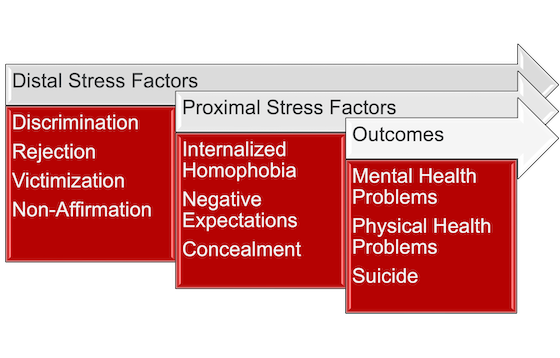
Minority Stress Theory provides a framework for understanding how societal stigma translates into individual mental health outcomes. It posits that marginalized groups face chronic stress distinct from the general population.
Image Caption: The relationship between external stressors and internal psychological processes leading to adverse health outcomes (Testa et al., 2015).
As defined by Testa et al. (2015), the theory divides stressors into:
Distal Stress Factors (External): These are objective events such as discrimination, rejection, victimization, and non-affirmation of identity.
Proximal Stress Factors (Internal): These are the internal psychological processes resulting from the distal stressors, including internalized transphobia, expectations of rejection, and concealment of identity.
These factors combine to degrade mental and physical health, leading to higher rates of suicide and chronic illness.
Multiple Minority Stress
Clients often hold multiple marginalized identities, leading to compounded stress (intersectionality). Clinicians must consider the unique experiences of:
BIPOC Communities: particularly Black, Indigenous, and Latinx transgender individuals who face racism alongside transphobia.
Immigrant Communities: Undocumented families may fear that seeking gender-affirming care will draw attention to their immigration status.
Religious Minorities: Jewish and Muslim transgender individuals may face rising antisemitism or Islamophobia in addition to transphobia.
People with Disabilities: There is a high overlap between neurodivergence (specifically autism) and gender diversity. Attacks on disability rights and healthcare access further marginalize this population.
Veterans: Those relying on the VA for care face specific anxieties regarding federal policy changes.
Increase in Disordered Eating
Disordered eating in the transgender population is often functionally different from that in cisgender populations. It can be a mechanism to manage gender dysphoria by altering the body. For example, starvation may be used to stop menstruation or reduce breast tissue development, while other behaviors might be used to reduce muscle mass or curves.
Research indicates that gender-affirming hormone therapy (GAHT) is protective against disordered eating. When individuals can access hormones that align their physical body with their gender identity, the need to use maladaptive eating behaviors to control their body often decreases. Conversely, losing access to GAHT may precipitate a relapse into disordered eating. Additionally, logistical barriers, such as the lack of safe bathrooms, can lead to restrictive behaviors (avoiding food and water) to prevent the need to use the restroom during the school or work day.
The Dangers of Conversion Therapy
With the restriction of affirmative care, some political factions promote "conversion" or "reparative" therapy as an alternative. This practice attempts to change a person’s sexual orientation or gender identity.
Data from the 2015 U.S. Transgender Survey highlights the extreme danger of this approach. Youth exposed to conversion therapy had a 55% increase in the risk of attempting suicide compared to those who were not. The risk of running away from home also doubled. These risks were highest for those exposed to the practice at a young age (between 11 and 14) (Campbell & van der Meulen Rodgers, 2023).
Mental health professionals have an ethical mandate to "Do No Harm." Engaging in or referring clients to conversion therapy violates this fundamental ethical principle.
Ethical Dilemmas
The current political climate creates complex ethical dilemmas where legal mandates, client safety, and clinical best practices may conflict.
Can You Support Detransition?
Case Study: Jay Jay is an 80-year-old transfeminine nonbinary veteran who, after a lifetime of suppressing their identity, began estrogen therapy. They experienced great joy in developing a feminine body. However, due to economic factors, Jay lost their housing in San Francisco and had to move to a rural area in Oregon to afford a home. In this new environment, Jay perceived a high threat of transphobia and physical violence. Consequently, Jay decided to stop taking hormones and "detransition" to ensure their physical safety.
Ethical Consideration: Clinicians may struggle with supporting a client in stopping a treatment that clearly benefits their mental health. However, in this case, the detransition is driven by external safety concerns rather than an internal shift in identity. Research indicates that over 82% of individuals who detransition do so because of external factors like family rejection or societal stigma, rather than a realization that they are not transgender.
In this scenario, the clinician’s role is to respect the client's self-determination and safety needs. Supporting Jay involves validating the unfairness of the situation, helping them grieve the loss of their authentic expression, and prioritizing their physical safety and housing stability.
When Clients Choose to Go DIY
Case Study: Jasper Jasper is a 23-year-old trans man who wishes to take testosterone. However, he distrusts the medical establishment, fearing that a formal prescription could be tracked or cut off by future legislation. Instead, he obtains testosterone from an unregulated source ("DIY"). He wants to continue therapy to process the changes but refuses to see a medical provider for the hormones.
Ethical Consideration: This presents a dilemma regarding scope of competence and safety. A therapist cannot prescribe or manage medication. However, refusing to treat Jasper could alienate him from his only source of mental health support.
The recommended approach is harm reduction. Similar to working with a client who uses substances or engages in self-harm, the clinician does not condone the risky behavior but works to minimize danger. This involves:
Acknowledging the client's valid fears of the medical system.
Educating the client on the risks of unmonitored hormone use (e.g., polycythemia, liver strain).
Encouraging any possible safety steps (e.g., "If you won't see a doctor for a prescription, would you consider getting blood work done at a private lab to check your levels?").
Discussing safe injection practices.
Documentation & Ethics
With the Department of Justice and other entities issuing subpoenas for medical records of transgender patients, documentation has become a safety issue.
Key Questions for Clinicians:
Diagnosis: Do you include a diagnosis of Gender Dysphoria (F64.0)? While necessary for insurance coverage, it can also serve as a flag in medical records. If a client is paying out of pocket or seeking therapy for unrelated issues (e.g., anxiety), is the diagnosis necessary?
Names and Pronouns: Do you document the client's chosen name and pronouns in the official chart, or keep them in a separate "shadow" file? Documenting them validates the client but could expose them if records are seized.
Relationship Status: How are same-sex partners documented?
Intervention: Adopt a consent-forward approach. Have transparent conversations with clients about documentation. Ask: "I want to respect your identity, but I also want to protect your privacy. Here are the risks and benefits of documenting your chosen name in the official record. What do you prefer?"
Should We Delay GAC?
Case Study: Molly Molly is a 16-year-old trans girl who has socially transitioned and is desperate to start estrogen. Her therapist and doctors agree it is medically appropriate. However, her parents, while affirming of her identity, are terrified of the political climate. They want her to wait until she is 18 or until the political situation stabilizes to ensure her safety.
Ethical Consideration: This is a conflict of values: Safety vs. Authenticity. The parents prioritize physical safety; Molly prioritizes the quality of her life and her authentic development.
Intervention: The clinician's role is to facilitate a values-based conversation. For Molly, living as a boy might feel like a fate worse than the risk of discrimination. The therapist can help the family navigate this by validating the parents' fear while highlighting that denying care also carries severe risks (e.g., suicidality, worsening dysphoria). The goal is to help the family find a consensus that respects the adolescent's developing autonomy and the reality of their dysphoria.
Can Therapists Be Political?
Historically, mental health professions encouraged neutrality. However, the current context challenges this stance.
The Personal is Political: The DSM-5 itself is a sociopolitical document, not just a scientific one. The laws governing practice are political. Conceptions of mental health are shaped by societal values.
Ethical Obligation: Hope and Puckett (2024) argue that mental health providers are ethically required to engage in advocacy. Silence in the face of legislation that harms clients can be complicit.
Scope of Advocacy: Advocacy can take many forms, from voting and calling legislators to attending protests or simply creating a safe, affirming space in the therapy room.
Image Caption: Engaging in public advocacy is one form of ethical action for mental health providers (Image: G. Levin).
Recommendations
General Recommendations for Providers
Consultation: Do not make decisions in isolation. Consult with legal experts regarding state laws and with colleagues regarding ethical gray areas.
Avoid Rash Decisions: Do not preemptively strip all charts of pronouns or cease care based on rumors. Base actions on verified legal and clinical information.
Communication: Clearly communicate your stance on privacy and advocacy to your clients. Knowing their therapist is "on their team" is a vital intervention in itself.
Advocacy: Engage in advocacy appropriate to your capacity. "Be loud" where you can.
Self-Care: Vicarious trauma is real. Find your own sources of resilience and joy.
Building Rapport
Explicit Allyship: Do not assume clients know you are safe. State clearly that you are committed to LGBT rights.
Proactive Inquiry: Do not wait for the client to bring up the news. Ask: "I know there has been a lot of heavy news regarding trans rights lately. How is that impacting you?"
Knowledge: Do not place the burden of education on the client. Stay informed about major legislative updates so the client does not have to explain basic news events to you.
Recommendations for Patients: The Crash Pad
Clinicians can use the metaphor of a "Crash Pad" with clients. If the client feels they are climbing a dangerous cliff (navigating society), they cannot control whether they fall (legislation/discrimination), but they can build a crash pad to catch them.
Components of a Crash Pad:
Community: Connection with other trans people.
Supportive Individuals: A trusted cousin, friend, or therapist.
Affirming Environments: A workplace or hobby group where they are respected.
Practices: Meditation, exercise, or art that grounds them.
T4T Relationships: "Trans for Trans" relationships, where partners share a mutual understanding of the gendered experience, can be a profound source of safety and intimacy.
Image Caption: The "Crash Pad" intervention helps clients visualize and strengthen their support network.
Queer/Trans Joy as Resistance
While it is necessary to discuss trauma and safety, it is equally important to center Queer and Trans Joy. Encouraging clients to access joy—through community events, pride celebrations, or personal expression—is a form of resistance against a system that seeks their misery
Recommendations for Parents
Parents often ask how much they should share with their children about the political climate.
Assess Capacity: Consider the child's age and emotional maturity.
Assume Knowledge: Children often know more than parents realize through social media and peers.
The "Need to Know" Approach: A parent can ask, "Do you want to know what is going on in the news, or do you want me to handle it?"
Example: A father asked his 12-year-old daughter this question. She replied that she just wanted to be a kid. The father agreed to carry the burden of political awareness and advocacy so she could focus on her childhood. This is a model of protective parenting.
Using a Values-Based Approach
When clients or families feel stuck, a values clarification exercise can be powerful.
Image Caption: Mapping conflicting values helps clients understand their decision-making process in complex situations.
Clinicians can help clients identify their core values (e.g., Authenticity, Safety, Family Harmony) and acknowledge that these values may currently be in conflict. There is no single "right" answer; different clients will prioritize different values (like Jay choosing safety vs. Molly choosing authenticity).
Resources
Providing clients with concrete resources is an essential intervention.
Relocation and Logistics:
Keshet Move to Thrive: Offers interest-free loans for relocation.
Project Open Arms: Resettlement project for trans families.
Elevated Access: Volunteer pilots providing free transportation to states with legal healthcare access.
Legal and Support:
Trans Family SOS: Guiding families through legal and medical navigation.
Trevor Space: Online community for LGBTQ youth.
Human Rights Campaign: Emergency funds and resources.
References
American Psychiatric Association. (2022). Diagnostic and statistical manual of mental disorders (5th ed., text rev.). American Psychiatric Association. https://doi.org/10.1176/appi.books.9780890425787
Campbell, T., & van der Meulen Rodgers, Y. (2023). Conversion therapy, suicidality, and running away: An analysis of transgender youth in the US. Journal of Health Economics, 89, 102750. https://doi.org/10.1016/j.jhealeco.2023.102750
Dhanani, L. Y., & Totton, R. R. (2023). Have you heard the news? The effects of exposure to news about recent transgender legislation on transgender youth and young adults. Sexuality Research and Social Policy, 20(4), 1345-1359. https://doi.org/10.1007/s13178-023-00869-7
Hope, D. A., & Puckett, J. A. (2024). Bans on evidence-based care for transgender and gender diverse people present risks for clients and dilemmas for mental health providers. Cognitive and Behavioral Practice, 31(1), 15-19. https://doi.org/10.1016/j.cbpra.2023.08.001
Lee, W. Y., Hobbs, J. N., Hobaica, S., DeChants, J. P., Price, M. N., & Nath, R. (2024). State-level anti-transgender laws increase past-year suicide attempts among transgender and non-binary young people in the USA. Nature Human Behaviour, 8(11), 2096-2106. https://doi.org/10.1038/s41562-024-01928-0
Movement Advancement Project. (2025). Healthcare laws and policies: Bans on best practice medical care for transgender youth [PDF]. Movement Advancement Project. https://www.lgbtmap.org/img/maps/citations-youth-medical-care-bans.pdf
Restar, A., Layland, E. K., Hughes, L., Dusic, E., Lucas, R., Bambilla, A. J., & Kershaw, T. (2024). Antitrans policy environment and depression and anxiety symptoms in transgender and nonbinary adults. JAMA Network Open, 7(8), e2431306. https://doi.org/10.1001/jamanetworkopen.2024.31306
Testa, R. J., Habarth, J., Peta, J., Balsam, K., & Bockting, W. (2015). Development of the Gender Minority Stress and Resilience Measure. Psychology of Sexual Orientation and Gender Diversity, 2(1), 65-77. https://doi.org/10.1037/sgd0000081
Citation
Levin, G. (2025). Supporting Queer and Trans Clients in the Current Political Climate: Ethical Dilemmas and Interventions in Trying Times. Continued - Counseling, Article 118. Available at www.continued.com/counselingOct 6, 2025
1 CE CreditADHD and Women: Ethical and Practice Implications for Clinical Providers
Christina Marsack-Topolewski, LMSW, PhD, MSW
This text-based course is an edited transcript from a live webinar presented by Christina Marsack-Topolewski, PhD, MSW, LMSW.
Introduction
It is a pleasure to present this comprehensive overview of ADHD and its ethical and practical implications for clinical providers working with women. The number of women diagnosed with Attention-Deficit/Hyperactivity Disorder continues to increase, bringing to light a unique set of challenges and considerations. Women frequently manage a multitude of life responsibilities and demands, which can present significant daily hurdles when coupled with ADHD. Living with ADHD can affect nearly every aspect of life, including one's professional life, financial stability, educational pursuits, the experience of motherhood, and other interpersonal relationships.
Furthermore, for women navigating life with ADHD, these challenges can be compounded by the presence of co-occurring conditions. This article will provide a framework for understanding the distinct complexities and journeys that women with ADHD often encounter. It will also discuss various interventions, strategies, and resources designed to support women with ADHD and their loved ones, acknowledging that the impact of ADHD extends beyond the individual to their entire relational network.
Learning Outcomes
After engaging with this material, participants will be able to:
- Identify the characteristics, signs, and symptoms of ADHD in adulthood that are unique to women.
- Describe co-occurring conditions commonly experienced by women with ADHD.
- Explain practical and evidence-based strategies to support women with ADHD and their loved ones.
Limitations and Risks
Supporting women with ADHD can be complex, and their coinciding needs can be wide-ranging. This discussion will not cover every aspect of these topics. Therefore, continued and additional training and education on this topic are recommended. Treatment and approaches to support individuals with ADHD and other comorbid challenges do not coincide with a one-size-fits-all approach. Practitioners should engage in cultural humility at all times and acknowledge cultural variations in mental health and treatment. Adequate support often requires the use of a multi-disciplinary team to ensure comprehensive treatment.
What is ADHD?
According to the guidelines from the American Psychiatric Association’s Diagnostic and Statistical Manual, Fifth Edition (DSM-5), the criteria for individuals ages 17 and older include:
“Frequent inattention, seen through at least five of the following, for at least six months, in a way that is inappropriate developmentally”:
- Careless mistakes and lack of close attention to detail
- Difficulty paying attention on tasks
- Does not listen when addressed
- Gets too side-tracked to finish chores or workplace duties
- Loses materials or equipment necessary for tasks
- Forgetfulness in daily living
- Difficulty in organizing tasks
- Easily distracted; daydreaming
- Difficulty or dislike of work that requires sustained mental effort
- Procrastination
(American Psychiatric Association, 2022)
Continued - What is ADHD?
Per the guidelines from the American Psychiatric Association’s Diagnostic and Statistical Manual, Fifth Edition (DSM-5), the criteria for individuals ages 17 and older also include:
“Frequent hyperactivity and impulsivity, seen through at least five of the following, for at least six months, in a way that is inappropriate developmentally”:
- Fidgeting, squirming, tapping
- Leaves seat when expected to sit
- Running or climbing at inappropriate times, feelings of restlessness
- Inability to play quietly
- Is often “on the go” and/or “driven by a motor”
- Talks excessively
- Blurting out responses
- Trouble waiting for turn
- Interrupting, intruding in conversations
Note: Six or more symptoms of inattention and/or hyperactivity-impulsivity are required for children up to age 16.
(American Psychiatric Association, 2022)
These diagnostic criteria provide a foundational understanding of ADHD. However, it is crucial to recognize that the manifestation of these symptoms can differ significantly between genders, particularly in adulthood. For individuals over the age of 17, the presence of at least five symptoms in either the inattention or hyperactivity-impulsivity domain, persisting for at least six months in a developmentally inappropriate manner, is indicative of ADHD. The impact of these symptoms on daily functioning across multiple settings is also a key diagnostic consideration.
ADHD Symptoms
Other symptoms commonly observed include:
- Poor time management (e.g., trouble multitasking)
- Emotional dysregulation (e.g., frequent/chronic stress, constant state of worry)
- Low frustration tolerance
- Mood swings
- Challenges focusing on a task
- Difficulties coping with stress
- Temper
(Mayo Foundation for Medical Education and Research, 2024)
When considering ADHD symptoms in adulthood, particularly for women, the challenges often extend beyond the core diagnostic criteria. Poor time management, including difficulties with multitasking, can profoundly impact adult life, where demands are often high and varied. Emotional dysregulation, manifesting as frequent stress, constant worry, or mood swings, can significantly affect an individual’s well-being and relationships. A low frustration tolerance can lead to interpersonal difficulties, especially in demanding roles such as parenting. Many women with ADHD report feeling overwhelmed by the daily tasks required to manage a household and career, often leading to internal frustration and self-criticism. The inability to focus on tasks and difficulties in coping with stress further exacerbate these challenges, contributing to a sense of being perpetually behind or unable to meet expectations.
ADHD in Adults
These conditions are required, too:
- Before age 12, must experience several inattentive or hyperactive-impulsive symptoms
- The symptoms must impact the person in at least two settings
- Clear evidence that the symptoms “interfere with or reduce the quality of” the person’s social, school and work activities
- Another mental disorder doesn’t better account for the symptoms
(American Psychiatric Association, 2013)
For an adult diagnosis of ADHD, it is essential to establish a developmental history of symptoms appearing before age 12. This underscores the understanding of ADHD as a neurodevelopmental disorder. Furthermore, the symptoms must be pervasive, affecting the individual in at least two significant settings, such as home, school, work, or social environments. This criterion highlights the functional impairment caused by ADHD, distinguishing it from transient difficulties. The impact must be clearly evident in a reduction of quality in social, academic, or occupational functioning. Finally, it is crucial to rule out other mental disorders that might better explain the symptoms, although co-occurring conditions are common and will be discussed further.
Symptoms may be common in women
- Racing thoughts
- Talking excessively
- Difficulty maintaining relationships
- “A scarred and wounded self-esteem”
- Stigma associated with their condition
(Holthe & Langvik, 2017)
Research indicates that certain ADHD symptoms are more commonly observed in women. These include racing thoughts, which can contribute to anxiety and overwhelm, and talking excessively, which may be a manifestation of internal hyperactivity. Difficulty maintaining relationships is a significant concern, often stemming from challenges with consistency, emotional regulation, or perceived social missteps. Many women with ADHD report a "scarred and wounded self-esteem," resulting from years of struggling with undiagnosed or misunderstood symptoms, leading to feelings of inadequacy or failure. The stigma associated with their condition further compounds these emotional burdens, often leading to shame and a reluctance to seek help or disclose their diagnosis. These gender-specific manifestations are crucial for clinicians to recognize for accurate diagnosis and tailored intervention.
Struggles Associated with Dysexecutive Functioning & ADHD
Visible:
- Running late, not making deadlines
- Presenting as “scattered”
- Outward aggression, frustration
Invisible:
- Self-esteem and self-efficacy implications
- Loneliness and isolation
- Internal frustration
- Anxiety
- Depression
The challenges associated with dysexecutive functioning in ADHD can be categorized into visible and invisible struggles. Visible struggles are those observable by others, such as consistently running late, failing to meet deadlines, appearing disorganized or "scattered," and exhibiting outward aggression or frustration. These external manifestations often lead to negative feedback from colleagues, family members, and friends, reinforcing feelings of inadequacy.
Invisible struggles, though less apparent to others, are deeply impactful. These include significant implications for self-esteem and self-efficacy, as women with ADHD may internalize their difficulties as personal failings rather than symptoms of a neurological condition. This can lead to profound feelings of loneliness and isolation, as the effort to maintain relationships becomes overwhelming or as perceived failures lead to withdrawal. Internal frustration is a constant companion, a silent battle against one's own cognitive processes. Furthermore, anxiety and depression are frequently co-occurring invisible struggles, often stemming from the chronic stress of managing ADHD symptoms and the emotional toll of perceived failures and social misunderstandings. Recognizing both visible and invisible struggles is essential for a holistic understanding of the impact of ADHD on women.
Masking of Symptoms
May mask in the following ways:
- Avoid interrupting others (by being quiet)
- Compensatory strategies to support routines and organization
- Exhibit perfectionistic tendencies
- Mirror what others do (e.g., this is common to other conditions and masking)
- Try very hard to focus and be overly conscientious
- Engage in substance misuse (e.g., this may hide/manage their symptoms in social environments)
- Engage in socially appropriate sports and physical activities – which may also mask symptoms
Masking can diminish the adverse effects of ADHD. Masking can be exhausting.
Masking is a common coping mechanism for women with ADHD, where they consciously or unconsciously hide their symptoms to conform to social expectations or avoid negative judgment. This can manifest in various ways, such as deliberately avoiding interrupting others by remaining quiet, even when they have something to contribute. Many develop elaborate compensatory strategies to maintain routines and organization, which, while effective in presenting a semblance of order, can be incredibly draining. Exhibiting perfectionistic tendencies is another form of masking, as an intense focus on flawless execution can be an attempt to overcompensate for perceived deficits in attention or organization. Mirroring the behaviors of others in social situations is also common, allowing them to blend in and avoid drawing attention to their struggles.
The effort to try very hard to focus and be overly conscientious is a constant internal battle, leading to significant mental fatigue. In some cases, individuals may engage in substance misuse as a maladaptive coping mechanism to hide or manage their symptoms in social environments, seeking to calm racing thoughts or reduce anxiety. Furthermore, engaging in socially appropriate sports and physical activities can also serve as a form of masking, as these activities may provide an outlet for hyperactivity or a structured environment that temporarily alleviates symptoms. While masking can temporarily diminish the adverse effects of ADHD in social or professional settings, it is an incredibly exhausting process that can lead to burnout, increased anxiety, and a profound sense of inauthenticity.
Executive Functioning
Executive functioning refers to a set of cognitive processes that are crucial for controlling behavior and operating effectively in daily life. These functions act as the "orchestra conductor" of the mind, enabling individuals to plan, organize, reason, and problem-solve. For individuals with ADHD, particularly women, challenges in executive functioning can profoundly impact various aspects of their lives.
Consider the intricate process of planning a trip: it involves booking flights, coordinating layovers, checking luggage, navigating security, and arranging accommodation and transportation. For a woman with ADHD, these seemingly straightforward tasks can become overwhelming due to difficulties with planning, sequential thinking, and managing multiple steps. If children are involved, the complexity escalates further, requiring meticulous organization of their belongings, car seats, and schedules. The ability to foresee potential issues, prioritize tasks, and maintain focus throughout such a multi-step process relies heavily on intact executive functions.
When executive functions are impaired, even routine daily activities can become monumental challenges. This can lead to visible struggles, such as missed deadlines and disorganization, and invisible struggles, including low self-esteem, internal frustration, and social isolation. Understanding the specific executive functioning deficits a woman with ADHD experiences is paramount for tailoring effective interventions. The goal is to develop strategies and coping mechanisms that support these cognitive processes, enabling her to navigate daily demands more effectively and enhance her overall quality of life. This includes recognizing and capitalizing on her strengths, as many individuals with ADHD possess remarkable creativity, quick thinking, and the ability to generate novel ideas, which can be leveraged in various settings, particularly in the workplace.
Diagnosis
Women in adulthood are equally likely to be diagnosed with ADHD as men.
- Misdiagnosis
- Underdiagnosis
- Overdiagnosis
- Late-diagnosis (Long & Coats, 2022)
The diagnostic landscape for ADHD presents unique considerations for women. While childhood diagnoses show a significant male-to-female ratio (approximately 3:1, with 75% boys compared to 25% girls), this ratio tends to equalize in adulthood. This suggests a notable pattern of underdiagnosis in girls during childhood, potentially due to masking behaviors, differing symptom presentations, or societal expectations that often lead to girls’ symptoms being overlooked or misattributed. Consequently, many women receive a late diagnosis in adulthood, often after years of struggling with unexplained difficulties and accumulating negative self-perceptions.
The phenomenon of misdiagnosis is also prevalent, as ADHD symptoms in women can overlap with or be mistaken for other conditions like anxiety, depression, or bipolar disorder. Conversely, there is also a concern for overdiagnosis in some contexts. The implications of late diagnosis are significant; women may miss out on early interventions and the development of effective coping strategies, leading to a cumulative impact on their self-esteem, relationships, and professional lives. The elevated demands of adulthood, such as managing careers, households, and families, can make undiagnosed or unmanaged ADHD particularly challenging, with potentially severe consequences like job loss or financial instability. Therefore, increased awareness among clinicians about the unique presentation of ADHD in women is crucial for timely and accurate diagnosis.
Prevalence of ADHD
- Childhood prevalence: 7.8 to 9.5% of children in the United States (Polancyznk et al., 2014)
- Adulthood prevalence: 4.4% of adults in the United States (Kessler et al., 2006)
- Global estimates:
- Persistent adult ADHD (with a childhood onset) = 2.58% or 139.84M in 2020
- Symptomatic adult ADHD (regardless of childhood onset) = 6.76% or 366.33M in 2020 (Song et al., 2021)
The prevalence of ADHD varies across different age groups and global regions. In the United States, childhood prevalence ranges from 7.8% to 9.5%, encompassing both boys and girls. For adults in the United States, the prevalence is estimated at 4.4%. Global estimates provide a broader perspective: persistent adult ADHD, defined as having a childhood onset, was estimated at 2.58% or approximately 139.84 million individuals in 2020. Symptomatic adult ADHD, which includes individuals regardless of childhood onset, showed a higher global prevalence of 6.76%, affecting around 366.33 million people in 2020. These figures underscore the widespread nature of ADHD across the lifespan and globally, emphasizing the importance of understanding its impact on diverse populations, including women. The disparity between childhood and adult prevalence, particularly the equalization of gender ratios in adulthood, highlights the need for continued research and clinical attention to how ADHD manifests and is diagnosed in women.
Propensity of ADHD
- About 2.5% of adults have ADHD (Simon et al., 2009); keep in mind other estimates indicate adults with ADHD comprise 2-4% of the population.
- Men’s and women’s rates of ADHD
- Men’s and women’s rates of risky/impulsive behaviors are similar.
- Women with persistent ADHD tended to be less likely to have hyperactive symptoms and to drive recklessly, but women had more anxiety (Cortese et al., 2016).
While general estimates suggest that about 2.5% to 4% of adults have ADHD, the gender-specific nuances are particularly insightful. As previously noted, the rates of ADHD diagnoses tend to equalize between men and women in adulthood, a significant shift from the childhood prevalence. Interestingly, research indicates that men and women with ADHD exhibit similar rates of risky or impulsive behaviors. However, a study by Cortese and colleagues (2016) found that women with persistent ADHD were less likely to present with overt hyperactive symptoms and were less prone to reckless driving compared to their male counterparts. This subtle difference in symptom presentation further contributes to the underdiagnosis of ADHD in women, as their hyperactivity may manifest more internally as racing thoughts or excessive talking rather than overt physical restlessness. A notable finding from this research is that women with ADHD often experience higher levels of anxiety, which aligns with broader population trends where women are more frequently diagnosed with anxiety disorders. This increased anxiety can complicate the clinical picture, sometimes leading to ADHD symptoms being overshadowed or misattributed to anxiety alone. Understanding these gender-specific propensities is vital for accurate assessment and tailored therapeutic approaches.
Co-Occurring Conditions in Women with ADHD
Co-occurring conditions
Adults with ADHD have a greater likelihood to experience other co-occurring conditions.
- Anxiety
- Autism spectrum disorder
- Depression
- Bipolar disorder
- Substance use disorder
(Micai et al., 2023; Pehlivanidis et al., 2020)
The presence of co-occurring conditions is a significant aspect of ADHD in adulthood, particularly for women. Research consistently demonstrates that adults with ADHD have a substantially higher likelihood of experiencing other mental health conditions. Common co-occurring conditions include anxiety disorders, which often manifest as chronic worry, panic attacks, or generalized anxiety. Autism spectrum disorder (ASD) can also co-occur with ADHD, presenting a complex diagnostic picture where symptoms of both conditions may overlap or exacerbate each other. Depression, including major depressive disorder, is frequently observed, often stemming from the chronic stress, emotional dysregulation, and interpersonal difficulties associated with unmanaged ADHD. Bipolar disorder is another condition that can co-occur, making differential diagnosis and treatment planning particularly challenging due to the fluctuating mood states. Finally, substance use disorders are also more prevalent among adults with ADHD, sometimes used as a maladaptive coping mechanism to self-medicate or manage overwhelming symptoms. Clinicians must be vigilant in screening for these co-occurring conditions to provide comprehensive and integrated care. A recent meta-analysis by Micai et al. (2023) highlighted the elevated risks, noting that adults with ADHD face five times the risk of comorbid anxiety, 4.5 times the risk of major depression, 8.75 times the risk of bipolar disorder, and 4.6 times the risk of substance use disorder compared to individuals without ADHD. This underscores the critical need for a thorough assessment that considers the full spectrum of potential co-occurring challenges.
Many domains of life impacted
ADHD in women can profoundly impact numerous domains of life, often due to the elevated social, employment, financial, relational, and functional demands placed on adults. The expectation to juggle multiple roles and responsibilities can become immensely overwhelming when compounded by ADHD symptoms.
- School and Work Life: Challenges in academic and professional settings are common. This can include difficulties with organization, time management, focus, and meeting deadlines, leading to underperformance, job changes, or unemployment. A study by Biederman et al. (2021) found that adults with ADHD were less likely to be currently employed (52% vs. 72% of peers without ADHD) and experienced more job changes over a decade (5.4 vs. 3.4). They also reported less satisfaction with family, social, and professional lives.
- Social Challenges: Intimate relationships, friendships, and peer interactions can be strained. Difficulties with listening, impulsivity in conversation, or inconsistency in plans can lead to misunderstandings and relationship breakdowns. Morley and Tyrrell (2023) found that female university students diagnosed with ADHD in adulthood reported significant social, academic, and psychological difficulties, including stigmatization and social discrimination.
- Family and Parenting: For women who are mothers, the demands of parenting can be particularly challenging. Managing household tasks, children's schedules, and personal needs while contending with ADHD symptoms can lead to immense frustration and feelings of inadequacy. The constant juggle often results in a feeling of being "at the bare bones" in terms of daily functioning, as one client described it, struggling to keep even basic necessities like milk in the fridge.
- Sleep Quality: Poor sleep hygiene is frequently reported, which further exacerbates ADHD symptoms and negatively impacts overall functioning and well-being.
The cumulative effect of these impacts can significantly diminish a woman's quality of life, highlighting the urgent need for tailored support that addresses the multifaceted nature of ADHD in adult women.
Case Example #1
Married mother of 4 struggles with ADHD (diagnosed in childhood), OCD, and anxiety. Spouse does not “believe in” mental health conditions. A lot of shame surrounding challenges. Mother has developed many coping strategies – still difficult. Balancing work, house obligations, and child rearing is immensely overwhelming.
This case illustrates the profound complexities faced by women with ADHD, particularly when compounded by co-occurring conditions and unsupportive family dynamics. The client, a married mother of four, grapples with a childhood diagnosis of ADHD, alongside obsessive-compulsive disorder (OCD) and profound anxiety. A significant barrier to her well-being is her spouse's disbelief in mental health conditions, which creates an environment of shame and discourages her from seeking or utilizing necessary support, including medication or therapy. Despite having developed numerous coping strategies since her early diagnosis and achieving professional success, the immense demands of balancing work, household obligations, and child-rearing have become overwhelmingly challenging. The added pressures of children's illnesses, childcare issues, or school breaks further intensify her struggles, especially within a traditional household where domestic responsibilities are primarily hers. This scenario highlights the critical need for interventions that not only address the client's symptoms but also navigate complex family systems and societal expectations.
Case Example #2
Female in early 40s, twice exceptional. Has childhood diagnosis of ADHD, anxiety. History of an eating disorder. Recent divorce – now back to the workforce. Recently single (now single mother of 3 children). New work position acquired around the time of her divorce. Struggling with meeting and juggling the multi-faceted needs of work, motherhood, home life, food in fridge. FMLA.
This case exemplifies the compounding stressors that can overwhelm a woman with ADHD, particularly during significant life transitions. The client, a female in her early 40s, is "twice exceptional," indicating both giftedness and a neurodevelopmental diagnosis. She has a childhood diagnosis of ADHD and anxiety, coupled with a history of an eating disorder. Her recent divorce has thrust her back into the full-time workforce after a significant hiatus, adding immense financial and logistical pressure. Now a single mother of three children, she finds herself struggling to meet the multifaceted demands of her new work position, motherhood, and maintaining a functional home life, to the extent that even basic tasks like keeping food in the refrigerator become a struggle. Her anxiety is heightened, and she experiences daydreaming at work, impacting her ability to meet professional demands. The severity of her challenges has led her to explore options like the Family and Medical Leave Act (FMLA) to gain a temporary reprieve and re-stabilize. This case underscores the need for comprehensive, tailored support that considers the interplay of ADHD with past traumas, co-occurring conditions, and current life circumstances, emphasizing the importance of practical strategies and external supports to manage overwhelming daily responsibilities.
Shared Terminology
- Autonomy: Making informed, independent decisions. Having control over own actions, choices, and life.
- Self-determination: The ability to determine what is best for yourself without force or coercion.
In the context of ethical practice, understanding autonomy and self-determination is paramount when working with women with ADHD. Autonomy refers to an individual's capacity to make informed, independent decisions and to have control over their own actions, choices, and life. For women with ADHD, this can be particularly challenging due to the internal and external pressures they face, including societal expectations and the impact of their symptoms on decision-making processes. Clinical providers must work to nurture and foster a therapeutic relationship predicated on respect and empowerment, helping clients to understand their diagnosis and its implications within their multifaceted lives.
Self-determination is closely related, emphasizing an individual's ability to determine what is best for themselves without external force or coercion. In cases where a client's environment, such as a spouse who dismisses mental health conditions, undermines their ability to make choices about their care, clinicians must support the client in finding ways to exercise their self-determination, even if it means adopting more private or "close to the vest" coping strategies. The ethical imperative is to help clients recognize and build upon their strengths, providing hope and a framework that extends beyond the challenges of ADHD, while also acknowledging the gender-specific pressures that women with ADHD often navigate. This involves a delicate balance of validating their experiences, offering practical support, and advocating for their right to make choices that enhance their well-being.
Ethical Considerations & Complexities in Supporting Women with ADHD and their Families
- Balancing viewpoints and perspectives
- Self-determination and autonomy should be at the forefront of all conversations
- Strength-based approach
- Using the client at the forefront of planning and treatment
- Safety is key
- Dreams for now and the future
- What’s realistic and doable?
- Capitalizing on supports
- Using relevant formal supports
- Importance of support from informal support networks
- Robust social networks
- Community (reduction of social isolation and loneliness)
- Changing and evolving needs
- Women with ADHD
- Other supports and their capacity
Supporting women with ADHD and their families involves navigating a complex ethical landscape that requires careful consideration of multiple factors. A primary ethical consideration is the need to balance various viewpoints and perspectives, particularly when family members hold differing beliefs about mental health. The principles of self-determination and autonomy must remain at the forefront of all clinical conversations, ensuring that the woman's right to make informed decisions about her care is respected, even if those decisions diverge from external recommendations.
A strengths-based approach is crucial, focusing on identifying and leveraging the client's inherent abilities and resources. This involves placing the client at the forefront of planning and treatment, ensuring that interventions are tailored to her unique needs and aspirations. Safety is always a key consideration, especially when symptoms or co-occurring conditions might pose risks to the individual or others. Clinicians should also explore the client's dreams for both the present and the future, helping to establish goals that are realistic and doable within her current context.
Capitalizing on both formal and informal supports is vital. Formal supports include professional services, while informal support networks, such as friends, family, and community groups, play a critical role in reducing social isolation and loneliness. It is important to foster robust social networks, recognizing that the give-and-take dynamic of relationships is essential for long-term sustainability. The needs of women with ADHD and their support systems are constantly changing and evolving, requiring clinicians to remain flexible and adaptive in their approach. This includes assessing the capacity of other supports within the family unit to ensure that the burden of care is not unduly placed on any one individual.
Ethics & ADHD in Women
Code of Ethics – Ethical Principles
- Service
- Dignity and Worth of the Person
- Who decides?
- Right to decline treatment and other recommendations
- Importance of Human Relationships
(National Association of Social Workers, 2023)
The ethical principles guiding practice with women with ADHD are deeply rooted in core professional codes of ethics. The principle of Service emphasizes the clinician's commitment to helping people in need and addressing social problems. For women with ADHD, this means providing comprehensive support that extends beyond symptom management to address the broader impacts on their lives, including employment, relationships, and overall well-being.
The principle of Dignity and Worth of the Person is paramount. This involves recognizing and respecting the inherent value of each individual, regardless of their diagnosis. A critical aspect of this principle is acknowledging the client's autonomy and their right to self-determination. This raises questions such as "Who decides?" when it comes to treatment plans and life choices. It firmly establishes the client's right to decline treatment and other recommendations, even if the clinician believes they would be beneficial. This requires a delicate balance of providing informed guidance while respecting personal agency.
Finally, the Importance of Human Relationships underscores the significance of building strong, collaborative relationships with clients and their support networks. This principle recognizes that individuals are interconnected and that interventions are most effective when they consider the broader family and community context. For women with ADHD, fostering robust social networks and ensuring instrumental engagement with others can significantly enhance their quality of life and well-being. This also extends to the clinician-client relationship, which should be built on trust, empathy, and mutual respect.
Ethical Responsibilities to Clients
Social workers respect and promote clients' right to self-determination and assist clients in their efforts to identify and clarify their goals. Social workers may limit clients’ right to self-determination when, in the social workers’ professional judgment, clients’ actions or potential actions pose a serious, foreseeable, and imminent risk to themselves or others.
(NASW Code of Ethics, 2023)
(Principle E): Respect for People's Rights and Dignity: Psychologists respect the dignity and worth of all people, and the rights of individuals to privacy, confidentiality, and self-determination. Psychologists are aware that special safeguards may be necessary to protect the rights and welfare of persons or communities whose vulnerabilities impair autonomous decision making.
The ethical responsibility to clients, particularly those with ADHD, centers on upholding their right to self-determination. As outlined in the National Association of Social Workers (NASW) Code of Ethics, social workers are mandated to respect and promote clients' autonomy, actively assisting them in identifying and clarifying their personal goals. This means empowering women with ADHD to make choices about their lives and treatment, even when those choices may differ from professional recommendations. However, this right is not absolute; clinicians may ethically limit self-determination when a client's actions or potential actions pose a serious, foreseeable, and imminent risk to themselves or others. This requires careful professional judgment and a clear understanding of the boundaries of intervention.
Similarly, the American Psychological Association (APA) Code of Conduct, under Principle E, emphasizes "Respect for People's Rights and Dignity." Psychologists are expected to respect the inherent dignity and worth of all individuals, along with their rights to privacy, confidentiality, and self-determination. The APA code also acknowledges that special safeguards may be necessary to protect the rights and welfare of vulnerable individuals or communities whose vulnerabilities might impair their autonomous decision-making capacity. This is particularly relevant for women with ADHD, who may experience cognitive or emotional challenges that impact their ability to make fully autonomous decisions at all times. Therefore, clinicians must balance the promotion of self-determination with the responsibility to protect clients from harm, always striving to empower them while ensuring their safety and well-being.
Ethics & ADHD in Women
Code of Ethics – Ethical Responsibilities to Clients
1.02 Self-Determination
The principle of self-determination, as articulated in ethical codes such as the NASW Code of Ethics (Section 1.02), is a cornerstone of responsible clinical practice with women with ADHD. This principle mandates that clinicians respect and actively promote their clients' right to make their own choices and decisions. For women navigating life with ADHD, this means empowering them to identify their own goals and clarify what they want for their lives, rather than imposing external expectations or solutions.
In practice, this translates to collaborative treatment planning where the woman with ADHD is an active participant in setting her therapeutic objectives. It involves providing her with comprehensive information about her diagnosis, potential interventions, and available resources, allowing her to make informed choices. This also means respecting her right to decline certain treatments or recommendations, even if they are medically or clinically advised, provided her decision does not pose a serious, foreseeable, and imminent risk to herself or others. The clinician's role is to support her in exploring the implications of her choices, fostering her capacity for independent decision-making, and building her confidence in managing her condition. This ethical stance ensures that interventions are client-centered and uphold the dignity and autonomy of the individual.
Practical and Evidence-Based Strategies
Treatment Goals
- Ensure the recognition of strengths and use a strengths-based approach
- Start with the basics
- Develop effective strategies and coping mechanisms
- Support facets of life that are impacted
- Help clients move toward better physical and psychological functioning
- Provide support to address multi-faceted impacts of ADHD and other co-occurring conditions
- Seek pathways to elevate strengths and build self-esteem
- Enable clients to live full, meaningful, and rewarding lives
Effective treatment for women with ADHD is guided by several key goals, all centered on empowering the individual and enhancing her overall quality of life. A foundational goal is to ensure the recognition of strengths and consistently employ a strengths-based approach. This involves identifying and building upon the woman's unique talents, resilience, and positive attributes, fostering a sense of self-efficacy and hope.
Another crucial goal is to "start with the basics." This means addressing fundamental areas of functioning that may be impacted by ADHD, such as sleep hygiene, nutrition, and foundational organizational skills. By establishing a solid foundation, clients can build confidence and gradually integrate more complex strategies. The development of effective strategies and coping mechanisms is paramount, equipping women with practical tools to manage their symptoms and navigate daily challenges.
Treatment should also aim to support all facets of life that are impacted by ADHD, including employment, relationships, finances, and parenting. This holistic approach ensures that interventions are comprehensive and address the real-world difficulties clients face. A core objective is to help clients move toward better physical and psychological functioning, promoting overall health and well-being.
Furthermore, it is essential to provide support to address the multifaceted impacts of ADHD and any co-occurring conditions. This often requires an integrated approach that considers the interplay between various diagnoses. Ultimately, treatment goals should seek pathways to elevate strengths and build self-esteem, counteracting the years of negative self-perception that many women with ADHD experience. The overarching aim is to enable clients to live full, meaningful, and rewarding lives, recognizing their inherent worth and potential beyond their diagnosis.
Practical Solutions
- Understand unique needs, realities, and experiences of women and pair supports accordingly
- Help loved ones understand what ADHD is like and daily implications
- Focus on solving problems, being proactive
- Take breaks
- Exercise and physical activity
- Focus on strengths
- Family meetings – to help with communication and routines
- Establish and utilize routines
- Visual and auditory supports
- Maintain a healthy lifestyle
- Financial organization and money management
- Symptom management skills
- Prioritize sleep, self care, and well being
- Consider (when applicable) employment supports
Implementing practical solutions for women with ADHD requires a tailored approach that acknowledges their unique needs and experiences. Firstly, it is crucial to understand the specific realities and challenges women face and to pair supports accordingly. This might involve addressing the societal pressures of juggling multiple roles, such as career, motherhood, and household management.
Educating loved ones about what ADHD is like and its daily implications is vital. This can foster empathy and understanding, reducing blame and promoting a more supportive environment. Encouraging a focus on problem-solving and proactive strategies helps clients move beyond reactive responses to challenges. Incorporating regular breaks, exercise, and physical activity can significantly improve attention, mood, and overall well-being.
A consistent emphasis on strengths is essential, helping women with ADHD recognize and leverage their unique abilities, such as creativity, quick thinking, or hyperfocus in areas of interest. Implementing family meetings can improve communication and establish clear routines, which are highly beneficial for managing ADHD symptoms. Establishing and consistently utilizing routines, supported by visual and auditory aids, can provide much-needed structure and predictability.
Maintaining a healthy lifestyle, including prioritizing sleep, self-care, and overall well-being, is foundational for symptom management. Developing financial organization and money management skills is also critical, as ADHD can often impact financial stability. Specific symptom management skills, tailored to individual needs, should be taught and practiced. Finally, when applicable, exploring and implementing employment supports can help women with ADHD thrive in their professional lives, ensuring reasonable accommodations and strategies for workplace success. These practical solutions, when consistently applied, can significantly enhance a woman's ability to manage ADHD and improve her quality of life.
Consider Dynamics in Couples
NON-ADHD PARTNER:
- Feelings
- Behaviors
- Internal narrative
ADHD PARTNER:
- Feelings
- Behaviors
- Internal narrative
When ADHD is present in one partner, the dynamics within a couple can become particularly complex, impacting both the individual with ADHD and their non-ADHD partner. Understanding the distinct feelings, behaviors, and internal narratives of each partner is crucial for effective intervention.
For the non-ADHD partner, common feelings include anger, frustration, sadness, and disappointment. They may feel overwhelmed by the perceived disorganization, forgetfulness, or impulsivity of their ADHD partner, leading to resentment and a sense of carrying an unequal burden. Their behaviors might include nagging, micromanaging, or withdrawing emotionally. The internal narrative of the non-ADHD partner often revolves around themes of "I have to do everything," "I'm not being heard," or "Why can't they just try harder?" They may struggle to differentiate between intentional neglect and ADHD symptoms, leading to personalizing their partner's challenges.
For the ADHD partner, feelings often include shame, guilt, inadequacy, and frustration. They may feel misunderstood, criticized, or constantly "beaten down" by their partner's reactions. Their behaviors might include procrastination, avoidance, or defensiveness when confronted about symptoms. The internal narrative of the ADHD partner often involves self-criticism, such as "I'm not good enough," "I'm always letting people down," or "I'm trying my hardest, but it's never enough." They may struggle with emotional dysregulation, leading to mood swings or outbursts, which further strain the relationship.
Effective couples therapy for ADHD involves helping both partners understand ADHD as a neurological condition, not a character flaw. It focuses on developing communication strategies, establishing clear expectations, and implementing practical solutions for managing symptoms. The goal is to foster empathy, reduce blame, and create a supportive environment where both partners feel understood and valued, moving towards a more balanced and harmonious relationship dynamic.
Parenting with ADHD
Medications may not last long enough through the day so that moms can both work effectively at the office and do caregiving duties when they get home (Seay, 2022).
In the article, Terry Matlen, an ADHD consultant, recommended moms:
- Help their families understand what ADHD is like
- Focus on solving problems, not blaming
- Take breaks to cool down or re-energize
- Have family meetings and learn how to communicate
- Create routines
Parenting with ADHD presents a unique set of challenges for mothers, often exacerbated by the demanding nature of modern life. One significant issue is the duration of ADHD medication efficacy; many mothers find that their medication wears off before they finish their workday, leaving them unmedicated for the demanding caregiving duties upon returning home (Seay, 2022). This can lead to increased struggles with organization, patience, and executive functioning during critical evening hours.
Terry Matlen, a renowned ADHD consultant, offers valuable recommendations for mothers navigating these complexities. She emphasizes the importance of helping family members, including children and partners, understand what ADHD is like. This fosters empathy and reduces misunderstandings, shifting the focus from blame to collaborative problem-solving. Matlen also advises mothers to prioritize self-care by taking breaks to cool down or re-energize, acknowledging the immense mental and emotional toll of managing ADHD while parenting. Implementing family meetings can be instrumental in improving communication and establishing clear routines, which are vital for creating a predictable and supportive home environment. Routines provide structure that can significantly alleviate the organizational challenges inherent in ADHD, benefiting both the mother and her children. By adopting these strategies, mothers with ADHD can enhance their parenting effectiveness and improve overall family dynamics.
Potential Concerns for Women and their Families
- Shortage of medications and generic medication
- Are ADHD medications harmful? Role of medication
- Organizational challenges
- Listening skills
- Whether medication should be stopped during pregnancy
Several potential concerns can impact women with ADHD and their families, requiring careful consideration and clinical guidance. A significant issue that has emerged is the shortage of ADHD medications, particularly generic versions. This can lead to disruptions in treatment, increased stress, and difficulties in maintaining symptom control, profoundly affecting daily functioning and quality of life.
Another common concern revolves around the safety and role of ADHD medications, especially during sensitive periods like pregnancy. Women often grapple with questions such as "Are ADHD medications harmful?" and "Whether medication should be stopped during pregnancy." These are complex decisions that require thorough discussion with medical professionals, weighing the risks and benefits for both the mother and the developing fetus.
Beyond medication, organizational challenges are a pervasive concern. These can manifest in various aspects of home life, work, and personal management, leading to chronic stress, missed appointments, and a sense of being perpetually overwhelmed. Difficulties with listening skills, a common ADHD symptom, can impact communication within relationships, leading to misunderstandings and frustration for both the woman with ADHD and her family members. Addressing these concerns requires a multi-faceted approach that combines medication management (when appropriate), behavioral strategies, organizational tools, and open communication within the family unit.
Special Considerations for Motherhood while Navigating Life with ADHD
Motherhood, while profoundly rewarding, can be exceptionally challenging for women navigating life with ADHD. The inherent demands of raising children—from managing schedules and household tasks to providing consistent emotional support—can exacerbate ADHD symptoms and create significant stress.
- Organizational Structures, Routines: The need for robust organizational structures and consistent routines becomes paramount. ADHD can make it difficult to establish and maintain these, leading to chaos and overwhelm. Clinicians can help mothers develop practical systems for managing household chores, meal planning, and children's activities, often utilizing visual aids and reminders.
- Visual Supports: Visual supports, such as chore charts, visual schedules, and color-coded organizational systems, can be invaluable tools for both the mother and her children. These external aids reduce the reliance on working memory and executive functions, making daily tasks more manageable.
- Outside Supports: Leveraging outside supports is crucial. This can include formal supports like professional organizers, ADHD coaches, or childcare assistance, as well as informal supports from family, friends, or community groups. Delegating tasks and accepting help can significantly alleviate the burden.
- Divisions of Duties in the Household: Equitable divisions of duties within the household are essential, especially if a partner is present. Open communication about responsibilities, acknowledging the impact of ADHD on certain tasks, can prevent resentment and foster a more collaborative environment. For single mothers with ADHD, this might involve creative solutions for outsourcing tasks or building a strong support network.
Ultimately, supporting mothers with ADHD involves a holistic approach that acknowledges the unique interplay between ADHD symptoms and the demands of parenting, providing tailored strategies to promote both the mother's well-being and a stable, nurturing environment for her children.
Tips for Clinicians Supporting Moms with ADHD
- Support use of routines
- Make problem solving a focus
- Help client avoid blame
- Support efforts to accept the reality of living with ADHD
- Support home structure to benefit all family members, including children
(Agnew-Blais et al., 2022)
Clinicians supporting mothers with ADHD can employ several effective strategies to enhance their clients' well-being and family functioning. Firstly, consistently supporting the use of routines is paramount. Routines provide predictability and structure, which are incredibly beneficial for individuals with ADHD in managing their daily lives and reducing cognitive load. Helping mothers establish and adhere to consistent schedules for themselves and their children can significantly alleviate stress and disorganization.
Secondly, making problem-solving a central focus of therapy is crucial. Instead of dwelling on past mistakes or perceived failures, guide clients to identify specific challenges and collaboratively develop practical, actionable solutions. This empowers mothers to feel more in control and capable of navigating difficulties.
Thirdly, it is vital to help clients avoid blame, both self-blame and external blame. Many mothers with ADHD internalize their struggles as personal failings, leading to shame and guilt. Clinicians can reframe these challenges as symptoms of a neurodevelopmental condition, fostering self-compassion and reducing the emotional burden. Similarly, addressing any blame from family members and facilitating understanding can create a more supportive home environment.
Fourth, supporting efforts to accept the reality of living with ADHD is a significant therapeutic step. Acceptance does not mean resignation but rather a realistic understanding of the condition's impact and a commitment to developing effective coping mechanisms. This can lead to greater self-awareness and a more adaptive approach to daily life.
Finally, clinicians should actively support the development of a home structure that benefits all family members, including children. This might involve strategies for decluttering, creating designated spaces for belongings, and implementing consistent household rules. By creating an organized and predictable home environment, clinicians can help reduce chaos, improve family dynamics, and enhance the overall quality of life for everyone involved. Resources from organizations like CHADD on coaching, organization, time management, and Cognitive Behavioral Therapy (CBT) can be invaluable tools for both clinicians and clients.
Care Techniques
- Awareness
- Medication (stimulants, nonstimulants, off-label use of anti-depressants)
- Cognitive-behavioral therapy, relaxation training, stress management, couples or family therapy
- Job mentoring, job/behavioral coaching in executive functioning skills
- Sleep hygiene
- Focus on strengths
- Digital detox and limits
- Exercise
- The power of…
- Laughter
- Knowledge
- Influence over ADHD
A comprehensive approach to caring for women with ADHD involves a combination of techniques tailored to individual needs. Awareness is the foundational step; understanding ADHD as a neurodevelopmental condition, rather than a character flaw, is crucial for both the individual and their support system.
Medication often plays a significant role in managing ADHD symptoms. This includes stimulants, nonstimulants, and sometimes off-label use of antidepressants, all of which should be carefully considered and managed by a medical professional.
Therapeutic interventions are equally important. Cognitive-behavioral therapy (CBT) helps individuals identify and change negative thought patterns and behaviors associated with ADHD. Relaxation training and stress management techniques equip clients with tools to cope with the chronic stress and emotional dysregulation that often accompany ADHD. Couples or family therapy can address relational dynamics strained by ADHD, fostering better communication and understanding.
For professional life, job mentoring and job/behavioral coaching in executive functioning skills can provide targeted support for workplace challenges, such as time management, organization, and task completion.
Prioritizing sleep hygiene is essential, as poor sleep can exacerbate ADHD symptoms. Strategies to improve sleep quality, such as consistent sleep schedules and a conducive sleep environment, are vital.
A consistent focus on strengths helps to build self-esteem and confidence, allowing women with ADHD to leverage their unique talents and abilities. Implementing digital detox and limits can reduce distractions and improve focus in an increasingly connected world. Regular exercise is a powerful tool for managing symptoms, improving mood, and reducing anxiety.
Finally, recognizing the power of laughter, knowledge, and influence over ADHD can be transformative. Laughter provides emotional release and perspective. Knowledge empowers individuals to understand their condition and advocate for their needs. And fostering a sense of influence over ADHD, rather than being controlled by it, cultivates agency and resilience. These care techniques, when integrated thoughtfully, can significantly improve the quality of life for women with ADHD.
Strategies and Supports
- Balancing expectations, roles, and responsibilities
- Pomodoro technique
- Task decomposition/breaking down of tasks
- Reminders
- Section 504 - Access, Reasonable accommodations
Effective strategies and supports are essential for women with ADHD to navigate their daily lives successfully. A key area of focus is balancing expectations, roles, and responsibilities. Women often face immense pressure to excel in multiple domains, and ADHD can make this balance particularly challenging. Clinicians can help clients identify realistic expectations, prioritize tasks, and delegate responsibilities where possible, fostering a more sustainable lifestyle.
Practical techniques can significantly aid in managing attention and productivity. The Pomodoro Technique, for instance, involves working in focused intervals (e.g., 25 minutes) followed by short breaks, which can help maintain concentration and prevent burnout. Task decomposition, or breaking down large tasks into smaller, more manageable steps, reduces overwhelm and makes daunting projects feel more achievable. Utilizing various reminders, such as digital alarms, sticky notes, or visual cues, can compensate for forgetfulness and aid in task initiation and completion.
In educational and employment settings, understanding and advocating for Section 504 access and reasonable accommodations is crucial. Section 504 of the Rehabilitation Act of 1973 prohibits discrimination based on disability and ensures that individuals with disabilities have equal access to programs and activities. For women with ADHD, this might translate to accommodations such as extended time on assignments, a quiet workspace, flexible scheduling, or access to assistive technology. By implementing these strategies and leveraging available supports, women with ADHD can enhance their executive functioning, improve productivity, and experience greater success and well-being in all aspects of their lives.
Practical Tips for Women with ADHD
- Practice wellness
- Stay active and connected with others
- Connect with others and find community
- Develop a support system
- Check out community resources and events
- Consider being a part of a faith-based community
- Recognize internal signs and symptoms that may co-occur/be associated with ADHD
- Support co-occurring conditions
For women living with ADHD, integrating practical tips into daily life can significantly enhance well-being and symptom management. A fundamental tip is to practice wellness holistically, encompassing physical, mental, and emotional health. This includes prioritizing adequate sleep, nutritious eating, and stress-reduction techniques.
It is crucial to stay active and connected with others. Regular physical activity can help manage hyperactivity and improve focus, while social engagement combats feelings of isolation. Actively seeking to connect with others and find community is vital. This might involve joining support groups, clubs, or shared interest groups where individuals can relate to similar experiences, fostering a sense of belonging and reducing loneliness.
Developing a robust support system—including friends, family, and professionals—provides a safety net and a source of encouragement. Additionally, exploring community resources and events can open doors to new opportunities for learning, social interaction, and practical assistance. For some, considering involvement in a faith-based community can offer spiritual support, a sense of purpose, and a structured social environment.
Finally, it is important to recognize internal signs and symptoms that may co-occur or be associated with ADHD, such as anxiety, depression, or emotional dysregulation. Being attuned to these internal cues allows for proactive management and seeking appropriate support for co-occurring conditions. By integrating these practical tips, women with ADHD can build resilience, enhance their coping skills, and cultivate a more fulfilling and balanced life.
Keep in mind…
Supports can be put in place to manage and alleviate the symptoms of ADHD. In the family and other contexts, striving for interdependence is key. Use the strengths to balance the needs of the total unit.
It is crucial to remember that while ADHD presents significant challenges, effective supports can be implemented to manage and alleviate its symptoms. The goal is not to eliminate ADHD, but to empower individuals to thrive despite its presence. In family and other relational contexts, striving for interdependence is key. This means fostering an environment where individuals can rely on each other's strengths and support each other in areas of weakness, rather than expecting complete self-sufficiency from every member. By recognizing and utilizing the unique strengths of each individual, the needs of the entire unit can be balanced, leading to greater harmony and collective well-being. This collaborative approach ensures that the burden of ADHD is shared, and that everyone contributes to creating a supportive and functional environment.
Remember
There is always something that can be done to help women living with ADHD improve their quality of life (which also helps the overall family quality of life). Consider helping individuals develop routines, strategies, coping mechanisms, and opportunities to build on strengths, augment social supports, and build self-esteem.
It is a fundamental truth that interventions and support can always be provided to help women living with ADHD enhance their quality of life. This improvement extends beyond the individual, positively impacting the overall family quality of life. Clinical providers should focus on empowering these women by assisting them in developing practical routines, effective strategies, and adaptive coping mechanisms. Creating opportunities to build on their inherent strengths is paramount, fostering a sense of self-efficacy and competence. Furthermore, actively working to augment their social supports—both formal and informal—can combat isolation and provide a vital network of assistance and understanding. Ultimately, the consistent effort to build self-esteem is crucial, helping women with ADHD to recognize their inherent worth and capabilities, leading to a more fulfilling and meaningful life.
Additional Information & Resources
DSM-5 Diagnostic Criteria in ADHD
See link for DSM-5-TR diagnostic criteria (pages 2-7): https://www.pbm.va.gov/PBM/AcademicDetailingService/Documents/508/10-1659_ADHD_QRG_P97097.pdf
https://www.aafp.org/dam/AAFP/documents/patient_care/adhd_toolkit/adhd19-assessment-table1.pdf?ref=clarityxdna.com
Resources
Resources for Adults with ADHD (copy and paste links into a new browser window):
- ADHD Fact Sheets (Note: there is a whole section of resources for adults with ADHD and parents)
- https://chadd.org/understanding-adhd/adhd-fact-sheets/
- Attention Deficit Disorder Association (ADDA)
- https://add.org/resources/
- CHADD
- https://chadd.org/for-adults/overview/
- National Institute of Mental Health
- https://www.nimh.nih.gov/health/publications/adhd-listing
Resources - Books
- ADHD & Marriage, where “The ADHD Effect on Marriage” author Melissa Orlov and psychiatrist and author Dr. Ned Hallowell blog about marriages when at least one spouse has ADHD. Hallowell, his wife (Sue Hallowell), and Orlov wrote “Married to Distraction.”
- “Executive Functioning Skills for Adult ADHD: Proven Techniques and Exercises to Learn Time Management, Increase Focus, and Stop Procrastinating,” by Catherina Kaylie
- “FAST MINDS: How to Thrive If You Have ADHD (Or Think You Might),” by Craig Surman, Karen Weintraub, and Tim Bilkey
- “Faster Than Normal: Turbocharge Your Focus, Productivity, and Success with the Secrets of the ADHD Brain” by Peter Shankman, who was diagnosed with ADHD in his 30s
- “Smart But Stuck: Emotions in Teens and Adults with ADHD,” by Thomas E. Brown, PhD
- “Taking Charge of Adult ADHD,” by Russell A. Barkley, PhD
- The New York Times 6 Books for adults living with ADHD (March 24, 2024): https://www.nytimes.com/2024/03/25/well/mind/adult-adhd-books.html
How to Engage in Consistency in Parenting as a Parent with ADHD
Resource: https://www.youtube.com/watch?v=1XvM9WSHgZI
Workplace Accommodations
Video: https://www.youtube.com/watch?v=-Cfatp1gy-8
Employees in the Workplace
Video: https://www.youtube.com/watch?v=_HXV2doQVlM
Supports and Resources - Websites for women with ADHD:
Website: https://www.qbtech.com/blog/top-6-must-visit-websites-for-women-with-adhd/
Books for Women with ADHD:
Website: https://www.additudemag.com/slideshows/adhd-books-for-women/#:~:text="The Queen of Distraction"&text=Written by a psychologist, this,and respected psychologist Sari Solden.
Information regarding Women and ADHD
Website: https://www.understood.org/en/topics/adhd-women
Kaleidoscope Society
Website: https://www.kaleidoscopesociety.com/
Duke Center for Girls & Women with ADHD
Website: https://adhdgirlsandwomen.org/
Verywell Mind
Website: https://www.verywellmind.com/add-symptoms-in-women-20394
ADDitude
Website: https://www.additudemag.com/category/adhd-add/adhd-in-adults/add-women/?srsltid=AfmBOorsazRsrqhshU8sI3xhryVJpBhtfxgnZY18IGNpQ0-g_t58f0yT
ADDA – Attention Deficit Disorder Association
Website: https://add.org/women-with-adhd/
References
Agnew‐Blais, J. C., Wertz, J., Arseneault, L., Belsky, D. W., Danese, A., Pingault, J. B., ... & Moffitt, T. E. (2022). Mother's and children's ADHD genetic risk, household chaos and children's ADHD symptoms: A gene–environment correlation study. Journal of Child Psychology and Psychiatry, 63(10), 1153–1163.
American Psychiatric Association. (2022). Diagnostic and statistical manual of mental disorders (5th ed., text rev.). https://doi.org/10.1176/appi.books.9780890425787
Attoe, D. E., & Climie, E. A. (2023). Miss. Diagnosis: A systematic review of ADHD in adult women. Journal of Attention Disorders, 27(7), 645–657.
Biederman, J., Faraone, S. V., Spencer, T. J., Mick, E., Monuteaux, M. C., & Aleardi, M. (2021, February 4). Functional impairments in adults with self-reports of diagnosed ADHD: A controlled study of 1001 adults in the community. Psychiatrist.com. https://www.psychiatrist.com/jcp/functional-impairments-adults-self-reports-diagnosed/
Bradley, S., Parzych, I., Platts, J., & Powell, L. (2025). Understanding and harnessing differences in women with ADHD: A qualitative study. Neurodiversity, 3, 27546330251317199.
Cortese, S., Faraone, S. V., Di Martino, A., & Castellanos, F. X. (2016). ADHD in women and girls: An update on the clinical picture and treatment. Current Psychiatry Reports, 18(1), 1-10.
Da Silva, A. G., Malloy-Diniz, L. F., Garcia, M. S., & Rocha, R. (2020). Attention-deficit/hyperactivity disorder and women. In J. Jr. Renno, G. Valadres, A. Cantilino, J. Mendes-Ribeiro, R. Rocha, & A. G. da Silva (Eds.), Women’s mental health (pp. 215–219). Springer Nature Switzerland. https://doi.org/10.1007/978-3-030-29081-8
Holthe, M. E. G., & Langvik, E. (2017). The strives, struggles, and successes of women diagnosed with ADHD as adults. Sage Open, 7(1), 2158244017701799.
Kessler, R. C., Adler, L., Barkley, R., Biederman, J., Conners, C. K., Demler, O., ... & Zaslavsky, A. M. (2006). The prevalence and correlates of adult ADHD in the United States: Results from the National Comorbidity Survey Replication. American Journal of Psychiatry, 163(4), 716–723. https://doi.org/10.1176/ajp.2006.163.4.716
Long, C. J., & Coats, J. L. (2022). Missed diagnosis: A systematic review of ADHD in adult women. Journal of Attention Disorders, 27(7), 645–657.
Martin, J. (2024). Why are females less likely to be diagnosed with ADHD in childhood than males? The Lancet Psychiatry, 11(4), 303–310.
Mayo Foundation for Medical Education and Research. (2024). Adult attention-deficit/hyperactivity disorder (ADHD). Mayo Clinic. Retrieved from https://www.mayoclinic.org/diseases-conditions/adult-adhd/symptoms-causes/syc-20350878
Micai, M., Fatta, L. M., Gila, L., Caruso, A., Salvitti, T., Fulceri, F., Ciaramella, A., D’Amico, R., Del Giovane, C., Bertelli, M. O., Romano, G., Schünemann, H. J., & Scattoni, M. L. (2023). Prevalence of co-occurring conditions in children and adults with autism spectrum disorder: A systematic review and meta-analysis. Neuroscience & Biobehavioral Reviews, 155, 105436. https://doi.org/10.1016/j.neubiorev.2023.105436
Morley, E., & Tyrrell, A. (2023). Exploring female students’ experiences of ADHD and its impact on social, academic, and psychological functioning. Journal of Attention Disorders, 27(10), 1129–1155.
National Association of Social Workers. (2023). Read the code of ethics. https://www.socialworkers.org/About/Ethics/Code-of-Ethics/Code-of-Ethics-English
Pehlivanidis, A., Papanikolaou, Κ., Mantas, V., Kalantzi, E., Korobili, K., Xenaki, L. A., Vassiliou, G., & Papageorgiou, C. (2020). Lifetime co-occurring psychiatric disorders in newly diagnosed adults with attention deficit hyperactivity disorder (ADHD) or/and autism spectrum disorder (ASD). BMC Psychiatry, 20(1). https://doi.org/10.1186/s12888-020-02828-1
Polanczyk, G. V., Willcutt, E. G., Salum, G. A., Kieling, C., & Rohde, L. A. (2014). Psychiatric comorbidities in children and adolescents with ADHD: A meta-analysis of clinical and community samples. European Child & Adolescent Psychiatry, 23(9), 833–848.
Rivas-Vazquez, R. A., Rivas-Vazquez, A. R., & Rivas-Vazquez, A. M. (2023). Masking in ADHD: A systematic review. Journal of Attention Disorders, 27(10), 1083–1094.
Seay, B. (2022, April 14). SuperMom is overrated! ADDitude. https://www.additudemag.com/parenting-moms-with-adhd-advice-help/
Simon, V., Czobor, J., Bálint, S., Mészáros, Á., & Bitter, I. (2009). Prevalence and correlates of adult attention-deficit hyperactivity disorder: A systematic review and meta-analysis. Psychological Medicine, 39(2), 195–208.
Song, P., Zha, M., Yang, Q., Zhang, Y., Li, X., & Rudan, I. (2021). The prevalence of adult attention-deficit hyperactivity disorder: A global systematic review and meta-analysis. Journal of Global Health, 11. https://doi.org/10.7189/jogh.11.04009
Additional Current References
Baggio, S., da Cunha Gonçalves, L., Heller, P., Wolff, H., & Gétaz, L. (2025). Informed Consent in Vulnerable Populations: The Case of Detained Persons with Attention Deficit Hyperactivity Disorder. Journal of Empirical Research on Human Research Ethics, 1. https://doi-org.ezproxy.uu.edu/10.1177/15562646251340474
Giray, L. (2025). Cases of Using ChatGPT as a Mental Health and Psychological Support Tool. Journal of Consumer Health on the Internet, 29(1), 29–48. https://doi-org.ezproxy.uu.edu/10.1080/15398285.2024.2442374
Harkness, K., Bray, S., Durber, C. M., Dewey, D., & Murias, K. (2025). Assessing the Contribution of Measures of Attention and Executive Function to Diagnosis of ADHD or Autism. Journal of Autism & Developmental Disorders, 55(4), 1353–1364. https://doi-org.ezproxy.uu.edu/10.1007/s10803-024-06275-9
Maffly-Kipp, J., & Morey, L. C. (2025). Detecting Attention Deficit Hyperactivity Disorder and its feigning using the Personality Assessment Inventory. Applied Neuropsychology: Adult, 32(3), 730–739. https://doi-org.ezproxy.uu.edu/10.1080/23279095.2023.2207215
Pehlivanidis, A., Kouklari, E.-C., Kalantzi, E., Korobili, K., Tagkouli, E., & Papanikolaou, K. (2025). Self-reported symptoms of attention deficit hyperactivity disorder (ADHD), autism spectrum disorder (ASD), and affective lability in discriminating adult ADHD, ASD and their co-occurrence. BMC Psychiatry, 25(1), 1–14. https://doi-org.ezproxy.uu.edu/10.1186/s12888-025-06841-0
Citation
Marsack-Topolewski, C. (2025). ADHD and Women: Ethical and Practice Implications for Clinical Providers. Continued Counseling - Article 110. www.continued.com/counseling
Sep 24, 2025
1 CE CreditMastering Telehealth in Behavioral Health: Ethical Considerations, Clinical Interventions, and Building Human Connection
Ryan Kirk, HSPP, PsyD, MSW
This text-based course is an edited transcript of a live webinar presented by Ryan Kirk, PsyD.
This material is for educational purposes and does not replace clinical judgment or local policy.
Risks/Limitations
- This course provides foundational training but does not certify clinicians in EMDR or specialized trauma interventions.
- Clinicians are encouraged to seek further supervised training specific to EMDR protocols and advanced telehealth competencies.
- Due to diverse client populations, cultural competence strategies discussed may require tailored adaptations in unique clinical contexts.
- Participants are advised to consult state-specific telehealth guidelines for complete compliance.
Learning Outcomes
After this course, participants will be able to:
- Identify ethical considerations, diversity, equity, and inclusion (DEI) strategies, and best practices for culturally competent telehealth services.
- Describe strategies for effectively adapting trauma interventions, EMDR, and child and play therapy techniques for telehealth settings.
- Explain methods to establish and maintain human connection and therapeutic rapport during virtual sessions.
Introduction
Telehealth has undergone a profound transformation, particularly since 2020, becoming an indispensable modality in behavioral health. This shift, largely accelerated by global events such as the COVID-19 pandemic, has necessitated that clinicians across various disciplines, including those in primary care and behavioral health, integrate some form of telehealth intervention into their practice. This article aims to explore key insights for mastering telehealth in behavioral health, focusing on ethical guidelines, diversity, equity, and inclusion (DEI) considerations, and the adaptation of clinical interventions. Specific attention will be given to trauma treatments, EMDR, and play therapy, alongside a discussion of various virtual platforms and, crucially, techniques for fostering rapport and human connection in teletherapy.
The growth of telehealth has been exponential, offering unprecedented access to mental health services for individuals who might otherwise face significant barriers. These barriers can include geographical distance, transportation challenges, physical limitations, or privacy concerns. The ability to deliver care remotely has not only expanded the reach of behavioral health professionals but has also introduced a new set of complexities and considerations that demand careful navigation. This article will delve into these aspects, providing a comprehensive overview for clinicians seeking to enhance their telehealth practice.
Telehealth Behavioral Health Case Study
To provide a practical framework for applying the concepts discussed, we will follow a case study involving Daniel, an 8-year-old Latino male. Daniel's primary concern is increased anxiety and behavioral disruptions at school following witnessing domestic violence in his home. He was recently referred by his school counselor due to noticeable anxiety, a decrease in school performance, and aggressive behaviors towards his classmates.
Daniel's mother, Sofia, scheduled a telehealth session due to transportation barriers and privacy concerns that prevented in-person visits. The family resides in a rural community with limited access to mental health services, highlighting the critical role telehealth can play in bridging service gaps. As we proceed through the various sections of this article, we will revisit Daniel's case to illustrate how ethical considerations, DEI strategies, and adapted clinical interventions can be effectively applied in a real-world telehealth scenario.
Ethics Codes
Ethical practice forms the cornerstone of all clinical work, and its importance is amplified in the context of telehealth. Every major behavioral health profession has, to our knowledge, addressed telehealth within its ethics code. Clinicians are strongly advised to consult their specific ethical guidelines to ensure compliance and best practice. Resources for various professional organizations include:
- American Association for Marriage and Family Therapy (AAMFT)
- American Counseling Association (ACA)
- American Psychological Association (APA)
- National Board for Certified Counselors (NBCC)
- National Association of Addiction Professionals (NAADAC)
- National Association of Social Workers (NASW)
Additionally, clinicians must be aware of and adhere to their state-specific laws and administrative rules governing telehealth practice. These guidelines provide the foundational framework for ensuring ethical and responsible service delivery in the virtual environment.
Ethical and DEI Considerations – Brief Review
Ethical practice is foundational, particularly in telehealth. It is paramount to ensure privacy and confidentiality, which encompasses not only the use of secure video platforms but also safeguarding the virtual workspace. Clinicians must clearly communicate informed consent, detailing telehealth-specific risks and limitations. Proper documentation is essential to meet compliance standards and ensure quality care within one's organization or practice.
Diversity, Equity, and Inclusion (DEI) are equally important. Clinicians must be mindful of cultural differences and language barriers, which can be even more challenging to detect in an online platform. Strategies such as culturally sensitive communication and providing resources in the client's preferred language are crucial. Awareness of digital literacy levels is also vital. While some older individuals may need assistance with computer technology, younger generations, though comfortable with cell phones or tablets, may find these devices less ideal for telehealth interventions. The goal is to meet the patient where they are, understanding their typical interaction with technology.
Accessibility challenges related to disability or limited technological resources must also be considered. In Daniel's case, residing in a rural community with limited access to technology underscores the need for tailored approaches. Clinicians must always adapt their approach on a case-by-case basis, even when working with a general population, to ensure that telehealth services are accessible and effective for all clients.
Case Study: Diversity, Equity, and Inclusion (DEI) in Telehealth
Daniel and Sofia represent a diverse cultural and socioeconomic background, making the application of DEI principles in telehealth particularly relevant. Practicing diversity, equity, and inclusion in telehealth necessitates culturally sensitive communication, ensuring that language is both accessible and inclusive. It also requires understanding cultural views on mental health. How do Daniel and his mother generally perceive mental health practitioners or accessing therapy services? This understanding is crucial, as it adds another layer to how they might interact with technology and how these two aspects converge.
Acknowledging barriers to service access, such as their rural location, is vital. Openly addressing any cultural stigma related to counseling can foster greater engagement and trust. Several questions arise when considering cultural considerations in telehealth sessions with Daniel and Sofia. One might consider potential stigma surrounding mental health discussions and familial dynamics. Who is involved in the treatment, and who might wish to be involved? In a brick-and-mortar setting, one might anticipate meeting only the mother and child, but in a digital format, several additional relatives might wish to participate. How does this dynamic translate to a virtual environment?
Culturally appropriate methods of emotional expression also warrant attention. To what extent are nonverbal cues captured on screen? If the clinician is only visible from the shoulders up, how might this limit the observation of whole-body dynamics or nonverbal communication beyond traditional talk therapy? These discussions are essential for ensuring a comprehensive understanding of the client's emotional world.
Socioeconomic factors significantly influence Daniel's engagement and access to telehealth. Internet access limitations, including the speed required to sustain a video conference, and device availability are critical considerations. Clinicians must assess what devices the family possesses and how they interact with the clinician's chosen platforms. Offering practical solutions, such as phone check-ins or leveraging community resources, is paramount if reliable telehealth connectivity becomes an issue. For instance, an organization might set up a room with a computer in a different location within a rural community, allowing clients to access telehealth services even without home internet. This creative problem-solving is vital, while also being mindful of limiting solutions that involve public spaces, such as libraries, where full privacy may not be guaranteed.
Informed Consent and Client Autonomy
Informed consent and client autonomy are fundamental to building a strong therapeutic alliance, whether in traditional or virtual therapy settings. It is imperative for the patient to clearly understand telehealth procedures. This includes detailing the session structure, such as the expectation of using a virtual waiting room or preparing microphones and video before the session begins. Confidentiality measures must be thoroughly explained; patients may not fully grasp the security protocols simply by seeing a portion of the clinician's screen. Transparency about the measures the clinician personally takes to safeguard privacy is invaluable.
Data privacy is another critical aspect. Patients should be informed about whether sessions are recorded (typically they are not without explicit consent) and that data is generally not retained. A thorough discussion of the risks and benefits of telehealth compared to in-person therapy is also essential. If a clinician has reservations about telehealth ultimately benefiting a patient, it is best not to proceed with this modality.
When working with minors, as in play therapy or trauma therapies, obtaining informed consent from parents or legal guardians and assent from the child is crucial. The comprehension level must be appropriate for each developmental stage. For example, when conducting sand tray therapy, the clinician should explain how the virtual experience might differ from an in-person session where direct guidance or coaching is possible.
Best practices for informed consent include providing written documents that clearly detail telehealth-specific concerns, as recommended by APA guidelines. Ample time should be allocated for questions, not just at the intake or the beginning of treatment, but throughout the therapeutic process. This ongoing dialogue allows patients to express their comfort levels and helps gauge whether telehealth remains a suitable fit. Ultimately, ensuring that the client and caregiver clearly understand their rights and roles in telehealth services is paramount.
Confidentiality and Privacy
Confidentiality and privacy are paramount in telehealth. Practitioners must utilize secure, encrypted communication platforms that comply with HIPAA regulations. The era of using platforms like FaceTime for therapy is long past; secure options such as Zoom for business and healthcare, and other specialized platforms, are now standard. A list of hyperlinked resources will be provided at the end of this article, offering various platforms, some specifically designed for interventions like EMDR, bilateral stimulation aids, or group therapy modalities.
It is crucial to clearly communicate potential limitations of confidentiality in telehealth. This includes addressing accidental disclosures if someone enters the client's private space during a session. Clinicians should prepare for scenarios such as a patient attempting to find privacy in a public restroom, as this highlights the need for continuous assessment of the confidentiality of the client's environment. If a client is interrupted, any sensitive discussions should be paused to ensure no one overhears the private conversation. Particular attention must be paid to privacy issues in child and trauma-focused therapies, as sensitive disclosures may raise additional confidentiality concerns.
Best practices involve confirming that the client has a confidential and secure environment, free from disruptions, for each session. This might involve a virtual tour of the space. Regular reminders about the importance and limitations of confidentiality are essential, especially for minors and trauma survivors, ensuring they understand who has access to session content. Just as in traditional therapy, minors must understand that parents will be contacted in certain situations where confidentiality must be breached, clarifying that this does not mean parents will be brought into the video session without the child's knowledge.
Competence and Professional Boundaries
Ensuring professional competence in using telehealth technology and platforms is vital. This includes proficiency in technical troubleshooting and ethical decision-making within a virtual environment. It is advisable to conduct some of this troubleshooting during the initial intake to establish a safe environment, confirm good internet speeds, and ensure the patient is comfortable interacting on screen.
Clinicians must also recognize the limitations of telehealth in accurately assessing nonverbal cues, particularly in child therapy or trauma work, and adjust their practice accordingly. Patients do not need to be so close to the screen that only their head is visible. If an intervention involves bilateral stimulation or "butterfly hugs," a conversation should occur at the outset to determine the best setup for the technology, allowing the patient or parent to arrange it before the session. This proactive approach prevents the patient from feeling pressure to perform correctly while simultaneously discussing sensitive information. The goal is to avoid creating anticipatory anxiety related to the technology.
Maintaining clear professional boundaries in virtual interactions, especially regarding out-of-session communications, is equally important. Best practices include pursuing ongoing training and certification specific to telehealth best practices and ethical standards. For those engaging in specialty interventions, consulting the accrediting bodies or developers of those interventions for telehealth guidance is highly encouraged, as most now offer relevant literature. Establishing clear communication guidelines and protocols for session scheduling, rescheduling, and after-hours contact is also crucial. While the virtual format may make it seem easier for patients to text, email, or call, clinicians must clearly define these limitations, just as they would in standard therapy.
Trauma-Informed Ethical Practices
Applying trauma-informed care principles to telehealth practice is essential, prioritizing safety, transparency, and client empowerment. This guidance, derived from SAMHSA, emphasizes that patients must feel comfortable engaging in this modality, a comfort that may take several sessions to achieve. The aim is to ensure forward progress in the therapeutic journey.
It is crucial to acknowledge that trauma work via telehealth carries a risk of re-traumatization if not carefully managed. Clinicians must consider potential technological breakdowns, lag, or loss of connection during deep meditative states. These possibilities warrant upfront discussions with patients. A backup plan, such as a phone call to continue the session, should always be in place to prevent patients from feeling stranded during critical moments of trauma processing.
Best practices involve utilizing virtual grounding and containment strategies specifically designed for telehealth settings. These adaptations help patients remain grounded during sessions. Regular monitoring for emotional safety is also vital, requiring clinicians to adjust their therapeutic approach to reduce client distress and ensure supportive follow-up care.
Ethical Considerations for Child Therapy and Play Therapy
Child therapy and play therapy in a telehealth format often require significant adaptation. Direct physical interaction, as in traditional in-person sessions, is typically not possible. The primary goal is to maintain therapeutic effectiveness while upholding ethical standards. The Association for Play Therapy, in 2020, released recommendations for such adaptations, which clinicians are encouraged to consult.
Considering developmental appropriateness and age-specific confidentiality is paramount. Working with a 10-year-old differs significantly from working with a 3- or 4-year-old. The role of the parent or caregiver in facilitating the session may also increase, potentially involving more interaction between them and the child than would typically occur in an office setting.
Best practices include selecting age-appropriate virtual play interventions and ensuring caregiver involvement in creating a therapeutic space conducive to online play therapy. Clear communication of expectations and boundaries for both caregivers and child clients regarding interactions within teletherapy sessions is essential. For instance, clinicians might advise parents that while they can assist with setting up the digital format, they should not simply "pop in and out" of the session to maintain child confidentiality. A brief 5-minute start or close with parents, with the middle of the session dedicated solely to the clinician and child, can help maintain this boundary.
Ethics, Diversity, Equity, and Inclusion (DEI)
Ethically sound telehealth practice must actively consider diversity, equity, and inclusion by recognizing the multifaceted barriers clients face. These barriers can include language differences, which may necessitate a translator, similar to in-office settings. Cultural stigma surrounding mental health is another significant factor; clinicians must understand how patients perceive accessing therapy in general, and then layer on how they feel about accessing telehealth specifically. Socioeconomic constraints, such as the cost of devices and internet access, also impact access to telehealth. Clinicians should strive to level the playing field as much as possible, exploring creative approaches such as directing clients to community resources or designated office spaces where technology can be accessed.
Addressing potential implicit biases in telehealth interactions is crucial, as these can influence the therapeutic alliance or clinical judgment. For example, if a clinician expects a patient to maintain direct eye contact with the camera, but the patient's cultural background dictates a more deferential interaction style, the clinician must be well-versed in these nuances. Understanding that this is not a lack of respect but a cultural norm allows for appropriate adjustment of expectations.
Best practices involve actively engaging in cultural humility and seeking education on culturally responsive telehealth strategies. The growing body of research in this area provides valuable insights into interaction strategies for specific populations in telehealth. Providing equitable services is also paramount, which includes accommodating client needs through language assistance, culturally appropriate interventions, and flexible scheduling to address access barriers. This might mean adjusting session times to align with when community resources for technology are available.
Crisis Management and Ethical Decision-Making
Telehealth practitioners must anticipate and proactively prepare for crisis situations during virtual therapy sessions, especially when working with trauma and high-risk client populations. This guidance is reinforced by APA articles from 2017. It is crucial to clarify protocols for managing crises remotely, including suicidal ideation, threats of harm, or disclosures of ongoing abuse. When geographical distance is a factor, safety plans with nearby support systems may need to be established to assist at-risk patients.
Best practices involve creating and clearly communicating telehealth-specific crisis response plans. These plans should include immediate contact numbers, such as suicide hotlines or other interventions typically provided in face-to-face settings. Procedures for emergency intervention must be clearly outlined, including agreements to remain online beyond the scheduled therapeutic hour if necessary, to ensure the patient's safety and stabilization, and potentially arranging for a safe person to join them. Detailed, written crisis protocols outlining exact steps for both the client and clinician to follow in urgent situations are also essential.
Ethics Summary
Ethical practice within telehealth is critical for ensuring the delivery of effective, safe, and culturally responsive behavioral health services. By diligently adhering to established ethical guidelines, behavioral health clinicians can successfully provide trauma-informed care, implement child-focused interventions, and offer diversity-inclusive therapy services remotely. It is imperative for clinicians to engage in continuous professional development through regular training and to maintain familiarity with current ethical codes. This ongoing commitment provides the necessary foundation for sound ethical decision-making within the evolving landscape of telehealth practice.
Case Study: Best Practices and Ethical Considerations in Telehealth
Returning to our case study, as we meet with Daniel and his mother for their initial telehealth appointment, it is critical to integrate ethical guidelines and best practices. The first step involves obtaining clear and specific informed consent from Sofia regarding the nuances of telehealth sessions. This conversation must ensure she thoroughly understands the potential risks, the privacy safeguards we will implement, and the privacy measures she should also take. Additionally, a plan for addressing emergencies or technological interruptions must be established. Utilizing an encrypted, HIPAA-compliant telehealth platform and clearly outlining data security measures will enhance trust in the telehealth process.
To handle informed consent with Daniel's mother and ensure her understanding, a clear, age-appropriate explanation of telehealth, its functionality, and what to expect should be provided. Verification of understanding can be achieved by asking Sofia to paraphrase or recite her understanding of how the telehealth sessions will work, with this consent thoroughly documented.
To confirm confidentiality and data security with Daniel's family, it is essential to clarify that the platform is encrypted and to discuss privacy settings so they understand that session content is not shared with others. The clinician's unwavering commitment to confidentiality should be emphasized. Furthermore, providing a written detailed explanation or a frequently asked questions (FAQ) document can be a valuable resource, particularly if telehealth is a regular component of the clinician's practice.
Telehealth for Trauma Treatment and EMDR
We now turn our attention to Eye Movement Desensitization and Reprocessing (EMDR), specifically examining how this powerful, evidence-based trauma intervention can be adapted for telehealth settings. While early research and interventions for EMDR were primarily conducted face-to-face, telehealth has significantly broadened its accessibility, providing essential trauma treatment to clients who might otherwise face limited access due to geographic, physical, or logistical barriers. Shapiro's 2017 article, referenced at the end of this document, provides valuable insights into this expansion. Successfully translating EMDR to virtual environments necessitates thoughtful modifications, specialized tools, and careful ethical considerations to ensure both effectiveness and client safety.
EMDR Brief Summary
EMDR is an evidence-based therapeutic modality primarily used for addressing trauma and distressing experiences. Developed by Francine Shapiro, EMDR integrates bilateral stimulation, such as guided eye movements across the midsection, to facilitate the brain's natural processing mechanisms. This approach enables clients to reprocess traumatic memories, thereby reducing their emotional intensity and associated distress. EMDR has demonstrated high effectiveness as an evidence-based intervention for post-traumatic stress disorder (PTSD), anxiety disorders, and depression, often leading to a more rapid alleviation of symptoms compared to some traditional therapies. Its incorporation expands the therapeutic toolbox, offering a powerful resource for supporting clients on their healing journey.
How to Obtain Training
EMDR training is typically available to licensed behavioral health professionals, including psychologists, social workers, counselors, marriage and family therapists, and psychiatric nurses. The training process generally involves completing an EMDR International Association (EMDRIA) approved course. These courses consist of intensive workshops that combine didactic learning, live demonstrations, supervised practice, and consultation sessions. Training usually spans several weekends or a week-long intensive program, followed by substantial supervised clinical practice sessions to ensure competency. After initial training, ongoing supervision and consultation are crucial for therapists to refine their skills. Completing this comprehensive training equips clinicians with a robust, evidence-based therapeutic tool that significantly enhances their ability to work with patients experiencing trauma and anxiety.
Virtual Bilateral Stimulation Methods
Bilateral stimulation is at the core of EMDR treatment. Traditionally, this involves eye movements guided by a therapist in person. In telehealth, several virtual methods are utilized. Visual methods may include following a therapist's finger across the webcam or using digital platforms specifically designed for EMDR, some of which feature tools that facilitate back-and-forth eye tracking, such as RemotEMDR or BilateralStimulation.io. These resources are listed in the references section. Another common method involves auditory bilateral stimulation, where clients use headphones to listen to alternating audio tones, facilitated by specialized EMDR platforms. Clinicians may need to provide additional coaching to patients on setting up their virtual environment, including the use of headphones, to achieve this.
Tactile stimulation offers another avenue, involving methods clients can perform themselves, such as alternately tapping on their shoulders or legs, often referred to as a "butterfly hug" technique. All these methods aim to activate bilateral brain activity, which is essential for EMDR processing, while maintaining client comfort and engagement in a virtual format. It is crucial to clearly demonstrate and practice virtual bilateral techniques with clients before starting treatment. This proactive approach prevents the first exposure to these techniques from coinciding with the discussion of a traumatic experience, thereby reducing anticipatory anxiety. The goal is to ensure clients feel comfortable and competent with the technology before engaging in sensitive processing.
These methods have proven effective when clearly demonstrated, practiced, and discussed with clients prior to therapy sessions, as highlighted in Parnell's research. The therapist's role is to select the bilateral stimulation method most suitable for the client's comfort, preference, and technological capabilities.
Telehealth Adapted EMDR Protocol
Adapting the standard EMDR protocol, which typically includes eight phases—history taking, preparation, assessment, desensitization, installation, body scan, closure, and reevaluation—to a teletherapy format requires maintaining fidelity to the original methodology. While adaptations are necessary, the fundamental phases must still be followed, just as they would be with an in-person patient. Telehealth adaptations primarily focus on utilizing secure virtual environments to ensure privacy and compliance with HIPAA regulations. It is crucial to adequately prepare clients for what to expect during remote sessions.
Reinforcing the structure of EMDR virtually and thoroughly explaining each phase is critical. Adjusting the pacing of the session and transparently communicating these adjustments to the patient empowers them with information about the pros and cons of the virtual format. If a patient ultimately decides that an in-person approach is preferable, that wish should be respected.
Remote Resourcing and Stabilization
A critical component of EMDR therapy, especially when addressing severe trauma, is ensuring clients possess effective emotional regulation tools. In telehealth settings, this may involve guiding clients through virtual mindfulness exercises, grounding techniques, or guided imagery. Helping the client create a "calm place" and "safe place" virtually can significantly enhance their resilience. This is particularly important when discussing sensitive, trauma-related issues, as it helps reduce emotional flooding during processing and ultimately reinforces the client's sense of agency.
This process requires regular practice and consistent reinforcement of these resources at the beginning and end of sessions to help clients manage distress. When considering adaptations, it may be necessary to dedicate more time to ensuring the initial starting point or location is quiet and confidential, fostering a calm environment conducive to entering a meditative headspace.
Trauma-Focused Telehealth EMDR
When utilizing EMDR specifically for trauma-focused therapy via telehealth, special attention must be given to remote containment strategies, crisis planning, and any immediate safety measures that might be necessary if the patient experiences emotional flooding during the session. A clear plan must be in place to manage such situations and guide the patient back to a calm state.
During trauma-focused sessions, emotional activation is expected. As clinicians, we must carefully assess a client's readiness and stability before initiating EMDR online. Clear emergency protocols and crisis planning must be firmly established, and clients should be provided with explicit guidelines or frequently asked questions (FAQs) regarding crisis procedures. This might include providing resources such as the National Suicide Hotline (988) and establishing a specific telehealth safety plan to ensure immediate access to crisis interventions if needed.
Virtual EMDR Group Protocols
Virtual EMDR group therapy is an emerging and increasingly beneficial approach, particularly in scenarios involving shared trauma, such as natural disasters, community violence, or supporting healthcare workers during events like the COVID-19 pandemic. Much of the research in this area originated from the need to provide an outlet for highly fatigued and overtaxed healthcare workers to process shared experiences with peers.
Group EMDR protocols necessitate special attention to informed consent regarding confidentiality and group safety. It is crucial to ensure that the virtual environment is private, meaning that individuals in the background of one participant do not have access to the confidential information of other participants. This mirrors the in-person imperative to prevent information from leaving the group. Facilitators must ensure a secure environment, clarify boundaries, roles, and expectations prior to initiation, and continuously reinforce confidentiality, especially given the increased number of linked devices in a group format.
EMDR Telehealth Ethics Reminder, Resources and References
For further guidance on EMDR telehealth ethics, several key resources are available. The EMDR International Association (EMDRIA) provides specific guidelines on virtual EMDR, accessible through their website. Additionally, the American Psychological Association (APA) offers comprehensive telepsychology guidelines that are highly relevant.
In terms of specific EMDR telehealth platforms and tools, several options exist. RemotEMDR is a dedicated online EMDR therapy platform. BilateralStimulation.io offers a free virtual bilateral stimulation tool, and Easy EMDR provides an online platform for visual and auditory bilateral stimulation.
For client safety and crisis resources, the National Suicide Prevention Lifeline (988) offers 24/7 crisis support. The Crisis Text Line provides text-based crisis support by texting HOME to 741741.
Recommended literature for clinicians seeking to deepen their understanding and training in EMDR includes:
- Shapiro, F. (2017). Eye Movement Desensitization and Reprocessing (EMDR) Therapy: Basic Principles, Protocols, and Procedures (3rd ed.). Guilford Press.
- Leeds, A. (2016). A Guide to the Standard EMDR Therapy Protocols for Clinicians, Supervisors, and Consultants (2nd ed.). Springer Publishing Company.
- Parnell, L. (2013). Attachment-Focused EMDR: Healing Relational Trauma. W.W. Norton & Company.
These resources provide comprehensive information for those looking to pursue more training or enhance their EMDR practice in a telehealth context.
Case Study: Effective Rapport-Building via Telehealth
Returning to Daniel and Sophia's case, building rapport through telehealth requires very intentional efforts. Sessions can begin with engaging, age-appropriate icebreakers. For instance, asking Daniel about his favorite hobbies or inviting him to a "virtual show and tell" where he can share objects or activities from his home that he wouldn't typically bring to an in-person session can be highly effective. This might include introducing pets, which can be a powerful way to build rapport and bond with the patient.
Consistently maintaining direct eye contact, assuming it is culturally appropriate, involves looking into the camera and modeling how to interact on screen. This clearly demonstrates to Daniel that the clinician is focused and attentive, serving as positive modeling not only for children but also for adults, showing a high comfort level with the technology and a genuine presence.
To modify communication style for building trust and rapport online with a child client, clinicians should adjust their voice tone, utilize visual gestures, and employ expressive facial expressions. Incorporating interactive elements that foster emotional connection is also crucial.
Regarding virtual tools or activities that might engage Daniel effectively, the internet offers numerous possibilities. Shared online games, such as chess, checkers, or word games, can be beneficial, provided they are compatible with a HIPAA-compliant platform. Digital drawing tools and storytelling applications, akin to a journaling practice, can also enhance engagement and make sessions more enjoyable for Daniel.
Case Study: Trauma Therapy via Telehealth
In addressing Daniel's trauma from witnessing domestic violence, a trauma-informed care approach specifically adapted for telehealth is essential, guided by best practice guidelines. Before delving into traumatic memories, it is paramount to ensure Daniel is in a safe, comfortable, and confidential space at home. Virtual grounding exercises should be employed, teaching Daniel breathing or sensory grounding skills to manage distress. This foundational work and coaching, which might be more extensive than in face-to-face therapy, are crucial to ensure that if Daniel becomes overwhelmed by the additional element of technology, he can utilize techniques like deep breathing to regain presence in the session.
To adapt trauma-focused interventions for Daniel via telehealth, clinicians might use visual aids, such as a breathing exercise, and virtual grounding techniques like counting backward from 10. Each step should be clearly demonstrated over video to eliminate any ambiguity, ensuring Daniel does not have to guess how to perform the technique.
Telehealth-specific safety measures must also be considered. Working collaboratively with Sofia, Daniel's mother, to establish a clear safety plan is vital. This plan should ensure Daniel has access to supportive resources and emergency contacts in case of any distress he might experience during sessions, particularly given the potential for traumatic events related to domestic violence to arise.
Adapting Child and Play Therapy for Virtual Care
Child and play therapy necessitate creativity when transitioning to an online format. The integration of engaging, interactive virtual activities that align with the child's developmental stage is crucial. Encouraging caregiver involvement when appropriate facilitates meaningful therapeutic interaction, even in a remote setting. Examples of such activities include guided drawing, where a child might draw their family and describe its members, or a more specific prompt like drawing how they wish to be perceived by peers. Interactive storytelling or bibliotherapy can also be employed, perhaps through shared digital storybooks or collaborative drawing platforms. Virtual sand tray therapy, using digital tools that allow children to select and place symbolic objects, helps externalize internal experiences. Emotion-focused games, virtual puppet therapy, and mindfulness or virtual yoga sessions are also valuable options. Clinicians must guide parents in setting up a conducive therapy space at home to maximize effectiveness and ensure safety, potentially sending FAQs or emails in advance.
Modifying Therapy Techniques for Virtual Sessions
When transitioning play therapy to a virtual platform, careful selection of methods that are engaging, interactive, and developmentally appropriate is essential. Virtual interventions must be clearly structured and easy for the child to follow remotely. The principle of "less is more" often applies; steps should be easily digestible. It is important to anticipate and resolve any technology challenges. If additional interactions involving hyperlinks or navigation to other areas are incorporated, their number should be limited to avoid overwhelming the child or parent. Selecting virtual tools such as digital drawing platforms, online stories, and interactive games can significantly enhance engagement and outcomes, offering age-appropriate alternatives to standard talk therapies.
Integrating Caregivers Effectively
Caregivers, especially for children, play a crucial role in virtual therapy. Their involvement in teleplay therapy sessions is paramount, as virtual therapy takes place within the home environment, making caregiver support central to therapeutic activities. Clinicians can engage parents through phone calls or virtual video calls to outline session intentions and specific timestamps for their involvement. Gil's 2015 article provides good examples of how to prepare and converse with family members or caregivers. For instance, caregivers might set up a safe, comfortable therapy environment, assist with technology setup, and reinforce session activities. In a virtual sand tray therapy scenario, extensive coaching with the parent might enable them to facilitate the physical interaction that would otherwise occur in a face-to-face setting, with the practice extending as homework.
Tele-Play Therapy Examples
Several tele-play therapy examples can be effectively adapted for virtual settings. Guided drawing and expressive arts encourage children to express emotions through interactive drawing tasks. Clinicians might prompt a child to create a safe space or draw their feelings, then discuss these creations to gain insights into their emotional world. Interactive storytelling and bibliotherapy can involve digital storybooks or shared screens, allowing for collaborative drawing or storytelling. Virtual sand tray therapy, utilizing digital platforms, enables children to select and place symbolic objects, helping them externalize internal experiences safely. Emotion-focused games, such as feeling charades or emotion matching, promote emotional identification and expression. Virtual puppet therapy offers a unique dramatic element, leveraging the unseen space to facilitate safe emotional expression through puppets. Finally, mindfulness and virtual yoga, through simple exercises or brief child-friendly sessions, can help reduce anxiety and improve emotional regulation. Clinical judgment is always essential to determine the best fit for the child, their family's comfort, and their overall interaction and growth.
Family and Parent-Child Interactive Teletherapy
Family involvement through structured interactive teletherapy can be a powerful tool, particularly in addressing relationship dynamics. This approach can help strengthen attachment bonds and reinforce session outcomes within the home environment. Various methods can facilitate family interaction on screen, including joint art projects, collaborative storytelling, or structured emotion-sharing tasks. Anything that promotes effective communication and supports family wellness can be beneficial.
Trauma-Focused Approaches and EMDR Adaptations
Shapiro's 2017 article highlights the significant therapeutic value of integrating trauma-informed strategies, such as virtual EMDR or trauma-focused Cognitive Behavioral Therapy (TF-CBT), adapted for telehealth. The article specifically discusses carefully adapted trauma processing techniques, including virtual bilateral stimulation through guided tapping activities or "butterfly hugs," which support children in safely exploring and processing traumatic memories remotely. Clinicians engaging in these trauma-related processing techniques via telehealth are strongly encouraged to consult this article for comprehensive guidance.
Considerations for Diversity, Equity, and Inclusion (DEI)
Adapting child and play therapy techniques virtually also requires careful attention to cultural sensitivity, diversity, equity, and inclusion. It is paramount to ensure that all activities are culturally relevant, inclusive, and sensitive to the family's background. This necessitates an open discussion at the outset of therapy, prompting clinicians to thoughtfully consider the cultural differences that may exist based on the patient in front of them.
Ethical Considerations in Virtual Child Therapy
Several ethical considerations are paramount in virtual child therapy. Confidentiality and privacy are critical, requiring the exclusive use of HIPAA-compliant telehealth platforms. Informed consent is equally crucial; caregivers must be fully informed about telehealth specifics, potential risks, and their responsibilities during sessions. They need to understand the pros and cons of engaging in this format, as convenience alone does not guarantee suitability for their presenting problems or symptoms. Competence is another key ethical pillar; clinicians must continuously develop their skills related to virtual care delivery, ensuring familiarity with technological platforms and the utilization of age-appropriate virtual therapy methods. Finally, safety protocols are essential. Clinicians must have a clear safety plan and established procedures for implementation should a crisis arise during a session.
Adapting Child/Play Therapy to Telehealth Wrap-up
As we conclude this section, it is evident that teleplay therapy offers innovative, accessible, and highly effective avenues for delivering therapeutic services remotely. Clinicians are strongly encouraged to continuously expand their telehealth toolkit through ongoing professional education, consulting with experienced colleagues, and seeking guidance from professional associations that have developed specific guidelines, such as the Association for Play Therapy and the National Child Traumatic Stress Network (NCTSN), which are excellent resources for ongoing training.
For Daniel's case, to facilitate play-based emotional expression, specific virtual interventions could include utilizing virtual sand tray tools, guided storytelling, and drawing platforms. In this scenario, such approaches could encourage Daniel to open up more emotionally and be more willing to explore his experiences, thereby building stronger rapport. To monitor and maintain engagement and emotional safety during virtual child therapy, clinicians should regularly observe Daniel's emotional reactions, frequently check his comfort level, and use rating scales or check-ins and check-outs. This continuous assessment, not just at the start of treatment but at each subsequent visit, helps gauge his comfort and the effectiveness of the therapeutic relationship.
Building Human Connection Virtually
Establishing a strong therapeutic alliance remains paramount in a virtual setting, just as it is in person. This involves building trust and rapport, increasing emotional attunement remotely, and effectively managing any virtual crises. When patients know that their clinician has a plan for managing emergencies, it fosters a sense of security and trust.
Telehealth Best Practices: Key Takeaways
To recap the essential elements for mastering telehealth in behavioral health:
- Quick review of ethical guidelines: Clinicians must regularly consult their specific ethical guidelines and state regulations to ensure compliant and responsible practice.
- Cultural responsiveness in telehealth: Understanding and adapting to diverse cultural backgrounds, language barriers, and digital literacy levels is crucial for providing equitable and effective care.
- Effective virtual therapeutic techniques: Employing creative, engaging, and age-appropriate interventions, especially for trauma and child therapies, is key to maintaining clinical effectiveness in a remote environment.
Ultimately, the aim is to create compassionate, effective, and ethical care remotely. The resources discussed throughout this article, including specific platforms for trauma-based interventions like EMDR and general ethical guidelines from organizations such as the APA, ACA, and NASW, provide invaluable support for clinicians in achieving this goal (NASW, 2021).
Telehealth Course Resources
Copy and paste the links into a new browser window.
Child and Play Therapy via Telehealth
- Virtual Sandtray Therapy: https://www.sandtrayplay.com
- Interactive Storytelling and Bibliotherapy: https://www.storybird.com
- Virtual Puppet Therapy: https://puppetools.com
- Online Playrooms and Interactive Games: https://toytheater.com
- Virtual Mindfulness and Yoga Activities: https://www.cosmickids.com
EMDR and Trauma-focused Telehealth Resources
- EMDR International Association (EMDRIA): https://www.emdria.org
- Virtual EMDR Platform: https://virtualemdr.com
- Trauma-focused Cognitive Behavioral Therapy (TF-CBT): https://www.nctsn.org/interventions/trauma-focused-cognitive-behavioral-therapy
- PTSD Telehealth Toolkit (Veterans Affairs): https://telehealth.va.gov
Telehealth Ethical Guidelines and Resources
- American Psychological Association (APA) Guidelines for Telepsychology: https://www.apa.org/practice/guidelines/telepsychology
- American Counseling Association (ACA) Code of Ethics (Telehealth): https://www.counseling.org
- National Association of Social Workers (NASW) Standards for Technology: https://www.socialworkers.org
References
American Counseling Association. (2014). ACA code of ethics. Retrieved from https://www.counseling.org/Resources/aca-code-of-ethics.pdf
American Psychological Association. (2017). Ethical principles of psychologists and code of conduct. Retrieved from https://www.apa.org/ethics/code
American Psychological Association. (2020). Publication manual of the American Psychological Association (7th ed.). https://doi.org/10.1037/0000165-000
American Psychological Association. (2021). Guidelines for the practice of telepsychology. Retrieved from https://www.apa.org/practice/guidelines/telepsychology
Association for Play Therapy. (2020). Play therapy best practices. Retrieved from https://www.a4pt.org/page/PTBestPractices
EMDR International Association. (2020). EMDR therapy and telehealth guidelines. Retrieved from https://www.emdria.org
Gil, E. (2015). Play in family therapy (2nd ed.). Guilford Press.
Landreth, G. L. (2021). Play therapy: The art of the relationship (4th ed.). Routledge.
Leeds, A. (2016). A guide to the standard EMDR therapy protocols for clinicians, supervisors, and consultants (2nd ed.). Springer Publishing Company.
National Association of Social Workers. (2017). NASW standards for technology in social work practice. Retrieved from https://www.socialworkers.org
National Association of Social Workers. (2021). NASW code of ethics. Retrieved from https://www.socialworkers.org/About/Ethics/Code-of-Ethics
National Child Traumatic Stress Network. (2021). Trauma-focused cognitive behavioral therapy. Retrieved from https://www.nctsn.org/interventions/trauma-focused-cognitive-behavioral-therapy
Norwood, C., Moghaddam, N. G., Malins, S., & Sabin‐Farrell, R. (2020). Working alliance and outcome effectiveness in videoconferencing psychotherapy: A systematic review and noninferiority meta‐analysis. Clinical Psychology & Psychotherapy, 27(6), 797–808. https://doi.org/10.1002/cpp.2456
Parnell, L. (2013). Attachment-focused EMDR: Healing relational trauma. W.W. Norton & Company.
Perry, B. D., & Hambrick, E. P. (2008). The neurosequential model of therapeutics. Child Trauma Academy. Retrieved from https://childtrauma.org
Shapiro, F. (2017). Eye movement desensitization and reprocessing (EMDR) therapy: Basic principles, protocols, and procedures (3rd ed.). Guilford Press.
Substance Abuse and Mental Health Services Administration. (2014). SAMHSA’s concept of trauma and guidance for a trauma-informed approach. Retrieved from https://store.samhsa.gov/sites/default/files/d7/priv/sma14-4884.pdf
Veterans Affairs Telehealth Services. (2021). PTSD and trauma telehealth toolkit. U.S. Department of Veterans Affairs. Retrieved from https://telehealth.va.gov
Additional Current References
These references were added as additional information on the topic for course participants; the presenter did not use them in developing the course.
Adedoyin, A. C., Wynn, S., Adunlin, G., Adegboyega, A., Holly, H., Makanjuola, D. I., Adedoyin, O. O., Bolaji, O., Olawoyin, E., & Makanjuola, O. E. (2025). Telehealth access inequality for african americans in rural areas: Interventions from an interprofessional education perspective. Journal of Human Behavior in the Social Environment. Advance online publication. https://doi.org/10.1080/10911359.2025.2470901
Choi, S., Hussain, S., Wang, Y., D'Aunno, T., Mijanovich, T., & Neighbors, C. J. (2025). Telehealth disparities in outpatient substance use disorder (sud) treatment among medicaid beneficiaries during covid-19. Substance Use & Misuse. Advance online publication. https://doi.org/10.1080/10826084.2025.2478603
Palfai, T. P., Kratzer, M. P. L., Taylor, J. L., Otis, J. D., & Winter, M. R. (2025). Addressing pain and heavy drinking among patients in hiv-care: A pilot study of an integrated telehealth intervention. AIDS and Behavior. Advance online publication. https://doi.org/10.1007/s10461-025-04660-8
Torres, V. A., Coe, E., Jackson, J., Leonard, K., Rostockyj, J., Swensen, K., Meyer, E., Gulliver, S. B., & Jones, S. (2025). Data‐informed selection of evidence‐based treatments for posttraumatic stress disorder and co‐occurring symptoms. Journal of Traumatic Stress. Advance online publication. https://doi.org/10.1002/jts.23133
Young, J. F., Jones, J. D., Schwartz, K. T. G., So, A., Dysart, G. C., Kanine, R. M., Gillham, J. E., Gallop, R., & Davis, M. (2025). Telehealth-delivered depression prevention: Short-term outcomes from a school-based randomized controlled trial. Journal of Consulting and Clinical Psychology, 93(4), 213–225. https://doi.org/10.1037/ccp0000913
Citation
Kirk, R. (2025). Mastering telehealth in behavioral health: Ethical considerations, clinical Interventions, and building human connection. Continued - Counseling, Article 108. Available at www.continued.com/counselingJun 4, 2025
1 CE CreditMoral Good Versus Moral and Ethical Duty in Mental Health Practice: Shoulds, Shalls, and What-Ifs
Allan Barsky, JD, MSW, PhD
This text-based course is an edited transcript of the webinar, Moral Good Versus Moral and Ethical Duty in Mental Health Practice: Shoulds, Shalls, and What-Ifs, presented by Alan Barksy, JD, MSW, PhD, on February 19, 2025.
Introduction: Rationale
Ethical decision-making in mental health practice often presents complex challenges, requiring professionals to navigate a landscape where various obligations and desired outcomes may conflict. This article, based on a webinar presented by Dr. Allan Barsky, aims to delineate the critical distinctions between "moral good" and "moral duty" within the context of mental health practice. Understanding this differentiation is paramount for prioritizing actions, especially when conflicting obligations arise. While the desire to "do good" is a fundamental motivator for many entering helping professions, it is crucial to recognize when actions are merely commendable versus when they are mandated by professional, legal, or ethical standards. The discussion emphasizes that ethical issues are best managed through relational engagement and constructive conversations with clients, colleagues, supervisors, and supervisees. It also acknowledges that ethical and legal obligations can vary across regions and cultures, underscoring the need for practitioners to consult their specific codes of ethics, local laws, and seek supervision.
The core objective is to equip mental health professionals with the ability to:
- Differentiate between moral goods and moral duties when making ethical decisions in practice.
- Analyze ethical issues in practice situations through the lenses of moral goods and moral duties.
- Identify how to best engage clients and co-professionals in discussions about these distinctions.
Risks and Limitations to the course include:
- Ethical and legal obligations may vary significantly between different regions and cultures. This training focuses on general principles and is not intended to be a substitute for consultation with your professional code of ethics, local laws, supervisors, or legal counsel.
Ethics Codes:
Below are links to Ethics Codes for some of the major behavioral health professions. Please ensure you always refer to your own ethical code.
- AAMFT
- ACA:
- APA:
- NBCC:
- NAADAC:
- NASW:
- Ohio Laws and Administrative Rules
A preliminary poll conducted during the webinar revealed that 95% of participants reported being primarily guided by their moral or ethical duties, with only 5% guided by what is morally good. This initial finding sets the stage for a deeper exploration of why prioritizing duties is often essential, and how a nuanced understanding of these concepts can refine professional conduct.
Introduction: Key Concept
Distinguishing Goods & Duties
To effectively navigate ethical dilemmas, a clear understanding of "moral good" and "moral duty" is essential. While both relate to appropriate behavior, their implications for professional conduct differ significantly.
Key Concepts
- Moral Good: A moral good refers to an action, behavior, or personal quality that contributes positively to the well-being, flourishing, or dignity of individuals and society. These are commendable and desirable actions but are not necessarily required. For example, a mental health professional's desire to be helpful to others, often a driving force for entering the profession, aligns with the moral good of beneficence. Attending a professional development session, while beneficial for enhancing competence, is a moral good, not a strict moral obligation, unless it directly addresses a specific competency deficit that would otherwise lead to harm. There are generally no punitive consequences for not pursuing every moral good.
- Moral Duty: In contrast, moral duties are behavioral rules or requirements that are aligned with values or ethical principles. They are mandated and required, implying that failure to adhere to them can lead to negative repercussions, such as punishment or corrective actions by professional associations, licensing bodies, agencies, or even legal entities in cases of malpractice or criminal charges.
Ethics and Morals
While "ethics" and "morals" are often used interchangeably, it is useful to note their traditional distinctions. "Ethics" typically refers to professional guidelines, principles, and standards that govern one's conduct within a specific professional role (e.g., as a psychologist, counselor, or social worker). "Morals," on the other hand, are often associated with everyday behavior, guiding actions in non-professional contexts (e.g., as a parent, friend, or neighbor). However, for the purpose of this discussion, Dr. Barsky uses "ethics" and "morals" interchangeably to refer to guidelines for both appropriate and inappropriate behavior, regardless of professional context.
Related Concepts
The distinction between moral good and moral duty can be further understood by examining related concepts.
- Aspirational Ethics (Moral Good): These are guidelines or rules within professional codes of ethics that inspire practitioners to go beyond the bare minimum. They represent values and principles that professionals aspire to, such as respecting dignity and worth, promoting human well-being, and advocating for social justice. These are "reaching for the stars" rather than just meeting baseline expectations. An example of a "supererogatory act" or "good deed" that goes beyond the call of duty is someone risking their life to protect another from harm during a shooting incident. While preventing harm is good, sacrificing one's own life is aspirational and not morally required.
- Mandatory Ethics (Moral Duty): These define the minimum acceptable standard of ethical or appropriate behavior. They employ language indicating what "must" or "shall" be done, or what is "prohibited." Failure to adhere to mandatory ethics can lead to accountability from professional bodies, licensing boards, agencies, and potentially legal action. Examples include prohibitions against exploiting clients sexually or financially.
(Chiappinotto et al., 2024)
Language
The language used in professional documents (codes of ethics, agency policies, contracts, laws) often indicates whether an action is a duty or a good.
- Mandatory (Duty): Words such as "shall," "will," or "must" denote a duty. Non-compliance typically carries consequences.
- Morally Good: Language like "should" suggests a desirable action but not a strict requirement. Sometimes "will" can also be used in an aspirational sense.
Distinguishing - Examples
To make these concepts concrete, consider the following examples.
Moral Good.
- Promote mental health: Advocating for policies that advance mental health or providing clients with suggestions for activities that promote their well-being.
- Treat clients with respect: Using preferred names and pronouns, employing strengths-based language, and ensuring basic needs are met.
- Demonstrate care: Showing empathy and compassion for clients struggling with personal challenges.
- Engage in self-care: Prioritizing one's own mental, physical, and social well-being to ensure effective service delivery.
- Continuously learn and enhance skills: Attending professional development sessions to improve practice.
Moral Duty.
- Act within areas of competence: Not attempting interventions (e.g., prescribing medication) for which one is not trained or licensed.
- Obtain informed consent: Clearly explaining services, choices, and their pros and cons, and ensuring clients make voluntary, informed decisions.
- Avoid dual relationships: Specifically, avoiding relationships that pose a significant conflict of interest, risk of harm, or exploitation of clients.
- Do no harm: Not intentionally or negligently causing harm to clients. While some therapeutic interventions may involve discomfort, the overall aim is beneficence.
- Do not have sexual relationships with current clients: This is a clear violation of professional duty across all licensed professions.
Bernard Gert's Common Morality
Bernard Gert, a prominent ethicist, developed a framework called "Common Morality," which outlines duties applicable to everyone, not just professionals. This framework is useful for distinguishing moral goods from moral duties and emphasizes baseline behaviors. His rules are often phrased as "do not," similar to the Ten Commandments, setting minimum standards (Gert, 2025).
Do Not Cause Harm
- Do not kill.
- Do not cause pain.
- Do not disable.
- Do not cheat.
- Do not deprive people of freedom (e.g., respecting client self-determination and informed consent).
- Do not deprive people of pleasure.
Do Not Violate Trust
- Do not deceive (e.g., obligations of honesty and integrity).
- Keep your promises (e.g., adhering to scheduled appointments or providing promised documentation).
- Do not cheat (e.g., not overbilling insurance).
- Obey the law (e.g., following licensing laws and continuing education requirements).
- Do your duty (e.g., fulfilling obligations to employers, maintaining records, providing supervision).
These duties underscore the special responsibility professionals have towards vulnerable clients, given the power imbalance and clients' potential struggles with mental health issues, poverty, or trauma.
What if...
When faced with a situation where a choice must be made between doing what is morally good and doing what is morally required, the ethical response is to choose what is morally required (a moral duty) over a moral good.
Example
A client urgently needs help due to a serious, imminent suicide risk, but the professional also needs time for self-care.
- Moral Good: Self-care. While important, it is not an absolute requirement at this specific moment.
- Moral Duty: Safeguarding individuals from serious, imminent, and foreseeable harm.
In this scenario, the moral duty to protect the client from harm takes precedence. If no other professional can intervene, the responsibility falls to the current practitioner. This does not negate the importance of self-care but highlights the critical need to prioritize duties when lives are at stake.
Constructive "Moral" Discussions
Ethical decision-making is rarely a solitary process. Engaging clients, co-professionals, and others in constructive conversations about moral issues is crucial. This involves more than just making a unilateral decision; it requires active listening, empathy, and a willingness to explore diverse perspectives.
Engaging Clients, Co-professionals, or Others in Conversations About Moral Issues
When a conflict arises, rather than immediately deciding on the moral duty, it is beneficial to engage in a conversation. This involves the following.
- Understanding their concerns: Asking about their perspective, the facts leading to the concern, and perceived conflicting obligations.
- Allowing space to discuss moral choices: Creating an environment where individuals can express their views without judgment.
- Listening actively and encouraging reflection: Reflecting back what is heard, clarifying, and ensuring accurate understanding.
- Validating what others are saying: Showing understanding and appreciation for their viewpoint, even if there is disagreement. This aligns with Carl Rogers' principles of demonstrating respect, empathy, and genuineness.
- Using "we" language: Encouraging joint problem-solving and consensus-building rather than debate. This fosters a collaborative approach to ethical dilemmas.
Examples of Challenging Discussions
Discussions around complex moral issues can be particularly challenging. Examples include the following.
- End-of-life decisions: Whether to remove life support, or discussions around medical aid in dying in states where it is permitted.
- Abortion care: Navigating state laws restricting abortion and helping clients make decisions about appropriate, ethical, and legal care.
- Gender-affirming care: Addressing restrictions on care for youth and balancing professional beliefs with legal limitations.
- Suicide risk/Homicide risk: Intervening in situations where there is a risk of harm to self or others.
- Adult guardianship: Determining when state intervention is necessary to protect frail older adults or dependent individuals with disabilities.
Discussion Example - End-of-Life Decision Making
The way questions are framed can significantly impact the depth and openness of moral discussions.
Closed questions (limiting):
- "Should artificial respiration be removed?" (Yes/No)
- "Is it ethical to do something that hastens death?" (Confining)
- "Is there a duty to prolong life?" (Focuses on legal/moral duty, but limits broader discussion)
Open questions (facilitating discussion):
- "What is a good life?" (Encourages diverse perspectives on quality of life)
- "What do you believe about an individual's right to choose the timing and manner of their death?" (Opens up discussion on autonomy and personal beliefs)
Using simple, nonjudgmental language is crucial. Avoid jargon like "deontology" or "teleology." Instead, ask questions like "What are we required to do?" or "What are the consequences if we don't act in a particular way?" The language should be appropriate for the audience, promoting open and meaningful discussion (de Groot et al., 2017).
Moral Discussions
Effective moral discussions also involve:
- Option generation: Brainstorming a wide range of possibilities before evaluating them. For instance, in a case of potential elder abuse, options might include calling adult protective services, conducting a more in-depth assessment, facilitating family meetings, or seeking consultation without revealing identifying information.
- Inviting many perspectives ("hat switching"): Considering the situation from various viewpoints—e.g., the client's, family's, legal professional's, agency administrator's, or law enforcement's. This broadens understanding, even if it doesn't lead to agreement. For example, when law enforcement requests client information, clarify what information is being sought, the authorizing law, and the timeframes for response, and determine if legal advice is needed before complying.
- Clarifying and checking out what others mean: Not making assumptions. If a family member says, "I don't have time to take care of my father," explore the underlying reasons rather than assuming a lack of care. Neglect may not be intentional but could stem from work obligations, childcare responsibilities, or a complex family history. It is also important to help individuals distinguish between moral goods and moral duties. For example, while parents have a moral and legal duty to care for minor children, adult children do not have the same legal duty to care for their elderly parents, though it is a moral good. Exploiting parents, however, would be a violation of a moral and legal duty.
Application to Situations
Applying the distinction between moral goods and moral duties to specific practice situations helps clarify ethical obligations and guide decision-making.
Situation 1: Client Treatment
Scenario: A psychotherapist believes residential treatment would be beneficial for a client with an addiction, but the client prefers outpatient services.
Conflict: Respecting client autonomy versus promoting what the therapist believes is good for the client.
Analysis:
- Promoting good for the client (e.g., ensuring effective treatment): This is a moral good, but not a moral duty in itself. The therapist's professional judgment might suggest residential treatment is more effective, or even medically necessary for safe detoxification.
- Not coercing a client/Respecting client autonomy: This is a moral duty, as outlined in ethical codes and Gert's common morality (do not deprive of freedom). Imposing the therapist's will on the client, even with good intentions, violates this duty.
Prioritization: In general, prioritize client autonomy over promoting what you believe is good for the client, unless there are clear exceptions.
Exceptions:
- Lack of mental capacity. If the client lacks the mental capacity to make informed decisions, a surrogate decision-maker or legal intervention (e.g., Florida's Marchman Act for involuntary commitment for substance abuse) may be necessary.
- Legal mandates. If a client is mandated to specific services as part of a criminal sentence or probation.
Even when clients make choices that may lead to harm, the professional's role is to provide education, options, and support, and to be available if the client needs help, rather than overriding their self-determination.
Situation 2: Client Referral
Scenario: A colleague refers a client for cognitive therapy, but you decline due to a busy caseload.
Conflict: Moral good of helping clients/being generous with time versus moral good of self-care.
Analysis:
- Moral good of helping clients, being generous with time, and prioritizing client needs: These are commendable actions.
- Moral good of self-care: Limiting new clients to prevent burnout is also a moral good.
Distinction from Duty: There is no moral duty to accept every referral. However, there is a moral duty not to abandon clients in need. While this specific individual is not yet your client, the broader principle of not abandoning people in need still applies.
Options to Avoid Abandonment:
- Provide alternative referral sources.
- Explore organizations that accept Medicaid or offer pro bono services.
- Discuss waitlist options with the client/colleague.
- Suggest self-help support groups.
- Consider terminating with existing clients to create capacity for new, high-need cases.
- Explore the responsible use of AI programs for support, especially for clients on waiting lists (e.g., anxiety apps).
- Adjust current client frequency (e.g., bi-weekly sessions instead of weekly) to accommodate more clients.
The goal is to be creative and collaborative in finding solutions that promote good without breaching a duty.
Situation 3: Client Documentation
Scenario: You are providing therapy to a teenager whose parents have consented to treatment. The teen discloses being sexually active but asks you not to document this, as parents have access to records.
Conflict: Keeping promises to the client (confidentiality) vs. keeping promises to parents/following agency policy.
Analysis:
- Duties:
- Keep promises to the client and parents.
- Follow agency policy regarding documentation and information sharing.
- Moral Good (for the teen): Not documenting this information could foster greater trust, encourage the teen to be more open, and prevent them from closing down or terminating services. This also allows for continued counseling on safer sex practices.
Prioritization: Ideally, an agreement should be established in advance with both the parents and the teen regarding what information will be shared. Ethical codes often encourage such agreements when working with minors. If an agreement exists (especially in writing), adhering to it is a duty. Agency policies also constitute duties.
Considerations:
- Benefits of not documenting: Increased trust, continued engagement in therapy, opportunity to provide guidance on safer sex.
- Harms avoided: Teen's emotional distress, termination of therapy, parental overreaction if they discover the information from the therapist.
- Risks of not documenting: Parental anger if they eventually find out, potential termination of services by parents.
The aim is to balance duties (to client, parents, agency) with promoting the moral good (teen's trust and continued well-being). This might involve encouraging the teen to eventually disclose to their parents, facilitating that conversation, or finding ways to provide support without breaching confidentiality, while still adhering to established agreements and policies.
Questions and Answers
If a client chooses not to engage in a recommended higher level of care deemed clinically necessary after significant assessment, is it ethical to discharge them from your care?
In general, yes. Adults with mental capacity have the right to self-determination. If a client declines recommended services, they can discharge themselves, even "against medical advice." It is prudent to document this decision, and if possible, have the client sign an acknowledgment. Exceptions arise only in cases of mental incompetence or serious, imminent risk (e.g., suicide). In such cases, consultation with legal counsel or an ethics committee is advisable.
Is there a difference in how this should be handled if the client is seeing you face-to-face versus outpatient telehealth?
Mostly, the considerations are the same: informed consent, options, understanding consequences, and respecting confidentiality. However, assessing suicidal ideation can be harder remotely. If the client is at a distance, it's crucial to know local crisis intervention services and potential backup options (e.g., mental health services for a check-in), while being mindful not to invade privacy or provoke a negative reaction. Documentation of outreach efforts is important.
If a client is 18 years old and drinking alcohol, are you mandated to tell the parent?
This depends on state laws. The ideal approach is to have an agreement with the client (and parents, if applicable) beforehand about what information will be shared. Often, for youth, maintaining a safe space for open communication is prioritized over automatic disclosure, as reporting might lead to the youth closing down. Consult state laws and agency policies, and strive for pre-established agreements.
Is it ethical to refer a client to AI while on a waiting list? Personally and professionally, I don't believe we should have waiting lists. That is our obligation to try to connect them with a therapist that does, that does have openings immediately.
While ideally, waiting lists shouldn't exist, if they do, offering AI as one among various options can be ethical, depending on the nature and severity of the need. For example, apps for anxiety or problem-solving might be helpful. It should not be the only option. Providing a range of options (self-help groups, other therapists, AI) and discussing their pros and cons, along with potential follow-up, demonstrates a commitment to client well-being even when direct services are limited. The professional's duty is not to serve every client, but to act in their best interest, which may involve advocacy for immediate connection with other therapists.
Conclusions
The webinar concludes with several key takeaways that summarize the core principles discussed:
- Goods are good - not required: Moral goods are helpful and admirable, offering a sense of personal satisfaction, but they are not mandatory. There are no punitive consequences for not fulfilling every moral good.
- Duties are duties - mandatory or expected: Moral duties are obligations that are expected and mandated. Violating a duty can lead to accountability and consequences.
- Be aspirational - "reach for the stars": While duties set the baseline, professionals should strive to go beyond the minimum. Aspirational ethics encourage continuous improvement and proactive measures that often serve as excellent risk management strategies, ensuring clients receive comprehensive care even beyond strict requirements.
- Act prudently - duties are baselines: Prudent practice involves not just meeting the bare minimum but acting in a smart, well-trained, and wise manner. When unsure, consult with colleagues and supervisors, and meticulously document decisions, including options considered, their pros and cons, and the rationale for the chosen course of action. Ideally, this is done with client consent, though sometimes it may conflict with client preferences.
- We can, and often should, do more than the baseline: The ultimate message is to respect and fulfill one's duties as the foundational ethical standard, but to also embrace an aspirational approach, consistently seeking opportunities to provide care that exceeds basic requirements. This proactive stance contributes to better client outcomes and a more robust ethical practice.
By understanding and applying these distinctions, mental health professionals can navigate complex ethical landscapes with greater clarity, ensuring both compliance with mandatory duties and a commitment to aspirational, client-centered care.
References
American Counseling Association [ACA]. (2014). Code of ethics. https://www.counseling.org/docs/default-source/default-document-library/ethics/2014-aca-code-of-ethics.pdf?sfvrsn=55ab73d0_1
American Psychological Association [APA]. (2017). Ethical principles of psychologists and code of conduct. https://www.apa.org/ethics/code
Barsky, A. E. (2017). Conflict resolution for the helping professions. Oxford University Press.
Barsky, A. E. (2023). Essential ethics for social work practice. Oxford University Press.
Barsky, A. E., & Barsky, J. D. (2024). Practice standards for addressing social justice in social work research. International Journal of Social Work Values and Ethics, 21(1), item 10. https://doi.org/10.55521/10-021-110; https://jswve.org/volume-21/issue-1/item-10
Chiappinotto, S., Igoumenidis, M., Galazzi, A., Kokic, A., & Palese, A. (2024). Between mandatory and aspirational ethics in nursing codes: A case study of the Italian nursing code of conduct. BMC Nursing, 23(1), 1-17. https://doi.org/10.1186/s12912-024-01697-3
de Groot, J., & van Hoek, M. E. C. (2017). Contemplative listening in moral issues: Moral counseling redefined in principles and method. The Journal of Pastoral Care & Counseling, 71(2), 106–113. https://doi.org/10.1177/1542305017708155
Gardiner, D., McGee, A., Simpson, C., Ahn, C., Goldberg, A., Kinsella, A., Nagral, S., & Weiss, M. J. (2023). Baseline ethical principles and a framework for evaluation of policies: Recommendations from an international consensus forum. Transplantation Direct, 9(5), e1471. https://doi.org/10.1097/TXD.0000000000001471
Grannan, D. (2022). What’s the difference between morality and ethics? Encyclopedia Brittanica. https://www.britannica.com/story/whats-the-difference-between-morality-and-ethics
Gert, B. (2005). Morality: Its nature and justifications. Oxford University Press.
Knapp, S. J., Gottlieb, M. C., & Handelsman, M. M. (2024). Avoiding failures when applying principle-based ethics to difficult ethical situations in psychotherapy. Practice Innovations, 9(3), 205–214. https://doi.org/10.1037/pri0000239
Muñoz D. (2021). Three paradoxes of supererogation. Noûs, 55, 699–716. https://doi.org/10.1111/nous.12326
National Association of Social Workers [NASW]. (2021). Code of ethics. https://www.socialworkers.org/About/Ethics/Code-of-Ethics/Code-of-Ethics-English
Stanford Encyclopedia of Moral Philosophy. (2024). Moral responsibility. https://plato.stanford.edu/entries/moral-responsibility
Weisenmuller, C. M., & Luzier, J. L. (2023). Technology is a core competency in professional psychology. Training and Education in Professional Psychology, 17(3), 241–247. https://doi.org/10.1037/tep0000423
Additional Current References
Note: The following resources have been included for members to view additional resources associated with this topic area. These resources were not used by the presenter when creating this course.
Coblentz, J. (2025). How (not) to theologize psychological distress: Lessons from thinking across conditions. Journal of Moral Theology, 14(1), 89–108. https://doi-org.ezproxy.uu.edu/10.55476/001c.127970
McLoughlin, S., Thoma, S., & Kristjánsson, K. (2025). Was Aristotle right about moral decision-making? Building a new empirical model of practical wisdom. PLoS ONE, 20(1), 1–48. https://doi-org.ezproxy.uu.edu/10.1371/journal.pone.0317842
Stagner, B. H., Livingstone, J., Gottlieb, M., DeMatteo, D., Chard, A., Perillo, J. T., Boness, C. L., Wise, R. A., & Fairfax-Columbo, J. (2025). Red Flag Laws: Psychologist duties and professional responsibilities. Professional Psychology: Research & Practice, 56(1), 4–18. https://doi-org.ezproxy.uu.edu/10.1037/pro0000600
Terris, C., & Tumilty, E. (2025). High hopes: Legal and ethical Issues with post-trial access to psychedelic drugs. Journal of Health Care Law & Policy, 28(1), 1–23.
van Baarle, E., & van Baarle, S. (2025). Advancing ethics support in military organizations by designing and evaluating a value‐based reflection tool. Bioethics, 39(1), 5–17. https://doi-org.ezproxy.uu.edu/10.1111/bioe.13255
Citation
Barsky, A. (2025). Moral good versus moral and ethical duty in mental health practice: Shoulds, shalls, and what-ifs. Continued Counseling, Article 97. Available at www.continued.com/counselingFeb 19, 2025
1 CE CreditWorking with Transgender and Gender Diverse Youth: Navigating the Current Political Climate, Clinical Practice Guidelines, and Ethical Considerations
Giselle Levin, PsyD
Editor’s note: This text-based course is an edited transcript of the webinar, Working with Transgender and Gender Diverse Youth: Navigating the Current Political Climate, Clinical Practice Guidelines, and Ethical Considerations, presented by Giselle Levin, PsyD.
Learning Outcomes
After this course, participants will be able to:
- Describe current mental health challenges facing transgender and gender-diverse youth.
- Identify standards and clinical practice guidelines for provision of gender-affirming care of youth.
- Apply clinical interventions to support transgender and gender-diverse youth coping with minority stress and other mental health challenges.
Limitations/Risks
- This presentation presents the fundamentals of working with trans and gender-diverse youth. Further training, supervision, and/or consultation may be required before working with specific patients.
- Information in the presentation is generalized and may not apply to specific patients. Refer or consult as needed.
- Ethical and legal standards may differ from state to state. Ensure that you are familiar with the laws and ethics specific to your state.
- Individual and cultural considerations should be explored prior to pursuing treatment and interventions.
Introduction
Today, we will explore how mental health professionals like you can support transgender and gender-diverse youth and their families in your practice. We will focus on the impact of minority stress, discussing its significance and associated mental health challenges. As a fundamental course, we'll introduce the standards of care, though we will not delve deeply into complex topics.
Assessing gender-diverse youth for readiness to begin puberty blockers, hormones, or surgeries requires a nuanced approach. Such medical gender-affirming care demands additional training, supervision, and consultation. You may encounter patients with complex needs that necessitate specialized attention. In these cases, always refer or consult based on your training level and comfort with the patient's specific situation.
We'll also cover some general information useful when dealing with particular cases. Understanding ethical and legal standards is crucial, which vary significantly from state to state. I will show a detailed map highlighting the various pieces of legislation proposed and passed across different states. Being aware of the laws in your state is essential, as is understanding the ethical codes specific to your professional field. For instance, as a psychologist, my guidelines might differ from those for Licensed Marriage and Family Therapists (LMFTs) or social workers. Lastly, we must consider individual and cultural factors before pursuing treatment or interventions. These preliminary considerations are vital in providing effective and sensitive care to your patients.
The Political Climate: Events, Legislation, and Articles
Let's examine the current political climate, focusing on recent events, legislation, and related articles. We'll start with anti-transgender bills in 2024. Remarkably, even though it's only April of 2024, there have already been 539 bills proposed across 41 states this year. This widespread legislative activity has affected nearly every state in the U.S. Of these bills, 21 have passed, 92 have failed, and the majority, 426, remain active. This volume of legislation underscores the significant attention and contention surrounding this issue.
What exactly do these bills entail? These bills target:
- Re-definition of sex
- Curriculum censorship
- School facilities bans (bathrooms, lockers)
- School sports bans
- Forced outing in schools
The redefinition of sex often stipulates sex as strictly binary—male or female—and identical to the sex assigned at birth. This conflation of sex and gender precludes any later changes in gender identity if it doesn't match the sex assigned at birth.
Another significant area is curriculum censorship. This includes bills that prevent discussions about LGBTQ+ individuals, particularly transgender and gender-diverse topics, within schools. It restricts teachers from using books with non-binary or transgender characters and limits educational resources and opportunities. Such bills also aim to censor or ban LGBTQ+ groups in schools and impose facility bans that restrict students from accessing certain facilities, like bathrooms, that do not align with their gender assigned at birth.
For example, a transgender girl who fully presents as female would be compelled to use the boys’ bathroom or locker room. School sports bans are also prevalent, prohibiting transgender students from joining teams that align with their gender identity rather than their assigned sex at birth.
Forced outing is another concerning issue. This practice requires that transgender students be outed at school, making their transgender status known to teachers and peers, which can lead to bullying and create a hostile environment.
Healthcare restrictions are also widespread. These include age limits on accessing gender-affirming care and could even carry criminal penalties for providers who offer such care to transgender youth. Interestingly, these restrictions often exempt similar treatments for cisgender youth or mandatory treatments for intersex infants.
Speaking of intersex individuals—those whose biological characteristics do not fit typical binary notions of male or female bodies—it’s estimated that approximately 1.7% of the population is intersex. This might involve chromosomal differences or ambiguous genitalia. Many intersex infants undergo surgery without their consent, yet such procedures are generally not subject to the same restrictions as gender-affirming surgeries for older youth.
Additionally, there are prison restrictions that disproportionately affect transgender individuals in incarceration, often denying them access to essential gender-affirming treatments. Funding restrictions also play a role, blocking programs like Medicaid from covering necessary treatments for transgender individuals.
Religious exemptions are another barrier, allowing healthcare providers and others in the community to deny care or services to LGBTQ+ individuals based on religious beliefs. Lastly, there are significant hurdles regarding accurate IDs. Restrictive bills limit the ability to update gender information on official documents like birth certificates and driver's licenses, which can lead to discrimination and violence, as well as practical challenges in employment, housing, and travel.
In addition to the types of bills previously discussed, there are other anti-LGBTQ+ legislative actions that don't necessarily fit neatly into those categories. These include bans on marriage equality and bills that preempt or override local non-discrimination protections, stripping back established rights and safeguards for LGBTQ+ individuals.
Bills Passed in 2024
AL SB129: “Each public institution of higher education shall ensure that every multiple occupancy restroom be designated for use by individuals based on their biological sex.”
In higher education, policies now mandate that individuals use restrooms based on their biological sex, not their gender, gender identity, or presentation. This requirement overlooks the complexities of gender expression and identity.
ID H0421: “In human beings, there are two, and only two, sexes: male and female; (2) Every individual is either male or female; (3) An individual's sex can be observed or clinically verified at or before birth”
This is scientifically incorrect. As previously mentioned, an estimated 1.7% of people are intersex, meaning they possess sex traits that do not conform to the traditional binary. For example, someone with androgen insensitivity syndrome, a common intersex condition, is genetically male with XY chromosomes but is resistant to male hormones like testosterone. Consequently, they do not develop male characteristics and typically appear female at birth, often being designated as female despite lacking internal female reproductive organs and being infertile.
Another intersex condition, congenital adrenal hyperplasia, occurs in individuals with XX chromosomes who produce high levels of androgens. This can lead to ambiguous genitalia, where external genitalia may appear male, yet internal genitalia include a uterus. Therefore, the sex of someone with congenital adrenal hyperplasia cannot be definitively observed or clinically verified at birth.
These examples illustrate that such legislation is not grounded in science and is, in fact, scientifically inaccurate. It can be especially harmful not only to transgender individuals but also to those who are intersex.
WI AB377: “The three designations are 1) males, 2) females, and 3) males and females. The bill defines “sex” as the sex determined at birth by a physician and reflected on the birth certificate. The bill also requires an educational institution to prohibit a male pupil from participating on an athletic team or in an athletic sport designated for females. Finally, the bill requires the educational institution to notify pupils and parents if an educational institution intends to change a designation for an athletic team or sport.” VETOED
This bill was vetoed, but it aimed to define sex strictly as male and female, the only designations deemed valid, a scientifically incorrect concept. Additionally, it stipulated that these designations be determined at birth. Under this bill, a male pupil—including a transgender girl—would not be allowed to participate on an athletic team or in a sport designated for females. Furthermore, the bill mandated that educational institutions notify students and parents if a transgender child was to join a sports team that aligned with their gender identity.
ID H0455: “Requiring students to share restrooms and changing facilities with members of the opposite biological sex generates potential embarrassment, shame, and psychological injury to students, as well as increasing the likelihood of sexual assault, molestation, rape, voyeurism, and exhibitionism; every public school restroom or changing facility accessible by multiple persons at the same time must be: (a) Designated for use by male persons only or female persons only; and (b) Used only by members of that sex.”
You can see that many of these rules deeply affect students, which is particularly concerning given that schools are already challenging environments for youth. Under these regulations, students would not be able to use restrooms that align with their gender identity. Interestingly, the rationale provided states that allowing students to share restrooms and changing facilities could lead to potential embarrassment, shame, and psychological injury. However, this concern appears to focus solely on cisgender students. The statement further suggests that this mixing increases the likelihood of sexual assault, molestation, rape, voyeurism, and exhibitionism.
Yet, there is no research supporting the claim that transgender individuals using bathrooms that align with their gender identity are more likely to perpetrate any form of sexual misconduct in those settings. Thus, these assertions are not backed by empirical evidence. Moreover, the policy mandates that public school restrooms and changing facilities, like locker rooms, be designated strictly for male or female use based on the sex assigned at birth.
WY SF0099: “No physician or health care provider shall: [...] Provide, administer, prescribe or dispense [...] prescription drugs that induce [...] puberty suppression or blocking prescription drugs to stop or delay normal puberty; [...] Supraphysiologic doses of testosterone to females [...] Supraphysiologic doses of estrogen to males.”
Here, we examine another bill that was passed, which prohibits physicians and healthcare providers from offering medical gender-affirming care to youth. This includes prescribing or dispensing drugs that induce, block, or delay puberty.
We'll discuss puberty blockers in more detail shortly. These medications are completely reversible and provide transgender youth with additional time to explore their gender identity and consider their options before making any irreversible decisions. Importantly, puberty blockers also spare them from undergoing puberty, which might be dysphoric and distressing. Once these blockers are discontinued, the individual will experience their natural puberty.
The bill also addresses testosterone and estrogen, which are used in hormone therapy. We will delve into the distinctions between puberty blockers and hormone therapy later. While the effects of hormone therapy are partially reversible, some aspects are irreversible. This bill bans both treatments, impacting the ability of transgender youth to receive care that could significantly ease their gender dysphoria.
ID S1352: “No person engaged in the practice of professional counseling or marriage and family therapy in the state of Idaho shall be required to provide counseling to or facilitate the counseling of a client in support of goals, outcomes, or behaviors that conflict with the sincerely held religious, moral, or ethical principles of the counselor or therapist.”
We're seeing that therapists who do not support transgender youth are not required to provide services, which, in a way, aligns with ethical obligations to refer patients when there is significant negative bias. Ethically, it is crucial that patients are treated by professionals who can support them without prejudice.
However, the situation is nuanced. While it is understandable that a transgender youth would not benefit from working with a therapist who harbors strong anti-trans sentiments, the legislation also allows therapists to refuse to facilitate counseling that supports the client's goals if these goals conflict with the therapist's moral principles. This aspect of the law can lead to a lack of support for transgender youth, as it permits professionals to decline to provide essential therapeutic services based on personal beliefs, potentially leaving vulnerable clients without necessary care.
I must emphasize that the ramifications of these bills extend beyond transgender individuals, affecting cisgender people as well. This is particularly evident in policies like bathroom bans or facility restrictions.
Consider, for instance, the impact on intersex individuals, who make up an estimated 1.7% of the population and do not fit neatly into the binary categories of male or female. They are directly affected by such legislation. But the implications also reach cisgender individuals. For example, women with polycystic ovarian syndrome (PCOS), a condition that can cause facial hair growth, may face discrimination in female restrooms despite being cisgender.
Moreover, societal assumptions about gender appearance can lead to accusations and challenges for cisgender individuals as well. Online and in public spaces, cisgender women and men are sometimes mistakenly identified as transgender, leading to harassment and discrimination. This can occur even with individuals who exhibit traditionally feminine or masculine traits—demonstrating that appearance alone is not a reliable indicator of someone's gender identity.
These legislative measures also affect children and youth, who may be subjected to similar forms of discrimination and misunderstanding. The scope of harm from such bills is wide, impacting not only those who are transgender but also many who are not, including those with certain medical conditions and the broader cisgender population.
Tracking Anti-Trans Legislation
If you're interested in staying informed about anti-trans legislation, several excellent resources are available. "Erin In The Morning" offers a comprehensive Anti-Trans Legislative Risk Assessment Map, which details the status of proposed and passed bills in each state. This map is particularly useful for understanding the legislative risks and includes separate sections for adults and youth. Initially, much of this legislation targeted youth, but there is now also a significant amount aimed at adults.
Additionally, the ACLU is tracking 484 anti-LGBT bills. Their website provides updates on their progress, whether they have just been proposed or have already been passed. It’s a valuable resource for those looking to understand the broader scope of legislation affecting the LGBTQ+ community.
There is also a trans legislation tracker available online. This tool is specifically designed to follow legislation that directly impacts transgender individuals. Using these resources can provide a clearer picture of the legislative landscape and help you stay informed about changes that might affect your community.
In The News
Recently, there has been a noticeable increase in media coverage concerning gender-affirming care, particularly for youth. A prominent New York Times article raised concerns about the adequacy of mental health assessments for youth receiving such care. It suggested that co-occurring mental health issues were not adequately addressed, leading some individuals to ultimately detransition or express regret.
The World Professional Association for Transgender Health (WPATH), a key global organization in transgender healthcare similar to the American Psychological Association (APA), provides evidence-based standards of care. WPATH's latest manual, the Standards of Care 8, is accessible online at no cost and extensively cites the supporting research. WPATH also maintains a confidential forum for medical and mental health experts to discuss complex cases. Unfortunately, this forum was recently compromised by anti-trans activists, resulting in the unauthorized release and misrepresentation of confidential information in what became known as the "WPATH Files."
Erin In The Morning responded with a detailed rebuttal, highlighting the misinterpretations and distortions of the leaked information, which seemed designed to fuel anti-trans rhetoric. This incident is just one example of the challenges facing medical and mental health providers working with transgender individuals, particularly youth. There have been cases of individuals posing as patients to expose providers, a form of healthcare fraud that adds to the already tense environment.
There are numerous anti-trans articles circulating. We'll discuss further how this affects transgender youth and explore ways you, as a provider, can take a supportive stance. It's crucial to understand that transgender healthcare, particularly for trans youth, is currently at the center of intense political controversy. This group has been singled out as a focal point for debate and conflict. Consequently, there is a significant amount of anti-trans rhetoric specifically targeting this vulnerable population. As healthcare providers, recognizing this context is essential for effectively supporting and advocating for transgender youth.
Trans and Gender-Diverse (TGD) Youth
Let's shift our focus to understanding trans and gender-diverse youth. First, it's important to clarify terminology. We often use the terms "trans and gender-diverse" or "trans and gender-expansive" because not all youth under this umbrella identify strictly as transgender. Additionally, some children who identify as gender-diverse in their youth may not retain these identities into adulthood. Gender diversity can be fluid and subject to change, which we'll explore further.
To provide some context on the broader spectrum of LGBT identification, let’s consider recent data. According to a Gallup Poll, which has been tracking LGBT identification since 2012, with the latest poll conducted in 2024, there are notable generational differences in how people identify. Among Boomers, only 5% identify as part of the LGBT community, compared to 10% of Millennials and a significant 25% of Gen Z—reflecting a substantial generational shift.
Specifically focusing on transgender identification, the numbers are smaller but still indicative of a generational change: 0.2% of Boomers, 1.1% of Millennials, and 2.8% of Gen Z identify as transgender. Most of the LGBT Gen Zers are bisexual, with about 15% identifying as such, which is a stark contrast to those identifying as gay or lesbian. Other identities within the LGBT spectrum, including transgender, represent smaller percentages but are crucial for understanding the full diversity within these communities.
Figure 1. Graph showing the percentage of people identifying as LGBTQ+.
Since the initiation of the Gallup Poll in 2012, which tracks LGBT identification among those aged 18 and older, there has been a noticeable increase in the percentage of individuals identifying as LGBT. Figure 1 provides a visual display of this information. In 2012, approximately 3.5% of the population identified as LGBT, a figure that rose to 5.6% four years ago and stands at 7.6% today. This significant increase suggests a changing landscape in societal acceptance and self-recognition of diverse sexual orientations and gender identities.
The rise in LGBT identification, particularly among Gen Z, where a large portion identifies as bisexual, may reflect greater societal acceptance and visibility. Older generations, like Boomers, who identify as LGBT are more likely to describe themselves as lesbian or gay, which may indicate a previous era's more restrictive understanding of sexuality. The broader acceptance of bisexuality today suggests that individuals who might not have previously explored or accepted this aspect of their identity now feel more comfortable doing so.
Moreover, the acceptance of non-binary identities within the transgender community has also grown. Historically, societal acceptance was generally extended only to those who presented themselves fully as either female or male—transgender women or men. There is increasing recognition and support for individuals who identify outside these binary categories, acknowledging those who feel they lie somewhere in the middle, embody elements of both, or do not fit into the binary at all. This shift is critical in understanding the increase in individuals identifying as transgender or non-binary.
Gender Diversity in Children
Gender diversity in children is a normal aspect of developmental progression. From as early as two or three years old, children begin to recognize and interact with the concept of gender, understanding its social elements. In preschool, it's common to see children gravitating toward certain toys or clothing traditionally associated with a particular gender—boys opting for dolls or wearing tutus and girls preferring boys' attire and rejecting the color pink.
It's crucial to recognize that such expressions of gender diversity in young children are not indicative of a pathological condition. Nor do they necessarily predict a future transgender identity or gender incongruence. For example, a boy who enjoys wearing tutus might grow up to identify as a man, possibly as a more feminine man or as a gay man, reflecting variations in sexual orientation rather than gender identity. Similarly, femininity in cisgender gay men or masculinity in straight women are expressions of gender diversity that don't strictly align with transgender or non-binary identities.
Gender expression in children is fluid and cannot reliably predict future gender identity. A child showing gender-diverse traits may grow up to identify within a range of possibilities—from continuing to embrace a gender-diverse identity, to identifying as a feminine man or masculine woman, or not aligning with any of these categories permanently. Essentially, there is no fixed path or clear predictor for how a child's gender identity will evolve.
Understanding this fluidity is vital in supporting gender-diverse children. We recognize gender diversity not as an anomaly but as a part of the broader spectrum of human development that occurs naturally alongside the emergence of gender awareness in children. This perspective is fundamental when discussing what gender diversity means for children and how to support their growth in a nurturing and affirming environment.
Gender Diversity in Adolescence
Gender diversity in adolescence presents unique considerations. In discussions about adolescence, including those within WPATH (World Professional Association for Transgender Health), we typically consider this period as extending from puberty to the age of maturity. However, the exact parameters of adolescence aren't strictly defined, as puberty can start very early in some children, and cognitive development, particularly executive control neural systems, continues into the mid-twenties. This development challenges the notion that turning 18 automatically signifies the transition from adolescence to adulthood, as cognitive development continues well past this age.
In the United States, the age of majority is 18, but it's important to recognize that this age can range from 15 to 21 in other countries. Moreover, turning 18 doesn't necessarily equate with immediate independence or adult responsibilities. Many individuals continue to depend on their parents well into their mid-twenties, which is why considerations relevant to adolescents often apply to transitional-age youth—those from the age of majority up to about 25. These young adults are navigating the complex journey from adolescence to full adulthood, dealing with both social and psychosocial challenges.
Legally, the standards of care for adolescents apply up until the age of 18. After this, adult standards of care take precedence. It's also crucial to acknowledge that some adolescents may experience gender incongruence from childhood, while others only encounter these feelings during puberty—a time of significant physical and gender development that can trigger the onset of gender dysphoria or incongruence.
Regarding terminology, "dysphoria" and "incongruence" are often used interchangeably, though they represent a diagnostic distinction between DSM-5 and ICD-11 frameworks. These terms describe a mismatch between an individual's gender assigned at birth and their experienced gender.
Adolescence is a pivotal time for gender identity development, which often begins in childhood but intensifies during puberty. Influences such as social media and peer interactions play significant roles in shaping gender expectations and identities during this time. As adolescents learn and navigate these influences, their understanding of gender and identity continues to evolve, making adolescence a critical period for support and guidance in gender identity development.
A comprehensive clinical approach is crucial when working with transgender adolescents. This approach is necessary partly because adolescents must be able to understand hypothetical situations to give informed consent for treatments that might have long-term effects. Children often struggle with this concept, but adolescents are generally developing the cognitive awareness needed to think about future consequences and cause-and-effect relationships. However, it's also common for adolescents to display risk-taking behaviors and experience a sense of urgency, perceiving time differently than adults.
Those of you who have worked with teenagers, especially those in distress like depression, might notice that they have difficulty envisioning a life different from their current situation. They often feel an immediate need for change, driven by a heightened sensitivity to rewards, which focuses their attention on short-term outcomes rather than long-term implications. Additionally, adolescents place significant importance on peer relationships, which can be a source of support or a risk factor, depending on the health of those relationships. As they seek more autonomy from their parents, the influence of their peers can become even more pivotal.
The variability in maturity among teenagers is notable. For example, a 17 or 18-year-old might exhibit less self-awareness and insight than a 14-year-old. This individuality means that when making decisions about gender-affirming medical treatments—which can have lifelong consequences—it's essential to consider a range of developmental factors.
This nuanced understanding of adolescent development informs our approach to their care. In my presentations on hormone therapy or surgery for adults, the focus on these developmental considerations is less intense, reflecting adults' greater maturity and decision-making capacity. However, with adolescents, we exercise heightened diligence during the assessment process to ensure that decisions about their care are made with a full understanding of the potentially irreversible effects. This careful approach is vital in supporting adolescents as they navigate these critical decisions.
Minority Stress & Mental Health in Trans and Gender-Diverse Youth
Minority Stress Theory
Let's delve into the topic of minority stress and its impact on the mental health of youth. Minority stress theory, developed by Meyer and seen in Figure 2, is a foundational framework for understanding the mental and physical health disparities observed in LGBT individuals, particularly transgender people.
Figure 2. Minority Stress Theory.
Research strongly supports the minority stress theory, suggesting that LGBT people face higher rates of mental and physical health issues. The question arises: Why does this disparity exist? The theory identifies two primary types of stress factors: distal and proximal.
Distal stress factors represent external stressors that significantly affect the well-being of transgender individuals. These include discrimination, rejection by family, peers, or institutions, victimization through physical or verbal abuse, and non-affirmation, such as being deliberately misgendered or called by incorrect pronouns.
The impact of these distal stress factors is profound, directly correlating with severe outcomes. They contribute to a heightened incidence of mental and physical health problems within the transgender community, particularly among transgender youth. Furthermore, these factors are strongly associated with the tragically high rates of suicide observed among transgender individuals.
The direct link between these external stressors and negative health outcomes underscores the critical need for supportive interventions and policies to mitigate these stressors and provide transgender individuals, especially youth, with safer, more affirming environments.
Proximal stress factors involve the internalization of the external stressors described as distal factors. These internal stressors include internalized homophobia or transphobia, where a transgender individual may feel there is something inherently wrong with them due to their identity, leading to feelings of shame, disgust, or severe self-criticism.
Additionally, negative expectations can heavily impact transgender individuals, especially youth. Many feel their future prospects are bleak—believing they will never succeed in personal relationships, career ambitions, or broader societal acceptance. This often results in low self-esteem and confidence, which may not always be directly linked to their gender identity in their own minds but stems from the ongoing internalization of societal rejection and stigma.
Concealment is another significant proximal stress factor. Many transgender individuals may hide their identity by engaging in activities like secretly trying on clothes that affirm their gender identity or purchasing and hiding such items to avoid detection and potential conflict. This behavior is a direct response to the fear and anxiety produced by societal judgment and lack of acceptance.
These proximal stress factors mediate the relationship between external pressures and the negative outcomes they cause, establishing a complex interaction where external abuses become internal struggles that further exacerbate health and well-being issues. This mediation illustrates how distal factors impact individuals directly and indirectly by fostering harmful internal narratives and behaviors.
Furthermore, the concept of multiple minority stress must be considered. This occurs when individuals identify with more than one marginalized group, compounding their experiences of stress and adversity. For example, a transgender person of color may face intersecting prejudices related to both their gender identity and race, intensifying their experience of minority stress and its associated impacts. Understanding and addressing these layered stresses is crucial for supporting the mental and physical health of transgender individuals, particularly those who are navigating multiple marginalized identities.
ADDRESSING Framework
The ADDRESSING framework, developed by Pamela Hayes (2008), is an essential tool for understanding the complexities of individual identity, particularly concerning marginalization, power, and privilege. This framework breaks down various categories contributing to an individual's identity, each linked to potential marginalization. Here's a brief overview of each component within the ADDRESSING acronym:
- Age: Young people and older adults often possess less societal power than adults aged 18 to 65, who typically have more influence.
- Disability (Developmental): Autism is a common example. Individuals with developmental disabilities may experience increased minority stress. Notably, there is a significant overlap between individuals who are autistic and those who are transgender, with higher incidences of autism among transgender populations and vice versa.
- Disability (Acquired): Conditions like traumatic brain injury or spinal cord injuries that occur later in life. Like developmental disabilities, these also lead to increased minority stress and can profoundly impact an individual’s life and identity.
- Religion: Religions other than Christianity often face more marginalization in predominantly Christian societies.
- Ethnicity: Ethnic minorities, or kids of color, generally experience greater marginalization compared to their white peers.
- Socioeconomic Status (SES): Individuals from lower socioeconomic backgrounds have less privilege than those from higher income brackets.
- Sexual Orientation: Within the transgender community, those who are heterosexual typically experience less discrimination compared to transgender individuals who are gay, lesbian, bisexual, or otherwise non-straight. For example, a transgender girl attracted to men is considered straight and may face fewer challenges than a transgender girl attracted to women or both genders. Transgender individuals who are straight have better mental health care. They have more privileges than transgender individuals who are also lesbian, gay, or bisexual.
- Indigenous Heritage: Individuals with indigenous backgrounds can face unique challenges and discrimination, adding another layer to their identity and experiences of marginalization.
- National Origin: The citizenship status of an individual, particularly when they are transgender, can significantly impact their mental health and well-being. Non-U.S. citizens, especially from countries with limited LGBT rights, face ongoing stress due to potential instability in their residency status. For example, I currently have a patient who is a transgender woman from India, sponsored by her company to work in the tech industry, which is notably volatile at the moment, especially in the Bay Area. She lives with the constant fear of losing her job, and if that were to happen, she believes she would have only about 30 to 60 days to find new employment or face deportation to India, where she would have far fewer protections.
- Gender: It's also crucial to acknowledge how gender affects experiences of privilege and marginalization. Transgender individuals and women typically have less privilege compared to cisgender men, facing numerous systemic barriers that impact their social, professional, and personal lives.
Understanding these dimensions of identity through the ADDRESSING framework helps to highlight the intersecting challenges faced by individuals, emphasizing the need for targeted support and inclusive policies to mitigate these pressures.
Impact of Minority Stress
The impact of minority stress on mental health disparities among transgender and gender-diverse youth is significantly influenced by their experiences of discrimination and rejection. Research confirms that support and acceptance from family, friends, and educational institutions play a critical role in the well-being of these youths. When their social environments embrace them, transgender and gender-diverse youth often show good psychological adjustment and resilience.
Conversely, when they lack support, the consequences can be severe. Distal stressors such as discrimination and rejection can lead to these youths feeling ostracized from their school life, exacerbating feelings of isolation. This external rejection often fosters internalized transphobia and low expectations, which can further deepen their sense of isolation and alienation.
Effective coping strategies involve proactive advocacy for inclusion, particularly within educational settings. Working directly with teachers to promote understanding and acceptance and fostering peer support networks are essential actions. Addressing the mental health needs of transgender youth thus requires a holistic approach that involves their families, peers, and schools. These elements are not just supportive aspects of their lives; they are pivotal determinants of a transgender youth's mental health outcomes.
Have You Heard the News?
The impact of anti-trans legislation is a significant source of minority stress for transgender youth and young adults, manifesting as a profound distal stress factor. A study conducted between September and November of 2021 explored the implications of exposure to news about newly proposed anti-trans legislation and how perceptions of support for this legislation within one's social network—such as from parents or friends—affect these individuals.
The findings were concerning: news consumption related to this legislation was directly associated with increased rumination and physical health symptoms among trans youth and young adults. Furthermore, if these individuals perceived that their social network supported the legislation, they experienced even greater rumination, depressive symptoms, physical health symptoms, and an intensified fear of disclosing their identity.
The study also included open-ended questions, which revealed that this legislation not only affects access to gender-affirming healthcare but also impedes their ability to seek general healthcare services. Many avoid medical settings altogether due to fear of discrimination or past negative experiences. Additionally, the legislative climate has led to an increase in discrimination during medical treatment and prompted unhealthy coping responses among these individuals. These findings highlight a crucial message for policymakers: the laws they propose and enact have real and damaging effects on the mental and physical well-being of trans youth.
Gender-Affirming Interventions for Trans and Gender-Diverse Youth
Gender-Affirming Care: Social Transition
Gender-affirming interventions for trans and gender-diverse youth are crucial for their well-being and are often misunderstood. Here’s an overview of what these interventions entail and the standards of care involved.
- Name change;
- Pronoun change;
- Change in sex/gender markers (e.g., birth certificate, identification cards, passport, school and medical documentation, etc.);
- Participation in gender-segregated programs (e.g., sports teams, recreational clubs and camps, schools, etc.);
- Bathroom and locker room use;
- Personal expression (e.g., hairstyle, clothing choice, etc.);
- Communication of affirmed gender to others (e.g., social media, classroom or school announcements, letters to extended families or social contacts, etc.). (Coleman et al., 2022)
Social transition is the primary approach for children who are prepubertal, typically younger than 10 or not yet at Tanner stage 2 of puberty. Medical interventions like hormones, puberty blockers, or surgeries are not considered for children who have not reached these developmental milestones. Social transition involves several reversible changes designed to affirm a child's experienced gender. This includes updating their name across various settings to reflect their gender identity, adopting pronouns that align with the child’s gender identity, and changing gender markers on official documents such as birth certificates, school records, and medical documents to reflect the child's affirmed gender. Children are also allowed to participate in activities and programs, such as sports teams, that align with their gender identity.
For prepubertal children, hormonal differences are not yet a factor, which supports their inclusion based on their affirmed gender rather than their sex assigned at birth. Facilitating access to bathrooms and locker rooms that correspond with the child’s gender identity is another aspect of social transition. Supporting the child in expressing themselves through clothing, hairstyle, and other forms of personal presentation that reflect their identity is also key. Additionally, helping to communicate the child’s gender identity to others, which might include social media announcements or letters to extended family members, is part of this process.
These elements of social transition are entirely non-medical and reversible. They are aimed at supporting the child in a way that affirms their identity, which is critical for their psychological and emotional health.
Gender-Affirming Care: Prosthetics
In addition to social transition, other non-medical, gender-affirming interventions involve prosthetics or specific training to help individuals express their gender identity. These interventions, which do not involve medication or surgery, play a crucial role in aligning one’s external appearance with one's gender identity.
For masculinizing purposes, binders are often used. These compression garments are designed to flatten the chest, creating a more masculine appearance, and are suitable for individuals who have experienced breast development but are not seeking medical treatment. Packers, another form of prosthetic, are utilized to create the appearance of a bulge in the genital area, simulating the presence of a penis. STP (stand-to-pee) devices enable individuals who do not have a penis to urinate while standing. These devices are shaped to function as prosthetics and urinary aids.
For feminizing effects, gaffs and tucking are common practices. Tucking involves repositioning the penis and testicles to achieve a smoother appearance in tight clothing, while gaffs are specialized undergarments designed to hold these parts securely. Breast forms, worn to simulate the appearance of breasts, enhance the feminine silhouette. Wigs also play an essential role, particularly for individuals who desire longer hair or face challenges with hair loss.
Additionally, aesthetic procedures like laser hair removal aid in achieving a more consistent appearance with one’s gender identity, though their reversibility varies. Voice training is another critical aspect, helping individuals modify their vocal pitch and resonance to better match their gender presentation. While some may seek professional guidance for voice training, others might use self-guided methods.
These gender-affirming interventions, while non-medical, are vital components of the support system for transgender and gender-diverse individuals, offering additional ways to safely and comfortably express their identities.
Gender-Affirming Care
The final piece of gender-affirming care involves medical transition, which consists of three primary categories. The first category includes puberty blockers, also known as GnRH analogs. These blockers prevent the development of endogenous secondary sex characteristics, effectively pausing puberty. This intervention is fully reversible, with no impact on fertility or other puberty-related changes once the treatment is discontinued. Puberty blockers provide adolescents with additional time to explore their gender identity without the distress often associated with puberty. For instance, a 12-year-old at Tanner stage 2 might use puberty blockers to halt puberty, allowing time for further cognitive development and exploration before making decisions about hormones, which are only partially reversible.
Tanner stage 2 marks the onset of visible changes. For those designated female at birth, this stage typically starts between ages 9 and 11 and is characterized by the development of breast buds under the nipples, which may become itchy or tender. The areola, the darker area around the nipple, expands, and the uterus begins to grow. A small amount of pubic hair starts to appear. Tanner stage 2 generally begins around age 11 for those designated male at birth. Changes include enlargement of the testicles and the scrotum, with some pubic hair forming at the base of the penis. It is at this stage that puberty blockers are deemed appropriate, not earlier.
The second category of medical transition involves hormones. For individuals assigned male at birth, the regimen can include estrogen and testosterone blockers, while those assigned female at birth may receive testosterone. The effects of hormone therapy are partially reversible. For example, breast growth induced by estrogen does not recede when hormone treatment is stopped and would require surgical removal if desired. Prolonged hormone use can also impact fertility. Testosterone administration can lead to irreversible changes such as voice deepening and facial and body hair growth. Hair loss, another effect of testosterone, is also irreversible. Fertility effects are generally more reversible for those assigned female at birth taking testosterone compared to those assigned male at birth on estrogen and testosterone blockers.
The third category is surgeries, which are entirely irreversible. While reconstructive surgeries are possible, they do not fully reverse the original alterations. Masculinizing top surgery, or double mastectomy, is the most common procedure performed under age 18, typically starting at age 16. This procedure achieves a flatter chest appearance. Most other surgeries are recommended after age 18.
WPATH Standards of Care 8: Children
Continuing with the Standards of Care 8, we focus now on children, particularly those who are pre-puberty. It is crucial to emphasize that the standards of care do not involve any medical interventions for these children. Instead, the focus is on providing support through knowledge and understanding.
- 7.1 - We recommend health care professionals working with gender-diverse children receive training and have expertise in gender development and gender diversity in children and possess a general knowledge of gender diversity across the life span.
- 7.2 - We recommend health care professionals working with gender-diverse children receive theoretical and evidenced-based training and develop expertise in general child and family mental health across the developmental spectrum.
- 7.3 - We recommend health care professionals working with gender-diverse children receive training and develop expertise in autism spectrum disorders and other neurodiversity or collaborate with an expert with relevant expertise when working with autistic/neurodivergent, gender-diverse children
- 7.4 - We recommend health care professionals working with gender-diverse children engage in continuing education related to gender-diverse children and families.
- 7.5 - We recommend health care professionals conducting an assessment with gender-diverse children access and integrate information from multiple sources as part of the assessment.
- 7.6 - We recommend health care professionals conducting an assessment with gender-diverse children consider relevant developmental factors, neurocognitive functioning, and language skills.
- 7.7 - We recommend health care professionals conducting an assessment with gender-diverse children consider factors that may constrain accurate reporting of gender identity/gender expression by the child and/or family/caregiver(s).
- 7.8 - We recommend health care professionals consider consultation, psychotherapy, or both for a gender-diverse child and family/ caregivers when families and health care professionals believe this would benefit the well-being and development of a child and/or family.
- 7.9 - We recommend health care professionals offering consultation, psychotherapy, or both to gender-diverse children and families/caregivers work with other settings and individuals important to the child to promote the child's resilience and emotional well-being.
- 7.10 - We recommend health care professionals offering consultation, psychotherapy, or both to gender-diverse children and families/caregivers provide both parties with age-appropriate psychoeducation about gender development.
- 7.11 - We recommend that health care professionals provide information to gender-diverse children and their families/caregivers as the child approaches puberty about potential gender-affirming medical interventions, the effects of these treatments on future fertility, and options for fertility preservation.
- 7.12 - We recommend parents/caregivers and health care professionals respond supportively to children who desire to be acknowledged as the gender that matches their internal sense of gender identity.
- 7.13 - We recommend health care professionals and parents/caregivers support children to continue to explore their gender throughout the pre-pubescent years, regardless of social transition.
- 7.14 - We recommend the health care professionals discuss the potential benefits and risks of a social transition with families who are considering it.
- 7.15 - We suggest health care professionals consider working collaboratively with other professionals and organizations to promote the well-being of gender-diverse children and minimize the adversities they may face.
Healthcare professionals working with gender-diverse children must be well-trained in gender diversity across the lifespan. This training should also encompass general child and family mental health and expertise in working with neurodiverse conditions such as autism spectrum disorders and ADHD. For those without direct training in these areas, collaboration with experts who possess this knowledge is essential. This is particularly important given the noted overlap between transgender identities and autism; many autistic children are trans, and vice versa, though the reasons for this correlation are not fully understood and continue to be a subject of research.
The diagnostic criteria for autism, primarily based on studies of cisgender boys, may not accurately reflect the experiences of cisgender girls or transgender children. Recent research indicates that the manifestation of autism characteristics can differ significantly in these groups compared to the established DSM-5 criteria. This highlights the necessity for ongoing education and adaptation of diagnostic approaches to better serve a diverse population.
WPATH also emphasizes the importance of continuous professional development. Healthcare providers are encouraged to pursue continuing education to stay abreast of evolving practices and theories, ensuring they are equipped to provide the most effective support. Conducting comprehensive assessments that integrate information from multiple sources is also recommended. These assessments should aim to develop tailored intervention recommendations that support the child's mental health and well-being without pushing medical transitions.
It is crucial that assessments and interventions neither encourage nor discourage a child’s gender expression. The goal is to support the child in a manner that respects their self-identified gender needs. Assessments should thoroughly consider the child's environment, including family, school, and community contexts, utilizing multiple informants such as teachers, parents, extended family members, and other community figures to comprehensively understand the child’s situation.
Understanding the legal context in which the child lives is also vital. For example, if a child resides in Texas, it is important to know the specific legal implications for transgender youth in that state. Assessments might explore various dimensions such as the child’s gender identity and expression, any dysphoria or incongruence they experience, the strengths and challenges faced by the child and their family, experiences of gender minority stress, levels of support within the school, faith community, and extended family, potential conflicts within the family regarding the child’s gender, and the child’s overall mental health.
In comprehensive assessments for transgender and gender-diverse children, it's vital to gather a detailed medical and developmental history. This includes identifying any potential risks such as past trauma, abuse, suicidality, and co-occurring family stressors like chronic illness, homelessness, or poverty. Understanding the mental health of parents, caregivers, and siblings and the family's overall dynamics is also crucial.
Additionally, assessing the child's neurocognitive functioning and language skills is important. These factors can influence how accurately the child and their family report gender identity and expression. External pressures from family or school environments may compel a child to conform to certain gender expressions, and recognizing these influences is essential for accurate assessment and support.
Continuing education is imperative in this field. Professionals must stay informed about legislative changes, ongoing research, and evolving best practices. The recent introduction of the Standards of Care 8 underscores the importance of keeping knowledge current. In cases where it benefits the child and family, consultation or psychotherapy can be valuable, and it's crucial that this care coordinates with other aspects of the child’s life, such as school and faith communities.
Providing psychoeducation is a crucial element of working with transgender children and their families. Parents and children often require extensive information, especially as children approach puberty and begin considering their options regarding gender-affirming medical treatments. It is vital for healthcare providers to offer comprehensive details about available interventions, such as puberty blockers, ensuring that the family fully understands their effects and implications.
If a child expresses interest in exploring gender-affirming treatments, it is essential to discuss the potential impacts on fertility, as this is a common concern among families. Discussing fertility preservation options can help alleviate some anxieties about the future and aid families in making informed decisions. However, it's important to remember that if a child or their parents are not interested in these treatments, they should not be pressured or obligated to consider them.
Supporting a child's exploration of their gender identity is fundamental, whether or not they choose to socially transition. This support includes affirming the child's gender identity in a manner that respects their individuality and personal journey. It's also worth noting that a social transition can vary across different contexts. For example, a child might transition socially at home but not at school. Whether or not to disclose a social transition is a personal decision and should be guided by the child's comfort and safety, especially in environments where anti-trans legislation may affect their rights.
Additionally, it is crucial to address any concerns the family might have about sexual functioning, which can be a sensitive topic for some. While not all families will want to discuss this aspect, providing clear and age-appropriate information is essential for those who do. Furthermore, sex education should be introduced before puberty. This education should be inclusive, providing all children, including those who are transgender or gender-diverse, with the knowledge they need to understand their bodies and the changes they will undergo. This preparation concerns physical health and fosters a supportive environment that respects and affirms the child's developing identity.
When discussing social transition for transgender children, it is essential that the initiative for such a transition originates from the children themselves, not from assumptions made by their parents. For example, a parent should not deduce a child’s gender identity simply because they dislike traditionally gender-typed colors like pink and suggest the child might be a boy. Instead, the child should express their own desires and interests, and the transition should reflect their wishes.
Families can discuss with the child the advantages and disadvantages of social transitioning. It's important to note that social transition may occur in varying contexts; a child might transition at home but not at school, which is acceptable. Sometimes, a child may socially transition at a very young age, around 3 to 6 years old. In these cases, it's possible that neither their classmates nor their teachers are aware of the transition. This lack of disclosure is generally acceptable and often preferred to protect the child's privacy. This privacy should be respected unless external circumstances, such as anti-trans legislation, require disclosure. However, ideally, no one should be compelled to discuss their transgender identity involuntarily.
Exploring the risks and benefits of social transitioning is crucial. On the positive side, social transitioning can significantly enhance a child’s psychosocial adjustment and overall well-being. Research indicates that the mental health of socially transitioned children often parallels that of their cisgender siblings and peers, suggesting fewer mental health disparities than those observed in gender-diverse children and adolescents who have not transitioned socially. Supportive family environments frequently accompany these transitions and likely contribute to positive mental health outcomes.
However, there are potential downsides. Social transition may expose children to risks such as bullying or ostracism, particularly if they do not conform to established gender roles within their school or community. Additionally, the internal stress from experiencing gender incongruence can be a source of distress for gender-diverse children.
Importantly, all children, including those who are transgender and gender-diverse, have the right to be supported and respected in their gender identities. They are a particularly vulnerable group, and the social determinants of health significantly impact their well-being. For these marginalized minorities, robust support from families and schools is crucial, playing a critical role in fostering their health and overall development.
WPATH Standards of Care 8: Adolescents
Let's switch our focus to adolescents. When discussing this age group, we refer to the Standards of Care 8 outlined by WPATH. It’s important to note that the numbers I mention correspond to specific standards within these guidelines.
- 6.1 - We recommend health care professionals working with gender-diverse adolescents:
- 6.1.a - Are licensed by their statutory body and hold a postgraduate degree or its equivalent in a clinical field relevant to this role granted by a nationally accredited statutory institution.
- 6.1.b - Receive theoretical and evidenced-based training and develop expertise in general child, adolescent, and family mental health across the developmental spectrum.
- 6.1.c - Receive training and have expertise in gender identity development, gender diversity in children and adolescents, have the ability to assess capacity to assent/consent, and possess general knowledge of gender diversity across the life span.
- 6.1.d - Receive training and develop expertise in autism spectrum disorders and other neurodevelopmental presentations or collaborate with a developmental disability expert when working with autistic/neurodivergent gender-diverse adolescents
- 6.1.e - Continue engaging in professional development in all areas relevant to gender-diverse children, adolescents, and families.
- 6.2 - We recommend health care professionals working with gender-diverse adolescents facilitate the exploration and expression of gender openly and respectfully so that no one particular identity is favored.
- 6.3 - We recommend health care professionals working with gender-diverse adolescents undertake a comprehensive biopsychosocial assessment of adolescents who present with gender identity-related concerns and seek medical/surgical transition-related care, and that this be accomplished in a collaborative and supportive manner.
- 6.4 - We recommend health care professionals work with families, schools, and other relevant settings to promote acceptance of gender-diverse expressions of behavior and identities of the adolescent.
- 6.5 - We recommend against offering reparative and conversion therapy aimed at trying to change a person’s gender and lived gender expression to become more congruent with the sex assigned at birth.
- 6.6 - We suggest health care professionals provide transgender and gender-diverse adolescents with health education on chest binding and genital tucking, including a review of the benefits and risks.
- 6.7 - We recommend providers consider prescribing menstrual suppression agents for adolescents experiencing gender incongruence who may not desire testosterone therapy, who desire but have not yet begun testosterone therapy, or in conjunction with testosterone therapy for breakthrough bleeding.
- 6.8 - We recommend health care professionals maintain an ongoing relationship with the gender diverse and transgender adolescent and any relevant caregivers to support the adolescent in their decision-making throughout the duration of puberty suppression treatment, hormonal treatment, and gender-related surgery until the transition is made to adult care.
- 6.9 - We recommend health care professionals involve relevant disciplines, including mental health and medical professionals, to reach a decision about whether puberty suppression, hormone initiation, or gender-related surgery for gender-diverse and transgender adolescents are appropriate and remain indicated throughout the course of treatment until the transition is made to adult care.
- 6.10 - We recommend health care professionals working with transgender and gender-diverse adolescents requesting gender-affirming medical or surgical treatments inform them, prior to initiating treatment, of the reproductive effects, including the potential loss of fertility and available options to preserve fertility within the context of the youth's stage of pubertal development.
- 6.11 - We recommend when gender-affirming medical or surgical treatments are indicated for adolescents, health care professionals working with transgender and gender-diverse adolescents involve parent(s)/guardian(s) in the assessment and treatment process, unless their involvement is determined to be harmful to the adolescent or not feasible.
The first standard involves the requisite training, licensing, and credentials necessary when working with transgender adolescents. Importantly, while one does not need to be a mental health professional to assess a transgender-diverse adolescent, mental health professionals are generally best suited for this role. Typically, it is recommended that a mental health professional conduct assessments, especially those related to blockers, hormones, or surgery. However, a well-trained primary care physician could also competently perform this evaluation.
Additionally, those working with autistic or neurodivergent adolescents should seek ongoing training and professional development to ensure they are providing the most informed and effective care. It's crucial to facilitate the exploration and expression of gender in an open and respectful manner, ensuring that no specific identity is favored. This means avoiding any bias that might influence an adolescent either to embrace or reject a trans identity or to adhere strictly to the gender assigned at birth. The goal is to maintain a neutral, supportive space that allows youth to explore their identity at their own pace.
Conducting a comprehensive biopsychosocial assessment of adolescents is essential in a collaborative and supportive manner. It's important to recognize that not all children who are gender-diverse will continue to identify this way into adolescence. Similarly, adolescents may vary significantly in how quickly they consolidate their gender identity. This process occurs rapidly for some, while it evolves more slowly for others. This variability underscores the need to meet each youth where they are and proceed at a pace that respects their individual process.
Robust evidence supports the benefits of gender-affirming medical treatments in adolescents, but it's crucial to note that this evidence is based on clinical settings that incorporated detailed, comprehensive diagnostic assessments over time. There is no supportive evidence for making medical or surgical decisions without a thorough and prolonged assessment process. Therefore, the recommendation is clear: comprehensive diagnostic biopsychosocial assessments are necessary and represent the evidence-based approach for managing gender-diverse youth.
When working with families and schools, similar to interactions with children, it's crucial to avoid any approaches akin to reparative or conversion therapy. Such practices, aimed at changing a child's experience of their gender or eliminating gender incongruence, are not only ineffective but also harmful and unethical. Extensive research indicates that these methods can have detrimental effects on adolescents' well-being.
Health education on tucking and binding is also essential. If patients are engaging in these practices or are interested in doing so, it is important to provide proper guidance. Many teens might be tucking and binding unsafely, using materials like ace bandages or excessively tight tape, which can disrupt circulation and lead to issues such as back and chest pain, shortness of breath, and overheating. For example, one patient reported wearing two to three binders simultaneously, keeping them on while sleeping and during exercise, which is highly inadvisable. Binders are not meant for prolonged wear, especially not during sleep or physical activity, and should not be substituted with ace bandages. There are binders specifically designed for safe use, and these should be recommended instead. Notably, 87% of transgender masculine individuals, those designated female at birth who are transitioning to a more masculine identity, have a history of binding.
Discussing tucking, which involves retracting the testes and penis for a smoother appearance at the groin, is also crucial. This practice can affect sperm production and fertility, necessitating thorough educational support on these topics. Menstrual suppression is another consideration; it can be managed with various agents, regardless of whether the patient is using testosterone or puberty blockers. Some individuals may opt only for menstrual suppression without pursuing hormone therapy. Just as some cisgender women choose not to menstruate for personal comfort, similar options should be accessible for transgender individuals. Options include estrogen and progestin medications, oral progestins, and IUDs.
Puberty blockers, or GnRH (Gonadotropin-releasing hormones) analogs, can also suppress menstruation. However, testosterone, while it can suppress menstruation, may not immediately stop uterine bleeding, and breakthrough bleeding can occur. Importantly, testosterone is not a form of birth control and is teratogenic, meaning it can cause harmful effects on a fetus if pregnancy occurs. Therefore, it is vital to provide sex education and discuss birth control options with sexually active patients who could become pregnant, even if they are not menstruating. Ovulation and the potential for pregnancy can still occur in individuals using testosterone or puberty blockers who do not menstruate.
Providing ongoing support throughout the duration of puberty suppression, hormone treatment, or surgical interventions is crucial until the transition to adult care is complete. This process should not be limited to a single evaluation, after which the adolescent is sent on their way with prescriptions for hormones or puberty blockers. Decision-making is an ongoing process that requires constant support, especially as adolescents experience changes that might affect them differently than anticipated.
All of the research and evidence supporting these interventions were conducted in settings that fostered ongoing clinical relationships between the adolescents, their families, and their providers. This continuous support within multidisciplinary settings, where medical and mental health professionals collaborate closely, is essential for effective treatment. It’s important to understand that the evidence base comes from these types of collaborative environments.
Both medical and mental health professionals should be involved in both the initial evaluation and the ongoing care concerning blockers, hormones, and surgery. It’s not sufficient to have only mental health support; medical professionals must also be involved. While only one letter from a professional is required to proceed with treatment, this letter should reflect the entire team's comprehensive assessment and consensus, encompassing medical and mental health perspectives.
The multidisciplinary team might include professionals from various fields, such as adolescent medicine or primary care, which is often needed to confirm the stage of puberty. Endocrinologists may be required to prescribe hormones or puberty blockers, while psychologists, psychiatrists, and social workers address mental health aspects. Speech-language pathologists might be involved in voice training, along with support staff and the surgical team.
Discussing fertility is crucial when considering gender-affirming treatments for adolescents. It is essential to address the potential for fertility loss associated with various treatments and explore options for fertility preservation.
Puberty blockers are fully reversible, meaning they do not typically impact long-term fertility. However, transitioning directly from puberty blockers to hormones could potentially result in fertility loss. Furthermore, genital surgeries, although less common among adolescents, can have an irreversible impact on fertility. Therefore, discussing fertility preservation options, such as egg retrieval or sperm preservation, is important. It is vital that both parents and the adolescent understand the pros and cons of these options thoroughly.
Differences in perspective between parents and adolescents regarding reproductive capacity can lead to disagreements. Parents might place a high value on the potential for grandchildren, whereas the adolescent may express a clear disinterest in having children. Such disparities underscore the importance of facilitated discussions that help both parties understand each other’s viewpoints and the implications of treatment decisions.
It is also crucial to consider the adolescent’s decision-making competency regarding their future reproductive choices. While many adolescents feel certain about not wanting children, their desires and life circumstances could change as they mature. Guidance from professionals experienced in adolescent development and family dynamics is essential in these discussions. These professionals should help set realistic expectations for fertility preservation outcomes and ensure that these discussions are informed and based on the adolescent’s and family’s needs and values. These conversations need to occur both before initiating any medical intervention and throughout transition.
Fertility counseling is often recommended, even if preservation is not pursued. However, it is important not to coerce adolescents into fertility preservation if it is not aligned with their or their parents’ wishes. Procedures like egg retrieval can be distressing and physically uncomfortable, particularly for transmasculine individuals, due to the highly gendered nature of most reproductive health environments.
I'm currently working with an adult patient who was going through the egg retrieval process prior to continuing on testosterone. They experienced significant anxiety, partly because they had previously undergone the procedure. The environment, heavily feminized with images of women, did not align with their transmasculine identity, adding to their discomfort. They also found the process physically uncomfortable and painful.
These considerations must be navigated sensitively, ensuring that discussions about fertility preservation are inclusive and respectful of the adolescent’s gender identity and personal preferences. The decision to undergo fertility preservation is complex and must balance medical possibilities with the psychological comfort and personal desires of the adolescent, making professional guidance and open communication essential throughout the process.
It's crucial not to make assumptions about an adolescent's goals, especially given the limited research in this area. There is existing research involving childhood cancer survivors, which suggests that some participants experienced regret and distress over missed opportunities for fertility preservation. However, the experiences of transgender individuals may differ significantly.
Involving parents or guardians in both assessment and treatment is generally standard practice, with the assessment often occurring over multiple sessions—individually with the child, with the parents, and then together. This process can be extensive. Exceptions may occur, such as in cases where the adolescent is in foster care, under Child Protective Services, or where parental involvement might be harmful due to issues like abuse. However, in the majority of cases, parental or guardian involvement is crucial. Depending on the institution’s policy, consent from one or both parents might be necessary.
Parents and caregivers can provide valuable insights into the adolescent's gender development, medical and mental health history, and overall level of functioning. Discrepancies in reports between the adolescent and their parents about mental health can also provide critical information for understanding the youth's needs.
Working closely with parents is vital. It is essential to educate them about the treatment process, follow-up care, and potential complications. It’s important to take parents' concerns seriously and address their questions thoroughly, which can help in assessing the influence of peers or social media on the adolescent's understanding of gender.
There may be instances where parents do not consent to treatment. While some may still be generally supportive of their child’s gender identity, others may hold unsupportive or even antagonistic views. These perspectives, while challenging, are important to engage with as part of the therapeutic process. Many parents, with appropriate support and psychoeducation, may become more accepting and supportive of their trans and gender-diverse children over time.
Thus, continuing to work with families remains critical regardless of their initial stance on medical care. Even if a parent does not consent to specific treatments, supporting them can still positively impact the family dynamics and the well-being of the adolescent.
The following recommendations are made regarding the requirements for gender-affirming medical and surgical treatment (All of them must be met):
- 6.12 - We recommend health care professionals assessing transgender and gender-diverse adolescents only recommend gender-affirming medical or surgical treatments requested by the patient when:
- 6.12.a - The adolescent meets the diagnostic criteria of gender incongruence as per the ICD-11 in situations where a diagnosis is necessary to access health care. In countries that have not implemented the latest ICD, other taxonomies may be used, although efforts should be undertaken to utilize the latest ICD as soon as practicable.
- 6.12.b - The experience of gender diversity/incongruence is marked and sustained over time.
- 6.12.c - The adolescent demonstrates the emotional and cognitive maturity required to provide informed consent/assent for the treatment.
- 6.12.d - The adolescent’s mental health concerns (if any) that may interfere with diagnostic clarity, capacity to consent, and gender-affirming medical treatments have been addressed.
- 6.12.e - The adolescent has been informed of the reproductive effects, including the potential loss of fertility and the available options to preserve fertility, and these have been discussed in the context of the adolescent’s stage of pubertal development.
- 6.12.f - The adolescent has reached Tanner stage 2 of puberty for pubertal suppression to be initiated.
- 6.12.g - The adolescent had at least 12 months of gender-affirming hormone therapy or longer, if required, to achieve the desired surgical result for gender-affirming procedures, including breast augmentation, orchiectomy, vaginoplasty, hysterectomy, phalloplasty, metoidioplasty, and facial surgery as part of gender-affirming treatment unless hormone therapy is either not desired or is medically contraindicated.
When discussing gender-affirming medical and surgical treatments, it's imperative that the adolescent meets the diagnostic criteria for gender incongruence as outlined in the ICD-11. If the ICD-11 is not yet implemented within a specific healthcare system, an alternative classification, such as the DSM-5, may be used. However, the ICD-11 is generally preferred because it categorizes gender incongruence under conditions related to sexual health rather than mental and behavioral disorders. This shift is significant as it reflects a more current understanding that gender diversity is not a mental health condition, similar to historical changes in the classification of homosexuality.
The ICD-11 allows for diagnoses such as gender incongruence of adolescence or adulthood (HA60) for adolescents, gender incongruence of childhood (HA61) for children, or unspecified gender incongruence (HA6Z). This classification is less pathologizing and helps reduce stigma compared to the DSM-5’s diagnosis of gender dysphoria.
It's essential to recognize that adolescents may experience shifts in their gender-related experiences and needs. Therefore, they should ideally demonstrate several years of persistent gender diversity and incongruence before initiating less reversible treatments such as hormones or surgery. Puberty suppression is particularly beneficial as it can provide adolescents experiencing distress from the changes associated with puberty the time to decide if they want to undergo the typical changes of their biological puberty or pursue hormone therapy.
However, prolonged periods without hormones can impact bone health and density, making the extended use of puberty suppression treatments a complex decision. While several years of observation and assessment are ideal, practical considerations, including potential impacts on physical health, must also be taken into account. Social transition can provide significant relief and additional time for adolescents to explore their gender identity before making any medical decisions.
While we have already discussed reproduction and fertility, it is vital to reiterate the importance of these topics in the context of gender-affirming care.
A critical aspect of treating adolescents involves ensuring they have the emotional and cognitive maturity to consent to or assent to treatment. This typically requires both parental consent and the adolescent's assent. The adolescent must fully understand the treatment, including the ability to evaluate the risks and benefits. They must appreciate the nature of their decision, especially considering the long-term consequences of irreversible treatments such as hormone therapy or surgery.
To make an informed decision, adolescents need to clearly communicate their choices and understand the timelines for expected changes from treatments like hormones. They should be aware of what is reversible, partially reversible, and irreversible, weighing all the pros and cons to determine if the treatment aligns with their needs.
It's crucial to assess whether the adolescent can thoughtfully consider the future implications of partially or fully irreversible interventions. This includes evaluating if they have the self-reflective capacity to understand how their gender-related needs and priorities might evolve over time. Adolescents should consider their responses if their perspectives on gender identity change in the future.
Additionally, it's essential to determine if the adolescent can manage the day-to-day and long-term aspects of a medical treatment. This includes adhering to medication schedules, attending necessary medical follow-ups, and handling any associated responsibilities.
When considering the capacity to consent, it's essential to evaluate all aspects thoroughly, particularly mental health concerns, which are prevalent among transgender youth. This demographic may face a range of mental health issues, including depression, self-harm, suicidality, and eating disorders. When such concerns are present, the priority must be safety and stabilization. For instance, an adolescent grappling with suicidality or an active eating disorder may not be in a position to make informed decisions about gender-affirming medical or surgical treatments. Furthermore, these conditions could potentially destabilize them further, prompting careful consideration of whether they are ready for such treatments.
Mental health concerns can also complicate the assessment process. It may be challenging to distinguish between gender incongruence and other mental health issues, such as compulsions, special interests associated with autism, or symptoms stemming from trauma or psychosis. Such complexities necessitate a nuanced approach to evaluating the adolescent's true needs and readiness for transition-related care.
Moreover, if an adolescent is experiencing a depressive episode, it could impair their ability to engage in thoughtful decision-making. For autistic adolescents, persistent communication differences and a preference for concrete or rigid thinking can further complicate discussions around treatment options and future planning.
Treatment adherence is another critical consideration. An adolescent dealing with severe depression might struggle to consistently take prescribed medications or follow through with post-surgical care. While mental health issues do not need to be fully resolved before proceeding with gender-affirming treatment, they must be sufficiently managed to ensure the adolescent can safely participate in and benefit from treatment.
Regarding treatment timing, it's crucial that adolescents reach Tanner stage 2 before initiating puberty blockers. For hormones and surgery, the recommendation generally includes at least 12 months on hormones before considering surgical options. This duration allows for anatomical changes necessary for certain procedures, such as breast augmentation, and ensures that the adolescent has adequate time to psychologically adjust to the physical changes hormones induce.
Gender-Affirming Care: Outcomes
Let's discuss the outcomes associated with gender-affirming interventions. There is substantial evidence indicating that these interventions improve mental health outcomes. These interventions, which include puberty blockers, hormone therapy, and surgery, have been shown to lead to a resolution in gender dysphoria. This resolution is often associated with enhanced psychological functioning and increased satisfaction with body image.
It's important to note that trans adolescents generally exhibit poorer mental health compared to their cisgender peers. However, studies have shown that after undergoing puberty suppression, their mental health tends to improve significantly. Additionally, trans males who have undergone hormone therapy report lower levels of depression and anxiety compared to those who have not yet started hormone treatments. These findings underscore the potential benefits of gender-affirming interventions in improving mental health.
It's crucial to recognize that while these interventions can markedly enhance mental health, their impact varies. Not all adolescents will experience the same benefits, particularly if they have preexisting mental health issues. Gender-affirming treatments specifically address gender dysphoria; they do not directly treat other mental health conditions. Therefore, it is possible for an adolescent to continue experiencing mental health challenges even after undergoing hormone treatments, surgery, or puberty blockers. This highlights the importance of comprehensive mental health care that addresses all aspects of an adolescent’s well-being, not just those related to gender dysphoria.
What About Regret & Detransition?
Research concerning regret and detransition is a topic that garners significant attention, often highlighted in various articles due to public concern. However, studies indicate that the rates of adolescents choosing to cease puberty blockers are relatively low. For example, two Dutch studies from 2018 and 2019 found that only about 2% to 3.5% of adolescents chose to stop puberty suppression. It's crucial to note that puberty suppression is entirely reversible, so stopping these treatments does not result in long-term or sustained effects.
Regarding detransition, research shows that while some adolescents do detransition, they do not necessarily regret initiating treatment. For instance, an individual might have achieved the desired irreversible effects from hormone therapy, such as a lower voice, and choose to discontinue treatment while still feeling positive about the decision to start it.
A significant study conducted between 2014 and 2020 by a gender diversity service in Western Australia that provides gender-affirming care to children and adolescents up to 18 years tracked 552 closed referrals and provided insightful data. Out of the 548 patients included in the study, only a very small percentage, 5.3%, re-identified with their birth sex after being referred. Remarkably, only two patients, approximately 1% of those who received some form of treatment such as puberty suppression or hormones, later re-identified with their birth sex. The findings suggest that some individuals might re-identify during the assessment process and choose not to proceed with treatment.
It is essential to distinguish between detransition and regret. Detransition refers to the cessation of the medical transitioning process, which does not necessarily imply regret about the decision to start. Furthermore, the rates of re-identifying with the birth sex are exceedingly low, and stopping hormone therapy does not always mean re-identifying with one's birth sex. Individuals might continue to identify with the same or a different transgender identity but decide against continuing medical transition.
This complexity underscores the need for nuanced understanding and support in the realm of gender-affirming care, recognizing that the paths of gender identity and transition are highly individual and not uniformly linear.
Clinical Approaches
Let's briefly review some clinical approaches. Since we've covered these extensively, I'll quickly summarize the key points.
Supporting TGD Youth
- The role of advocacy
- Join community organizations
- Join with parents and families
- Provide psychoeducation and training
- Make your voice heard in schools, with medical providers, in politics/courts, and in the media
- Support youth in their families, schools, and communities
- Understand the role of multiple minority stress
- Address barriers to accessing care
Advocacy plays a crucial role in supporting transgender and gender-diverse youth. It is vital to engage with community organizations, collaborate with parents and families, and make one's voice heard in various settings, including schools, medical environments, political arenas, and the media.
Family Interventions
- Providing psychoeducation
- Allowing space for families to express reactions to their child's gender
- Emphasizing the protective power of family acceptance
- Utilizing multiple modalities of support,
- Giving families opportunities for allyship and advocacy
- Connecting families to TGE community resources
- Centering intersectional approaches and concerns
- Types of support:
- Emotional
- Instrumental
- Appraisal
- Informational
- Parental support is essential!
In working with families, it is important to provide education and space for them to express their reactions to their child's gender identity, even if those reactions are not always positive. Emphasizing the protective power of family acceptance is crucial. Employ multiple modalities of support and provide opportunities for allyship and advocacy. For example, connecting families with advocacy organizations and community resources can help them support their children more effectively. It is also important to consider intersectional approaches, acknowledging that these families may face additional challenges related to other marginalized identities.
Studies have shown that family support can take various forms, including emotional support, such as expressions of love, empathy for mental health issues, and communication about emotions. Instrumental support might include financial assistance, help with healthcare, and support during social and legal transitions. Appraisal involves giving feedback and affirming the child’s gender, helping choose a name, or helping choose pronouns. Informational support includes providing advice and sexual health information. These elements are crucial in helping transgender children feel supported by their families.
Guidelines for Schools
- Create a welcoming environment
- Create antibullying measures – and actually enforce them!
- Provide opportunities to explore medical transition options if indicated
- Use the youth’s name and pronouns correctly
- Support the youth in connecting with LGBT groups, trusted staff, and peers
It is essential to help schools create a welcoming environment in the educational setting. This involves implementing and enforcing anti-bullying measures, using the youth’s chosen name and pronouns correctly, and providing opportunities for medical transition if indicated. Schools should also facilitate connections with LGBT groups, trusted staff, and LGBT peers. In one school, for example, affirming teachers displayed symbols on their doors to indicate their support, allowing LGBT students to identify allies.
Unfortunately, the risks of inadequate support are starkly highlighted by incidents like the case of Nex Benedict, a non-binary student in Oklahoma. Nex was reportedly bullied and attacked and tragically found dead the following day. This case underscores the severe impact that bullying and lack of support can have on the physical and mental health of transgender youth, emphasizing the importance of robust advocacy and protective measures in all environments that influence the lives of these young individuals.
Ethical Considerations
Ethical considerations are critical, especially when working with transgender youth. As we conclude today's discussion, it's important to emphasize the role of ethical guidelines in guiding professional conduct.
Ethics Codes
Always refer to the ethics codes specific to your profession. These codes provide a framework for addressing the complex situations you may encounter and ensure that you uphold the highest standards of practice. Additionally, be well-informed about the legal and ethical environment in your state. Local laws and regulations can significantly impact how services are provided to transgender youth, and staying informed ensures that your practice meets professional standards and regional legal requirements. Below are links to Ethics Codes for some of the major behavioral health professions. Please ensure you always refer to your own ethical code.
- AAMFT: https://www.aamft.org/Legal_Ethics/Code_of_Ethics.aspx
- ACA: https://www.counseling.org/resources/ethics
- APA: https://www.apa.org/ethics/code
- NBCC: https://nbcc.org/assets/ethics/nbcccodeofethics.pdf
- NAADAC: https://www.naadac.org/code-of-ethics
- NASW: https://www.socialworkers.org/About/Ethics/Code-of-Ethics/Code-of-Ethics-English
The Ethics of Gender-Affirming Care
The ethics of gender-affirming care, particularly for transgender youth, involves navigating complex issues that require a nuanced understanding of medical ethics and human rights perspectives. The World Professional Association for Transgender Health (WPATH) and its Standards of Care emphasize the ethical principles of self-determination and the right to access healthcare.
When deemed capable, adolescents should have the autonomy to make decisions about their healthcare. This often involves dual consent—both from the adolescent and their parents. However, the ethical principle of self-determination supports an adolescent's right to choose their own treatment, assuming they have the capacity to consent. This principle is particularly poignant in cases where gender-affirming care is deemed medically necessary, as it is the only treatment known to effectively address gender incongruence and has been shown to lead to significantly positive outcomes.
However, it is crucial to ensure that adolescents receive appropriate education about their treatment options and a thorough and thoughtful assessment process. This ensures they truly understand and can consent to their treatment, safeguarding against potential harm that could arise from treatments they are not fully prepared to undertake.
It is also important to recognize that choosing not to intervene—allowing puberty to progress without interruption—is not a neutral act. For many transgender adolescents, this could lead to intense distress and negative psychological outcomes. Inaction, under the guise of avoiding harm, can itself be harmful.
For example, I am currently working with a 20-year-old who began hormone therapy at around 17 or 18, with parental consent. However, prior to this, there was a period of confusion and non-consent from the parents. During this time, she obtained hormones via the internet, stating that it was life-saving and that her friend, by facilitating access to hormones, literally saved her life. While it's not ideal to encourage unsupervised medical interventions, this situation underscores the lengths to which individuals may go to alleviate their distress.
Moreover, consider the patient who wore three binders to flatten their chest despite the physical pain it caused. This example highlights the severe distress associated with experiencing gender incongruence and the potential risks individuals might take to find relief.
Ethics and the Law
When ethics and law are in conflict, particularly in the realm of gender-affirming care for transgender youth, professionals face significant challenges. Instances where laws may label supportive parents as potential child abusers simply for consenting to gender-affirming care for their children highlight the stark contrasts between ethical medical practices and legal mandates. This was a proposed law in Texas, and a psychologist took that law to court. These situations are distressing, not only to the families affected but also to the professionals involved.
In states where gender-affirming care is restricted or banned, families sometimes resort to extreme measures, such as traveling to neighboring states or even countries where such care is accessible. For example, families in Texas might travel to New Mexico to receive the necessary treatments that are prohibited in their home state. This places a financial and emotional burden on the families and highlights the disparities in healthcare access based on geographical location.
For mental health professionals and psychologists, these conflicts between ethics and law underscore the importance of being actively involved in policymaking. Advocating for laws that reflect current scientific understanding and best practices in healthcare is crucial. Many policymakers may lack awareness of the latest research or the scientific consensus on issues related to gender identity, which can lead to legislation that is not only scientifically unsound but also harmful.
Professionals can leverage their expertise to educate policymakers, participate in legislative processes, and challenge unjust laws in court. The case of the psychologist who took such a law to court is a prime example of how professionals can actively defend ethical practices and support the rights of transgender individuals.
Conversion Therapy
Conversion therapy, often referred to as reparative therapy, attempts to change an individual's sexual orientation or gender identity. It is important to acknowledge that this practice is ineffective and unethical. Research and clinical consensus have demonstrated that gender incongruence cannot be "treated" or altered through such therapeutic approaches; they simply do not work.
Gender-affirming treatments are the only interventions that have been shown to alleviate the distress associated with gender dysphoria. These treatments support the individual’s gender identity rather than attempting to change it, which is crucial for improving mental health outcomes.
Moreover, it's worth noting that conversion therapy is illegal in several states, reflecting its disapproval within the professional community and its recognition as a harmful practice. Engaging in or endorsing conversion therapy goes against the ethical guidelines of most professional bodies in the mental health field. As such, it is vital for professionals to avoid any involvement in practices that attempt to change a person's sexual orientation or gender identity.
Confidentiality
Finally, confidentiality is a critical ethical consideration when working with transgender youth. It is imperative not to disclose a child's gender identity to their parents or family without the child's explicit permission. Often, a child may reveal their gender identity to a healthcare provider while still not being ready to come out to their family.
To manage expectations and protect confidentiality, it is advisable to include specific provisions in the consent forms that are discussed and agreed upon with the parents at the onset of treatment. These provisions should clearly state that while issues of significant risk will prompt a breach of confidentiality — for example, if the child is in danger — the details of the child's gender identity will remain confidential if sharing those details poses no immediate risk.
Furthermore, it is important to discuss with the child the potential mental health impacts of coming out to their family. This conversation can help prepare the child for various outcomes and ensure they are making informed decisions about their disclosure.
Additionally, be cautious about documentation. In large healthcare systems, where multiple providers may access a patient's records or where parents can view their child's medical information, it is crucial to document sensitively. If certain information, such as the child's discussed gender identity, needs to be kept confidential, ensure it is documented in a way that respects the child's privacy.
Overall, establishing clear guidelines about confidentiality from the start with both the child and their parents can prevent misunderstandings and protect the child's privacy while under your care.
Resources
- APA Guidelines for Treatment of Transgender & Gender Diverse Practice
- WPATH Standards of Care, Version 8
- UCSF Guidelines for the Primary and Gender-Affirming Care of Transgender and Gender Nonbinary People
References
ACLU. (2024). The ACLU is Tracking 484 Anti-LGBTQ Bills in the U.S. Retrieved from https://www.aclu.org/legislative-attacks-on-lgbtq-rights-2024
Andrzejewski, J., Pampati, S., Steiner, R. J., Boyce, L., & Johns, M. M. (2021). Perspectives of transgender youth on parental support: Qualitative findings from the resilience and transgender youth study. Health Education & Behavior, 48(1),74-81.
Call, D. C., Challa, M., & Telingator, C. J. (2021). Providing affirmative care to transgender and gender diverse youth: disparities, interventions, and outcomes. Current Psychiatry Reports, 23, 1-10.
Cavve, B. S., Bickendorf, X., Ball, J., Saunders, L. A., Thomas, C. S., Strauss, P., & Moore, J. K. (2022). Reidentification with birth-registered sex in a Western Australian pediatric gender clinic cohort. JAMA pediatrics, 178(5), 446-453.
Coleman, E., et al. (2022). Standards of care for the health of transgender and gender diverse people, Version 8. International journal of transgender health, 23(Suppl 1), S1–S259.
Dhanani, L. Y., & Totton, R. R. (2023). Have you heard the news? The effects of exposure to news about recent transgender legislation on transgender youth and young adults. Sexuality Research and Social Policy, 20(4), 1345-1359.
Hays, P. A. (2008). Entering another's world: Understanding clients' identities and contexts. In P. A. Hays, Addressing cultural complexities in practice: Assessment, diagnosis, and therapy (2nd ed., pp. 65–83). American Psychological Association.
Johns, M. M., Zamantakis, A., Andrzejewski, J., Boyce, L., Rasberry, C. N., & Jayne, P. E. (2021). Minority stress, coping, andtransgender youth in schools—Results from the Resilience and Transgender Youth Study. Journal of School Health,91(11), 883-893.
Malpas, J., Pellicane, M. J., & Glaeser, E. (2022). Family-based interventions with transgender and gender expansive youth:Systematic review and best practice recommendations. Transgender Health, 7(1), 7-29.
Reed, E. (2024). Anti-Trans Legislative Risk Assessment Map – February Update. Retrieved from https://www.erininthemorning.com/p/anti-trans-legislative-risk-assessment-96f
Testa, R. J., Habarth, J., Peta, J., Balsam, K., & Bockting, W. (2015). Development of the gender minority stress and resilience measure. Psychology of Sexual Orientation and Gender Diversity, 2(1), 65.
Trans Legislation. (2024). What is Happening With Anti-Trans Bills in 2024? Retrieved from https://translegislation.com/
Additional Current References
Please Note: The following resources have been included for members to view additional resources associated with this topic area. These resources were not used by the presenter when creating this course.
Georges, E., Brown, E. C. B., & Cohen, R. S. (2024). Prohibition of gender-affirming care as a form of child maltreatment: Reframing the discussion. Pediatrics, 153(1), 1–5. https://doi.org/10.1542/peds.2023-064292
Handler, T., Merchant, M., Guzik, C., Chen, S., Kralik, N., Ojo, A., & Zaritsky, E. (2024). Diagnosis and time to treatment for pediatric patients with gender dysphoria. Journal of LGBT Youth, 21(1), 20–28. https://doi.org/10.1080/19361653.2022.2139788
Pomarico-Denino, V. (2024). Gender-affirming care for the adolescent patient. Nurse Practitioner, 49(3), 11–18. https://doi.org/10.1097/01.NPR.0000000000000147
Rangi, S. K., Rehmer, J., & Ferrando, C. A. (2024). Prevalence of Polycystic Ovarian Syndrome in young and adolescent transmasculine patients presenting for gender-affirming care. Journal of Pediatric & Adolescent Gynecology, 37(1), 51–55. https://doi.org/10.1016/j.jpag.2023.09.003
Restar, A. J., Layland, E. K., Davis, B., Thompson, H., & Streed, C. (2024). The public health crisis state of transgender health care and policy. American Journal of Public Health, 114(2), 161–163. https://doi.org/10.2105/AJPH.2023.307523
Citation
Levin, G. (2024). Working with transgender and gender diverse youth: Navigating the current political climate, clinical practice guidelines, and ethical considerations. Continued.com, Article 80. Available at www.continued.com/counseling
Apr 22, 2024
2 CE CreditsProviding Behavioral Health Treatment to LGBTQ+ Populations: Introductory Ethical and Clinical Considerations
Andrew Arriaga, PhD
Editor's Note: This text-based course is an edited transcript of the webinar, Providing Behavioral Health Treatment to LGBTQ+ Populations: Introductory Ethical and Clinical Considerations, presented by Andrew Arriaga, PsyD.
Learning Outcomes
After this course, participants will be able to:
- Identify key terms, concepts, and empirical findings relevant to the understanding of LGBTQ+ people and their experiences.
- Identify common issues often reported by LGBTQ+ people in psychotherapy.
- Identify therapeutic challenges that may arise in psychotherapy with LGBTQ+ people.
Risks and Limitations
Today, I’d like to begin by discussing some of the risks and limitations we face. First, it’s essential to explore individual and cultural considerations before pursuing any treatment plans or interventions. Much of this is likely covered in your training—whether through graduate programs or hands-on clinical work—but these factors should always be carefully examined, often with supervision, to address potential concerns ahead of time.
The availability of gender-affirming therapeutic or medical support can vary widely depending on agency policies, local laws, and federal guidelines. As many of you are probably aware, gender-affirming care laws differ significantly across the United States. Some of what we discuss today may not directly apply to your specific region. However, that doesn’t lessen the importance of these concepts. Laws and federal guidelines are constantly evolving, so it’s critical to stay informed. Continuing education and supervision are highly recommended when working with LGBTQ+ populations. For some, this is a core focus in their work—particularly in behavioral health—but others may not have had as much exposure to these communities in their training or practice.
In light of this, it’s always beneficial to seek out further courses, like this one, and connect with supervisors who can offer broader perspectives and open up space for discussion. This approach is invaluable when serving populations with whom you may have limited familiarity. Since this is an introductory course, we won’t be able to dive deeply into all the health disparities and interventions across the lifespan for LGBTQ+ individuals. I’m sure many of you anticipated this, given the nature of the course, but it’s worth reiterating. Hopefully, in the future, I’ll have the opportunity to return, and we can take a deeper dive into these disparities and the interventions designed to address them. As you move forward from this course, keep in mind the importance of continued education and supervision. These will ensure you develop a thorough understanding of the health disparities LGBTQ+ individuals face and the appropriate interventions for supporting them in clinical settings.
Ethics Codes
As you know, behavioral health providers come from diverse training backgrounds, so many of us have encountered some or all of these codes in one way or another throughout our education. I strongly encourage you to always refer back to your specific ethical code when faced with ethical questions or decisions. While we all generally receive training grounded in similar ethical principles, there may be nuanced differences depending on the field in which you work.
Below are links to Ethics Codes for some of the major behavioral health professions. Please ensure you always refer to your own ethical code.
- AAMFT: https://www.aamft.org/Legal_Ethics/Code_of_Ethics.aspx
- ACA: https://www.counseling.org/resources/aca-code-of-ethics.pdf
- APA: https://www.apa.org/ethics/code
- NBCC: https://nbcc.org/assets/ethics/nbcccodeofethics.pdf
- NAADAC: https://www.naadac.org/code-of-ethics
- NASW: https://www.socialworkers.org/About/Ethics/Code-of-Ethics/Code-of-Ethics-English
Ethical Considerations
I’d like to begin by focusing on some general ethical considerations when working with LGBTQ+ individuals. As I’ve mentioned, ethical codes across behavioral health professions share commonalities, and many of us are familiar with at least a few of them. These codes typically require that, as professionals, we remain competent in serving a diverse range of clients, regardless of specific backgrounds. This applies not only to LGBTQ+ individuals but to all clients we encounter. It’s a vital point to keep in mind.
It’s natural to feel overwhelmed when faced with clinical situations that are unfamiliar or outside our comfort zones. However, a key ethical consideration is recognizing that our role as behavioral health professionals is to hold space for clients from all walks of life. We have the foundational skills to do this. So, if you're considering working more with LGBTQ+ populations but feel uncertain about your level of competence or confidence, I encourage you to remember that these ethical principles are already a part of your professional training.
That said, we also acknowledge that working with LGBTQ+ clients can be challenging for clinicians who may hold biases or discomfort with certain identities. This issue isn’t limited to LGBTQ+ clients; it can also apply to individuals from different religious, racial, or ethnic backgrounds. However, I always remind colleagues that the core of this work is about adhering to the same ethical standards you would apply to any client. So, whenever you find yourself making clinical decisions, always refer back to the ethical codes of your profession.
Important Ethical Concepts
I’d like to focus on a few ethical concepts that I find particularly important when working with LGBTQ+ clients. Many of these terms, if not all, will likely be familiar to you, but let’s explore them in this context.
First, autonomy. It’s crucial to remember that, just like with any client, LGBTQ+ individuals know themselves best. Gatekeeping care can be a significant concern, especially when clients feel misunderstood or sense that a clinician is steering them in a direction misaligned with their experiences. At the end of the day, we must trust that our clients understand their own needs.
Next, beneficence and nonmaleficence—core values we’re all familiar with in behavioral health. These principles remind us to do right by our clients, to help them navigate challenges in ways that are both productive and safe. Above all, we must ensure we’re not causing harm. When facing ethical dilemmas, it can help to simplify the situation: Am I doing everything within my ability to serve this person? Is there any risk that my actions could harm them? Avoiding decisions that could cause harm is especially critical when working with LGBTQ+ individuals, as there are often additional nuances to consider, which we’ll dive into later.
Fidelity and veracity—respecting others' rights and dignity—may seem straightforward, but they are fundamental to our work. This includes ensuring confidentiality and creating a safe space for LGBTQ+ clients, whether they are currently identifying as such or not. It’s essential that they feel comfortable exploring their experiences and unique challenges in an environment that honors their dignity and listens without judgment.
Lastly, justice. A significant aspect of working with LGBTQ+ individuals often revolves around social justice. Some of us are engaged in anti-racist training, social equity efforts, or advocacy work within our communities, and these elements can also shape our clinical practice. For LGBTQ+ communities, social justice concerns frequently arise, given the ongoing legal and social barriers that impact access to care and equality. Recognizing and supporting clients on their journey toward justice, both in and outside of the therapy room, is invaluable. Our role as clinicians, from an ethical standpoint, is to align with and support those efforts, recognizing the broader social and legal issues that continue to affect these populations.
Key Terms
Let’s dive into some key terms and concepts. Some may be familiar, and a few might feel quite straightforward, but it’s useful for all of us to refresh our understanding, especially as some of these terms carry nuances that differ from how they’re often used in everyday language.
- gender identity: This refers to how a person perceives themselves—as a man, a woman, both, neither, or somewhere along the spectrum. Essentially, it’s about how individuals define themselves and what they choose to call themselves. You may hear terms like cisgender man, transgender woman, non-binary, or agender, all of which relate to gender identity.
- gender expression: This differs from gender identity. Here’s where we start to get into the nuances of language, as these terms are often used interchangeably in everyday conversation. However, from a clinical and research standpoint, it’s important to distinguish between them. Gender expression refers to how people outwardly communicate their gender identity through behavior, clothing, hairstyles, voice, and overall presentation. For example, you might hear someone described as presenting masculinely, femininely, or with an androgynous expression. These terms reflect aspects of gender expression, rather than gender identity itself.
- anatomical sex: This refers to physical attributes such as external genitalia, sex chromosomes, gonads, hormones, and internal reproductive structures. These are typically the biological markers used to assign sex at birth, which leads us to the next term.
- sex assigned at birth: This is determined by a medical professional based on the visible physical characteristics of a newborn. Typically, this assessment is made by visual examination of external genitalia, such as assigning male if a baby is born with a penis. However, like gender, sex is a complex concept, and this visual method of assigning sex can sometimes oversimplify the biological variations that exist.
- sexual/romantic attraction: Generally, this refers to a person’s emotional or sexual attraction to people of the same or different genders. You may also encounter the term sexual orientation, which is often used interchangeably in this context. While these terms overlap in casual conversation and even in some clinical spaces, it’s helpful to clarify that we’re talking about attraction in both romantic and sexual senses here.
The Genderbread Person
I want to take a moment to introduce the "Genderbread Person." There have been many versions of this circulating for over a decade, but it's a useful tool in clinical work to highlight the differences between these terms and delve into the nuances. It helps explain to clients—whether they are LGBTQ+ or simply exploring their identities—how gender identity, gender expression, and sex assigned at birth can intersect and diverge in unique ways.
Figure 1. The Genderbread Person. Image Source: genderbread.org – CC Universal Public Domain Dedication
When I work with clients using the Genderbread Person, it can also be helpful for parents or family members in therapy, especially those with LGBTQ+ loved ones or those trying to become more supportive. I usually begin with gender identity, as we discussed earlier. This refers to a person’s internal sense of self—how they see themselves and what they prefer to be called. Terms like man, woman, and non-binary are often associated with gender identity.
Next, I move to gender expression. The key point here is that gender expression is how we outwardly communicate our internal identity to the world. Clothing plays a big role in this, but so do other personal choices in style and behavior. For instance, some might assume that identifying as a woman means you should wear dresses and makeup, but that’s simply not the case. If you prefer sweatpants and don’t like makeup, that’s perfectly valid. The takeaway here is that gender identity and expression don’t necessarily predict one another. A feminine man or a masculine woman, whether LGBTQ+ or not, is entirely possible. These are separate constructs, and understanding this is crucial for psychoeducation.
When we talk about anatomical sex, we’re shifting into the more medicalized terminology—terms like male, female, and intersex, which refer to physical characteristics. This leads into sex assigned at birth, where a newborn’s sex—often labeled as male or female— is assigned by a medical professional based on external genitalia. However, as we’ll discuss, this can be more complex, especially in cases of intersex individuals.
Now, an important distinction to make is between gender identity and sexual orientation. Sexual or romantic attraction to others has no bearing on one’s gender identity. For instance, if a cisgender man—someone assigned male at birth who identifies as a man—is attracted to both men and women, that has no direct connection to his gender identity. Attraction, whether sexual or romantic, exists as a separate construct.
This distinction is especially important because, in public discourse and media, there’s often confusion between gender identity and sexual orientation. Trans and gender-diverse individuals are frequently lumped together with queer people, which can blur the lines between these concepts. The Genderbread Person graphic highlights this beautifully, illustrating that identity, expression, sex, and orientation are distinct elements.
Understanding these concepts allows clients to gain clarity about their own experiences: Is this about my gender? How I present myself? Or is it about who I’m attracted to? Each is its own construct, and recognizing this helps break down confusion and fosters deeper self-awareness.
Additional Key Terms
Let’s go over some additional key terms. I’ve included these because, especially in work with younger people or those who are more comfortable discussing LGBTQ+ issues, you may encounter terms that are unfamiliar or used in shorthand. Some of these may seem elementary, and you’ve likely heard them many times before.
- heterosexual: Most of us are familiar with this term or the shorthand “straight” or “hetero.” It refers to someone who experiences sexual, romantic, or emotional attraction to people of a different gender. Historically, it’s been defined as attraction to the "opposite" gender, but since gender is now understood as a spectrum, we try to move away from that language and be more mindful of gender diversity.
- bisexual: This term, with shorthand “bi,” refers to a person who experiences sexual, romantic, or emotional attraction to their own gender as well as to others. Some may assume this means attraction to men and women only, but bisexuality can also include attraction to non-binary or agender individuals. So, defining bisexuality strictly as attraction to men and women is exclusionary. Instead, we acknowledge that it means attraction to the same gender and others.
- pansexual: Shorthand “pan,” refers to sexual, romantic, or emotional attraction to individuals regardless of their gender identity or sex assigned at birth. This broader concept of attraction extends beyond specific gender categories and can include an openness to many, or all, gender identities.
- aromantic and asexual: Often shortened to “aro” and “ace,” these terms are frequently heard together, especially when working with younger clients. Someone who identifies as aro-ace experiences little to no romantic or sexual attraction. However, it’s important to note that individuals on these spectrums may still experience some attraction but don’t feel the need to act on it in the way others might.
- intersex: This refers to individuals born with chromosomal or physiological variances, including ambiguous genitalia. Sex assigned at birth is often based solely on external genitalia, but as we know from biology, sex involves more than just what is visible at birth. Hormones, chromosomes, and reproductive structures all play a role in defining sex, and these factors may not always align with the assigned label. Intersex people exist, and their experiences are distinct from those of individuals assigned male or female at birth. There’s a broader ethical conversation about the practice of assigning sex at birth based on genitalia alone, but that’s a topic for another day.
- transgender: Shortened to “trans,” is a term you’ve likely heard in many contexts—whether in the news, schools, or clinical practice. It’s often used as an umbrella term to describe individuals whose gender identity does not align with their sex assigned at birth. For example, a transgender man is someone who was assigned female at birth but identifies and lives as a man. A transgender woman is someone assigned male at birth who identifies as a woman. It’s important to recognize that within the trans community, individuals may use more specific terms for themselves, such as trans man, trans woman, or trans girl. Some may even prefer not to use the term "trans" at all and simply identify as a man or a woman. Checking in with clients about the language they prefer is crucial.
- gender binary: This is the social system that assigns everyone to be raised as a boy or girl based on their sex assigned at birth. This rigid perspective of gender assumes that male and female are the only two options. However, we know that non-binary or genderqueer individuals exist—people who don’t identify strictly as male or female. Gender fluidity, which refers to a flexible range of gender expression and identity, can be confusing for some who aren’t used to thinking of gender as fluid.
It’s common to hear even more unfamiliar terms when working with younger individuals. It’s important to remember that, ultimately, the client’s view of their own identity and the language they prefer is what matters most—regardless of what you may have learned in a class or even here. While we’ve covered some typical terms for familiarity’s sake, it’s crucial to let our clients lead the way in how they identify and express themselves.
Some people may feel different on different days, choosing to express themselves in a variety of ways. For example, one day they may enjoy wearing dresses, and another day they may prefer a more masculine presentation with jeans and sneakers. This doesn’t necessarily reflect their gender identity but could simply be an expression of their fluid identity. With that said, the language around gender and sexual orientation is constantly evolving. It’s always important to follow the lead of your clients and ask directly if you’re unsure. Simple questions like “What would you like me to call you?” or “Do you have a preferred pronoun, name, or gender identity?” can make an LGBTQ+ client feel truly seen and heard.
Why is This Topic Important
Why is this topic important? I’m sure many of you could think of several reasons off the top of your head, but I’d like to highlight a few key ones that I’ve found particularly motivating in this field. These reasons underscore why we should be competent in this work—or at least work toward that goal.
As clinicians, we have an ethical duty to be prepared to serve individuals from all backgrounds. This means being aware of terms and concepts that are central to LGBTQ+ experiences, so we can create a welcoming and inclusive space for these clients. Familiarizing ourselves with these terms ensures that we are ethically prepared to support them.
Additionally, awareness of LGBTQ+ identities and the social issues within these communities continues to grow. You’ve probably noticed this yourself—there’s increasing visibility around queer and trans people. By “queer,” I’m referring to those who identify as sexual minorities, such as gay, lesbian, bisexual individuals, and more. As society becomes more knowledgeable, we often see an increase in the presentation of these identities in clinical spaces, as people feel more comfortable bringing these aspects of themselves into therapy.
LGBTQ+ individuals also face a unique set of interpersonal and intrapersonal stressors, which need to be carefully considered in clinical work. I’ll walk through some of these stressors and the theoretical background that explains why they exist. Because of these increased stressors, LGBTQ+ people continue to experience disproportionately higher rates of health and wellness disparities—far exceeding those of majority populations.
LGBTQ+ Identity Statistics
Let’s go over a few statistics about identity and where things stand today based on the most recent data. Analyses conducted by the Williams Institute, using 2020-2021 data from the Behavioral Risk Factor Surveillance System—a major study conducted most years—revealed some notable findings about identity. Even I was a bit surprised by some of these, but it's heartening to see these shifts.
For example, 36% of respondents in the Southern U.S. identified as LGBTQ+, making it the largest regional population compared to the Northeast, Midwest, and Western states. This was unexpected for me, as someone from the South and Texas, but it’s encouraging to see more openness in this region, especially considering the political and cultural challenges that LGBTQ+ people often face in the Southern United States.
Additionally, almost one in six adults aged 18 to 24 identify as members of the LGBTQ+ community. I was pleasantly surprised by this as well. Of course, there are often heated discussions around this statistic—questions like, "Why are more young people identifying this way? Is there a rise in people becoming queer or trans?" In my opinion, much of this can be attributed to increased social acceptance and visibility for Gen Z and Gen Alpha, leading to greater comfort in openly identifying as LGBTQ+.
As for state-level data, California has the largest number of LGBTQ+ adults, with about 1.5 million. It’s also worth noting that, currently, the U.S. Census does not include questions about sexual orientation or gender identity, despite various proposals over the years. As a result, we rely heavily on studies conducted by universities and research institutes to provide this data.
Minority Stress Theory
Let’s start with a bit of theory. Ilan Meyer’s Minority Stress Theory is a framework you’ll often encounter in research and work with LGBTQ+ people. It posits that these populations face unique intra- and interpersonal stressors, which contribute to poorer health and wellness outcomes, beyond what is typically experienced by majority populations. When I talk about intrapersonal and interpersonal stressors, I’m referring to the stress that arises from interactions with others or from being in negative environments.
Interpersonal stressors include experiences like discrimination, microaggressions at work, or being denied services. This can be explicit or policy-driven and doesn’t always involve direct one-on-one discrimination. Intrapersonal stress, on the other hand, may be less familiar, especially to those who haven’t struggled with issues like shame or identity. LGBTQ+ individuals often face stress from internal conflicts, fear, or confusion when acknowledging their identities.
One common form of intrapersonal stress is internalized phobia, where an LGBTQ+ person begins to internalize negative messages from transphobic or homophobic encounters and directs that negativity toward themselves. This internalized negativity can be profoundly impactful and is unique to these populations. Meyer’s theory has been foundational in LGBTQ+ health and wellness research and is the basis for thousands of studies. The theory has also expanded to include other aspects of identity that compound stress, such as race, ethnicity, or socioeconomic background. Staying informed on the latest research and theoretical perspectives is crucial for engaging in this work, even if you’re not reading research articles all the time. Checking in occasionally can be helpful.
LGBTQ+ Barriers to Care
LGBTQ+ individuals often face significant barriers to care, sometimes even before measurable health impacts arise. Many postpone or avoid medical or behavioral healthcare altogether—even when dealing with serious issues like infections, suicidal ideation, or distressing mental health problems.
There are several reasons why LGBTQ+ individuals may avoid care. A major one is the fear of having their gender-diverse or sexual minority identity pathologized. The outdated view that being transgender or homosexual is something “wrong” still lingers in some spaces. Until recently, homosexuality was classified as a disorder in the DSM, and gender dysphoria remains in the current edition, largely for insurance purposes. Despite this, many still fear going into a hospital or therapy setting and being treated as though something is inherently wrong with them.
There are also more direct concerns, such as discrimination by healthcare providers. This discrimination doesn’t always manifest overtly; it can come in the form of microaggressions or comments rooted in heteronormative or cisnormative beliefs. Finally, past negative experiences with healthcare providers can deter people from seeking care. If a doctor made them uncomfortable when they disclosed their sexual orientation, it can discourage them from returning to that space—or to any medical provider. It’s common for clients to ask for lists of LGBTQ+-affirming providers, emphasizing their need to feel understood and cared for in the same way as cisgender and heterosexual individuals.
LGBTQ+ Health Disparities
Minority Stress Theory has sparked extensive research into why LGBTQ+ individuals face significant health disparities. Several large studies have shed light on these disparities. For example, the All of Us research project found that LGBTQ+ adults are more likely to experience tobacco use disorder than their heterosexual and cisgender counterparts. This pattern extends to other substances as well, with research showing elevated rates of alcohol and substance use among queer and trans people. The link between stress and tobacco use, in particular, highlights how these disparities may reflect the increased stress faced by these populations.
On a more positive note, a study by The Trevor Project found that higher levels of social support are associated with fewer suicide attempts among LGBTQ+ youth. This finding reminds us that social support—whether from family, friends, or school—can be protective against suicidality.
However, challenges remain. One in four transgender adults reported experiencing an issue with their insurance related to being transgender in the past year. As my previous work in the Gender Health Department with Kaiser Permanente illustrated, insurance coverage for gender-affirming care remains a significant barrier. While there’s a perception that greater visibility for trans issues means more equality, this is not always the case.
A Myriad of Presenting Issues
In therapy, queer and trans individuals often present with many of the same issues as other clients: depression, anxiety, social isolation, and marginalization. While these issues can affect anyone, the factors behind them—such as rejection by family or the broader community—can look different for LGBTQ+ individuals.
Family conflict, for example, is common across the board but may stem from lack of acceptance of a client’s identity. For clinicians experienced in addressing family conflict, those skills are just as valuable when working with LGBTQ+ clients. Similarly, issues like substance abuse and addiction are prominent among certain LGBTQ+ subcommunities, and licensed addiction specialists can bring their expertise to this work.
More severe concerns, such as complex trauma or physical and sexual violence, are also common. Transgender individuals, especially trans women of color, are often targets of violence due to prejudice and political discourse around their identities. While trauma can affect anyone, the targeted nature of violence against transgender people is a stark reality.
Finally, LGBTQ+ individuals may present with psychosis, though there’s no unique connection between this condition and their identity. Like all clients, they may face psychosis for a variety of reasons.
Other Unique Issues
There are some unique issues to consider when working with LGBTQ+ individuals. One common issue I’ve encountered is the questioning of identity. Someone may come to therapy without identifying under the LGBTQ+ umbrella, but they’re trying to figure out, “What does this mean for me? Am I gay? Am I transgender? Am I non-binary or sexually fluid?” You’ll hear all sorts of terms in these situations, and it can be a very confusing journey for the client. This is where psychoeducation around language, gender, sexual orientation, and birth sex can be incredibly valuable in helping clients clarify these questions.
Coming out, or informing others about one’s sexual orientation or gender identity, is a unique issue within the LGBTQ+ community. While not entirely exclusive to this group—people may “come out” regarding political ideologies or religious beliefs—coming out as LGBTQ+ often brings its own set of challenges. Even someone who feels secure in their identity might face difficulties when entering new spaces, especially if they haven’t had to come out in a while. The process of coming out is ongoing, as long as we are meeting new people, and the environment can impact whether it feels safe to do so.
Gender dysphoria is another major issue for individuals exploring their gender identity. This disconnect between one’s gender identity and their sex assigned at birth, or societal expectations based on appearance, can manifest as discomfort with secondary sex characteristics, pronouns, or even the name being used for them. Gender dysphoria is complex, and working through it often requires additional training and supervision to ensure you’re guiding clients in a helpful, non-harmful way.
Internalized homophobia and transphobia, as mentioned earlier, can also be deeply challenging in therapy. Some clients may not even recognize that they are acting out this internalized negativity toward their own identity.
Pointed discrimination—whether in medical, educational, or workplace settings—can be another major issue. LGBTQ+ individuals may face systemic or interpersonal discrimination that others do not. Acknowledging these struggles helps clients feel seen and validated in their day-to-day challenges.
A particularly unique issue is the why behind identity. When there’s shame associated with a minority identity, people often ask themselves, “Why me? Why do I feel different from my heterosexual siblings? How did I end up like this?” While research continues to explore the predictors of LGBTQ+ identity, there’s still much uncertainty. Holding space for this uncertainty, especially when clients are grappling with shame, can be an important part of the therapeutic process. Acceptance can play a key role in this work.
Even for Clinicians, Issues Arise!
Even for us as clinicians, issues can arise in therapy. One common issue discussed in supervisory meetings is identity disclosure by the therapist. There are strong arguments on both sides of this, and it can depend on your therapeutic orientation, setting, and personal beliefs about how a therapist should show up in the room. There is no definitive answer, which is why it’s helpful to acknowledge that this is a complex issue for many clinicians.
This includes whether to disclose your sexual orientation, gender identity, or even the pronouns you use. These days, with the push toward transparency, many clinicians include their pronouns in email signatures. This is often done to signal to prospective LGBTQ+ clients that their identities will be respected. However, some therapists believe that providing personal information could overshadow the client’s concerns or pressure them to be open about their own identity. If you’ve struggled with this, you’re not alone—it’s a topic of ongoing discourse in the field.
So What If I Make a Mistake?
What happens if you make a mistake? If you use the wrong pronouns, the wrong name, or an outdated term for someone’s sexual orientation?
The first thing to do is apologize. Acknowledge the mistake: “I’m so sorry, I didn’t use your correct pronouns.” Then, correct yourself and move on. It’s important to avoid over-apologizing, as this can shift the burden onto the client to comfort you. Even though the mistake was well-intentioned, repeated apologies can make the client feel like they need to take care of the therapist, when they’re the ones who were slighted.
It’s also important to keep updated on preferred terms, pronouns, and names, especially if you have a large caseload. Clients may experiment with different names or pronouns throughout the course of therapy, and that’s okay. Be patient with yourself—it does get easier with time. While some may feel frustrated by this fluidity, simplifying identity exploration in that way does a disservice to the complexity of the process.
If you work in a setting where medical charts or patient files are accessible to others—such as when working with adolescents—it’s important to be mindful of how you use pronouns and names. For example, if a client isn’t ready for their family to know about their identity, you may choose not to chart using the pronouns or name they use in session. The implications of when and where to use these terms are complex, but with practice and guidance, it becomes more manageable.
Case Study
All right, as we near the end, I’d like to present a case study for consideration. You’re halfway through your third session with Amos, a 16-year-old Mexican American who uses he/him pronouns, when he reveals that he’s been scratching himself deeply over the past week. When you ask why, he hesitantly admits that he’s trying to suppress “unnatural urges.” Eventually, he confides that he believes he’s developing a crush on a close male friend, but the thought terrifies him because he’s worried he might be gay. At this point, you also recall that during the intake, Amos’s mother expressed her desire to be informed if there were any safety concerns. So, my question is: How would you proceed with Amos, given what you now know about his self-harm, its potential link to his sexuality, and his mother’s request? I’m curious to hear your thoughts on possible first steps and how you might approach this.
I can imagine that you might have conflicting thoughts about how to handle this situation. Some of you might think, “I would consult my supervisor to talk this through before proceeding.” That’s completely understandable, as it’s not always easy to give an immediate response in cases like this.
I’ll give you a moment to think about it and share your approach if you have something in mind. Broadly speaking, I think the key here is to prioritize ethical and clinical considerations, focusing on protecting our clients from harm while providing the best possible care.
I don’t intend to provide a clear-cut answer because there isn’t one. How you approach this could vary depending on the nuances of the situation. For example, you might consider whether there’s a way to address the mother’s concerns without outing Amos or jeopardizing his trust. When working with teens, we often enter gray areas regarding confidentiality. Although Amos is 16, and his parents could access his charts in most states, navigating this ethically while maintaining the therapeutic relationship is critical.
This is a common ethical dilemma, particularly when working with younger clients. It requires careful thought—sometimes what seems like the obvious answer, such as disclosing everything to the parent, may not be the best approach. There are many ways this could play out, and each has its own set of considerations.
Limitations
Now, let’s consider some limitations when working with LGBTQ+ clients. It’s important to remember that queer and trans identities are not monolithic. No two LGBTQ+ individuals are the same, just as no two straight or cisgender individuals are the same. So, even if you’ve worked with a trans client before, it doesn’t mean the next trans client will share the same experiences. There may be overlap, but each person’s story is unique, and we must approach them as such. As cultural climates shift, so do language norms. It’s essential to stay current with the language your clients use to describe themselves and their identities. Additionally, it’s crucial to consider intersecting identities before making assumptions. For example, a queer person of color may have different experiences than a white queer person. These intersections play a vital role in shaping the client’s experiences and how they present in therapy.
Finally, it’s worth noting that there are still no major federal efforts to gather comprehensive national data on LGBTQ+ experiences. This is a significant limitation in understanding the full scope of these communities. As data collection evolves, hopefully, we will have more accurate and refined insights into LGBTQ+ populations in the future.
Summary
In summary, we are ethically bound to be competent in serving clients from all backgrounds, including LGBTQ+ individuals. These populations face unique social stressors that contribute to the health and wellness issues often highlighted in research. While LGBTQ+ clients may present with similar issues as cisgender and heterosexual clients, we must remain aware of the unique challenges they face. Lastly, when ruptures occur with LGBTQ+ clients, it’s most effective to apologize, correct the mistake, and move forward.
References
American Psychological Association. (2017). Ethical principles of psychologists and code of conduct. https://www.apa.org/ethics/code
American Counseling Association. (2014). Code of ethics. https://www.counseling.org/resources/aca-code-of-ethics.pdf
Clay, R. A. (2015, April). Competence vs. conscience: ‘Conscience clause’ initiatives expand beyond psychology training into the practice arena. Monitor on Psychology. https://www.apa.org/monitor/2015/04/competence
Drescher, J., & Fadus, M. (2020). Issues arising in psychotherapy with lesbian, gay, bisexual, and transgender patients. FOCUS, 18(3), 262–267. https://doi.org/10.1176/appi.focus.20200001
Flores, A. R., & Conron, K. J. (2023). Adult LGBT population in the United States. https://williamsinstitute.law.ucla.edu/wp-content/uploads/LGBT-Adult-US-Pop-Dec-2023.pdf
Hailes, H. P., Ceccolini, C. J., Gutowski, E., & Liang, B. (2020). Ethical guidelines for social justice in psychology. Professional Psychology: Research and Practice, 2(1), 1-11. https://doi.org/10.1037/pro0000291
James, S. E., Herman, J. L., Rankin, S., Keisling, M., Mottet, L., & Anafi, M. (2016). The report of the 2015 U.S. transgender survey. National Center for Transgender Equality. https://doi.org/10.1038/064604a0
Leitch, J., & McGeough, B. L. (2023). A proposed stage model of LGBTQ people’s selection of and engagement with therapists. Families in Society, 104(3), 372–383. https://doi.org/10.1177/10443894221150667
McLemore, K. A. (2018). A minority stress perspective on transgender individuals’ experiences with misgendering. Stigma and Health, 3(1), 53–64. https://doi.org/10.1037/sah0000070
Meyer, I. H. (2003). Prejudice, social stress, and mental health in lesbian, gay, and bisexual populations: Conceptual issues and research evidence. Psychological Bulletin, 129(5), 674–697. https://doi.org/10.1037/0033-2909.129.5.674
Meyer, I. H. (2010). Identity, stress, and resilience in lesbians, gay men, and bisexuals of color. The Counseling Psychologist, 38(3), 442–454. https://doi.org/10.1177/0011000009351601
Tran, N. K., Lunn, M. R., Schulkey, C. E., Tesfaye, S., Nambiar, S., Chatterjee, S., Kozlowski, D., Lozano, P., Randal, F. T., Mo, Y., Qi, S., Hundertmark, E., Eastburn, C., Pho, A. T., Dastur, Z., Lubensky, M. E., Flentje, A., & Obedin-Maliver, J. (2023). Prevalence of 12 common health conditions in sexual and gender minority participants in the All of Us research program. JAMA Network Open, 6(7), e2324969. https://doi.org/10.1001/jamanetworkopen.2023.24969
The Trevor Project. (2022). 2022 National Survey on LGBTQ Youth Mental Health. https://www.thetrevorproject.org/survey-2022/
Additional Current References
Please Note: The following resources have been included for members to view additional resources associated with this topic area. These resources were not used by the presenter when creating this course.
Chu, T. L. (A.), Treacy, A., Moore, E. W. G., Petrie, T. A., Albert, E., & Zhang, T. (2024). Intersectionality matters: Gender, race/ethnicity, and sport level differentiate perceived coach-created motivational climates and psychological needs. Sport, Exercise, and Performance Psychology, 13(1), 59–75. https://doi.org/10.1037/spy0000331
Dorrell, K. D., Benjamin, I., Dyar, C., Davila, J., & Feinstein, B. A. (2024). Minority stress and relationship satisfaction among bi+ individuals: The roles of partner gender and sexual orientation. Psychology of Sexual Orientation and Gender Diversity. Advance online publication. https://doi.org/10.1037/sgd0000711
Jeon, M. E., Udupa, N. S., Potter, M. R., Robison, M., Robertson, L., Rogers, M. L., & Joiner, T. E. (2024). Measurement invariance of the Depressive Symptom Inventory–Suicidality Scale across race, ethnicity, sexual orientation, and plurality of minoritized identities. Psychological Assessment. Advance online publication. https://doi.org/10.1037/pas0001306
Kim, H. J., Romanelli, M., & Fredriksen-Goldsen, K. (2024). Multidimensional social connectedness of sexual and gender minority midlife and older adults: Findings from the National Health, Aging, and Sexuality/Gender Study (NHAS). American Journal of Orthopsychiatry. Advance online publication. https://doi.org/10.1037/ort0000726
Lloyd, A., Granot, Y., Rovegno, E., Bazin, A., Bryant, A., & Richards, M. (2024). How schools can bolster belonging among Black lesbian, gay, bisexual, and queer youth. Translational Issues in Psychological Science. Advance online publication. https://doi.org/10.1037/tps0000039
Citation
Arriaga, A. (2024). Providing behavioral health treatment to LGBTQ+ populations: Introductory ethical and clinical considerations. Continued.com, Article 70. Available at www.continued.com/counseling
Feb 14, 2024
1 CE Credit