Self-Care and Systems Change for Behavioral Health Professionals
Published on 2023-09-11 17:07:09
Learning Outcomes
After this course, readers will be able to:
- After this course, participants will be able to describe a system-changer is and how it can be applied in a behavioral health setting.
- After this course, participants will be able to identify three factors associated with system-change that contribute to burnout for behavioral health professionals.
- After this course, participants will be able to identify four domains of self-care for behavioral health professionals.
Self-Care and Systems Change for Behavioral Health Professionals
This is an edited transcript of the webinar, Self-Care and Systems Change for Behavioral Health Professionals, presented by Sophie Nathenson, PhD.
Learning Outcomes
After taking this course, participants will be able to:
- Describe a system-changer is and how it can be applied in a behavioral health setting.
- Identify three factors associated with system-change that contribute to burnout for behavioral health professionals.
- Identify four domains of self-care for behavioral health professionals.
Introduction: Healthcare Systems Change Context
This course will adopt a sociological approach. I hope that you will derive some valuable insights from it, even if it's just the validation of your existing knowledge or the sowing of seeds for new ideas.
In this discussion, we're starting with a focus on the United States, though these concepts can apply globally, particularly in the context of healthcare and behavioral healthcare systems. We're looking at population health, which involves studying the overall well-being of communities and societies, examining the root causes of health issues. These causes include socioeconomic factors and cultural elements. Additionally, we consider the impact of various systems and institutions like government, healthcare, mental health services, media, education, and religion. These systems can significantly influence health outcomes, and understanding their role is crucial in the field of medical sociology.
In this sociological context of population health, our focus isn't on one-on-one approaches. Instead, we emphasize prevention and examine upstream factors - elements of society that have far-reaching impacts on how people handle stress and their health behaviors. Further downstream, we deal with issues that can quickly lead to emergencies or mortality. While it's vital to allocate resources to emergencies, we're also considering the potential of system and community structure adjustments to affect a larger population positively.
A relevant concept here is "structure versus agency." Agency refers to our individual choices, attitudes, motivation, and the extent to which we can make choices. However, agency is somewhat constrained by societal structures or "life chances and life choices." This concept is central to our work in systems-change. For instance, providing education can enhance agency, but if structural barriers prevent individuals from exercising their choices, the success of such educational initiatives may be limited.
In the broader context, legislative changes also play a significant role. For instance, in 2008, we saw the introduction of the Mental Health Parity and Addiction Equity Act, which can greatly affect the ability of individuals and organizations to participate in systems-change efforts. A recurring question in the population health and systems-change realm is: Who bears the responsibility for creating programs and initiatives that can influence the system, whether on a large scale or within a smaller organization or group of individuals?
When it comes to health professionals, especially those in behavioral health like therapists, counselors, and addiction treatment specialists, engaging in system-change work alongside their one-on-one responsibilities can add a significant load to their already demanding work. This process is undeniably collective but challenging because it often requires additional effort beyond the norm. Some of you might already be involved in system-change efforts, while others might be contemplating it. Regardless, it's worth considering, especially in the post-COVID era, as psychology literature increasingly calls for systemic changes. The stress our systems endured during the pandemic spotlighted their broken and inefficient aspects.
Who is a “System-Changer”?
Now, who qualifies as a "system-changer"? Despite some research, it's unclear who first coined this term. It frequently arises in discussions of social innovation and entrepreneurship, where we explore a spectrum between for-profit, profit-focused organizations and entirely mission-driven ones, rather than seeing it as a strict dichotomy. The notion of a "system-changer" emerges from the idea of shifting organizations along this spectrum, making it a fluid and evolving concept.
A system-changer, when we attempt to define this term, is someone who not only identifies problems within a system but actively embraces this role as a primary focus. Not everyone consistently takes this broad view. Beyond recognizing issues, a system-changer possesses a compelling drive to take action. It's akin to the stages of change in the Theory of Planned Behavior, where the behavior is actively working to adjust a given system, be it on a large or small scale, whether within an organization, group, or at local, regional, national, or international levels. There's a multitude of examples of system-change efforts today, covering a vast array of issues.
Ultimately, system-changers are united by a shared desire and commitment to address broader societal problems. This aspiration leads them to delve upstream, scrutinizing the social, economic, cultural, and political contexts in which these issues manifest within a population.
Characteristics of System-Changers. Expanding on the concept of system-changers, it’s important to recognize the presence of an entrepreneurial mindset in these individuals. This mindset can lead to the establishment of businesses, and many behavioral health professionals have ventured into side businesses. These ventures might involve resource exchanges to provide services that aren’t available within their primary healthcare system or could take the form of nonprofit or grant-funded programs, distinct from their regular work. Importantly, this entrepreneurial mindset involves a willingness to innovate, which doesn’t always mean creating something entirely new; it can also involve revisiting past policies or programs that may have lost funding over time. The ebb and flow of funding in response to legislative changes can significantly impact these initiatives.
Moreover, at the core of being a system-changer is a profound concern for others in society. We’ll delve into how this relates to burnout later, but this sense of being others-centered is what drives these individuals to address the root causes they encounter in their daily work. Often, when providing care, they’re acutely aware of underlying issues that may seem beyond their control but are affecting the effectiveness of the care they provide. This awareness compels them to explore or take action on these matters.
System-changers often possess a visionary outlook, enabling them to perceive alternative possibilities. While recognizing systemic problems is relatively straightforward, these individuals go further by envisioning, independently or collaboratively, how things could be different. They frequently adopt growth-centered thinking, which is essential for their own well-being in the context of system-change. This mindset involves viewing challenges as valuable lessons, embracing feedback, engaging in self-reflection, and maintaining humility when confronted with resistance during change efforts. System-changers can be deeply other-centered and exhibit leadership qualities, not necessarily confined to formal decision-making roles; they lead through example. Additionally, a strong commitment to social justice typically underpins their motivations, a theme we'll explore further in relation to system-change.
What Can or Should Change?
When considering what can or should change, we confront the question of whether a system is fundamentally broken or if there are opportunities for either cultural or practical change. Practical and procedural changes often become entrenched when cultural shifts don't accompany them. To catalyze change, individuals must envision something different, not merely identifying problems but actively imagining alternatives. This growth-centered thinking is vital for personal well-being amid system-change efforts. It involves viewing challenges as valuable lessons, embracing feedback, self-reflection, and maintaining humility in the face of resistance. System-changers often exhibit a deep concern for others in society, driven by a desire to address root causes that affect the efficacy of care. Recognizing systemic issues typically hinges on noticing trends among clients, patients, or community members that extend beyond random chance.
Change can manifest in various ways. It might involve shifting organizational culture, even if it seems daunting, particularly in situations where divisions like administrators versus employees or employees versus clients persist. Yet, culture is malleable and can transform, even when deeply ingrained. Changes can also stem from shifts in funding structures and performance incentives, influenced by legislative changes such as the Affordable Care Act in 2012. This legislation pushed healthcare systems to prioritize population health outcomes over individual care. The move to electronic health records added to the data available for assessing patient outcomes and identifying issues affecting the majority. Data now includes social determinants of health and disparities among different groups, aiding in targeted interventions. Coordinated care organizations, responsible for a defined population's care and costs, further incentivize population health. Changes in healthcare policies and other policies affecting mental health, addiction services, and drug legalization or decriminalization also play significant roles in system change.
Breaking down silos between sectors is crucial for effective collaboration, as issues often intersect with multiple systems. However, it's essential to be mindful of resource allocation, as an excessive focus on a single problem, like the opioid crisis, can hinder broader, systemic improvements. Collaboration across organizations and sectors is pivotal but demands extra effort. In summary, system-change presents personal and professional challenges, emphasizing the importance of understanding these complexities.
System Change and Social Justice
System-change is also tied to social justice. For a lot of people, that is a big part of the motivation to engage in system change. So, addressing health disparities. There is a disproportionate prevalence of social problems, social determinants of health, meaning different groups, marginalized populations, disadvantaged and disinvested communities. They have a higher prevalence of mental health issues, behavioral health issues across the board, social problems, interactions with the criminal justice system. So, looking at the social institutions that affect those individuals, looking at the criminal justice system, the healthcare system, behavioral health, those systems are part of the root causes of these disproportionate issues that affect these kind of subpopulations. Looking at networks is also important because networks and social networks are one of the most protective elements that serve as a buffer for interactions with criminal justice, with homelessness, with interactions with behavioral healthcare.
So looking at those community networks is very powerful and can highlight some of those issues. So, if it's systemic, we're looking at policy, we're looking at culture change, we're looking at social policy to drive some kind of improvement with disparities. Health disparities in some cases are narrowing, in many cases are broadening. And so, we have to ask ourselves if cultural competency is widespread as far as training. And we have all of these initiatives at different levels, the state level, the national level, to reduce health disparities, but we're still seeing them across time, that is really a trend and a set of trends that signals we may not be getting to the roots of those issues. There's also the role of social media, mass media, and we really saw that in COVID, especially when the containment measures were at play and there was a lockdown, we had this interesting situation, it was like a social experiment and we had people across the globe that if they had access to the internet through a computer or phone, they were all tuning in to the same issue, the pandemic.
And so with all eyes on media during that time, there were a lot of social justice issues that just blew up. And in the field of medical sociology and many other disciplines, disparities have been studied for decades upon decades. So, it wasn't new information to a lot of people, but it was new information to many people in society. And for the first time I was seeing statistics by social factors on the mainstream news outlets. And so, that played a role in highlighting all these issues and spurred this desire to focus on systemic change.
Examples of Systems Change
So now we'll go through some examples of systems-change. These might be familiar to you, they might be new ideas and they represent a range of the small to the large scale.
"Re-Imagining Mental Health Systems."
The phrase "Re-Imagining Mental Health Systems" encapsulates a notable example of system-change. The COVID-19 pandemic, though not fully in the rearview mirror, has exposed vulnerabilities within healthcare systems, including mental health. This crisis has sparked a renewed interest in system-change efforts, prompting a reevaluation of established models like the bio-psychosocial and ecological frameworks. Researchers are once again turning their attention to the impact of various communities and community characteristics, reinvigorating a research field that had seen a period of relative dormancy.
Addressing the Emotional Capacity of Communities
Addressing the emotional capacity of communities signifies a significant paradigm shift, moving beyond the conventional individual focus. It entails assessing the potential for change within the social, economic, and political context of a community. This shift prompts us to question the extent of transformation that's achievable, a crucial consideration when engaging in individual therapy and service provision while also participating in group-level initiatives. Understanding how the broader context impacts the effectiveness of treatment is paramount, marking a transition from the traditional individual lens to a broader population-level perspective.
Social Determinants
Social determinants significantly influence mental health disparities among communities, and adopting a population-wide view helps identify key issues. Examining why some communities experience higher addiction rates than others, this analysis extends beyond borders, comparing societies and regions. These disparities are often rooted in social and economic factors like poverty, housing challenges, and racism, both within systems and externally. These stressors can detrimentally affect individuals emotionally, mentally, and physically, highlighting the interconnectedness of mental and physical health. Behavioral health professionals increasingly integrate into healthcare to address these complex challenges, serving as agents of systems change. Collaborative coalitions spanning various sectors work to address social determinants and reduce disparities, providing a platform for behavioral health professionals to advocate for their role and educate other sectors.
Participatory Change
Another example of system change involves participating in participatory change, a practice linked to engaging clients within their communities and obtaining feedback from community members. This approach allows for insights into external issues that might influence the system.
Coalition Driven
System changes often rely on coalitions, as the prevalence of mental health conditions varies significantly from one community or group to another. For instance, a community might show a reduction in suicide rates, but disparities based on race, class, sexuality, or gender identity may reveal an increase in suicidal ideation or attempts among certain groups. Using coalitions with representatives from diverse sectors, including education, local churches, and recreational organizations, provides a way to work collaboratively and establish community priorities and tailored initiatives. This approach to system change is often more effective than applying a one-size-fits-all, evidence-based intervention from one community to another without a nuanced understanding of the population served.
Inclusion of Non-Clinicians
Another critical aspect of system-change, as noted in the literature, is the involvement of non-clinicians as experts within population-serving institutions. The behavioral healthcare landscape comprises numerous fragmented organizations that often lack cohesion. When crafting policy changes, even at the organizational level, it's valuable to engage external experts, community members, individuals from academia, and those within healthcare, considering them as experts. Their input can facilitate the development of novel interventions and drive shifts in how systems operate.
Task Sharing
Embracing the concept of task sharing involves moving away from individual or organizational efforts to impact a particular issue or drive organizational change. Instead, it encourages collaboration where people assume different roles. This approach often aligns with public health and healthcare interventions that involve empowering community health workers to enhance their capacity and incorporating backup care. How does this tie into the broader system? Well, even if a behavioral health organization achieves excellent outcomes, disparities between the demand for behavioral healthcare and the supply of professionals can significantly affect a community's mental health status. This challenge is particularly pronounced in places like Oregon, where there's a substantial gap between the number of professionals and those in need of services. Thus, developing strategies to ensure some level of care reaches those underserved individuals and creating pathways to care becomes imperative.
Prevention
Engaging in system change involves challenging the specialist model, questioning hierarchical decision-making, and expanding beyond excessive medicalization to consider prevention within the system. It also entails addressing systemic issues like racism and sexism, applying an equity lens, and transitioning towards trauma-informed care. This might involve educational efforts to inform individuals. While there are many high-level initiatives advocating for the integration of an equity lens, the question remains: How do we achieve this, and whose responsibility is it to make it happen?
The Suffering of System-Changers
Now, let's address the challenges faced by system-changers, which will tie into the discussion of combining system change and self-care. It's important to note that there's a significant issue of burnout among those passionate about system change, and this can negatively impact their career sustainability and overall well-being. While I don't engage directly with the population served, I work closely with program developers, witnessing their idealism, their efforts for change, and the frustration that can follow. This often leads to taking on too much responsibility, which can lead to burnout and disillusionment. The key question is: How can we prevent burnout and prioritize the well-being of those pushing for systemic change?
- Disillusionment; low autonomy or control/influence
- Alienation; lack of peers or support
- Feeling overwhelmed and stuck
- Imposter syndrome; hesitancy in stance
- Burnout; frustration, perceived lack of effectiveness
- Can be compounded by other minority or marginalized statuses
Engaging in system change can be mentally and socially challenging. Feeling unheard or thinking differently from others, especially when administrators are heavily focused on funding, can create social stress. Recognizing the system as broken, ineffective, or unjust, and witnessing a lack of empathy or acknowledgment of social issues, can lead to burnout, exhaustion, cynicism, and even dishonest behavior or alcohol abuse. These issues are common among deeply dedicated individuals. Notably, research shows that independent practitioners experience less burnout compared to those in larger organizations, where clashes between hierarchy levels can be more frequent. It's crucial to protect individuals from burnout and its negative consequences.
Measuring Burnout
To recap, measuring burnout involves assessing a combination of emotional exhaustion, depersonalization (developing a negative attitude towards work or the people you serve), and a sense of reduced personal accomplishment. It's not a binary measure; instead, it exists on a continuum. You can experience varying degrees of these feelings, ranging from a state of well-being and vitality to total burnout and detachment from your work. It's important to recognize that individuals can move along this continuum, and burnout is not necessarily a permanent state.
- Emotional Exhaustion (EE): feeling maxed out and not able to offer emotional support
- Depersonalization (DP): negative/cynical attitude towards/of the patient
- Personal Accomplishment (PA): is reduced, plus escapism
- NOT dichotomous
Pain Points in Systems Change
System change in the context of behavioral healthcare often involves shifting culture, paradigms, and approaches, which can be challenging and sometimes seen as counter to the traditional medical model, particularly when it involves changing how we view the root causes of mental health issues. These shifts can contribute to the factors related to burnout among system-changers.
Job scope, Time Constraints
Burnout in the context of system change can also be related to short-term coping with workload and feelings of ineffectiveness. It may increase with years of experience and is influenced by the scope of your job and time constraints when taking on extra responsibilities related to system change. Additionally, the global nature of the problems may not always align with your sphere of influence. In response to system change efforts, new professional roles can emerge, often grant-funded, but they might be temporary, coming and going as needed.
Bureaucracy, Hierarchy
Bureaucracy and hierarchy within organizations can indeed create challenges for system-changers. Conflict between employees and administrators, as well as mismatches between programs or ideas and funding criteria, can add to the pressure. Dealing with bureaucratic red tape is a significant cause of burnout, leading to moral distress when top-level decision-makers may not be implementing positive changes for legitimate reasons.
Organizational Culture
The organizational culture can become a pressure cooker when infighting or tensions arise among different groups and individuals regarding how to approach a problem. This can often be a clash between the biomedical model, emphasizing over-medicalization, and a more holistic approach that includes social factors and policy changes to address disparities. Such conflicts go beyond day-to-day practice. The ethical climate within an organization can also be influenced by this, and many have experienced situations where they were proud to work somewhere with a clear mission and purpose, only to see changes in administration lead to a values mismatch or ethical concerns. When such discrepancies occur, it can be challenging to maintain positive momentum towards your goals, affecting your ability to perform at your best and having a psychological impact.
Self-Care
Self-care is not only important but protective, especially when dealing with the various stressors and risk factors that come with engaging in system change. It's essential to shift the stigma around self-care, viewing it as mission-critical rather than selfish. Focusing on basic needs and avoiding codependency – where you overly prioritize others' needs – is crucial. By taking responsibility for your self-care, you regain power and improve relationships and overall well-being.
Incorporating practices that enhance your overall wellness is key. Additionally, it's essential to separate your identity and self-worth from your career, as tying them too closely can lead to emotional highs and lows that affect your self-esteem and well-being. Decoupling your identity from your career allows you to offer better care by preventing emotional exhaustion. Cultivating emotional and interpersonal boundaries is also important for maintaining your well-being and preventing overwhelm from systemic and individual challenges.
Human Needs
Understanding and addressing human needs is a crucial aspect of self-care. These needs can be categorized into various levels, with physiological and connection with others being some of the top priorities when it comes to self-care. Ensuring your physiological well-being, which includes things like sleep, nutrition, and exercise, is fundamental for your overall health. Likewise, maintaining strong connections with others, such as friends and family, can provide emotional support and a sense of belonging, which is essential for your mental and emotional well-being. Building self-care routines around these needs can significantly contribute to your overall well-being and resilience, especially in the face of the challenges associated with system change work.
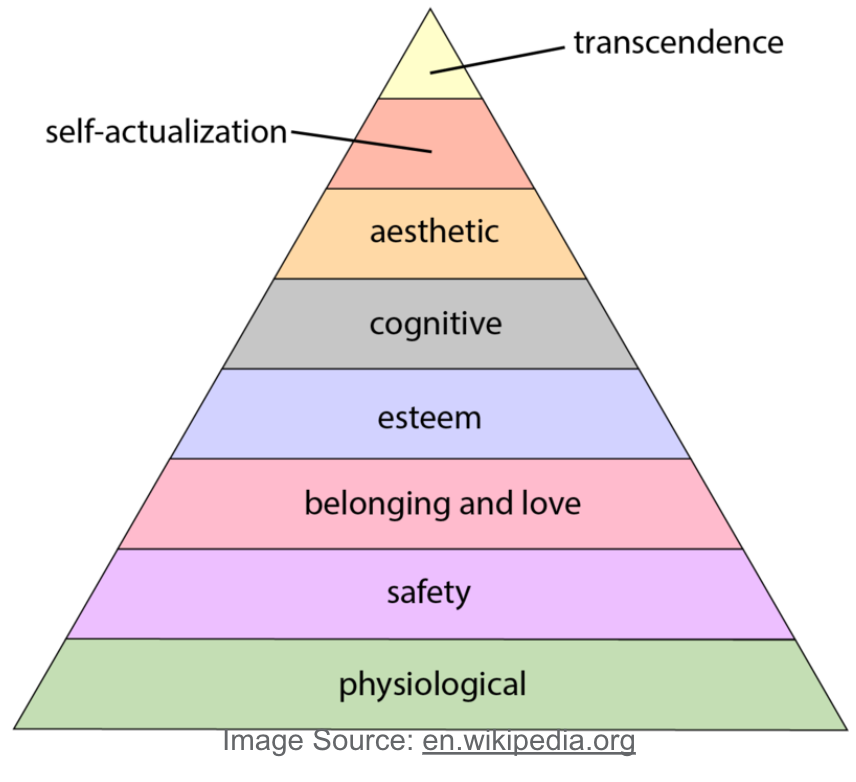
Figure 1. Maslow's hierarchy of needs.
Barriers to Self-Care
Engaging in self-care can be challenging due to various barriers. These obstacles include attachment to unhealthy behaviors or addiction, a lack of motivation, difficulty deciding when to adopt healthy behaviors, challenges in maintaining these behaviors without social support, dealing with multiple health conditions (multi-morbidity), experiencing significant life events such as relationship endings or loss, and having an inadequate response to the symptoms of burnout. Additionally, there may be a stigma associated with seeking help for self-care, particularly among health professionals who provide care to others but may hesitate to seek support for themselves. Recognizing and addressing these barriers is essential for promoting self-care and overall well-being, especially in high-stress roles like system-change work.
Self-Care in Practice
In self-care, you can start anywhere, but it's essential to cover various domains. Begin with physical well-being, which you may already be practicing. Next, set healthy boundaries, manage emotions effectively, and release negative feelings to think clearly and make sound decisions. Embracing your inner spirituality, regardless of religious beliefs, can offer a protective perspective that turns life's challenges into valuable learning experiences. This simplified paragraph maintains the core concepts while improving readability.
Physical Nurturing
Physical nurturing primarily revolves around the vital aspect of rest. It's crucial to remember the HALT concept: when you're hungry, angry, lonely, or tired, rest becomes your best ally. This is my catchphrase, "Rest is best." Additionally, your diet, exercise, and physical activity, which can encompass simple movements like standing up and down, dancing, or spending time outdoors in nature, play pivotal roles in regulating your overall well-being. Don't underestimate the significance of basic hygiene practices such as teeth brushing, hair care, and showering; they are integral to your physical nurturing. Lastly, engaging with healthcare professionals when needed and adopting other wellness practices further contribute to your holistic self-care routine.
Boundaries
Let's talk about boundaries, a key factor in your well-being and career sustainability. First, there's work-life balance, where setting clear time limits matters, even if it feels challenging in environments where work bleeds into personal time. Emotions come into play too; it's important to distinguish what's yours from what's others'. Plus, professional boundaries ensure you don't get overly involved with colleagues to the point where you lose your own identity. Remember, boundary-setting can be a lifelong process, especially if you've never learned it before; it often starts in adulthood and takes time to develop fully. So, be patient with yourself as you work on it.
Locus of Control
This also ties into the concept of your locus of control, which involves recognizing what you can and cannot control. This distinction becomes particularly crucial in effecting system-level change. Focusing excessively on things beyond your direct control can drain you emotionally. It's not that you can't contribute to changing the system, but it's important to differentiate between what falls outside your control, such as people, places, and external factors, and what you can control, which includes your responses and behaviors. While thoughts, emotions, and feelings can sometimes feel less controllable, they also fall within your influence and can change over time.
Emotional Regulation and Expression
It's crucial to recognize and identify your emotions. Sometimes, without clear boundaries or when you're overly focused on others, pinpointing your feelings can be challenging. Practicing mindfulness can help create a separation between strong emotions and your neutral inner self. Techniques like deep breathing, talking to a friend, journaling, engaging in art, participating in activities, singing, or even venting can serve as valuable outlets to express and process your emotions, which is essential for your well-being.
Spirituality & Your Inner-Self
To reiterate, spirituality involves connecting with your identity beyond your social and professional roles, potentially seeking support from a higher power when you're overwhelmed or uncertain about your path. This could involve practices like prayer and meditation, which offer valuable guidance. It also includes identifying your personal and professional values, finding solace in nature, and for some, spirituality is intimately tied to the natural world. How does all this help in your daily life? It provides you with a centered foundation, ensuring that the ups and downs of your professional life don't easily toss you about, helping you maintain a sense of inner calm and stability.
Social Support
Social support stands out as one of the most effective preventive measures for mental health issues, especially at a broader population level. This is even more crucial when you're involved in system change efforts. Seek out like-minded support groups, consider individual counseling or therapy, and if you're adopting new health behaviors, having a supportive buddy can be immensely beneficial. Building a strong support network can significantly bolster your well-being and your ability to navigate challenges effectively.
An Appropriate Outlet
In summary, my message, while not from a behavioral health professional, is grounded in real-world experiences involving programs, policies, initiatives, and organizational adjustments aimed at addressing pressing social issues. Undertaking such endeavors can indeed be daunting, but they can also be deeply inspiring and drive meaningful change. Our systems may have flaws, but they are amenable to improvement through ongoing innovations and initiatives, which you can explore through readily available resources.
Self-care plays a pivotal role in this journey because without prioritizing your well-being, progress becomes elusive. However, the key is to identify an appropriate outlet for your efforts. It involves discovering where you can make a difference, whether it's within your current role or beyond it, while understanding your limitations regarding time, workload, and emotional investment. The goal is to find the smallest difference you can make within your capacity, as this will fuel your energy for sustained work. Attempting to tackle something too vast can be overwhelming, akin to getting electrocuted, so the metaphor here is to find an appropriate outlet.
I've provided references for further reading, and I'm open to offering additional resources. Your time is greatly appreciated, and I welcome any comments or questions. I wish you the best of luck in your endeavors, whether they involve small or large changes. That concludes this course.
References
Belkin, G., Appleton, S., & Langlois, K. (2021). Reimagining mental health systems post COVID-19. The Lancet Planetary Health, 5(4), e181-e182.
Balch, C. M., Oreskovich, M. R., Dyrbye, L. N., Colaiano, J. M., Satele, D. V., Sloan, J. A., & Shanafelt, T. D. (2011). Personal consequences of malpractice lawsuits on American surgeons. Journal of the American College of Surgeons, 213, 657-667. doi:10.1016/j.jamcollsurg.2011.08.005
Bruce, C. R., Miller, S. M., & Zimmerman, J. L. (2015). A qualitative study exploring moral distress in the ICU team: the importance of unit functionality and intrateam dynamics. Critical Care Medicine, 43, 1–9.
Dzeng, E., & Curtis, J. R. (2018). Understanding ethical climate, moral distress, and burnout: a novel tool and a conceptual framework. BMJ Quality & Safety, 27(10), 766-770.
Maslach, C., & Jackson, S. E. (1981). The measurement of experienced burnout. Journal of Organizational Behavior, 2(2), 99-113.
O’Connor, K., Neff, D. M., & Pitman, S. (2018). Burnout in psychotherapists: A systematic review and meta-analysis of prevalence and determinants. European Psychiatry, 53, 74–99. doi:10.1016/jeurpsy.2018.06.003
Pawson, R., Greenhalgh, J., Brennan, C., & Glidewell, E. (2014). Do reviews of healthcare interventions teach us how to improve healthcare systems? Social Science & Medicine, 114, 129-137.
Reith, T. P. (2018). Burnout in United States healthcare professionals: a narrative review. Cureus, 10(12).
Riegel, B., Dunbar, S. B., Fitzsimons, D., Freedland, K. E., Lee, C. S., Middleton, S., ... & Jaarsma, T. (2021). Self-care research: Where are we now? Where are we going? International Journal of Nursing Studies, 116, 103402.
Welp, A., Meier, L. L., & Manser, T. (2015). Emotional exhaustion and workload predict clinician-rated and objective patient safety. Frontiers in Psychology, 5, 1573. doi:10.3389/fpsyg.2014.01573
Wilkinson, H., Whittington, R., Perry, L., & Eames, C. (2017). Examining the relationship between burnout and empathy in healthcare professionals: A systematic review. Burnout Research, 6, 18-29.
Yang, Y., & Hayes, J. A. (2020). Causes and consequences of burnout among mental health professionals: A practice-oriented review of recent empirical literature. Psychotherapy, 57(3), 426.
Citation
Nathenson, S. (2023). Self-care and systems change for behavioral health professionals. Continued Psychology, Article 24. Available from www.continued.com/psychology.

Sophie Nathenson
PhD
Related Courses
Burnout Among Mental Health Professionals: A Sociological Perspective
In this course learners will acquire knowledge in the sociological perspective of burnout and how role strain contributes to burnout at the individual level. The social and political context of burnout is discussed, as well as the organizational-level factors of burnout. Social and economic power differentials are examined as a barrier to improving the landscape of burnout among the helping professions.Compassion Fatigue: When the Helping Well Runs Dry
This course defines burnout and compassion fatigue and identifies the associated symptoms. In addition, strategies to alleviate and/or avoid compassion fatigue and burnout are identified.Decreasing Professional Burnout
While improving and advocating for patients' emotional and physical well-being, healthcare workers frequently neglect their own. Specific symptoms of professional burnout, practical techniques for decreasing burnout, and helpful resources for healthcare providers are described in this course.